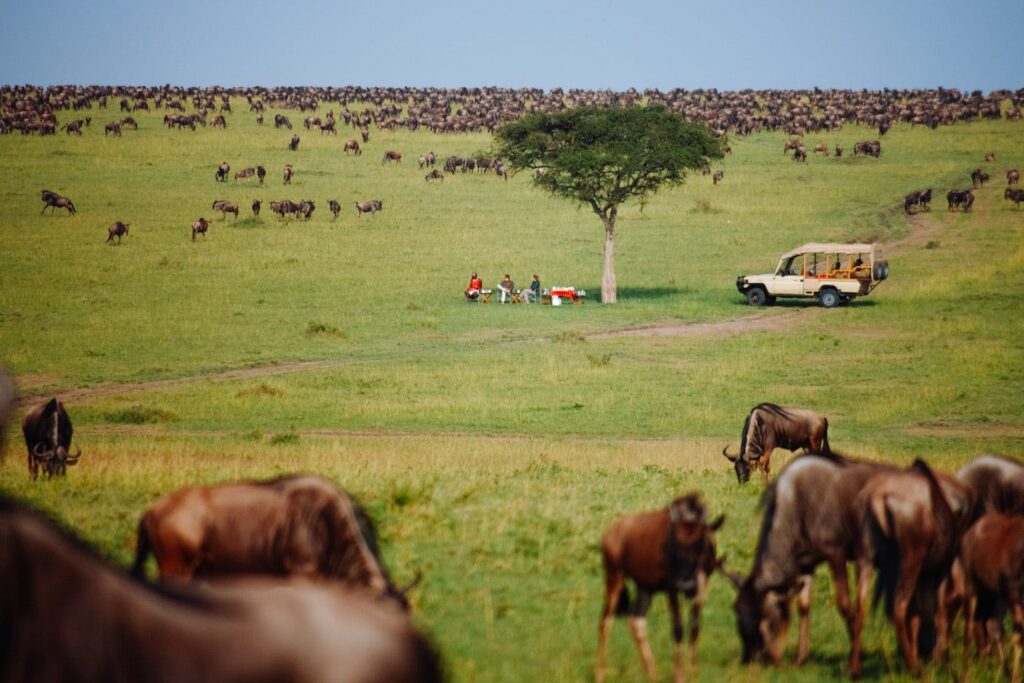
Start planning a 12-day Tanzania safari by focusing on the Northern Circuit (Serengeti, Ngorongoro, Tarangire, Manyara) between June and October for peak wildlife viewing or January to February for the calving season. Budget around ($350-$1500+) per person per day, book 6–12 months in advance, and fly into Kilimanjaro International Airport (JRO)
12-days-best-tanzania-and-kenya-safari-combo-itinerary
12-days-perfect-tanzania-zanzibar-beach-holiday-tour-package
12-days-budget-tanzania-safari-itinerary-visiting-tanzania-on-budget
12-days-kilimanjaro-and-safari-in-northern-tanzania-safari-parks
12-days-tanzania-safari-and-culture-experience
12-days-tanzania-photography-safari-capturing-the-wild-with-lenses
A Journey Through the Wild: The Ultimate 12-Day Tanzania Odyssey
Tanzania stands as the ultimate theater of the natural world, a land where the primordial rhythm of the wild remains undisturbed. This 12-day odyssey is meticulously crafted to immerse you in the diverse ecosystems of the Northern Circuit, from the baobab-studded plains of Tarangire to the endless horizons of the Serengeti and the lost world of the Ngorongoro Crater. This journey is more than a simple sightseeing tour; it is a deep dive into the heart of African conservation and biodiversity. You will witness the raw drama of predator and prey, the gentle giants of the elephant kingdom, and the kaleidoscope of birdlife that fills the acacia trees. Whether you are tracking the Great Migration or standing on the rim of the world’s largest intact caldera, each day offers a new chapter in a story of survival and beauty. Prepare to disconnect from the modern world and reconnect with the soul of the Earth.
Day 1: Arrival and the Gateway to Adventure
Your journey begins at Kilimanjaro International Airport, where the crisp air and the distant, snow-capped silhouette of Africa’s highest peak welcome you. After a brief transfer to the charming town of Arusha, you will have time to settle into your lodge and shake off the dust of international travel. Arusha serves as the botanical and logistical heart of the Tanzanian safari industry, surrounded by coffee plantations and lush greenery. Use this afternoon to meet your professional guide for a comprehensive briefing on the days ahead. As the sun sets, enjoy a quiet dinner featuring local flavors, perhaps trying some traditional ugali or grilled nyama choma. This first night is about acclimatization and anticipation, as the sounds of the African night begin to replace the hum of the city, marking the official start of your 12-day wilderness immersion.
Day 2: The Giant Baobabs of Tarangire
After breakfast, you head southwest to Tarangire National Park, a landscape defined by its ancient, "upside-down" baobab trees and the life-giving Tarangire River. This park is famous for hosting one of the highest concentrations of elephants in the world. During the dry season, the river becomes a magnet for thousands of these gentle giants, who congregate along the banks to drink and bathe. As you navigate the park’s rolling hills, you will also encounter large herds of buffalo, zebra, and wildebeest, often pursued by resident lions and leopards. The birdlife here is equally impressive, with over 550 species recorded. You will spend the day exploring the diverse habitats, from open grasslands to palm-fringed swamps. As evening falls, retreat to a safari camp perched on a ridge, offering panoramic views of the wilderness you just traversed, accompanied by the distant trumpeting of elephants.
Day 3: Exploring the Silale Swamps
A second day in Tarangire allows for a deeper exploration of the park’s southern reaches, specifically the vast Silale Swamps. This massive wetland acts as a giant sponge, staying green long after the surrounding plains have dried out. This attracts an incredible array of wildlife, including the rare fringe-eared oryx and the long-necked gerenuk. The swamp is also a prime location for leopard sightings, as these elusive cats frequent the dense riverine forests. Watching a pride of lions navigate the high reeds in search of prey is a highlight of the southern circuit. The afternoon can be spent at a slower pace, perhaps visiting a local Maasai boma to learn about the harmonious, yet challenging, relationship between traditional pastoralist communities and the surrounding wildlife. This cultural exchange provides essential context to the conservation efforts required to protect this fragile and beautiful ecosystem.
Day 4: Lake Manyara and the Great Rift Valley
Leaving Tarangire behind, you travel toward the base of the Great Rift Valley escarpment to visit Lake Manyara National Park. Though small, this park is a mosaic of habitats, ranging from groundwater forests to the alkaline waters of the lake itself. It is most famous for its unique "tree-climbing" lions, which can often be found draped over the sturdy branches of acacia trees to escape the heat and insects. The park’s entrance is a lush jungle home to troops of baboons and blue monkeys. As you emerge onto the lakeshore, the landscape opens up to reveal thousands of flamingos painting the water pink. Keep an eye out for hippos wallowing in the Simba River and giraffes gracefully browsing the high canopy. The day ends with a drive up the steep escarpment, providing a breathtaking view of the valley floor before arriving at your lodge in Karatu.
Day 5: Journey to the Serengeti Plains
Today you cross the lush highlands of Ngorongoro and descend into the world-famous Serengeti National Park. The name "Serengeti" is derived from the Maasai word Siringet, meaning "endless plains," and the view from the Naabi Hill gate perfectly illustrates why. The vast, flat grasslands stretch to the horizon, dotted only by occasional "kopjes"—ancient granite rock formations that serve as lookout points for predators. This is a day of transition as you move into the heart of the Big Cat capital of the world. Your game drive toward the central Seronera Valley is likely to produce sightings of Thompson’s gazelles, topis, and perhaps a cheetah surveying the landscape from a termite mound. The sheer scale of the sky and the sense of isolation are profound. You will arrive at your central Serengeti camp in time for a sundowner, surrounded by the quintessential sounds of the African bush.
Day 6: The Central Seronera Valley
Central Serengeti is a wildlife haven year-round due to its permanent water sources. Today is dedicated to exploring the Seronera River valley, a high-density area for leopards and lions. You will depart at dawn, the best time to catch predators while they are still active from the night’s hunt. Your guide will navigate the network of tracks, searching for the flick of a leopard’s tail in a sausage tree or a pride of lions resting in the tall grass. Along the riverbanks, you will find pods of hippos and enormous Nile crocodiles. The central plains are also home to a resident population of giraffes and elephants that do not participate in the Great Migration. Lunch is often a picnic under a lone acacia tree, allowing you to maximize your time in the field. The afternoon brings a different light, perfect for capturing the golden hues of the savannah on camera.
Day 7: Following the Migration Tracks
Depending on the time of year, your journey now shifts toward the specific location of the Great Migration herds. If you are visiting during the dry season, you will head north toward the Mara River; during the calving season, you will focus on the southern Ndutu plains. This flexibility is the hallmark of a 12-day safari, allowing you to witness the movement of over 1.5 million wildebeest and zebras. The sheer noise and scent of the massive herds are an assault on the senses. You will observe the complex social dynamics of the migration, from the leadership of the zebras to the relentless pressure from pursuing predators. Following the herds provides a front-row seat to the cycle of life and death that has played out on these plains for millennia. It is a humbling experience to see such a massive biomass moving in unison across the landscape.
Day 8: The Remote Wilderness of the North (or South)
Whether you are in the North or the South, Day 8 is about venturing away from the main tracks to find the more secluded corners of the Serengeti. In the North, this might mean exploring the Lamai Wedge, a beautiful area between the Mara River and the Kenyan border that offers spectacular scenery and high predator concentrations. In the South, it may involve navigating the hidden marshes and acacia woodlands where cheetahs teach their cubs to hunt. The absence of other vehicles in these remote areas enhances the feeling of being an explorer in a lost world. You will have the chance to see rarer species, such as the bat-eared fox or the serval cat. This day is about patience and observation, allowing the rhythms of the wild to reveal themselves without the rush of checking off a list. It is often during these quiet moments that the most extraordinary sightings occur.
Day 9: Serengeti to the Ngorongoro Highlands
After a final early morning game drive in the Serengeti, you begin your journey back toward the Ngorongoro Conservation Area. This drive is a "game drive en route," meaning you keep your binoculars ready as you move between ecosystems. You will ascend from the dry plains back into the misty, cool highlands. Along the way, you may stop at Olduvai Gorge, known as the "Cradle of Mankind," where the Leakey family discovered some of the earliest hominid fossils. This archaeological site provides a fascinating look at our human origins and the prehistoric animals that once roamed this landscape. As you reach the crater rim, the temperature drops and the vegetation becomes much denser. You will arrive at your lodge perched on the edge of the caldera, offering one of the most spectacular views in Africa as the sun dips below the far rim, casting long shadows across the crater floor.
Day 10: The Ngorongoro Crater Floor
Today you descend 600 meters into the Ngorongoro Crater for a full-day safari in this "Garden of Eden." This 20-kilometer-wide caldera is a self-contained ecosystem where animals live in incredible density. It is one of the best places in Africa to see the endangered black rhino, which find protection within the crater's steep walls. The crater floor is a mix of open grasslands, Lerai forest, and the alkaline Lake Magadi. You will see prides of lions that are famously unfazed by vehicles, allowing for exceptionally close encounters. Massive "tusker" elephants roam the swampy areas, and spotted hyenas are frequently seen patrolling the plains. Because the animals do not migrate out of the crater, the density of wildlife is staggering; you are likely to see four of the "Big Five" in a single morning. This is a high-energy day of constant sightings, set against the dramatic backdrop of the crater walls.
Day 11: Cultural Immersion and Lake Eyasi
Leaving the high-profile parks behind, you travel to the shores of Lake Eyasi for a completely different experience: a cultural encounter with the Hadzabe and Datoga people. The Hadzabe are one of the last remaining hunter-gatherer tribes in Africa, living much as our ancestors did tens of thousands of years ago. You will have the opportunity to join the men on a morning hunt or learn about traditional foraging techniques from the women. Their click-based language is unique and fascinating to hear. Afterward, visit the Datoga, skilled blacksmiths and pastoralists who maintain a traditional lifestyle centered around livestock and metalwork. This day is a profound reminder of the human element in the African landscape and the deep history of the Rift Valley. It offers a reflective contrast to the wildlife-heavy days of the safari, providing a holistic view of Tanzania’s heritage before you begin your journey home.
Day 12: Farewell to the Wild
On your final day, you enjoy a leisurely breakfast in the highlands before driving back toward Arusha. This is a time for reflection on the incredible sights and sounds of the past twelve days. You may stop at a local gallery or market in Arusha to pick up some handcrafted souvenirs—perhaps a piece of Tanzanite jewelry or a traditional Maasai carving—to remind you of your journey. After a farewell lunch with your guide, you will be transferred to Kilimanjaro International Airport for your departing flight. As the plane climbs above the clouds, you might catch one last glimpse of Mount Kilimanjaro or the vast plains you called home for nearly two weeks. You leave Tanzania with a memory card full of photos, but more importantly, a renewed sense of wonder and a deep connection to the wild heart of Africa that will remain with you forever.
1. When is the best time to plan a 12-day safari in Tanzania?
Deciding when to visit Tanzania depends entirely on which natural spectacle sits at the top of your bucket list. The Dry Season (June to October) is widely considered the "gold standard" for wildlife viewing. As the landscape dries out, vegetation thins, and animals are forced to congregate around predictable water sources like the Tarangire River or the Seronera Valley. This is also the window for the dramatic Great Migration river crossings in the Northern Serengeti. If your goal is to see thousands of wildebeest plunging into crocodile-infested waters, late July through September is your target.
Conversely, the "Green Season" (January to March) offers a completely different but equally vital experience: the calving season. During these months, the southern Serengeti and Ndutu plains are transformed into a lush, emerald nursery. Approximately 8,000 wildebeest are born every day, attracting an incredible density of predators—lions, cheetahs, and hyenas—looking for an easy hunt. This period is also a paradise for birdwatchers, as migratory species from Europe and North Africa are present in full force. While you might encounter occasional afternoon rain, the dust is low, the air is crisp, and the photography lighting is sublime. For those looking to avoid peak season crowds, the "shoulder months" of November or late May offer a perfect balance of decent weather and lower lodge rates.
2. How do I decide between Northern or Southern circuits for my safari in Tanzania?
Tanzania’s safari offerings are generally split into two distinct geographical regions, each catering to a different style of traveler. The Northern Circuit is the legendary powerhouse of East African tourism. It includes household names like the Serengeti, Ngorongoro Crater, and Lake Manyara. This circuit is ideal for first-timers because it offers a high density of wildlife and the iconic scenery often depicted in documentaries. Because the parks are relatively close together, you spend more time watching animals and less time in transit. However, its popularity means you will likely share sightings with other vehicles, especially in the Crater.
The Southern Circuit (encompassing Nyerere National Park and Ruaha) is the choice for the seasoned traveler or the solitude seeker. These parks are vast, rugged, and significantly less visited. Here, the experience is defined by exclusivity; it is not uncommon to spend an entire day without seeing another safari vehicle. The Southern Circuit focuses more on boat safaris on the Rufiji River and guided walking safaris, offering a "boots-on-the-ground" connection to the bush. While the wildlife may be slightly more spread out, the raw, untamed atmosphere provides a sense of adventure that is harder to find in the more manicured Northern parks. For a 12-day trip, unless you are flying between sectors, it is usually best to commit to one circuit to avoid spending half your holiday on the road.
3. What does a typical itinerary look like for a 12-day safari in Tanzania?
A 12-day itinerary is the "sweet spot" for Tanzania, providing enough time to see the highlights without feeling rushed. A classic route typically begins in Arusha, the safari gateway. From there, you spend two days in Tarangire, famous for its massive elephant herds and ancient baobab trees. This is followed by a day at Lake Manyara, known for its groundwater forest and tree-climbing lions. As you move deeper into the wild, the next four days are dedicated to the Serengeti. This allows you to explore different sectors—perhaps the central Seronera for big cats and the North or South depending on the Migration’s current location.
After the Serengeti, you ascend to the Ngorongoro Crater for a full-day floor tour. Often called the "Eighth Wonder of the World," this collapsed volcano offers a self-contained ecosystem where you are almost guaranteed to see the endangered black rhino. To wrap up the journey, most travelers take a bush flight from a dusty Serengeti airstrip directly to Zanzibar. The final three to four days are spent in the turquoise waters of the Indian Ocean, decompressing from the early morning safari wake-up calls. You can explore the winding alleys of Stone Town, go spice tasting, or simply relax on the white sands of Nungwi. This progression—from the rugged bush to the historic highlands and finally the tropical coast—provides a holistic Tanzanian experience.
4. Should I book a private or group safari in Tanzania?
When planning a trip of this length, the choice between a private or group safari significantly impacts your daily satisfaction. A private safari offers total autonomy. If you are a photography enthusiast who wants to spend two hours waiting for a leopard to descend from a tree, you can. If your group is tired and wants to head back to the lodge early for a swim, you have that flexibility. You also have the undivided attention of your guide, which is invaluable for deep-dives into animal behavior or local culture. For families or small groups, the cost difference per person is often negligible compared to a high-end group tour.
Group safaris, on the other hand, are excellent for solo travelers or those on a stricter budget. They provide a social environment where you can share the excitement of a sighting with new friends. However, group tours operate on a fixed schedule. You must move when the group moves, and seating in the vehicle can sometimes be cramped, potentially obstructing your view for photography. In a 12-day context, the "fatigue factor" is real; being in a private vehicle ensures you aren't frustrated by the conflicting interests of strangers over a long duration. Ultimately, if the budget allows, a private vehicle is the recommended way to ensure your once-in-a-lifetime trip matches your personal rhythm.
5. How far in advance should I book my 12-day safari in Tanzania?
Tanzania is one of the world's most sought-after travel destinations, and the logistics of a 12-day safari are complex. For those aiming to travel during the Peak Season (July to October), the "golden rule" is to book 6 to 12 months in advance. The primary reason isn't just the flights; it's the accommodation. The most desirable lodges and tented camps—especially those located inside the national parks or along the rim of the Ngorongoro Crater—often have fewer than 20 rooms. These spots fill up quickly with repeat guests and high-end tour operators.
If you are looking for a specific experience, such as a mobile camp that moves with the Migration, early booking is even more critical. These camps have very limited capacity and are usually the first to go. Booking early also secures your preferred professional guides, who are often requested by name months in advance. If you find yourself planning a last-minute trip (less than 3 months out), you can still have a wonderful experience, but you may have to stay in lodges located outside the park gates, which adds driving time to your day. For the "Green Season" (November to May), a lead time of 4 to 6 months is usually sufficient to secure your first-choice properties.
6. What is the cost of a 12-day luxury vs. budget safari in Tanzania?
The cost of a 12-day safari is dictated by three factors: accommodation type, transport mode, and exclusivity. A budget safari usually involves "public camping," where you sleep in sturdy tents on the ground at designated campsites and have a dedicated chef traveling with you. This is an authentic, rugged experience that brings you closest to the sounds of the night, typically costing between $250 and $400 per person per day. This allows you to see the same wildlife as luxury travelers but at a fraction of the cost.
A luxury safari scales up to permanent tented lodges that feature mahogany floors, en-suite bathrooms, and fine dining in the middle of the wilderness. These packages often include "fly-in" logistics, where you hop between parks on light aircraft rather than driving for hours on bumpy roads. Luxury tiers can range from $800 to over $2,000 per person per day at ultra-exclusive properties like those in the Singita or &Beyond portfolios. Mid-range options—comfortable lodges with great views—fall comfortably in the middle. When budgeting, remember to account for "hidden" costs like park entry fees (which can be over $70 per person per day in the Serengeti), crater descent fees, and international flights.
7. Do I need a visa for my 12-day safari in Tanzania?
Navigating the entry requirements for Tanzania is relatively straightforward but requires attention to detail. Most international visitors, including those from the US, UK, and EU, require a tourist visa. As of 2026, the most efficient method is the Tanzanian E-visa, applied for online at least two to three weeks before departure. The cost is generally $50 for most nationalities, though US citizens are required to purchase a multiple-entry visa for $100. While "visa on arrival" is still available at major airports like Kilimanjaro (JRO), the queues can be several hours long, making the pre-arranged e-visa a much smoother choice.
Your passport must be valid for at least six months beyond your date of entry and have at least two blank pages. If your 12-day itinerary includes a flight to Zanzibar, you do not need a separate visa, as Zanzibar is part of the United Republic of Tanzania. However, you will go through a brief internal immigration check upon arrival on the island. It is also wise to keep digital and physical copies of your visa approval and your return flight itinerary, as these are frequently requested by immigration officers upon arrival and at various checkpoints.
8. What vaccines are required for a safari in Tanzania?
Your health is the most important piece of gear you’ll bring on a 12-day safari. The most critical medical consideration is Malaria prophylaxis. Tanzania is a high-risk zone, and while lodges use mosquito nets and repellents, taking a prescribed preventative like Malarone or Doxycycline is strongly recommended. Consult a travel clinic at least six weeks before your trip to discuss which medication is best for you.
Regarding vaccinations, there are no "mandatory" shots for entry unless you are arriving from a country with a risk of Yellow Fever (including layovers of more than 12 hours in countries like Kenya or Ethiopia). In such cases, you must present an International Certificate of Vaccination (the "Yellow Card"). Regardless of the rules, most doctors recommend being up to date on Hepatitis A, Hepatitis B, and Typhoid. Because you will be in remote areas, ensure you have a basic first-aid kit with rehydration salts, anti-diarrheal medication, and any personal prescriptions. Staying hydrated and wearing long sleeves at dusk are your best defenses against the most common safari ailment: the sun and the bugs.
9. What kind of clothing should I pack for a safari in Tanzania?
Packing for a 12-day safari is an exercise in "functional minimalism." The key is layering. Many travelers are surprised to find that early morning game drives in the Serengeti or Ngorongoro can be biting cold, with temperatures near freezing. However, by noon, the equatorial sun is intense. You need a warm fleece or "puffer" jacket and a windbreaker for the mornings, which you can shed as the day warms up. Stick to neutral colors like khaki, olive, and tan. Avoid bright whites (which get dusty instantly), black and dark blue (which attract tsetse flies), and camouflage patterns (which are reserved for the military and can cause legal issues).
For footwear, unless you are doing a dedicated walking safari, heavy hiking boots aren't necessary. A pair of comfortable, closed-toe walking shoes or sturdy sneakers is perfect. Don't forget a wide-brimmed hat with a chin strap, high-SPF sunscreen, and polarized sunglasses to cut the glare on the savannah. Most lodges offer laundry services—often for a small fee or even included in luxury tiers—so you only need to pack about 4–5 days' worth of clothes. This is especially important if you are taking bush flights, which usually have a strict 15kg (33lb) limit in soft-sided bags.
10. How do I ensure safety during my 12-day safari in Tanzania?
Safety on a 12-day safari is built on a foundation of respect for the environment and the animals. Tanzania is a very safe destination for tourists, but "safari safety" is different from "city safety." The most important rule is to always listen to your guide. They are experts in animal behavior and know the "comfort zones" of the lions and elephants you encounter. Never encourage a guide to drive off-road or get closer to an animal than they feel is safe. While it may look like a "park," these are unfenced wilderness areas where animals have the right of way.
Inside the vehicle, stay seated while the car is moving and keep all limbs inside. When staying at "tented camps," you are living in the animals' territory. After dark, you must never walk between your tent and the dining mess alone; an armed guard or "askari" will always escort you. These protocols aren't meant to scare you—they are there so you can enjoy the thrill of hearing a lion roar nearby while knowing you are secure. Finally, regarding personal safety, Tanzania is a conservative country; when in Arusha or Zanzibar, dress modestly and be mindful of your belongings in crowded markets.
11. Is it necessary to fly between parks during my 12-day safari in Tanzania?
While a "driving safari" allows you to see the changing Tanzanian countryside, a 12-day trip often benefits significantly from at least one bush flight. Driving from the Ngorongoro Highlands to the Northern Serengeti can take 6 to 8 hours on extremely dusty, corrugated roads—a journey often called "the African massage." By taking a light aircraft flight, you turn a grueling travel day into a 45-minute scenic hop, giving you an extra morning and afternoon for game viewing.
Flights are particularly useful for the transition to Zanzibar. A flight from the Serengeti directly to the island takes about 2.5 hours, whereas driving back to Arusha and then flying would consume an entire day. These flights use small planes (Cessna Caravans or similar), providing a stunning aerial perspective of the Great Rift Valley and the vastness of the plains. Be aware of the strict luggage restrictions: soft-sided duffel bags are required because they need to fit into the small pods under the plane. If you have excess luggage, most operators can arrange for it to be stored in Arusha and reunited with you later.
12. What wildlife can I expect to see on a 12-day safari in Tanzania?
A 12-day safari offers the luxury of time, allowing you to look past the "Big Five" (Lion, Leopard, Elephant, Buffalo, Rhino) and appreciate the intricate layers of the ecosystem. While the Big Five are the stars, Tanzania’s biodiversity is staggering. You can expect to see vast "super-herds" of wildebeest and zebra during the migration, but also rarer antelope like the spiral-horned Eland or the tiny, monogamous Dik-dik.
In the Serengeti, keep an eye out for "the smaller stuff"—the Aardwolf, Serval, and Caracal are elusive cats that a 12-day window gives you a better chance of spotting. The birdlife is equally phenomenal; even if you aren't a "birder," the sight of a prehistoric-looking Shoebill stork or a Secretary bird hunting snakes on the plains is unforgettable. Your guide will also point out the "Little Five" (Ant Lion, Leopard Tortoise, Elephant Shrew, Rhino Beetle, and Buffalo Weaver). Having 12 days means you can spend time watching a cheetah hunt from start to finish, rather than just snapping a photo and rushing to the next sighting.
13. What are the tipping guidelines for a 12-day safari in Tanzania?
Tipping is an integral part of the safari culture in Tanzania and serves as a primary source of income for many hardworking staff. For a 12-day safari, it is best to budget for tips in advance so you aren't caught short of cash at the end of the trip. The industry standard for a professional safari guide is approximately $20 to $30 per vehicle, per day. If you are a group of four, that’s about $5–$8 per person. This is usually presented at the very end of your time with that specific guide.
For lodge staff, most properties have a "general tip box" located in the reception or dining area. Tips here are shared among the "invisible" staff—the cleaners, chefs, and gardeners who make your stay comfortable. A guideline of $10 to $15 per guest, per day is standard. If a particular staff member (like a private butler or a porter) goes above and beyond, a small personal tip is always appreciated. It is best to tip in US Dollars (printed after 2006) or Tanzanian Shillings. Having a stack of small bills ($1s, $5s, and $10s) is extremely helpful. Remember, tipping is voluntary, but it is a vital way to support the local community that makes your safari possible.
14. How do I arrange a safari in Tanzania with a focus on local culture?
A safari that ignores the people of Tanzania is an incomplete one. For a 12-day trip, it is highly recommended to dedicate at least one day to cultural interaction. Many travelers choose to visit a Maasai Boma. While some are more commercialized than others, a good tour operator can find an authentic village where you can learn about their pastoralist lifestyle, traditional medicine, and the significance of their beadwork.
Another fascinating option is a visit to the Hadzabe and Datoga tribes near Lake Eyasi. The Hadzabe are one of the last true hunter-gatherer tribes in Africa, speaking a unique "click" language. Spending a morning with them provides a window into a way of life that has remained unchanged for millennia. If you are staying in the Karatu area, you can also tour local farms or schools to see how modern Tanzanians live and work. These interactions provide a profound counterpoint to the wildlife sightings and often end up being the most talked-about part of the trip. Always ask for permission before taking photos of people, and consider booking through operators that ensure the fees for these visits go directly to the community.
15. What vaccinations are required for a safari in Tanzania?
As your 12-day departure approaches, a final health check is essential. Malaria remains the primary concern. In addition to pills, bring a high-quality insect repellent containing at least 20-30% DEET. Apply it to your ankles and wrists particularly at dawn and dusk when mosquitoes are most active. Many lodges provide repellent, but having your own ensures consistency.
Beyond vaccinations and pills, remember the "safari belly" rule: drink only bottled or filtered water, and avoid ice in drinks unless you are at a high-end lodge where it's made from purified water. Be cautious with raw salads or unpeeled fruit in smaller towns, though food at established safari lodges is generally very safe and of a high international standard. Finally, the African sun is deceptive; even on overcast days, the UV index at the equator is extreme. Wear a hat and reapply sunscreen often. By taking these simple precautions, you ensure that your 12-day journey is defined by the roar of the lion and the beauty of the Serengeti, not by a visit to the clinic.
Booking 12-day Safari in Tanzania with us Roads of Adventure safaris
Book a 12-day Tanzania safari with Roads of Adventure Safaris to experience premier Northern Circuit parks like Serengeti, Ngorongoro Crater, and Tarangire, often combined with Zanzibar beaches or Kenya. They offer personalized, full-service itineraries featuring expert guides, luxury to budget lodging, and a focus on Big Five wildlife viewing.
