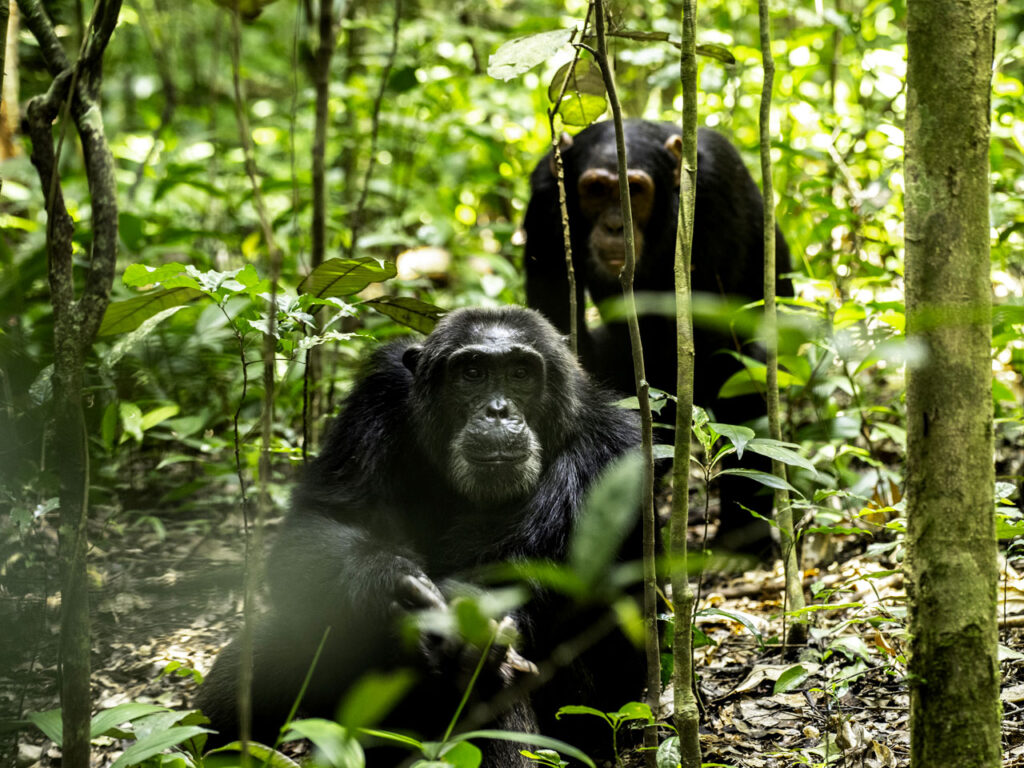
A 9-day Uganda safari combining gorilla trekking and wildlife is best planned by focusing on the southwestern circuit, starting in Entebbe/Kampala and covering Murchison Falls, Kibale Forest, Queen Elizabeth, and Bwindi Impenetrable National Park. Key essentials include securing a gorilla permit (approx. ($700) for foreign non-residents) months in advance and traveling in the dry seasons of June–August or December–February
9-days-uganda-primate-safari-and-wildlife-expedition
9-days-best-uganda-birding-safari-tour-from-swamps-to-savannah-eastern-route
9-days-africa-big-five-safari-in-uganda-safari-parks-and-gorilla-trekking
9-days-uganda-wildlife-safari-chimpanzee-tracking-and-semuliki-park
9-days-bwindi-gorilla-trekking-lake-bunyonyi-queen-elizabeth-kibale-chimps-and-murchison-falls
9-days-best-of-uganda-safari-gorilla-trekking-chimpanzee-tracking-tour-package
9-days-uganda-gorilla-trekking-and-safari-holiday-vacation
9-days-luxury-gorilla-and-uganda-safari-tour-package
9-days-ultimate-africa-big-five-safari-to-gorilla-trekking-in-bwindi-impenetrable
9-days-best-of-uganda-and-rwanda-combined-tour-package
9-days-best-uganda-wildlife-safari-chimpanzee-and-culture
9-days-8-nights-midrange-uganda-gorilla-trekking-wildlife-culture-and-history
This 9-day Uganda wildlife safari and gorilla trekking adventure offers a profound immersion into the "Pearl of Africa." Your journey begins in the lush north at Murchison Falls, where the world’s most powerful waterfall thunders through a narrow gorge, before heading to the "Primate Capital of the World," Kibale Forest. You will transition from the savannah plains of Queen Elizabeth National Park, famous for its tree-climbing lions and hippo-filled channels, to the mist-shrouded ancient rainforests of Bwindi Impenetrable National Park. The pinnacle of this expedition is a face-to-face encounter with the endangered mountain gorillas, a transformative experience that few ever witness. Beyond the iconic Great Apes, you’ll track chimpanzees, spot the "Big Five," and explore the serene crater lakes and winding rivers that define Uganda’s diverse topography. Combining raw adventure with authentic cultural encounters and expert-led conservation insights, this itinerary is meticulously crafted for nature enthusiasts seeking the ultimate East African wilderness experience.
9 Days Uganda wildlife safari and gorilla trekking
Day 1: Arrival and Transfer to Murchison Falls
Your adventure begins with a warm welcome at Entebbe International Airport. After a brief orientation, you’ll head north through the vibrant Luwero Triangle. The first major highlight is a stop at the Ziwa Rhino Sanctuary, the only place in Uganda where you can track wild southern white rhinos on foot. This conservation success story allows you to get remarkably close to these prehistoric-looking giants. After a local lunch, continue the drive into Murchison Falls National Park, Uganda’s largest protected area. As you enter the park, keep your eyes peeled for early wildlife sightings, such as baboons and warthogs. You’ll arrive at your lodge in time to witness a stunning sunset over the Victoria Nile, settling in for dinner as the sounds of the African bush begin their nightly chorus.
Day 2: Murchison Falls – Game Drive and Boat Cruise
Rise before dawn for an exhilarating game drive across the northern savannah. This is the prime time to spot predators like lions and leopards returning from their nightly hunts, alongside massive herds of elephants, Rothschild’s giraffes, and Cape buffalo. After lunch, the perspective shifts to the water with a boat safari upstream toward the base of the falls. You’ll cruise past pods of hippos and enormous Nile crocodiles basking on the banks. The climax is the sight of the Nile River forcing its entire volume through a seven-meter gap, creating a thunderous roar and permanent rainbows. For those seeking a challenge, a hike to the Top of the Falls offers a dizzying, bird's-eye view of the crashing water before you return to the lodge for a well-earned rest.
Day 3: Transfer to Kibale Forest National Park
Bid farewell to the falls and embark on a scenic full-day drive toward the Rwenzori Mountains. This journey takes you through the heart of the Ugandan countryside, passing through Hoima and endless tea plantations that carpet the rolling hills in vibrant green. You’ll witness the daily rhythms of local life—vibrant markets and traditional homesteads—as the landscape transitions from open savannah to dense tropical forest. Arriving in the Fort Portal area, often cited as Uganda’s most beautiful town, you’ll find yourself in the shadows of the "Mountains of the Moon." This evening is spent in the vicinity of Kibale Forest, an area boasting the highest density of primates in Africa. Rest up tonight, as tomorrow brings you into the world of our closest living relatives.
Day 4: Chimpanzee Trekking and Bigodi Wetland
The morning belongs to the chimpanzees. After a briefing at the Kanyanchu Tourism Center, you’ll enter the forest with expert rangers. Tracking is a sensory experience; you’ll listen for the deafening "pant-hoots" echoing through the canopy before finding a troop as they feed, play, and swing through the trees. Spending an hour with these intelligent primates is both chaotic and mesmerizing. In the afternoon, visit the Bigodi Wetland Sanctuary, a community-run initiative. A guided boardwalk hike through the swamp offers a chance to see up to eight other primate species, including the Red Colobus and L’Hoest’s monkey, as well as the rare Great Blue Turaco. This visit directly supports local schools and clean water projects, providing a meaningful connection to the people living alongside the wildlife.
Day 5: Queen Elizabeth National Park – The Kazinga Channel
Head south to Queen Elizabeth National Park, crossing the Equator along the way. The park is set against the backdrop of the jagged Rwenzori range and dotted with ancient volcanic craters. After checking in and enjoying lunch, you’ll board a boat for a cruise along the Kazinga Channel. This natural waterway, connecting Lake Edward and Lake George, features one of the world's highest concentrations of hippos. It is an incredible spot for photography, as elephants and buffalo often come to the water’s edge to drink and bathe just meters from the boat. Birdwatchers will be in paradise, with hundreds of species—from kingfishers to fish eagles—patrolling the banks. The day ends with a short evening game drive as you head back to your lodge.
Day 6: Ishasha's Tree-Climbing Lions and Transfer to Bwindi
Today, you’ll travel to the southern sector of the park, known as Ishasha. This remote area is world-famous for its unique population of "tree-climbing lions." It is a bizarre and fascinating sight to see these heavy predators lounging on the sturdy limbs of ancient fig trees to escape the heat and tsetse flies. While spotting them requires a bit of luck and a keen-eyed guide, the search takes you through beautiful, open woodlands teeming with Topi and Uganda Kob. Afterward, the terrain begins to rise sharply as you leave the plains behind and climb into the Kigezi Highlands, also known as the "Switzerland of Africa." You’ll arrive at the edge of the Bwindi Impenetrable Forest, where the air is cool and the vegetation impossibly thick.
Day 7: The Gorilla Trekking Experience
This is the day you’ve been waiting for. After an early breakfast and a safety briefing, you’ll be assigned to a gorilla family and a team of trackers. The trek through Bwindi’s tangled vines and steep ridges can be physically demanding, lasting anywhere from two to six hours, but the struggle vanishes the moment you see a silverback. You’ll have exactly one hour to observe the family—watching mothers groom their infants and juveniles somersaulting in the foliage. The sheer size and gentle nature of the mountain gorillas are humbling beyond words. You are just a few meters away from a species that shares $98\%$ of our DNA. After this life-changing encounter, you’ll return to the trailhead to receive your trekking certificate and spend a quiet evening reflecting on the experience.
Day 8: Lake Bunyonyi Relaxation and Culture
After the physical exertion of the trek, enjoy a short drive to Lake Bunyonyi, the deepest and arguably most beautiful lake in Uganda. Dotted with 29 emerald islands and surrounded by terraced hillsides, Bunyonyi is a place of absolute serenity. The morning is yours to relax, or you can take a dugout canoe out on the water to explore the "Punishment Island" and learn about its dark local history. In the afternoon, engage with the local Batwa (Pygmy) community. As the original inhabitants of the forest, the Batwa offer a unique perspective on survival, traditional medicine, and ancient folklore. It’s a day of cultural exchange and breathtaking scenery, providing a perfect "buffer" between the wild jungle and your return to the modern world.
Day 9: Return to Entebbe and Departure
On your final day, begin the journey back toward central Uganda. You’ll stop at the Igongo Cultural Center in Mbarara for a traditional lunch, showcasing the heritage of the Ankole kingdom and their famous long-horned cattle. A final stop at the Equator crossing in Kayabwe provides a fun photo opportunity and a chance to browse local craft markets for last-minute souvenirs like hand-woven baskets or wood carvings. As you reach Entebbe, the landscape flattens out toward the shores of Lake Victoria. Your guide will transfer you to the airport for your evening flight, marking the end of an epic 9-day circuit. You leave with sore boots, a full camera roll, and a soul forever changed by the wild heart of Africa.
1. What is the Best Time to Visit Uganda for a 9-day Safari?
Choosing the right window for your Ugandan expedition is the difference between a dusty savannah drive and a muddy struggle through the rainforest. The dry seasons—spanning June to September and December to February—are widely considered the gold standard for travel. During these months, the northern savannah of Murchison Falls and the plains of Queen Elizabeth National Park become easier to navigate as tracks remain firm. More importantly, wildlife becomes predictable; as the smaller water holes dry up, animals are forced to congregate around permanent water sources like the Nile River and the Kazinga Channel, providing spectacular, high-density viewing opportunities.
For gorilla and chimpanzee trekking, the dry season is nearly essential for comfort. The "Impenetrable Forest" of Bwindi earned its name for a reason; its steep, densely forested ridges are challenging enough without the added slickness of tropical mud. In the dry months, the trails are more stable, and the risk of rain interrupting your precious hour with the Great Apes is significantly lower. Furthermore, mosquitoes are less prevalent when there is less standing water, reducing the nuisance factor during evening sundowners.
However, the "Green Season" (the wet months of March to May and October to November) has its own charm. The landscape is a vibrant, photogenic emerald, and many migratory bird species are present. For the budget-conscious traveler, some lodges offer discounted "low season" rates, and the parks are far less crowded, offering a more solitary wilderness experience. If you don't mind a sudden downpour and have high-quality waterproof gear, Uganda’s beauty remains accessible year-round, but for the classic "Big Five" and primate combination, the dry months reign supreme.
2. How Early Should I Book My Gorilla Permits?
Securing a gorilla permit is the most critical logistical hurdle of your entire 9-day safari. Unlike a standard game drive where you can simply show up at the park gate, gorilla trekking is strictly regulated to protect the primates from stress and human-borne diseases. The Uganda Wildlife Authority (UWA) issues a limited number of permits per day for specific sectors of Bwindi and Mgahinga. Because of this scarcity, it is highly recommended to book your permits 6 to 12 months in advance, especially if you plan to travel during the peak seasons of June through September or December through February.
During these peak windows, permits can sell out a year ahead of time. Waiting until the last minute often means being forced to change your entire itinerary to match whatever sector has remaining availability—or worse, missing out entirely. Booking early also ensures you get a permit in a sector that aligns with your lodge choice, preventing long, pre-dawn drives between your accommodation and the trekking start point.
The permit fee is non-refundable (though it can sometimes be rescheduled under strict conditions), and it serves as your "golden ticket." It covers the park entry fees, the armed rangers who protect both you and the gorillas, and the expert trackers who head into the forest at dawn to locate the family before you even start your hike. Most reputable tour operators will handle this process for you as soon as you confirm your safari, ensuring that the centerpiece of your Ugandan adventure is legally and logistically locked in.
3. What Specific Wildlife Can I View in 9 Days?
A 9-day itinerary is the "sweet spot" for Uganda because it allows you to transition through three entirely different ecosystems, resulting in a staggering variety of species. Your journey typically begins with the Big Five (minus the rhino, which you see at Ziwa) at Murchison Falls. Here, you’ll encounter massive herds of Rothschild’s giraffes, elephants, and Cape buffalo. The Victoria Nile is a sanctuary for some of Africa’s largest Nile crocodiles and endless pods of hippos, while the surrounding scrubland is home to lions and the elusive leopard.
As you move toward the rainforests of Kibale, the focus shifts to primates. Kibale is home to 13 species, but the stars are the Chimpanzees. You’ll also likely spot Red-tailed monkeys, Black-and-white Colobus, and the Grey-cheeked mangabey. In the nearby Bigodi Wetland, the Great Blue Turaco is a prize sighting for birders.
In Queen Elizabeth National Park, the wildlife changes again. You’ll see the Uganda Kob (a handsome antelope found nowhere else in such numbers) and the famous tree-climbing lions of the Ishasha sector. Finally, the journey culminates in the ancient Bwindi Forest, where you will meet the Mountain Gorillas. Beyond these "headline" animals, Uganda hosts over 1,000 bird species, including the prehistoric-looking Shoebill Stork, which can often be found in the swampy fringes of the Nile or Lake Victoria. From the smallest colorful sunbird to the 200kg Silverback, the sheer biodiversity packed into these nine days is unparalleled in East Africa.
4. What Vehicle Do I Need for the Trip?
While Uganda’s main highways have seen significant improvements, a safari is only as good as the vehicle that takes you off the beaten path. For a 9-day journey covering Murchison Falls, Kibale, and Bwindi, a 4x4 vehicle is not just a luxury—it is a necessity. The "African massage" (the bumpy ride on unpaved park roads) requires a vehicle with high ground clearance and a robust suspension system to handle deep ruts, mud, and rocky inclines.
The gold standard for this trip is a 4x4 Toyota Land Cruiser specially modified for safaris. These vehicles feature pop-up roofs, which are essential for game viewing. A pop-up roof allows you to stand up safely during game drives, providing a 360-degree unobstructed view for photography and animal spotting without the glare of a glass window. It also keeps you protected from the sun while allowing the breeze to circulate.
For smaller groups or those on a tighter budget, a 4x4 Safari Van (customized Hiace) is a viable option. It also features a pop-up roof and 4WD capabilities, though it may not handle the most extreme muddy inclines of Bwindi as effortlessly as a Land Cruiser. Regardless of the model, ensure the vehicle is equipped with a functional AC (for dusty savannah stretches), a charging system for your camera batteries, and a fridge or cooler box for water. Navigating the steep, winding roads of the Kigezi Highlands requires a powerful engine and a driver who knows how to use low-range gears; therefore, hiring a professional driver-guide with a well-maintained 4x4 is the safest and most efficient way to enjoy the trip.
5. How Much Time Will I Spend Trekking Gorillas?
The "trekking" portion of your gorilla encounter is the ultimate wild card of the safari. Because mountain gorillas are wild animals that move freely through the dense Bwindi Impenetrable Forest, there is no fixed "appointment" time. On average, the hike to find them can take anywhere from 30 minutes to 6 hours. This depends entirely on where the gorillas spent the previous night and how far they have moved in search of fresh bamboo shoots and fruit.
The morning begins with "advance trackers" who head into the forest at daybreak to find the spot where the gorillas nested the night before. They then follow the trail of broken branches and dung until they locate the family. They communicate via radio with your lead ranger, who guides you through the bush. Some treks are a relatively easy walk through light forest, while others involve "bushwhacking" through thick vines on 45-degree slopes.
Once your group makes contact with the gorilla family, the clock starts. You are permitted exactly one hour of face-to-face time. This time limit is strictly enforced to minimize the risk of behavioral disruption and to reduce the chance of transmitting human illnesses to the gorillas. That single hour is incredibly intense; you will be so close you can hear them chewing and see the individual hairs on their knuckles. While the trek itself might be long and grueling, most travelers find that the physical effort actually enhances the reward. After your hour is up, you hike back to the park headquarters to receive your completion certificate, usually returning by mid-afternoon.
6. Where Can I View Tree-Climbing Lions?
While lions are generally ground-dwelling predators, there are two places in Africa where they have developed the peculiar habit of climbing trees; the most famous of these is the Ishasha Sector of Queen Elizabeth National Park in southwestern Uganda. Located on the road between the northern part of the park and Bwindi Impenetrable Forest, Ishasha is a "must-stop" on any 9-day itinerary.
The lions here are typically found draped over the sturdy horizontal limbs of Sycamore Fig trees and Albizia trees. Researchers believe they climb for several reasons: to catch a cool breeze away from the heat of the ground, to get a better vantage point for spotting prey (like the abundant Uganda Kob), and most importantly, to escape the relentless bites of tsetse flies and other ground-based insects.
Viewing these lions is a unique thrill, as it challenges your typical "safari eye"—instead of looking into the golden grass, you find yourself squinting into the dark green canopy. Seeing a 400-pound predator napping ten meters above the ground is a surreal sight. However, they are not guaranteed. They are wild animals with a massive home range, and if the weather is overcast or cool, they may choose to stay on the ground. A good guide will look for clues like vultures or the behavior of nearby antelopes to track them down. Even if the lions prove elusive, Ishasha is a beautiful, less-crowded part of the park characterized by vast savannahs and stunning views of the Congo border, making the detour well worth the effort.
7. How Do I Travel Between Parks in 9 Days?
Uganda is a relatively small country, but its terrain—ranging from flat savannahs to jagged mountains—means that travel times can be deceptive. For a 9-day safari, most travelers use a 4x4 road transfer with a professional driver-guide. Driving is the most immersive way to see the country; you pass through vibrant villages, bustling markets, and shifting landscapes that you would miss from the air. The drive from Murchison Falls to Kibale, for instance, is a full-day journey that offers a deep look into Ugandan rural life.
However, if your budget allows and you want to maximize your time with wildlife rather than on the road, domestic "bush" flights are a game-changer. Companies like AeroLink operate scheduled flights from Entebbe International Airport to small airstrips near the parks, such as Pakuba (for Murchison Falls), Kasese (for Queen Elizabeth/Kibale), and Kihihi or Kisoro (for Bwindi). A flight that takes 60 to 90 minutes can replace an 8-to-10-hour drive. Many "luxury" 9-day itineraries use a "fly-in" model where you fly to Bwindi at the end of the trip to avoid the long haul back to Entebbe.
A popular middle ground is a hybrid approach: driving between the western parks (Kibale, Queen Elizabeth, and Bwindi) because they are relatively close to each other (2 to 5 hours apart), but flying the longest legs. This allows you to experience the local culture on the ground while skipping the most exhausting transit days. Regardless of your choice, your itinerary should be logically sequenced to move north-to-south or vice versa to minimize backtracking and ensure you spend more time behind binoculars than behind a windshield.
8. What Essential Items Should I Pack for Trekking?
Packing for a Uganda safari requires a "layering" strategy, as you will experience everything from sweltering savannah heat to chilly, misty rainforest mornings. For the gorilla and chimpanzee treks, the most critical item is a pair of sturdy, waterproof hiking boots with good ankle support. The terrain in Bwindi is uneven and can be very slippery; sneakers will not provide the grip or protection you need.
You should also pack long-sleeved shirts and long trousers (lightweight and quick-drying). While it might be hot, the forest is full of stinging nettles, sharp branches, and "safari ants." Tucking your trousers into your socks is a standard—if unglamorous—tactic to keep ants from crawling up your legs. A pair of tough garden gloves is another "pro-tip"; you will often need to grab onto vines or roots to steady yourself, and these can be thorny or covered in insects.
Other essentials include:
- A lightweight rain jacket or poncho: In a rainforest, a downpour can happen at any moment, even in the dry season.
- Insect repellent: Specifically one with a high DEET concentration for the forest sections.
- A wide-brimmed hat and sunblock: The sun at the Equator is intense, even through cloud cover.
- Binoculars and a camera with a zoom lens: Gorillas are often in low-light environments, so bring extra memory cards and batteries.
- A small waterproof daypack: To carry your packed lunch, water (at least 2 liters), and your permit.
- Hiring a porter: While not an "item," paying a local porter (approx. $20) to carry your bag and help you over difficult terrain is highly recommended—it supports the local economy and makes your trek significantly more enjoyable.
9. Can I Visit Both Murchison Falls and Bwindi in One Trip?
Yes, and in fact, combining Murchison Falls and Bwindi is the foundation of the most comprehensive 9-day Uganda itineraries. While they are located at opposite ends of the western safari circuit (Murchison in the northwest and Bwindi in the southwest), the route between them is well-established and passes through several other major attractions.
A typical 9-day "Best of Uganda" loop starts in Entebbe, drives north to Murchison Falls for two days of big-game viewing and boat cruises, and then moves southward. By day four or five, you reach Kibale for chimpanzees, followed by Queen Elizabeth National Park. This sequence is designed to "build the excitement," starting with the wide-open savannahs and ending with the intimate, high-stakes encounter with the mountain gorillas in Bwindi.
The logistics are manageable because the parks act as natural stepping stones. You rarely drive more than 5–7 hours at a time, except for the transition from Murchison to Kibale. If you find the driving distances daunting, you can easily fly from Murchison Falls to the southern parks, which saves nearly two days of transit time. Visiting both allows you to see the full spectrum of Uganda’s geography: the powerful Victoria Nile in the dry north and the lush, alpine-like "Little Switzerland" of the south. It is a diverse and rewarding journey that ensures you don't just see the primates, but also the iconic African wildlife that makes the continent famous.
10. What is the Minimum Age for Gorilla Trekking?
The Uganda Wildlife Authority (UWA) maintains a strict minimum age of 15 years old for gorilla trekking. This rule is not arbitrary; it is based on several critical safety and conservation factors. First, children under 15 are more likely to carry "childhood diseases" like mumps, measles, or even common colds that they may not have full immunity against. Because gorillas share so much of our DNA, they are highly susceptible to human respiratory infections, which can be fatal to an entire troop.
Second, the trekking environment is physically demanding and potentially frightening. Encountering a 200kg Silverback charging or "mock charging" requires a calm, disciplined response (such as looking down and remaining still). Younger children are more prone to panic, running, or making high-pitched noises, all of which can trigger a defensive or aggressive reaction from the gorillas. Furthermore, the treks can last up to six hours in thick jungle with steep inclines; the physical stamina required is often beyond that of a younger child.
However, if you are traveling with children under 15, many lodges offer supervised "nature walks" or cultural visits for kids while the parents are trekking. In very rare circumstances, an exception can be made if the child is nearing their 15th birthday and is physically robust, but this requires a formal application and written permission from the UWA authorities well in advance. For most families, the 15-year rule is a firm boundary designed to ensure the safety of the tourists and the long-term survival of the endangered mountain gorillas.
11. Is it Possible to View Chimpanzees and Gorillas?
Absolutely. In fact, Uganda is one of the few places on Earth where you can see both of these Great Apes in their natural habitat within a single week. A 9-day itinerary almost always includes Kibale Forest National Park for chimpanzees and Bwindi Impenetrable National Park for gorillas. These two experiences are remarkably different and complement each other perfectly.
Chimpanzee trekking in Kibale is generally faster-paced. Chimps are highly mobile and spend a lot of time moving through the canopy. You’ll find yourself following them as they hoot, scream, and swing from tree to tree. The atmosphere is loud, energetic, and exhilarating. Since Kibale has over 1,500 chimpanzees and several habituated groups, the success rate for sightings is nearly .
Gorilla trekking in Bwindi, by contrast, feels more like a "pilgrimage." The mountain gorillas are ground-dwellers and much more sedentary. Once you find them, they are often sitting calmly, munching on bamboo or grooming one another. The encounter is quiet, profound, and deeply moving. While chimpanzees are our closest relatives in terms of behavior and social intelligence, gorillas offer a sense of ancient, gentle power.
Including both primates in your 9-day trip gives you a complete "Primate Safari" experience. It allows you to compare the social structures and personalities of these two distinct branches of our evolutionary tree. Usually, Kibale is visited first as it is lower in altitude and the trekking is less strenuous, serving as an excellent "warm-up" for the more challenging terrain of Bwindi.
12. How Close Can I Get to the Gorillas?
The official rule is that you must maintain a distance of at least 7 meters (about 23 feet) from the gorillas at all times. This rule is the primary defense against zoonotic disease transmission. Because gorillas have no natural immunity to many human viruses and bacteria, even a common cold passed from a tourist could potentially devastate a gorilla family. In recent years, particularly following the global COVID-19 pandemic, rangers have become even stricter about this distance, and visitors are often required to wear masks when they are in the immediate vicinity of the gorillas.
However, the "7-meter rule" is often subject to the gorillas' own curiosity. While you are not allowed to approach them, the gorillas (especially the playful juveniles) do not know the rules. It is not uncommon for a young gorilla to wander right up to a visitor to investigate a shoelace or a camera strap. If this happens, your ranger will instruct you to slowly and quietly back away to re-establish the gap.
Maintaining this distance also ensures that the gorillas remain "habituated" rather than "tamed." We want them to remain wild animals that are simply comfortable with our presence, rather than pets that rely on human interaction. By respecting their space, you ensure that they continue their natural behaviors—feeding, nesting, and playing—without feeling threatened. Your rangers and trackers are experts at positioning your group in a way that provides clear sightlines for photography while still adhering to these vital conservation protocols.
13. What Vaccinations Do I Need?
For anyone planning a 9-day safari in Uganda, the most important medical requirement is the Yellow Fever vaccination. Uganda is classified as a high-risk country for Yellow Fever, and a valid International Certificate of Vaccination (the "Yellow Card") is a mandatory entry requirement. Immigration officers at Entebbe Airport will check for this document, and you may be denied entry or forced to get an on-the-spot vaccination (which is not ideal) if you do not have it. The vaccine must be administered at least 10 days before your arrival to be considered valid.
In addition to Yellow Fever, health professionals typically recommend the following:
- Malaria Prophylaxis: Uganda is a high-malaria zone. You should consult a travel clinic about which pills (e.g., Malarone or Doxycycline) are best for you.
- Routine Vaccines: Ensure you are up to date on Hepatitis A and B, Typhoid, Tetanus, and Polio.
- Rabies: Recommended if you plan to spend significant time in rural areas or near wildlife, though contact with animals is strictly controlled.
- COVID-19: Requirements vary, so check current government guidelines before travel; carrying your vaccination card is always a good idea.
Since you will be trekking primates, it is also your ethical responsibility to be in good health. If you feel sick (cough, flu, or stomach upset) on the day of your trek, you are legally obligated to inform the rangers. In Bwindi, if you volunteer this information, you are often eligible for a partial refund or a rescheduled trek, as the risk of passing a human illness to the endangered gorillas is a major conservation threat. Being healthy isn't just about your safety—it’s about theirs.
14. Are There Options for More Time with Gorillas?
Standard gorilla trekking allows for exactly one hour of observation. However, for those who feel that 60 minutes isn't enough, Uganda offers a unique and more intensive alternative: the Gorilla Habituation Experience. This is currently only available in the Rushaga sector in the southern part of Bwindi Impenetrable National Park.
In the Habituation Experience, you spend four hours with a gorilla family that is currently undergoing the process of becoming accustomed to human presence. Unlike the fully habituated families seen on standard treks, these gorillas are still a bit "shy" and are being monitored by researchers and rangers. By participating, you are actually helping the habituation process. You get to observe the researchers as they collect data, name individual gorillas, and study their social dynamics.
This experience is significantly more expensive (currently per permit compared to for a standard trek), and the number of participants is strictly limited to four people per group, rather than the usual eight. The trek is often more physically demanding because the families are not yet fully predictable in their movements. However, for photographers and serious wildlife enthusiasts, the extra three hours are invaluable. It allows you to move beyond the initial "shock and awe" of seeing a gorilla and actually begin to recognize individual personalities and complex social interactions. If you want to include this in your 9-day trip, you must specify it during the booking phase, as it requires a different type of permit and a stay in the southern part of Bwindi.
15. Can I Trek Gorillas via Rwanda?
Yes, and this is a very popular "travel hack" for those who want to avoid the long 8-to-10-hour drive from Entebbe to Bwindi. Although Bwindi is in Uganda, it is geographically much closer to Kigali, Rwanda, than it is to Uganda’s own capital.
By flying into Kigali International Airport, you can reach the Bwindi or Mgahinga forests in about 4 to 5 hours by road. The drive involves crossing the land border (usually at Cyanika or Gatuna). This route is incredibly scenic, passing through Rwanda’s "thousand hills" before climbing into the Ugandan highlands. This option is especially useful for travelers who have limited time or those who only want to focus on the southern parks (Queen Elizabeth and Bwindi) without visiting Murchison Falls in the north.
To do this, you will need an East African Tourist Visa. This single-entry visa ($100) allows you to move freely between Kenya, Rwanda, and Uganda for 90 days. It is much cheaper and more convenient than buying separate visas for each country. Some travelers even choose to trek gorillas in both countries to compare the experiences—Rwanda’s Volcanoes National Park offers easier, more open terrain, while Uganda’s Bwindi offers a more "wild" and budget-friendly jungle experience. If your 9-day safari is focused on the southwestern circuit, starting in Kigali and ending in Entebbe (or vice versa) is a logistically smart way to see more of the region with less time spent in a vehicle.
Booking 9 Days Uganda wildlife safari and gorilla with us Roads of Adventure safaris
Book a 9-day luxury or mid-range Uganda wildlife and gorilla safari with Roads of Adventure Safaris to explore Bwindi Impenetrable National Park, Queen Elizabeth National Park, and Kibale Forest. These tailored, private tours include gorilla permits,chimpanzee tracking, and game drives, with accommodation in luxury lodges and expert guides. Contact them at info@roadsofadventuresafaris.com or +256 701041637
