A 12-day luxury Rwanda safari focuses on gorilla trekking in Volcanoes National Park, chimpanzee trekking in Nyungwe Forest, and savannah game drives in Akagera, supported by high-end lodges like Singita Kwitonda Lodge or One&Only Nyungwe House. The ideal itinerary includes Kigali, Nyungwe, Lake Kivu, and Volcanoes NP. Booking 6-12 months in advance is essential for permits.
12-days-classic-rwanda-uganda-africa-safari-tour-package-combo
12-days-rwanda-primate-safari-vacation-and-akagera-national-park
12-days-best-rwanda-wildlife-safari-and-rwanda-primate-safari-vacation
12-days-rwanda-safari-adventure-and-active-hiking-safari
12-days-rwanda-uganda-safari-and-rwenzori-climb-and-hiking
12-days-perfect-rwanda-birding-safari-itinerary
12-day luxury Rwanda safari
This 12-day luxury Rwanda safari is a masterfully curated odyssey designed for the discerning traveler who seeks a profound connection with nature without compromising on comfort. Spanning the entirety of this remarkable "Land of a Thousand Hills," the journey transitions seamlessly from the sophisticated, clean streets of Kigali to the ancient, misty rainforests of Nyungwe and the dramatic volcanic peaks of the Virungas. You will experience the "Full Primate Circuit," encountering chimpanzees, golden monkeys, and the legendary mountain gorillas. The adventure is perfectly balanced by the serene, Mediterranean-like atmosphere of Lake Kivu and the revitalized savannahs of Akagera National Park, where the Big Five now roam. Throughout the tour, you will reside in Rwanda's most prestigious lodges, enjoying world-class hospitality and private guiding. This itinerary is more than a wildlife tour; it is a holistic immersion into Rwanda's story of resilience, conservation excellence, and breathtaking natural beauty, ensuring a transformative experience from start to finish.
Day 1: Arrival in Kigali
Your luxury Rwandan adventure begins the moment you touch down at Kigali International Airport. After clearing customs, you will be greeted by your professional driver-guide and whisked away in a private 4x4 vehicle to the Kigali Serena Hotel. This oasis of calm in the heart of the city serves as the perfect "soft landing." Depending on your arrival time, you can relax by the palm-fringed swimming pool or enjoy a gourmet dinner featuring fusion Rwandan-international cuisine. Kigali is celebrated as Africa’s cleanest and most organized city, and your first evening provides a gentle introduction to its tranquil atmosphere. As you settle into your plush suite, you’ll feel the anticipation building for the journey ahead. This is a day for acclimatisation, ensuring you are refreshed and ready to begin your exploration of the "Land of a Thousand Hills" the following morning.
Day 2-3: Journey to Nyungwe Forest
Leaving the capital behind, you embark on a scenic southward journey toward Nyungwe Forest National Park. This drive is a highlight in itself, traversing rolling hills and vibrant tea plantations. To deepen your understanding of Rwanda’s rich heritage, you will stop in Huye to explore the Ethnographic Museum, home to one of Africa's finest archaeological collections. You will also visit the King’s Palace in Nyanza, a reconstruction of a traditional royal residence where you can meet the long-horned Inyambo cattle. Your destination is a luxury lodge on the forest’s edge, such as One&Only Nyungwe House. Over these two days, the air turns crisp and the vegetation becomes dense and ancient. As you sip local tea on your private deck overlooking the rainforest canopy, you are perfectly positioned for the primate encounters that define the next chapter of your safari.
Day 4: Chimpanzee Tracking & Canopy Walk
Today offers an exhilarating dive into the heart of the rainforest. You will rise early for chimpanzee tracking, heading into the ancient primary forest where these vocal primates reside. Accompanied by expert trackers, you will follow the sounds of pant-hoots echoing through the trees. Witnessing our closest living relatives swinging through the branches and interacting in their social groups is a high-energy, raw wildlife experience. In the afternoon, the perspective shifts from the forest floor to the sky. You will take on the famous Nyungwe Canopy Walkway—a 70-meter-high suspension bridge that provides a breathtaking bird’s-eye view of the mist-shrouded valley and the diverse birdlife living in the upper reaches of the trees. It is a day of adrenaline and wonder, showcasing the sheer scale and biological importance of one of Africa’s oldest mountain forests.
Day 5: Colobus Trekking & Lake Kivu
Before departing the rainforest, you will trek to find the striking Black and White Colobus monkeys. Unlike the chimps, these monkeys are often found in massive troops of up to 400 individuals, creating a spectacular sight as their long white fur catches the light against the emerald canopy. Following this encounter, you will begin a picturesque drive north toward Lake Kivu. Arriving in Kibuye or Gisenyi, the landscape opens up to reveal the shimmering, emerald-blue waters of one of Africa’s Great Lakes. You will check into a luxury lakeside resort where the sound of the forest is replaced by the gentle lapping of waves. The transition from the high-altitude rainforest to the tropical, Mediterranean-like atmosphere of the lake provides a welcome "reset," allowing you to rest your trekking legs while enjoying a sundowner overlooking the distant Congolese mountains.
Day 6: Lake Kivu Relaxation & Coffee Islands
Day six is dedicated to the art of "slow travel." After several days of movement, you have the opportunity to unwind on the tranquil shores of Lake Kivu. You will embark on a private boat cruise to explore the lake’s hidden inlets and verdant islands. A highlight is visiting one of the coffee-growing islands, where you can walk through the plantations and learn how Rwanda’s world-class volcanic coffee is grown, harvested, and roasted. Enjoy a fresh brew while interacting with the local farmers who have cultivated these lands for generations. For the more active traveler, kayaking along the coastline or swimming in the clear, crocodile-free waters is a delight. As evening falls, watch the "singing fishermen" head out in their unique three-hulled boats, their rhythmic chants echoing across the water in a tradition that has remained unchanged for centuries.
Day 7: Drive to Volcanoes National Park
Bidding farewell to the lakeside, you head toward the crown jewel of Rwanda’s tourism: Volcanoes National Park. The drive along the "Congo Nile Trail" offers some of the most dramatic vistas on the continent, with terraced hillsides plunging into the lake. As you approach the northwest, the five majestic peaks of the Virunga Massif begin to dominate the horizon. This is the realm of the mountain gorilla. You will check into a prestigious lodge, such as Bisate or Singita Kwitonda, where the architecture reflects the volcanic surroundings and the service is impeccably personalized. The evening is spent in anticipation; your guide will provide a detailed briefing on the etiquette of gorilla trekking. Sitting by a roaring fireplace in the cool mountain air, you’ll prepare for the life-changing encounter that awaits you in the bamboo forests tomorrow morning.
Day 8: The Gorilla Trekking Experience
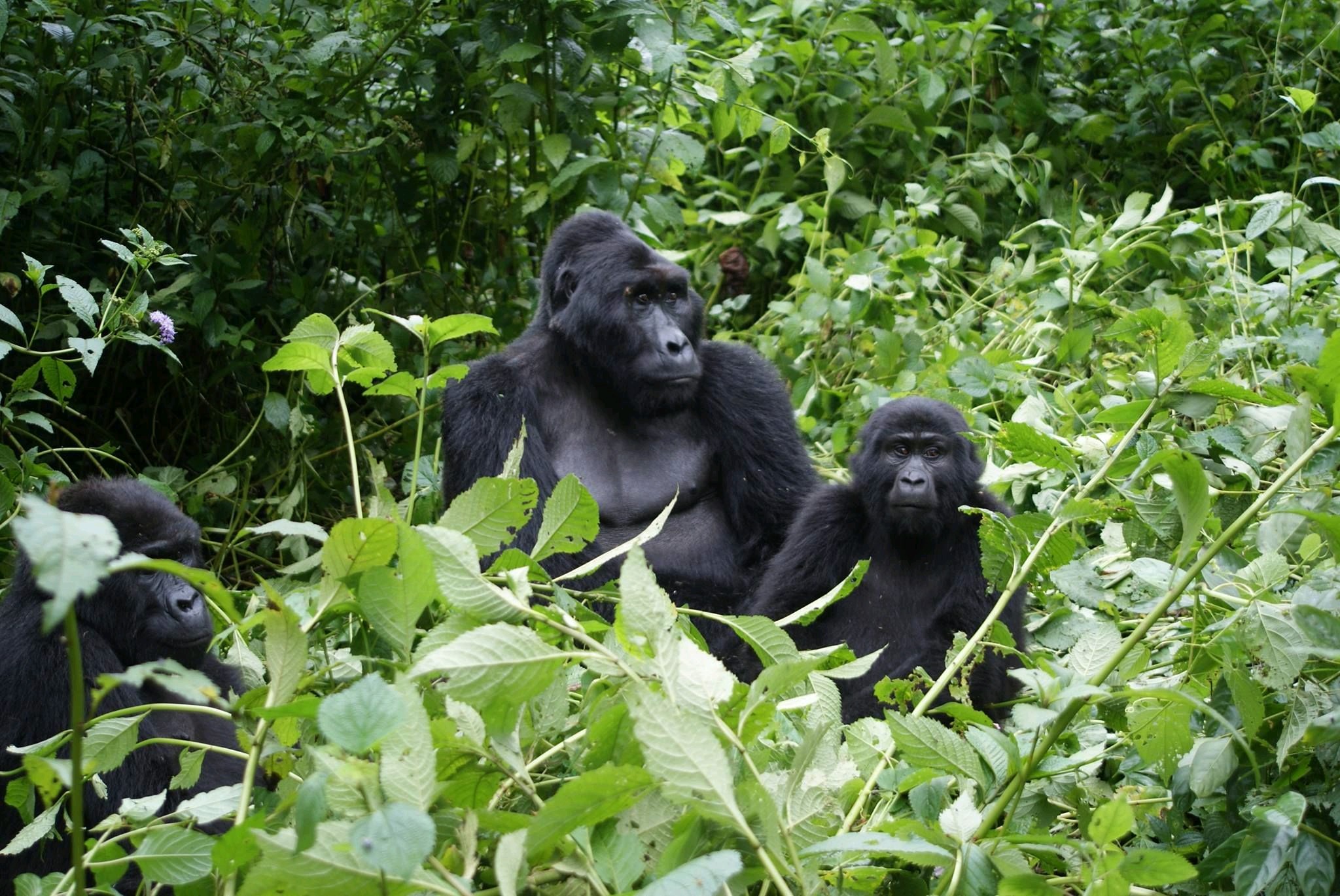
This is the pinnacle of your 12-day safari. After an early briefing at the park headquarters, you will be assigned to a gorilla family and begin your trek into the misty heights of the Virungas. Led by professional RDB rangers, you will navigate through thick bamboo and giant lobelias until you come face-to-face with a family of mountain gorillas. For one unforgettable hour, you will sit just meters away from these gentle giants. Watching a massive Silverback oversee his family while juveniles play nearby is a spiritual experience that defies description. The human-like expressions and profound peace of the forest create a memory that will stay with you forever. Returning to your luxury lodge in the afternoon, you will enjoy a celebratory lunch and perhaps a foot massage, spending the rest of the day in quiet reflection of your encounter with one of the world's most endangered species.
Day 9: Golden Monkeys & Cultural Immersion
Today you return to the forest to find the endemic Golden Monkeys. These playful, "blue-faced" primates are a joy to watch as they leap through the bamboo thickets in high-energy social groups. Their vibrant orange fur and inquisitive nature make them a favorite for photographers. In the afternoon, the focus shifts to the human heart of the region with a visit to the Iby’iwacu Cultural Village. This community-led project, run by former poachers who are now dedicated conservationists, offers a joyful celebration of Rwandan heritage. You can watch the powerful "Intore" dance, learn about traditional medicine, and even try your hand at archery or grinding grain. This interaction provides vital context, showing how the survival of the gorillas is intimately linked to the prosperity and pride of the local people living on the forest's edge.
Day 10: Dian Fossey or Mt. Bisoke Hike
Day ten offers a choice of two iconic mountain adventures. For history enthusiasts, the hike to the Dian Fossey tomb and the ruins of her Karisoke Research Center is a moving tribute to the woman who gave her life to protect these mountains. It is a beautiful, evocative trek through the hallowed ground of gorilla conservation. Alternatively, those seeking a physical challenge can summit Mount Bisoke. This dormant volcano stands at 3,711 meters and features a stunning, mist-covered crater lake at its peak. The views from the top, looking out across the Virunga chain and into the Democratic Republic of Congo, are unparalleled. Whichever path you choose, you will be surrounded by the unique Afro-alpine flora and the silent majesty of the volcanoes. The evening is spent back at your lodge, enjoying a final gourmet dinner in the mountains.
Day 11: Transfer to Akagera National Park
You will descend from the volcanic highlands and head east, crossing back through Kigali toward Akagera National Park. The landscape undergoes a dramatic transformation as the hills flatten into the broad acacia savannahs and wetlands of the eastern border. Akagera is a shining example of conservation rebirth; once depleted, it is now a thriving "Big Five" destination managed by African Parks. Upon arrival, you will check into a luxury camp, such as Magashi, which offers spectacular views over Lake Rwanyakazinga. In the late afternoon, embark on your first game drive in this revitalized wilderness. As the sun sets over the plains, you might spot herds of elephants, buffalos, or even a pride of lions beginning their nightly hunt. The change in pace and scenery provides a thrilling final chapter to your comprehensive Rwandan odyssey.
Day 12: Game Drive & Farewell
Your final day begins with an early morning game drive to catch the savannah’s predators at their most active. Search for the elusive leopard or the majestic rhinos that have been successfully reintroduced to the park. The birdlife here is also spectacular, with over 480 species recorded. After a bush breakfast, you will begin the journey back to Kigali. Your final stop is the Kigali Genocide Memorial at Gisozi—a sobering but necessary experience to understand the resilience and unity of modern Rwanda. It provides a profound bookend to your trip, illustrating why the peace and conservation you witnessed over the last 12 days are so cherished. Finally, your guide will transfer you to the airport for your departure flight. You leave with a full heart and a deep respect for the "Land of a Thousand Hills."
Essential Luxury Planning Tips
Gorilla Permits
Securing a gorilla permit is the most critical logistical step in planning your 12-day safari. In Rwanda, permits are strictly limited to just 96 per day for the entire country to ensure the protection of the mountain gorillas and their habitat. Because of this exclusivity and the global demand for "once-in-a-lifetime" wildlife encounters, it is essential to book your permits 6 to 12 months in advance, especially if you plan to travel during the peak dry seasons. As of 2026, the cost for an international visitor remains at $1,500 per permit.
This fee is more than just an entry ticket; it is a vital investment in conservation. Approximately 10% of the permit revenue is directed back into local communities to fund schools, health centers, and infrastructure, ensuring that the people living near the park are active stakeholders in the gorillas' survival. For those on a 12-day journey, there is a strategic advantage: if you spend at least two nights in other Rwandan national parks like Akagera or Nyungwe during the low season (November to May), you may be eligible for a 30% discount, bringing the permit cost down to $1,050. Regardless of when you visit, working with an experienced tour operator is the most reliable way to secure these permits, as they manage the real-time availability through the Rwanda Development Board (RDB) and ensure your trekking dates align perfectly with your broader itinerary.
Luxury Accommodation
In the foothills of the Virunga Volcanoes, luxury accommodation is defined by a blend of "East Africa-chic" design and a deep commitment to conservation. Sabyinyo Silverback Lodge is a premier choice, being Rwanda’s first community-owned lodge. It features large stone cottages with private verandas that offer cinematic views of the volcanoes. Each room is equipped with a cozy fireplace—essential for the cool mountain nights—and the lodge provides high-end services like in-room massages to soothe muscles after a day of trekking. Its close proximity to the park headquarters makes it a seamless base for early morning departures.
For travelers seeking a more intimate, boutique feel, Five Volcanoes Boutique Hotel offers a lush garden setting and a refreshing swimming pool, which is a rare and welcome luxury in the highlands. Their VIP Cottage and Deluxe rooms provide a sophisticated retreat with personalized service. Alternatively, Amakoro Songa Lodge is celebrated for its eco-friendly luxury and "Mongolian-style" interactive dining experiences. Built using local materials and powered by solar energy, it provides a tranquil, sustainable sanctuary. These properties go beyond traditional hospitality; they offer gear cleaning services (brushing the mud off your boots is a signature luxury here) and private sundowners, ensuring that your time outside the forest is as memorable as your time within it.
Transport
Navigating Rwanda’s "Thousand Hills" requires more than just a standard vehicle; it requires a high-performance 4x4 luxury Land Cruiser. While Rwanda’s main roads are excellently paved, the final stretches leading to trekking trailheads and remote luxury lodges often involve rugged, unpaved terrain that can become slippery after a tropical shower. A luxury Land Cruiser—specifically models like the V8 or the Extended LX—offers the suspension and power needed for a smooth ride, combined with interior comforts like air conditioning, charging ports, and large windows or pop-up roofs for optimal wildlife viewing in the savannah.
Hiring a vehicle with an expert driver-guide is arguably the most valuable investment for a first-timer. These guides are more than just drivers; they are logistical masters and cultural ambassadors. They handle the nuances of Rwandan traffic, navigate the misty mountain passes with ease, and manage the check-in processes at park headquarters. Their local knowledge allows them to spot birds or primates you might otherwise miss and provides a deeper layer of storytelling during the long scenic drives between parks. In 2026, a fully equipped luxury 4x4 with a professional guide typically costs between $150 and $250 per day, providing the peace of mind and flexibility that self-drive options simply cannot match in this specialized environment.
Best Time to Visit
Timing your 12-day safari correctly can significantly enhance the comfort of your experience. The Long Dry Season (June to September) is widely considered the prime window for trekking. During these months, the forest floor is at its driest, making the steep volcanic slopes much easier to navigate and reducing the risk of slipping. The thinner undergrowth also improves visibility for photography, allowing for clearer shots of the gorillas and golden monkeys. This is the peak season for tourism in Rwanda, so while the weather is at its best, the lodges and permits will be in the highest demand.
The Short Dry Season (mid-December to early February) is the second ideal window. This period often features beautiful, clear mornings and lush green landscapes that have been refreshed by the previous rains. The weather is predictable and stable, providing excellent conditions for the Big Five game drives in Akagera as well as the primate treks in Nyungwe and Volcanoes. For photographers, this "green-dry" season offers a stunning contrast of vibrant emerald vegetation against the dark volcanic rock. While rain is always a possibility in a tropical rainforest, visiting during these windows ensures that your 12-day journey is defined by the majesty of the landscapes rather than the challenges of the mud.
What's Included in a 12-Day Luxury Package
All Gorilla Permits
In a 12-day luxury package, the mountain gorilla permit is the most significant inclusion, currently priced at $1,500 per person per trek. This fee is much more than a simple entry pass; it is a high-value investment in the survival of a species. The revenue generated from these permits is used to fund the 24-hour protection of the gorilla families by dedicated rangers and trackers, as well as to support community development projects—such as schools and health clinics—surrounding Volcanoes National Park.
By including this permit in your package, your tour operator handles all the complex logistics with the Rwanda Development Board (RDB). Only 96 permits are issued daily, and they often sell out a year in advance. Having this secured within your luxury itinerary guarantees your hour with the gorillas without the stress of administrative hurdles. For travelers visiting in the low season (November to May) and staying at least two nights in Akagera or Nyungwe, operators may even leverage a 30% discount (reducing the cost to $1,050), which is typically passed on as a package saving. This permit provides you with one of the most exclusive and intimate wildlife encounters on the planet, all while directly contributing to one of Africa’s greatest conservation success stories.
Primate Trekking Permits
A truly comprehensive 12-day safari includes more than just gorillas; it features a full suite of primate encounters, including chimpanzee tracking, golden monkey tracking, and colobus monkey trekking. Each of these activities requires its own specific permit, which is bundled into your luxury package. Chimpanzee permits in Nyungwe National Park are approximately $150, while golden monkey permits in the Virungas are $100. Colobus tracking typically costs around $60.
These permits ensure that your groups remain small and that the animals’ social structures are respected. Tracking chimpanzees in the ancient rainforest of Nyungwe is a high-energy adventure, while the golden monkey trek in the bamboo forests offers a playful and vibrant contrast to the quiet dignity of the gorillas. Including all these permits in your package means you don't have to worry about daily park fees or local payments. Your operator manages the permits for the entire "Primate Circuit," allowing you to see the diversity of Rwanda’s biological heritage—from the Great Apes to the endemic monkeys of the Albertine Rift—in one seamless, well-organized journey.
Luxury Accommodation and Meals
One of the hallmarks of a 12-day luxury safari is the caliber of your accommodation. These aren't just hotels; they are world-class sanctuaries like Bisate Lodge, Singita Kwitonda, or One&Only Nyungwe House, where the service is as exceptional as the architecture. Your package includes all meals, which are typically "farm-to-table" gourmet experiences featuring local Rwandan ingredients, fresh volcanic coffee, and fine wines.
The value of luxury lodging becomes clear after a long day of trekking. These lodges offer high-touch services such as private butler care, in-room fireplaces, and specialized gear cleaning—where staff will meticulously brush the mud off your boots and have them ready for the next morning. Most luxury packages are all-inclusive, meaning you won't have to reach for your wallet for sundowner drinks, laundry services, or the various "extra" comforts that make a trip truly relaxing. This allows you to focus entirely on the landscape and the wildlife, knowing that every evening you will return to a sanctuary of privacy, comfort, and top-tier Rwandan hospitality.
Private 4x4 Vehicle and Guide
The backbone of your 12-day journey is your private 4x4 luxury Land Cruiser and your professional driver-guide. In a luxury package, you are not shared with other groups; you have a dedicated vehicle equipped with a pop-up roof for wildlife viewing, charging ports, and a fridge stocked with refreshments. This level of privacy is essential for first-timers who want the flexibility to stop for photos or adjust the pace of the day's travel.
Your guide is perhaps the most important person on your trip. These individuals are highly trained experts in Rwandan history, birdlife, and animal behavior. They act as your personal concierge, handling everything from check-ins at park headquarters to translating local customs during village visits. Having a private guide for 12 days means they get to know your specific interests—whether you're an avid photographer or a history buff—and can tailor the journey accordingly. Their expertise ensures that the long drives across the "Thousand Hills" are filled with insightful stories, and their logistical mastery ensures that you are always in the right place at the right time for your treks.
City Tour and Cultural Visits
A luxury 12-day safari balances wild encounters with a deep dive into the "human heart" of Rwanda. Your package includes a comprehensive Kigali City Tour, featuring the Kigali Genocide Memorial—an essential and moving site for understanding the nation’s resilience. You may also visit vibrant art galleries like Inema Arts or local fashion houses to see the modern side of the capital.
Beyond the city, the itinerary includes immersive cultural experiences such as the Iby’iwacu Cultural Village (Gorilla Guardians Village) near Volcanoes National Park. Here, your entry fees are already covered, allowing you to enjoy traditional Intore dancing and learn about ancient medicinal practices without any transactional stress. You may also visit coffee cooperatives at Lake Kivu or local tea plantations in Nyungwe. Including these activities ensures a holistic experience where you aren't just a spectator of wildlife, but a guest of the Rwandan people. It provides the necessary context to understand how the country’s community-centered conservation model has allowed both people and primates to thrive together in the 21st century.
1. When is the best time to book?
The timing of your booking is just as critical as the timing of your travel. To secure a 12-day luxury Rwanda safari, you should ideally book 6 to 12 months in advance. This lead time is essential because Rwanda operates on a "low-volume, high-value" model. With only 96 gorilla permits issued daily for the entire country and a limited number of villas at ultra-luxury lodges like Bisate or Singita Kwitonda, the most sought-after dates during the dry seasons sell out rapidly.
The best windows for travel are the Long Dry Season (June to September) and the Short Dry Season (December to February). During these months, the forest trails are firmer, making the sometimes-strenuous trekking more manageable and significantly safer. The humidity is lower, and the lack of rain means that wildlife—particularly in Akagera National Park—is easier to spot as animals congregate around permanent water sources. While Rwanda is beautiful year-round, these dry windows provide the "golden light" that photographers crave and the comfortable hiking conditions that first-time trekkers appreciate. Booking early ensures you don't have to compromise on your preferred lodges or settle for less-ideal trekking dates.
2. What are the top luxury accommodations?
A 12-day luxury safari in Rwanda is defined by its accommodation, which ranks among the most exclusive in the world. Singita Kwitonda Lodge, set on 178 acres right on the edge of Volcanoes National Park, offers eight suites that feel like private sanctuaries, each with a heated plunge pool and indoor/outdoor fireplaces. Similarly, Bisate Lodge is famous for its iconic, nest-like forest villas that offer cinematic views of the Bisoke and Karisimbi volcanoes. These lodges provide "high-touch" service, including private butlers and professional gear cleaning.
In the south, One&Only Nyungwe House is situated on a working tea plantation, offering a dramatic contrast with its dark wood interiors and infinity pool overlooking the ancient rainforest canopy. Near the park’s northern entrance, One&Only Gorilla’s Nest provides a whimsical, jungle-chic atmosphere surrounded by eucalyptus trees. These properties are not just hotels; they are immersive conservation hubs where your stay directly funds reforestation and community upliftment. For a first-timer, these lodges offer a "soft landing," providing world-class amenities, gourmet farm-to-table cuisine, and a secure, serene environment to process the profound wildlife encounters of the day.
3. What does a typical itinerary include?
A well-balanced 12-day luxury itinerary is designed to be a "Full Circle" journey, covering Rwanda’s diverse ecosystems without the fatigue of a rushed schedule. It typically begins in Kigali, allowing for a stay at a premier hotel and a visit to the Kigali Genocide Memorial. The journey then heads east to Akagera National Park for a Big Five savannah safari and boat cruises on Lake Ihema. This provides a classic African wilderness experience before moving into the high-altitude forests.
The middle of the trip focuses on the southwest in Nyungwe National Park, where the agenda includes chimpanzee tracking and the famous canopy walk. To ensure the trip remains a "vacation," two nights are usually spent relaxing by Lake Kivu, where you can enjoy private boat trips and coffee plantation visits. The grand finale takes place in Volcanoes National Park for mountain gorilla trekking and golden monkey tracking. This logical loop minimizes driving time and allows you to experience the three distinct biomes of Rwanda—savannah, rainforest, and volcanic massif—all while staying in the country's most prestigious lodges.
4. How much should I budget?
Budgeting for a 12-day luxury Rwanda safari requires an understanding of its "high-value" tourism model. For a truly high-end experience in 2026, you should budget between $15,000 and $25,000 per person. The most significant fixed cost is the $1,500 gorilla permit per person per trek. If you choose to do a second trek or include chimpanzee and golden monkey permits, these fees add up quickly but are essential for the core experience.
The remainder of the budget covers ultra-luxury lodging, which can range from $1,500 to $4,000 per night during peak season. This usually includes all gourmet meals, premium drinks, and private guiding. Private 4x4 transport or helicopter transfers also influence the cost; while a luxury Land Cruiser is standard, a helicopter between parks can add several thousand dollars but saves hours of driving. While the price point is high, it reflects a commitment to exclusivity, privacy, and conservation. Most luxury packages are "all-inclusive," meaning once you land, you rarely need to reach for your wallet, allowing you to focus entirely on the transformative nature of the safari.
5. How do I secure gorilla permits?
Securing permits is the most technical part of the planning process. Because only 96 permits are issued per day, they are strictly controlled by the Rwanda Development Board (RDB). For a 12-day luxury safari, the most reliable method is to book through a reputable tour operator who has a direct link to the RDB reservation system. Operators can see real-time availability and can "hold" permits while the rest of your luxury itinerary is being finalized.
It is highly recommended to secure these 4 to 6 months in advance, especially for travel in July, August, or December. You will need to provide a copy of your passport, as permits are non-transferable and tied to your identity. In 2026, there are also conservation incentives: if you spend at least two nights in other Rwandan parks (Akagera and Nyungwe) during the low season months of November or May, you may qualify for a 30% discount on the permit price. Your operator will manage these nuances, ensuring that your permit dates perfectly align with your lodge bookings, providing a seamless logistical experience.
6. What is the best way to travel between destinations?
While Rwanda’s roads are among the best in Africa, a 12-day luxury safari often prioritizes private helicopter transfers. Companies like Akagera Aviation provide "flight-hopping" services between Kigali, Nyungwe, and Volcanoes National Park. A flight that takes 30 to 45 minutes by helicopter would otherwise take 5 to 6 hours by road. This maximizes your "residence time" at the lodges, allowing you to enjoy a leisurely breakfast or an extra spa treatment instead of being in transit.
For those who prefer the scenic route, a private 4x4 luxury Land Cruiser remains the standard. These vehicles are modified for maximum comfort with reclining seats, air conditioning, and large windows. Driving through the "Land of a Thousand Hills" is incredibly beautiful and offers a closer look at the vibrant local life and terraced agriculture. Many travelers choose a "hybrid" approach: driving the scenic sections, such as the Congo Nile Trail along Lake Kivu, and taking a helicopter for the longer legs back to Kigali. This ensures you see the country’s beauty without the physical toll of long driving days.
7. Can I combine it with other countries?
Yes, combining Rwanda with neighboring East African destinations is a popular way to extend a 12-day safari into a "Great Migration" odyssey. The most common combination is with Kenya or Tanzania. After completing your primate treks in Rwanda, a short regional flight can take you to the Masai Mara or the Serengeti for a classic savannah safari. This allows you to experience the two different styles of African travel: the intimate, trekking-based safari of Rwanda and the vast, vehicle-based herds of the plains.
Another frequent combination is with Uganda. While Rwanda offers a higher-end, more polished infrastructure, Uganda offers a "wilder" experience and the chance to see gorillas in Bwindi Impenetrable Forest. Some travelers do one trek in each country to compare the different habitats. For those seeking relaxation after their 12-day adventure, a direct flight from Kigali to the beaches of Zanzibar or the Seychelles is an excellent way to end the trip. Using the East African Tourist Visa makes these cross-border combinations seamless, as it allows multiple entries between Rwanda, Uganda, and Kenya on a single $100 permit.
8. What should I pack?
Packing for a 12-day luxury safari requires a balance of "safari-chic" for the lodges and functional "expedition-wear" for the forest. For trekking, you need sturdy, waterproof hiking boots with good ankle support. Long-sleeved shirts and trousers are essential to protect against stinging nettles and insects. A unique but vital item is a pair of gardening gloves; these allow you to grab onto branches or vines for balance without worrying about thorns.
Layering is key, as temperatures can shift from a humid 25°C in the savannah to a crisp 10°C in the volcanic highlands. Pack neutral-colored (khaki, tan, or green) breathable fabrics, but avoid camouflage patterns, which are reserved for the military. A high-quality, lightweight raincoat is mandatory, as showers can occur at any time in the rainforest. Most luxury lodges offer daily laundry services, so you don't need to over-pack. Finally, don't forget high-SPF sunscreen, a wide-brimmed hat, and a good pair of binoculars. For photography, bring extra memory cards and a weather-sealed camera bag to protect your gear from the mist and occasional rain.
9. Are there age limits for trekking?
Yes, there is a strict minimum age limit of 15 years old for gorilla trekking in Rwanda. This rule is enforced by the Rwanda Development Board and is in place for several reasons. Primarily, it is a conservation and safety measure; younger children may not have the immune system maturity to prevent the transmission of childhood diseases to the gorillas, who share 98% of our DNA. Additionally, the trekking can be physically demanding and requires a level of discipline to remain calm and quiet when face-to-face with a 400-pound Silverback.
For families traveling with younger children, a 12-day luxury safari can still be rewarding. Many top-tier lodges offer specialized "Junior Ranger" programs or childcare services while the adults are trekking. Children can participate in cultural visits, gentler nature walks outside the park boundaries, and educational activities at the lodge. It is important to have a copy of each traveler’s passport ready when booking, as age is verified at the time of permit issuance and again at the park headquarters on the morning of the trek.
10. What kind of private transport is used?
The standard for a luxury 12-day road safari is a customized 4x4 Land Cruiser. These vehicles are specifically designed for the African terrain, featuring reinforced suspension and extended bodies for extra legroom. In a luxury package, these vehicles are usually limited to just two or four passengers to ensure everyone has a "window seat." They come equipped with a pop-up roof for 360-degree viewing in Akagera, a fridge stocked with chilled water and snacks, and charging ports for your cameras and phones.
Beyond the vehicle, the most important "feature" is your private guide. These professionals are the backbone of your journey. They serve as your driver, wildlife spotter, and cultural interpreter. A private guide allows for total flexibility—if you want to spend an extra hour photographing a rare bird or stop at a local market, you can. In 2026, many luxury vehicles also feature onboard Wi-Fi, allowing you to stay connected as you traverse the hills. This combination of a rugged, high-comfort vehicle and an expert guide ensures that the transitions between Rwanda's diverse parks are as enjoyable as the destinations themselves.
11. What is the benefit of a private guide?
A private guide is the difference between a standard tour and a truly bespoke 12-day luxury experience. From the moment you land, your guide becomes your personal concierge. They handle all the heavy lifting—from managing check-ins at the lodges to coordinating with park rangers at the crack of dawn. This allows you to focus entirely on the experience without worrying about the logistics of navigating a foreign country.
Educationally, a private guide offers a depth of insight that a guidebook cannot provide. They can explain the nuances of Rwandan history, the intricacies of social behavior in a gorilla troop, or the names of the hundreds of bird species you’ll encounter in Nyungwe. More importantly, they provide a tailored pace. If you are feeling tired after a long trek, they can adjust the afternoon's activities for more relaxation. If you are a photography enthusiast, they will position the vehicle to get the best light. This one-on-one attention ensures that your 12-day journey is perfectly aligned with your personal interests, fitness level, and curiosity, creating a much more intimate connection with the destination.
12. How does it support conservation?
The luxury tourism model in Rwanda is a global benchmark for sustainable conservation. By intentionally pricing permits and lodging at a premium, Rwanda limits the number of visitors, thereby reducing the "human footprint" on fragile ecosystems. Every person who embarks on a 12-day luxury safari is directly contributing to the survival of the mountain gorillas. A significant portion of the $1,500 permit fee goes directly toward the salaries of the rangers and trackers who protect the families 24/7.
Furthermore, 10% of all tourism revenue is shared with the local communities living adjacent to the parks. Over the last decade, this has funded over 700 projects, including schools, clean water systems, and local businesses. This "Revenue Sharing Program" is the reason poaching has drastically declined; the local people now see the gorillas and the forest as their greatest economic assets. Luxury lodges also play a role, often engaging in massive reforestation projects—like the 250,000 trees planted around Bisate Lodge—and hiring the vast majority of their staff from neighboring villages. Your luxury holiday is, in essence, a philanthropic act that ensures Rwanda’s wildlife will endure for generations.
13. What is the visa process?
Rwanda has one of the most traveler-friendly visa policies in Africa. For many nationalities, including citizens of the US, UK, and most EU countries, a 30-day visa is available on arrival for a fee (typically $50). You can also apply in advance via the Irembo platform, which is Rwanda’s official e-government portal. The process is straightforward and usually takes only a few days for approval.
If your 12-day luxury safari includes visits to Kenya or Uganda, you should apply for the East African Tourist Visa. This is a joint visa that costs $100 and allows for multiple entries between the three countries. It must be applied for through the embassy or e-visa portal of the country that is your first point of entry. Regardless of which visa you choose, ensure your passport is valid for at least six months beyond your departure date and has at least two blank pages. Having these documents in order before you land ensures a seamless "soft landing" into the Kigali International Airport, where the immigration process is known for being remarkably efficient and welcoming.
14. Are there any health precautions?
While Rwanda is a safe and healthy destination, a few standard precautions are necessary for a 12-day safari. Anti-malarial medication is highly recommended, as the lower-altitude areas like Akagera are in malaria zones. It is also advised to use high-quality insect repellent and wear long sleeves during evening game drives to protect against mosquitoes and tsetse flies. While most luxury lodges provide safe, filtered water, it is best to stick to bottled or treated water throughout your stay.
Regarding vaccinations, a Yellow Fever certificate is required if you are traveling from a country with a risk of transmission. It is also wise to ensure your routine vaccinations (Tetanus, Polio, Hepatitis A) are up to date. Given that trekking occurs at high altitudes, it is important to stay hydrated and move at a steady pace to avoid altitude sickness. Finally, ensure your travel insurance is comprehensive; it should specifically cover medical evacuation and high-altitude trekking. In 2026, Rwanda's private medical facilities in Kigali are excellent, but having the right insurance provides peace of mind when you are in the more remote reaches of the volcanic highlands.
15. What cultural experiences are included?
A 12-day luxury safari provides the time necessary to move beyond the wildlife and connect with the soul of Rwanda. A complete itinerary includes a visit to the Iby’iwacu Cultural Village (the Gorilla Guardians Village) near Volcanoes National Park. This center is run by former poachers who are now dedicated conservationists. Here, you can witness traditional Intore dancing—a powerful, rhythmic performance that was historically used to celebrate returning warriors—and learn about ancient medicinal practices.
In Kigali, the cultural experience is more contemporary. You might explore the Nyamirambo Women’s Center, which offers walking tours of the city's oldest neighborhood and provides vocational training for local women. You can also visit the Inema Arts Center to see the thriving modern art scene or a high-end coffee cooperative at Lake Kivu to see how the "crop to cup" process supports local farmers. These interactions provide the human context for the conservation success you see in the parks. They illustrate the resilience of the Rwandan people and their commitment to a unified, prosperous future, ensuring that your memories of the trip are as much about the people as they are about the primates.
Booking 12 Days luxury Rwanda safari with us Roads of Adventure safaris
Booking a 12-day luxury Rwanda safari with Roads of Adventure Safaris offers tailor-made, high-end primate trekking and wildlife experiences. Packages, including Gorilla trekking in Volcanoes National Park and wildlife viewing in Akagera, feature private 4x4 transport, luxury lodging, and expert guides. A 30% deposit is required to secure bookings, which should be made 6–12 months in advance
