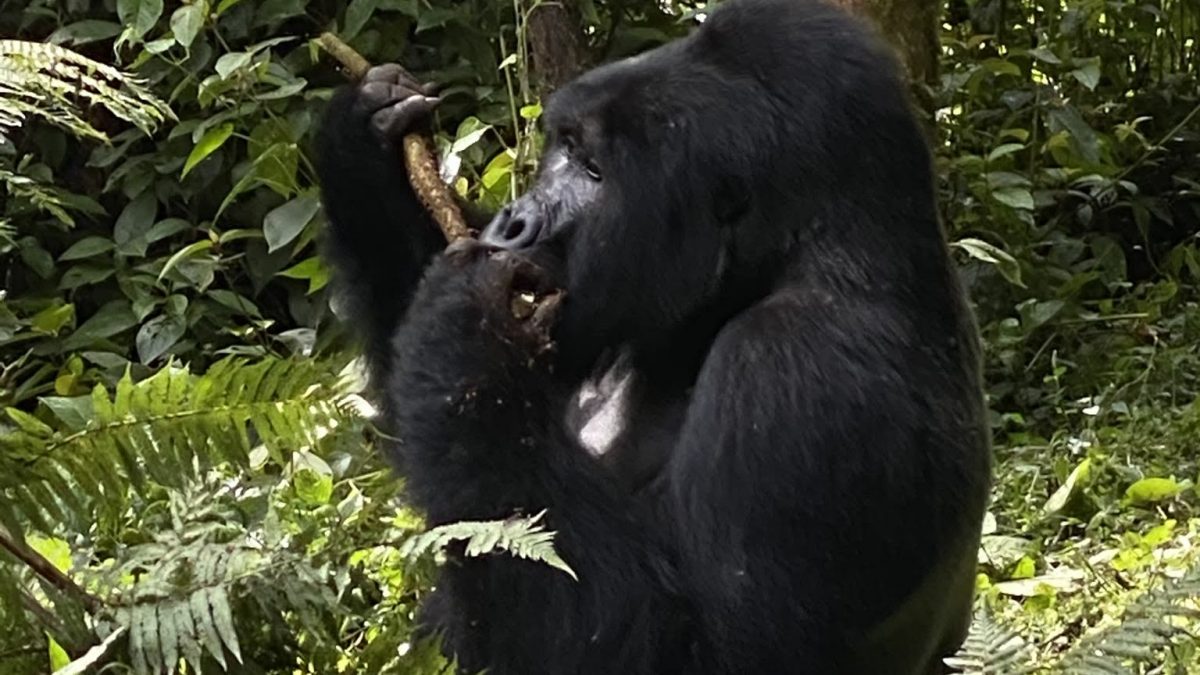
To lower costs on a 2-day Uganda gorilla trek from Kigali, select Uganda over Rwanda to save on permit fees ($800 vs. $1,500), travel during low seasons (April-May/Oct-Nov) for reduced accommodation rates, and join a group tour to share transport costs. Bookbudget accommodation, such as Bwindi Community Rest Camp or Ruhija Gorilla Friends Resort, and cross via the Cyanika or Katuna border.
2-days-best-gorilla-trekking-safari-tour-via-kigali-to-bwindi-impenetrable-forest-park
2-days-quick-escape-to-bwindi-impenetrable-to-trek-mountain-gorilla-from-kigali
Strategic Destination Choice: Choose Uganda
For travelers based in Kigali, the most effective way to reduce the cost of a gorilla safari is to cross the border into Uganda. While Rwanda’s Volcanoes National Park is geographically closer to the capital, its gorilla permits are priced at a premium of $1,500. In contrast, a permit for Uganda’s Bwindi Impenetrable or Mgahinga National Parks costs $800. By opting for the Ugandan side, you immediately save $700 per person on the permit alone—a difference that can often cover the entire cost of your transport, lodging, and meals for the two-day trip.
Even when you factor in the $100 East African Tourist Visa (which allows multiple entries between Rwanda and Uganda) and the additional fuel for the 4-hour drive to the border, the total savings remain substantial. This strategy is particularly popular for budget-conscious adventurers and small groups. Furthermore, the southern sectors of Bwindi (Rushaga and Nkuringo) are specifically optimized for access from Kigali via the Cyanika border, making the transit surprisingly efficient. You essentially trade a few extra hours of scenic driving for a nearly 50% reduction in the single most expensive component of a gorilla safari, without sacrificing the quality or intimacy of the one-hour encounter with the primates.
Timing Your Trip: Travel During Low Season
Timing is a powerful lever for cost-saving in the East African tourism industry. Rwanda and Uganda experience two rainy seasons, typically in April, May, and November. During these months, many luxury and mid-range lodges see a drop in occupancy and respond by offering "Low Season" or "Green Season" rates. These discounts can range from 20% to 40% off standard peak-season prices. If you are willing to navigate slightly muddier trails and carry high-quality rain gear, you can stay in high-end accommodations that might otherwise be outside your budget.
Beyond lodging, the low season offers a more "exclusive" feel. With fewer tourists on the trails, the park headquarters are less crowded, and you may find yourself in a smaller trekking group. While the rain can make the 3–7 hour hike more challenging, the forest is at its most vibrant and lush, providing spectacular emerald backdrops for photography. Additionally, because demand for permits is lower, you have a much higher chance of securing a permit for your preferred sector on short notice. For the 2-day traveler from Kigali, this seasonal strategy allows for a high-value experience at a fraction of the cost, provided you come prepared for the equatorial rain.
Logistical Efficiency: Join Group Tours
Transport is the second largest expense on a 2-day safari, as the 4-5 hour drive from Kigali to Bwindi requires a sturdy 4x4 vehicle, a professional driver-guide, and significant fuel. For a solo traveler or a couple, the cost of a private vehicle can be prohibitive. The most effective solution is to join a scheduled group tour through a local operator. By sharing the vehicle and the guide’s fees with four to six other travelers, you can slash your transport costs by more than half.
Many operators in Kigali specialize in these "Express Gorilla Treks," departing on set dates. These tours are designed for efficiency, ensuring everyone arrives at the border and the park briefing on time. Beyond the financial savings, group tours provide a social element, allowing you to share the anticipation and the post-trek excitement with like-minded travelers. It also simplifies the planning process, as the operator handles the permit procurement and lodging bookings as a package. For those on a tight budget, the "group-share" model transforms a high-end expedition into an affordable 48-hour adventure.
Lodging Selection: Budget Accommodation
The southern sectors of Bwindi have a well-developed range of budget-friendly accommodations that offer cleanliness and hospitality without the luxury price tag. Sites like Bwindi Community Rest Camp (in Buhoma), Ruhija Gorilla Friends Resort, and Bwindi Nshongi Camp (in Rushaga) are excellent choices for the 2-day traveler. Many of these camps are community-owned or operated, meaning your stay directly supports the local people living on the forest boundary.
These budget options typically offer "lazy camping" (permanent tents with beds) or simple wooden bandas. While you might trade a private plunge pool for a shared or basic en-suite bathroom, these lodges are often located right at the edge of the forest, providing the same morning mist and birdcalls as their luxury neighbors. Staying at a budget camp reduces your nightly rate to a fraction of the cost of a high-end lodge, often between $50 and $100 per night. For a 2-day trip where you spend most of your time in a vehicle or on a trail, a simple, warm bed and a hot meal are often all you truly need to enjoy the experience.
Expense Management: Avoid Hidden Costs
A 2-day trip can quickly become expensive due to "itinerary creep"—the addition of extra activities and forgotten gear. To keep costs low, it is essential to pack your own hiking gear. Renting boots, rain jackets, or gaiters at the park can add unnecessary fees. By bringing your own well-broken-in boots and waterproofs, you save money and ensure your own comfort on the steep trails. Additionally, skip optional extras like bird-watching tours, community walks, or batwa trail visits if your primary goal is the gorillas. While these are wonderful experiences, they come with separate fees and can be saved for a longer, more comprehensive trip.
Another way to avoid hidden costs is to be disciplined with your "incidental" spending. Carry your own reusable water bottle to avoid buying plastic bottles, and pack a few high-energy snacks from a supermarket in Kigali before you depart. While tipping rangers and porters is a standard and recommended practice, being prepared with the correct amount of cash avoids the "emergency" high-fee ATM withdrawals or unfavorable exchange rates at the border. By focusing strictly on the trek and being self-sufficient with your gear, you ensure that your 2-day budget remains predictable and controlled.
Time vs. Money: Avoid Public Transport
While public buses (Matatus) are the cheapest way to travel between Kigali and the border, they are the least recommended for a 2-day gorilla safari. Public transport in the region does not follow a strict "tourist" timetable; buses wait to fill up, stop frequently, and often terminate in town centers far from the park gates. Relying on public transport poses a high risk of missing the 7:00 AM mandatory briefing at the park headquarters. If you miss the briefing, you may forfeit your $800 permit entirely, as the groups depart shortly after.
Furthermore, the "last mile" from the border or Kisoro town to the Bwindi park gates is on rough mountain roads where public transport is non-existent. You would be forced to hire an expensive private "special hire" taxi or a boda-boda (motorcycle taxi), which can be dangerous and muddy. The time lost in transit and the stress of navigating border crossings on foot can ruin the experience. For a 2-day trip, your time is your most valuable asset. Investing in a pre-arranged tour or a private vehicle is a "preventative" saving—it ensures you don't lose the massive investment of your permit due to a logistical delay.
2 Days budget Uganda Gorilla trekking from Rwanda Kigali
The 2-Day Budget Uganda Gorilla Trekking from Kigali is a masterfully designed "express" safari for travelers who prioritize value without sacrificing the awe-inspiring nature of the encounter. By utilizing Kigali as your gateway, you take advantage of shorter transit times to the southern sectors of Bwindi Impenetrable National Park while benefiting from Uganda’s significantly more affordable $800 trekking permit. This logistical shortcut saves you $700 compared to Rwandan permits, making the dream of standing feet away from a silverback accessible to a wider range of adventurers. The journey transitions from the clean, rolling streets of Kigali into the rugged, emerald-green highlands of the Kigezi region. Within just 48 hours, you will navigate international borders, climb through ancient rainforests, and secure a life-changing wildlife connection. It is the ultimate "high-impact" itinerary, proving that the world’s most profound wildlife experience can be both time-efficient and budget-conscious.
Day 1: Kigali to the Bwindi Highlands
Your budget adventure begins with an early morning pickup in Kigali, heading north toward the Ugandan border. The drive is a scenic traverse through Rwanda’s terraced hills, offering a window into rural life. After crossing at the Cyanika border—the fastest route to the southern Bwindi sectors—you enter the rugged highlands of Uganda. You’ll check into a budget-friendly eco-camp or community-run lodge in the Rushaga or Nkuringo sector. These lodges offer clean, basic comfort and hot meals right at the forest's edge, keeping costs low while maximizing the "jungle" atmosphere. The afternoon is yours to rest or take a walk through the local village, acclimatizing to the high altitude. As night falls, the sounds of the "Impenetrable Forest" set a thrilling stage for tomorrow’s trek into the ancient, misty depths of the mountains.
Day 2: The Gorilla Trek and Return to Kigali
The day begins at 7:00 AM with a mandatory briefing at the park headquarters. You’ll be assigned to a gorilla family and, accompanied by expert rangers and trackers, plunge into the dense rainforest. The hike can be physically demanding, navigating steep ridges and thick vines, but the moment you lock eyes with a silverback, all effort is forgotten. You spend one "Magic Hour" observing the troop's human-like social interactions in their natural home. After the trek, you’ll receive your completion certificate and enjoy a quick packed lunch before beginning the return journey. Crossing back into Rwanda, you’ll wind down the hills toward Kigali, arriving by late evening for your flight or hotel drop-off. You leave with an extra stamp in your passport and a soul full of the raw, untamed spirit of Africa’s great apes.
Why choose Uganda from Kigali to save money?
The primary driver behind choosing Uganda when starting in Kigali is the stark difference in conservation pricing. A mountain gorilla permit in Rwanda’s Volcanoes National Park is priced at $1,500, regardless of the season. In contrast, a permit in Uganda costs $800. By simply crossing the land border, you instantly save $700 per person. When you consider that a 2-day budget safari from Kigali often costs between $1,100 and $1,300 inclusive of the permit, transport, and lodging, the $700 saving essentially pays for the entire logistical portion of your trip. Furthermore, the southern sectors of Bwindi (Rushaga and Nkuringo) are geographically closer to Kigali than they are to Uganda’s own capital, Entebbe. This means you can leverage Rwanda’s superior road infrastructure to reach a more affordable trekking destination in less time.
Is it cheaper to fly or drive?
Driving from Kigali to the Ugandan border is exponentially cheaper than any aerial alternative. A private 4x4 transfer from Kigali to Bwindi typically costs between $250 and $400 (shared among passengers), whereas a scheduled domestic flight within Uganda from Entebbe to Kisoro can cost upwards of $500 per person for a round trip. Furthermore, flying into Bwindi from within Uganda necessitates an international flight into Entebbe first, which is often more expensive than flying into Kigali. By driving from Kigali, you eliminate the need for costly bush flights and multiple airport transfers. The 4-hour drive is not only a massive cost-saver but also a scenic journey through the "Land of a Thousand Hills," providing a level of cultural immersion that a flight simply cannot offer.
When is the cheapest time for budget gorilla trekking?
The most budget-friendly windows are the rainy seasons, specifically April, May, and November. During these "off-peak" months, the demand for gorilla trekking drops significantly. To maintain occupancy, many mid-range and luxury lodges slash their rates by 30% to 50%. While the permits themselves remain at the $800 price point, the cumulative savings on accommodation and vehicle rentals can be substantial. For a budget traveler, this is the "sweet spot" where you can stay in a high-quality lodge for the price of a budget camp. While you must be prepared for rain and muddier trails, the forest is at its most lush, and the smaller trekking groups often result in a more intimate and personalized experience with the rangers and gorillas.
How do I secure a cheap Uganda permit?
Securing a permit at the base price of $800 requires booking 3 to 6 months in advance. While the price is fixed by the Uganda Wildlife Authority (UWA), the "cost" of a permit increases if you wait too long and are forced to rearrange your entire itinerary around the few remaining dates or sectors. Booking early allows you to select the Rushaga or Nkuringo sectors, which are the closest to the Rwanda border, thereby saving you money on fuel and transit time. While you can attempt to book directly through UWA, using a local operator is often more efficient. They do not typically charge a "premium" for the permit itself but rather bundle it into a package where they have already negotiated lower rates for transport and lodging, ensuring you don't overpay for the peripheral costs of the trek.
Are low-season permits cheaper in Uganda?
Historically, the Uganda Wildlife Authority offered discounted permits during the low season to stimulate tourism. However, in recent years, Uganda has moved toward a uniform $800 price point for foreign non-residents throughout the year. While the permits themselves are no longer seasonally discounted, the "total trip cost" is significantly lower during these months due to the aforementioned drops in lodge pricing. It is important to stay updated on UWA announcements, as promotional rates are occasionally reintroduced during special conservation milestones or tourism expos. For the modern budget traveler, the "discount" is found not in the permit office, but in the negotiation with lodges and transport providers who are eager for business during the wetter months.
How to cut transportation costs?
The most effective way to slash transport costs is to join a group tour. The cost of a 4x4 vehicle, fuel, and a professional driver-guide for the 2-day trip from Kigali is a "fixed cost"—it remains the same whether there is one person in the car or six. By joining a group, you divide this $300–$500 expense among multiple people, bringing your individual transport cost down to as little as $80. Many operators in Kigali run weekly "express" departures specifically for this purpose. If a group tour isn't available, consider traveling with a friend; the "per person" cost of a 2-day safari drops significantly when the vehicle and room costs are split between two people, making a private duo-safari much more affordable than a solo expedition.
Is hiring a private safari car cheaper?
Hiring a private 4x4 is generally more expensive for a solo traveler but becomes cost-effective for a group of three or more. If you are a solo traveler, a private car is the least economical option. However, for a small family or a group of friends, a private hire provides the best value as it offers flexibility and intimacy at a shared price point. The "hidden" cost of a private car is the driver-guide’s daily fee and their accommodation, which is usually included in the rental price. To save money, ensure you are booking a local Ugandan or Rwandan operator directly rather than through an international travel agent, as the latter will add a 15–25% commission on top of the actual vehicle and fuel costs.
Do I need a 4x4 vehicle?
While the main roads from Kigali to the border are paved and in excellent condition, a 4x4 vehicle is a mechanical necessity for the final leg of the journey into Bwindi. The roads leading to the park gates are unpaved, steep, and can become extremely slippery after a downpour. Attempting to save money by using a 2WD vehicle is a "false economy," as you risk getting stuck or failing to reach the 7:00 AM briefing on time, which would result in the forfeiture of your $800 permit. To save money while still using a 4x4, look for operators who use well-maintained older models or smaller 4x4s like a Toyota RAV4 (if traveling light) rather than the high-end, extended Land Cruisers, which have much higher daily rental and fuel costs.
Should I choose a budget lodge?
Absolutely. Choosing a budget lodge is the most significant way to reduce your 2-day expenses after the permit saving. In the southern Bwindi sectors, budget lodges like Nshongi Camp or Rushaga Gorilla Camp (in their standard rooms) offer clean, safe, and hospitable accommodation for $50 to $80 per night, compared to luxury lodges that can cost $600+. Since a 2-day itinerary is focused almost entirely on the trek and the transit, you will likely only spend about 10 to 12 hours in your room, most of which will be spent sleeping. A budget lodge provides exactly what you need—a warm bed, a hot shower, and a hearty meal—without the unnecessary overhead of luxury amenities that you won't have the time to enjoy.
How to get discounted accommodation?
The best way to secure discounted rates is through direct booking and negotiation, especially if you are traveling outside of the peak months of July and August. Reach out to mid-range lodges directly via email or WhatsApp and ask for their "resident" or "last-minute" rates. Many lodges would rather fill a room at a 30% discount than have it sit empty. Another tactic is to look for "All-Inclusive" budget packages offered by local operators. These operators often have "block-booked" rooms at specific lodges at rates that are much lower than what is available to the general public on sites like Booking.com or Expedia. By leveraging their local relationships, you can often stay in a mid-range lodge for a budget price.
How to minimize meals and food costs?
To minimize food costs, pack a "safari snack kit" in Kigali before you depart. High-energy snacks like nuts, dried fruit, chocolate, and energy bars are essential for the trek but are often overpriced in lodge gift shops or remote village stalls. Additionally, ensure your lodge booking is at least on a "Half-Board" (breakfast and dinner) basis. Most lodges include a packed lunch for the trek as part of their service, but it’s worth confirming this in advance. Bringing your own large 1.5L water bottles from a Kigali supermarket will also save you several dollars compared to buying them at the lodge. These small savings on incidentals can easily add up to $40–$50 over the 2-day period—roughly the cost of your tips for the trackers and rangers.
Why use a local Ugandan operator?
Using a local Ugandan operator for a 2-day trip is almost always cheaper than booking through an international agency or a large Rwanda-based luxury firm. Local operators have lower overhead costs and direct "boots on the ground." They pay local prices for fuel, maintenance, and staff, and they pass those savings on to the traveler. Furthermore, a Ugandan operator will have a more intimate knowledge of the Bwindi sectors and can often advise on which lodges currently offer the best value or which gorilla families are currently easier to reach. By cutting out the "middleman" of an international agency, you can save between 15% and 30% on the total cost of your tour package.
Can I book the permit myself?
Yes, it is possible to book a permit directly through the Uganda Wildlife Authority (UWA), but for a 2-day trip, it is often more trouble than it is worth. Booking yourself requires navigating international bank transfers and coordinating the physical collection of the permit in Kampala or at the park gates. If there is a delay or a clerical error, you have no local representative to resolve it. Most local operators will secure your permit as part of a package for a very small administrative fee (or no fee at all if you book transport with them). Given the $800 investment, the security of having an agent handle the permit is worth the nominal fee, as it ensures everything is ready the moment you arrive at the briefing.
Should I tip porters and guides?
While a budget traveler may be tempted to skip tipping to save money, it is highly discouraged. Tipping is a cornerstone of the conservation economy in Bwindi. The rangers, trackers, and porters are the frontline protectors of the gorillas; many porters are former poachers who now rely on these tips to support their families. A standard tip is $10–$15 for the main guide and $5–$10 for the trackers and rangers (per group). If you hire a porter (highly recommended for $20), an additional tip of $5 is appreciated. These "hidden costs" should be factored into your budget from the beginning. Tipping is not just a gesture of gratitude; it is a direct investment in the local community that ensures they continue to value the gorillas more alive than dead.
Does a 2-day trip save money?
A 2-day trip is the most cost-effective way to see mountain gorillas because it minimizes the "daily burn" of safari costs. On a longer 4- or 5-day trip, you are paying for additional nights of lodging, more meals, and more days of vehicle and driver hire. For many, the gorilla trek is the primary objective of their visit to the region. By condensing the trip into 48 hours—driving from Kigali on Day 1 and returning on Day 2—you focus your budget entirely on the trek itself. This "express" model allows you to experience a world-class wildlife encounter without the financial bloat of a longer itinerary, making it the ideal choice for business travelers in Kigali or backpackers on a strict budget.
Booking 2 days budget Uganda gorilla trekking from Kigali with us Rods of adventure safaris
A 2-day budget Uganda gorilla trek from Kigali with Roads of Adventure Safaris is a fast-paced, cost-effective trip involving a ~4-hour drive to Bwindi or Mgahinga, bypassing the long 10-hour drive from Entebbe. The trip requires a US$800 gorilla permit, 4x4 transport, and budget lodge accommodation
