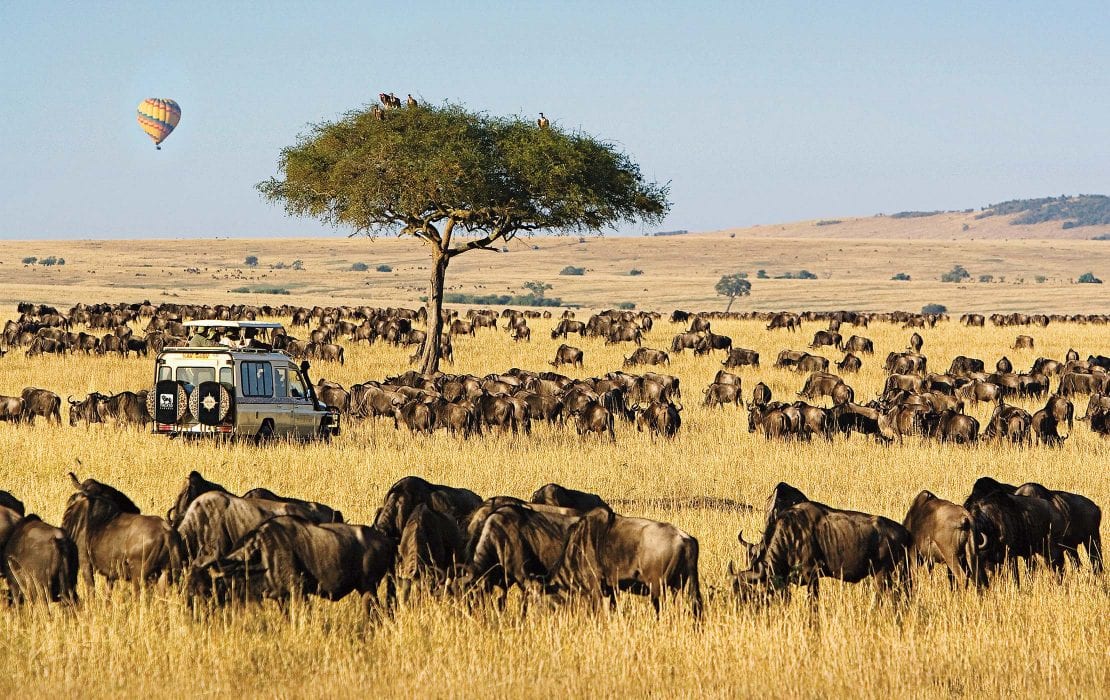
Combining Kenya and Tanzania's best safari parks is best achieved by focusing on the Serengeti-Mara ecosystem, typically over 10–14 days. The most efficient route links Masai Mara (Kenya) with Serengeti and Ngorongoro (Tanzania) via road or cross-border flights. Optimal timing is during the dry season (June–October) for peak wildlife viewing.
11-days-ultimate-kenya-tanzania-safari-combined-tour
10-days-africa-big-five-kenya-tanzania-safari-and-wildebeest-migration
9-days-photography-kenya-tanzania-safari-holiday-vacation
8-day-best-kenya-tanzania-safari-vacation
Top Recommended Combined Kenya Tanzania safari Itinerary (10–12 Days)
Combining Kenya and Tanzania's best safari parks is best achieved through a 10–14-day itinerary focusing on the Serengeti-Mara ecosystem, typically traveling between June and October for the Great Migration. Key routes include flying between Masai Mara (Kenya) and Serengeti (Tanzania), or crossing by road via the Isebania border. Key parks to combine are Masai Mara, Serengeti, Ngorongoro Crater, and Amboseli
Experience the ultimate African odyssey with a 12-day safari through Kenya and Tanzania, showcasing the crown jewels of the East African savannah. This meticulously crafted journey centers on the legendary Serengeti-Mara ecosystem, a vast landscape of golden plains that plays host to the Great Migration—nature's most spectacular wildlife show. Your adventure begins in the vibrant hub of Nairobi before venturing into the Great Rift Valley’s scenic lakes. From there, you will witness the unmatched predator action of the Masai Mara and cross into the endless plains of the Serengeti. The journey continues to the "Eighth Wonder of the World," the Ngorongoro Crater, and the elephant-rich landscapes of Tarangire. Designed for peak wildlife viewing between June and October, this itinerary seamlessly blends luxury, adventure, and raw nature. Prepare to encounter the Big Five, vast herds of wildebeest, and breathtaking vistas as you traverse two of the world’s most iconic safari destinations in one unforgettable expedition.
Day 1: Arrival in Nairobi, Kenya
Your journey begins as you land at Jomo Kenyatta International Airport, where the warm air of East Africa greets you. Nairobi, the "Green City in the Sun," serves as the perfect gateway for your adventure. After a smooth transfer to your hotel, you can spend the afternoon relaxing or exploring the city’s unique wildlife conservation hubs. Consider a visit to the Giraffe Centre to hand-feed endangered Rothschild giraffes or the Sheldrick Wildlife Trust to see orphaned baby elephants. For dinner, experience the city's burgeoning culinary scene, perhaps sampling local game meats at the world-famous Carnivore restaurant. This first day is designed for decompression, allowing you to shake off your jet lag and prepare for the early morning departure into the wild. Overnighting in Nairobi provides a comfortable base before the rugged beauty of the bush takes center stage tomorrow
Day 2–3: Lake Nakuru or Naivasha
Leaving the city behind, you descend into the breathtaking Great Rift Valley. Your first stop is either Lake Nakuru National Park or Lake Naivasha. At Lake Nakuru, you are greeted by a shimmering soda lake often fringed with a pink haze of flamingos. This park is a sanctuary for both black and white rhinos, offering some of the best sightings of these prehistoric giants in Kenya. Alternatively, Lake Naivasha offers a more tranquil pace with boat safaris across its freshwater expanse, where hippos wallow and fish eagles soar. You might also walk among zebras and giraffes at Crescent Island, a unique experience without the confines of a vehicle. The lush acacia forests and dramatic escarpments provide a stunning backdrop for your first major game drives, introducing you to the incredible avian and mammalian diversity that defines this volcanic rift region.
Day 4–6: Masai Mara National Reserve
Drive further west into the iconic Masai Mara National Reserve, the northern extension of the Serengeti and Kenya’s premier wildlife destination. Over the next three days, the vast, rolling grasslands become your playground. This is the land of the Big Five—lion, leopard, elephant, buffalo, and rhino. During the migration months, the plains are choked with over a million wildebeest and zebras, creating a buffet for the Mara’s famous lion prides and elusive leopards. You will spend your days exploring different sectors of the reserve, including the Mara River, where dramatic crocodile-infested crossings occur. Sunrise balloon safaris are an optional highlight, offering a bird's-eye view of the herds below. In the evenings, retreat to your camp for sundowners under a baobab tree, listening to the nocturnal chorus of the African bush while reflecting on the day's predator-prey sightings.
Day 7: Cross to Tanzania
Today marks a transition as you move from Kenya into the vastness of Tanzania. Whether you take a scenic bush flight directly into the Serengeti or choose the overland route through the Isebania border, the change in scenery is subtle but the sense of scale expands. Crossing the border involves brief customs formalities before you meet your Tanzanian guide. The journey continues into the Serengeti National Park, a UNESCO World Heritage site whose name translates to "Endless Plains" in the Maasai language. As you enter the park, your game drive begins immediately; the road to your lodge is often lined with gazelles and curious giraffes. This transition day connects two of the world's most famous wilderness areas, ensuring that not a moment of your safari is wasted as you settle into the heart of the Tanzanian wild.
Day 8–9: Serengeti National Park
The next two days are dedicated to exploring the immense Serengeti, focusing on the Central Seronera Valley or the Northern Kogatende region depending on the movement of the Great Migration. The Serengeti offers a sense of space that is truly humbling. In the central region, huge granite outcrops known as kopjes serve as lookout points for lions and cheetahs surveying the plains. If you are here during the migration, the air is thick with the sound of lowing wildebeest stretching as far as the eye can see. You will track the herds, witnessing the raw drama of survival as predators shadow the trek. Beyond the migration, the Serengeti is home to a permanent population of spectacular wildlife, including massive herds of elephants and diverse birdlife. Each evening ends with a spectacular African sunset, painting the horizon in shades of violet and gold.
Day 10: Ngorongoro Crater
Wake up early for a highlight of any African journey: a descent into the Ngorongoro Crater. This ancient, collapsed volcano has created a self-contained ecosystem 2,000 feet below the rim. The crater floor is home to approximately 30,000 animals, providing one of the highest densities of wildlife on the planet. Within the span of a few hours, you can see lions, hyenas, and the rare black rhino grazing near the soda lake. The crater’s unique geography means the animals here are less migratory, allowing for exceptional year-round viewing. You will enjoy a picnic lunch on the crater floor, surrounded by hippos splashing in the nearby pools. The steep walls of the caldera provide a dramatic frame for photography, making every angle look like a scene from a documentary. It is a concentrated dose of nature that feels almost otherworldly.
Day 11: Tarangire National Park
Your final full safari day takes you to Tarangire National Park, a hidden gem often referred to as the "Home of Giants." The landscape here is distinct, dominated by ancient, massive baobab trees that tower over the scrubland. Tarangire is famous for its enormous elephant herds—sometimes numbering in the hundreds—which congregate around the Tarangire River, the park's primary water source. During the dry season, the river becomes a magnet for wildlife, including oryx, eland, and the unusual long-necked gerenuk. The park’s marshes are a paradise for birdwatchers, with over 500 species recorded. Tracking lions perched in trees or leopards draped over branches provides a thrilling conclusion to your wildlife viewing. Tarangire offers a quieter, more intimate safari experience, allowing you to savor the sights and sounds of the African wilderness one last time before heading toward civilization.
Day 12: Arusha/Departure
On your final morning, enjoy a leisurely breakfast at your lodge before the drive back toward Arusha. As the rugged tracks turn into paved roads, you’ll have time to stop at local markets or cultural centers to pick up authentic Tanzanian souvenirs, such as Maasai beadwork or Tanzanite gemstones. Depending on your flight schedule, you may enjoy a farewell lunch in Arusha, sharing stories of the incredible sights you've witnessed over the past twelve days. Finally, you will be transferred to Kilimanjaro International Airport (JRO) for your flight home. As your plane takes off, you might catch a final glimpse of Mount Kilimanjaro’s snow-capped peak poking through the clouds, a fitting goodbye to a journey that has taken you through the very heart of the African continent’s most legendary landscapes
1. Can I combine Kenya and Tanzania in one trip?
Combining Kenya and Tanzania isn't just possible; it’s the definitive way to experience the East African wilderness. While each country stands alone as a premier destination, they share a singular, massive ecosystem—the Greater Mara-Serengeti—that ignores the man-made borders of mapmakers. By visiting both, you witness the complete lifecycle of the Great Migration. You get the intimate, high-density wildlife encounters of Kenya’s private conservancies alongside the cinematic, infinite horizons of the Serengeti.
Beyond the wildlife, the combination offers a fascinating cultural contrast. Kenya often feels more "plugged in" with its bustling Nairobi hub and tech-savvy tourism infrastructure. Tanzania, by comparison, offers a slower, more rugged sense of "Old Africa," where the scale of the landscape, such as the Ngorongoro Crater, feels almost prehistoric. Geographically, the two countries complement each other perfectly: Kenya provides the iconic views of Mount Kilimanjaro from Amboseli, while Tanzania allows you to actually stand at its base or climb its slopes.
From a logistics standpoint, the proximity of the parks makes a dual-country itinerary surprisingly efficient. You can spend the morning watching a lion pride in the Masai Mara and be settling into a lodge in the Serengeti by sunset. This "gold standard" approach ensures you don't miss out on specific highlights—like the rare black rhinos of Ngorongoro or the red-robed Maasai cultures of the Mara—simply because of a border crossing. It is the ultimate safari "playlist," hitting every high note of the African continent in a single, seamless journey.
2. How do I travel between the parks?
Navigating the geography between Kenya and Tanzania requires choosing between speed and immersion. The Bush Flight is the preferred method for those who value time. These aren't standard commercial flights; they are "puddle-jumpers" that double as aerial tours. To cross the border, you typically fly from the Masai Mara to a border town like Migori (Kenya), take a short taxi transfer across the land border to Tarime (Tanzania), and board a second bush plane into the Serengeti. While more expensive, this saves you a full day of travel and offers breathtaking views of the Great Rift Valley from above.
The Long Drive is the alternative for the adventurous or budget-conscious. This involves crossing at major hubs like the Namanga border (ideal for the Amboseli-Arusha route) or Isebania. Be prepared for the "African Massage"—the colloquial term for the bumpy, unpaved roads that connect the remote wilderness areas. A significant quirk of the driving route is the "vehicle swap." Due to strict cross-border licensing regulations, your Kenyan guide and vehicle will usually drop you at the border, where you will clear customs on foot before being met by your Tanzanian guide on the other side.
The drive usually takes 6 to 8 hours depending on road conditions and customs queues. While physically demanding, driving allows you to see the "real" East Africa—vibrant roadside markets, school children in colorful uniforms, and the changing vegetation of the highlands. Whether you fly or drive, the transition is a rite of passage, marking the shift from the bustling energy of Kenya to the vast, wild expanses of the Tanzanian circuit.
3. Do I need two separate visas?
Navigating the entry requirements is perhaps the most critical "homework" for a dual-country safari. Because Kenya and Tanzania are sovereign nations with different diplomatic policies, you cannot enter both on a single-country visa. However, there is a specialized solution: the East Africa Tourist Visa. This $100 multi-country visa allows for 90 days of travel between Kenya, Rwanda, and Uganda. It is a fantastic deal if your itinerary includes those three, but here is the catch—it does not include Tanzania.
If you are visiting Kenya and Tanzania, you essentially have two tasks. First, you must deal with Kenya’s Electronic Travel Authorization (eTA). Kenya transitioned away from traditional visas to this digital system; it is a mandatory pre-approval process that should be completed at least two weeks before your flight. Second, you must secure a Tanzania e-Visa. For most nationalities, this costs $50, but U.S. citizens are required to purchase a Multi-Entry Visa for $100.
It is highly recommended to apply for both online through official government portals well in advance. While "Visa on Arrival" has historically been an option in Tanzania, it can involve long, hot queues at border crossings or airports that eat into your precious safari time. Having your printed e-Visa and eTA QR codes ready ensures a smooth transition at the border. Always double-check your passport's expiration date; both countries require at least six months of validity from your date of entry and at least two blank pages for the necessary stamps that document your epic cross-border journey.
4. What is the best route?
The most logical and visually rewarding path is the "Clockwise Circuit." This route minimizes backtracking and builds in intensity, saving the vastest landscapes for the grand finale. You typically begin in Nairobi, the "Safari Capital," which serves as the perfect staging ground. From there, your first major stop is the Masai Mara. Starting here allows you to check off "Big Cat" sightings early and get accustomed to the rhythm of early morning game drives.
After the Mara, many travelers head south toward Lake Nakuru or Naivasha for a quick 1-night stop. This provides a refreshing change of scenery—pink-hued soda lakes and rhino sanctuaries—before pushing on to Amboseli National Park. Amboseli is essential because it offers the quintessential view of the Kenyan safari: massive "tusker" elephants silhouetted against the snow-capped peak of Tanzania’s Mt. Kilimanjaro. From Amboseli, the Namanga border crossing into Tanzania is a short, straightforward hop.
Once in Tanzania, you move through Tarangire (famous for baobabs and more elephants) or Lake Manyara, eventually reaching the Ngorongoro Crater. Descending into this collapsed caldera is a spiritual experience, offering the highest density of wildlife in Africa. Finally, you conclude in the Central or Northern Serengeti. Finishing here is intentional; the "Endless Plains" are so vast that they can make other parks feel small by comparison. Ending your trip in the heart of the Serengeti ensures your final memories are of the horizon-to-horizon herds that define the African wild.
5. How many days are needed?
Time is your most valuable asset on a safari. While a week might seem like enough on a map, the "Sweet Spot" for a combined Kenya and Tanzania trip is 12 days. This timeframe allows you to account for the transit days between countries without feeling like you are living in the back of a Land Cruiser. On a 12-day itinerary, you can afford three nights in the Masai Mara and three in the Serengeti. This "rule of three" is vital because it gives you two full days of game viewing in each ecosystem, significantly increasing your chances of seeing rare events like a leopard kill or a river crossing.
A 10-day trip is possible, but it requires a "Fly-In" strategy. By eliminating the long drives between parks and using bush planes, you can see the highlights, but you will be moving every 48 hours. This can lead to "safari fatigue," where the early wake-up calls (usually 5:30 AM) start to feel more like a chore than an adventure. You may find yourself seeing a lot of dirt strips and airports rather than the animals you came to see.
If you have 14 days, you have reached safari luxury. This allows for a "Slow Safari" pace or the inclusion of a "hidden gem" like Samburu in Northern Kenya or a few days of relaxation on the beaches of Zanzibar. Two weeks allows for a more profound connection with the landscape; you can spend an extra hour sitting quietly at a watering hole just watching the social interactions of an elephant family, rather than rushing to the next "check-box" animal. Remember: the wild doesn't run on a schedule, and more days equal more opportunities for the unexpected.
6. Best time to see the Great Migration?
The Great Migration is often misunderstood as a single event; in reality, it is a perpetual, 500-mile circular trek driven by the search for green grass. However, two "peak" windows offer the most dramatic sightings. The first is July through October, known as the "Great Crossings." During this time, the herds are concentrated in Kenya’s Masai Mara. This is the season of the world-famous Mara River crossings, where wildebeest must brave crocodile-infested waters. It is high-octane, emotional, and visually spectacular, though it is also the busiest time for tourism.
The second peak is January through March, the "Calving Season" in the Southern Serengeti (Ndutu). During a concentrated two-to-three-week window, roughly 500,000 wildebeest calves are born—nearly 8,000 a day. This abundance of vulnerable young creates a "predator's paradise." If you want to see lions, cheetahs, and hyenas in action, this is the time. The landscape is lush and green, and the air is clear, making it a favorite for professional photographers.
The "shoulder" months of June and November/December are also excellent, offering lower prices and fewer crowds while the herds are in transit through the Central Serengeti. The only time to be cautious is April and May, the season of the "Long Rains." While the scenery is stunningly emerald and many luxury lodges offer deep discounts, the heavy rains can make some roads impassable and the tall grass can make spotting cats more difficult. However, for the intrepid traveler, the lack of other vehicles makes the parks feel like your own private kingdom.
7. What are the top parks to include?
If you are building a "Greatest Hits" itinerary, four parks are non-negotiable. First is the Masai Mara (Kenya). It is arguably the most famous wildlife conservancy in the world for a reason: the concentration of big cats is staggering. The Mara’s open grasslands make spotting leopards and lions relatively easy, even for first-timers. Second is the Serengeti (Tanzania). It is the "big brother" to the Mara, offering a sense of scale that is genuinely humbling. To see the "Endless Plains" stretch to the horizon is a perspective-shifting experience.
Third is the Ngorongoro Crater (Tanzania). This UNESCO World Heritage site is a self-contained "Garden of Eden." Because the wildlife lives within the walls of a 2,000-foot-deep volcanic caldera, they don't migrate out, leading to some of the most reliable game viewing on Earth. It is also your best chance to see the endangered Black Rhino in the wild. The crater floor is a microcosm of African wildlife, featuring forests, swamps, and soda lakes all within a 100-square-mile area.
Finally, Amboseli (Kenya) rounds out the list. While smaller than the others, it offers something they cannot: the iconic backdrop of Mount Kilimanjaro. Amboseli is also world-renowned for its "Big Tuskers"—massive, older bull elephants with ivory that almost touches the ground. These four parks provide the perfect balance of predator action, massive herds, rare species, and breathtaking topography. If your schedule allows for more, adding Lake Nakuru for its birdlife or Tarangire for its prehistoric baobab trees will only enrich the experience.
8. Can I see the Big Five in one trip?
The "Big Five"—Lion, Leopard, Elephant, Cape Buffalo, and Rhino—is the ultimate checklist for any safari-goer. Originally coined by big-game hunters to denote the five most dangerous animals to hunt on foot, the term is now a badge of honor for wildlife photographers. In a combined Kenya and Tanzania trip, you aren't just likely to see them; you can often see them all within the first few days. Elephants, Buffalo, and Lions are ubiquitous in almost every park you will visit, from the Mara to the Serengeti.
The Leopard and the Rhino are the "difficult" ones. Leopards are solitary, nocturnal, and expertly camouflaged. However, the Masai Mara and the Seronera Valley in the Central Serengeti are among the best places in Africa to find them, as guides know the specific "leopard trees" where these cats like to drape their kills. Your guide’s keen eyes and radio network will be your best tools here.
The Rhino is the rarest of the five due to poaching and habitat loss. To guarantee a sighting, you must include the Ngorongoro Crater or Kenya's Lake Nakuru. Both are sanctuaries where rhinos are heavily protected and relatively easy to spot against the open terrain. In Kenya, you might also consider the Ol Pejeta Conservancy, which is home to the world’s last two northern white rhinos (under 24-hour armed guard). By visiting both countries, you effectively double your chances of checking off this legendary list, turning a "maybe" into a near-certain "absolutely."
9. Are there birding opportunities?
While the "Big Five" get the headlines, East Africa is a kaleidoscope for birdwatchers, boasting over 1,000 species. Even if you don't consider yourself a "birder," the sheer vibrancy of the avian life will catch your eye. Kenya’s Great Rift Valley lakes are the epicenter of this activity. Lake Nakuru and Lake Elementaita are famous for their "pink fringe"—millions of Lesser and Greater Flamingos that feed in the alkaline waters. Seeing a flock of thousands take flight simultaneously is one of nature’s most beautiful displays.
In Tanzania, Lake Manyara offers a completely different birding environment. It is a lush, groundwater forest that feels more like a jungle than a savanna. Here, you can spot the massive Silvery-cheeked Hornbill, the elegant Grey Crowned Crane (the national bird of Uganda), and hundreds of migratory species that travel from Europe and Asia. The Ngorongoro Highlands are also home to specialized raptors, including the massive Verreaux's Eagle and various species of vultures that play a crucial role in the ecosystem.
The savannas of the Mara and Serengeti provide a home for the world's largest bird, the Ostrich, and the heaviest flying bird, the Kori Bustard. You will also fall in love with the "smaller" beauties, like the Lilac-breasted Roller, which looks like it was painted with every color in a watercolor box, and the Superb Starling, with its iridescent blue and orange plumage. Bringing a dedicated bird guide or at least a high-quality field guide will open up a whole new layer of the safari experience that many travelers overlook.
10. Is a guide mandatory?
Technically, you can rent a 4x4 and "self-drive" in many of the national parks, but for a combined Kenya-Tanzania trip, a professional guide is not just recommended—it is essential. First, there is the matter of navigation. Most parks have no paved roads, no signposts, and hundreds of intersecting dirt tracks that look identical. It is incredibly easy to get lost in the 5,000-square-mile Serengeti, and getting stuck in the mud without a radio or GPS can turn an adventure into a dangerous situation quickly.
Second, there is the "Spotting" factor. Professional guides have "eagle eyes" trained over decades. They can spot a leopard’s tail twitching in a thicket from 200 yards away while you are still struggling to see the tree. Furthermore, guides are part of a radio network. When a rare event—like a cheetah hunt or a rhino sighting—occurs, they communicate with one another to ensure their guests see the action. Without a guide, you are essentially driving in the dark, hoping for a lucky encounter.
Finally, the Border Logistics make a guide invaluable. Crossing from Kenya into Tanzania involves complex paperwork for vehicles and permits. Most guided tours handle the vehicle swap at the border for you, ensuring that you and your luggage are transferred safely to a fresh car and a local expert who knows the specific terrain of the next country. A guide also acts as a cultural bridge, explaining the nuances of Maasai traditions or Tanzanian history, transforming a simple "zoo drive" into a deep, educational journey.
11. What should I pack?
Packing for a safari is an exercise in "functional minimalism." The golden rule is to wear neutral colors: tan, khaki, olive, and brown. Avoid bright white (it turns brown with dust instantly) and dark blue or black (which attracts the biting Tsetse fly). Most importantly, avoid camouflage or military-style patterns, as these are reserved for the local military and can cause issues at border crossings or checkpoints.
People are often shocked by the temperature swings. While you are on the equator, many parks are at high altitudes. A 6:00 AM game drive can be bone-chillingly cold, often hovering around 50°F (10°C). As the sun rises, the temperature can soar to 85°F (30°C). The "layering system" is your best friend: a moisture-wicking t-shirt, a warm fleece, and a light windbreaker or down jacket. Zip-off trousers are also a safari classic for a reason.
Beyond clothing, your "kit" should include high-SPF sunscreen, a wide-brimmed hat with a chin strap (the wind in an open-top vehicle is fierce), and a quality pair of binoculars. Don't rely on your guide to share theirs; an 8x42 pair is the industry standard for clarity and ease of use. If you are a photographer, bring more memory cards than you think you need. Finally, pack a small "bush pharmacy" with malaria prophylactics, insect repellent (with DEET), and basic stomach meds. Most bush flights have a strict 15kg (33lb) weight limit in soft-sided bags, so leave the hard suitcases and the evening gowns at home.
12. Are safari vehicles different?
One of the subtle surprises of a cross-border safari is the change in transportation. In Kenya, you will see a mix of 4x4 Land Cruisers and specialized Safari Vans. The vans are cheaper and perfectly capable on Kenya’s generally better-maintained park roads. They feature "pop-up" roofs that allow you to stand and take photos with a 360-degree view. However, for more rugged areas like the Mara North Conservancy, Land Cruisers are the standard.
In Tanzania, the rules are stricter. Safari vans are rarely used in the national parks; instead, the fleet is almost exclusively 4x4 Land Cruisers. These vehicles are often "stretched" to accommodate six to eight passengers comfortably. They are heavy-duty, built to withstand the punishing washboard roads of the Serengeti and the steep descent into the Ngorongoro Crater. Like the Kenyan versions, they have pop-up roofs, but the windows are usually glass-enclosed rather than open-sided to protect from dust and tsetse flies during long transits.
The vehicles in both countries are equipped with long-range radios for guide communication, and many modern luxury fleets now include on-board Wi-Fi and charging stations for your cameras and phones. You will also find a "safari fridge" stocked with cold water and sodas. When you cross the border, you will likely switch vehicles. This isn't just about licensing; it’s about local expertise. Your Tanzanian vehicle will be maintained to handle Tanzanian mud, and your Kenyan vehicle will be optimized for the Mara's rolling hills. Embrace the switch—it’s part of the logistical dance of the African bush.
13. Is it better to fly or drive between parks?
The "Fly vs. Drive" debate usually comes down to your budget and your "tolerance for dust." Flying is the ultimate luxury. Bush flights turn a grueling 8-hour drive into a 45-minute "flightseeing" tour. Seeing the Rift Valley, the winding Mara River, and the vast herds from a low-flying Cessna is a highlight in itself. If your budget allows, flying maximizes your time "on the ground" with animals. It also means you arrive at your next lodge refreshed and ready for an afternoon game drive, rather than exhausted from a day on the road.
However, driving has its own unique charm. It is significantly more affordable, and it provides a context that flying simply cannot. When you drive, you see the transition from the lush highlands of the Ngorongoro conservation area to the arid plains of the Serengeti. You pass through small towns where you can stop for a "local" lunch or buy hand-carved curios directly from artisans. It gives you a sense of the vastness of the continent and the daily lives of the people who call it home.
The best itineraries often combine both. You might drive the "Northern Circuit" in Tanzania (Arusha to Ngorongoro) to see the sights, but then fly from the Serengeti back to Nairobi or out to Zanzibar. This gives you a taste of the "real Africa" on the road without spending your entire vacation in a car seat. Be honest about your physical stamina; "African roads" are notoriously bumpy, and if you have back issues or get motion sickness, the extra cost of a bush flight is a very wise investment.
14. What is the difference between the countries' parks?
While they share an ecosystem, the "vibe" of the parks in Kenya and Tanzania is distinct. Kenya is often described as more "intimate" and accessible. The Masai Mara is surrounded by Private Conservancies. These are lands owned by Maasai communities and leased to safari operators. In these conservancies, the number of vehicles is strictly limited, and you can participate in activities that are banned in National Parks—such as night game drives, off-roading for close-up sightings, and guided walking safaris. This makes Kenya feel very "hands-on" and exclusive.
Tanzania is defined by scale. The Serengeti National Park alone is nearly ten times the size of the Masai Mara. Tanzania’s parks generally feel wilder, more remote, and less crowded (with the exception of the Ngorongoro Crater). Because of the sheer size, you can drive for an hour in the Serengeti without seeing another soul, giving you a profound sense of solitude. Tanzania has also been more conservative with its land use; you won't find as many private conservancies, but the National Parks themselves are massive and strictly regulated to preserve their "untouched" feel.
In short: go to Kenya for the variety of activities, the incredible density of cats, and the high-end boutique camp experience. Go to Tanzania for the epic landscapes, the feeling of true wilderness, and the unique geological wonders like the Ngorongoro Crater. Combining them allows you to experience both the "theatre" of the Mara and the "cathedral" of the Serengeti, ensuring you don't have to choose between intimacy and immensity.
15. How can I include a beach vacation?
The "Safari and Surf" combination is the most popular way to end an East African adventure. After ten or twelve days of early mornings, dust, and bumpy roads, a few days on a white-sand beach is the perfect "reboot." If you are finishing your safari in Tanzania (which is recommended), the transition to Zanzibar is incredibly easy. There are direct 1.5-hour flights from the Serengeti or Arusha straight to the island.
Zanzibar offers two distinct experiences. First, there is Stone Town, a UNESCO World Heritage site filled with winding alleys, spice markets, and carved wooden doors. It’s a cultural immersion into Swahili and Omani history. Second are the Northern and Eastern beaches (like Nungwi or Paje). Here, the sand is like powdered sugar, and the water is a vivid turquoise. You can spend your days snorkeling, kitesurfing, or sailing on a traditional dhow at sunset. It is the ultimate place to process the thousands of photos you took on safari.
If your trip ends in Kenya, Diani Beach is the mainland's answer to paradise. Located south of Mombasa, it is easily accessible by a short flight from the Masai Mara. Diani is famous for its wide beaches, world-class kite-surfing, and luxury resorts that sit right on the Indian Ocean. Whether you choose the spice island of Zanzibar or the coastal chic of Diani, adding 3 to 4 nights of "beach time" transforms a wildlife expedition into a complete, balanced vacation. Just remember: the pace on the coast is "Pole Pole" (slowly, slowly)—the perfect antidote to the high energy of the savanna.
Booking Kenya Tanzania safari with us Roads of Adventure safaris
Roads of Adventure Safaris offers customized, mid-range to luxury Kenya and Tanzania combined safaris, featuring 14-day ultimate tours, 10-day luxury packages, and 27-day East Africa experiences. Based in Uganda (Seguku, Kampala), they provide private 4x4 Land Cruiser transport, expert guiding, and fully tailored itineraries focusing on the Great Migration and Big Five
