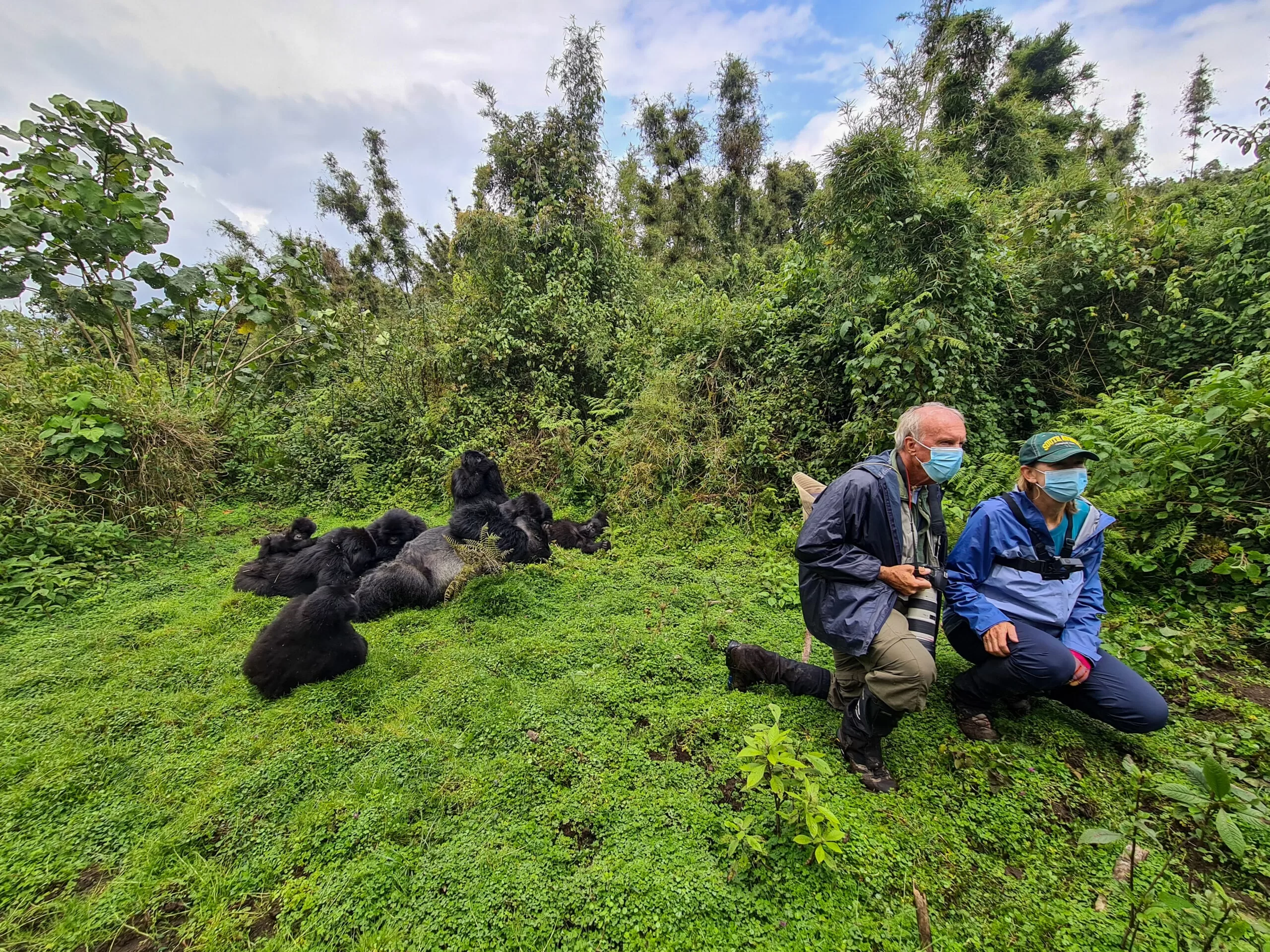
Habituated Gorilla Families in Uganda vs. Rwanda: Complete Safari Guide When planning a mountain gorilla trekking safari in Uganda Rwanda, permit availability and park options depend heavily on the number of habituated gorilla groups. Uganda leads with 22 to 24 habituated families across Bwindi Impenetrable Forest and Mgahinga Gorilla National Park, offering over 170 daily trekking permits. In contrast, Rwanda hosts 12 habituated gorilla families in Volcanoes National Park, offering 96 daily permits. Explore the breakdown below to decide which gorilla trekking destination fits your itinerary best
5-days-rwanda-uganda-safari-combined-volcanoes-to-queen-elizabeth-national-park
3-days-luxury-gorilla-trekking-in-nkuringo-sector-of-bwindi
4-days-luxury-gorilla-trekking-safari-in-bwindi-fly-in-all-inclusive-tour
8-days-best-uganda-rwanda-safari-holiday-ending-in-kigali
8-days-exclusive-gorilla-trekking-chimpanzee-and-big-five
9-days-luxury-gorilla-and-uganda-safari-tour-package
10-days-luxury-uganda-gorilla-trekking-safari-and-big-five-safari-vacation
12-days-luxury-safari-in-uganda-parks
Uganda Gorilla Families
- Total open for regular tourism: 21–22 groups
- Locations: Bwindi Impenetrable National Park (Buhoma, Ruhija, Rushaga, and Nkuringo sectors) and Mgahinga Gorilla National Park
- Daily limit: Maximum of 8 visitors per family
Rwanda Gorilla Families
- Total open for tourism: 10–12 groups
- Location: Volcanoes National Park
- Daily limit: Maximum of 8 visitors per family
What is the difference in permit prices between Uganda and Rwanda?
Uganda gorilla trekking permits cost $800 for foreign non-residents, $700 for foreign residents, and 300,000 UGX for East African citizens. In contrast, Rwanda charges a flat rate of $1,500 per permit for international visitors, regardless of residency status. Rwanda positions itself as an exclusive, high-end ecotourism destination, using higher fees to fund community development and intense conservation efforts. Uganda offers a more budget-friendly entry point for travelers while maintaining equally strict conservation standards. If you are planning a multi-day trip or traveling as a family, Uganda's lower permit price can free up a substantial portion of your travel budget for better accommodation, extended wildlife safaris, or additional primate tracking experiences like chimpanzee trekking.
How far are the gorilla parks from the main international airports?
Accessibility is one of the most significant differences between the two destinations. Rwanda’s Volcanoes National Park is just a 2.5 to 3-hour smooth drive along paved roads from Kigali International Airport. This makes Rwanda ideal for short stays, weekend getaways, or quick business trips. Uganda’s Bwindi Impenetrable Forest and Mgahinga Gorilla National Park require a 8 to 10-hour drive from Entebbe International Airport. However, travelers in Uganda can significantly reduce travel time by booking a 1.5-hour domestic fly-in safari from Entebbe to Kihihi or Kisoro airstrips, or by flying into Kigali and taking a 4 to 5-hour scenic drive across the Cyanika or Katuna land border into southwestern Uganda.
Which country offers easier trekking terrain?
Trekking difficulty varies by day, but Rwanda generally offers slightly more open terrain. Volcanoes National Park features bamboo zones and high-altitude volcanic slopes. While climbing can be steep and altitude effects noticeable, the paths are often clearer. Bwindi Impenetrable Forest in Uganda lives up to its name: it is a dense, primary rainforest with steep ridges, thick undergrowth, tangled vines, and slippery clay trails. You often walk off-path as rangers slash through vegetation. Mgahinga in Uganda offers terrain similar to Rwanda, as both belong to the Virunga Massif. If you have mobility concerns or prefer clearer paths, Rwanda or Bwindi's flatter sectors like Buhoma may feel more manageable.
What is the Gorilla Habituation Experience, and where is it available?
The Gorilla Habituation Experience is exclusively available in Uganda’s Bwindi Impenetrable Forest, specifically in the southern Rushaga and Nkuringo sectors. Standard gorilla trekking allows eight tourists to spend exactly one hour with a fully habituated family. The habituation experience allows just four visitors to accompany researchers, trackers, and conservationists for up to four full hours with a semi-habituated gorilla group. A permit costs $1,500—the exact price of a standard one-hour permit in Rwanda. This immersive encounter lets you witness wild primates adjusting to human presence, observing natural behaviors, communication, and nest-building in real time.
How many visitors are allowed per gorilla family each day?
Both Uganda and Rwanda strictly limit group sizes to a maximum of eight tourists per habituated gorilla family per day for standard trekking. This rule protects the primates from human disease transmission, minimizes environmental stress, and prevents disruptions to natural wild behaviors. Once a gorilla group reaches its daily limit of eight permits, no additional tickets are issued under any circumstances. Because Uganda has over 20 open habituated families, it issues more than 160 permits daily. Rwanda’s 12 families yield 96 daily permits. Due to these strict caps, booking permits several months in advance is essential for both countries.
Can I combine gorilla trekking with a traditional wildlife safari in the same park?
In both countries, mountain gorillas live in dedicated forested national parks separate from classic savannah game-viewing areas. In Rwanda, Volcanoes National Park is exclusively a primate and montane bird sanctuary; to see lions, elephants, and giraffes, you must drive three hours east to Akagera National Park. In Uganda, Bwindi and Mgahinga are also specialized mountain sanctuaries, but they sit right next to expansive savannah ecosystems. Queen Elizabeth National Park—famous for tree-climbing lions and Kazinga Channel boat cruises—is just a 2 to 4-hour drive from Bwindi’s northern sector. This proximity makes combining gorilla tracking with classic game drives seamless in Uganda.
What is the success rate of spotting gorillas in Uganda vs. Rwanda?
The success rate for sighting mountain gorillas in both Uganda and Rwanda is over 99%. Experienced trackers enter the forest at dawn to locate the families where they nested the previous night and follow their trail. Trackers maintain constant radio communication with the park rangers leading your group, directing you straight to the gorillas' current location. While mountain gorillas are wild, free-roaming animals that move constantly in search of food, total failure to find a group is extremely rare. On the off-chance gorillas move into inaccessible areas, park authorities coordinate alternative treks or offer partial permit refunds according to park policy.
What is the best time of year for gorilla trekking in both countries?
The dry seasons—from June to September and December to February—are the best times for gorilla trekking in both Uganda and Rwanda. During these months, forest trails are less muddy, footing is firmer, and rainfall is lighter, making the steep hikes significantly easier. However, mountain rainforests can rain at any time, so rain gear is necessary year-round. The wet months of March to May and October to November bring heavy rainfall and slick terrain, but they also offer perks: gorillas often stay lower on the mountain slopes where food is abundant, shortening hike times.
How fit do I need to be for gorilla trekking?
You do not need to be an elite athlete, but a reasonable level of physical fitness makes the experience much more enjoyable. Treks can range from a quick 30-minute walk to a strenuous 6 to 8-hour hike across uneven terrain, steep mud inclines, and thick vegetation at altitudes between 1,400 and 3,000 meters. On the morning of your trek, park rangers conduct a briefing and typically assign visitors to gorilla families based on fitness levels, age, and personal preferences. Exercising with light cardio and stair climbing in the weeks leading up to your trip helps build stamina.
Why should I hire a local porter during my gorilla trek?
Hiring a porter is one of the single best decisions you can make on a trek, as well as a direct form of community support. For a set fee of around $15 to $20 plus tip, a local porter carries your daypack, camera gear, and water, freeing you to focus on your balance. More importantly, porters provide physical assistance—offering a supportive hand across slippery clay slopes, steep drops, and dense undergrowth. Most porters are residents from neighboring villages, and some are former poachers. By hiring a porter, you directly fund local families and give the surrounding community a financial stake in wildlife conservation.
What are the rules for photos and videos during the gorilla encounter?
Photography is permitted during your hour with the gorillas, but flash photography is strictly banned. Bright flashes can startle or threaten the silverback, potentially provoking an aggressive defensive response. You should ensure your camera flash, autofocus assist light, and shutter sounds are turned off before approaching the family. Bring a weather-sealed camera or a waterproof dry bag, as mountain humidity and sudden downpours are common. A versatile zoom lens (such as a 70–200mm) is ideal, allowing you to capture intimate close-ups while respecting the required distance from the animals.
What is the minimum age limit for gorilla trekking?
The minimum age for gorilla trekking in both Uganda and Rwanda is 15 years old. This rule is strictly enforced by park authorities during morning permit verification, where original passports are checked. The age limit exists for two main reasons: young children are more susceptible to contagious childhood diseases (like mumps, measles, or common colds) that can devastate gorilla populations, and children are less likely to stay calm or follow safety instructions if a large silverback makes a sudden move or mock charge. Exceptions are rarely granted unless special permission is approved in advance by wildlife authorities.
How close can I get to the gorillas?
Official rules in both countries require visitors to maintain a minimum distance of 7 meters (about 23 feet) from the gorillas at all times. This rule minimizes disease transmission and respects the primates' personal space. However, gorillas do not know the rules. Curious infants, playful juveniles, or moving silverbacks may walk right past you or pass close by on a narrow trail. If a gorilla approaches, you are instructed to remain calm, stay still, avoid direct eye contact, lower your gaze, and slowly step back if the terrain permits without making sudden movements.
What happens if I am sick on the day of my trek?
Because mountain gorillas share roughly 98% of human DNA, they are highly vulnerable to human respiratory infections, flu, and airborne viruses. A simple human cold can prove fatal to a gorilla family lacking natural immunity. If you show signs of flu, a heavy cough, fever, or a contagious illness on the morning of the trek, park officials will prohibit you from entering the forest. In Rwanda and Uganda, travelers who declare their illness before the trek may be offered a partial permit refund or the chance to reschedule their trek, subject to medical verification and permit availability.
What clothing and footwear should I pack for gorilla trekking?
Proper gear makes a huge difference in forest comfort. Wear sturdy, broken-in waterproof hiking boots with deep tread for traction on muddy slopes. Long, lightweight, moisture-wicking trousers and a long-sleeved shirt protect against stinging nettles, insects, and thorny branches. Tuck your pants into your socks to keep fire ants out. Bring thick gardening gloves to grip vines and rough bark during steep scrambles, a lightweight waterproof rain jacket, a wide-brimmed hat, and tall gaiters. Avoid brightly colored clothes; neutral earth tones like green, khaki, and brown blend best into the forest.
How does gorilla tourism benefit local communities?
Gorilla tourism actively supports local development around national parks. In Uganda, 20% of all park entrance fees are directly reinvested into local community initiatives bordering Bwindi and Mgahinga. In Rwanda, 10% of total gorilla permit revenue is allocated to community revenue-sharing programs. These funds build schools, health clinics, clean water supply points, and paved roads for nearby villages. Additionally, tourism provides sustainable employment as park rangers, trackers, lodge staff, drivers, and cultural performers, giving communities a clear financial incentive to protect gorillas against poaching and deforestation.
How do accommodation options compare between Uganda and Rwanda?
Rwanda specializes in top-tier luxury ecotourism. The area surrounding Volcanoes National Park features high-end, world-famous luxury lodges offering ultra-exclusive, tailor-made services. Uganda offers a broader, more diverse spectrum of accommodation styles across all budgets. Around Bwindi's four sectors, you will find high-end luxury lodges, mid-range eco-camps, and comfortable budget options. Because Bwindi has four distinct trekking sectors, booking accommodation located within the specific sector where your tracking permit is assigned is essential to avoid long early-morning drives.
What are the gorilla tracking sectors in Bwindi Impenetrable National Park?
Bwindi is divided into four distinct administrative sectors:
- Buhoma (North): The oldest, most established sector with easier terrain and well-developed luxury lodges.
- Ruhija (East): Cooler, higher-altitude terrain known for birdwatching and scenic forest views.
- Rushaga (South): Home to the highest concentration of habituated gorilla families and the site for Habituation Experiences.
- Nkuringo (South): Known for steep, challenging climbs compensated by incredible vistas of the Virunga Volcanoes.
Each sector requires a permit designated for that area, and visitors should book lodges located in that exact sector.
How far in advance should I book my gorilla permits?
You should secure your permits at least 3 to 6 months in advance—and up to 10 to 12 months ahead if you plan to travel during peak dry seasons (June–September and December–February). Because daily permits are strictly capped at eight per family, high demand routinely outpaces permit supply. Last-minute permits are occasionally available in low seasons, but relying on walk-ins carries a high risk of disappointment. Securing permits early ensures you lock in your preferred trekking dates, sectors, and nearby lodge availability.
Is gorilla trekking safe in Uganda and Rwanda?
Gorilla trekking is safe in both Uganda and Rwanda. Park boundaries are continuously patrolled by well-trained armed wildlife rangers, park wardens, and national security personnel. An armed ranger escort accompanies every trekking group into the forest to ensure safety from wild animals like forest elephants or buffaloes. The mountain gorilla families open to tourists have undergone a rigorous 2 to 3-year habituation process, making them comfortable around humans as long as visitors follow ranger guidelines and maintain safe distances.
What should I do if a silverback gorilla charges or acts aggressively?
While aggressive behavior is rare among habituated gorillas, mock charges can happen if a silverback feels startled or threatened. If a silverback chest-beats, grunts, or moves quickly toward your group, follow your ranger's instructions immediately. Stand your ground, do not run, lower your eyes, crouch down slowly, and assume a submissive posture. Running triggers a chase instinct and signals fear. The silverback will almost always stop short once he sees you are not a threat, resuming his normal routine shortly after.
Can I trek gorillas in both Uganda and Rwanda on a single trip?
Combining both countries on a single itinerary is popular among wildlife enthusiasts. A dual-country trip allows you to experience two distinct forest environments: the dense rainforest of Bwindi and the volcanic bamboo slopes of Volcanoes National Park. Travelers can fly into Kigali, trek in Rwanda, cross the land border into Uganda via Cyanika or Katuna for a second trek, and depart via Entebbe or Kigali. Applying for an East Africa Tourist Visa ($100) allows multiple entries between Uganda, Rwanda, and Kenya under a single document.
What additional primate activities can I do alongside gorilla trekking?
Both countries are primate hot spots. In Uganda, Kibale National Park is widely considered East Africa's premier chimpanzee tracking destination, boasting over 1,500 chimpanzees alongside 12 other primate species. Bwindi and Mgahinga also offer golden monkey tracking and baboon sightings. In Rwanda, Volcanoes National Park offers golden monkey tracking hikes through bamboo forests, while Nyungwe National Park in southwestern Rwanda offers chimpanzee tracking and high-canopy walkway tours.
What cultural experiences can I add to my gorilla trip?
Cultural visits add meaningful context to a gorilla safari. In Uganda, you can visit the Batwa communities around Bwindi and Mgahinga. The Batwa are indigenous hunter-gatherers who lived in harmony with the forest for generations before it became a protected national park; guided Batwa cultural trails showcase traditional survival skills, medicinal plants, and forest heritage. In Rwanda, you can explore the Iby’Iwacu Cultural Village (Gorilla Guardians Village) near Volcanoes National Park, where former poachers share traditional drumming, dance, king's court reenactments, and rural lifestyle demonstrations.
How do I get a gorilla trekking permit?
Permits can be purchased directly through official government wildlife authorities—the Uganda Wildlife Authority (UWA) or the Rwanda Development Board (RDB)—or through licensed local tour operators. Most international travelers prefer booking through an experienced tour operator. Operators handle the permit reservation process, match your permit dates with sector-appropriate lodge availability, arrange land or air transport logistics, and assist with any scheduling changes or border clearances.
What does a typical gorilla trekking day schedule look like?
Your day starts early:
- 06:00 – 06:30 AM: Early breakfast at your lodge.
- 07:30 AM: Arrival at the park headquarters for registration, coffee, and a safety briefing by park wardens.
- 08:00 AM: Group assignment, meeting your assigned rangers and porters, and heading to the trailheads.
- 08:30 AM – 01:00 PM (varies): Hiking through the forest to locate the gorilla family.
- Upon arrival: Exactly 60 minutes spent observing and photographing the gorillas.
- Afternoon: Hike back to the trailhead, receive your official gorilla tracking certificate, and return to your lodge for lunch and relaxation.
What happens if I have physical mobility limitations or disabilities?
Physical limitations do not have to prevent you from seeing gorillas. In both Uganda and Rwanda, sedan chairs and traditional bamboo stretchers (often called "helicopter stretchers") are available for hire. Teams of 4 to 8 strong local porters carry guests who are elderly, disabled, or unable to hike directly to and from the gorilla group. Park wardens prioritize closer gorilla families for guests using porter stretchers, ensuring the experience is accessible to almost everyone.
What should I pack in my daypack for the trek?
Keep your daypack lightweight and weather-resistant. Key items include:
- 2 to 3 liters of drinking water and energy-rich snacks (dried fruit, nuts, energy bars provided by your lodge)
- A lightweight rain jacket or poncho
- Camera gear, spare batteries, and extra memory cards in waterproof bags
- Insect repellent, sunscreen, and lip balm
- Gardening gloves, a small hand towel, and personal medications
- Cash in small USD or local bills for porter fees and tips for rangers and trackers
How does tipping work for rangers, trackers, and lodge staff?
Tipping is customary and deeply appreciated, though optional. A general guideline is:
- Head Ranger / Guide: $10 to $20 per tourist from the group.
- Trackers & Security Escorts: $5 to $10 per person to be shared among the tracking team.
- Porters: $15 to $20 flat fee for carrying your bag, plus a $5 to $10 tip for helpful assistance.
- Lodge Staff: $10 to $15 per day dropped into the lodge's communal tip box to support back-of-house staff.
Tips are best given in cash (US Dollars printed after 2013 or local currency like UGX/RWF).
Why is gorilla trekking worth the cost?
Gorilla trekking is widely regarded as one of the most profound wildlife encounters on Earth. Unlike viewing animals from an safari vehicle, you walk into an untamed mountain rainforest and stand just feet away from wild, massive silverbacks, caring mothers, and playful juveniles. Every permit purchased directly finances round-the-clock veterinary care, anti-poaching ranger patrols, habitat expansion, and vital community health and education programs. The experience is not just a holiday excursion—it actively fuels the global survival and recovery of an endangered species.
Booking gorilla trekking in Uganda and Rwanda with us Roads of Adventure safaris
To book a gorilla trekking safari in Uganda or Rwanda through Roads Of Adventure Safaris, contact their team directly via their website or office along Kampala-Entebbe Road. They organize custom mid-range tours, secure permits ($800 in Uganda, $1500 in Rwanda), arrange lodging, and manage transport 3 to 6 months in advance.
