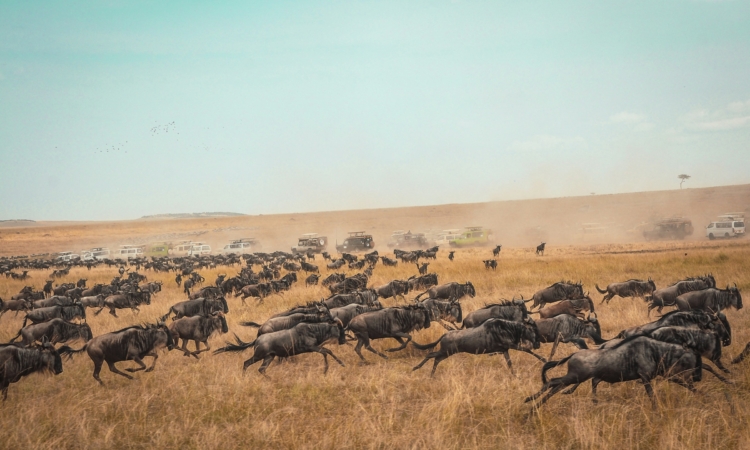
A Serengeti safari is defined by endless, open savannas, epic predator action, and the Great Migration. In contrast, a Tarangire safari offers a more intimate, secluded experience centered around lush, hilly landscapes, iconic baobab trees, and massive elephant herds
3-days-amazing-serengeti-safari-to-ngorongoro-crater-tanzania-tour
3-days-best-tarangire-national-park-tanzania-safari-tour-package
4-days-best-tarangire-ngorongoro-and-serengeti-safari-itinerary
The Serengeti Safari Experience
The Landscape: A Sea of Endless Grass
The Serengeti’s landscape is defined by its name, derived from the Maasai word siringet, meaning "the place where the land runs on forever." Covering an expansive 14,750 square kilometers, this iconic ecosystem forms a mesmerizing, unbroken canvas of rolling grasslands and golden savannas. The geology of the park varies profoundly across its distinct regions. In the southern plains, volcanic ash from the Ngorongoro Highlands has created a shallow, nutrient-rich soil bed that prevents tree growth, resulting in the famous treeless, emerald-green pastures that crop up during the rains. As you move northward, the terrain transitions into clay-heavy woodland savannas dominated by twisted acacia trees, terminalia bush, and structural granite kopjes—prehistoric rock islands that interrupt the flat horizons. These ancient rock formations act as critical micro-ecosystems, catching rainwater and providing shade, water pools, and vantage points for predators amidst the wide-open grasslands. The sheer scale of the landscape shapes weather patterns and animal behaviors; the visibility is so immense that a traveler can witness a localized thunderstorm dumping rain miles away on the horizon while standing under a cloudless sky. Sliced by life-giving water veins like the Seronera, Grumeti, and Mara Rivers, the Serengeti's landscape is an ever-shifting mosaic of color, moving seamlessly from dust-blown bone-whites and parched straw-golds in the dry season to an ocean of vibrant green following the monsoons. It is a place where the curvature of the Earth is visibly apparent, offering an raw, unfiltered perspective of wild Africa that feels completely untouched by modern civilization.
The Wildlife: The Stage of the Great Migration
The Serengeti hosts one of the most prolific and high-density concentrations of wildlife on the planet, functioning as a fully self-contained, ancient ecosystem where apex predators and massive herbivore herds play out an endless cycle of survival. It is the primary stage for the Great Migration, the largest overland mammal migration in the world. Each year, over 1.5 million wildebeest, accompanied by 200,000 zebras and gazelles, travel a continuous, clockwise 800-kilometer loop driven by the scent of rain and the promise of fresh grazing grass. This massive biomass attracts an unparalleled numbers of predators. The Serengeti is arguably the premier destination in Africa for big cat tracking, harboring over 3,000 lions, massive numbers of solitary leopards utilizing the riverine trees, and cheetahs specialized in hunting across the open southern plains. Beyond the famous cats, the ecosystem supports spotted hyenas, jackals, and wild dogs, alongside healthy populations of elephants, giraffes, and hippos that pack the river bends. The true drama unfolds during the dry season river crossings at the Grumeti and Mara Rivers, where desperate herds must plunge into raging currents patrolled by massive, prehistoric Nile crocodiles. For wildlife enthusiasts, the sheer volume of animals ensures constant action, allowing visitors to witness real-time hunting tactics, newborn calving on the southern plains, and the complex social dynamics of massive animal populations functioning in their natural, historical state.
The Vibe & Crowds: Action-Packed High Energy
The operational atmosphere of the Serengeti is electrifying, fast-paced, and filled with high-stakes adventure. Because it is globally renowned as a bucket-list destination, the vibe is heavily centered on chasing major wildlife events, such as a lion hunt, a leopard kill, or a dramatic migration river crossing. However, this high concentration of world-class wildlife inevitably draws significant international tourist traffic. During the peak dry season months, the main safari tracks—particularly around the central Seronera Valley and active river crossing points in the northern sector—can become highly congested. It is not uncommon to see multiple safari vehicles gathered around a single cat sighting or tracking a migrating herd. To manage the crowds and maintain an exclusive feel, experienced guides utilize deep bush tracking techniques and alternative loop roads to distance clients from the main convoy traffic. Alternatively, traveling during the "green season" shifts the vibe completely, offering a tranquil, intimate experience where the plains are empty of tourists but bursting with newborn wildlife. For travelers who thrive on natural drama and want to be in the center of the world's greatest wildlife theater, the energetic, shared excitement of the Serengeti is deeply rewarding, provided they partner with a seasoned operator who understands how to expertly navigate vehicle densities.
Activities: Multi-Day Expeditions & Aerial Safaris
Due to the immense geographical footprint of the Serengeti, a proper safari requires a multi-day expedition strategy, ideally moving between different sectors of the park to fully appreciate its changing biomes. Game viewing is highly optimized through specialized 4x4 open-roof vehicles, allowing for long, full-day game drives equipped with bush picnics. Beyond standard driving tracks, the Serengeti is the absolute global capital for luxury mobile camps. These highly specialized camps are designed to pack up and move multiple times a year, trailing the moving migration herds to ensure guests are always positioned in the heart of the action without compromising on five-star canvas luxury. For a truly unforgettable perspective, the park offers world-class hot air balloon safaris. Launching at dawn, these balloons glide silently over the canopy and open plains, allowing passengers to look down on massive herds of wildebeest streaming across the savanna, completely undisturbed by engine noise, just as the golden morning sun hits the horizon. Walking safaris, accompanied by armed park rangers, are also highly integrated into specialized wilderness zones, giving adventurous travelers a ground-level, sensory connection to the tracks, plants, and smaller creatures that form the foundation of this legendary ecosystem
The Tarangire Safari Experience
The Landscape: Baobabs and Living Rivers
Tarangire’s landscape is a dramatic, visually striking departure from the flat, open grass plains found elsewhere in northern Tanzania. The park’s defining signature is its dense collection of ancient, giant baobab trees (Adansonia digitata). These prehistoric, root-like giants dominate the ridges and hillsides, some living for well over a thousand years, their massive trunks scarred by generations of elephants stripping bark for moisture. The core life support system of this ecosystem is the Tarangire River, a permanent water vein that snakes its way northward through the park. This river carves out deep, lush valleys and creates a vibrant green corridor lined with whistling thorn acacias and wild doum palms. As you move away from the river, the undulating terrain opens up into expansive, swampy floodplains like the Silale Swamp. This massive wetland acts as a giant sponge, staying green long after the surface rains stop and absorbing seasonal floods to provide a constant source of water and sweet grasses. The rich, red-earth soils contrasting with the deep greens of the river valleys and the stark silhouettes of the baobabs give Tarangire a uniquely rugged, beautiful, and almost primeval aesthetic. It is a highly textured environment where hilly woodland ridges transition into open marshy flats, offering travelers an enclosed, intimate wilderness feeling where the next bend in the track always reveals a completely new habitat.
The Wildlife: Elephant Empires and Birdlife Paradises
Wildlife in Tarangire is defined by scale and diversity, earning it a reputation as a sanctuary for massive mammal herds. The park is most famous for hosting Tanzania’s largest and most densely packed population of African bush elephants. During the dry season, it is not uncommon to see magnificent herds of up to 300 individuals gathering along the riverbeds to dig for underground water channels. While predators like lions, leopards, and even tree-climbing pythons are healthy and present, the dense acacia woodlands and tall river grasses mean spotting them requires a bit more patience and tracking skill compared to the wide-open Serengeti plains. What makes Tarangire truly unique is its dry-season mini-migration. As the surrounding Maasai Steppe dries up between July and October, thousands of migratory wildebeest, zebras, elands, gazelles, and buffalos flood into the park, drawn by the permanent waters of the Tarangire River and Silale Swamp. Furthermore, the park is an absolute paradise for birdwatchers, boasting the highest breeding bird species count of any habitat in Tanzania, with over 550 distinct species recorded. The swamps are alive with vibrant yellow-collared lovebirds, rufous-tailed weavers, massive kori bustards, and a dazzling array of raptors, making the avian viewing just as thrilling as the big game tracking.
The Vibe & Crowds: An Intimate, Secluded Wilderness
The operational atmosphere of Tarangire is notably peaceful, unhurried, and deeply immersive. Unlike its busier northern neighbors, Tarangire manages to fly somewhat under the radar, allowing it to retain an authentic, wild, and exclusive frontier vibe. Because vehicle densities are significantly lower here, game drives routinely feel like private expeditions. You can sit for an hour watching an elephant family bathe in the river mud or track a herd of kudu through the bush without another safari truck breaking the horizon. This lack of vehicle congestion creates a profound sense of solitude and connection with the wild. The pace is slower, encouraging travelers to appreciate the smaller details of the bush—the crunch of dry leaves, the calls of the birds, and the tracking skills of their guides—rather than rushing from one high-traffic predator sighting to another. Even during peak travel seasons, the vast network of tracks stretching into the quieter southern loop allows visitors to escape tourist traffic entirely. For travelers who value stillness, privacy, and the feeling of having a vast African wilderness all to themselves, Tarangire offers a wonderfully grounding and therapeutic safari rhythm.
Activities: Walking Safaris and Night Tracking
Tarangire is structurally tailored for highly focused 1- to 2-day excursions, making it an exceptional, gentle introduction to a northern Tanzanian safari circuit. Because of its close proximity to Arusha, it acts as the perfect, low-stress first stop to shake off jet lag and get accustomed to the bush before moving on to the high-energy environments of the Ngorongoro Crater or the Serengeti. Beyond standard daytime 4x4 game drives along the river circuits, Tarangire’s status as a national park with dedicated conservation concessions allows for specialized activities that are strictly regulated elsewhere. Many luxury lodges situated on the park borders offer exceptional walking safaris accompanied by armed rangers, giving travelers a chance to step out of the vehicle and experience the bush from a sensory ground level. Furthermore, Tarangire is one of the premier locations in the region for night game drives. Venturing out after dark with specialized spotlights reveals an entirely different ecosystem, offering a rare window into the nocturnal world where you can spot elusive bushbabies, servals, genets, and active predators on the hunt under a spectacular canopy of stars
1. What are the core differences in landscape aesthetics and tree cover?
The landscape of the Serengeti is defined by its vastness, characterized by endless, rolling grasslands, short-grass savannas, and scattered acacia trees that create an open horizon where the earth visibly curves. Tree cover is sparse in the south and central regions, opening up completely to massive skies. In contrast, Tarangire National Park presents a highly textured, enclosed, and hilly landscape dominated by ancient, giant baobab trees that pierce the skyline. The terrain in Tarangire is dense with whistling thorn acacias, riverine forests, and thick bushland. While the Serengeti feels expansive and flat, Tarangire feels uniquely primeval and dense, offering a more variable canvas that shifts rapidly from high, baobab-studded ridges to lush river valleys and swampy floodplains like the Silale Swamp.
2. How do elephant population sizes and viewing experiences compare?
While elephants are found throughout the Serengeti, they roam across enormous distances and are often seen in scattered, smaller family herds amidst the vast plains. Tarangire, however, is globally renowned as an elephant empire, boasting Tanzania's highest concentration of these gentle giants. In Tarangire, elephant viewing is intimate and highly concentrated, especially during the dry season when herds of up to 300 individuals gather along the Tarangire River. Visitors in Tarangire can sit quietly as massive herds pass within feet of their vehicles to dig for water in the sandy riverbeds, a distinct contrast to the more spread-out, distant elephant encounters typical of the wide-open Serengeti plains.
3. What is the difference in big cat density and tracking visibility?
The Serengeti is an unparalleled haven for big cats, hosting over 3,000 lions and a massive population of cheetahs and leopards. Its flat, treeless short-grass plains offer pristine visibility, making it incredibly straightforward to spot a cheetah scanning the horizon or a lion pride resting on a granite kopje. In Tarangire, big cats are healthy and present, but tracking them is a significantly greater challenge. The park's dense acacia woodlands, tall grasses, and tangled bush provide ample camouflage, meaning that spotting a leopard or a lion requires intense tracking skills, patience, and a bit of luck, as predators easily melt into the thick undergrowth.
4. How does the Great Migration impact wildlife dynamics in each park?
The Great Migration is the lifeblood of the Serengeti safari experience, where over 1.5 million wildebeest and zebras move in a continuous annual loop across the ecosystem, creating high-energy predator-prey spectacles, dramatic river crossings, and immense herd densities. Tarangire does not participate in this world-famous migration; instead, it hosts its own localized, dry-season mini-migration. Between July and October, thousands of migratory zebras, wildebeest, buffalos, and elands flee the parched Maasai Steppe to seek refuge along the permanent water channels of the Tarangire River. While smaller in scale than the Serengeti's phenomenon, Tarangire's migration results in an intense concentration of diverse wildlife within a relatively compact river corridor.
5. What are the operational differences regarding vehicle crowds and congestion?
Because of its global fame and bucket-list status, the Serengeti—particularly in the central Seronera Valley and around northern river crossing points—can experience significant vehicle congestion during peak seasons. It is common to see multiple safari trucks surrounding a high-profile predator sighting. Tarangire operates at a noticeably quieter, lower-stakes pace. It remains a more secluded, less tourist-heavy destination where vehicle densities are low. It is easy to spend hours on a game drive in Tarangire without encountering another vehicle, offering an intimate, private frontier vibe that is difficult to replicate in the popular hubs of the Serengeti.
6. How do the standard lengths of stay and geographic sizes differ?
The Serengeti is massive, covering nearly 14,750 square kilometers, which demands a multi-day exploration strategy of at least three to five nights to properly navigate its distinct southern, central, western, and northern sectors. Tarangire is much smaller, encompassing roughly 2,850 square kilometers, and is structurally optimized for short, focused excursions. Most operators schedule Tarangire as a 1- to 2-day introduction to the northern safari circuit, making it an excellent, low-stress destination to settle into the safari rhythm before moving onward to the expansive commitments required by the Serengeti.
7. What is the variance in birdwatching opportunities and species counts?
While the Serengeti offers excellent birdwatching with around 500 recorded species, its vast plains favor large ground birds like ostriches, secretary birds, and kori bustards. Tarangire, however, is a certified birdwatcher's paradise, boasting the highest breeding bird species count in Tanzania with over 550 distinct species packed into its diverse habitats. The permanent wetlands of the Silale Swamp and the riverine woodlands support an astonishing array of colorful avian life, including yellow-collared lovebirds, rufous-tailed weavers, and a magnificent variety of raptors, making Tarangire’s birding experience far more condensed, diverse, and vibrant.
8. Can visitors participate in night game drives in both parks?
Night game drives are strictly prohibited within the boundaries of Serengeti National Park to protect nocturnal predators and prevent wildlife disruption from spotlights. Safaris here are confined entirely to daylight hours. Tarangire offers a distinct advantage in this regard; while night drives are restricted in the main park, the private concessions and conservation areas directly bordering Tarangire allow for specialized night safaris. This opens a completely unique window into the nocturnal ecosystem, allowing guests to use spotlights to track active predators on the hunt, alongside elusive nocturnal species like servals, genets, and bushbabies under the stars.
9. How do walking safaris compare between the two destinations?
Walking safaris in the Serengeti are highly exclusive, strictly regulated, and restricted to designated wilderness zones in the remote corners of the park, usually managed by high-end luxury camps. In Tarangire, walking safaris are far more accessible and integrated into the standard regional experience. Due to the park’s rugged topography and the presence of private unfenced concessions on its borders, guided walking safaris accompanied by armed rangers are standard offerings, allowing travelers to step out of the vehicle and connect intimately with the tracks, plants, and baobabs on foot.
10. What are the differences in accommodation styles and mobile camps?
The Serengeti is the global capital for luxury mobile canvas camps that pack up and move multiple times a year to trail the moving migration herds, ensuring guests stay in the heart of the wildlife action. Tarangire’s accommodation infrastructure is primarily anchored around permanent, structurally striking luxury lodges and tented camps built into the landscape. Many of Tarangire's lodges are built elevated on stilts, nestled directly into giant baobab trees or perched on high ridges overlooking the river valleys, offering scenic, static vistas rather than the nomadic, herd-following structure of the Serengeti's mobile setups.
11. How does seasonal timing affect wildlife viewing in each park?
Wildlife viewing in the Serengeti is a year-round affair because the resident game is immense and the Great Migration moves seamlessly through different sectors across all twelve months. Tarangire is highly seasonal. During the wet green season (November to May), its wildlife disperses deep into the outer Maasai Steppe, making game viewing inside the park challenging. Tarangire peaks spectacularly during the dry season (July to October), when the surrounding wilderness dries out entirely, forcing the regional wildlife to compress into the park's permanent river corridor, resulting in some of the densest dry-season game viewing in Africa.
12. What are the logistical differences in travel times and accessibility?
Logistically, Tarangire is highly accessible, situated a smooth two-hour drive southwest of Arusha on well-tarmacked roads, making it an easy, cost-effective, and low-stress entry point for a safari itinerary. The Serengeti is far more remote, requiring a long, bumpy six- to eight-hour drive from Arusha through the Ngorongoro Conservation Area, a route affectionately dubbed the "African massage." Alternatively, reaching the Serengeti comfortably requires booking expensive bush flights into regional airstrips, making the Serengeti a more logistically demanding and cost-intensive destination to access compared to the straightforward overland route to Tarangire.
13. How do park entry fees and overall costs compare?
Due to its massive size, prestige, and high demand, Serengeti National Park carries some of the highest conservation fees, vehicle fees, and concession fees in East Africa, making a safari there inherently premium and costly. Tarangire National Park is significantly more budget-friendly. Its park entry and conservation fees are substantially lower, and because it can be explored effectively as an overland day trip or a short stay without internal flights, it provides an exceptionally high-value, cost-effective wilderness experience that fits comfortably into mid-range and luxury budgets alike.
14. What is the difference in specific wildlife species highlights?
Beyond the big cats and migration herds, the Serengeti is an excellent place to spot wide-plains specialists, including cheetahs, Thompson's gazelles, topis, and spotted hyenas. Tarangire serves as a sanctuary for unique dry-country species that are uncommon or absent in the Serengeti. Visitors to Tarangire have an excellent chance of spotting the elegant, long-necked gerenuk browsing on high branches, the rare fringe-eared oryx, and the striking lesser kudu, alongside a massive abundance of olive baboons that thrive within the fruiting baobab and palm forests along the river banks.
15. How does the overall emotional "vibe" differ for a traveler?
The overall vibe of the Serengeti is one of high-octane adventure, vast cinematic scale, and dramatic wildlife theater; it feels like stepping directly into a nature documentary where you are chasing epic historical movements across an endless earth. Tarangire’s vibe is deeply grounding, therapeutic, and peaceful. It offers a slower safari rhythm focused on the stillness of an ancient forest, the quiet behavior of elephant families, and the intricate beauty of a river ecosystem. While the Serengeti thrills with its grand scale and high energy, Tarangire enchants with its old-world solitude, majestic baobabs, and intimate, crowd-free wilderness encounters.
Booking Serengeti or Tarangire safari with us Roads of Adventure safaris
To book a Serengeti or Tarangire safari with Roads of Adventure Safaris, you can contact their team directly to create a custom-tailored itinerary. Because they specialize in bespoke packages (like the popular 4-day Tarangire, Serengeti, and Ngorongoro route), they do not publish fixed prices for long-term or advance bookings
