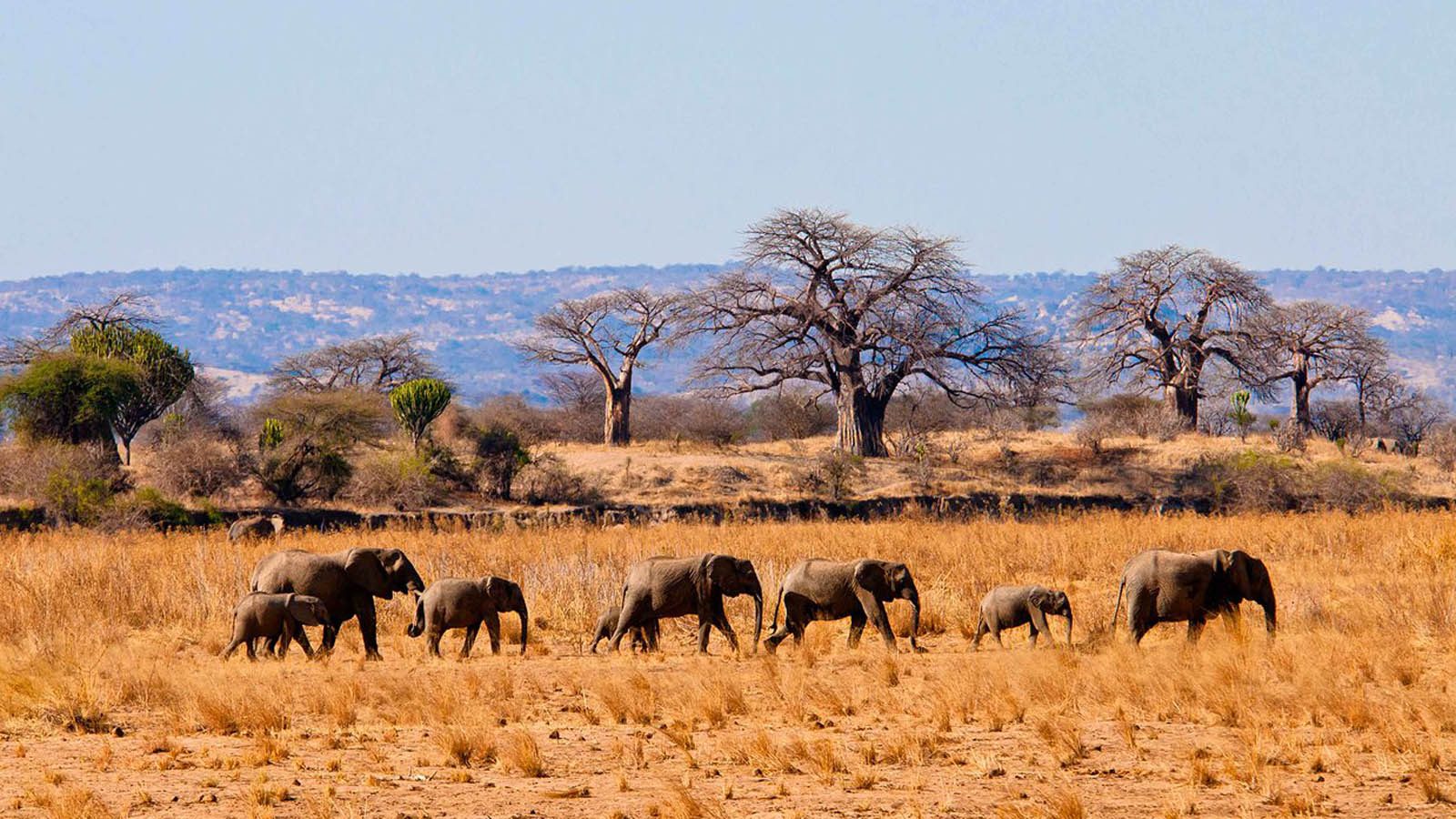
A two-day safari in Tarangire National Park is perfect for spotting massive elephant herds and iconic baobab trees. To maximize your experience, choose from an immersive deep-dive, combining it with Lake Manyara's birdlife, or adding an iconic sunrise at the Ngorongoro Crater
2 Days Classic Tarangire Deep Dive (Focus on Elephants & Baobabs)
2 Days Classic Tarangire Deep Dive (Focus on Elephants & Baobabs)
This focused, highly rewarding weekend escape is curated specifically for wildlife photography enthusiasts and travelers who want to experience Tanzania’s incredible big game without the thick crowds found in the neighboring northern parks. Tarangire National Park is a visually stunning wilderness defined by two iconic features: ancient, massive baobab trees that dominate the horizon and the highest concentration of elephants in East Africa. By focusing your limited time along the permanent lifelines of the Tarangire River circuit and the park's quieter southern reaches, this itinerary ensures exceptional, unhurried wildlife viewing. You will transition smoothly from classic 4x4 game drives tracing colossal elephant herds to an exclusive, immersive walking safari on foot alongside expert armed rangers. It stands as a perfect, high-impact introduction or a standalone deep dive into a rugged, beautiful ecosystem where wild Africa feels completely untouched.
Sopa Lodges
Day 1: Arusha to Tarangire National Park
Your safari starts with a prompt morning pickup from your hotel in Arusha. Embark on a comfortable, highly scenic two-hour drive heading southwest along smooth tarmacked roads, passing lively Maasai villages and expansive open plains before arriving at the Tarangire main gate. After a swift park entry clearance, you will immediately begin a game drive heading toward the Tarangire River circuit. During the dry season, this permanent river becomes the primary life source for thousands of animals, creating a magnificent wildlife theater. Your guide will position your pop-up roof vehicle to capture stunning photographs of massive elephant families digging in the dry riverbed for water. You will also track resident lion prides resting beneath the shade of giant, centuries-old baobab trees. In the late afternoon, drive through the changing shadows of the park to settle into the comfortable Tarangire Sopa Lodge for a hot dinner and a relaxing evening.
Day 2: Walking Safari, Game Drive & Return to Arusha
Awake at first light to the vocal dawn chorus of Tarangire's 550 bird species. You will head out early to experience an exclusive, guided morning walking safari, a specialized activity offered around select southern concessions and camps. Walking side-by-side with an armed park ranger and an expert tracker, you will step out of the safari vehicle to feel the raw African earth beneath your boots. Your guide will teach you to decipher fresh leopard tracks, identify medicinal plants, and quietly approach grazing zebras and waterbucks from a ground-level perspective. Following a hearty bush breakfast, transition back into your 4x4 for a mid-morning game drive through the acacia woodlands, keeping a sharp lookout for rare fringe-eared oryx and tree-climbing pythons. After a fresh lunch, you will embark on a smooth afternoon drive back to Arusha, concluding a memorable two-day deep dive.
2 Days Tarangire & Lake Manyara Combo (Two Parks, Two Ecosystems)
2 Days Tarangire & Lake Manyara Combo (Two Parks, Two Ecosystems)
This fast-paced, highly rewarding Northern Circuit safari is specifically designed to showcase the incredible geographic and ecological contrasts of northern Tanzania in a single weekend. Perfect for travelers with limited time, photography enthusiasts, and birdwatchers, this itinerary links two entirely distinct environments separated by just a short drive. You will transition seamlessly from the dry, rugged, acacia-and-baobab-dominated savannahs of Tarangire National Park to the lush groundwater forests, steep Great Rift Valley escarpments, and shimmering alkaline waters of Lake Manyara National Park. By focusing on the unique wildlife behaviors native to each ecosystem, this compressed route ensures high-impact game viewing, remarkable landscape variety, and access to some of the richest birdlife diversity on the continent, all while keeping your transit times remarkably low.
Day 1: Arusha to Tarangire National Park
Your adventure begins with a morning pickup from your base in Arusha, setting off on a smooth two-hour southwest drive across Maasai plains to Tarangire National Park. Known as the "Home of the Giants," Tarangire immediately captivates with its ancient, colossal baobab trees and rolling golden grasslands. You will spend a full afternoon tracking vibrant lion prides, massive herds of zebras, and towers of Maasai giraffes shifting along the riverine floodplains. The park is world-famous for its dense elephant populations, and you will frequently watch these magnificent animals bathing in the marshes or foraging beneath the canopy. As dusk falls, you will drive out of the park and travel up the scenic escarpment to settle into a premium tented camp or safari lodge nestled in the nearby Karatu highlands or Manyara basin, enjoying a fresh dinner and a restful night.
Day 2: Lake Manyara National Park to Arusha
Depart early to Lake Manyara National Park, a scenic gem dramatically pressed against the towering, sheer wall of the Great Rift Valley. Your morning game drive kicks off in a lush, dense groundwater forest fed by underground springs, where massive baboon troops and blue monkeys leap through giant mahogany trees. As the forest opens up into acacia woodlands, keep a sharp lookout for Manyara’s legendary tree-climbing lions resting high on the branches to escape the heat or insects. Emerging onto the grassy floodplains, you will look out over the vast, shimmering soda lake to observe giant hippo pods wallowing in the shallows and thousands of pink flamingos wading along the alkaline shoreline. Following a scenic lunch within the park and excellent bird watching, you will embark on a relaxed, mid-afternoon return drive to Arusha, wrapping up a spectacular dual-ecosystem loop.
2 Days Tarangire & Ngorongoro Crater (The Big 5 Shortcut)
2 Days Tarangire & Ngorongoro Crater (The Big 5 Shortcut)
This high-impact, iconic route is engineered for travelers who want to maximize their chances of encountering Africa's legendary Big Five (lion, leopard, elephant, buffalo, and rhino) within a compact 48-hour window. Perfect for business travelers with a free weekend, photography enthusiasts, or those on a tight travel schedule, this itinerary bypasses longer transits to focus exclusively on two of the most wildlife-dense environments in East Africa. You will experience the dramatic contrast between the vast, elephant-dominated acacia savannahs of Tarangire National Park and the completely enclosed, ancient volcanic caldera of the Ngorongoro Crater. By staying strategically positioned on the crater rim or in the nearby Karatu highlands on night one, you ensure an immediate, crowd-free descent into the crater at first light—giving you a front-row seat to prime predatory action.
Day 1: Arusha to Tarangire National Park
Your safari starts with an early morning pickup in Arusha for a direct, scenic two-hour drive to Tarangire National Park. Known as the "Elephant Playground," Tarangire is defined by its dramatic, ancient baobab trees and massive elephant herds, often numbering in the hundreds. You will arrive in time for a midday game drive along the Tarangire River circuit, where wildlife gathers in immense numbers as the day heats up. Beyond the giant tuskers, you will track active lion prides, columns of giraffes, zebras, and migratory wildebeests across the golden floodplains. Following an afternoon filled with tracking big game, you will drive out of the park and ascend the Great Rift Valley escarpment. You will spend the evening at a full-board safari lodge positioned either right on the forested rim of the Ngorongoro Crater or nestled in the lush, nearby agricultural hills of Karatu, settling in for a hearty dinner and an early night.
Day 2: Ngorongoro Crater floor to Arusha
Wake up before dawn for a crisp, early breakfast before descending 2,000 feet down the steep, forested walls into the Ngorongoro Crater floor exactly at sunrise. This UNESCO World Heritage site is a self-contained ecosystem harboring over 25,000 large mammals, offering unparalleled game viewing. The early hours are unmatched for tracking massive black-maned lions, elusive leopards in the Lerai Forest, and huge cape buffaloes. This is also your absolute best opportunity in Tanzania to spot the critically endangered black rhino grazing peacefully on the open basalt plains. After an exhilarating morning exploring the salt lakes packed with waterbirds and watching hippos wallow in the pools, you will enjoy a scenic picnic lunch on the crater floor. By midday, you will begin your ascent up the caldera wall and embark on a relaxed afternoon drive back to Arusha, arriving before dusk with the entire Big Five checked off your list.
2 Days Tarangire Cultural & Wildlife Safari
2 Days Tarangire Cultural & Wildlife Safari
This specialized, high-impact loop is crafted for travelers who want to balance classic East African big game viewing with deep, authentic human connection. Rather than just observing the landscape from a vehicle, this itinerary allows you to step directly into the vibrant cultural tapestry of northern Tanzania. You will explore Tarangire National Park—famed for its colossal elephant herds and ancient baobab trees—while dedicating your afternoon to an immersive cultural exchange with the region's indigenous communities. Whether you choose to walk through a traditional Maasai boma, learn ancient metalworking from the Datoga tribe, or explore the bustling, multi-ethnic market town of Mto wa Mbu, this route provides profound context to your safari. It stands as an ideal choice for culturally curious travelers and photographers who want to capture both the magnificent wildlife and the deep-rooted human heritage that define this slice of the Great Rift Valley.
Day 1: Arusha to Tarangire & Cultural Immersion
Your journey begins with an early morning pickup in Arusha, followed by a scenic two-hour drive southwest to Tarangire National Park. Upon entering, you will embark on a rewarding morning game drive along the Tarangire River circuit. Your expert guide will track large elephant families digging for water, towers of giraffes browsing acacia trees, and resident lion prides resting in the shade. Following a fresh picnic lunch under a baobab canopy, you will exit the park for an immersive afternoon cultural encounter. You can choose to visit an authentic Maasai boma to learn about pastoralist life, or head to the vibrant hub of Mto wa Mbu. Here, over 120 distinct tribes co-exist, and a guided walk introduces you to local banana plantations, traditional Makonde woodcarvers, and bustling local markets. In the evening, retire to a nearby eco-lodge for dinner and cultural storytelling around the campfire.
Day 2: Sunrise Game Drive & Return to Arusha
Awake before dawn to catch the savannah at its most active and visually spectacular moment. Entering the park just as the first golden rays of sunlight pierce the horizon, you will embark on a sunrise game drive optimized for action photography. The cool morning hours are prime for tracking apex predators, such as lions, leopards, and hyenas, as they wrap up their nocturnal hunts and move across the dew-covered grass. Herbivores like zebras and wildebeests are highly alert, offering dynamic behavioral shots against the backdrop of giant, glowing baobab trees. Your guide will navigate the quieter tracks to ensure solitary, high-quality wildlife encounters away from other vehicles. Following a late mid-morning breakfast or a hearty bush brunch, you will enjoy a final, casual game drive out of the reserve and take a smooth afternoon drive back to Arusha or straight to the airport for your onward flight.
2 Days Tarangire Birding & Night Safari
2 Days Tarangire Birding & Night Safari
This highly specialized, slow-paced route is tailor-made for passionate ornithologists, returning safari-goers, and nocturnal wildlife enthusiasts who want to unlock the secrets of the African bush after dark. Tarangire National Park is a premier, world-class birding destination boasting a checklist of over 550 recorded avian species—the highest count in Tanzania for a single ecosystem. By focusing your daylight hours around the vast, permanent wetlands of the Silale Swamp, you gain access to an unparalleled density of raptors, waterbirds, and dry-country endemics. The true centerpiece of this itinerary, however, is the exclusive opportunity to participate in an authorized night safari. Because standard park regulations strictly mandate that day visitors exit by sunset, exploring the park or its adjoining private concessions under the cover of darkness reveals a completely hidden world of elusive predators and rare nocturnal creatures that daytime travelers never get to experience.
Day 1: Arusha to Silale Swamp Birding Deep Dive
Your safari begins with a morning pickup in Arusha, followed by a comfortable two-hour drive southwest to Tarangire. You will bypass the busier northern loops and head directly into the heart of the park toward the sweeping Silale Swamp. This massive, 30-square-kilometer wetland acts as a giant sponge, retaining water year-round and attracting an astonishing array of birdlife and specialized wildlife. Armed with binoculars and a long telephoto lens, you will spend the afternoon scanning the reeds and open waters for giant saddle-billed storks, goliath herons, elegant grey crowned cranes, and the localized rufous-tailed weaver. The swamp's edge is also prime territory for spotting massive marsh-dwelling African rock pythons and tree-climbing pythons draped over acacia branches. As the sun sets, paint-splashing the sky in deep oranges, you will transfer to a specialized wilderness camp inside or bordering the park for dinner and a restful evening.
Day 2: Dawn Avian Tracking & Authorized Night Safari
Awake to a spectacular dawn chorus as the savannah's birdlife activates. Your morning game drive focuses on raptors and dry-country species, tracking everything from the massive martial eagle to flocks of colorful yellow-collared lovebirds foraging near the baobabs. Return to camp for a midday rest, enjoying a slow lunch and downloading your photos during the heat of the day. The safari takes an extraordinary turn in the late evening as you board an open-sided 4x4 equipped with powerful, red-filtered spotlights for an authorized night game drive. Operating under strict conservation guidelines, your expert guide will illuminate the darkness to reveal animals completely invisible by day. You will track stealthy leopards on early evening hunts, spotted hyenas, and smaller, enigmatic nocturnal species like large-spotted genets, African civets, white-tailed mongooses, and bouncing lesser bush babies. Wrap up the night with a late bush supper under the stars before your return drive to Arusha the following morning.
1. Is 2 days enough to explore Tarangire?
Two days provides a thoroughly satisfying window to explore the northern and central circuits of Tarangire National Park without feeling rushed. Because the park's primary geographical features and wildlife hubs—such as the Tarangire River circuit and the Lemiyon triangle—are concentrated within a manageable radius of the main gate, a 48-hour itinerary gives you ample time to track resident game.
On a standard two-day safari, you can dedicate your first afternoon to exploring the river bends where wildlife clusters heavily, and use your second morning to venture into the acacia woodlands or the edges of the Silale Swamp. This structure ensures you do not waste hours in transit, allowing you to settle into a relaxed rhythm that mirrors the natural pace of the bush. While the park's extreme southern reaches require a longer expedition, a two-day safari perfectly captures the quintessential Tarangire experience, delivering maximum wildlife viewing and exceptional photography opportunities within a highly optimized, compact timeframe.
2. What are the highlights of this itinerary?
The undeniable centerpiece of this itinerary is the opportunity to witness Tarangire's world-famous elephant herds, which can swell up to 300 individuals strong during the dry season. Watching these generational families interact, bathe, and excavate dry riverbeds for hidden water sources is a deeply moving experience.
Another massive highlight is the park’s striking botanical landscape, dominated by ancient, colossal baobab trees that pierce the skyline and provide incredible compositional elements for landscape and wildlife photography. Furthermore, Tarangire is celebrated for its unique wildlife behaviors, including its famous tree-climbing lions—which take to the branches of low-slung sausage trees to escape the heat and ground-dwelling insects—and its massive African rock python populations, often found coiled in the swamp reeds or draped over acacia limbs. The rich avian diversity, with over 550 recorded bird species, rounds out the visual spectacles of this route.
3. What is the standard day-by-day itinerary?
Your safari begins on Day 1 with a prompt morning pickup from your base in Arusha, followed by a comfortable, scenic two-hour drive heading southwest along paved roads. You will arrive at the Tarangire main gate by midday, complete swift entry formalities, and immediately embark on an afternoon game drive focused along the permanent lifelines of the Tarangire River circuit. After an immersive afternoon tracking big game, you will check into your lodge or luxury tented camp located inside or just outside the park boundaries for dinner and a restful evening under the stars.
Day 2 kicks off with an early morning game drive at first light, a critical window when apex predators like lions and leopards are wrapping up their nightly hunts and herbivores are highly active. Following a hearty bush breakfast or a scenic picnic lunch near a baobab grove, you will enjoy a final, casual game drive as you wind your way back toward the park gate, departing for a relaxed afternoon transit back to Arusha or straight to the airport.
[Day 1: Morning] Arusha ──(2-Hour Drive)──> Tarangire Gate ──> River Circuit Safari
│
(Overnight)
▼
[Day 2: Evening] Arusha <──(2-Hour Drive)── Tarangire Gate <── Sunrise Game Drive
4. What animals will I see on this 2-day safari?
While wildlife viewing is naturally unpredictable, a two-day safari in Tarangire reliably yields spectacular encounters with an array of East African fauna. You are practically guaranteed to see hundreds of elephants, alongside massive herds of Cape buffaloes, zebras, and blue wildebeests moving across the open plains.
Prides of lions are frequently spotted resting under trees or scanning the floodplains, while elusive leopards are regularly found resting on the branches of large acacia trees. The park is also a haven for plains game, including elegant Maasai giraffes, impalas, waterbucks, elands, and specialized dry-country antelopes like the long-necked gerenuk and the fringe-eared oryx. For birdwatchers, the landscape is alive with colorful yellow-collared lovebirds, ostrich, kori bustards, and an astonishing density of raptors, including martial eagles and bateleurs.
5. What is the best time of year to do this 2-day trip?
The absolute pinnacle window for this two-day itinerary is the dry season, which runs from June to October. During these months, the surrounding Maasai steppe completely dries up, forcing hundreds of thousands of migratory animals to abandon the outer corridors and migrate inward toward the park's interior.
Because the Tarangire River becomes the only permanent, reliable water source for miles around, the riverbanks transform into a crowded wildlife corridor. Prey and predators congregate along the water out of absolute necessity, resulting in high-density, dramatic game viewing conditions where you can sit in one spot and watch thousands of animals pass by. Traveling during this dry window also means the vegetation is sparse, which drastically improves your visibility and allows for clean, unobstructed wildlife photography.
6. Can I combine Tarangire with another park in 2 days?
Yes, combining Tarangire with a neighboring park is a highly popular option for travelers who want to sample two completely different ecosystems within a single 48-hour window. The most logistically sound and rewarding combination pairs Tarangire National Park on Day 1 with Lake Manyara National Park on Day 2.
After spending your first afternoon tracking giant elephant herds and big cats across the dry savannahs of Tarangire, you travel up the Great Rift Valley escarpment to spend the night in the Karatu or Manyara region. The following morning, you descend into Lake Manyara’s lush, emerald groundwater forest, which stands in stark contrast to Tarangire. This allows you to spend the morning viewing baboon troops, hippos wallowing in the pools, and thousands of bright pink flamingos wading along the alkaline lake shore, before making your smooth afternoon return drive back to Arusha.
7. Should I choose a lodge inside or outside the park?
Choosing between staying inside or outside Tarangire National Park depends on your budget and your desired safari atmosphere. Staying at a property inside the park (such as Tarangire Sopa Lodge, Oliver's Camp, or Tarangire Treetops) offers an unparalleled, deeply immersive wilderness experience. You are fully wrapped in the sounds of the African bush, wake up already inside the wildlife loops, and completely eliminate the need to wait in line at the main gate for morning entry.
Conversely, staying outside the park boundaries—either just outside the gate or in the nearby agricultural hills of the Karatu region—is typically more budget-friendly. Modern tented camps and lodges located outside the park offer exceptional comfort and amenities at a lower price point, though you must factor in a short morning drive to clear the park gates before starting your safari.
8. Is a walking safari possible on this itinerary?
Yes, a walking safari can absolutely be integrated into this two-day itinerary, offering a thrilling change of pace from standard vehicle game drives. While walking inside the main public sectors of the park is strictly restricted to protect visitor safety, several authorized luxury lodges located inside private concessions or bordering the park’s southern boundaries offer guided walking safaris.
This immersive activity is typically scheduled during the cooler hours of the afternoon on Day 1 or early morning on Day 2. Accompanied by a highly trained, armed park ranger and an expert tracker, you step out of the vehicle to experience the bush through your senses. You will learn to decipher fresh animal tracks in the dust, identify the medicinal uses of regional plants, and experience the adrenaline-pumping thrill of approaching herds of zebras, giraffes, or impalas quietly on foot.
9. What kind of vehicle is used for a Tarangire safari?
For your Tarangire safari, you will travel in a custom-built, heavy-duty 4x4 safari Land Cruiser specifically engineered to handle the rugged, unpaved dirt tracks of the Tanzanian bush. These robust vehicles feature heavy-duty suspension systems to smooth out bumpy roads and are equipped with high-clearance frames to safely navigate muddy patches or sandy river crossings.
The defining feature of these vehicles is the pop-up roof canopy, which raises up easily once inside the park. This allows all passengers to stand up safely inside the vehicle, providing unobstructed, 360-degree views of the landscape and an ideal elevated platform for stable wildlife photography. Every vehicle is outfitted with a long-range radio system for guides to share wildlife sightings, power outlets for charging camera batteries, and a built-in refrigerator to keep your drinking water crisp and cold throughout the hot afternoon drives.
10. Do I need to book in advance?
Booking your two-day Tarangire safari well in advance through a licensed, local tour operator is highly recommended. Tarangire’s popularity has grown significantly, and during the peak dry season (June to October), the premier safari lodges and luxury tented camps—especially those situated inside the park boundaries—routinely sell out months ahead of time.
Furthermore, booking in advance allows your tour operator to secure your electronic park entry permits, arrange for your dedicated 4x4 vehicle and professional guide, and seamlessly coordinate any specialized optional activities you might want to add, such as a guided walking safari or an authorized night game drive. Attempting to arrange a high-quality safari last-minute upon arrival in Arusha can lead to compromised accommodation choices and unnecessary logistical delays at the park gate.
11. Is a 2-day safari good for photography?
A two-day safari in Tarangire is a paradise for wildlife and landscape photographers. The park is highly regarded for its unique visual textures, dominated by the ancient, weathered bark of giant baobab trees and the stark, rich red soil that defines the terrain. This red dust often coats the elephants as they mud-bathe, creating spectacular, dramatic wildlife subjects against the golden savannah grasses.
The morning and afternoon golden hours are especially magical; the low equatorial sun casts long, dramatic shadows through the baobab branches and bathes the landscape in a warm, amber glow. Because the wildlife gathers predictably along the open riverbanks, you can easily position your vehicle to capture clean, unobstructed shots of animal interactions, dynamic predator-prey behavior, and striking silhouettes against the dramatic East African horizon.
12. What are the park entrance fees for this trip?
Tanzania National Parks Authority (TANAPA) structures conservation fees based on residency status, age, and season. For international foreign non-residents aged 16 and above, the standard park entry fee for Tarangire National Park is $50 USD per person during the high/peak season and $45 USD per person during the low season.
Important Tax Note: It is critical to note that all official TANAPA entry fees are subject to an additional 18% Value Added Tax (VAT), which brings the actual out-of-pocket peak season adult entrance fee to $59 USD per 24 hours.
For children aged between 5 and 15 years, the all-season entry fee is $15 USD (before VAT). If you choose to stay at a lodge or camp located inside the park boundaries, you must also pay a mandatory overnight concession fee, which stands at $47.80 USD per adult per night (inclusive of VAT). These fees are completely non-refundable, cannot be paid in cash at the gates, and must be processed electronically via credit card or pre-paid safari permits handled by your tour operator.
13. Are children allowed on a 2-day safari?
Tarangire National Park is an exceptionally family-friendly destination, making a two-day safari a wonderful choice for travelers exploring with children. The relatively short two-hour driving distance from Arusha eliminates long, exhausting road transits that can easily tire out younger travelers. The sheer abundance of large mammals—particularly the massive elephant families and curious baboon troops—keeps children highly engaged, while the comfortable layout of the main game-viewing circuits allows for flexible scheduling and easy breaks.
However, if you plan to incorporate a guided walking safari into your itinerary, you must check with your operator beforehand; for safety reasons, TANAPA and local camps enforce a strict minimum age limit of 12 to 16 years old for all excursions conducted on foot in the wild.
14. What should I pack for a 2-day trip?
Packing efficiently for a short safari requires focusing on lightweight, practical layers and protective gear. You should pack breathable, comfortable clothing in neutral tones like khaki, olive green, and tan; avoid wearing bright whites (which attract dust) and dark blue or black clothing, as these colors are highly attractive to biting tsetse flies.
- Clothing: Pack a lightweight fleece or windbreaker jacket for chilly, early morning game drives, a wide-brimmed safari hat, and polarized sunglasses to cut down on the midday glare.
- Protection: High-factor, ocean-safe sunscreen and a premium insect repellent are absolute essentials to protect your skin from the harsh equatorial sun and bugs.
- Gear: Bring a high-quality pair of binoculars ($8\times42$ or $10\times42$ optics are ideal) so you don't miss distant predator action, a camera equipped with a telephoto lens, extra memory cards, and a universal charging brick to keep your electronics powered up at night.
15. How do I get to the starting point of the safari?
The starting and concluding hub for this Tarangire itinerary is the vibrant safari capital of Arusha. To access this starting point, international travelers typically fly directly into Kilimanjaro International Airport (JRO), which is located roughly 45 kilometers east of Arusha city and services major global carriers like Qatar Airways, Emirates, and KLM.
Alternatively, if you are arriving from a beach holiday in Zanzibar or a regional safari hub, you can book a domestic flight landing straight at Arusha Municipal Airport (ARK), situated on the western outskirts of the city. Upon landing, your professional safari guide will meet you directly at the arrivals terminal in your designated 4x4 safari vehicle, managing your luggage and ensuring a smooth, seamless transition directly onto the highway leading toward your Tarangire adventure.
16. What should I do if a wild elephant approaches our vehicle?
When exploring the dense elephant corridors of Tarangire, it is incredibly common for these massive, intelligent creatures to walk right up alongside your parked vehicle. Encountering a multi-ton wild animal at arm's length can be an adrenaline-pumping experience, but following a few foundational safety rules ensures a completely calm, respectful interaction.
Booking Tanzania safari to Tarangire with us Roads of Adventure safaris
Booking a Tanzania safari to Tarangire with Roads of Adventure Safaris is a seamless process. They specialize in custom and pre-planned packages, with their popular 3-Day Tarangire National Park Safari Package being the perfect option for spotting large elephant herds and iconic baobab trees
