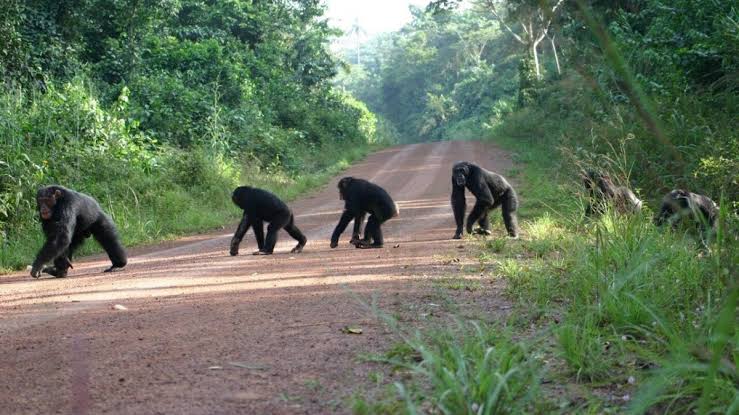
Chimpanzee trekking in Budongo Forest seamlessly acts as an introductory or concluding highlight for a standard 3 to 5-day Murchison Falls National Park itinerary. Located in the southern section of the conservation area, it provides a lush, primate-focused experience to contrast with the park's open savanna game drives and Nile River cruises
4-days-murchison-falls-and-chimpanzee-tracking-in-budongo-forest
4-days-birding-safari-in-murchison-falls-budongo-forest-and-ziwa-rhinos
2-days-chimpanzee-tracking-sleeping-at-budongo-eco-lodge
2-days-best-chimpanzee-tracking-in-kibale-forest-park-tour-package
3-days-trips-to-queen-elizabeth-national-park-for-chimpanzee-tracking-in-kyambura-gorge
3-days-chimpanzee-tracking-to-kibale-forest-national-park
4-days-queen-elizabeth-national-park-and-kyambura-gorge-chimpanzee-tracking
4-days-kibale-forest-chimpanzee-tracking-and-queen-elizabeth-national-park
4-days-chimpanzee-tracking-in-lake-mburo-national-park-and-lake-mburo-safari
4-days-kibale-forest-chimpanzee-tracking-and-queen-elizabeth-national-park
4-days-murchison-falls-and-chimpanzee-tracking-in-budongo-forest
5-days-uganda-big-five-safari-and-chimpanzee-tracking-in-kibale-forest-park
6-days-jinja-white-water-rafting-gorilla-trekking-and-chimpanzee-tracking-adventure
6-days-budget-uganda-safari-and-gorilla-trekking
7-days-perfect-uganda-primate-safari-itinerary
How It Fits into the Itinerary
Positioned right at the southern threshold of the Murchison Falls Conservation Area, Budongo Forest serves as the ultimate pit stop when traveling north from Kampala. The drive from the capital takes roughly four to five hours along paved highways via Masindi before you reach the park's Kichumbanyobo Gate. Budongo's main ecotourism site, Kaniyo Pabidi, sits just eight kilometers inside this southern entrance.
Instead of pushing through in a single tiring stretch all the way to the northern banks of the Nile, stopping here allows you to pace your journey. You can depart Kampala in the early morning, arrive at Budongo Eco Lodge in time for lunch, and immediately set off on an afternoon chimpanzee trek or nature walk. Alternatively, you can spend a quiet night nestled in the forest and complete a morning trek before moving deeper into Murchison Falls National Park for afternoon safari activities. Incorporating Budongo creates a seamless transition from urban transit to wild immersion without adding unnecessary detours or back-tracking onto your route.
The Contrast
Stepping out of the bright, sun-drenched savannas of northern Murchison into the cool, shadowed interior of Budongo Forest feels like entering an entirely different world. While Murchison is famous for sweeping grass plains populated by lions, Rothschild’s giraffes, and large herds of elephants, Budongo surrounds you with towering, ancient mahogany and ironwood trees—some of the largest surviving canopy giants in East Africa.
The visual experience shifts completely: open horizons give way to filtered sunlight, tangled vines, and the earthy scent of moist soil. Instead of scanning the horizon through a vehicle window, you explore on foot, tracking wild chimpanzees through the understory. The forest hums with life—pant-hoots echoing off buttress roots, tree branches swaying under the weight of red-tailed monkeys, blue monkeys, and black-and-white colobus monkeys, and vibrant woodland birds flitting through the canopy. This dramatic shift from open-air game drives to intimate, ground-level rainforest trekking provides a rich depth and diversity to your safari experience.
Pre-requisite Logistics
Chimpanzee trekking in Budongo is tightly regulated to protect both the habituated chimp communities and their fragile habitat. Treks depart in two main daily shifts: a morning session beginning with a briefing around 7:30 to 8:00 AM, and an afternoon session starting at approximately 2:00 PM. Group sizes are strictly capped—typically at a maximum of six to eight trekkers per ranger guide—ensuring minimal noise and disturbance in the forest.
Because permit numbers are limited per session, securing your permit ($130 USD for foreign non-residents) well in advance through a registered tour operator or the Uganda Wildlife Authority is essential, particularly during peak dry seasons. A standard session lasts between two and four hours depending on where the chimps are foraging, though once located, visitors are granted a strict one-hour window of direct observation. To fit this seamlessly into your schedule, you will need to allocate at least an extra half-day to your Murchison Falls itinerary, ensuring you arrive with proper hiking boots, lightweight long clothing, and insect repellent.
Where is Budongo Forest located relative to Murchison Falls National Park?
Budongo Forest lies directly within the southern sector of the Murchison Falls Conservation Area in Northwestern Uganda. Specifically, the main ecotourism site, Kaniyo Pabidi, sits just 8 kilometers inside the park’s Kichumbanyobo Gate along the main road from Masindi. Positioned roughly 220 kilometers north of Kampala, it serves as the geographical gateway to the park. Traveling north toward the Victoria Nile, you hit Budongo first, making it a natural entry point before reaching savanna sites like Paraa or the Bugungu Wildlife Reserve.
Why is Budongo Forest considered an ideal stopover when driving from Kampala?
Driving from Kampala to the northern game tracks of Murchison Falls takes upwards of 6 to 7 hours. Stopping at Budongo Forest breaks this long transit into a manageable 4-hour leg to Masindi and Kaniyo Pabidi. Travelers can stretch their legs, enjoy lunch at Budongo Eco Lodge, and trek chimpanzees in the afternoon. This eliminates driver fatigue and converts what would be a wasted travel day into an active, immersive safari experience right at the southern threshold of the conservation area.
How does the ecosystem in Budongo differ from the rest of Murchison Falls?
While central and northern Murchison Falls consist of open Borassus palm savannas, acacia woodlands, and riverine swamps along the Nile, Budongo is a dense, semi-deciduous tropical rainforest. Spanning roughly 825 square kilometers, Budongo features towering mahogany trees (Entandrophragma) and ironwood, creating a dark, moist canopy. This environment supports forest-dependent primates, woodland birds, and unique flora entirely absent on the exposed grassland plains where lions and giraffes roam.
What are the main daily tracking shifts for chimpanzee trekking in Budongo?
Chimpanzee trekking at Kaniyo Pabidi operates in two primary shifts daily. The morning session begins with a mandatory safety briefing around 7:30 AM, setting off into the forest by 8:00 AM. The afternoon session begins briefing at 1:30 PM and enters the forest at 2:00 PM. Each session accommodates limited groups to minimize ecological impact. Choosing between morning or afternoon depends on your driving schedule from Kampala or your onward travel plans to the Nile riverbank lodges.
How much does a chimpanzee permit cost in Budongo compared to Kibale?
As of current Uganda Wildlife Authority and National Forestry Authority pricing, a chimpanzee trekking permit in Budongo Forest costs $130 USD for foreign non-residents. In contrast, a permit for Kibale National Park costs $250 USD for foreign non-residents. Budongo provides an exceptionally cost-effective alternative for primate tracking, offering high sighting success rates without adding significant transit time or high permit fees to a classic Northern Uganda safari circuit.
What is the group size limit for trekking chimps in Kaniyo Pabidi?
To safeguard the habituated chimpanzee communities and maintain high safety standards, trek groups in Budongo are strictly capped at 8 visitors per ranger guide. During sensitive research periods or low-impact trekking protocols, groups may be kept even smaller, around 6 people. This small group size ensures lower noise levels in the understory, clearer vantage points through dense foliage, and less physical disturbance to the forest ecosystem.
How long does a typical chimpanzee trek in Budongo Forest take?
A standard trek usually lasts between 2 to 4 hours in total, depending on the location of the habituated chimp groups. Rangers track the primates based on where they built their nests the previous night and their vocal pant-hoots. Once the guide locates the group, visitors spend exactly 1 hour observing them as they feed, groom, and rest, before hiking back to the Kaniyo Pabidi visitor centre.
What tree species dominate the Budongo Forest canopy?
Budongo Forest is renowned across East Africa for its majestic, ancient mahogany trees, particularly Entandrophragma utile and Khaya anthotheca. Alongside these mahogany giants are dense stands of ironwood (Cynometra alexandri), which form a heavy, shaded canopy reaching up to 60 meters high. The massive buttress roots of these trees serve as soundboards for wild chimpanzees, who slam their feet against them to send acoustic signals across the forest floor.
Can you trek chimpanzees on the same day you drive from Kampala?
Yes, provided you leave Kampala early, around 5:00 AM or 6:00 AM. The 220-kilometer drive to Kaniyo Pabidi via Luwero and Masindi takes approximately 4 to 5 hours. Arriving by 12:30 PM allows time to check in at Budongo Eco Lodge, eat lunch, and prepare for the 2:00 PM afternoon tracking briefing. This makes same-day trekking logistically practical and efficient for tight 3-day Murchison itineraries.
How high is the success rate of finding chimpanzees in Budongo Forest?
The sighting success rate in Budongo Forest sits consistently above 80% to 90% during peak months. Kaniyo Pabidi hosts a well-habituated chimpanzee community studied and monitored by both ranger guides and researchers from the Budongo Conservation Field Station. However, because these are wild animals foraging across large home ranges, success varies slightly when fruit trees ripen deeper in un-queried sectors of the reserve.
What other primates can you spot while tracking chimps in Budongo?
Beyond wild chimpanzees (Pan troglodytes schweinfurthii), Budongo Forest harbors rich primate diversity. While hiking the trail network, trekkers regularly encounter black-and-white colobus monkeys leaping through the canopy, red-tailed monkeys with their distinct rust-colored tails, blue monkeys, and olive baboons along the forest margins. Nocturnal species like bushbabies (galagos) and pottos also inhabit the woods, observable on guided night walks.
How does Budongo fit into a 3-day Murchison Falls itinerary?
In a 3-day itinerary, Day 1 involves driving from Kampala, stopping at Ziwa Rhino Sanctuary, and reaching Budongo for an afternoon chimp trek or overnight stay. Day 2 features a morning game drive on the Buligi peninsula across the Victoria Nile and an afternoon boat cruise to the base of Murchison Falls. Day 3 includes visiting the Top of the Falls before returning to Kampala, creating a packed, balanced safari.
How does Budongo fit into a longer 5-day Murchison Falls itinerary?
A 5-day itinerary allows a far more relaxed pace. Day 1: Drive to Budongo Forest, overnighting at Budongo Eco Lodge. Day 2: Morning chimpanzee trek, followed by a forest canopy bird walk, then transit to Paraa. Day 3: Game drive in Buligi and afternoon boat safari to Murchison Falls. Day 4: Morning delta boat cruise toward Lake Albert for shoebill spotting and evening game drive. Day 5: Hike to the Top of the Falls and return to Kampala.
What accommodation options are available directly inside Budongo Forest?
The primary lodging facility located directly within the forest at Kaniyo Pabidi is Budongo Eco Lodge. Operated with eco-friendly principles, it offers comfortable timber cabins and budget dormitory rooms nestled right under the canopy. Staying here puts guests steps away from the ranger briefing station. Alternative luxury and mid-range options are available outside the forest boundary in Masindi town or further north along the Nile.
What are the physical fitness requirements for trekking chimps in Budongo?
Chimpanzee trekking in Budongo requires moderate physical fitness. Unlike mountain gorilla trekking in Bwindi Impenetrable National Park, which involves steep, muddy mountain ridges, Budongo’s terrain is relatively flat. However, trekkers must push through dense undergrowth, tangled vines, exposed tree roots, and damp ground for 2 to 4 hours. A steady walking pace and good balance are necessary to keep up when chimps move quickly on the ground.
What clothing and gear should you bring for a Budongo chimp trek?
Trekkers should wear lightweight, long-sleeved shirts and long trousers to protect against stinging nettles, thorny brush, and biting insects. Sturdy, broken-in hiking boots with good ankle support and grip are essential for muddy trails. Bring tucked-in long socks (to prevent driver ants from crawling up pant legs), a wide-brimmed hat, insect repellent containing DEET, a lightweight rain jacket, and at least 2 liters of drinking water.
How does seasonal weather affect trekking conditions in Budongo Forest?
During the dry seasons (December–February and June–August), trails are firmer, walking is easier, and chimps often forage near established paths where fruit is available. In the rainy seasons (March–May and September–November), heavy showers make forest tracks muddy and slippery, requiring extra caution. However, rain increases food availability, sometimes keeping chimp groups in smaller ranges, reducing overall hiking distances.
What is the minimum age requirement for chimpanzee trekking in Budongo?
The official minimum age limit for chimpanzee trekking in Budongo Forest, set by the National Forestry Authority and Uganda Wildlife Authority, is 15 years old. This rule is strictly enforced to protect young visitors from potential primate aggression and to prevent the transmission of childhood diseases (like measles or flu) to susceptible wild ape populations. Younger children must remain at the lodge under supervision.
Why is Kaniyo Pabidi the main focus for ecotourism in Budongo?
Kaniyo Pabidi is a designated ecotourism block within Budongo Forest Reserve specifically set aside for habituated primate research and controlled tourism. It features well-maintained trail grids, an established visitor center, ranger quarters, and Budongo Eco Lodge. This dedicated infrastructure protects the surrounding forest core while offering visitors reliable access to habituated chimp families under strict conservation guidelines.
How do forest birding walks in Budongo complement game viewing in Murchison?
Budongo Forest is one of Uganda’s premier birding hot spots, boasting over 360 bird species, including rare forest specials like the Puvel's Illadopsis, Chocolate-backed Kingfisher, and Sabine’s Spinetail. While savanna drives in northern Murchison yield sightings of open-country raptors, bustards, and storks, walking the famous "Royal Mile" track in Budongo gives bird watchers an intimate, focused rainforest canopy birding experience.
What is the "Royal Mile" in Budongo Forest and can it be added to the itinerary?
The Royal Mile is a famous, perfectly straight forestry road located in the Nyabyeya sector of Budongo Forest, historically used by King Kabalega of Bunyoro for recreation. Renowned globally as an exceptional birding spot, it features a wide, clear canopy corridor where birders can spot rare species effortlessly. Tour operators can easily add a 2-hour morning or afternoon Royal Mile walk to any Murchison itinerary.
What health and hygiene rules apply during a chimpanzee encounter?
Chimpanzees share roughly 98.7% of human DNA, making them highly vulnerable to human respiratory illnesses. Visitors must maintain a minimum distance of 8 meters (25 feet) from the chimps at all times. If you feel sick with a cold, flu, or contagious illness on the day of the trek, you are required to declare it and refrain from tracking. Wearing face masks during the observation hour is often enforced.
What role does the Budongo Conservation Field Station play in the area?
Founded in 1990 by Professor Vernon Reynolds, the Budongo Conservation Field Station (BCFS) combines field research with local conservation action. BCFS monitors wild chimp demography, studies forest ecology, and works with local communities in Masindi and Buliisa districts to curb illegal bushmeat snaring. Ecotourism fees generated at Kaniyo Pabidi directly fund these long-term scientific and community protection initiatives.
How does stopping at Ziwa Rhino Sanctuary pair with a Budongo chimp trek?
Ziwa Rhino Sanctuary sits in Nakasongola district, along the Kampala-Gulu highway before Masindi. Pairing Ziwa with Budongo allows travelers to track wild white rhinos on foot in the morning, stop for lunch in Masindi town, and reach Budongo for an afternoon chimp trek or overnight stay. This combination secures two major megafauna highlights before even entering the main gates of Murchison Falls.
Is chimpanzee trekking in Budongo safe for international travelers?
Yes, chimpanzee trekking in Budongo Forest is safe when led by trained Uganda Wildlife Authority and National Forestry Authority ranger guides. Guides carry armed protection for safety against wild forest mammals like buffaloes or bush elephants and maintain communication with park headquarters. Habituated chimps are accustomed to human presence, provided visitors follow ranger instructions and avoid sudden movements or eye contact.
What makes Budongo’s mahogany forest historically significant?
Budongo Reserve contains some of the last remaining large-scale primary mahogany stands in East Africa. Logging concessions during the British colonial era heavily targeted these timber giants, but protected blocks like Kaniyo Pabidi preserved specimen trees that are several centuries old. Today, these ancient trees form a vital ecological sanctuary, serving as carbon sinks and providing essential shelter and nesting habitat for primates.
How does the camera rule work when photographing chimps in Budongo?
Flash photography is strictly prohibited when observing chimpanzees in Budongo Forest. Bright flashes startle the animals, potentially triggering defensive calls or aggressive charges. Photographers should set their cameras to high ISO settings and wide apertures to capture sharp images under the dark, heavy forest canopy, and ensure shutter sounds are quieted so as not to disturb the group.
What local communities live around Budongo and how do they benefit?
The forest is surrounded by Banyoro and Alur farming communities in Masindi and Buliisa districts. Ecotourism revenue sharing programs allocate a percentage of permit fees toward local community projects, including constructing schools, healthcare clinics, and clean water boreholes. Additionally, local residents earn livelihoods as ranger guides, forest monitors, lodge staff, and suppliers of fresh organic produce to Budongo Eco Lodge.
How far in advance should you book Budongo chimpanzee permits?
While Budongo is generally less crowded than Kibale National Park, booking permits 2 to 4 months in advance is highly recommended—especially for travel during the peak dry seasons (June through August and December through February). Advance booking through a licensed Ugandan tour operator or directly via the National Forestry Authority guarantees your preferred shift time and prevents scheduling bottlenecks in your Murchison Falls itinerary.
Why does adding Budongo create a complete Ugandan wildlife experience?
Murchison Falls National Park excels at classic big game viewing—elephants, lions, leopards, buffalos, giraffes, and hippos along the Victoria Nile. However, without Budongo, the itinerary lacks an intimate rainforest primate experience. Adding Budongo combines open-savanna game viewing, river cruises, dramatic waterfalls, and deep-jungle ape tracking, delivering a comprehensive, multi-ecosystem safari without needing to travel all the way to Western Uganda.
Booking things to do in Murchison falls with us Roads of Adventure safaris
Booking an unforgettable safari in Murchison Falls with Roads of Adventure Safaris is easy. They specialize in tailored 3- to 4-day packages that cover everything from game drives and Nile boat cruises to top-of-the-falls hikes and rhino tracking
