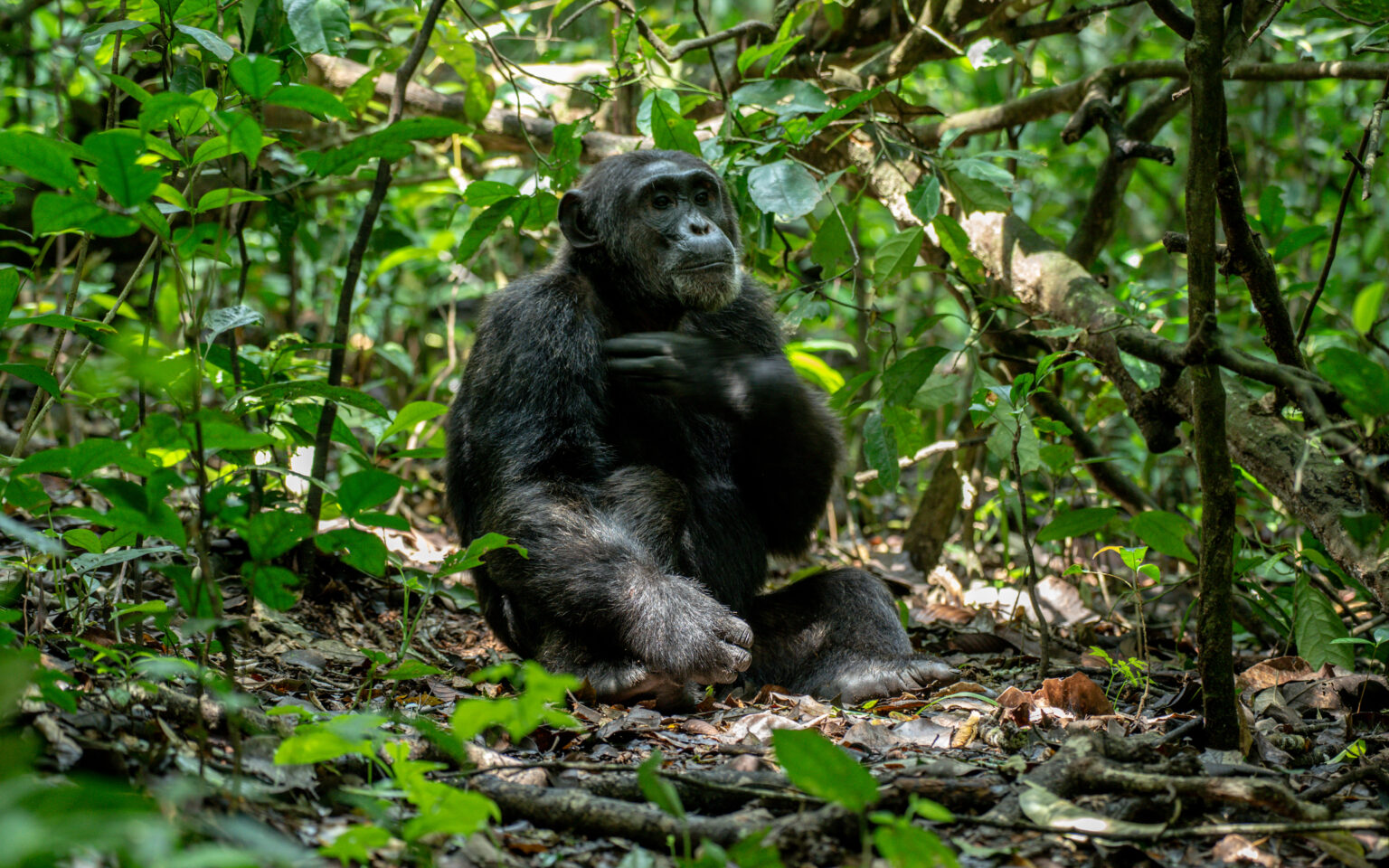
Wondering what to expect on a Kalinzu Forest chimpanzee safari? While less steep than mountain gorilla trekking, chimpanzee tracking in Kalinzu forest is a moderately difficult hike that takes between 2 and 4 hours over natural, uneven terrain. Explore our comprehensive guide to learn about elevation, seasonal weather impacts, required gear, and expert tips to help you prepare for an unforgettable rainforest experience.
4-days-budget-queen-elizabeth-park-and-chimpanzee-tracking-in-kalinzu-forest 14-days-uganda-and-rwanda-safari-tour-itinerary
14-days-luxury-uganda-primate-safari-holiday
14-days-uganda-primate-safari-and-jinja-white-water-rafting
14-days-classic-uganda-birding-safari-expedition
14-days-best-africa-big-five-safari-in-uganda-and-best-gorilla-trekking-adventure
20-days-uganda-birding-safari-wildlife-gorilla-and-chimpanzee-tracking
20-days-uganda-birding-safari-to-uganda-national-park
20-days-uganda-safari-holiday-tour-package-itinerary
19-days-best-photography-uganda-birding-safari-and-wildlife-adventure
19-days-incredible-uganda-safari-tour-big-five-chimpanzees-and-mountain-gorillas
18-days-best-of-uganda-safari-holiday-vacation-to-all-best-parks
17-days-uganda-honeymoon-safari-holiday-tour
17-days-uganda-birding-safari-itinerary
17-days-best-safari-in-uganda-ending-in-kigali-rwanda
16-days-ultimate-uganda-safari-to-rwanda-safari-tour-package-combo
16-days-best-of-uganda-birding-safari-holiday-extravaganza
7-day-ultimate-uganda-primate-safari-chimpanzees-and-game-drives
6-days-best-gorilla-trekking-and-safari-uganda-parks
Hiking Conditions and Terrain
- Duration: Expect to spend between 2 and 4 hours searching for the chimpanzees, followed by a maximum of 1 hour viewing them.
- Terrain: The trail network includes steep slopes, thick vegetation, and slippery or muddy sections, especially after rain.
- Pace: While the terrain is flatter than mountain gorilla habitats, chimpanzees move quickly through the trees, requiring bursts of fast walking to keep up.
Seasonal Impact
- Dry Season (June–September and December–February): Trails are drier, firmer, and much easier to navigate.
- Wet Season (March–May and Octobe
Overview of Hiking Difficulty for Chimpanzee Tracking in Kalinzu Forest
Chimpanzee tracking in Kalinzu Central Forest Reserve is rated as moderate in difficulty. While generally less steep and altitude-demanding than gorilla trekking in Bwindi Impenetrable National Park, it requires a reasonable level of physical fitness.
Key terrain and physical factors include:
- Terrain & Elevation: Sits at an elevation of approximately 1,400 meters above sea level along the Albertine Rift Valley escarpment. The terrain features undulating hills, slippery clay paths, exposed tree roots, and dense thickets.
- Pace & Distance: Treks typically last between 2 to 4 hours total. However, because wild chimpanzees move rapidly through the high canopy and across the forest floor, hikers must frequently off-trail through dense underbrush to keep up with them.
- Environmental Factors: High humidity, mud during rain showers, and prickly vegetation (such as acacias and stinging nettles) make sturdy footwear and long sleeves essential.
30 Detailed Questions & Answers
How does the overall physical difficulty of tracking chimpanzees in Kalinzu Forest compare to gorilla trekking in Bwindi?
Chimpanzee tracking in Kalinzu Forest Reserve is generally considered moderate and physically less strenuous than gorilla trekking in Bwindi Impenetrable National Park. Gorilla trekking often involves scaling steep, high-altitude ridges (up to 2,600 meters) through thick vegetation without established trails, lasting anywhere from 3 to 8 hours. In contrast, Kalinzu sits at a lower altitude of approximately 1,400 meters above sea level, making cardiovascular strain from elevation far less of a factor. However, the physical challenge in Kalinzu lies in speed and agility. Chimpanzees move rapidly through the forest canopy and on the ground. When trackers locate a vocalizing group, visitors must often move quickly through dense underbrush, over exposed roots, and across muddy ravines to keep up with the moving troop. While gorilla tracking requires sustained, slow uphill endurance, Kalinzu chimp tracking demands sudden bursts of speed, quick footwork on uneven ground, and bending beneath low-hanging vines. The average duration in Kalinzu is 2 to 4 hours, making it more accessible to travelers with average fitness, though active mobility is still essential to navigate off-trail terrain.
What specific terrain types will hikers encounter on the forest trails in Kalinzu Forest Reserve?
The terrain in Kalinzu Central Forest Reserve consists of a complex mix of moist evergreen forest paths, river valleys, and gentle escarpment slopes. Hikers begin on designated forest trails, such as the Valley or River trails, which are relatively clear but feature uneven earth, decaying leaf litter, and sprawling tree roots from massive hardwood trees like Parinari excelsa. As the trek progresses and trackers pinpoint the location of the habituated chimp community, the route frequently transitions off-trail into raw rainforest. Off-trail terrain requires stepping over fallen logs, navigating around dense vine thickets, and scrambling up or down damp clay banks along forest stream channels like the Kajojo River. The forest floor retains moisture year-round due to the dense overhead canopy, creating slick surfaces even outside the main rainy seasons. Soil conditions vary from firm loam on ridge tops to deep, sticky mud in lower drainage basins. These varied ground conditions require hikers to maintain constant focus on foot placement to avoid slipping or twisting ankles on hidden roots and loose soil.
How does local weather and seasonal rain impact the trail conditions and hike difficulty?
Weather plays a critical role in determining the difficulty of the Kalinzu chimp trek. During the wet seasons—typically March to May and October to November—tropical rain showers saturate the clay-rich forest soil. This turns moderate paths into slick, muddy tracks where maintaining traction becomes significantly more challenging. Rain also increases humidity under the closed canopy, causing hikers to tire more quickly due to heat retention. Downpours can cause low-lying forest floors and stream crossings to swell, requiring cautious steps across slippery rocks or mud banks. Conversely, during the drier months of June to August and December to February, trail surfaces dry out, providing firmer footing and making overall movement faster and less exhausting. However, even in dry seasons, localized rain showers occur due to the forest’s microclimate. Rain also influences chimpanzee behavior: during wet weather, chimps often remain seated high in tree canopies or reduce their movement, which may require hikers to stand on wet, uneven ground for extended periods while looking up, adding neck and back strain to the physical effort.
What distance and duration can visitors expect during a typical chimpanzee tracking excursion in Kalinzu?
A typical chimpanzee tracking session in Kalinzu Forest covers a distance ranging between 3 to 7 kilometers, lasting approximately 2 to 4 hours in total. Unlike structured walking tours on fixed loops, the exact distance and time are entirely unpredictable because they depend on the movement of the habituated chimp communities. Early in the morning, ranger-trackers enter the forest around 6:00 AM to locate where the chimps nested the previous night. Visitors launch their hike at 8:00 AM after a brief orientation. If the chimps are feeding near the main trail system, visitors may reach them within 45 minutes of easy walking. However, if wild fruit availability is low or if rival chimp groups are active nearby, the troop may travel deep into the reserve or across steep valleys. In such cases, the hike can extend up to 4 or 5 hours over rugged ground. Once the guide and trackers locate the chimpanzees, park regulations strictly limit the contact time to exactly 1 hour. The return walk back to the reception station at Nkombe typically takes another 45 to 90 minutes.
How does the pace of movement during chimp tracking affect the overall physical challenge?
The pace of chimpanzee tracking in Kalinzu Forest is dynamic and uneven, making it physically different from standard rhythm-based hiking. The trek usually begins at a measured, conversational pace along established paths as the National Forestry Authority (NFA) guide interprets plant species, birdlife, and forest ecology. However, once vocal calls or radio reports from advance trackers confirm the chimps’ precise location, the group must accelerate. Chimpanzees travel rapidly both on the ground and through the canopy, covering terrain much faster than humans. Hikers often need to keep up a swift walk or jog through thick undergrowth, ducking under branches and stepping over root networks. This sudden shift from a casual walk to fast-paced off-trail navigation demands cardiorespiratory agility and good balance. Furthermore, once near the chimps, visitors may spend 30 to 60 minutes actively following them through the forest as they forage, which involves quick stops, rapid direction changes, and ducking under foliage, leaving little opportunity for prolonged rest breaks.
What level of baseline physical fitness is required to successfully complete the Kalinzu chimp trek?
To enjoyably complete the chimpanzee track in Kalinzu Forest, an individual needs a moderate baseline of cardiovascular fitness and good functional mobility. Special training is unnecessary, but visitors should be comfortable walking continuously for 3 to 4 hours over uneven terrain. The primary physical demands involve knee stability, core balance, and leg strength for stepping over large roots, climbing muddy inclines, and descending slippery earth banks. Individuals who lead sedentary lives or suffer from severe joint conditions (such as advanced knee or hip arthritis) may find the off-trail portions challenging without assistance. Prior to departure, park guides assess the physical capability of visitors during the morning briefing. Hikers are often categorized into slow, medium, or fast-paced groups so that rangers can match the group’s walking speed to the anticipated location of the chimpanzee troop. For average travelers who routinely engage in recreational walks, light cardio, or general outdoor activities, the physical demand of Kalinzu is well within reach.
How does altitude and elevation change impact hikers in Kalinzu Forest Reserve?
Kalinzu Central Forest Reserve lies at an average altitude of approximately 1,400 meters (4,593 feet) above sea level on the escarpment of the Albertine Rift Valley. At this elevation, atmospheric oxygen levels are slightly lower than at sea level, but not low enough to cause acute altitude sickness or severe respiratory distress for most visitors. The physical impact of elevation here is minimal compared to high-altitude treks like Mount Rwenzori or the Virunga Volcanoes. The primary elevation-related challenge comes from localized topographic gains and losses rather than thin air. The forest terrain features rolling hills, stream valleys, and ridge lines. Hikers may experience repeated elevation changes of 50 to 150 meters as they descend into forest ravines and climb back up forest slopes. These short, steep ascents work the quadriceps and calves and increase the heart rate, particularly when moving quickly to follow chimpanzee vocalizations, but elevation itself poses little hindrance to healthy individuals.
What footwear is essential to handle the forest floor conditions in Kalinzu?
Proper footwear is critical to safety and comfort during a chimpanzee trek in Kalinzu Forest. Standard sneakers, running shoes, or open sandals are inadequate because they lack ankle support and deep tread pattern needed for wet forest clay. Hikers should wear sturdy, waterproof hiking boots with high ankle coverage and deep rubber lugs (soles). The ankle support helps prevent sprains when stepping on concealed roots, rolling stones, or hidden holes under leaf litter. Waterproof membranes (such as Gore-Tex) keep feet dry when crossing shallow mud pools, damp grass, or small forest rivulets. Pairing boots with moisture-wicking wool or synthetic hiking socks prevents blisters caused by friction and dampness. Furthermore, tucking long trousers into high socks or wearing gaiters prevents safari ants (driver ants) and mud from entering the boots. Properly broken-in boots with good traction significantly reduce physical fatigue by minimizing slipping on wet inclines.
Why are long trousers, long-sleeved shirts, and gaiters recommended for this hike?
Wearing long-sleeved shirts and full-length trousers made from lightweight, quick-drying synthetic fabric is essential protection against environmental hazards in Kalinzu. The forest contains abundant stinging nettles, thorny vines, sharp-edged elephant grass, and prickly acacia branches that scratch exposed skin during off-trail tracking. Long clothing also provides a barrier against insects, including mosquitoes, tsetse flies, and safari ants. Safari ants travel in dense columns across the forest floor; if stepped on, they swiftly climb up legs and deliver painful bites. Tucking trouser legs into socks or wearing gaiters creates a seal that prevents ants and ticks from climbing up inside clothing. Gaiters additionally protect lower legs from deep mud and wet brush. Heavy denim jeans should be avoided, as they absorb moisture from sweat, rain, or dew, becoming heavy, chafing, and slow to dry in humid forest conditions.
What role do walking sticks play in easing the difficulty of the Kalinzu forest trek?
A sturdy walking stick or adjustable trekking pole is a valuable aid for managing the terrain in Kalinzu. Local wooden walking sticks are usually offered to visitors at the start of the trek by NFA guides. A walking stick acts as a third point of contact with the ground, improving balance on slippery, clay-covered slopes and damp leaf beds. During steep descents into river valleys, leaning on a stick transfers body weight away from the knees and lower back, reducing joint strain and preventing slips. On uphill sections, poles allow the upper body arms and chest to assist the leg muscles in propelling the hiker forward. Additionally, a trekking pole can be used to test soft ground or deep mud before stepping forward and to clear away low-hanging vines or stinging plants along unmaintained paths. For older hikers or those with minor joint stability issues, a walking stick significantly enhances confidence and safety.
How do heat and humidity inside the closed-canopy rainforest affect physical exertion?
Kalinzu Forest is a dense tropical rainforest characterized by a thick overhead canopy that blocks direct sunlight while trapping heat and moisture beneath. Relative humidity levels within the forest frequently exceed 80% to 90%. High humidity reduces the body’s ability to cool itself through sweat evaporation, causing hikers to feel hotter and sweat heavily even during moderate walking. This microclimate accelerates dehydration, electrolyte loss, and physical fatigue if not properly managed. While the canopy shields hikers from direct sun, the still, warm air inside can feel oppressive, particularly during steep climbs or fast-paced tracking. To mitigate heat stress, hikers should wear breathable, moisture-wicking fabrics, pace themselves during steep sections, and sip water regularly. Taking brief stops in shaded clearings allows the body to regulate temperature before continuing through dense foliage.
How are visitors grouped by fitness level during the pre-trek briefing at Kalinzu?
Before entering the forest, all visitors gather at the Kalinzu NFA reception center for a mandatory safety orientation and briefing. During this time, lead range guides assess the group's composition, age profile, and expressed physical capabilities. Visitors are typically divided into small teams of up to 6 people per habituated chimpanzee group. Guides assign faster, highly fit hikers to chimpanzee groups known to have moved deeper into the forest or onto steeper terrain. Conversely, older travelers or those who prefer a more relaxed pace are assigned to chimp groups located closer to the forest headquarters or along flatter terrain. Communicating any pre-existing physical limitations, joint concerns, or medical issues openly to the lead guide during briefing ensures accurate placement. This system helps ensure that the pace remains manageable and safe for everyone in the group.
What dynamic behaviors of habituated chimpanzees influence the tracking difficulty on any given day?
Unlike mountain gorillas, which spend much of their day lazily feeding on terrestrial foliage in a compact area, chimpanzees are energetic, highly mobile, and semi-arboreal. Their daily routine directly dictates the physical effort required by trackers. In the morning (around 8:00 AM), chimps are active, descending from night nests to forage for wild figs, leaves, and fruits, or patrolling territory borders. During this time, they move swiftly across the forest floor or leap through branches, requiring hikers to maintain a fast pace to keep up. By early afternoon (around 1:00 PM to 3:00 PM), chimps often rest, groom, or sleep in tree canopies to escape midday heat. Afternoon tracking may require less continuous running, but it can involve standing in one location for long periods, craning the neck upward to observe chimps high in the canopy. If a food source is scarce, chimps can cover 10 or more kilometers in a day, turning a standard track into a longer endurance challenge.
How does off-trail bushwhacking increase the technical challenge of the hike?
While designated trails like the Palm Trail or Waterfall Trail exist in Kalinzu, chimpanzees regularly range far beyond maintained paths. Once armed NFA rangers and guides track the chimps' vocal calls, they lead visitors directly into the undisturbed forest. Bushwhacking off-trail introduces several technical physical challenges: hikers must navigate dense underbrush, duck beneath tangled vines, squeeze between close-growing tree trunks, and step over rotting, fallen trees. The forest floor off-trail is uneven and covered with thick leaf litter that can hide holes, burrows, sharp stumps, and loose rocks. Hikers must continually flex their core, bend low, and adjust their stride while watching for hanging branches and thorny flora. This movement engages stabilizing muscles in the ankles, hips, and core far more intensely than flat trail walking, increasing physical fatigue.
What safety precautions do armed rangers and guides take to manage physical risks on the trail?
Safety during the Kalinzu Forest hike is managed by professional National Forestry Authority (NFA) guides and armed park rangers who accompany every tracking group. The armed ranger typically walks at the front or rear of the group carrying a firearm. This is primarily a protective measure against non-habituated wild animals that inhabit the reserve—including forest elephants, buffaloes, giant forest hogs, and baboons—which may wander in from adjacent Queen Elizabeth National Park. Guides are trained in forest navigation, first aid, and animal behavior. They carry mobile phones or two-way radios to maintain contact with advance trackers and central headquarters. If a hiker experiences severe fatigue, an injury, or illness, the guide can alter the route, pause for extended rests, or coordinate assistance. Guides also manage trail speed, clear dangerous paths with cutlasses when necessary, and ensure visitors keep a safe 8-meter distance from the primates.
Are porters available at Kalinzu Forest to assist visitors with daypacks and challenging terrain?
Unlike Bwindi Impenetrable National Park or Kibale National Park where porter services are formally structured at every briefing station, porter availability at Kalinzu Central Forest Reserve is more informal. Local community members and field porters can often be hired at the Nkombe forest station reception upon prior request or arrival. Hiring a porter is highly recommended for hikers who want to reduce physical exertion. For a modest fee (typically $10 to $15 USD), a porter carries your daypack—containing heavy water bottles, camera gear, rain jackets, and snacks—allowing you to focus entirely on footing and balance. In addition to carrying bags, porters offer physical assistance by giving a steady hand over slippery stream crossings, steep mud banks, or tricky fallen logs. Hiring a porter also provides direct economic support to the local communities surrounding the forest reserve, fostering positive wildlife conservation attitudes.
How much water and what energy snacks should visitors carry on the Kalinzu tracking hike?
Proper hydration and nutrition are vital to managing physical exertion in Kalinzu's warm, humid climate. Each hiker should carry at least 2 to 3 liters of clean drinking water in a durable hydration bladder or reusable water bottles. Sweating heavily in humid forest conditions leads to rapid fluid loss, and drinking water continuously helps prevent dehydration, muscle cramps, and headaches. Along with water, visitors should pack energy-dense, non-perishable snacks such as nut mixes, dried fruit, energy bars, or electrolyte powder packets. These supply quick carbohydrates to maintain blood sugar during unexpected long climbs or fast tracking sessions. It is crucial to remember that eating or drinking directly in front of the chimpanzees is strictly prohibited to avoid agitating the primates or risking disease transmission. Snacks and water should only be consumed during designated rest breaks along the trail as authorized by the guide.
What are the primary insect and flora hazards on the trail, and how do they add to the challenge?
Navigating Kalinzu Forest requires awareness of specific botanical and insect hazards. The most notable insect hazard is the safari ant (driver ant). These ants form massive marching columns across forest paths; if disturbed, hundreds can quickly swarm footwear and deliver sharp, painful bites. When encountering an ant column, hikers must step over it quickly and avoid stopping nearby. Tsetse flies and mosquitoes are also present, requiring insect repellent containing DEET or Picaridin. Botanical hazards include Urtica species (stinging nettles) which cause immediate burning skin irritation upon contact, as well as climbing palms (Raphia or rattan) with sharp, recurved thorns that easily catch on loose clothing or equipment. Dodging these flora hazards requires constant visual vigilance while walking, which adds mental focus to the physical demand of the hike.
How does age restriction and visitor health policy impact eligibility for the Kalinzu chimp hike?
To protect both human safety and primate health, strict age and health regulations govern chimpanzee tracking in Kalinzu. The minimum age limit for chimpanzee tracking in Uganda is 15 years old (though some historic regulations set it at 12, NFA enforces standard wildlife conservation standards). Children under this age are generally not permitted on tracking trails because younger hikers may panic during sudden wildlife movements or struggle with the physical demands. Health policies are equally strict: visitors suffering from airborne or communicable illnesses—such as the flu, common cold, cough, diarrhea, or COVID-19—are prohibited from tracking. Because chimpanzees share roughly 98.7% of human DNA, they are highly susceptible to human respiratory diseases, which can decimate an entire wild community. Visitors who feel unwell must self-report; park authorities may deny trail access to visibly ill individuals to safeguard the habituated chimp population.
What are the rules of conduct when near the chimpanzees, and how do they affect movement?
Once the guide locates the habituated chimpanzee group, visitors must adhere to strict rules of conduct that dictate physical movement. Trekkers must maintain a minimum distance of 8 meters (26 feet) from the chimpanzees at all times. If a curious chimp approaches, visitors are instructed to step back slowly without making sudden movements or direct eye contact, which primates can interpret as a threat. Flash photography is strictly forbidden because sudden bright flashes can startle or agitate the animals. Voices must be kept low and hushed. Eating, drinking, or littering within sight of the chimps is prohibited. These behavioral rules mean that watching the primates isn't a passive rest break; visitors must remain alert, crouch or shift footing quietly on uneven ground, hold heavy cameras steady without support, and adjust positions cautiously on narrow paths to maintain viewing angles without breaking proximity limits.
How does tracking chimpanzees in Kalinzu Forest differ from tracking in Kibale National Park?
Comparing Kalinzu Forest Reserve to Kibale National Park highlights differences in terrain, group size, and overall tracking dynamics. Kibale is famous as the "Primate Capital of the World," featuring a vast, well-maintained network of wide, flat trails with high tourist volumes and a permit cost of $250+ USD. Kalinzu, managed by the NFA, offers a more rugged, rustic, and intimate forest experience at a significantly lower permit cost (around $50 to $130 USD depending on residency status). The terrain in Kalinzu features steeper escarpment valleys and narrower paths compared to the flatter, central sectors of Kibale. Group sizes in Kalinzu are kept small (maximum 6 visitors per chimp group), leading to less crowded viewing. While both locations boast high sighting success rates (around 90% to 95%), tracking in Kalinzu often requires more off-trail bushwhacking through dense vegetation, making it feel slightly more adventurous and physically engaging.
How does tracking in Kalinzu compare to tracking chimps in Kyambura Gorge?
Kalinzu Forest Reserve and Kyambura Gorge are two primary chimpanzee tracking destinations situated near Queen Elizabeth National Park, but their physical profiles differ dramatically. Kyambura Gorge, known as the "Valley of Apes," is a deep, sunken atmospheric canyon cut through the savannah. Tracking in Kyambura requires a steep, vertical descent down 100-meter canyon walls via wooden steps and dirt ladders, followed by trekking along a muddy riverbank bounded by steep cliffs on both sides. This creates an isolated, closed-in physical environment. In contrast, Kalinzu is an expansive, high-canopy continuous forest (147 sq km) sitting atop the rift escarpment. While Kalinzu has undulating hills, it lacks the extreme vertical wall descents of Kyambura. Furthermore, Kalinzu hosts a much larger habituated chimp population (over 70 habituated chimps out of 320 total), resulting in a significantly higher sighting success rate (95%) compared to Kyambura's smaller, isolated population.
What camera gear and backpack setup minimizes physical strain during the trek?
Carrying excessive or poorly packed camera gear can significantly increase physical strain during the Kalinzu trek. Because chimpanzees are fast-moving and often perched high in dense forest canopies 20 to 30 meters above, photography requires telephoto lenses (e.g., 70-200mm or 100-400mm). However, heavy super-telephoto prime lenses and heavy tripods become burdensome off-trail. Monopods or lightweight carbon-fiber travel tripods are far more practical for steadying shots on uneven forest floors without adding excess weight. Cameras should be carried in a comfortable, ergonomic dual-shoulder backpack with chest and waist hip straps. Hip straps transfer pack weight from the shoulders to the pelvis, preserving lower back comfort during steep walks. Using a chest harness or clip keeps the camera easily accessible while leaving hands free to hold trekking poles or grab handholds when traversing slippery sections.
What are the morning vs. afternoon tracking options, and how do they differ in difficulty?
Kalinzu Forest Reserve offers two daily chimpanzee tracking sessions: a morning shift starting around 8:00 AM and an afternoon shift starting around 3:00 PM. The morning shift is generally considered more physically active. In the early hours, chimpanzees descend from their nests, feed hungrily on fruits, communicate loudly, and move rapidly across territory boundaries. Hikers on morning tracks often cover more distance at a faster pace, making the hike more strenuous but delivering dynamic behavioral sightings. The afternoon shift occurs when forest temperatures are higher. Chimps are often full from morning feeding and spend hours resting, grooming, or sleeping in tree shade. Afternoon tracking usually involves less rapid cross-forest chasing, making the physical walk somewhat shorter or more static, though elevated afternoon heat and humidity can increase personal dehydration and tiredness.
How do travelers with minor joint issues or limited hiking mobility manage the Kalinzu hike?
Travelers with minor knee issues, stiff joints, or lower fitness levels can successfully complete a Kalinzu chimp tracking tour by taking targeted precautions. First, inform the NFA lead guide during the morning briefing about any physical constraints. Guides can assign limited-mobility visitors to slow-paced groups and target habituated chimp troops closest to the forest entrance. Second, hire a local porter to carry all equipment and provide hand assistance on steep or muddy trail sections. Third, use dual trekking poles with rubber tips to absorb impact on knees during downhill segments. Wearing flexible neoprene knee braces provides lateral stability on uneven roots. Maintaining a slow, steady pace rather than rushing during off-trail pushes prevents sudden joint strain. While severe mobility impairments may preclude off-trail tracking, moderate adjustments make the experience accessible to most casual walkers.
What role does the National Forestry Authority (NFA) play in trail maintenance and trek organization?
Unlike most national parks in Uganda managed by the Uganda Wildlife Authority (UWA), Kalinzu Forest Reserve is managed by the National Forestry Authority (NFA). The NFA oversees conservation, eco-tourism, and research operations within the reserve. NFA station staff maintain a network of designated walking trails—including the River Trail, Palm Trail, Valley Trail, and Waterfall Trail—by clearing fallen branches, building rustic log bridges across streams, and marking routes. NFA guides undergo specialized training in primate habituation, forestry ecology, and visitor safety. The NFA briefing center at Nkombe manages permit validation, divides visitors into balanced groups, and coordinates field trackers. This structured management ensures that while the forest retains its raw, authentic wilderness character, visitor activities remain organized, educational, and safe.
How does rainfall during the hike affect trail navigation and emergency extraction if needed?
Heavy, unexpected rainfall during a trek introduces operational challenges that increase physical difficulty. Rain turns clay tracks into slick surfaces, slows walking speed, and reduces visibility under the dense forest canopy. It also drowns out chimpanzee calls, making vocal tracking more difficult and potentially lengthening the hike. In the event of a minor emergency—such as a severe ankle sprain or acute exhaustion during a downpour—armed rangers and NFA guides use two-way radios or mobile phones to call for support from the Nkombe headquarters. Because vehicles cannot access the inner forest interior, extraction relies on manual stretcher assistance provided by rangers and porters along established trails. Maintaining proper waterproof gear (a breathable rain jacket, waterproof pack cover, and sealed dry bags for electronics) ensures hikers stay warm and comfortable even if rain lengthens the return trip.
What non-primate wildlife encounters might occur on the trail, and how do they impact the hike?
While chimpanzees are the main focus, Kalinzu Central Forest Reserve is a rich biodiversity hotspot hosting 6 primate species, 379 bird species, 262 butterfly species, and various forest mammals. Hikers regularly spot black-and-white colobus monkeys, red-tailed monkeys, blue monkeys, L'Hoest's monkeys, and olive baboons in the mid-canopy. Due to Kalinzu’s direct connection to Queen Elizabeth National Park and the Maramagambo Forest, larger mammals—including forest elephants, buffaloes, giant forest hogs, and duikers—frequently move through the reserve. Encountering large mammals like elephants or buffaloes requires strict safety protocol: armed rangers lead the group, monitor wind direction, and alter the hiking path to keep a safe distance. These wildlife detours can add extra distance or time to the hike, requiring flexibility and adding excitement to the wilderness experience.
What items should be packed in a personal daypack for a comfortable Kalinzu forest trek?
A properly packed daypack (15 to 25 liters capacity) should hold essential gear without adding unnecessary weight. Crucial items include:
- Hydration & Snacks: At least 2 to 3 liters of water and energy snacks (nuts, dried fruit, protein bars).
- Rain Gear: A lightweight, waterproof rain jacket or poncho and a pack cover.
- Protection: Insect repellent (DEET-based), sunscreen, sunglasses, and a wide-brimmed hat.
- Personal & Hygiene: Lightweight gardening gloves (for gripping thorny vines), hand sanitizer, personal medication, blister pads/bandages, and a small roll of toilet paper in a waterproof bag.
- Electronics: Camera gear protected in Ziploc or dry bags, spare batteries, and memory cards.
- Documentation: Physical copies of tracking permits and identification passports.
Keeping the daypack weight under 5 to 6 kg (11 to 13 lbs) prevents shoulder fatigue during off-trail hiking.
How can visitors best prepare physically in the weeks leading up to their Kalinzu chimp tracking safari?
Preparing physically 3 to 4 weeks before arriving in Uganda improves comfort and stamina on the trail. Pre-trip physical conditioning should focus on leg strength, core balance, and general aerobic endurance. Effective exercises include:
- Walking & Hiking: Take 1- to 2-hour outdoor walks on natural, uneven surfaces (grass, dirt paths, or sand) rather than flat pavement to build ankle stability.
- Stair Climbing: Use stairs or a stair-master machine to strengthen quadriceps, hamstrings, and calves for undulating forest terrain.
- Core & Balance: Perform bodyweight squats, lunges, step-ups, and planks to improve core balance needed when stepping over fallen trees and slipping on mud.
- Gear Break-In: Wear your actual hiking boots with weighted socks on pre-trip walks to break them in thoroughly and identify potential friction spots before arriving in Kalinzu.
Booking chimpanzee tracking in Kalinzu forest with us Roads of Adventure safaris
You can book your chimpanzee tracking experience in Kalinzu Forest directly through Roads of Adventure Safaris by providing your preferred travel dates and traveler details.
