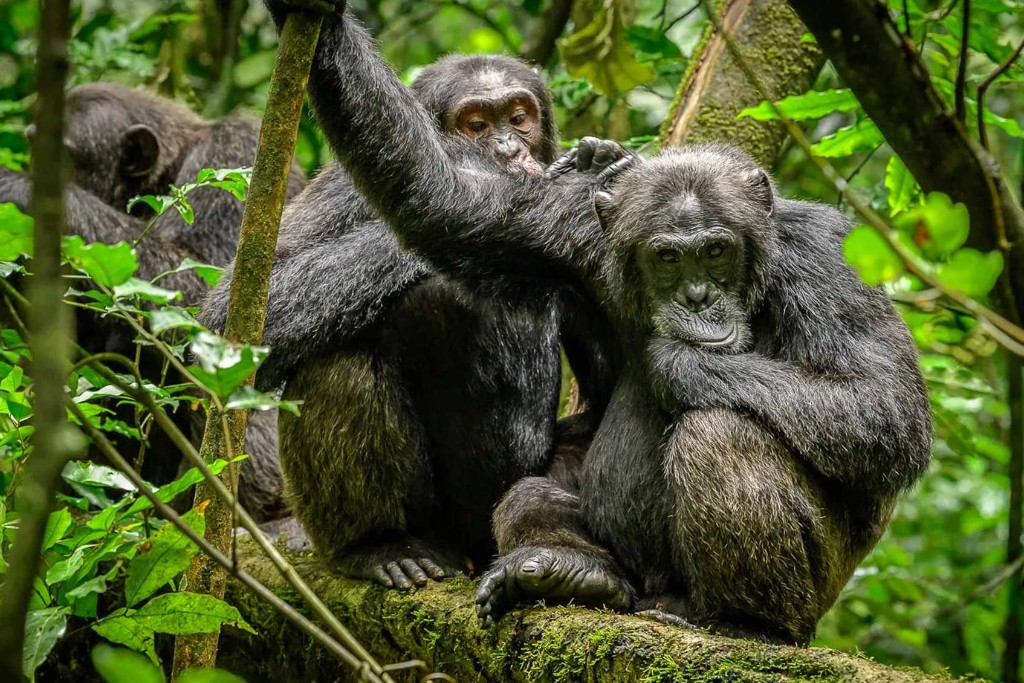
Gorilla trekking wins as the premier, must-do experience for a Rwanda safari, though chimpanzee tracking offers a high-energy and budget-friendly alternative.
2-days-luxury-rwanda-gorilla-trekking-safari-from-kigali-city
3-days-rwanda-gorilla-trekking-and-golden-monkey-tracking-in-volcanoes
3-days-rwanda-gorilla-trekking-safari-itinerary-in-volcanoes-park
4-days-rwanda-golden-monkey-tracking-and-bisoke-hiking-tour-package
4-days-best-volcanoes-and-bwindi-impenetrable-national-park-double-gorilla-trekking
4-days-rwanda-primates-safari-gorilla-trekking-and-chimpanzee-all-inclusive-package
5-days-best-chimpanzee-tracking-golden-monkey-tracking-and-visit-to-lake-kivu
5-days-rwanda-double-gorilla-trekking-and-golden-monkey-tracking
5-days-uganda-gorilla-trekking-chimps-and-rwanda-golden-monkey-tracking-combo
6-days-gorillas-trekking-chimpanzee-tracking-and-golden-monkeys-safari-in-rwanda
7-days-best-gorilla-trekking-and-other-highlights-of-rwanda-tour
8-days-best-of-rwanda-uganda-safari-volcanoes-to-best-uganda-safari-parks
Key Comparison
Feature
Gorilla Trekking (Volcanoes National Park)
Chimpanzee Tracking (Nyungwe National Park)
The Experience
Emotional, calm, and slow-paced encounter with grounded silverbacks and families
Fast-paced, dynamic, and noisy action with chimps moving through trees
Location from Kigali
~2.5 hours north (relatively accessible)
~5 to 6 hours south (deep in the rainforest)
Wildlife Behavior
Mostly ground-dwelling, organized, and easy to photograph
Tree-dwelling, constantly moving, and chaotic
Minimum Age
15 years old
Lower age limits apply depending on local rules
Why It "Wins"
Rarity, intimacy, and the defining bucket-list status of Rwanda's eco-tourism
Great if you want a longer, multi-stop forest adventure (plus the canopy walk)
What makes gorilla trekking in Volcanoes National Park considered the ultimate bucket-list safari experience in Rwanda?
Gorilla trekking in Volcanoes National Park is widely considered the ultimate bucket-list safari experience because it offers a rare, deeply intimate encounter with mountain gorillas in their natural cloud-forest habitat. Travelers are granted a strictly regulated, magical one-hour window to observe a habituated family up close. The sheer rarity of mountain gorillas—numbering only around a thousand individuals globally and existing entirely in the wild—elevates the journey. Furthermore, the meticulous conservation framework managed by the Rwanda Development Board ensures that tourism directly funds habitat preservation and anti-poaching operations, making every trek an impactful act of global wildlife preservation.
How does the physical pacing and overall atmosphere of gorilla trekking differ from chimpanzee tracking?
Gorilla trekking is characterized by a calm, slow-paced, and profoundly emotional atmosphere. Mountain gorillas spend the majority of their time on the ground foraging, resting, grooming, and playing. Because they are grounded and largely relaxed in the presence of humans, encounters unfold at a deliberate, contemplative pace. In contrast, chimpanzee tracking in Nyungwe National Park is fast-paced, dynamic, and chaotic. Chimpanzees spend much of their time high up in the rainforest canopy, moving quickly through the branches, vocalizing loudly, and engaging in high-energy social interactions that require travelers to stay alert and nimble.
What is the geographical distance and travel time from Kigali to Volcanoes National Park versus Nyungwe National Park?
Volcanoes National Park is located in northwestern Rwanda, approximately a 2.5-hour drive north of Kigali, making it remarkably accessible for travelers with limited time. This relatively short journey allows visitors to land in the capital and reach the foothills of the Virunga volcanoes swiftly. Conversely, Nyungwe National Park is situated in the deep southwest of the country. Traveling from Kigali to Nyungwe requires a 5 to 6-hour drive winding through picturesque hills, tea plantations, and rural countryside, demanding a more significant commitment of time and transportation planning.
How do the wildlife behaviors of mountain gorillas and chimpanzees impact photography opportunities?
Wildlife behavior heavily dictates photographic success during these treks. Mountain gorillas are mostly ground-dwelling, organized, and unhurried, allowing photographers to capture clear, detailed portraits of silverbacks, mothers, and infants against forest foliage without excessive obstruction. Chimpanzees, however, are tree-dwelling, highly mobile, and erratic. Photographing them often involves shooting upward into a dense, dappled canopy where lighting shifts constantly and subjects vanish behind leaves or branches within seconds, making action shots a thrilling challenge.
What are the official minimum age requirements for participating in gorilla trekking and chimpanzee tracking in Rwanda?
Rwanda enforces a strict minimum age requirement of 15 years old for gorilla trekking in Volcanoes National Park to protect the health and safety of both the adolescents and the sensitive mountain gorilla populations. For chimpanzee tracking in Nyungwe National Park, age regulations can be more flexible, with lower age limits sometimes applied depending on specific park rules and the behavioral temperament of the community being tracked, though family-friendly planning is always advised when traveling with younger children.
Why is gorilla trekking often cited as the clear "winner" for travelers seeking a signature eco-tourism milestone?
Gorilla trekking "wins" primarily due to its unmatched exclusivity, emotional resonance, and status as a defining milestone of African eco-tourism. Standing a few feet away from a massive silverback is a transformative wildlife encounter that leaves few travelers unmoved. The global scarcity of mountain gorillas, combined with the pristine volcanic backdrop of the Virungas, creates an iconic status that outshines standard wildlife viewing, making it a priority for travelers who want a once-in-a-lifetime wildlife experience.
What makes chimpanzee tracking a compelling alternative for visitors looking for a multi-stop forest adventure?
Chimpanzee tracking serves as an exceptional alternative for travelers who want an extended, multi-faceted rainforest expedition. Because Nyungwe National Park is an ancient, biologically diverse montane rainforest, tracking chimpanzees is easily combined with other immersive adventures. Visitors can pair the trek with Africa’s highest-altitude Canopy Walk, guided waterfall hikes, colobus monkey tracking, and world-class bird watching, turning a simple primate outing into a comprehensive, multi-day nature exploration.
How do the permit costs compare between gorilla trekking in Volcanoes and chimpanzee tracking in Nyungwe?
Permit pricing reflects the differing scale, exclusivity, and conservation economics of the two experiences. Gorilla trekking permits in Volcanoes National Park are priced at $1,500 per person for foreign non-residents, making it a significant financial investment. In contrast, chimpanzee tracking permits in Nyungwe National Park are considerably more budget-friendly, typically costing around $250 for foreign non-residents. This substantial price gap makes chimpanzee tracking an accessible option for travelers seeking a primate encounter without the high-end permit price tag.
What ecological differences exist between the habitats of Volcanoes National Park and Nyungwe National Park?
Volcanoes National Park features a Afro-montane ecosystem dominated by high-altitude bamboo forests, open meadows, and rugged volcanic slopes scaling the Virunga mountains. The terrain can be damp, misty, and steep, but open enough to navigate during a trek. Nyungwe National Park is one of Africa’s oldest and best-preserved montane rainforests, characterized by a vast, dense canopy, deep ravines, high humidity, and an astonishingly rich biodiversity that includes hundreds of bird species, orchids, and multiple other primate species.
How does the physical exertion required for a gorilla trek compare to that of a chimpanzee trek?
Physical exertion varies widely depending on where the habituated families happen to roam on the day of your trek. A gorilla trek can take anywhere from 30 minutes to over four hours of hiking each way through steep, uneven volcanic terrain, requiring a good baseline of physical fitness. Chimpanzee tracking can be equally unpredictable; because chimps travel vast distances quickly through the trees, trackers often embark on fast, long-distance hikes over slippery forest trails to catch up with a moving troop before they settle or nest.
What role do local community projects and anti-poaching initiatives play in the economics of Rwandan primate tourism?
Community integration and anti-poaching programs are foundational to the success of Rwanda’s conservation model. A substantial percentage of revenue generated from park permits is funneled back into surrounding communities through infrastructure development, clean water projects, and revenue-sharing schemes. Furthermore, former poachers have been retrained as expert guides and porters, turning local communities into passionate stewards of the national parks and ensuring that both gorillas and chimpanzees thrive safely in the wild.
How should travelers prepare physically and logistically for a high-altitude trek in Rwanda's national parks?
Preparing for a Rwandan primate trek requires proper gear and physical conditioning. Travelers should pack sturdy, waterproof hiking boots with excellent ankle support, lightweight rain jackets, breathable long-sleeved shirts, and thick gardening or pruning gloves to protect against stinging nettles and sharp branches. Cardiopulmonary conditioning, leg-strengthening exercises, and staying well-hydrated are essential for handling high altitudes—ranging from 2,000 to over 3,000 meters—and steep, muddy forest trails.
What additional wildlife and bird species can travelers expect to encounter while visiting Nyungwe National Park?
Beyond chimpanzees, Nyungwe National Park is a paradise for biodiversity enthusiasts, hosting 13 different primate species, including massive troops of over 400 Angola colobus monkeys, L'Hoest's monkeys, and golden-brown red-tailed monkeys. The park is also a premier bird-watching destination, sheltering over 300 bird species—including 27 Albertine Rift endemics such as the Ruwenzori turaco and the handsome francolin—alongside an incredible variety of colorful butterflies, orchids, and endemic flora.
Why is Volcanoes National Park historically famous among conservationists, and how did Dian Fossey shape its legacy?
Volcanoes National Park gained global renown largely due to the pioneering work of American primatologist Dian Fossey, who arrived in the Virunga Mountains in 1967 to study mountain gorillas. She established the Karisoke Research Centre and fought tirelessly against poachers, shifting public perception of gorillas from ferocious beasts to gentle, highly intelligent social beings. Her legacy laid the groundwork for modern conservation tourism, ensuring that Volcanoes National Park remains a sacred ground for gorilla protection and scientific research.
What are the best times of year to plan a primate safari combining both Volcanoes and Nyungwe National Parks?
The optimal times for a dual-park primate safari in Rwanda are during the dry seasons: from June to September and from December to February. During these months, rainfall is significantly lower, making forest trails less slippery and hiking conditions more manageable. However, the lush low seasons (March to May and October to November) offer unique advantages, including easier permit availability, beautiful misty photography conditions, and lush, vibrant rainforest scenery for travelers who do not mind afternoon tropical showers.
How do ranger guides and trackers ensure safety and adherence to rules during close encounters with primates?
Ranger guides and trackers maintain strict protocols to ensure the safety of both visitors and the animals. Before any trek, comprehensive briefings outline essential rules, such as maintaining a mandatory 7-meter distance from the animals, avoiding flash photography, speaking in hushed tones, and prohibiting anyone showing signs of illness from trekking to protect the primates from human pathogens. Armed park rangers accompany every group to provide security and manage interactions with wild animal behavior.
What accommodation styles are available near Volcanoes National Park versus Nyungwe National Park?
Accommodations near both parks cater to a wide spectrum of travelers, ranging from eco-friendly rustic guesthouses to ultra-luxury lodges. Near Volcanoes National Park, world-class properties offer stunning views of the Virunga volcanoes, featuring opulent fireplaces, private villas, and spa services. Near Nyungwe National Park, luxury forest lodges and high-end resorts are seamlessly integrated into the rainforest canopy or perched on the edge of sprawling tea estates, offering serene balconies where guests can listen to the symphony of the jungle.
How do chimpanzee social structures and vocalizations differ from the family dynamics of mountain gorillas?
Mountain gorilla societies are stable, cohesive family units led by a dominant silverback who makes final decisions, protects the group, and maintains social harmony. In contrast, chimpanzees live in complex, male-dominated fission-fusion communities numbering up to a hundred individuals, where subgroups constantly split and merge. Chimpanzees are also far more vocal, communicating through explosive pant-hoots, screams, and drumming on buttress roots, creating a noisy and dynamic forest atmosphere that contrasts sharply with the quiet serenity of gorilla groups.
What cultural and historical experiences can travelers integrate into their safari itinerary when visiting Nyungwe and Volcanoes?
A Rwandan safari offers rich cultural touchpoints beyond wildlife viewing. Near Volcanoes National Park, visitors can explore the Gorilla Guardians Village (formerly Iby'Iwacu), where former poachers showcase traditional dances, local medicine, basket weaving, and royal palace histories. Near Nyungwe, travelers can visit working tea plantations like Gisakura, learn about the local tea-harvesting process, or explore historical trails that connect local communities to the heritage of the ancient forest.
Which primate experience ultimately provides the better overall value for a first-time visitor to Rwanda?
For a first-time visitor with a flexible budget, gorilla trekking provides unmatched emotional value and stands out as the undeniable highlight of any Rwandan safari. However, for travelers looking to balance high-end wildlife encounters with a diverse, activity-rich, and budget-conscious itinerary, chimpanzee tracking paired with Nyungwe's canopy walk delivers exceptional value. Ultimately, combining both parks offers the definitive East African primate expedition, capturing both the majestic calm of the mountains and the wild energy of the rainforest.
Booking Rwanda safari with us Roads of Adventure safaris
Booking your Rwanda safari with Roads of Adventure Safaris guarantees an extraordinary, seamlessly planned journey through the land of a thousand hills. As local experts, we specialize in crafting immersive itineraries, from breathtaking mountain gorilla trekking in Volcanoes National Park to thrilling wildlife game drives in Akagera and primate walks in Nyungwe Forest. Trust our experienced guides, reliable 4x4 vehicles, and handpicked luxury lodges to deliver a safe, unforgettable African adventure tailored just for you.