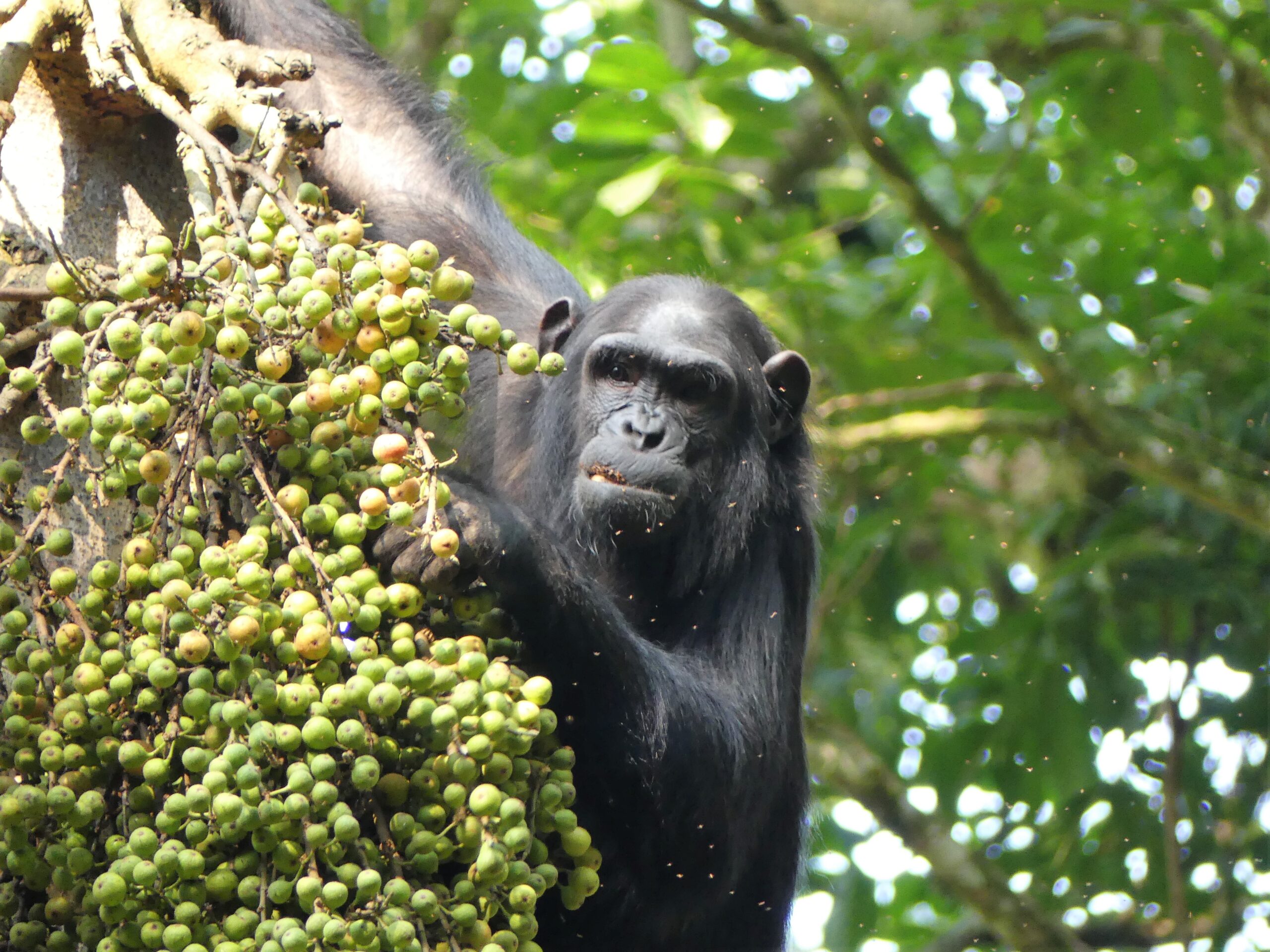
Filming chimpanzees in Kibale Forest National Park offers premier access to over 1,500 chimpanzees, with the best filming conditions during dry seasons (June–Sept, Dec–Feb). Specialized filming permits from the Uganda Wildlife Authority (UWA) and Uganda Media Council accreditation are required. Popular options include standard 1-hour tracking or full-day 4-hour Chimpanzee Habituation Experience (CHEX)
38-days-unmatched-uganda-primate-safari-tour-and-uganda-wildlife-safari-with-culture
30-days-uganda-rwanda-photography-safari-adventure
10-days-best-photography-uganda-wildlife-safari-holiday-and-gorilla-trekking
7-days-photography-uganda-safari-all-big-five-chimpanzee-and-gorillas
3-days-murchison-falls-national-park-best-uganda-safari-road-trip
3-days-best-honeymoon-uganda-safari-escape-to-murchison-falls-national-park
5-day-best-safaris-to-uganda-kidepo-and-murchison-falls-national-parks
5-days-kidepo-valley-uganda-safari-via-ziwa-rhino-sanctuary
6-days-best-of-murchison-and-kidepo-uganda-safari-via-ziwa
7-days-murchison-falls-uganda-safari-trip-via-ziwa-rhinos-kidepo-valley-and-jinja
7-days-uganda-tour-to-murchison-falls-via-ziwa-kibale-and-queen-elizabeth-national-park
9-days-africa-big-five-safari-in-uganda-safari-parks-and-gorilla-trekking
What permits are required for filming chimpanzees in Kibale Forest National Park?
Filming chimpanzees in Kibale Forest requires official authorization from Uganda Wildlife Authority (UWA) and relevant media accreditation. The primary legal document is a filming permit or contract issued by UWA; this permits access to chimpanzee tracking or habituation sessions and outlines conditions (crew size, equipment, permitted locations, biosecurity measures, and any deliverables such as copies of footage to UWA). For commercial projects you must apply well in advance, providing a detailed production proposal, equipment list, proposed dates, crew biographies, insurance details, and an outline of conservation and biosecurity protocols. In parallel, media accreditation through the Uganda Media Council is typically required for journalists and media crews working in Uganda; this process issues media accreditation cards which UWA may request as part of its verification of professional credentials. The media accreditation application normally includes Form G (or the current Media Council form), passport copies for team members, passport-sized photos, and an introductory or assignment letter from your media house or production company; independent freelancers should provide a clear statement of intent and any institutional affiliations. Additionally, special permissions may be necessary if you intend to operate drones, use significant artificial lighting, bring unusually large support vehicles, or film during research-led habituation activities—these require separate clearances from UWA and, for some activities, coordination with other agencies (e.g., Uganda People’s Defence Forces for aerial permissions). Local district authorities, community tourism committees, and research teams involved in habituation programs may also need to be informed or to sign off on access. Always confirm the latest application forms, timelines, and fee schedules directly with UWA and the Uganda Media Council; their processes can change, and early engagement via a licensed local fixer avoids last-minute permit denials.
How much does the permit cost for filming chimpanzees in Kibale Forest National Park?
Permit costs for chimpanzee filming in Kibale vary by purpose (tourist vs. commercial), project scale, and the specific services requested (e.g., ranger escorts, research permits, use of habituation groups). For standard chimpanzee trekking, published tourist permit rates (as of the date you noted) may be around $250 per foreign non-resident for a standard one-hour tracker; however, commercial filming typically attracts additional fees. Many production-level permits are charged as a percentage of the base activity fee or as a flat commercial filming fee; your note that commercial filming is often calculated as roughly 40% of the activity fee aligns with common examples where UWA applies a substantial surcharge on top of trekking fees to account for the commercial exploitation of wildlife imagery. For drone use or special aerial permissions, additional levies (for example, an extra 50% surcharge) may apply and require separate authorization from the Uganda People’s Defence Forces; these figures are examples and should be verified. Beyond the core filming permit fee, budget for ancillary costs: park entrance fees for each crew member, ranger/time-escort fees, local guide and porter costs, conservation levies, logistics (vehicles, fuel), insurance, and any veterinary/biosecurity screening (e.g., proof of vaccinations or medical clearance). There can also be mandatory deliverables tied to fees—UWA may require copies of final footage or broadcast material for archival and promotional use. Fees and percentage calculations are subject to policy updates; request a formal cost estimate from UWA early in preproduction and factor in contingency. Engaging an experienced Ugandan fixer or production manager helps secure accurate fee breakdowns, negotiates package arrangements where possible, and ensures transparent payment flows to avoid penalties or permit delays.
Can I use a drone for filming chimpanzees in Kibale Forest National Park?
Drone use in Kibale is possible but tightly regulated and not automatically permitted. Because drones can disturb wildlife, the Uganda Wildlife Authority (UWA) requires explicit, advance permission for any unmanned aerial vehicle (UAV) operations near chimpanzees. In addition to UWA approval, aerial operations often need clearance from national aviation and security authorities—in Uganda’s case, the Uganda People’s Defence Forces (UPDF) and the Civil Aviation Authority may be involved depending on airspace regulations. Permissions typically require a comprehensive application: details of the drone operator’s licensing and experience, the drone make/model and technical specifications, intended flight times, altitudes, flight paths, risk assessments, mitigation measures to avoid disturbance, and proof of insurance and local authorization. Your note that drone permissions may carry a fee equivalent to 50% of the activity fee is an example of how UWA can levy substantial surcharges for aerial filming; actual fee structures vary and must be confirmed. Operational constraints are common: minimum flight distances from animals, maximum altitude limits, prohibition of flights directly above groups, limitations during habituation or research activities, and requirement for a licensed operator to coordinate with park rangers. The rationale for strict controls is clear—drones can stress chimpanzees, disrupt behavior, and pose safety risks if they fail or crash into the forest canopy. Practically, many productions choose alternatives (long telephoto lenses, anchored camera poles at safe distances, or licensed stock aerial footage) to avoid complex aerial permit processes. If aerial footage is essential, begin drone authorization at least months ahead, include all required supporting documents, and be prepared for UWA to deny permission if the risk to chimpanzees is judged too high.
What is the best time for filming chimpanzees in Kibale Forest National Park?
The best times to film chimpanzees in Kibale are the drier seasons when trails are more accessible, light is relatively better for canopy photography, and daily logistics are easier. In Uganda, the primary drier months are typically June to September and December to February. During these windows, rainfall is less frequent, trails are less muddy and slippery, and heavy daily downpours that can damage sensitive camera gear are less likely—critical considerations for productions carrying high-value equipment. Additionally, canopy visibility can be improved because heavy rains often clear mist and reduce the dense dripping understorey that can blur images. However, chimpanzee behavior and filming needs should also guide timing: fruiting seasons, mating, or nesting patterns can influence activity levels and shot opportunities. In some cases the wetter seasons might present richer behavioral or ecological scenes (lush vegetation, infant rearing peaks, or specific food sources) that are creatively desirable despite harsher conditions—expect more challenging trekking, slower movement times, and increased equipment protection needs. Early mornings and late afternoons are often the most productive for filming: chimps may be more active during cooler hours, and the soft directional light improves image quality. When planning, coordinate seasonality with permit availability, local guide schedules, and research group activity (habituated group movements can vary). Weather in tropical montane forest can be unpredictable—always include buffer days for rain-related delays, and arrange robust protection for gear (waterproof covers, silica packs) and flexible logistics. Consulting local fixers who know Kibale’s microclimate and the habitual ranges of chimp groups will maximize the yield of filming days.
How long can I spend with the animals while filming chimpanzees in Kibale Forest National Park?
Duration of close encounters with chimpanzees in Kibale depends on the permit type. Under standard chimpanzee tracking permits, visitors typically get up to one hour (60 minutes) with a habituated group—this is intended to limit human impact on chimp behavior and disease exposure. For more involved research and habituation-focused visits, a Chimpanzee Habituation Experience (CHEX) permit may allow extended observation periods—commonly up to four hours—with a semi-habituated group under strict research supervision. The CHEX process is designed to gradually accustom unhabituated chimp families to human presence and is managed by researchers; media participants in CHEX must follow tighter protocols, often accept restricted movement, and coordinate closely with the research team. For commercial filming, UWA may issue permits for multiple one-hour sessions or negotiate special arrangements for extended time, but these come with higher fees, extra ranger supervision, and stricter biosecurity stipulations; any extension is discretionary and subject to conservation priorities. Note that the one-hour limit applies to close proximity work—longer-distance filming from hideouts or canopy platforms outside immediate proximity may be possible under different conditions. Productions needing repeated or longer-duration footage should budget for multiple permit days allocated across different groups to avoid over-exposure of any single troop. Efficiency is important: pre-briefing, assigning clear camera roles, and rehearsing shot lists help maximize usable footage within allotted time. Always verify the exact permitted durations in your issued UWA permit, as terms can vary by group status, current veterinary considerations, and policy updates.
How do I apply for media accreditation for filming chimpanzees in Kibale Forest National Park?
To obtain media accreditation for filming in Uganda (needed for many professional media activities), you must apply to the Uganda Media Council or the relevant national media authority with the required documentation. Typical application requirements include a completed accreditation form (commonly referenced as Form G or the current Media Council template), clear passport photocopies for each crew member, passport-sized photographs, and an introductory or assignment letter from your employer, media house, or production company confirming the purpose and scope of your work. Freelancers should provide a detailed project brief, portfolio or references, and any institutional endorsements. The Media Council will process applications and issue media cards which are often requested by other agencies (including UWA) to verify that the personnel are legitimate media professionals. Additional clearances may be needed for international productions, including work permits or visas, customs declarations for imported equipment, and local business registrations for extended shoots. Allow sufficient lead time—the Media Council and UWA can take weeks to process accreditation and associated filming permits. When applying, attach specifics of the chimpanzee filming plans (dates, number of crew, equipment list, proposed filming locations) as UWA will require this information for their separate permit. Always check the most current application procedures and fees on the Uganda Media Council website or contact their office directly; working with a local fixer or production manager experienced in Ugandan media accreditation streamlines the process and ensures paperwork is complete and compliant.
Is there a minimum age for crew members filming chimpanzees in Kibale Forest National Park?
Yes—there are minimum age guidelines for primate-related activities in many Ugandan parks including Kibale. General park policy often sets a minimum age (commonly cited as 12 years) for participating in primate activities; however, for chimpanzee trekking specifically some operators and sources recommend or require that participants be at least 15 years old due to the physical and safety demands of the trek and the sensitivity of the activity. For filming crews, individual parks and UWA may be stricter: they can refuse participation by younger crew members who may be unable to follow the strict biosecurity and behavioral instructions or who might place themselves or the animals at risk. When planning a shoot with younger crew members (assistants, trainees, or students), secure explicit approval from UWA in advance and ensure parental consent, appropriate insurance, and medical clearances are in place. Also be ready to explain the child’s role, supervision arrangements, and evidence they can obey ranger instructions and safety protocols. Note that age rules can vary by park sector and may be enforced differently by guides; always confirm the minimum age policy at the time of permit application. Finally, consider the welfare responsibilities—chimpanzees are susceptible to human diseases, and limiting participants to mature, disciplined adults reduces risk for both animals and people. For risk management and smooth permitting, plan for adult-only crew members for the close-contact segments of any chimpanzee filming.
What equipment should I pack for filming chimpanzees in Kibale Forest National Park?
Selecting the right equipment for Kibale’s dim canopy and rugged terrain is crucial. Prioritize long zoom and telephoto optics (e.g., 100–400mm or 200–600mm equivalents) for canopy-level shots and to maintain safe distances. Fast lenses (f/2.8–f/4) help in low-light conditions under dense foliage; pair them with cameras that have excellent high-ISO performance to handle shaded environments without excessive noise. A versatile mid-range zoom (24–70mm or equivalent) is useful for contextual forest shots and interviews at base. Stabilization matters—bring a sturdy monopod (preferred in the forest for mobility) and a lightweight tripod for stationary setups; gimbals are helpful for motion shots outside immediate chimp proximity. Protect gear with waterproof covers, camera rain sleeves, and sealed cases—Kibale can be humid and prone to sudden showers. Spare batteries and large-capacity memory cards are essential because power access is limited; include portable power banks and consider solar charging options for extended shoots. For audio, directional shotgun mics, windshields, and portable recorders are recommended—forest soundscapes can be loud and complex, so high-quality mics and booms allow clearer dialogue capture. Consider teleconverters for greater reach, but balance added weight and light loss. Lightweight clamps, quick-release plates, and secure straps minimize mishaps on uneven trails. Also pack lens-cleaning kits, silica desiccants, and protective filters. If using drones (only with prior permission), bring spare propellers and a fail-safe plan. Finally, include robust first-aid kits, waterproof field notes, GPS or offline maps, and personal protective gear (boots, gloves, rain gear). Test equipment in similar environments beforehand and plan for minimal crew movement during close encounters to protect both the animals and the kit.
Can I film chimpanzees in Kibale Forest National Park during the rainy season?
Yes, you can film during the rainy season, but expect greater logistical and technical challenges. Heavy rains—especially in the long rainy months—make trails slippery, slow down access to habituated groups, and increase the risk of equipment damage from moisture and mud. Lighting conditions under dense, wet canopy are often dimmer and more variable, requiring faster lenses, higher ISO settings, and more stabilization to get usable footage. Rain can also reduce visibility as fog and mist form in the forest, and dense foliage during wet seasons may obscure lines of sight to chimpanzees, making it harder to capture clear close-ups. On the plus side, wet-season shoots can yield lush, saturated visuals, richer forest textures, and unique behavioral moments linked to seasonal food availability or nesting. To shoot successfully in the rains, waterproof all gear with covers and sealed cases, bring redundant battery systems (cold and wet conditions drain batteries faster), and schedule extra days as buffers for weather delays. Crew safety is paramount—ensure appropriate footwear, trekking poles, and trained porters to transport gear safely. Also coordinate closely with UWA about trail conditions and the status of habituated groups; they can advise if certain sectors are temporarily closed. Finally, factor in health precautions—wet seasons come with increased insect activity and potential for waterborne illnesses—so ensure vaccinations, insect repellents, and hygiene measures are in place. While more demanding, rainy season filming can produce distinctive, atmospheric material if planned carefully.
Are there specific rules for camera use when filming chimpanzees in Kibale Forest National Park?
Yes—Kibale enforces camera-use rules to protect chimpanzee welfare and visitor safety. Flash photography and use of sudden bright lights are strictly forbidden because chimpanzees can become startled, aggressive, or flee, and flashes can disrupt their vision. Maintain the mandated minimum distance from chimpanzees (commonly 7–10 meters, but check your permit) and avoid close approaches even if animals appear curious. All camera actions should be slow and deliberate—rapid panning, loud shutter clicks (if avoidable), or intrusive rigs that require crew movement within the buffer zone are discouraged. Turn off phone notifications and vibrations, mute camera beeps, and secure straps to prevent accidental drops. If using large rigs, lights, or microphones, disclose these in permit applications and obtain explicit written permission; many such devices are barred from the close-contact zone to avoid altering animal behavior or damaging vegetation. Drones require separate clearances and are often heavily restricted. Crews must observe biosecurity protocols—wear masks when within required distances, sanitize equipment that may be handled near other people, and avoid sharing gear among team members during close encounters to minimize disease risk. Recording or broadcasting live may have additional restrictions in your UWA permit; some permits require that all footage be shared with UWA or used under certain conditions. Always follow ranger instructions on-site: guides have authority to reposition or stop filming if chimpanzees show stress. These measures protect both chimpanzees and future access for research and tourism, so strict compliance is essential.
Do I need a local fixer for filming chimpanzees in Kibale Forest National Park?
A local fixer is not strictly mandatory for filming chimpanzees in Kibale, but hiring one is strongly recommended for nearly every production—especially international shoots. Fixers save time, reduce risk, and increase the chance of a successful, lawful shoot by managing administrative, logistical, and cultural details that foreign crews often find time-consuming or confusing. Practical services a fixer provides include coordinating and submitting permit applications to Uganda Wildlife Authority (UWA) and the Uganda Media Council, arranging media accreditation, and liaising with local research teams or park management. They can also handle customs clearance for expensive camera gear, compiling the detailed equipment inventories and serial numbers required by customs to avoid costly import duties or delays. On the ground, fixers organize transport, accommodation, local crew hires (porters, drivers, translators), and sourcing of specialist services such as experienced field producers or wildlife guides who understand chimp behavior and filming protocols. They streamline procurement of required insurances and arrange medical logistics, including nearby clinics and emergency evacuation plans—critical in remote forest locations. Fixers are particularly valuable with complex permissions (drone authorizations, extended habituation access, research-sector filming like Ngogo) because they already know the right contacts at UWA, Makerere University field stations, or community tourism committees. They also help negotiate fees, clarify deliverable requirements (e.g., providing UWA with copies of footage), and ensure compliance with biosecurity measures such as mask policies and pre-trek health checks. Using a fixer reduces the administrative burden on production companies, helps avoid permit denials or fines, and supports local economies when you hire reputable, licensed local providers. For medium-to-large productions or shoots with specialized needs (aerials, multi-day habituation, or research collaboration), a fixer is effectively essential.
What is the difference between trekking and habituation for filming chimpanzees in Kibale Forest National Park?
Trekking and habituation are distinct activities with different goals, rules, and filming implications. Trekking involves visiting fully habituated chimpanzee groups for a limited period—typically one hour—with the primary aim of viewing these animals that are already comfortable with a regulated human presence. Trekking sessions are structured, timed, and designed to minimize disturbance; they are the standard offering to tourists and many media crews. From a filming perspective, trekking is predictable: you get a fixed-duration encounter, an assigned ranger guide, and set briefing protocols. However, the one-hour limit can constrain the ability to capture extended behavioral sequences. Habituation, by contrast, is a scientific process in which researchers and trackers work to gradually acclimate previously unhabituated chimpanzee groups to human presence over time. Habituation visits—often organized as Chimpanzee Habituation Experience (CHEX) sessions—can allow much longer observation windows (commonly up to four hours) and provide rare access to nuanced behaviors such as complex social interactions, courtship, infant rearing, tool use, and daily movement patterns. For filmmakers, habituation offers deeper storytelling opportunities and a higher probability of capturing sequences that require extended observation. But habituation carries greater responsibilities: strict research protocols, constrained crew movement, and tighter biosecurity are enforced to avoid disrupting the habituation process. Filming during habituation usually requires direct coordination with the lead research team (e.g., Makerere University field stations), advanced permission from UWA, and a willingness to accept restrictions on camera placement and equipment use. In sum, trekking is a shorter, more predictable, and more accessible encounter suited to many productions; habituation provides richer content for in-depth documentaries but demands patience, scientific collaboration, and higher ethical standards.
How do I clear my camera gear at customs for filming chimpanzees in Kibale Forest National Park?
Clearing camera gear through Ugandan customs requires careful preparation to avoid import duties, delays, or detention of equipment. The standard approach is to provide a complete, itemized inventory of all gear to customs officials upon arrival—this includes make, model, serial numbers, declared value in U.S. dollars, and intended duration of stay. Many international film crews use a carnet (an ATA carnet) which serves as a passport for professional equipment and simplifies temporary importation; a carnet is highly recommended because it helps avoid customs duties if the gear leaves the country within the carnet’s validity and if correctly processed. If you do not use a carnet, you will need to work through a licensed clearing agent or fixer who submits the equipment list, secures temporary import permits, and, if necessary, posts bonds or deposits to secure re-export. Customs often require documentation such as the production company’s business registration, a letter of assignment from the media house, copies of filming permits (UWA), and, for drones or other regulated items, additional aviation or security clearances. Be transparent: undervaluing items or failing to list serial numbers can lead to hefty fines. For drones, specialized permission from UWA and security agencies is needed before customs will release the equipment—bring operator licenses and insurance details. Always keep original receipts or manufacturer invoices to substantiate declared values. Plan customs clearance into your schedule; processing can take several days for first-time productions or complex consignments. Hiring an experienced local clearing agent or fixer is the most efficient route—they know the paperwork, can expedite inspections, and will arrange temporary import bonds if needed. Finally, ensure all cleared gear is documented on exit to avoid later import duty claims.
What is the "monitoring fee" for filming chimpanzees in Kibale Forest National Park?
A monitoring fee is typically charged by Uganda Wildlife Authority (UWA) as part of commercial filming contracts to ensure compliance with the terms of the permit and to cover the cost of supervisory staff who oversee field activities. This fee serves several purposes: it helps pay for the additional ranger or monitoring personnel assigned to accompany the production team, covers administrative costs of contract enforcement, and may function as a refundable deposit contingent on the crew’s adherence to environmental and welfare guidelines. Practically, UWA’s monitoring process involves placing a designated officer or ranger with the filming crew to verify that the permit’s conditions—crew size limits, distance rules, biosecurity protocols (e.g., mask compliance), no-flash rules, and approved equipment use—are followed. The fee amount and whether it is refundable depend on UWA policy at the time of contracting; sometimes it is retained to fund conservation monitoring, and other times a portion becomes refundable if the crew fully complies. Productions should request the monitoring fee’s specific terms in writing (is it refundable, what are the refund conditions, when is it payable) before finalizing the permit. Monitoring fees also discourage breaches by creating direct financial consequences and provide UWA with resources to manage the extra workload that film crews create. For producers, factoring monitoring fees into the budget is essential; the cost can be modest or substantial depending on crew size, shoot duration, and whether special monitoring arrangements (e.g., researcher monitors for habituation areas) are required. Confirm the current fee structure with UWA and include clear clauses on deliverables, inspection reporting, and refund conditions in the filming contract.
Are the chimpanzees aggressive when filming chimpanzees in Kibale Forest National Park?
Chimpanzees in Kibale are wild animals with complex social behaviors; while habituated groups are generally tolerant of human presence, they remain unpredictable and can be aggressive under certain circumstances. Habituation reduces fear but does not remove natural instincts—chimpanzees may display aggression during social disputes, when defending infants, or if they feel threatened by sudden movements, loud noises, intrusive equipment, or close approaches. For this reason, strict park rules—maintaining the minimum safe distance (commonly 7–8 meters), following ranger instructions, avoiding direct eye contact or threatening gestures, and never attempting to feed or touch the animals—are enforced to minimize provoking aggressive responses. When crews behave calmly, move slowly, and respect guidelines, incidents are rare; experienced rangers can read chimpanzee body language and will intervene if animals show signs of agitation (charging displays, loud pant-hooting, branch shaking, or rapid approach). Aggression risk increases if chimpanzees are surprised at close range—dense vegetation can cause sudden encounters—so careful route planning and quiet movement are essential. Mothers with young infants can be particularly defensive; never position yourself between a mother and her infant. If a chimpanzee shows clear aggressive intent, follow rangers’ directions immediately: step back slowly, sit down if instructed, and avoid direct confrontation. For film crews, reducing aggression risk also means adhering to biosecurity rules—sick or symptomatic humans can provoke stress and unpredictable behavior. In sum, chimpanzees are not inherently “aggressive” toward compliant human visitors but are wild and can behave aggressively in specific contexts; strict adherence to protocols, experienced guides, and conservative filming practices keep both crew and chimpanzees safer.
Where should the crew stay when filming chimpanzees in Kibale Forest National Park?
Choosing accommodation near Kibale’s visitor hubs optimizes early-morning starts and reduces transit times to habituation and trekking points. Two widely recommended options are Primate Lodge and Chimpanzee Forest Lodge, both situated close to the park’s visitor center and offering convenient access for early pick-ups and short drives to trailheads. Primate Lodge provides comfortable rooms, catering, and local logistics support, while Chimpanzee Forest Lodge is known for its proximity and safari-style accommodations that suit production teams needing quick access to the park. Other alternatives include community-run guesthouses or private lodges in nearby Kanyanchu and Fort Portal—these can be more budget-friendly and beneficial for community engagement but may offer fewer production conveniences. When selecting lodging, consider the following: proximity to the specific sector you are filming in (Kanyanchu, Bigodi, or other entrances), dining and power reliability (important for charging equipment), secure storage for gear, and availability of workspace for data offloading and backups. Some lodges provide secure camera lockers and can arrange early meals and wake-up calls to match pre-dawn trek times. For larger crews, book multiple rooms or consider a lodge that can support catered meals, meeting spaces, and reliable Wi‑Fi for file transfers (many remote lodges have limited bandwidth—plan to offload large data at Fort Portal or via paid satellite services). If working on longer shoots, negotiate with lodges for extended-stay rates, secure charging points, and local staffing assistance (porters, drivers). Finally, staying at locally owned accommodations supports the community and helps build goodwill with conservancies and UWA; always coordinate lodging through your fixer or UWA contact to ensure logistical alignment with park pickups and ranger schedules.
Can I film for a research documentary while filming chimpanzees in Kibale Forest National Park?
Yes, you can film for research-focused documentaries, but doing so requires additional coordination, permissions, and ethical considerations beyond standard commercial permits. If you intend to film in research sectors—such as Ngogo or Kanyawara, where long-term research projects (e.g., Makerere University, Uganda Wildlife Authority-affiliated studies) operate—you must obtain explicit permission from the project leads or site managers in addition to UWA permits. Long-term research sites often have strict rules designed to protect ongoing data collection and the integrity of scientific work; researchers may deny access if filming risks disrupting behavioral observations or if the crew’s presence could alter subject behavior. Collaborating with research teams can be enormously beneficial: they can provide scientific context, access to habituated individuals, support in interpreting behavior on camera, and help ensure the film accurately represents conservation issues. For research documentaries, you should present a detailed proposal to both UWA and the research team, outlining objectives, shot lists, crew composition, biosafety measures, and how the final product may be used. Some research projects require that footage be shared with them before public broadcast, or that researchers are credited and credited in any publications. Ethical considerations are paramount—avoid sensationalism and ensure portrayals do not compromise animal welfare or research confidentiality (e.g., revealing nesting sites or troop locations that might increase poaching risk). Finally, factor in time for relationship-building: researchers often require pre-shoot meetings and may set limits on crew movement, so include these collaborations in your timeline and budget.
How far in advance should I book for filming chimpanzees in Kibale Forest National Park?
Secure permits and logistics as early as possible—ideally four to six months before your intended shoot, and longer for large-scale productions or shoots involving habituation, drone operations, or research-sector access. Kibale is a popular destination and UWA’s permit processing and media accreditation can take time, especially during peak seasons (June–September and December–February). Early booking ensures you have access to preferred date windows, ranger availability, and appropriate habituated groups. If your project requires special approvals (e.g., drone clearance requiring UPDF coordination, filming in Ngogo research areas needing project-lead consent), start even earlier—six to nine months—because these approvals often involve multiple agencies and can require additional risk assessments. Early planning also helps secure lodging, local crew, and equipment logistics, and allows time for carnet issuance or customs arrangements for imported gear. For international co-productions, schedule pre-production visits to meet UWA contacts and research teams, conduct location scouts, and finalize health and insurance requirements. Last-minute requests are often denied or subject to premium fees and reduced flexibility. If scheduling in the wet season, allow extra buffer days for weather delays. In short, treat permit and logistics procurement as a major pre-production task: early, proactive engagement with UWA, the Uganda Media Council, local fixers, and research teams will maximize your chances of a smooth, productive shoot.
What health requirements are there for filming chimpanzees in Kibale Forest National Park?
Health and biosecurity requirements are stringent because chimpanzees are highly susceptible to human-borne illnesses. Anyone with symptoms of infectious respiratory disease (fever, cough, sore throat), gastrointestinal illness, or other contagious conditions will generally be barred from participating in chimpanzee encounters. UWA often requires that crew members do not visit if ill and may request medical declarations or on-site health checks. During heightened public health concerns (e.g., influenza season or outbreaks like COVID-19), additional measures—negative test results, vaccination proof, or mandatory mask use—can be imposed. In many cases, wearing surgical masks or well-fitting respirators during close encounters is mandatory to reduce the risk of disease transmission. Hand hygiene is crucial: crews should carry hand sanitizer and adhere to instructions about not touching faces or equipment exchanged between people in the proximity zone. Vaccinations recommended for travel to Uganda (e.g., yellow fever proof, routine immunizations, and others per current health advisories) should be up to date; check with travel health clinics well ahead of departure. For larger productions, consider pre-deployment medical screening for all crew members, and require that anyone with recent exposure to contagious illnesses delay participation. Also plan for on-site medical contingencies: bring first-aid kits, have evacuation and emergency hospital plans, and ensure adequate insurance covers medical care and evacuation. Respecting health protocols protects chimpanzee populations and helps preserve continued research and tourism access.
Is there a limit on the number of people in a crew for filming chimpanzees in Kibale Forest National Park?
Yes. To minimize disturbance and disease transmission risk, UWA and park guidelines set limits on the number of people who may be in close proximity to a chimpanzee group during trekking or filming. For standard sessions, group sizes are typically capped at 6–8 people per chimpanzee community (this number can vary slightly by sector and current policy). For filming crews, UWA may require that only essential personnel—lead camera operator, sound operator, director/producer for coordination, and the assigned ranger/guide—be permitted within the close-contact zone. Additional crew members (assistants, fixers, researchers) often must remain outside the buffer zone or rotate in and out across multiple permits to avoid overexposure of a single troop. For habituation or research shoots (CHEX or filming in Ngogo/Kanyawara), these limits may be stricter and replacement of personnel may require additional approvals. Permits usually specify the maximum authorized crew size; exceeding that number on the day can lead to permit revocation or fines. Productions should pre-plan crew roles, minimize the number of people who need to be close to the animals, and use remote-monitoring workflows (e.g., remote audio capture, long lenses) so that fewer people enter the proximity zone. When larger teams are needed for logistics, arrange staggered participation or obtain multiple permits and accept extra ranger fees. Always check your issued permit for the exact authorized crew size and adhere strictly to it.
Booking Chimpanzee tracking and filing in Kibale with us Roads of Adventure safaris
Book your unforgettable Chimpanzee tracking adventure in Kibale National Park with Roads of Adventure Safaris. We handle all logistics, including securing mandatory park permits (approx. for foreign non-residents), booking premium lodging at sites like Primate Lodge, and providing experienced guides for the Kanyanchu visitors center trek. Our 2-5 hour guided tours offer 1 hour of close interaction with chimpanzees in their natural habitat. Enjoy tailored, safe transport and expert advice on packing for the rainforest. Contact us to arrange your permits and experience the "Primate Capital of the World" seamlessly.
kl8iy6gyj
