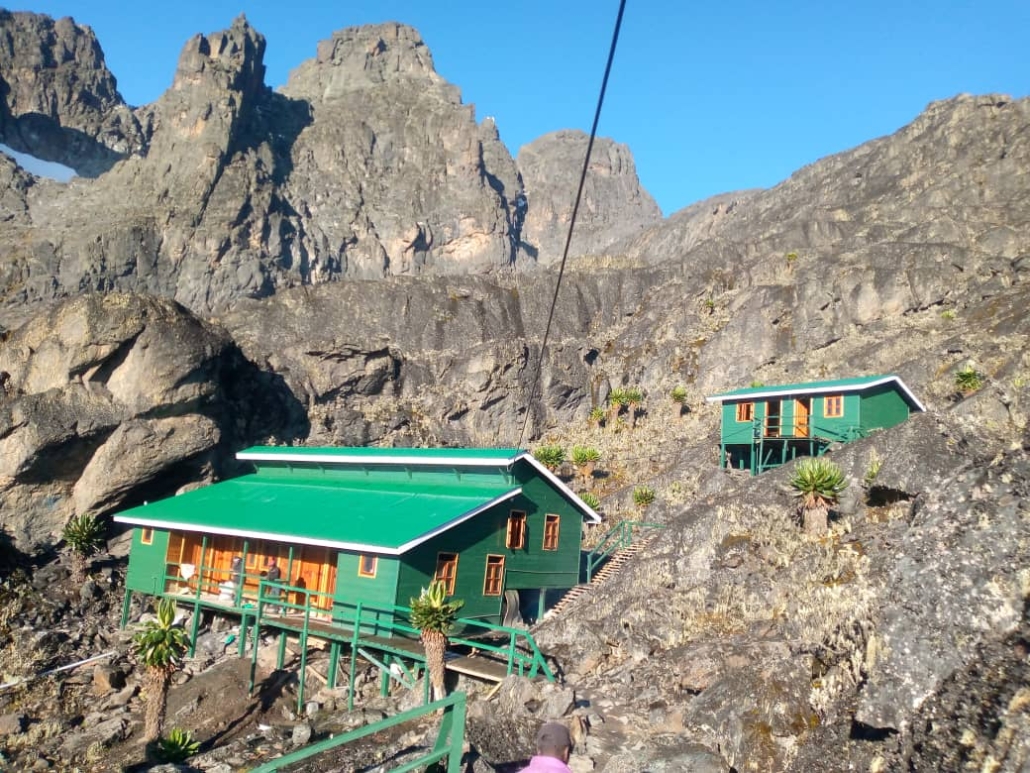
Managed by the Uganda Wildlife Authority (UWA), the newly upgraded, ultra-modern Elena Camp can host up to 70 people per night—split between 34 tourists and 36 support staff—and features fully furnished, self-contained dormitories, dedicated dining rooms, and separate kitchens to shield trekkers from the grueling high-altitude cold. Designed to balance premium comfort with strict UNESCO World Heritage environmental regulations, the facility operates on solar energy, utilizes advanced eco-friendly waste and water conservation systems, and connects its various blocks via wooden boardwalks to bypass the freezing mud. Crucially for high-altitude expeditions, the camp is equipped with an advanced rescue and first-aid block fully stocked with state-of-the-art emergency medical and mountaineering gear—including oxygen systems, modern stretchers, and specialized rescue ropes—to ensure immediate response capabilities for climbers tackling the final push to Margherita Peak.
Some of the popular Mountain Rwenzori hiking trips
15-days-rwenzori-hiking-safari-and-mountain-gorilla-trekking-vacation
11-days-best-rwenzori-mountain-hike-to-margherita-peak
7-days-mountain-rwenzori-mountain-climbing-active-adventure-to-margherita-peak
5-days-rwenzori-hike-to-either-mountain-sepeke-baker-or-luig-di-savoia
2-days-rwenzori-trek-to-nyabitaba-camp
The Gateway to Margherita Peak
Elena Camp serves as the ultimate launchpad for hikers attempting the final push to Margherita Peak, the highest point in Uganda and the third-highest summit in Africa at 5,109 meters. Climbers typically depart the camp between 2:00 AM and 5:00 AM to navigate the frozen Elena Glacier using crampons, ice axes, and ropes
Upgraded Facilities & Accommodations
Historically a rudimentary, single-room stone shelter, Elena Camp underwent a massive 4.7 billion UGX upgrade by the Ministry of Tourism, Wildlife, and Antiquities in collaboration with the Uganda Wildlife Authority (UWA). The modern, eco-friendly facility vastly improves safety and logistics in alpine conditions
Capacity
Perched at a grueling 4,500 meters above sea level, Elena Camp represents a groundbreaking leap forward for high-altitude mountaineering infrastructure within Rwenzori Mountains National Park. The ultra-modern facility has been engineered with a total nightly capacity of 70 individuals, strategically split to accommodate 34 tourists and 36 support staff, including local professional guides and porters. This precise configuration directly addresses a long-standing logistical bottleneck on the Central Circuit and peak-bound routes, where historical rock shelters and rudimentary huts frequently suffered from severe overcrowding. By ensuring a near one-to-one ratio between climbers and support crews, the camp guarantees that every expedition has the necessary human resource backing to attempt the grueling push to Margherita Peak safely. For expedition operators and international trekking agencies, this expanded and structured capacity brings immense predictability to booking logistics, allowing multi-day summit teams to secure guaranteed, weather-protected berths. Furthermore, the deliberate allocation of dedicated spaces for the crew ensures that the hardworking local porters and guides—the true backbone of any Rwenzori expedition—receive the same standard of high-altitude shelter and recovery as the international clientele they assist, significantly boosting overall safety, morale, and service quality on the mountain.
Furnishings
Stepping inside the newly upgraded dormitories at Elena Camp reveals an unprecedented level of interior comfort designed specifically to counteract the hostile, sub-zero alpine environment of the upper Rwenzoris. Moving completely away from the historic era of sleeping on cold, damp stone floors or basic thin mats, the facility features fully furnished, self-contained visitors' and crews' dormitories equipped with heavy-duty wooden beds and thick, high-density foam mattresses. These premium furnishings are critical for physical regeneration, providing exceptional thermal insulation from the freezing ground and offering ergonomic support to bodies exhausted from days of navigating vertical mud walls, steep scree, and exposed ridges. The inclusion of sturdy wooden frames helps elevate climbers well above the floor drafts, while the thick mattresses retain body heat when paired with high-altitude sleeping bags. This focus on restorative sleep is not merely a luxury; it is a vital physiological requirement at 4,500 meters, where the air is thin and the body must work twice as hard to recover from physical exertion. By providing a warm, dry, and structurally sound sleeping environment, Elena Camp ensures that mountaineers can properly combat hypothermia, reduce physical fatigue, and wake up fully recharged for the demanding alpine start required to cross the Stanley Plateau.
Amenities
To support life and sustain physical performance in a zone of extreme cold and low oxygen, Elena Camp is outfitted with a comprehensive suite of modern amenities, including designated dining rooms, fully equipped kitchens, and expansive supply stores. The separate dining areas provide a windproof, insulated sanctuary where climbers can gather to rehydrate, consume high-calorie meals, and map out summit logistics without being exposed to the biting glacial winds. Recognizing the immense logistical challenge of resource scarcity at this altitude, the facility relies on a reliable and sustainable water supply system that harvests and filters fresh water directly from nearby glacial meltwater streams, ensuring a steady stream for cooking and hydration. This is complemented by a robust, eco-friendly solar-powered electricity system that provides stable illumination across the entire camp and essential power stations for charging critical communication devices, satellite phones, camera gear, and navigation tools. All of these operational components are backed by secure supply stores designed to protect food reserves, emergency medical assets, and mountaineering equipment from moisture and freezing temperatures, effectively transforming this remote alpine outpost into a self-sustaining, highly functional base camp capable of weathering fierce high-altitude storms.
Access Safety
The approach to Elena Camp has been revolutionized by an ambitious infrastructure project that saw the government construct 12.8 kilometers of supportive wooden boardwalks and elevated pathways stretching across the park’s notoriously treacherous terrains. Historically, the routes leading through the upper valleys were defined by deep, knee-deep bogs, unstable tussocks, and slick mud that exhausted climbers long before they ever reached the rock line, while simultaneously causing severe trail braiding that eroded the fragile alpine vegetation. The installation of these extensive, heavy-duty boardwalks provides a stable, high-traction walking surface that eliminates the risk of slipping on ice-slicked mud or sinking into freezing bogs, drastically reducing the occurrence of lower-limb injuries, physical exhaustion, and twisted ankles during the ascent. Beyond dramatically lowering the physical toll on trekkers and porters, this engineering feat serves as an essential ecological shield for a UNESCO World Heritage Site; it strictly confines foot traffic to a single designated path, allowing the highly specialized and slow-growing giant lobelias, groundsels, and delicate moss carpets to recover from decades of human impact. Through this thoughtful integration of access safety, the journey to the base camp is now faster, safer, and entirely aligned with modern conservation standards.
Route Access
You will reach Elena Camp on Day 4 if you book a standard multi-day trek. It is primarily accessed via two major routes
Central Circuit Trail
The classic Central Circuit Trail stands as the historical and most frequented lifeline to Elena Camp, offering climbers a dramatic and technically demanding progression into the alpine zone. Typically reached on Day 4 of a standard expedition, the journey to the camp begins with a departure from Bujuku Hut at 3,962 meters, immediately plunging trekkers into a landscape of ancient, otherworldly beauty. The route quickly intensifies as it tackles the infamous Groundsel Gully, a steep, challenging ravine flanked by towering, prehistoric giant groundsels and lobelias. Navigating this section requires careful footwork over slick, moss-covered boulders and deep mud, testing the endurance of even seasoned hikers. Emerging from the gully, the trail pushes upward to cross the rugged Scott Elliot Pass at 4,372 meters, a stark, wind-swept col that offers spectacular, panoramic vistas of Mount Baker and the surrounding massifs, provided the volatile mountain mists part. At this high-altitude junction, the path diverges from the main circuit loop, taking a sharply angled, steep northern branch that scrambles over exposed rock slabs, scree slopes, and fixed ladders. This final, lung-burning ascent demands intense concentration and physical resilience, ultimately delivering climbers directly to the rocky platform where Elena Camp sits at 4,500 meters, poised for the summit push.
Bukurungu Trail
For mountaineers seeking an untamed, deeply immersive wilderness experience, the Bukurungu Trail offers a magnificent alternative route that safely converges into the main peak approach at Elena Camp. Renowned for its raw, untouched scenery and lower foot traffic, this route showcases the Rwenzoris at their most pristine, snaking past a breathtaking series of high-altitude glacial lakes, including Lake Bukurungu, Lake Irene, and Lake Mughuli. Unlike the more established Central Circuit, the Bukurungu Trail provides a steady, albeit rugged, acclimation profile through valleys lined with dense bamboo zones and vast bogs of giant heathers, entirely free from large crowds. The trail requires a high degree of self-reliance and physical stamina, as the terrain is exceptionally wild, featuring steep, unmarked ridges and long stretches of technical scrambling. As climbers ascend into the upper alpine reaches, the trail expertly maneuvers through the spectacular, jagged topography of the range before linking up seamlessly with the primary summit infrastructure. By terminating at the newly upgraded Elena Camp, the Bukurungu Trail bridges the ultimate wilderness trek with top-tier safety and comfort. This allows adventurous climbers to enjoy the solitude of an isolated backcountry expedition while still utilizing the state-of-the-art base camp facilities, reliable communications, and expert rescue teams essential for a safe final assault on Margherita Peak.
Weather & Essential Preparation
Extreme Cold
At an altitude of 4,500 meters, Elena Camp sits squarely within a harsh alpine desert zone where the weather is notoriously volatile and characterized by perpetual, bone-chilling cold. Daytime temperatures at the camp routinely hover at a meager 2°C or lower, and the moment the sun dips behind the jagged Rwenzori massifs—or when the pervasive mountain mists roll in—the thermometer rapidly plunges into sub-zero territory, frequently sitting between -2°C and -8°C at night. Because the range is located right along the equator, the air is exceptionally humid, creating a damp, piercing cold that penetrates standard clothing far more aggressively than dry arctic air. Snowfall, freezing rain, and heavy sleet are common occurrences at this base camp, often blanketing the surrounding rocky crags and wooden boardwalks in a slick layer of ice overnight. The fierce, unrelenting winds whipping off the nearby Stanley Icefield create a severe wind-chill factor, making the ambient temperature feel significantly lower. For mountaineers preparing to spend the night here before their final summit assault, understanding this extreme thermal environment is critical, as failing to stay dry and shielded from the elements can lead to rapid-onset hypothermia within minutes.
Gear Requirements
Surviving and thriving in the extreme conditions of Elena Camp demands highly specialized, technical mountaineering apparel and equipment. A heavy-duty, premium down sleeping bag with a comfort rating of at least -10°C (or lower) is highly recommended to ensure adequate thermal retention inside the unheated dormitories. Trekkers must strictly adhere to a rigorous three-layer clothing system: high-wicking synthetic or merino wool thermal base layers to keep moisture away from the skin, an insulating mid-layer such as a heavy fleece or packable down jacket to trap body heat, and a robust, fully waterproof and windproof outer shell (Gore-Tex or equivalent) to block the freezing rain and snow. Furthermore, standard hiking shoes are entirely insufficient at this level; rigid, insulated high-altitude mountaineering boots are strictly required, as they provide the structural support needed to attach technical crampons for the upcoming trek across the frozen Stanley Plateau. Climbers must also pack heavy waterproof gloves, thermal beanies, UV-blocking glacier glasses to prevent snow blindness, and high-traction gaiters to keep freezing slush and mud from breaching their boots, ensuring complete physical protection before stepping onto the ice.
Altitude Sickness
Operating at 4,500 meters means climbers are functioning with roughly 40% less available oxygen per breath compared to sea level, exposing the body to severe physiological stress. Because atmospheric pressure drops significantly at Elena Camp, the risk of developing Acute Mountain Sickness (AMS) escalates dramatically, making careful self-monitoring and strategic pacing absolute necessities. To combat the thinning air, trekkers must aggressively hydrate by consuming between four to five liters of water daily, as hyperventilation in the dry, cold air rapidly depletes the body's fluids. Climbing teams must strictly adopt the Swahili philosophy of "pole pole" (slowly, slowly)—deliberately restricting their pace to a measured, rhythmic stride to keep their heart rate stable and allow their respiratory system to acclimatize. Climbers and guides must remain hyper-vigilant for early warning signs of altitude sickness, including persistent headaches, dizziness, nausea, loss of appetite, and extreme fatigue. Ignoring these minor symptoms at Elena Camp can cause them to rapidly progress into life-threatening conditions like High Altitude Pulmonary Edema (HAPE) or High-Altitude Cerebral Edema (HACE), both of which demand immediate administration of supplemental oxygen and a rapid, supervised descent to lower elevations.
What is the exact altitude of Elena Camp?
Elena Camp sits at an exact, breathtaking altitude of 4,500 meters, which translates to roughly 14,900 feet above sea level. Perched right on the edge of the rocky alpine desert zone, this dramatic elevation places it high above the vegetation line where the atmospheric pressure drops significantly and the air contains about 40% less available oxygen than at sea level. For example, when climbers step out onto the camp's outdoor viewing platforms, they are looking directly down on the cloud tops and across to the massive, glaciated walls of Mount Baker. At nearly 15,000 feet, every basic task—from unlacing your boots to setting up your camera gear—requires deliberate, slowed-down effort, serving as a stark reminder of just how high you have climbed into the sky before your final push. This extreme elevation requires total respect, making the camp not just a beautiful viewpoint, but a serious high-altitude environment where the body must work twice as hard to stay warm and recover. For international trekkers, reaching this exact altitude marks the true transition from a mountain hike into a serious, technical alpine expedition.
What is the purpose of Elena Camp?
The core purpose of Elena Camp is to serve as the vital, high-altitude launchpad and final refuge for mountaineers attempting to conquer Margherita Peak, which stands as Uganda’s highest point at 5,109 meters. Because attempting to summit from lower stations like Bujuku Hut would be physically impossible due to the immense distance, steep elevation gain, and extreme terrain, Elena acts as the ultimate staging area where climbers can rest, hydrate, and prepare mentally for the ice. For instance, on a typical summit night, the camp transforms into a focused hub of activity where local guides use the insulated indoor space to check harness straps, inspect crampon teeth, and brief trekkers on glacier rope team logistics before stepping out onto the ice. Without this strategically placed base camp, attempting to cross the vast Stanley Icefield safely would be completely out of reach for standard expeditions. It provides the essential shelter needed to wait out unpredictable alpine storms, ensuring that climbing teams can choose the absolute safest weather window to make their final, historic push to the roof of Africa.
What is the climate like at the camp?
The climate at Elena Camp is notoriously brutal, volatile, and unforgiving, characterized by an equatorially damp, piercing cold where daytime temperatures struggle to reach a meager 2°C. The moment the sun slips behind Mount Stanley, or when the dense mountain fog rolls off the glaciers, temperatures frequently plummet to between -3°C and -8°C at night. A prime example of this extreme climate is the rapid freezing of exposed water pipes and the heavy, sudden blanketing of snowfall or sleet that can coat the camp's wooden boardwalks in a slick layer of ice within minutes, forcing trekkers to huddle indoors and rely heavily on technical sub-zero gear just to stay warm. Because the Rwenzoris sit right on the equator, the humidity remains exceptionally high, creating a wet, biting cold that feels significantly harsher than dry arctic air. The wind-chill factor off the nearby glaciers is unrelenting, meaning that a sudden change in wind direction can drop visibility to near zero and bring fierce blizzard conditions instantly, reminding everyone that nature rules this altitude.
When was the newly upgraded camp officially opened?
Marking a massive milestone for Ugandan mountaineering tourism, the newly constructed, government-funded accommodation facility was officially handed over to the Uganda Wildlife Authority on December 15, 2024. Prior to this modern overhaul, climbers had to endure old, cramped, and drafty tin shelters that offered minimal protection from the elements, often leaving teams shivering through the night before their summit attempt. To celebrate the opening, an official delegation of 26 officers from the Ministry of Tourism and UWA actually hiked up the mountain themselves; despite the grueling conditions, 12 of them successfully pushed all the way to the site, proving that the new camp was ready to safely shelter a new era of international adventurers. This official opening completely transformed the logistics of Rwenzori trekking, moving the park into the global spotlight for world-class, sustainable mountain infrastructure. Today, the facility stands as a testament to Uganda's commitment to eco-tourism, balancing premium visitor comfort with strict wilderness conservation standards to ensure the pristine alpine environment remains protected for decades to come.
What amenities and facilities are available at the camp?
The newly upgraded camp is fully equipped with modern, high-altitude amenities designed to provide maximum recovery and comfort, featuring fully furnished dormitories complete with proper wooden beds and thick foam mattresses. Beyond sleeping quarters, the facility includes separate dining rooms, insulated kitchens, and secure supply stores, all powered by a sustainable solar-electricity system and fed by a reliable water supply harvested from nearby glacial meltwater streams. For example, after days of trekking through wet bogs, climbers can sit at a sturdy dining table inside a draft-free room, charge their camera batteries at a solar station, and enjoy a steaming bowl of hot soup prepared in a dry, organized kitchen. Additionally, the camp features an advanced rescue and first-aid block heavily stocked with emergency medical gear, oxygen systems, and specialized rescue ropes. This ensures that if a climber shows symptoms of severe altitude sickness or suffers a sprain on the rocks, the guiding team has an immediate, well-equipped medical station to stabilize the patient before arranging a safe descent.
What is the maximum accommodation capacity?
To prevent overcrowding and ensure strict environmental management within a fragile UNESCO World Heritage Site, the camp features a fixed nightly capacity that accommodates up to 34 tourists and 36 support staff per night. This intentional split ensures a near one-to-one ratio of climbers to crew, meaning everyone on a peak-bound expedition has a guaranteed, comfortable bed. For instance, a large international climbing group of 12 people, accompanied by their necessary contingent of 14 local porters and guides, can comfortably check into the facility simultaneously without worrying about anyone being forced to sleep on the floor or out in the freezing cold. This managed capacity is a massive upgrade from the old days of mountaineering in the Rwenzoris, where overlapping expeditions frequently resulted in chaotic, overcrowded huts. By strictly capping the nightly numbers, the Uganda Wildlife Authority can effectively manage waste disposal, limit human impact on the slow-growing alpine flora, and ensure that the solar power and water harvesting systems operate smoothly without being overwhelmed by sudden surges of visitors.
Which trekking trails provide access to the camp?
Elena Camp is strategically positioned to act as the grand intersection for the region's top routes, primarily accessible via the classic Central Circuit Trail and the wilder Bukurungu Wilderness Route. For example, climbers on the Central Circuit will scramble up the steep, muddy boulders of Groundsel Gully and cross the windy Scott Elliot Pass at 4,372 meters before taking the sharp northern branch up to the camp. Meanwhile, trekkers looking for complete solitude can take the Bukurungu Route past pristine, untouched alpine lakes like Lake Irene and Lake Mughuli, with both paths safely converging at Elena to utilize its advanced rescue facilities and solid infrastructure before touching the ice. This dual-access design allows safari operators to customize itineraries based on a client's experience level; a team looking for a classic, deeply established mountain path can stick to the Central Circuit, while elite photographers and wilderness purists can opt for the rugged Bukurungu trail, knowing both routes lead to the same high-standard base camp for the summit.
When do climbers typically leave the camp to summit Margherita Peak?
Timing is everything in high-altitude mountaineering, and trekkers at Elena Camp typically wake up around midnight, officially beginning their final summit push between 12:00 AM and 2:00 AM. This early "alpine start" is a strict safety requirement designed to get climbers across the glaciers while the ice is still frozen solid and stable underfoot. For example, at 1:30 AM, the camp is alive with the sound of zippers and clicking buckles as headlamps slice through the pitch-black darkness, allowing the team to navigate the rocky scramble leading to the Stanley Plateau long before the morning sun begins to melt the snow. Leaving during these early morning hours also ensures that expeditions can reach the summit and safely navigate the trickiest glaciated sections before afternoon clouds roll in, which typically bring heavy mist, zero visibility, and sudden storms. Walking by headlamp over ancient rock and ice adds an unforgettable, dramatic atmosphere to the adventure, keeping everyone focused as they step rhythmically upward toward the peak.
How long does it take to reach the summit and return to camp?
Conquering the highest point in the Rwenzoris is a grueling endurance test, with the ascent from Elena Camp to Margherita Peak taking about 5 to 7 hours, followed by a 3 to 5-hour descent back to the safety of the camp. For instance, a team leaving the camp at 1:00 AM will spend hours navigating steep ice walls and crevasses, ideally standing on the roof of Uganda by 7:30 AM to catch a breathtaking sunrise above the clouds. After celebrating, they must maintain intense concentration for another 4 hours on the return leg, stepping back onto the camp's wooden pathways by midday just as physical exhaustion begins to fully set in. The total round-trip time of 8 to 12 hours requires immense stamina, as the high altitude makes every step feel twice as heavy. Guides constantly monitor the team's pace during this window, ensuring that climbers conserve enough energy for the down-climb, which can often be more technically demanding than the ascent due to warming, slushy ice conditions.
What specific mountaineering gear is required for the summit push from Elena?
Stepping out from Elena Camp toward the summit requires highly specialized, technical mountaineering gear to safely traverse the glaciated Stanley Plateau and the steep Margherita Glacier. Climbers are strictly required to wear rigid high-altitude boots fitted with sharp steel crampons, hold a technical ice axe for balance and self-arrest, and wear safety harnesses clipped into dynamic ropes managed by their guides. For example, when crossing an exposed, steep ice slope, a climber will use their ice axe for stability while the rope line connects them directly to their guide, ensuring that a sudden slip on the slick glacial ice is instantly caught and arrested. Additional mandatory gear includes safety helmets to protect against falling ice or loose rock, heavy waterproof glacier gloves to prevent frostbite when handling frozen ropes, and high-quality UV-blocking sunglasses to shield the eyes from intense snow blindness. This complete technical setup transforms a standard wilderness trek into a properly secured alpine ascent, giving climbers the safety netting required to navigate the mountain's permanent ice fields with absolute confidence.
Booking Mountain Rwenzori hike with us Roads of Adventure safaris
Conquer the legendary "Mountains of the Moon" with Roads of Adventure Safaris. As Uganda's premier safari specialists, we handle all logistics for your Rwenzori expedition, from UWA permits to guaranteed berths at the newly upgraded Elena Camp (4,500m). Led by our expert, certified mountain guides, we offer custom itineraries via the classic Central Circuit or the wild Bukurungu Trail. Enjoy ironclad safety protocols, exceptional camp chefs, and seamless extensions for gorilla trekking or wildlife safaris. Contact Roads of Adventure Safaris today to book your ultimate high-altitude trek to Margherita Peak
