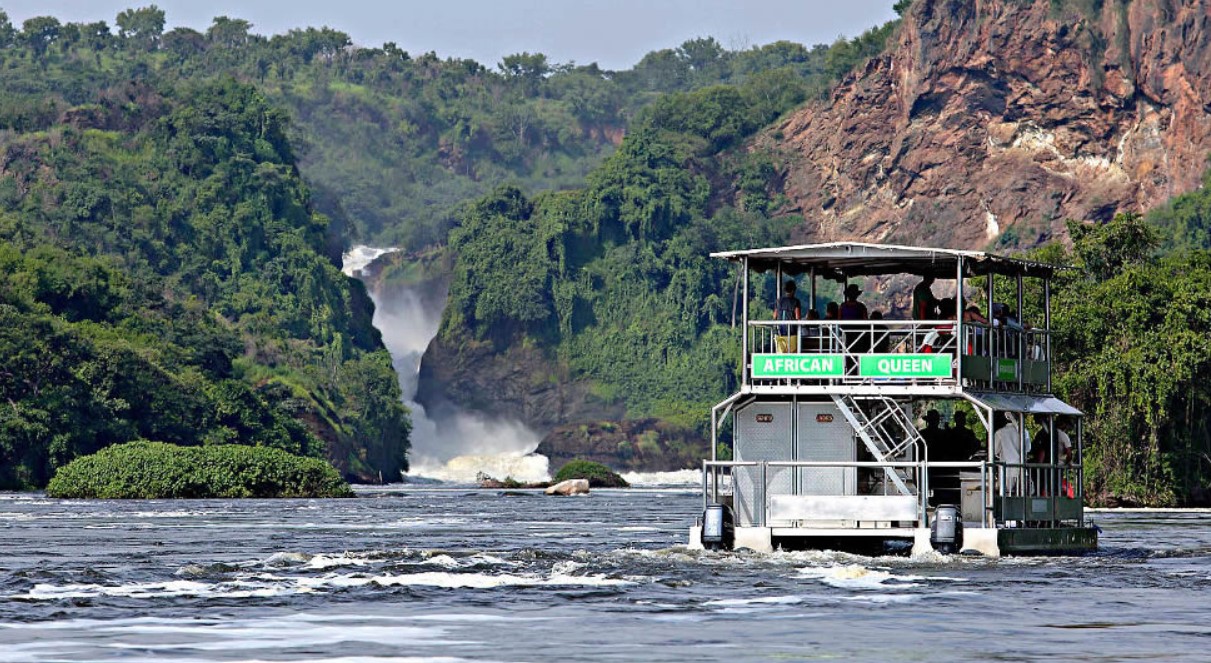
Yes, you can track chimpanzees on a 3-day Murchison Falls safari, typically by including a stop in the Budongo Forest or Kaniyo Pabidi area. This short itinerary usually combines savanna game drives, a Nile boat cruise to the falls, and chimpanzee trekking, often featuring Rhino tracking at Ziwa Sanctuary on the way
3-days-flying-luxury-uganda-safari-to-murchison-falls-national-park
3-days-best-honeymoon-uganda-safari-escape-to-murchison-falls-national-park
3-days-murchison-falls-national-park-best-uganda-safari-road-trip
4-days-murchison-falls-uganda-family-safari-vacation-tour
4-days-luxury-murchison-falls-and-jinja-uganda-safari-vacation
5-days-murchison-falls-safari-and-gorilla-trekking-in-bwindi
5-days-murchison-falls-and-queen-elizabeth-safari-itinerary
5-days-kidepo-valley-uganda-safari-via-ziwa-rhino-sanctuary
3-day Murchison falls safari trip
The 3-Day Murchison Falls Safari is Uganda’s premier short-duration expedition, masterfully combining "Big Five" wildlife encounters with the raw geological power of the Victoria Nile. This itinerary centers on Murchison Falls National Park, where the world’s longest river is dramatically forced through a narrow seven-meter rock cleft, creating the most powerful surge of water on Earth. The journey begins with a strategic stop at the Ziwa Rhino Sanctuary, allowing you to track white rhinos on foot and complete the "Big Five" checklist before even entering the park gates. Over three days, you will transition from tactical bush walks to high-energy savanna game drives and a classic riverine launch cruise. Whether you are observing a pride of lions at sunrise or cruising past massive pods of hippos toward the thundering "Devil’s Cauldron," this odyssey provides a high-impact, soul-stirring narrative of the "Pearl of Africa" in a compact timeframe.
Day 1: Ziwa Rhino Tracking and Transfer
Your adventure departs Kampala early, heading north through the lush landscapes of Nakasongola. The first highlight is the Ziwa Rhino Sanctuary, the only place in Uganda to see rhinos in the wild. You will join an expert ranger for a tactical track on foot, bringing you within meters of these prehistoric giants. This intimate encounter is essential for those seeking the full "Big Five" experience. After lunch, you continue the drive into Murchison Falls National Park. As you enter the gates, the vegetation shifts from thick woodland to open savanna, offering early glimpses of baboons and warthogs. You will arrive at your lodge by evening, settling into the heart of the wilderness. The night air, filled with the rhythmic sounds of the African bush, sets the stage for the wildlife drama awaiting you tomorrow morning.
Day 2: Game Drive and Nile Launch Cruise
The second day starts at sunrise with a game drive across the Buligi Circuit on the northern bank. This is the prime window to spot predators like lions and leopards before the savanna heat intensifies. You will traverse a landscape dotted with Borassus palms, home to massive herds of Rothschild’s giraffes, elephants, and Cape buffaloes. In the afternoon, the perspective shifts as you board a launch cruise toward the base of the falls. This three-hour journey along the Nile serves as a liquid stage for dense populations of hippos, giant Nile crocodiles, and thirsty elephants lining the banks. The cruise culminates at the "Devil’s Cauldron," where you witness the incredible power of the river exploding through the gorge. It is a sensory-rich day that perfectly captures the raw, untamed spirit of the mighty River Nile.
Day 3: Top of the Falls and Return
On your final day, you visit the top of the falls to witness the river’s power from above. Standing at the edge, you will feel the ground tremble as the Victoria Nile squeezes through a tiny rock cleft, plunging 43 meters into the gorge below. The thundering roar and permanent rainbows created by the mist provide a spectacular photographic finale to your safari. After witnessing this geological marvel, you begin the return journey toward Kampala. The drive back offers a final opportunity to observe the changing Ugandan countryside and reflect on the diverse wildlife encounters of the past 48 hours. A stop for lunch in Masindi town allows for a brief cultural pause before you reach the city by late afternoon, concluding an epic three-day expedition that showcased the absolute best of Uganda’s natural heritage.
3-Day Chimpanzee Safari: Essential Details
Location: The Ancient Budongo Forest Reserve
The setting for chimpanzee trekking within the Murchison Falls conservation area is the Budongo Forest Reserve, a sprawling tropical rainforest that covers approximately 825 square kilometers. Budongo is renowned for being the largest mahogany forest in East Africa and serves as a vital sanctuary for more than 600 chimpanzees. The trekking specifically takes place at Kaniyo Pabidi, a pristine section of the forest where several communities have been habituated for tourism and research. Unlike the open savannas that characterize the rest of Murchison Falls, Budongo offers a cool, shaded canopy of towering ancient trees, creating a completely different sensory experience. Navigating the forest floor in search of our closest relatives allows travelers to witness a complex ecosystem of rare birds, butterflies, and diverse primate species, making Budongo a critical ecological pillar of any northern Uganda safari.
Alternative: Flexible Final Day Scheduling
In many 3-day itineraries, chimpanzee trekking is positioned as a flexible or optional activity on the final day of the trip. Because the Budongo Forest is located near the southern gates of the Murchison Falls National Park, it serves as a perfect "exit activity" before the long drive back to Kampala or Entebbe. This scheduling allows travelers to maximize their wildlife viewing; you can spend the first two days focusing on the Big Five and the Nile River, and use the morning of Day 3 to enter the forest. For those who may find the physical demands of trekking daunting, or for those who prefer to spend more time on the savanna, keeping it as an optional add-on provides a personalized pace. This strategic placement ensures that the safari concludes with a high-energy primate encounter before transitioning back to the urban landscape.
Best Time: Navigating the Seasonal Cycles
While chimpanzee tracking in Budongo Forest is possible throughout the year, the dry seasons—spanning December to February and June to July—are considered the optimal periods for this adventure. During these months, the forest floor is less muddy, making the trails easier to navigate for hikers. Furthermore, the chimpanzees are often easier to locate during the dry season; when food is less abundant in the high canopy, they tend to spend more time on the ground foraging or moving between fruiting trees, which increases the likelihood of clear, eye-level sightings. Conversely, during the rainy seasons, the forest becomes incredibly lush and the fruit is plentiful, but the primates may remain higher in the trees, and the humidity can make the trek more physically taxing. Regardless of the season, the forest's microclimate provides a refreshing break from the heat of the savanna.
Other Activities: A Comprehensive Wildlife Circuit
A 3-day chimpanzee safari is rarely limited to the forest alone; it is typically part of a high-action wildlife circuit that showcases the best of northern Uganda. On the journey toward the park, most trips include rhino tracking at the Ziwa Rhino Sanctuary, allowing you to check off the first of the Big Five on foot. Once inside Murchison Falls, the itinerary usually features sunrise game drives across the Borassus palm-dotted plains to spot lions, leopards, giraffes, and elephants. A signature highlight is the boat cruise to the bottom of the falls, where the Nile River erupts through a narrow gorge. This combination of savanna game drives, river cruises, and forest trekking ensures that even a short 3-day trip provides a diverse and exhaustive overview of Uganda’s most famous landscapes and creatures.
Age Limit: Ensuring Safety and Etiquette
To participate in chimpanzee trekking in Budongo Forest, guests must adhere to a strict minimum age limit of 13 years. This regulation, enforced by the Uganda Wildlife Authority and the National Forestry Authority, is in place for several critical reasons. Primarily, it addresses the physical demands of the trek; navigating through thick undergrowth and uneven terrain requires a level of stamina and coordination that younger children may find difficult. Additionally, chimpanzees are highly sensitive to noise and sudden movements; older participants are generally better at maintaining the required silence and calm demeanor needed for a safe encounter. Finally, because chimpanzees share about 98% of human DNA, they are highly susceptible to human childhood diseases. The age limit acts as a protective barrier, ensuring the health and conservation of these vulnerable primate communities for future generations.
Can I really track chimps in Murchison Falls?
Yes, you absolutely can. While Murchison Falls is primarily famous for its savanna "Big Five" and the thundering Nile, the southern sector of the park encompasses the Budongo Forest Reserve, which is one of the most important primate habitats in East Africa. Budongo is home to approximately 600 to 800 chimpanzees, several communities of which have been habituated to human presence over decades of research.
Tracking here offers a stark, beautiful contrast to the vehicle-based game drives on the northern bank. Instead of looking through a window, you enter the chimps' world on foot, walking beneath a canopy of 80-meter-tall mahogany trees. This experience allows you to witness the intelligence and social complexity of our closest living relatives in a raw, undisturbed environment. It is the perfect way to round out a safari, moving from the open plains to the deep, emerald heart of the African jungle.
Where in the park is tracking done?
The primary hub for chimpanzee tracking is the Kaniyo Pabidi area, located within the Budongo Forest Reserve on the southern boundaries of Murchison Falls National Park. Kaniyo Pabidi is a pristine pocket of old-growth forest that has never been logged, making it an exceptionally stable environment for the chimps.
This location is strategically positioned along the main road that connects the park’s southern gates to the Paraa ferry crossing. This makes it an ideal stop for travelers entering or exiting the park. The terrain here is relatively flat compared to the steep slopes of Kibale or Bwindi, which makes it one of the most accessible places in Uganda to engage with wild primates. The forest is characterized by high biodiversity and a dense understory, providing a true "jungle" atmosphere just a few kilometers away from the dry savanna.
How long does the tracking experience take?
A standard chimpanzee tracking session typically lasts between 2 to 3 hours in total. This duration includes the initial safety briefing, the time spent trekking through the forest to locate the community, and the guaranteed one hour of direct observation once you find them.
The actual trekking time depends on the chimps' movement; since they are mobile and can travel long distances in search of seasonal fruits, you might find them within 20 minutes, or it might take over an hour of steady walking. During the hour of observation, you are allowed to take photos and watch them as they groom, play, feed, and interact in the canopy or on the forest floor. The experience is designed to be high-impact but efficient, fitting perfectly into a busy 3-day safari schedule without overwhelming the day’s other activities.
How much does a permit cost?
For foreign non-residents, a chimpanzee tracking permit in Budongo Forest (Kaniyo Pabidi) currently costs approximately $130 USD per person. This fee is significantly lower than the permits for Kibale National Park, making Budongo an excellent "value-for-money" option for primate enthusiasts.
The permit fee covers the services of a professional ranger-guide, forest entry fees, and a contribution toward the conservation and monitoring of the chimpanzee communities. It is important to note that these permits are issued in limited numbers per day to minimize the stress on the animals and prevent over-habituation. For many travelers, this $130 investment is the highlight of their Ugandan trip, offering a world-class wildlife encounter that is far more intimate than a standard game drive.
What is the minimum age?
The minimum age for chimpanzee tracking in Budongo Forest is 15 years old. This age limit is strictly enforced by the Uganda Wildlife Authority and forest management for several critical reasons, primarily related to safety and health.
Younger children may be more susceptible to common human illnesses, such as colds or flu, which can be fatal to chimpanzees due to our shared DNA. Furthermore, the forest environment can be unpredictable; tracking requires the ability to remain calm and follow specific behavioral instructions from the ranger if the chimps become vocal or active. While younger children can enjoy the savanna game drives and boat cruises in Murchison, the chimp trek is reserved for teenagers and adults to ensure the long-term well-being of the primates and the safety of the trekking group.
When is the best time for tracking?
The "golden window" for chimpanzee tracking in Budongo is during the dry seasons, specifically from December to January and June to August. During these months, the forest floor is less muddy, making the trek physically easier, and the chimps tend to stay in lower-altitude areas where fruit is more concentrated.
However, tracking is also very successful between October and January. During the wet seasons (March to May), the chimps may move deeper into the forest or higher into the canopy to find food, which can make the trek longer and more challenging. That said, Budongo has a consistently high success rate year-round. Many photographers prefer the "shoulder seasons" when the forest is lush and green, providing a vibrant backdrop for photos, even if it means navigating a bit of tropical rain and mud.
What time does the trek start?
Chimpanzee tracking in Budongo is typically organized into two sessions. The most popular is the morning trek, which begins with a mandatory briefing at 8:00 AM at the Kaniyo Pabidi eco-tourism center. Starting early is advantageous because the forest is cooler and the chimps are most active, often feeding on the ground or in the lower branches.
There is also an afternoon session that usually starts around 2:00 PM. This is a great option for travelers who spent the morning on a game drive across the river and are exiting the park toward Masindi or Kampala. Regardless of the session, punctuality is vital, as the groups depart promptly with their rangers. Arriving 15–20 minutes early allows you to check your gear, use the facilities, and prepare yourself for the unique sensory shift from the vehicle to the forest floor.
How many people are allowed?
To maintain a low-impact environment and ensure an intimate experience, tracking is conducted in very small groups. Typically, only 8 people are assigned to a single ranger-guide, with a maximum of 16 people permitted in the forest during a single session (split into two groups).
This small group size is essential for several reasons. It allows the ranger to communicate quietly without disturbing the wildlife, ensures that everyone has an unobstructed view of the chimps during the one-hour observation period, and minimizes the physical footprint on the forest trails. It also allows the guide to provide personalized information about the forest's ecology. Because of these strict limits, the experience feels exclusive and respectful, avoiding the "crowded" feel that can sometimes occur in more mainstream tourist destinations.
What is the success rate of seeing them?
The success rate for sighting chimpanzees in Budongo Forest is exceptionally high, often cited at over 80% to 90%. Because these communities have been habituated to humans for decades, they do not flee when they hear a group approaching. Instead, they continue their natural behaviors, allowing for excellent observation.
Ranger-guides are experts at tracking through vocalizations—the loud "pant-hoots" that chimps use to communicate across the forest are often audible from a kilometer away. They also track through physical signs like discarded fruit peels or "nests" from the previous night. While they are wild animals and sightings can never be 100% guaranteed, it is extremely rare for a group to return without a successful encounter. This reliability makes Budongo one of the most trusted locations in East Africa for primate tourism.
What else can I see in Budongo Forest?
While the chimps are the main draw, Budongo Forest is a biodiversity hotspot that offers much more. As you move through the mahogany stands, you are likely to encounter several other primate species, including Black-and-White Colobus monkeys, Red-tailed monkeys, and large troops of Olive baboons.
For birdwatchers, Budongo is legendary. It is home to several species that are rare elsewhere in East Africa, such as the Chocolate-backed Kingfisher, the Ituri Batis, and the Yellow-footed Flycatcher. The forest also hosts a variety of butterflies and ancient tree species, including the "Giant Mahogany" trees that have stood for centuries. Even the forest floor is teeming with life, from intricate fungi to forest elephants that occasionally wander through the southern corridors. The sheer density of life makes every minute of the trek an educational experience in tropical ecology.
Do I need to book in advance?
Yes, advance booking is highly recommended. Because only 16 permits are typically issued per session, they can sell out weeks or even months in advance, especially during the peak tourism months of July, August, and December.
You can book your permit through the Uganda Wildlife Authority (UWA) or, more commonly, through a licensed tour operator who can integrate the permit into your overall 3-day itinerary. Booking in advance ensures that your schedule is seamless; the last thing you want is to drive all the way to Kaniyo Pabidi only to find that the morning session is full. Having a pre-booked permit also allows the forest rangers to prepare for the number of guests, ensuring that there are enough guides available to provide a high-quality experience.
What should I wear?
Dressing correctly is the secret to an enjoyable trek. You should wear long, lightweight pants and a long-sleeved shirt. This is not for warmth, but for protection against stinging nettles, thorny vines, and "safari ants" that can be found on the forest floor. Tucking your pants into your socks is a common "pro-tip" to prevent ants from crawling up your legs.
Sturdy hiking shoes or boots with good grip are essential, as the forest floor can be slippery and uneven. Avoid bright colors; instead, opt for neutral tones (khaki, green, or tan) to blend into the environment and avoid startling the primates. Don't forget a lightweight waterproof jacket, even in the dry season, as tropical forests can experience sudden downpours. Finally, wearing a hat and using insect repellent on your skin will help you stay comfortable and focused on the chimps rather than the bugs.
Is the trekking physically demanding?
Chimpanzee tracking in Budongo is considered moderately demanding. Unlike the steep, mountainous terrain required for gorilla tracking in Bwindi, the Kaniyo Pabidi area of Budongo is relatively flat. However, you are still "off-trail" much of the time, navigating over fallen logs, through thick undergrowth, and across muddy patches.
The pace is determined by the chimps; if they are on the move, you will need to keep a steady walking pace to keep up with them. It is perfectly manageable for anyone with a reasonable level of fitness. If you have mobility concerns, it is best to inform your guide in advance so they can choose a community that is known to be closer to the headquarters. For most travelers, the adrenaline of the search and the excitement of the first sighting far outweigh the physical effort of the walk.
What is the Chimpanzee Habituation Experience?
For those who want more than just an hour, the Chimpanzee Habituation Experience (CHEX) is a remarkable option. This is a full-day activity where you join researchers and habituators at dawn as the chimps wake up and leave their nests, and stay with them until they build new nests at dusk.
This experience is designed to help "habituate" (accustom) the chimps to human presence. It allows for a deep dive into their daily lives—watching them hunt, mate, patrol their territory, and care for their young. It is a more demanding activity that requires a full day in the forest, but it offers an unparalleled level of intimacy and education. CHEX permits are more expensive and are usually only available during the "low season" months, making it a "connoisseur’s choice" for those who want to contribute directly to the scientific monitoring of the species.
Can I combine this with a boat cruise?
Yes, this is actually the ideal way to structure a 3-day Murchison Falls safari. A typical "best-of-both-worlds" itinerary would involve tracking chimpanzees in Budongo Forest on the morning of Day 3 as you exit the park, or on Day 1 as you enter.
This leaves Day 2 entirely free for the savanna game drives on the northern bank and the iconic Nile boat cruise to the base of the falls. By combining these activities, you experience the three distinct faces of Murchison: the "Big Five" savanna, the powerful riverine ecosystem, and the prehistoric tropical forest. It creates a high-impact, diverse journey that covers almost every major ecosystem in Uganda within just 72 hours. Your tour operator can handle the logistics of the ferry crossings and permit timings to make this combination seamless and stress-free.
Is it possible to see the Big Five?
By combining chimpanzee tracking with the standard Murchison circuit, you can actually go one better and aim for the "Big Five plus Primates." A 3-day trip that includes a stop at Ziwa Rhino Sanctuary on Day 1 (for the Rhinos) and game drives in Murchison (for Lions, Leopards, Elephants, and Buffalo) covers the traditional Big Five.
Adding the Chimpanzee trek in Budongo Forest means you have successfully seen the most iconic residents of both the savanna and the forest. While it makes for a very busy three days, it is the most efficient and rewarding wildlife route in Uganda. You start with the prehistoric feel of the rhinos, move to the thundering power of the Nile and the savanna predators, and conclude with the intelligent, vocal energy of the chimpanzees. It is a comprehensive "Pearl of Africa" experience that leaves no major wildlife box unchecked.
Booking 3 days Murchison falls with us Roads of Adventure safaris
Book a 3-day Murchison Falls safari with Roads of Adventure Safaris for an action-packed, tailored tour, including Ziwa Rhino tracking, boat cruises to the Nile's base, and game drives. This comprehensive package features 4WD transport, expert guides, and customized accommodation. Book directly via email or phone to secure your spot
