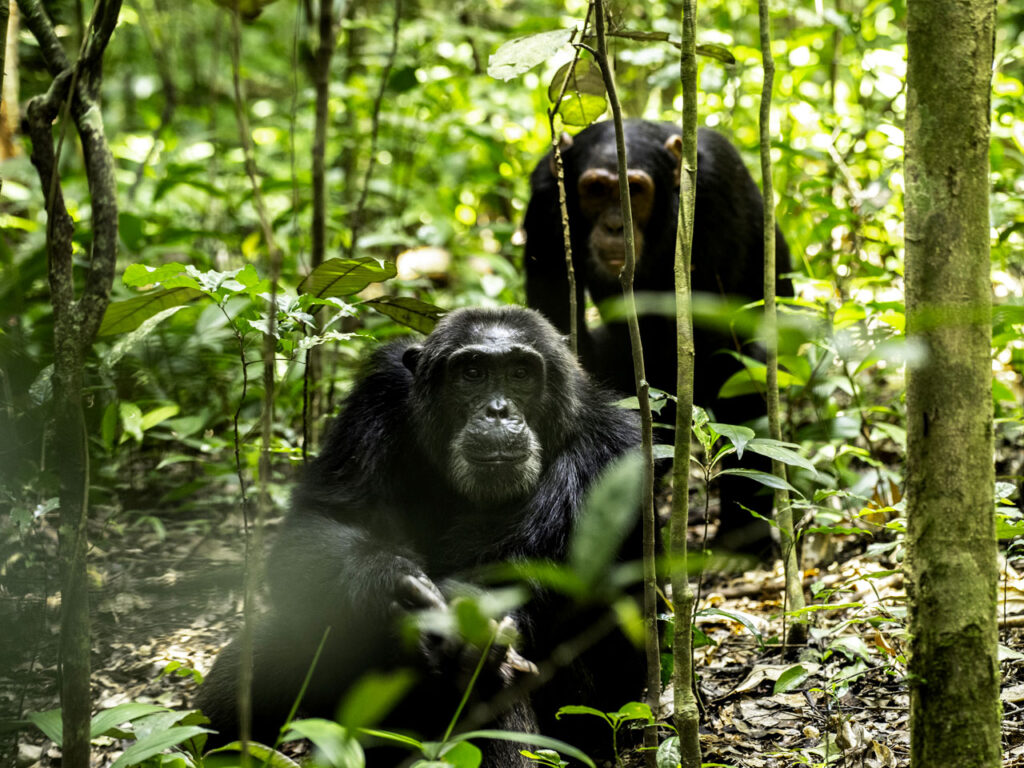
Yes, you can track chimpanzees in Queen Elizabeth National Park, specifically in the Kyambura Gorge, often referred to as the "Valley of Apes". Tracking permits cost around USD $50 for foreign non-residents, and the experience offers a 2-4 hour guided trek to find habituated chimpanzee families, usually starting at 8:00 AM or 2:00 PM
3-days-trips-to-queen-elizabeth-national-park-for-chimpanzee-tracking-in-kyambura-gorge
Key Details for Chimpanzee Tracking in Queen Elizabeth National Park
Location: The Dramatic Kyambura Gorge
The setting for chimpanzee tracking in Queen Elizabeth National Park is unlike any other primate destination in East Africa. While most chimpanzees are tracked in vast, level forests like Kibale, here they reside in the Kyambura Gorge, a 100-meter-deep tectonic gash that carves through the otherwise flat savanna. Often called the "Underground Forest" or the "Valley of Apes," the gorge is a lush, emerald ribbon of riverine vegetation that stands in stark contrast to the sun-scorched plains above it. Descending the steep escarpment into the gorge feels like entering a prehistoric world; the temperature drops, the air becomes humid, and the sounds of the savanna are replaced by the rushing Kyambura River and the echoes of forest life. This isolated ecosystem is home to a habituated community of chimpanzees that are physically separated from the rest of the park's forests. Tracking them here is a vertical adventure, requiring you to navigate the steep walls of the gorge to reach the dense canopy at the bottom, making the location itself a primary highlight of the experience.
Cost: Accessible Primate Adventures
One of the most appealing aspects of tracking chimpanzees in Queen Elizabeth National Park is its relative affordability compared to other high-profile primate treks. As of current standards, the permit cost is approximately USD 50 for foreign non-residents, making it a budget-friendly alternative to the more expensive treks in Kibale Forest. For East African Community residents, the cost is significantly lower, typically around 30,000 UGX, which encourages domestic tourism and regional conservation efforts. It is important to note that this permit fee specifically covers the tracking activity, the expertise of the ranger guides, and park security. However, it does not include the general park entrance fee (currently USD 40 for 24 hours), which must be paid separately. This pricing structure allows travelers to combine a classic savanna safari with a professional primate encounter without the high price tag often associated with gorilla or chimpanzee trekking in other protected areas, making it a "best-value" addition to a 3-day Uganda circuit.
Best Time to Visit: Weathering the Gorge
While chimpanzee tracking is a year-round activity, the dry seasons—specifically June to August and December to February—are considered the optimal times for the trek. During these months, the steep trails leading down into the 100-meter gorge are much firmer and easier to navigate. In the rainy season, these paths can become slippery and challenging, requiring a higher level of physical coordination. Furthermore, the dry weather often means the chimpanzees are more localized near permanent water sources and fruiting trees at the bottom of the gorge, making them slightly easier to locate. However, the rainy season (March to May and September to November) has its own rewards; the gorge becomes incredibly lush and vibrant, and the abundance of food can lead to more vocal and active chimpanzee behavior. Regardless of when you visit, the "sunken forest" provides a unique microclimate that is cooler than the surrounding plains, but sturdy hiking boots with good grip are always a mandatory requirement for managing the vertical terrain.
Duration: The Rhythm of the Trek
A typical chimpanzee tracking excursion in Kyambura lasts between 2 to 4 hours, depending on where the primates spent the previous night and how far they have traveled in search of food. The experience begins with a morning or afternoon briefing at the visitor center, followed by a descent into the forest. Once the rangers locate the community, you are granted one hour of observation. This "golden hour" allows you to witness the chimpanzees' complex social dynamics, from grooming and playing to their incredible vocalizations and occasional high-speed canopy maneuvers. Because the gorge is a linear, enclosed environment, the trek is often more intense than a walk in a flat forest; you are constantly aware of the towering walls around you. The relatively short duration compared to gorilla trekking makes it a perfect half-day activity, leaving you enough time to enjoy a boat cruise on the Kazinga Channel or a game drive on the Kasenyi plains later in the day.
Permits & Guides: The Necessity of Expertise
Navigating the Kyambura Gorge is a strictly regulated activity to ensure the safety of both the primates and the visitors. A guide is mandatory for every trek; these are professional rangers from the Uganda Wildlife Authority (UWA) who are armed for protection and highly trained in primate behavior. They are experts at "reading" the forest—interpreting broken branches, dung, and vocalizations to lead you to the chimpanzees. Because only a limited number of permits are issued per day to minimize the impact on the chimp community, booking in advance is highly recommended. Permits can be secured through the UWA headquarters or via a reputable tour operator. Attempting to enter the gorge without a guide is not only illegal but dangerous, as the terrain is rugged and the wildlife is wild. The guide does more than just find the apes; they provide essential context about the ecology of the gorge and the conservation efforts being made to protect this isolated and vulnerable population of "man's closest relatives."
Where do I track chimpanzees in Queen Elizabeth National Park?
The primary location for this activity is the Kyambura Gorge, a remarkable geological feature in the northeastern part of the park. Stretching for 16 kilometers and plunging 100 meters deep, this gorge is a dramatic contrast to the surrounding savanna. It was formed by the turbulent waters of the Kyambura River, which carved a deep valley that eventually filled with a lush, tropical riverine forest. This "sunken forest" acts as a natural sanctuary for primates, completely isolated from the drier plains above. Because the habitat is confined within the steep walls of the gorge, the trekking experience feels incredibly intimate and focused. You start by standing on the rim, looking down into a canopy of ancient trees, before descending into a humid, prehistoric world. The linear nature of the gorge makes it a unique trekking environment; you aren't just walking through a forest, you are exploring a hidden ecosystem that feels like a secret world tucked away within the Rift Valley.
Are there habituated chimps in Queen Elizabeth National Park?
Yes, the park is home to a specific community of habituated chimpanzees that reside exclusively within the Kyambura Gorge. Habituation is a long-term process where researchers and rangers spend years in close proximity to the primates until they become accustomed to human presence without changing their natural behavior. This particular community is relatively small and isolated, making them a subject of intense conservation interest. Because they are habituated, they do not flee when they encounter a trekking group, allowing you to witness their authentic social interactions, from complex grooming rituals to high-energy hunting parties. It is important to remember that they are still wild animals; their habituation simply means they view humans as a neutral part of their environment. This provides a rare window into the lives of our closest biological relatives, set against the stunning backdrop of a tropical forest trapped within a savanna.
How much is a chimpanzee trekking permit in Kyambura Gorge?
Compared to other primate experiences in East Africa, tracking in Kyambura Gorge is exceptionally affordable. While prices are subject to periodic review by the Uganda Wildlife Authority (UWA), the permit for foreign non-residents has traditionally hovered around USD 50. This makes it one of the most accessible primate encounters in Uganda, especially when compared to the higher fees in Kibale Forest or the significant cost of gorilla trekking. For East African citizens, the cost is even more accessible, often priced at 30,000 UGX. This fee covers the expertise of your ranger-guide and the conservation efforts required to protect the gorge. It is important to note that this permit is separate from the general park entrance fee (USD 40). For travelers on a 3-day safari, this pricing offers a "best-value" opportunity to add a high-quality primate experience to a traditional wildlife tour without a massive financial burden.
How do I book a chimpanzee permit in Queen Elizabeth National Park?
Securing a permit is a straightforward process, but because the number of visitors allowed in the gorge each day is strictly limited to protect the chimps, advance booking is highly recommended. You can book directly through the Uganda Wildlife Authority (UWA) offices in Kampala or at the park headquarters in Mweya. However, the most convenient method for most international travelers is to have a local tour operator handle the logistics. Operators have direct access to the booking systems and can ensure that your trekking time slots align perfectly with your 3-day itinerary, such as a morning trek followed by an afternoon boat cruise. When you book, you will receive a formal permit that you must present at the Fig Tree Camp (the gorge briefing point) on the day of your trek. Relying on an expert operator ensures you don't miss out on this limited-capacity experience during peak tourist seasons.
When is the best time for tracking in Kyambura Gorge?
The best time for tracking is during the dry seasons, which typically run from June to September and December to February. During these months, the trails that lead down the 100-meter escarpment are dry, firm, and much easier to navigate. In the rainy seasons, the steep paths can become incredibly slippery and muddy, making the descent and ascent quite challenging. Furthermore, chimpanzees are more likely to be found on the forest floor or in lower branches during the dry season as they move between fruiting trees, whereas heavy rain may keep them huddling in the high canopy. However, the "wet" months of March to May and October to November make the gorge incredibly lush and vibrant, and the abundance of food can lead to more vocal and active behavior. Regardless of the season, the gorge maintains a humid microclimate, but the dry months offer the most reliable conditions for a comfortable and successful trek.
How long does the chimp trekking experience last?
A typical chimpanzee trekking expedition in Kyambura Gorge lasts between 2 to 5 hours. The experience begins with a mandatory safety and etiquette briefing at the visitor center, followed by the descent into the gorge. The actual time spent searching for the chimps depends entirely on their movement; they are highly mobile and can travel significant distances within the gorge in a single morning. Rangers use their knowledge of the chimps' nesting sites and favorite fruiting trees to track them, often listening for their loud "pant-hoot" calls that echo off the gorge walls. Some days you might find them within thirty minutes, while other days require a longer hike through the riverine forest. This variability is part of the adventure, as the walk through the "Underground Forest" is a reward in itself, offering sightings of other primates, rare birds, and unique tropical flora before the main encounter begins.
How much time do I spend with the chimps?
Once your group successfully locates the chimpanzee community, you are permitted strictly one hour of observation time. This "golden hour" is an international standard for primate tourism designed to minimize stress on the animals and reduce the risk of cross-species disease transmission. During this time, you can observe them feeding, playing, or resting, and your ranger will provide fascinating insights into the individual personalities and hierarchy of the group. The one-hour limit ensures that the chimps' natural routines—such as foraging and social bonding—are not overly disrupted by human presence. Most travelers find that sixty minutes is the perfect amount of time to capture incredible photographs and soak in the experience without overstaying their welcome in the chimps' private forest home. The intensity of the encounter usually makes that hour feel like a lifetime of memories.
What is the minimum age for trekking in Kyambura Gorge?
To ensure the safety of both the children and the primates, the minimum age for chimpanzee trekking is 12 years. This rule is strictly enforced by the Uganda Wildlife Authority for several reasons. First, the trek involves navigating steep, rugged terrain and requires a level of physical stamina and coordination that younger children may struggle with. Second, chimpanzees are highly sensitive to noise and sudden movements; older children are generally better equipped to follow the ranger’s instructions to remain quiet and calm during the encounter. Lastly, there is a health component: primates are susceptible to many human childhood illnesses, and the age limit helps mitigate the risk of disease transmission. For families traveling with younger children, many lodges offer alternative activities or childcare services while the adults and older siblings head into the gorge for the trek.
Is chimp tracking in Queen Elizabeth difficult?
Tracking in the Kyambura Gorge is considered moderately strenuous, primarily due to the vertical nature of the terrain. Unlike other forests where you walk on relatively level ground, here you must descend a 100-meter escarpment to reach the forest and then climb back out at the end of the trek. The paths are steep and can be uneven, with roots and rocks providing natural obstacles. While you don't need to be a professional athlete, a moderate level of physical fitness and good balance are necessary. The humidity at the bottom of the gorge can also be taxing, making the hike feel more intense than a standard walk. However, the rangers move at a pace that suits the group, and the excitement of hearing the chimps' vocalizations usually provides a significant adrenaline boost that makes the physical effort feel well worth it.
What should I pack for trekking in Queen Elizabeth National Park?
Proper gear is essential for a successful and comfortable trek in the gorge. You should wear long-sleeved shirts and long trousers to protect your skin from stinging nettles, thorny bushes, and biting insects. Sturdy hiking boots with good ankle support and grip are non-negotiable for the steep, often slippery slopes. A high-quality insect repellent is necessary to ward off mosquitoes and tsetse flies, while a rain jacket is a must-have, as tropical showers can occur even in the dry season. Don't forget a camera with a good zoom lens, as the chimps can sometimes be high in the canopy, and a pair of binoculars for spotting other forest birds. Finally, bring a small backpack with enough drinking water and perhaps a light snack to keep your energy up during the 2–5 hour excursion.
What are the chances of seeing chimpanzees in Kyambura?
The chances of seeing chimpanzees in the Kyambura Gorge are remarkably high, often cited at over 80%. This high success rate is due to the unique "enclosed" nature of the habitat; because the forest is restricted within the walls of the gorge, the chimps have a limited range compared to those in vast, sprawling national forests. Furthermore, the acoustic properties of the gorge work in the rangers' favor—the loud vocalizations of the chimpanzees echo off the rock walls, making it much easier for experts to pinpoint their exact location even from a distance. The UWA rangers are also in constant communication and track the community daily, meaning they usually have a good idea of where the chimps nested the night before. While wildlife sightings can never be 100% guaranteed, the Kyambura Gorge is one of the most reliable places in East Africa for a successful primate encounter.
Can I track chimps in Maramagambo Forest?
While the Maramagambo Forest is a massive, beautiful central forest reserve within the park and is home to several primate species, including chimpanzees, formal trekking is not conducted there. This is because the chimpanzees in Maramagambo are not habituated to human presence. Unlike the community in Kyambura Gorge, the chimps in Maramagambo are wild and shy; they will typically flee long before a group of humans can get close enough for an observation. However, visitors to Maramagambo can still enjoy guided nature walks to see the famous "bat cave" and spot other primates like Black-and-white Colobus and Red-tailed monkeys. For the specific goal of seeing chimpanzees up close and spending time in their presence, the Kyambura Gorge remains the designated and only viable location within the park boundaries.
What time do trekking expeditions start?
Chimpanzee trekking in Kyambura Gorge typically begins with a briefing at 8:00 AM for the morning session, and there is often a second session starting at 2:00 PM. The morning session is generally the most popular, as primates are most active during the cooler early hours when they are foraging for breakfast. Starting early also increases your chances of finding them before they settle down for a midday nap in the thickest part of the canopy. For those on a 3-day safari, the morning session is ideal because it allows you to complete the trek by lunchtime, leaving the afternoon free for other park highlights like the Kazinga Channel boat cruise. Arriving on time for the briefing is essential, as the rangers provide critical safety information and etiquette rules that must be followed once you enter the "Underground Forest."
Is it safe to track chimpanzees?
Yes, tracking chimpanzees in the gorge is extremely safe, provided you follow the instructions of your professional UWA ranger. The rangers are experts in primate behavior and can interpret the chimps' vocalizations and body language to ensure the group maintains a safe and respectful distance. Rangers are also armed for protection, primarily as a deterrent against other potentially dangerous wildlife like buffaloes that occasionally wander into the forest. The habituated status of the chimps means they are not aggressive toward humans; they generally go about their daily lives as if you aren't there. By following the "Golden Rules"—such as staying 7 meters away, not eating near the chimps, and keeping your voice low—you ensure a peaceful and secure encounter for both yourself and the primates.
Can I combine this with a boat cruise?
One of the best things about Queen Elizabeth National Park is how easy it is to combine chimpanzee trekking with a boat cruise. Because the Kyambura Gorge is located in the northeastern sector of the park, it is only a short drive from the Mweya Peninsula, where the Kazinga Channel boat cruises depart. A perfect Day 2 itinerary involves a 3-hour morning trek in the gorge (8:00 AM to 11:00 AM), followed by a relaxing lunch at a nearby lodge, and then the 2:00 PM or 4:00 PM boat cruise. This combination allows you to experience two of the park’s most distinct ecosystems—the "Underground Forest" and the aquatic life of the channel—all within a single day. It is this diversity of activities, packed into a relatively small geographic area, that makes a 3-day safari to Queen Elizabeth Park so rewarding and time-efficient.
Booking Chimpanzee tracking in Kyambura gorge with us Roads of Adventure safaris
Booking chimpanzee tracking in Kyambura Gorge with Roads of Adventure Safaris offers tailored, 4-17 day, and 5-day 5-day Wildlife, Gorilla & Chimp packages including private 4x4 transport, permits, and expert guiding. Permits for Kyambura Gorge cost roughly $50–$150, allowing 1 hour with chimps, with only 16 permits available daily.
