Yes, 7 days is the perfect amount of time for a concentrated birding adventure in Uganda. You can easily spot hundreds of species by exploring diverse habitats, from wetlands and tropical forests to vast savannas.
Popular tour packages
9-days-classic-uganda-birding-safari-tourn
13-days-uganda-birding-safari-and-wildlife
20-days-uganda-birding-safari-to-uganda-national-park
21-days-uganda-birding-safari-extravaganza-to-best-uganda-safari-parks
10-days-best-uganda-birding-safari-and-wildlife-experience
9-days-best-uganda-birding-safari-tour-from-swamps-to-savannah-eastern-route
Day 1: Arrival & Birding at Entebbe Botanical Gardens
Upon arrival at Entebbe International Airport, transfer to your hotel before starting your birding trip at the historic Entebbe Botanical Gardens on the shores of Lake Victoria. Established in 1898, these lush gardens offer an ideal introduction to Uganda's birdlife along well-paved 2 to 3 km walking paths. Spend the afternoon scanning the high canopy for vibrant species like the Ross’s Turaco, Great Blue Turaco, Black-and-white-casqued Hornbill, and Eastern Grey Plantain-eater. Near the water's edge, watch for Pied Kingfishers, African Openbill Storks, and Long-tailed Cormorants. In the late afternoon, head to the nearby Uganda Wildlife Education Centre (UWEC) forest trails to spot roosting Bat Hawks and African Goshawks. This gentle first day allows you to acclimatize while logging over 50 bird species within a relaxed 10 km radius of Entebbe.
Day 2: Mabamba Swamp Shoebill Excursion
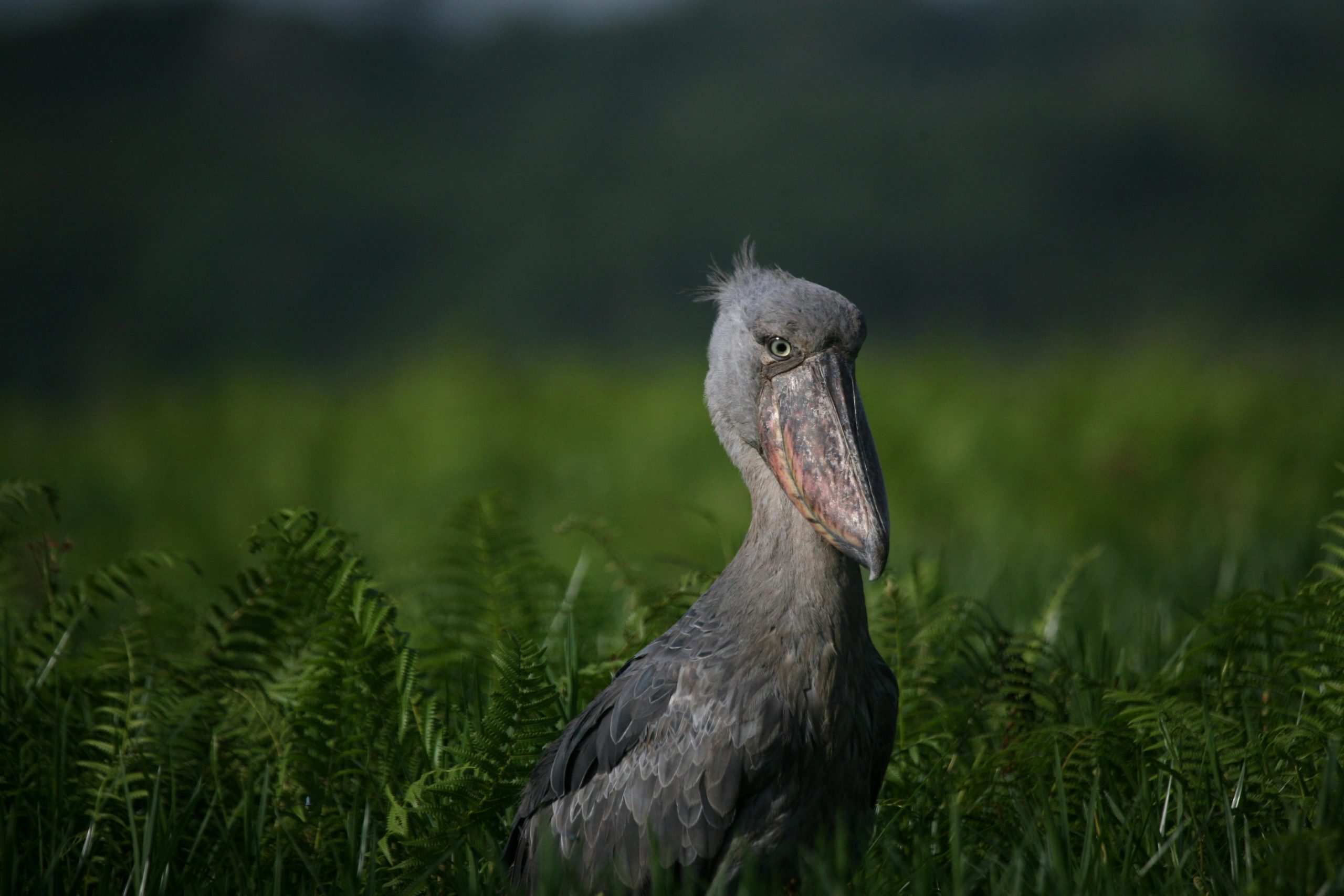
Rise at 6:00 AM for a 1.5-hour drive (or 45-minute speedboat ride across Lake Victoria) covering 50 km west to the Mabamba Bay Wetland, a world-famous RAMSAR site. Here, transfer into a motorized wooden canoe to navigate narrow papyrus channels. Your primary target is the prehistoric-looking Shoebill Stork, which hunts lungfish in the shallow, muddy clearings. Mabamba boasts an 85% to 90% sighting success rate during early morning hours before heat causes storks to retreat. Beyond the Shoebill, spot wetland specialists including the vibrant Papyrus Gonolek, Blue Swallow, Lesser Jacana, Malachite Kingfisher, and Purple Heron. After a 3 to 4-hour canoe excursion, return to land for lunch before taking an afternoon birding drive along the forest edges near Kasanje. Return to Entebbe for dinner and an early night before heading east tomorrow.
Day 3: Transfer East to Mabira Forest Reserve
Depart Entebbe early to tackle the 80 km drive east along the Kampala-Jinja Highway toward Mabira Forest Reserve, East Africa’s largest surviving central rainforest. Drive duration varies from 2.5 to 3.5 hours depending heavily on Kampala traffic bottlenecks. Arrive at Mabira by mid-morning and check into your eco-lodge surrounded by dense foliage. Mabira covers over 300 square kilometers and shelters more than 300 bird species. Spend the afternoon exploring the well-maintained canopy trails with a specialized forest guide. Focus on canopy-dwelling species like the African Grey Parrot, Yellow-whiskered Greenbul, Jameson’s Wattle-eye, and the striking Great Blue Turaco. Keep your eyes trained on fruiting trees, where Black-billed Turacos and Yellow-throated Tinkerbirds frequently feed. Finish the day with a dusk walk near the forest edge to listen for nocturnal owls and nightjars.
Day 4: Full-Day Mabira Forest Specialist Birding
Dedicate a full day to exploring deep forest trails within Mabira, focusing on rare forest-understory specialists and regional endemics. Start at dawn along the Najjembe trail network, where quietly stepping along damp floor paths yields optimal views. Your top target for the morning is the endangered Nahan’s Francolin, a terrestrial forest bird best detected by its distinctive morning calls. Search underbrush for the Forest Robin, Blue-shouldered Robin-Chat, and Shining-blue Kingfisher along shaded forest streams. During the warmer midday hours, focus on mixed-species feeding flocks moving through the middle canopy, where you can log the Forest Wood-hoopoe, Purple-banded Sunbird, and Chestnut-cap Flycatcher. In the afternoon, explore the forest boundary trails to spot raptors like the Ayres's Hawk-Eagle soaring over the canopy. Walk 8 to 10 km at a slow pace, accumulating an impressive forest bird list.
Day 5: Cross-Country Transfer to Lake Mburo National Park
Embark on the longest travel leg of the itinerary, driving 290 km west from Mabira Forest to Lake Mburo National Park. This journey takes approximately 6 to 7 hours as you traverse back past Kampala's urban perimeter and head southwest along the Masaka Road. Stop for lunch and photos at the Equator crossing in Kayabwe. Arrive at Lake Mburo by mid-afternoon, where the landscape transitions dramatically from lush rainforest to dry acacia savanna and rolling hills. Enter the park and take an late-afternoon 2-hour boat safari on Lake Mburo itself. This boat trip offers close encounters with water birds like the elusive African Finfoot, White-backed Night Heron, Rufous-bellied Heron, and African Fish Eagle, alongside heavy pods of hippos and basking crocodiles along the papyrus-fringed shores.
Day 6: Lake Mburo Savannah & Acacia Birding
Spend the day exploring Lake Mburo’s unique acacia woodland habitats, which host species found nowhere else in central or western Uganda. Begin with an early 3-hour morning game drive along the Zebra and Kazuma tracks. Keep your eyes peeled for the rare Red-faced Barbet, an acacia endemic, alongside the Tabora Cisticola, Crested Francolin, Bare-faced Go-away-bird, and Emerald-spotted Wood-Dove. The park’s open savannah also provides clear sightings of large mammals like burchell’s zebras, impalas, topis, and roan antelopes sharing the pastures. In the afternoon, take a guided birding walk on foot accompanied by an armed park ranger along the Salt Lick trail. Walking allows quiet approaches to secretive bushes, giving you chance to spot the Brown-chested Lapwing, Black-collared Barbet, and Yellow-breasted Apalis before watching the sunset over the park's rolling acacia hills.
Day 7: Morning Birding & Return to Entebbe/Kampala
Conclude your safari with a final 2-hour morning birding track along the Kigambira loop in Lake Mburo to catch any missed acacia species, such as the Coqui Francolin or Red-headed Lovebird. Pack your gear and begin the 230 km return drive to Kampala or Entebbe Airport. The return drive takes roughly 4 to 4.5 hours along the paved Mbarara-Kampala Highway, passing through traditional Ankole cattle farms and rural trading centers. Plan to arrive in Entebbe by late afternoon (around 4:00 PM), allowing ample time to freshen up, review your master bird list, and transfer to Entebbe International Airport for your evening departure flight home. This completes a comprehensive 7-day circuit spanning Uganda's best wetlands, central rainforests, and acacia savannahs.
What makes this 7-day circuit ideal for birdwatchers?
This 7-day circuit stands out because it offers an incredible density of diverse ecosystems within a compact geographic footprint. Instead of spending endless days driving across the country, you cover three distinct birding habitats—the papyrus wetlands of Lake Victoria, the dense central rainforest of Mabira, and the dry acacia savannas of Lake Mburo. This habitat variety allows you to log over 250 to 300 unique bird species in just one week. You start with world-famous water birds like the prehistoric Shoebill Stork in Mabamba, transition to canopy and understory specialists such as the Great Blue Turaco and Nahan's Francolin in Mabira Forest, and finish with acacia endemics like the Red-faced Barbet in Lake Mburo. The routing is designed as a smooth loop around central and southern Uganda, minimizing road fatigue while maximizing active field time. Every day brings completely different terrain, forest acoustics, and target species, making it an ideal itinerary for both dedicated lifers and enthusiastic naturalists seeking a well-rounded African birding adventure.
Is Entebbe Botanical Gardens worth visiting on Day 1?
Entebbe Botanical Gardens is absolutely worth visiting, especially as an gentle introduction on your arrival day. Located right on the shores of Lake Victoria just 15 minutes from the airport, these gardens offer over 100 years of established tall canopy trees, thick underbrush, and open lakefront habitats. It provides the perfect low-stress environment to stretch your legs after a long international flight while acclimatizing to local weather conditions. Walking along the wide, paved paths allows you to easily spot roosting species and get your eye in for African bird families without bushwhacking through dense terrain. In just a couple of hours, you can expect to see vibrant species like the Great Blue Turaco, Ross's Turaco, Eastern Grey Plantain-eater, Pied Kingfisher, and Black-and-white-casqued Hornbill. The garden's towering rainforest trees are also home to troops of playful black-and-white colobus monkeys and vervet monkeys. Starting here sets an encouraging, species-rich baseline for your master trip list before tackling the more challenging forest trails later in the week.
What are the chances of seeing a Shoebill Stork?
Your chances of sighting a Shoebill Stork at Mabamba Wetland are remarkably high, typically hovering between 85% and 90% on early morning canoe trips. Mabamba Bay is recognized globally as one of the best and most reliable sites to find this enigmatic, dinosaur-like bird. The local community boat captains and specialized birding guides monitor the wetland daily and track individual birds as they move between feeding clearings. To secure the highest probability of a sighting, you must embark on the motorized canoe early in the morning, around 6:30 AM or 7:00 AM. During these cooler morning hours, Shoebills stand completely motionless in shallow water pockets, patiently stalking lungfish and catfish. Once the sun rises high and temperature increases toward midday, the storks often catch thermals to soar high into the sky or retreat deep into impenetrable papyrus thickets where boats cannot navigate. Even in the rare event a Shoebill stays out of view, navigating the tranquil water channels offers sightings of Papyrus Gonoleks, Blue Swallows, and Malachite Kingfishers.
How difficult is forest birding in Mabira Reserve?
Forest birding in Mabira Reserve is moderately challenging, as is typical for dense rainforest environments, but it is highly rewarding for patient observers. Unlike open savanna where animals are fully exposed, forest species spend their time high in the dense upper canopy or hidden within tangled underbrush. Listening for distinct calls and following mixed-species feeding flocks is essential. Mabira features a well-maintained network of cleared trails that make walking easy underfoot, so you won't need to do any extreme mountain climbing or difficult bushwhacking. However, spotting small, fast-moving birds like greenbuls, flycatchers, and robins through thick foliage requires sharp eyes, good binoculars, and guidance from a local expert who knows the bird calls. The key is moving at a slow, deliberate pace and stopping frequently near fruiting trees or shaded stream beds. High canopy targets like the African Grey Parrot and Black-billed Turaco are often spotted perched on exposed top branches during early morning hours.
What species are unique to Lake Mburo National Park?
Lake Mburo National Park holds a vital spot on this itinerary because its dry acacia woodland and savanna habitats support species you won't encounter in Mabamba or Mabira. The star avian attraction here is the Red-faced Barbet, a localized endemic found almost exclusively in this acacia ecosystem within Uganda. Other notable acacia specialists include the Tabora Cisticola, Green-capped Eremomela, Yellow-breasted Apalis, Bare-faced Go-away-bird, and Emerald-spotted Wood-Dove. Lake Mburo is also famous for its wetland residents along the lake edges; a boat safari provides your best opportunity to spot the secretive African Finfoot paddling near overhanging roots, alongside the White-backed Night Heron and Rufous-bellied Heron. Beyond birdlife, Lake Mburo is the only park on this specific circuit where you will see large savanna mammals. As you bird along the tracks, you'll be surrounded by herds of Burchell’s zebras, impalas, topis, elands, and hippos, giving you a complete, classic African safari experience alongside your birdwatching goals.
How long are the travel drives between locations?
Managing transit expectations is key to a smooth Ugandan safari. The drive from Entebbe to Mabamba Swamp takes about 1.5 hours across 50 km of paved and gravel roads (or a 45-minute boat ride across Lake Victoria). Moving east from Entebbe to Mabira Forest Reserve covers roughly 80 km along the Kampala-Jinja Highway; while the distance seems short, heavy traffic around Kampala can extend this drive to 2.5 or 3.5 hours. The longest journey occurs on Day 5, traveling 290 km west from Mabira to Lake Mburo National Park, which takes approximately 6 to 7 hours including a lunch stop at the Equator crossing. Finally, returning from Lake Mburo back to Entebbe or Kampala covers 230 km and takes about 4 to 4.5 hours on smooth asphalt. All transfers are conducted in comfortable 4x4 safari vehicles with pop-up roofs, allowing you to bird along roadside habitats, agricultural fields, and papyrus swamps along the way.
What optical gear should I bring for birding?
Having the right optical equipment is critical for getting the most out of this trip. A quality pair of binoculars is your single most important tool. Standard 8x42 or 10x42 binoculars are ideal; 8x magnification offers a wider field of view and brighter image inside dark forest canopy environments like Mabira, while 10x gives you extra reach across open wetland channels in Mabamba and open savanna in Lake Mburo. Ensure your optics are fully waterproof and fog-proof, as high humidity and morning dew are standard in tropical Uganda. For photographers, a DSLR or mirrorless camera body paired with a telephoto zoom lens (such as a 100-400mm or 200-600mm) is recommended to capture clear shots of birds perched high in trees or across water channels. A spotting scope can be helpful for distant water birds on Lake Mburo or perched raptors, but your specialist birding guide will usually carry a high-end scope for group use.
What clothing and footwear work best on safari?
Packing the right attire ensures comfort across varying microclimates. For forest birding in Mabira, bring lightweight, long-sleeved shirts and full-length trousers in neutral earth tones like olive, khaki, or brown. Long sleeves protect against sharp foliage, biting insects, and sun exposure, while neutral colors keep you blended into the environment so you don't startle skittish species. Avoid dark blue or black clothing, as these shades naturally attract biting tsetse flies in woodland zones. For footwear, comfortable, broken-in hiking boots or sturdy trail runners with aggressive tread are essential for traction on damp, slippery forest paths and uneven savanna trails. Bring a wide-brimmed sun hat, polarized sunglasses to cut water glare during boat excursions, a lightweight waterproof rain jacket for sudden tropical showers, and long socks that you can tuck your trousers into during forest walks to prevent driver ants from crawling up your legs.
What are the accommodation styles on this circuit?
Accommodations across this 7-day circuit cater to comfort while keeping you immersed in nature. In Entebbe, you will stay in boutique lakeside hotels or cozy guesthouses surrounded by lush tropical gardens where birding begins right on your veranda. At Mabira Forest, lodging consists of eco-lodges nested directly inside the rainforest canopy. These lodges feature wooden chalets built on stilts, allowing you to wake up to the morning calls of turacos and hornbills feeding in adjacent trees. At Lake Mburo National Park, options range from mid-range safari tented camps to upscale eco-lodges perched on high rocky ridges overlooking the acacia valley. Tented camps feature solid floors, en-suite bathrooms with hot showers, and comfortable beds under canvas, providing an authentic wilderness feeling accompanied by the night sounds of roaring bushbabies and calling owls. All selected properties offer electricity for charging camera batteries and serve fresh, hot meals tailored to early morning birder schedules.
10. Can this 7-day itinerary be customized further?
Tailoring your 7-day Ugandan itinerary is entirely seamless, allowing you to craft an adventure that perfectly matches your pace, style, and interests. You can easily cut down long driving hours by booking quick domestic bush flights with local carriers like Aerolink or BAR Aviation from Entebbe directly to national park airstrips. Depending on your passion for adrenaline or wildlife, you can swap or insert experiences like white-water rafting on the Nile in Jinja, hiking Sipi Falls, or embarking on gorilla treks in Bwindi. Accommodation choices can be customized across all levels, ranging from cozy, budget-friendly eco-camps to high-end luxury lodges featuring private plunge pools overlooking the savanna. For an even grander East African journey, you can seamlessly link your itinerary across the border to Rwanda to explore Kigali or track primates in Volcanoes National Park before flying home.
Booking 10 days Uganda birding safari with us Roads of Adventure safaris
10-day Uganda birding safari with Roads of Adventure Safaris covers Uganda's premier ornithological loops, from prehistoric wetlands to high-altitude rain forests. The typical route starts in Entebbe, tracking over 1,000 recorded avian species through core biodiversity hotspots.
