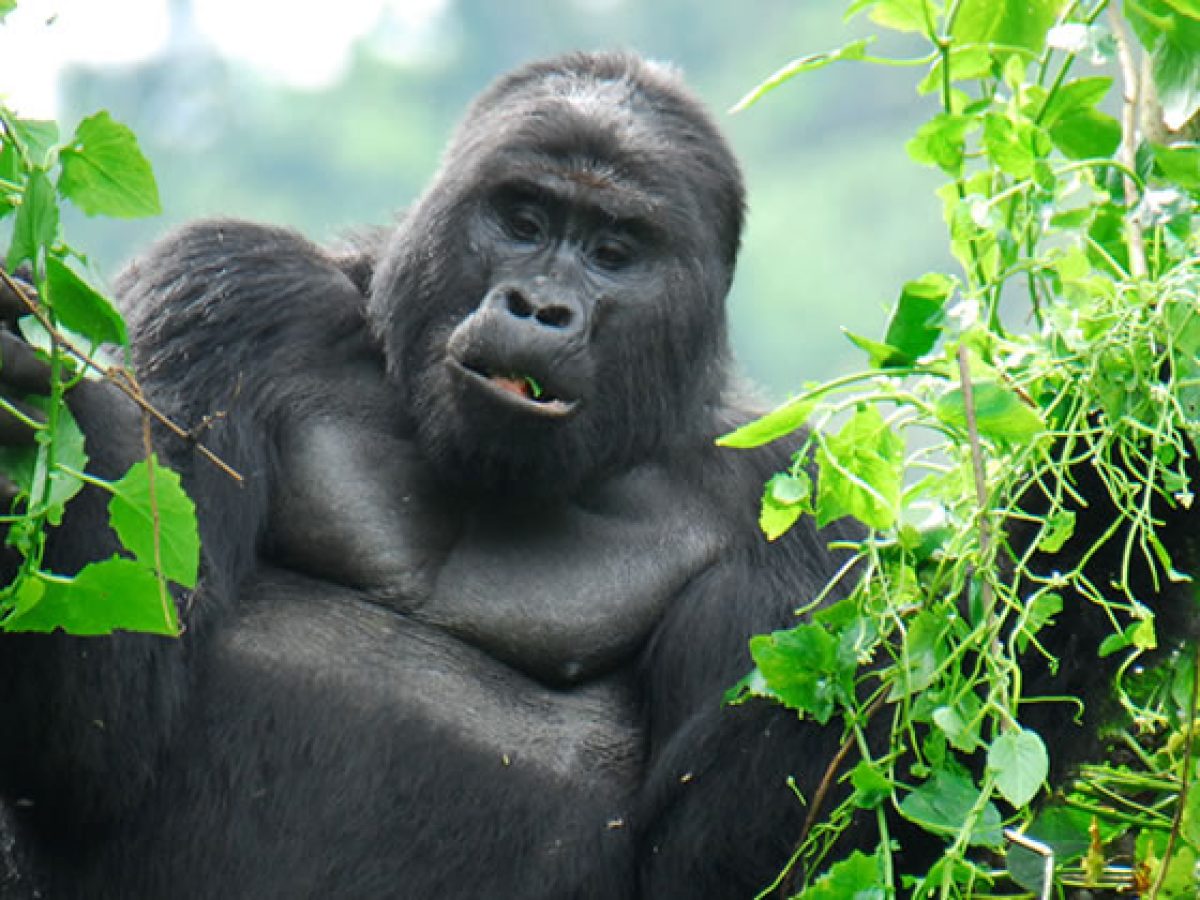
Yes, you can absolutely do both gorilla and chimpanzee trekking in a 7-day Uganda safari. This popular itinerary focuses on the southwestern region, allowing you to combine gorilla trekking in Bwindi Impenetrable National Park or Mgahinga with chimpanzee tracking in Kibale National Park, often including wildlife viewing in Queen Elizabeth National Park
7-days-murchison-falls-uganda-safari-trip-via-ziwa-rhinos-kidepo-valley-and-jinja
7-days-best-family-uganda-safari-with-primates-and-big-five
7-days-photography-uganda-safari-all-big-five-chimpanzee-and-gorillas
7-days-uganda-tour-to-murchison-falls-via-ziwa-kibale-and-queen-elizabeth-national-park
7-days-best-uganda-birding-safari-tour
7-days-perfect-uganda-primate-safari-itinerary
7-days-uganda-honeymoon-safari-holiday-vacation
7-days-best-uganda-wildlife-safari-and-culture
7-days-best-gorilla-trekking-and-safari-in-uganda-to-see-big-fives
7-days-safari-to-uganda-queen-elizabeth-park-gorillas-trekking-and-lake-mburo
7-day-best-uganda-safari-holiday-true-escape
7-days-budget-uganda-safari-tour-package
7-days-honeymoon-uganda-safari-and-primate-tour-vacation-holiday
7-days-perfect-road-trip-uganda-safari-tour
7-days-best-uganda-safari-tour-to-popular-safari-parks
7-day-uganda-safari-to-kidepo-valley-via-jinja-and-sipi-falls
7-day-uganda-gorilla-trekking-chimpanzee-wildlife-safari-tour-and-culture
7-days-uganda-safari-chimpanzee-tracking-and-jinja-white-water-rafting
7-day-ultimate-uganda-primate-safari-chimpanzees-and-game-drives
Key 7-Day Itinerary Highlights
- Chimpanzee Tracking: Usually done in Kibale National Park ("primate capital of the world").
- Gorilla Trekking: Conducted in Bwindi Impenetrable National Park.
- Wildlife: Game drives and boat cruises on the Kazinga Channel in Queen Elizabeth National Park.
7-Day Uganda Safari
This 7-Day Uganda Safari is a masterfully crafted expedition into the "Pearl of Africa," offering a profound immersion into one of the most biodiverse regions on the planet. This itinerary focuses on the legendary "Primate Double Bill," taking you from the ancient, steam-filled canopy of Kibale National Park to the mist-shrouded, prehistoric ridges of Bwindi Impenetrable Forest. Between these two world-class trekking experiences, you will navigate the golden savannahs of the Great Rift Valley in Queen Elizabeth National Park, a land of tree-climbing lions and hippo-filled channels. Designed for those who crave a deep connection with nature, this journey traverses five distinct ecosystems, offering a front-row seat to the daily dramas of the African wild. From the high-energy acrobatics of chimpanzees to the soulful, life-changing gaze of a mountain gorilla, these seven days provide a comprehensive and intimate portrait of Uganda’s magnificent wildlife and breathtaking landscapes.
Day 1: Arrival in Entebbe/Kampala
Your journey begins at Entebbe International Airport, situated on a lush peninsula jutting into Lake Victoria. Upon arrival, the cool breeze from the world's largest tropical lake greets you. You will be transferred to your hotel in Entebbe or the nearby capital, Kampala, to rest after your flight. If you arrive early, you can explore the Entebbe Botanical Gardens, a haven for exotic birds and Colobus monkeys, or visit the Ngamba Island Chimpanzee Sanctuary. As the sun sets over the lake, you will enjoy a briefing from your safari guide regarding the adventure ahead. The evening is spent in the comfort of a refined city hotel, allowing you to acclimatize to the tropical air and the rhythmic sounds of the African night before your departure into the deep wilderness at dawn tomorrow.
Day 2: Transfer to Kibale National Park
After an early breakfast, you begin the scenic drive west toward the "Primate Capital of the World," Kibale National Park. The journey takes you through the vibrant heart of Uganda, passing lush tea plantations that carpet the rolling hills of Fort Portal in brilliant shades of green. As you climb toward the Albertine Rift, the jagged "Mountains of the Moon" provide a dramatic backdrop to the landscape. Arriving in the afternoon, the air becomes cool and fragrant as you enter the forest fringe. You’ll check into your lodge, where the canopy literally touches your balcony. The evening is yours to relax and listen to the haunting calls of tree hyraxes and the distant hooting of monkeys, a visceral reminder that you are now deep within the most primate-dense rainforest in East Africa.
Day 3: Chimpanzee Tracking and Bigodi Swamp Walk
The morning begins with the echoing "pant-hoots" of chimpanzees as you enter Kibale’s ancient forest. Led by expert trackers, you will follow these highly intelligent primates through the dense undergrowth, witnessing their complex social hierarchies, grooming rituals, and high-energy hunts. Spending an hour in their presence is a thrilling look into our own evolutionary past. In the afternoon, the pace slows as you visit the Bigodi Wetland Sanctuary. This community-led project is a birder’s paradise, most famous for the vibrant Great Blue Turaco. As you navigate the swamp’s boardwalks, you’ll likely spot several other primate species, including the Red Colobus and Grey-cheeked Mangabey. This day provides a perfect balance of raw forest adrenaline and serene wetland exploration, all while supporting vital local conservation efforts that benefit the surrounding community.
Day 4: Transfer to Queen Elizabeth National Park
Leaving the rainforest behind, you head south toward Queen Elizabeth National Park. This drive offers stunning visual transitions as the dense jungle thins into open savannah dotted with candelabra euphorbia. You will cross the Equator once more before entering the park, which is framed by the Rwenzori Mountains and the Great Rift Valley escarpment. In the afternoon, you will embark on your first game drive across the Kasenyi Plains. This area is a primary breeding ground for Uganda kobs, making it a high-traffic zone for predators. Your guide will track resident lion prides and elusive leopards as they begin their evening hunts. The day concludes at a lodge overlooking the park, where you can watch elephants move across the plains under the golden light of a classic African sunset.
Day 5: Morning Boat Cruise and Drive to Bwindi
Dawn brings you to the Kazinga Channel for a spectacular boat safari. This natural waterway connects Lake Edward and Lake George and hosts one of the world's highest concentrations of hippos. From the water, you will observe massive pods of hippos, Nile crocodiles, and elephants coming down to the banks for a morning bath. Following the cruise, you begin the journey south toward Bwindi Impenetrable National Park. The route takes you through the Ishasha sector, where you will scan the massive limbs of sycamore fig trees for the famous tree-climbing lions. As the savannah fades, you climb into the steep Kigezi Highlands, often called the "Switzerland of Africa." By late afternoon, you arrive at the edge of the prehistoric forest, where the mist-shrouded ridges house the world’s last remaining mountain gorillas.
Day 6: Gorilla Trekking in Bwindi
This is the soul of your safari. After a briefing at the park headquarters, you will enter the tangled, high-altitude rainforest in search of a mountain gorilla family. The trek is a physical challenge, involving steep ridges and thick brush, but the moment you find them, the world goes silent. You are granted one hour to observe these gentle giants from just a few meters away. Watching a 400-pound Silverback calmly oversee his troop, or seeing infants tumble through the vines, is a profound, soul-stirring experience that defies description. You will see the human-like expressions in their eyes and hear their deep, guttural vocalizations. This intimate connection with our wild relatives is life-changing, leaving an indelible mark on your memory as you trek back to the lodge to celebrate.
Day 7: Return to Kampala/Entebbe
On your final day, you begin the long but scenic journey back to the central plateau. The drive offers a final chance to appreciate Uganda’s diverse geography as you pass through rolling cattle country and vibrant trading centers. You will make a definitive stop at the Equator crossing in Kayabwe for photographs and the famous Coriolis effect water demonstration. This is also the perfect opportunity for last-minute souvenir shopping, selecting hand-woven baskets or colorful African fabrics from local craft stalls. After a final safari lunch, you continue to Entebbe, arriving in the late afternoon for your departure flight. As you fly out over Lake Victoria, you carry the wild spirit of the rainforest and the memory of the "Pearl of Africa’s" magnificent primates and breathtaking landscapes with you.
Seven days in Uganda is widely considered the "sweet spot" for a primate-focused expedition. This timeframe allows you to comfortably traverse the southwestern circuit, which is the biological heart of the country. Below is a detailed breakdown of the logistics, costs, and expectations for this world-class adventure.
1. Is 7 days enough for both gorilla and chimp trekking?
Yes, seven days is the ideal duration to experience both of Uganda's premier primate encounters without feeling overly rushed. Most professional itineraries follow a logical "Southwestern Loop" that begins in Entebbe, moves to Kibale National Park for chimpanzees, transitions through Queen Elizabeth National Park for classic savannah wildlife, and culminates in the high-altitude forests of Bwindi for mountain gorillas.
By allocating seven days, you have enough "buffer" time to account for the long driving distances between parks. Typically, you spend two nights at each major destination. This allows for a dedicated tracking day in each forest, plus afternoon activities like community walks or boat safaris. This structure ensures that you aren't just checking animals off a list, but actually immersing yourself in the distinct ecosystems of the Albertine Rift.
2. Where do I see chimpanzees?
While chimpanzees can be found in several pockets of Uganda—including Kyambura Gorge and Budongo Forest—Kibale National Park is the undisputed "Primate Capital of the World." It hosts the highest density and diversity of primates in Africa, with 13 species in total. Kibale is the primary choice for 7-day safaris because its habituated chimpanzee troops are large and well-studied, resulting in a tracking success rate of over 95%.
The experience in Kibale is unique because it is a moist evergreen forest. You follow the echoing "pant-hoots" through the canopy, often witnessing high-energy social interactions, grooming sessions, and sometimes even hunting behavior. Because the terrain in Kibale is relatively flat compared to the gorilla highlands, it serves as an excellent "warm-up" for the more physically demanding trekking that usually follows later in the week.
3. Where do I see mountain gorillas?
Mountain gorillas are found in two locations in Uganda: Bwindi Impenetrable National Park and Mgahinga Gorilla National Park. Bwindi is the primary destination for most 7-day safaris because it houses roughly half of the world's remaining mountain gorilla population and has over 20 habituated families across four sectors (Buhoma, Ruhija, Rushaga, and Nkuringo). This provides more permit availability and a wider range of lodge options.
Mgahinga, part of the Virunga Volcanoes, offers a different aesthetic. It has only one habituated group, but it provides the unique chance to see gorillas against a backdrop of extinct volcanoes. Whether you choose the deep, ancient rainforest of Bwindi or the bamboo zones of Mgahinga, the experience remains the same: a strictly regulated one-hour encounter that is often described as the most profound wildlife experience on Earth.
4. What is the best itinerary route for 7 days?
The most effective and common route is the Entebbe–Kibale–Queen Elizabeth–Bwindi–Entebbe loop. Starting in Entebbe, you drive west to Kibale for your first primate encounter. From there, you head south to Queen Elizabeth National Park. This is a critical middle step because it provides a "safari break" where you can see lions, elephants, and hippos from a vehicle or boat, resting your legs between the two forest treks.
After the savannah, you continue south to Bwindi for the grand finale: gorilla trekking. The return journey from Bwindi to Entebbe is long, so most itineraries include a stop at the Equator or Lake Mburo to break up the drive. This route is designed to build momentum, starting with the fast-paced world of chimpanzees and ending with the quiet, soulful majesty of the gorillas, ensuring the trip ends on a high note.
5. How long is the drive between Kibale and Bwindi?
The drive between Kibale and Bwindi is indeed a long day on the road, typically taking between 6 to 8 hours depending on the sector of Bwindi you are heading to and the condition of the roads. However, in a well-planned 7-day itinerary, this isn't just "dead time." Most guides drive through Queen Elizabeth National Park, turning the transit into a long game drive.
If you pass through the Ishasha sector, you spend a few hours scanning trees for tree-climbing lions, which makes the journey much more engaging. The road also winds through the "Switzerland of Africa," offering stunning views of terraced hillsides and local villages. While the duration is long, the transition from the lush tropical jungle of Kibale to the golden plains of Queen Elizabeth and finally the mist-shrouded Kigezi highlands provides a spectacular visual narrative of Uganda's diverse geography.
6. Can I fly between parks to save time?
Yes, you can significantly reduce travel time by opting for a flying safari. Domestic airlines like AeroLink Uganda operate daily scheduled flights from Entebbe International Airport to various bush airstrips. For a primate-focused trip, you would fly into Kasese or Mweya for Kibale and Queen Elizabeth, and Kihihi or Kisoro for Bwindi.
A flight that takes 60 to 90 minutes replaces a 6 to 9-hour drive. This is particularly beneficial for a 7-day trip because it effectively "adds" two days of wildlife viewing to your itinerary. Instead of spending Day 2 and Day 7 in a car, you could be on a game drive or a community walk. While flying adds a significant cost (usually $300–$500 per leg), it provides a breathtaking aerial view of the Rift Valley and is the gold standard for luxury travel in Uganda.
7. What is the cost of a 7-day gorilla/chimp safari?
The cost of a 7-day Uganda safari is highly variable, generally ranging from $1,800 to $3,500+ per person, excluding international flights. A major portion of this cost is "fixed" by the government in the form of permits ($800 for gorillas and $250 for chimps). The remaining balance depends entirely on your choice of accommodation, transport (land vs. air), and the number of people in your group.
- Budget ($1,800–$2,200): Includes basic guesthouses/tented camps and a safari van.
- Mid-Range ($2,500–$3,000): Features comfortable lodges with great views and a 4x4 Land Cruiser.
- Luxury ($4,000+): Includes high-end boutique lodges (like Sanctuary or Clouds), private butlers, and often domestic flights. Most travelers find the mid-range tier offers the best value, providing high-quality meals and professional guiding while keeping the overall cost within a reasonable range for a "bucket list" trip.
8. How much is a Uganda gorilla permit?
A gorilla permit in Uganda currently costs $800 USD for foreign non-residents, $700 USD for foreign residents (with a valid work permit), and 300,000 UGX for East African citizens. This permit is your "ticket" into the national park and covers the cost of park entrance fees, the ranger-guides who lead the trek, and the trackers who head out at dawn to find the gorilla family.
It is important to understand that the permit allows you exactly one hour of contact time with the gorillas once they are located. While the price may seem high, a significant portion of this revenue goes directly back into conservation efforts and community projects (like schools and clinics) surrounding the park. This ensures that the local people see the gorillas as an asset to be protected rather than a nuisance, which has been the key to the species' recent population growth.
9. How much is a chimpanzee trekking permit?
Chimpanzee permits in Kibale National Park cost $250 USD for foreign non-residents. If you choose to track chimps in other locations like Kyambura Gorge or Budongo Forest, the price is lower (around $50–$100), but the success rate and quality of the sighting are generally higher in Kibale.
Like the gorilla permit, the chimp permit includes the park entrance fee and the services of an armed ranger-guide. If you are looking for an even deeper experience, you can opt for the Chimpanzee Habituation Experience (CHEX) in Kibale, which costs around $300 USD. This allows you to spend a full day with the chimps, from the time they wake up and leave their nests until they build new ones at night, providing a much more comprehensive look at their daily lives and social behaviors.
10. Do I need to book permits in advance?
Yes, booking permits in advance is absolutely essential. Because the number of people allowed to visit a primate family is strictly limited (8 people per gorilla family per day), permits often sell out months in advance. For the peak seasons (June–September and December–February), it is recommended to book at least 6 months early.
If you wait until you arrive in Uganda, you will almost certainly be disappointed. Furthermore, your accommodation booking is often tied to your permit sector. In Bwindi, if you book a lodge in the Buhoma sector but your permit is for the Rushaga sector (which is 4 hours away), you will have a logistical nightmare. Booking early through a reputable tour operator ensures that your permit and your lodge are in the same area, making for a smooth and stress-covered trip.
11. When is the best time for this safari?
The best time for a 7-day primate safari is during Uganda's two dry seasons: June to August and December to February. During these months, the forest trails are less muddy and slippery, making the trek to find the gorillas and chimps much easier. Additionally, the savannah grass in Queen Elizabeth is shorter, which makes it much easier to spot lions and leopards during your game drives.
However, Uganda is a year-round destination. The "Wet Seasons" (March to May and October to November) bring more frequent rain, but they also result in a lush, emerald-green landscape that is spectacular for photography. During these months, there are fewer tourists, and some luxury lodges offer lower rates. Even in the dry season, you should expect rain; Bwindi and Kibale are tropical rainforests, so a sudden afternoon downpour is always a possibility.
12. Can I see tree-climbing lions in this 7-day trip?
Yes, seeing the tree-climbing lions is a major highlight of the standard 7-day itinerary. These elusive predators are found in the Ishasha sector, which is the southern portion of Queen Elizabeth National Park. Most itineraries move from the northern part of the park toward Bwindi on Day 5, making Ishasha a perfect mid-day stopover.
Unlike most lions, the Ishasha prides have a habitual tendency to spend their afternoons draped over the large limbs of sycamore fig trees. This behavior is believed to be a way to escape the heat on the ground and avoid the tsetse flies. While sightings are never 100% guaranteed, your guide will spend several hours scanning the canopy. Seeing a pride of lions lounging 10 meters up in a tree is one of the most surreal and iconic images of a Ugandan safari.
13. How far in advance should I book the safari?
It is recommended to book your 7-day safari 6 to 8 months in advance. This timeframe is not just for the sake of the operator, but to protect your own interests. The two main bottlenecks in Ugandan tourism are gorilla permits and high-quality lodge availability.
The best lodges in Bwindi and Kibale are small, often having only 8 to 12 rooms. These fill up very quickly with group bookings and travelers who plan a year ahead. By booking 6–8 months out, you ensure that you get your first-choice lodges and that your gorilla permit is secured for the most accessible sectors of the forest. If you are planning a trip for the "festive season" in December, booking a full year in advance is often necessary to get the best experience.
14. What should I pack for the treks?
Packing correctly is the difference between an enjoyable trek and a miserable one. For both gorilla and chimp trekking, you need:
- Sturdy Hiking Boots: With good ankle support and grip for muddy, steep slopes.
- Long Trousers & Long-Sleeved Shirts: To protect against stinging nettles, thorns, and insects.
- Long Socks: To tuck your trousers into (this prevents "safari ants" from climbing up your legs).
- Gardening Gloves: These are incredibly helpful for grabbing onto vines and branches as you climb.
- Rain Jacket/Poncho: Even in the dry season, the rainforest is humid and prone to sudden showers.
- Insect Repellent: High DEET content is best for forest environments.
- A Waterproof Daypack: To keep your lunch and camera gear dry.
15. Is 7 days too rushed for both activities?
While 7 days is an active itinerary, it is not "too rushed" if it is managed by a professional operator with smooth logistics. The key to making it feel relaxed is the inclusion of the two-night stays in each park. This prevents you from feeling like you are simply living out of a suitcase and moving every morning.
The itinerary is designed to have "high-octane" mornings (trekking) followed by "tranquil" afternoons (boat cruises or lodge relaxation). If you are someone who prefers a very slow pace, you might consider extending to 9 or 10 days to include a stop at Lake Bunyonyi or more time in the crater lakes. However, for the average traveler, 7 days provides a perfect balance of intensity and discovery, covering the best of Uganda's wildlife without exhausting your travel time.
Booking 7-Day Uganda Safari with us Roads of Adventure safaris
Book a 7-day Uganda safari with Roads of Adventure Safaris to explore top destinations like Murchison Falls, Queen Elizabeth National Park, and Bwindi Impenetrable National Park. Packages include gorilla tracking, chimpanzee trekking, and Big Five viewing, with options for budget to luxury travelers. A 30% deposit is typically required to secure bookings, which cover accommodation, transport, and expert guides
