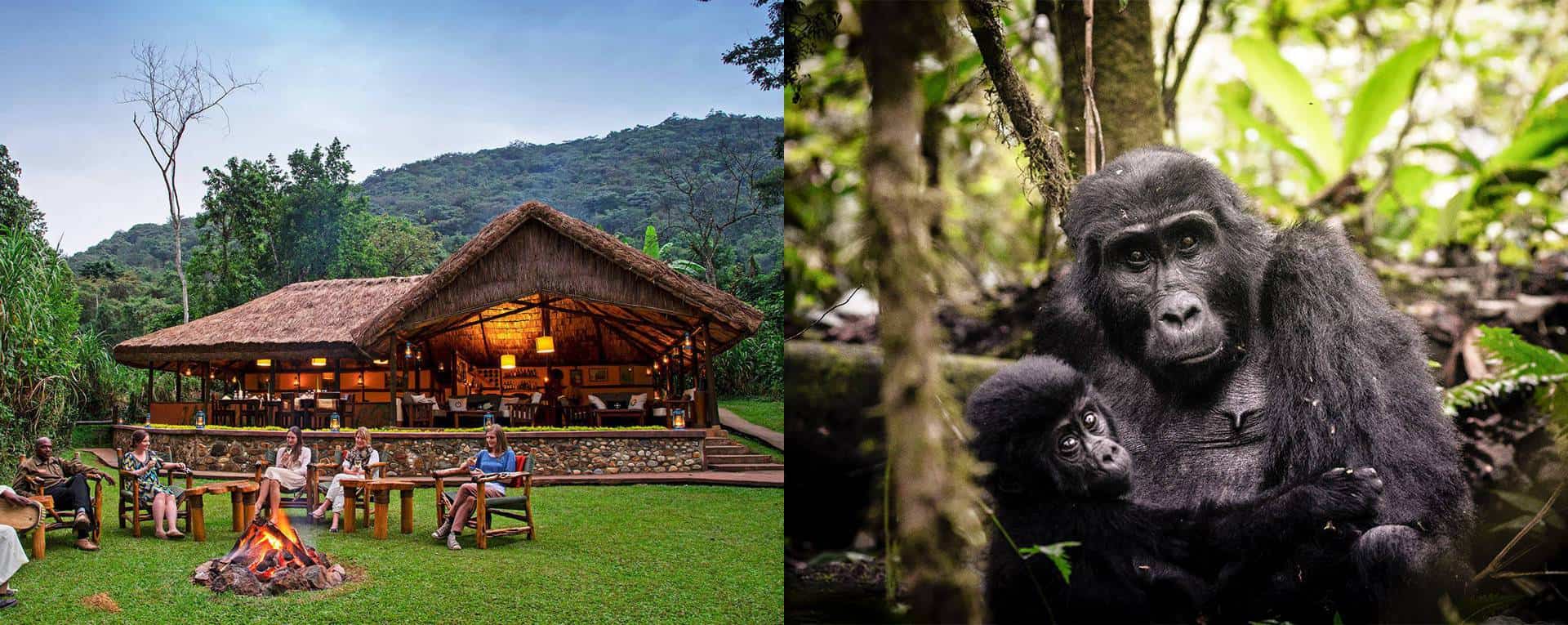
While mountain gorillas roam freely across the rugged slopes of Volcanoes National Park, sightings are never 100% guaranteed on paper. However, in practice, the actual success rate sits between 95% and 99%, making an encounter virtually certain for almost every trekker on gorilla trekking safari Rwanda.
Some of the popular gorilla trekking safari Rwanda packages
3-days-rwanda-gorilla-trekking-safari-itinerary-in-volcanoes-park
4-days-rwanda-golden-monkey-tracking-and-bisoke-hiking-tour-package
4-days-best-volcanoes-and-bwindi-impenetrable-national-park-double-gorilla-trekking
4-days-rwanda-primates-safari-gorilla-trekking-and-chimpanzee-all-inclusive-package
5-days-best-chimpanzee-tracking-golden-monkey-tracking-and-visit-to-lake-kivu
5-days-rwanda-double-gorilla-trekking-and-golden-monkey-tracking
5-days-uganda-gorilla-trekking-chimps-and-rwanda-golden-monkey-tracking-combo
6-days-gorillas-trekking-chimpanzee-tracking-and-golden-monkeys-safari-in-rwanda
7-days-best-gorilla-trekking-and-other-highlights-of-rwanda-tour
8-days-best-of-rwanda-uganda-safari-volcanoes-to-best-uganda-safari-parks
Why Sightings Are Exceptionally Reliable on gorilla trekking safari Rwanda
· Dedicated Dawn Trackers: Early every morning, expert park trackers head into the forest ahead of guests to locate each habituated gorilla group where they nested the previous night.
· Constant Radio Communication: Your lead ranger stays in continuous contact with these forward trackers, adjusting your hiking route in real time as the family moves.
· Habituated Gorilla Groups: Rwanda has around 12 gorilla families habituated specifically to human presence, meaning they are accustomed to observers and follow predictable territory patterns.
Factors That Influence Your Trek on gorilla trekking safari Rwanda
· Wildlife Movement & Terrain: Mountain gorillas travel where they choose. Depending on where the family decides to forage, your hike can range anywhere from a gentle 1-hour walk to an intense 4- to 6-hour trek across steep, dense vegetation.
· Forest Weather: Rain and muddy, slippery trails can slow your group's pace, though trekking operations run continuously regardless of weather conditions.
· Permit Structure: A Rwanda gorilla trekking permit purchases the guided opportunity to track a wild family alongside professional rangers, rather than a absolute contractual guarantee.
How far in advance do dawn trackers locate mountain gorillas in Volcanoes National Park?
Dawn trackers enter Volcanoes National Park every morning at first light, roughly two to three hours before visitors begin their hike. Their primary job on a gorilla trekking safari Rwanda is to navigate dense bamboo slopes and find the exact location where the habituated family nested the previous evening. Because mountain gorillas weave fresh nests from leaves and foliage every single night, these sleeping sites leave clear physical clues. Trackers follow crushed vegetation, fresh footprints, and droppings to locate the moving troop. Once they make visual contact, they radio the GPS coordinates and direction of movement back to the main park headquarters at Kinigi. This advance intelligence ensures that park rangers know precisely where to lead tourist groups, eliminating blind searching and maintaining the park's impressive 95% to 99% sighting success rate.
What happens if a habituated gorilla family moves deep into the forest during a trek?
If a habituated gorilla family travels deeper into the bamboo forest or climbs higher up the Virunga volcanoes during your hike, the forward trackers simply follow them on foot while remaining in constant radio contact with your lead park ranger. Because wild primates move freely to forage for shoots and bark, your trekking path adjusts in real time. Your guide receives live updates from the advance team, modifying the group's trajectory across the mountain terrain. While a family moving deeper into the park extends the total duration and physical effort of your gorilla trekking safari Rwanda, it does not compromise your chance of finding them. Guests simply continue hiking through the jungle until they catch up with the tracking crew and the troop.
How long does a typical hike take to reach a gorilla group on a Rwanda safari?
The overall duration of a hike on a gorilla trekking safari Rwanda ranges anywhere from 30 minutes to over 4 hours before reaching the primates, depending entirely on where the designated family chooses to forage that morning. Some habituated groups stay near the park boundary along lower bamboo zones, resulting in a gentle, short walk. Other families venture high onto steep mountain ridges, requiring several hours of active trekking through thick undergrowth and mud. During the morning briefing at Volcanoes National Park headquarters, park rangers assign guests to gorilla groups based partly on physical fitness levels. Once you reach the family, your observation time is capped at exactly 60 minutes, but the journey to reach them remains a dynamic, unpredictable jungle adventure.
How do park rangers track gorillas in dense vegetation and slippery rain conditions?
Park rangers and trackers utilize decades of traditional tracking skills combined with modern radio communication to navigate dense vegetation and heavy rain. Rain frequently washes away footprints, but experienced trackers read subtle environmental signs, such as broken bamboo stalks, peeled bark, freshly chewed shoots, and bent branches. On a gorilla trekking safari Rwanda, rangers carry machetes to clear tangled vines and forge temporary paths through thick forest cover. Raincoats and waterproof gear keep the tracking team operational regardless of weather. When downpours slow down human movement or cause gorillas to huddle beneath thick foliage, trackers slow their pace, rely on vocal calls, and maintain close contact with lead guides until the troop is successfully located.
What are habituated gorilla families, and how many are available for trekking in Rwanda?
Habituation is a gentle, multi-year process where wild gorilla groups are gradually accustomed to the neutral presence of human researchers and rangers without altering their wild nature. In Volcanoes National Park, there are currently around 12 habituated gorilla families reserved exclusively for tourism on a gorilla trekking safari Rwanda, while additional groups are monitored strictly for scientific research. Families like Sabyinyo, Amahoro, Umubano, and Hirwa vary in size, featuring different dynamics of dominant silverbacks, adult females, and playful juveniles. Because these groups are accustomed to seeing human observers daily, they continue their natural feeding, resting, and grooming behaviors when tourists arrive, allowing visitors to enjoy close, peaceful encounters within their natural rainforest habitat.
Does the price of a Rwanda gorilla trekking permit change if a trek takes longer than expected?
No, the price of a official permit remains fixed at $1,500 per person regardless of whether your hike lasts one hour or six hours. Purchasing a permit for a gorilla trekking safari Rwanda secures your spot in a small, guided group of eight visitors, accompanied by armed park rangers, trackers, and expert guides. The permit fee covers park conservation fees, continuous wildlife protection, local community development initiatives, and the administrative service of tracking a habituated wild family. A longer, more challenging trek that requires trekking high up the Virunga slopes costs the exact same as an easier, lower-altitude walk. The length of the journey depends entirely on wildlife movement, making every single excursion a unique forest adventure.
What physical fitness level is required to handle the steep terrain in Volcanoes National Park?
A moderate level of physical fitness is highly recommended for anyone embarking on a gorilla trekking safari Rwanda. Volcanoes National Park sits at high altitudes ranging between 2,500 and 4,000 meters above sea level, where thin air makes trekking more demanding. Trails often involve navigating steep inclines, muddy slopes, loose rocks, and tangled bamboo roots. While guests do not need to be elite athletes, being comfortable walking outdoors on uneven terrain for several hours is essential. During the morning briefing at Kinigi, rangers assess guest age and fitness preferences to match travelers with suitable gorilla families. Hiring a local porter at the trailhead is also widely recommended to assist with carrying daypacks and navigating slippery sections.
Are refunds or secondary treks offered if a group is among the rare 1% to 5% that does not spot gorillas?
Because mountain gorillas are wild animals, park regulations state that permit fees are generally non-refundable once a trek commences. However, in the extremely rare event that a group fails to locate their assigned troop—which happens in less than 5% of cases—the Rwanda Development Board evaluates the situation individually. Depending on park availability and timing, authorities may offer guests a complimentary secondary permit to trek again the following day or issue a partial refund according to official conservation policy. Choosing an established operator for your gorilla trekking safari Rwanda ensures you have experienced guides who communicate closely with park management to resolve unexpected situations, though tracking protocols make a missed sighting remarkably rare in practice.
How does forest weather during the rainy season affect tracking success rates?
Rainy seasons in Rwanda—typically occurring from March to May and October to November—do not reduce the actual sighting success rate on a gorilla trekking safari Rwanda. Trackers operate daily regardless of downpours, and mountain gorillas remain within their established home ranges. However, wet weather makes trails slick, muddy, and more physically demanding for hikers. Dense mist can also limit long-range visibility through the canopy, though close-up encounters remain fully intact since visitors observe gorillas from a close distance. On the upside, rainy months often coincide with abundant bamboo shoot growth at lower elevations, which can encourage gorilla families to move down the mountainsides, occasionally resulting in shorter, easier hikes for visitors.
Can travelers request an easier or shorter gorilla group assignment during the morning briefing?
Yes, travelers can request an easier or shorter hike during the mandatory morning assembly at park headquarters. Before setting off on your gorilla trekking safari Rwanda, park rangers organize visitors into groups of eight based on age, physical mobility, and personal preferences. If you have joint issues, lower stamina, or simply prefer a gentler walk, inform your driver-guide and park staff early during registration. Rangers try to match less strenuous requests with gorilla families known to forage near the park boundaries. While wild animal movements mean no hike duration can be guaranteed, communicating your physical condition ensures park authorities assign you to the most appropriate habituated troop available that day.
What basic gear helps trekkers manage mud, thick undergrowth, and sudden rain during the hike?
Packing the right gear is essential for staying comfortable on a gorilla trekking safari Rwanda. Sturdy, waterproof hiking boots with deep tread provide necessary traction on slippery mud and steep inclines. Pair these with thick gaiters to keep soil, moisture, and stinging nettles out of your boots. Wearing long-sleeved shirts and durable trousers protects skin from thorny brush and insects. Bring lightweight gardening gloves to grip branches and bamboo stalks along unpaved forest trails. A breathable, waterproof rain jacket is vital, as tropical mountain showers occur unexpectedly. Finally, carry a lightweight daypack with a waterproof cover to protect your camera gear, extra water, surgical face masks, and personal items.
Why do park authorities cap visitor time to exactly one hour once a gorilla group is located?
Park authorities enforce a strict 60-minute limit once visitors reach a habituated family to protect the health and natural behaviors of the primates. Restricting human contact minimizes the risk of disease transmission and prevents chronic stress in the troop. On a gorilla trekking safari Rwanda, mountain gorillas need ample, uninterrupted time to forage for food, groom one another, rest, and care for infants without feeling crowded or disturbed. Prolonged human presence could alter their natural wild habits or make them overly accustomed to human interaction. Capping visits to one hour daily strikes a delicate balance between supporting wildlife conservation tourism and preserving the natural lifestyle of these endangered mountain primates.
Booking gorilla trekking safari Rwanda with us Roads of Adventure safaris
Experience the magic of Rwanda’s Volcanoes National Park when you book your gorilla trekking safari with Roads of Adventure Safaris. Our knowledgeable local guides take care of every detail, from securing your $1,500 trekking permits to arranging comfortable lodges and seamless 4x4 transfers from Kigali. Whether you want a quick three-day primate escape or an extended luxury journey pairing mountain gorillas with golden monkeys and Lake Kivu, we tailor every trip around your pace for an unforgettable wildlife encounter.
To help you plan your Rwanda gorilla trek, share your preferred travel dates, group size, and lodge style (budget, mid-range, or luxury) so I can share a custom itinerary and rate estimate?