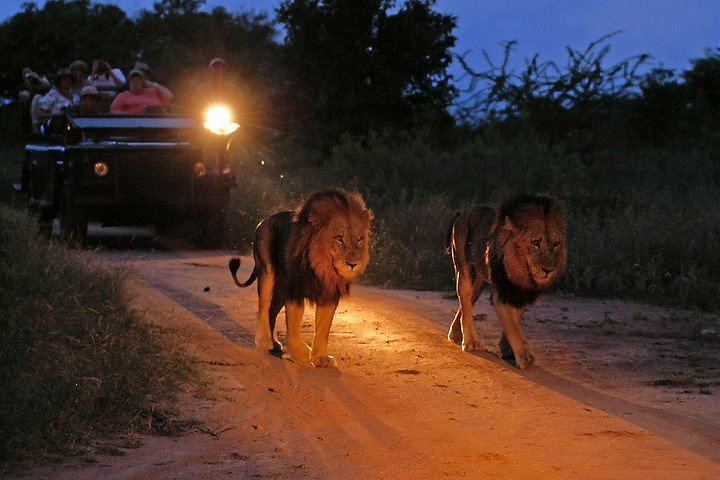
Are night game drives included in standard things to do in Murchison Falls schedules? No, night game drives are not included in standard or baseline safari schedules in Murchison Falls National Park. They must be booked and paid for separately as an optional activity, though you can easily request for them to be added to your itinerary
Popular Uganda safari tour packages to Murchison falls national park
3-days-murchison-falls-national-park-best-uganda-safari-road-trip
3-days-best-honeymoon-uganda-safari-escape-to-murchison-falls-national-park
5-day-best-safaris-to-uganda-kidepo-and-murchison-falls-national-parks
5-days-kidepo-valley-uganda-safari-via-ziwa-rhino-sanctuary
6-days-best-of-murchison-and-kidepo-uganda-safari-via-ziwa
7-days-murchison-falls-uganda-safari-trip-via-ziwa-rhinos-kidepo-valley-and-jinja
7-days-uganda-tour-to-murchison-falls-via-ziwa-kibale-and-queen-elizabeth-national-park
9-days-africa-big-five-safari-in-uganda-safari-parks-and-gorilla-trekking
How to Add a Night Game Drive
Booking
Night game drives require advance booking, either through a tour operator or directly with the Uganda Wildlife Authority (UWA) by 15:00 on the day of the drive. Same-day registration and payments must be completed before this deadline at park offices or gates to secure an armed ranger. Last-minute requests after 15:00 are not permitted due to security protocols.
Mandatory Guide
An armed UWA ranger guide is mandatory for all night drives to ensure safety in the savannah after dark. Rangers are equipped with high-powered spotlights and specialized knowledge to spot nocturnal wildlife and manage predator encounters. Self-driving at night is prohibited, with rangers accompanying vehicles for the entire duration.
Location Restrictions
Night drives are strictly restricted to the north bank of the Victoria Nile, covering the primary savannah game viewing areas. This policy protects the denser habitats on the south bank and ensures focused, productive wildlife viewing. South-bank visitors must account for ferry or boat crossing times to reach the north bank before dark.
What to Expect
1. Timing & Drive Setup
Night game drives typically run from about 18:30 or 19:00 until 21:30 or 22:00, lasting roughly two to three hours. Escorted by an armed Uganda Wildlife Authority (UWA) ranger, modern 4x4 safari vehicles are equipped with high-powered spotlight torches. Guides sweep these lights across grass fields, acacia thickets, and tree branches to catch reflective eye-shine. Operating after dark opens up a completely different side of the savanna, revealing elusive species that remain hidden underground or asleep in dense cover during the hot daylight hours.
2. Leopards
Leopards are solitary, secretive big cats that become significantly more active after dusk. While daytime visitors rarely see them out in the open, night drives offer prime opportunities to spot leopards patrolling their territories or stalking prey like Uganda kob and Oribi. Guides use red or filtered spotlights to avoid blinding the cat as it moves along dry riverbeds or resting on low sausage tree branches. Watching a leopard's reflective green eyes cut through the darkness is one of the most thrilling sights on an African night safari.
3. Lions Hunting
During the daytime, lions spend up to 20 hours resting in the shade to conserve energy. Once dusk sets in, pride dynamics shift into active hunting mode. Night drives allow visitors to witness lions coordinating tactics under the cover of darkness. Spotlights might catch a lioness stalking through high grass or a male roaring to mark his territory, a sound that vibrates through the vehicle chassis. Seeing a pride moving silently in formation toward grazing herds highlights the raw intensity of African predator behavior.
4. Aardvarks
The aardvark is one of Africa’s most elusive nocturnal mammals, spendings its days deep inside underground burrows and emerging only after dark. Armed with powerful claws and a long, sticky tongue, it wanders the savanna sniffing out termite mounds and ant colonies. Spotting an aardvark on a night drive is a rare highlight for safari enthusiasts. Their pig-like snouts, large donkey-like ears, and heavy tails give them an unmistakable appearance as they dig through the soil in search of their next insect meal.
5. Genets
Small, slender, and cat-like with spotted coats and long ringed tails, genets are agile nocturnal predators often seen darting across tracks or climbing tree trunks. Related to civets rather than true cats, genets use their keen night vision and flexible bodies to hunt insects, small rodents, roosting birds, and reptiles. Guides frequently spot them in lower branches or near riverine thickets, where their reflective eyes glow brightly in the spotlight before they slip effortlessly into the canopy.
6. Civet Cats
The African civet is a stocky, nocturnal omnivore easily recognized by its blotched coat, dark face mask resembling a raccoon, and short mane along its spine. Civets spend the night foraging individually along game trails and stream banks, eating small mammals, fruit, eggs, and reptiles. They communicate through scent-marking using a musky secretion from perineal glands. Encountering a civet along a dark dirt track offers a close look at one of the savanna's most widespread yet under-appreciated night scavengers.
7. Bush Babies (Galagos)
Bush babies, or galagos, are small nocturnal primates famous for their massive, round eyes and incredible leaping ability. Living in acacia woodlands and riverine trees, they jump between branches using long hind legs to catch insects and feed on tree gums. Their distinctive, child-like wailing calls echo through the park at night, giving them their common name. Spotters often catch the brilliant orange eyeshine of bush babies clinging to tree trunks before they vault several meters into the surrounding foliage.
8. Porcupines
The cresting porcupine is Africa’s largest rodent, emerging at night to feed on roots, tubers, bark, and fallen fruit. Though generally slow-moving, porcupines possess a formidable defense system made of thick, sharp quills. When threatened by predators like leopards or hyenas, a porcupine rattles hollow tail quills to make a warning noise, raises its crest to appear larger, and charges backward into the attacker. Spotting a pair waddling along safari tracks provides a classic nocturnal encounter.
9. Hippos Grazing
While hippopotamuses spend hot daylight hours submerged in the Victoria Nile to prevent their sensitive skin from drying out, they emerge onto dry land after sunset. Night drives along riverbanks and marsh edges reveal hippos out of the water, grazing on vast quantities of savanna grass. Seeing a multi-ton hippo walking freely on dry ground illustrates their true size and impressive speed, offering a contrast to the partially submerged snouts seen during daytime boat trips.
Typical costs
Using a Private Vehicle: ~$20 to $30 Per Person
When conducting a night game drive using your own registered tour vehicle, Uganda Wildlife Authority (UWA) charges a permit fee of approximately $20 to $30 per person. Foreign residents typically pay around $20 per person, while foreign non-residents pay $30 per person. In addition to this fee, hiring an official, armed UWA ranger to guide the drive and spot wildlife is mandatory for safety and navigation. This option is ideal for travelers on organized safari tours, as it allows you to remain in your group's comfortable 4x4 pop-top cruiser while benefiting from an expert local spotter.
Using a UWA Vehicle: ~$35 to $40 Per Person
If you do not have a private tour vehicle equipped for night drives, you can book a seat on an official Uganda Wildlife Authority truck. This service typically costs around $35 per person for foreign residents and $40 per person for foreign non-residents. The price includes both the vehicle transportation and the services of an experienced UWA ranger-guide equipped with high-powered spotlight searchlights. Because these sturdy, open-sided or high-clearance trucks are operated directly by park staff, they offer elevated viewing angles across the savanna—making them a convenient option for self-drive visitors or independent travelers staying near the park gates.
Are night game drives automatically included in a standard Murchison Falls safari package?
No, night game drives are strictly excluded from standard or baseline safari itineraries in Murchison Falls National Park. Standard packages typically feature daytime game drives along the Buligi circuit and boat cruises to the base of the falls. Because night drives require special permits, dedicated spotlighting equipment, and an escort from an armed Uganda Wildlife Authority (UWA) ranger, they are classified as an add-on activity. If you want to explore the savanna after dark, you must specifically request your tour operator to include it or arrange it independently at the park headquarters before the daily cutoff time.
How far in advance do I need to book a night game drive at Murchison Falls?
Night game drives require formal advance booking and must be confirmed with the Uganda Wildlife Authority by 15:00 (3:00 PM) on the day of the drive. This strict deadline allows park administration at gates like Tangi, Wankwar, or Paraa to assign certified armed rangers and schedule vehicle logistics. Same-day registration and fee payments must be finalized at the UWA offices before 15:00. Requests submitted after this time are strictly turned down due to ranger deployment schedules and night safety protocols across the northern savanna tracks.
Why is an armed UWA ranger guide compulsory for all night drives?
Navigating the savanna after sunset exposes visitors to apex predators actively hunting under the cover of darkness. An armed UWA ranger is mandatory to ensure human safety, manage unexpected wildlife encounters, and enforce park conservation rules. These experienced rangers carry high-powered spotlight torches and possess deep tactical knowledge of animal behavior. They know how to read subtle warning signs—such as a lion's low growl or an elephant's mock charge—and ensure vehicles maintain safe distances while navigating dark tracks around Pakuba and Queen’s Track.
Can I take my own self-drive vehicle on a night game drive without a ranger?
Self-driving without an official ranger after dark is strictly prohibited in Murchison Falls National Park. Even if you hold a valid park entry permit and drive a private 4x4, you cannot enter the tracks after sunset without an assigned, armed UWA ranger on board. Driving unescorted at night invites severe fines from UWA authorities and poses massive safety risks, including getting stranded off-grid in predator territory, blinding wildlife with improper headlights, or inadvertently disturbing breeding and hunting activities.
Where do night game drives take place within Murchison Falls National Park?
Night game drives are strictly restricted to the north bank of the Victoria Nile. This region—encompassing the famed Buligi, Pakuba, and Albert Nile tracks—features open savannah and acacia woodland that offer clear visibility for spotlighting. The south bank, dominated by dense mahogany forests like Rabongo and Budongo, remains off-limits for night drives to protect sensitive forest habitats and prevent vehicles from getting bogged down in thick vegetation where spotlighting is ineffective.
How do visitors staying on the south bank access the night drive tracks?
Visitors staying at south bank lodges (such as Sambiya River Lodge or Red Chilli Hideaway) must cross the Victoria Nile to reach the northern tracks before dark. Depending on your location, you will cross via the bridge at Karuma or utilize scheduled boat and ferry crossings near Paraa. It is critical to calculate your transfer time carefully so your vehicle is positioned on the north bank before the 18:30 start time, avoiding getting stranded on the wrong side of the river after water transit services cease operations for the night.
What is the typical start time and total duration of a night safari?
A standard night game drive starts between 18:30 and 19:00, right as dusk settles across the savanna, and wraps up between 21:30 and 22:00. The entire activity lasts approximately two to three hours. This timeframe aligns with the peak activity period for nocturnal hunters emerging from their daytime naps. Operating during these hours allows tourists to experience the dramatic transformation of the bush from daylight quietude to nighttime predator activity without compromising early-morning safari schedules the following day.
What specialized equipment is used during a Murchison Falls night drive?
Night drives rely heavily on specialized lighting equipment. UWA rangers and professional safari guides use heavy-duty, high-powered spotlight torches powered by vehicle battery terminals or rechargeable packs. These spotlights are equipped with red or amber filters to reduce glare and protect the sensitive night vision of animals like leopards (Engwe) and bush babies. Additionally, open-roof 4x4 Land Cruisers or open-sided UWA trucks are used to give spotters an unobstructed 360-degree view across the tall grass.
How do ranger guides locate animals in pitch darkness?
Rangers locate wildlife primarily by scanning for "eyeshine"—the vivid reflection caused by the tapetum lucidum, a retroreflective membrane behind the retina of nocturnal animals. By sweeping spotlights in slow, deliberate arcs across the acacia thickets, rangers catch distinct glowing colors: bright green for leopards and lions, shimmering orange for bush babies (galagos), and pale white or yellow for herbivores. Experienced guides also listen closely for alarms called out by francolins or Uganda kobs (Empange), which signal a nearby predator.
Why are leopards more easily spotted on night drives than during the day?
Leopards (Engwe in local Runyoro/Lutooro) are master ambush predators that spend daylight hours concealed in high thickets or resting in sausage trees (Kigelia africana). At night, lower ambient temperatures trigger their hunting instinct. They descend from trees to patrol territory boundaries along dry riverbeds and dirt tracks around Pakuba Airfield. Spotlights easily pick up their bright green eyeshine and distinct rosette coats as they move out in the open, making night drives significantly more rewarding for leopard sightings than daytime drives.
What lion behaviors can you witness at night compared to daytime drives?
During the daytime, lions (Empologoma) sleep up to 20 hours to conserve energy against the oppressive tropical heat. Once twilight falls, the pride awakens, grooms, and coordinates hunting strategies. On a night drive, you might observe lionesses fanning out in tactical formations to surround grazing herds of Jackson's hartebeest (Ekenyi), or hear a dominant male's territorial roar vibrating through the vehicle floorboards. Witnessing an active hunt or a pride feasting on fresh prey is an intense experience exclusive to nighttime excursions.
Are rare species like aardvarks regularly seen on Murchison night drives?
While sightings can never be guaranteed, night drives offer the only real chance to encounter the elusive aardvark (Emanzi). These solitary, burrow-dwelling mammals emerge exclusively after dark to forage for ants and termites using their powerful claws and sticky tongues. Rangers frequently scan near subterranean termite mounds along the Buligi circuit. Spotting an aardvark’s distinctive pig-like snout, long ears, and muscular tail as it digs through soil is widely considered a holy grail highlight for seasoned African safari enthusiasts.
What smaller nocturnal carnivores might you encounter during the drive?
In addition to big cats, night drives frequently reveal small carnivores such as genets, African civets (Ekinyira), and white-tailed mongooses. Genets—slender, cat-like creatures with spotted coats and long ringed tails—are often seen darting across branches or leaping through thickets. Civets resemble large raccoons with dark face masks and coarse coats; they forage along riverine paths for insects, rodents, and fallen fruit. Spotters also watch for servals hunting rodents in the tall savanna grass.
How do bush babies adapt to the dark, and how are they spotted?
Bush babies, or galagos, are small nocturnal primates adapted for arboreal life. They feature massive, round eyes that maximize light collection and specialized hind limbs enabling leaps of up to two meters between trees. Rangers locate them by sweeping spotlights across acacia canopies, searching for bright orange eyeshine. Hearing their distinct, infant-like wailing calls echoing through the dark bush adds an eerie, unforgettable auditory dimension to the night safari around Paraa.
What defensive behaviors do cresting porcupines display when encountered at night?
The cresting porcupine, Africa's largest rodent, emerges at dark to feed on tubers, roots, and bark. When startled by an approaching safari vehicle or a predator like a leopard, a porcupine executes a dramatic defense mechanism. It raises its crest of stiff quills to appear larger, rattles its hollow tail quills to generate a loud warning sound, and may even charge backward toward the perceived threat. Watching a pair waddle together along dry tracks provides an entertaining glimpse into savanna life.
Why do hippos come out of the Victoria Nile at night, and is it safe to view them?
Hippopotamuses (Emvubu) spend daytime hours submerged in the Victoria Nile to protect their sensitive skin from sunburn and dehydration. After sunset, they leave the water to graze on dry land, traveling miles inland to consume vast quantities of grass. Viewing a multi-ton hippo grazing on open land highlights their massive physical stature and surprising speed. Viewing them from the safety of a elevated 4x4 vehicle is completely safe, provided the driver keeps a respectful distance and never blocks their retreat route back to the river.
How much does a night game drive cost using a private safari vehicle?
If you travel in your own registered tour vehicle (such as a private pop-top Land Cruiser), UWA charges a night drive permit fee of approximately $20 for foreign residents and $30 for foreign non-residents per person. On top of this permit fee, you must pay for the mandatory services of an armed UWA ranger-guide, which typically costs an additional nominal fee per vehicle. This setup allows your private group to explore comfortably while guided by a certified local wildlife tracker.
How much does it cost to take a night game drive in an official UWA truck?
For self-drive travelers or visitors without a suitable safari vehicle, UWA provides seats on their official open-sided or high-clearance ranger trucks. This option costs around $35 per person for foreign residents and $40 per person for foreign non-residents. The fee covers both vehicle transport and the expert services of an armed ranger operating high-powered searchlights. These elevated trucks provide excellent viewing angles across tall grasses, making them a popular and budget-friendly choice.
What should visitors wear on a night game drive in Murchison Falls?
Although Murchison Falls is generally warm during the day, night temperatures on the open savannah can drop noticeably due to wind chill in open-roof vehicles. Visitors should dress in lightweight layers, including long-sleeved shirts, trousers, and a windbreaker jacket. Long clothing also provides essential protection against mosquitoes and insects attracted to the vehicle spotlights. Neutral, earth-toned colors (khaki, tan, olive) are recommended, while bright whites should be avoided as they reflect light and startle wildlife.
What photography tips should you follow during a night game drive?
Photographing wildlife in low-light conditions requires adjusting your gear expectations. Flash photography using standard camera flashes is strictly prohibited because it temporarily blinds predators and prey alike. Photographers should rely on the spotlight beam provided by the ranger, set their camera to a wide aperture (f/2.8 or lower), raise the ISO (3200 to 6400+), and utilize lens image stabilization. Alternatively, capturing high-definition video with natural spotlight illumination often yields better results than still photography in pitch darkness.
Are night game drives suitable for children?
Night game drives can be exciting for older children, but they are generally less suitable for toddlers and very young kids. The drives take place long past standard bedtimes, last up to three hours in pitch darkness, and require long periods of quiet waiting. Sudden movements or loud cries can scare off skittish nocturnal animals or disrupt predator tracking. Parents bringing children should ensure they wear warm layers, carry insect repellent, and understand the importance of remaining quiet throughout the excursion.
What safety rules must passengers follow during a night safari?
Safety rules on night drives are strictly enforced by the escorting ranger. Passengers must remain inside the vehicle at all times—stepping out onto the ground is strictly forbidden due to undetected predators. Keep all limbs within the vehicle body frame, refrain from making loud noises or sudden flashlight movements, and never shine personal phone lights or laser pointers directly into an animal's eyes. Following these instructions ensures a safe, smooth outing for everyone on board.
How does weather impact night game drive sightings?
Weather significantly influences animal activity during night drives. Clear, cool nights after a warm day are ideal, as predators actively move through open tracks to hunt. Conversely, heavy rainfall drives animals into thick cover and turns clay tracks like Queen's Track into slick mud, making navigation difficult and reducing visibility. Light breezes often work in your favor by masking the vehicle's engine sound, allowing you to approach grazing hippos or resting hyenas quietly.
What bird species can you spot during a Murchison night drive?
While daytime game drives feature spectacular avian life like the Shoebill stork, night drives reveal fascinating nocturnal birds. Rangers frequently spot nightjars—such as the pennant-winged or long-tailed nightjar—resting directly on dirt tracks before taking off in silent flight. Various owl species, including the Verreaux’s eagle-owl and African wood owl, can be seen perched on low acacia branches scanning for rodents. Spotting these secretive raptors adds great value for birding enthusiasts.
How do predators use the darkness to hunt prey along the Buligi circuit?
Darkness levels the playing field for night predators like lions and leopards. Herbivores such as Rothschild’s giraffes, Uganda kobs, and waterbucks (Ekenyi) rely heavily on eyesight to detect threats during the day. At night, their visual advantage vanishes. Lions use low drainage ditches and high savanna grass along the Buligi circuit to stalk within striking distance of grazing herds. The cover of night enables predators to execute ambushes with far higher success rates than during daylight hours.
Can you combine a night game drive with a daytime Nile boat cruise on the same day?
Yes, combining a daytime boat cruise to the base of Murchison Falls (or downstream to the Albert Delta) with an evening night drive is a popular, highly productive itinerary. A typical schedule includes an early morning daytime game drive, an afternoon boat cruise starting from Paraa jetty around 14:00, a brief dinner break at your lodge, and departing for the night drive around 18:30. This combination showcases both aquatic and terrestrial ecosystems within a single 12-hour window.
What role does the Uganda Wildlife Authority play in managing night drives?
The Uganda Wildlife Authority (UWA) regulates all commercial and recreational activities within Murchison Falls National Park. For night drives, UWA sets conservation policies, maintains track networks, collects permit revenue dedicated to park conservation, and deploys trained rangers. By restricting night drives to specific northern sectors and capping vehicle numbers, UWA ensures that nocturnal wildlife experiences minimal habitat disruption while generating sustainable revenue for local anti-poaching operations and community benefit schemes.
What should you pack in your daypack for a night game drive?
When preparing your daypack for a night drive, include essential items: strong insect repellent containing DEET, a personal headlamp or small torch for use inside the vehicle, camera equipment with low-light capability, spare batteries, a light rain jacket or sweater, and personal drinking water. Avoid bringing snacks with noisy plastic packaging, as rustling sounds can disrupt the quiet atmosphere required to spot skittish nocturnal mammals.
How do night game drives in Murchison Falls compare to Queen Elizabeth National Park?
While both parks offer exceptional wildlife viewing, Murchison Falls features vast, open palm-dotted savanna tracks along the Victoria Nile, providing clearer long-range spotlight visibility than the denser euphorbia thickets of Queen Elizabeth National Park's Kasenyi plains. Additionally, Murchison's high density of Rothschild’s giraffes, Jackson's hartebeests, and abundant leopard populations around former lodge ruins (like Pakuba) often results in higher predator sighting frequencies during night drives.
Is a night game drive in Murchison Falls worth the additional cost?
A night game drive is widely considered well worth the extra $20 to $40 permit fee. It opens up an entirely different ecosystem that remains hidden during the day. The thrill of tracking leopards through dry riverbeds, watching lions on the hunt, and spotting rare creatures like aardvarks, civets, and galagos creates a dramatic contrast to standard daytime safaris. For any traveler looking to experience the raw, unfiltered wildness of the African bush, adding a night drive delivers an unforgettable highlight.
Booking things to do in Murchison falls national park with us Roads of Adventure safaris
Book your Murchison Falls safari through Roads of Adventure Safaris by contacting them via email or phone. They customize your itinerary, secure permits, and book accommodations. A 30% deposit typically confirms your booking, with the balance due 60 days before the trip
