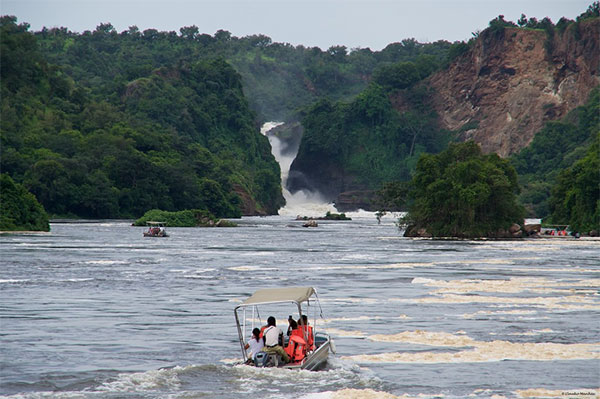
For a first-time visit to Murchison Falls National Park, your essential itinerary must include a dawn game drive across the Buligi tracks, a boat cruise to the base of the falls, a hike to the top of the falls, and chimpanzee trekking in Budongo Forest
Popular Uganda safari tour packages to Murchison falls national park
3-days-murchison-falls-national-park-best-uganda-safari-road-trip
3-days-best-honeymoon-uganda-safari-escape-to-murchison-falls-national-park
5-day-best-safaris-to-uganda-kidepo-and-murchison-falls-national-parks
5-days-kidepo-valley-uganda-safari-via-ziwa-rhino-sanctuary
6-days-best-of-murchison-and-kidepo-uganda-safari-via-ziwa
7-days-murchison-falls-uganda-safari-trip-via-ziwa-rhinos-kidepo-valley-and-jinja
7-days-uganda-tour-to-murchison-falls-via-ziwa-kibale-and-queen-elizabeth-national-park
9-days-africa-big-five-safari-in-uganda-safari-parks-and-gorilla-trekking
How many days are recommended for a first-time visit to Murchison Falls?
A three-day, two-night itinerary serves as the ideal baseline for a first-time visitor wanting to experience the core highlights of Murchison Falls National Park without feeling rushed. On the first day, travelers typically make the journey from Kampala or Entebbe, incorporating a stop at the Ziwa Rhino Sanctuary to trek white rhinos before entering the park in the late afternoon to view the dramatic top of the falls. Day two is spent exploring the wildlife-rich Buligi Peninsula on a early morning game drive to search for lions, giraffes, and elephants, followed by an afternoon boat launch along the Victoria Nile to the base of the thundering waterfall. The third day allows enough time for an early morning delta boat trip to search for the elusive shoebill stork or a chimpanzee trek in Budongo Forest before making the return journey back to Kampala. For travelers who prefer a more relaxed pace, plan to participate in sport fishing, or wish to combine multiple specialized activities like hot air ballooning and community visits, extending the stay to four or five days is highly recommended.
Which entrance gate (e.g., Tangi, Wankwar, Mubako, or Kichumbanyobo) is best for my route?
Selecting the best entrance gate depends primarily on your point of origin and where your chosen lodge is located relative to the Nile River. Kichumbanyobo Gate serves as the main entry point when driving from Kampala through Masindi, guiding travelers through the lush canopy of the Budongo Forest and providing direct access to the park’s southern sector, which makes it ideal for guests staying at southern lodges or planning early chimpanzee trekking at Kaniyo Pabidi. Bugungu Gate offers another southern entrance option, bringing visitors past the scenic Rift Valley escarpment over Lake Albert with sweeping landscape vistas. Tangi Gate sits on the northwest edge along the paved Karuma-Pakwach highway and provides the fastest access if you are arriving from Gulu or staying on the northern bank, dropping you immediately onto the primary Buligi game drive tracks. Wankwar Gate and Mubako Gate also sit along the northern border, offering convenient entry points for travelers staying at northern camps or approaching from the Karuma Bridge area.
What is the current vehicle and park entrance fee structure for foreign non-residents?
Park entrance fees managed by the Uganda Wildlife Authority are calculated on a twenty-four-hour basis from the exact time of entry. Foreign non-resident adults pay forty-five US dollars per person per day, while children between the ages of five and fifteen are charged twenty-five US dollars per day, with children under five admitted free of charge. Foreign residents holding valid Ugandan work permits pay thirty-five US dollars per day. Vehicle entry fees depend on origin and weight class; foreign-registered vehicles are charged one hundred fifty US dollars per entry, while Ugandan and East African Community registered safari vehicles incur a entry fee ranging between forty thousand and one hundred thousand Ugandan shillings depending on their gross weight. It is essential to keep in mind that all gate payments to UWA must be completed using cashless methods such as credit cards or mobile money, as cash is not accepted at park gates, and activities like boat cruises or sport fishing require separate fees beyond basic park entry.
What is the best time of year for optimal wildlife viewing and photography?
While Murchison Falls National Park remains an exceptional year-round destination, the dry seasons offer the most favorable conditions for game viewing and crisp wildlife photography. The primary dry season runs from December through February, during which vegetation thins out and natural water sources dry up, forcing heavy concentrations of wildlife—including big cats, elephants, and massive buffalo herds—to gather along the banks of the Victoria Nile. A second dry window occurs from June through September, offering clear blue skies, lower grass height, and excellent golden-hour lighting conditions that are ideal for landscape and animal photography. During the wet months of March to May and October to November, heavy rains transform the landscape into a vibrant green paradise, creating dramatic skies for landscape photography and attracting migratory bird species from Europe, though muddy tracks can make game drives more challenging and force wildlife to disperse deeper into the bush.
How do I get to Murchison Falls from Kampala, and how long does the drive take?
Traveling by road from Kampala to Murchison Falls National Park covers approximately three hundred five kilometers and generally takes between five and six hours, depending on traffic conditions exiting the capital and your ultimate lodge destination inside the park. The standard southern route heads north on the fully paved Kampala-Gulu highway through Luweero to Masindi town, from where you transition onto a dirt road entering through Kichumbanyobo Gate into the Budongo Forest section. Alternatively, travelers bound for northern lodges can remain on the smooth asphalt highway past Nakasongola and Karuma, branching off onto the Pakwach road to enter via Tangi, Wankwar, or Mubako gates, which allows for a faster, entirely paved drive right up to the northern border. Many road travelers choose to break up the journey with a two-hour stopover at the Ziwa Rhino Sanctuary in Nakasongola, located about halfway along the route, to walk alongside wild rhinos on foot before continuing into the park.
Are there scheduled domestic flights available, and which airstrips service the park?
Scheduled domestic flights provide a convenient alternative to long road journeys, connecting Entebbe International Airport or Kajjansi Airstrip to Murchison Falls National Park in approximately forty-five to sixty minutes. Air operators such as Aerolink Uganda and Bar Aviation run daily scheduled services as well as private charters to accommodate luxury travelers and time-sensitive itineraries. Pakuba Airstrip serves as the busiest airfield, strategically located on the northern bank near Paraa and the main Buligi game drive tracks, making it the top choice for guests staying at northern lodges. Bugungu Airstrip services the southern sector of the park and caters to travelers staying near the river’s south bank or planning forest activities in Budongo. Chobe Airstrip sits in the eastern sector of the park, primarily handling flights for guests staying in the luxury enclave around Chobe Safari Lodge.
What are the luggage and weight limits if I am flying into the park?
Domestic flight routes to Murchison Falls utilize small bush planes like the Cessna Grand Caravan, which necessitates strict enforcement of baggage weight and size restrictions for safety. Passengers are restricted to a maximum total luggage allowance of fifteen kilograms per person, which includes both checked baggage and any personal items or carry-on camera bags brought on board. Soft-sided duffel bags made of canvas or flexible nylon are mandatory because hard-shell suitcases cannot fit into the narrow baggage pods beneath the aircraft fuselage. If your total baggage exceeds the fifteen-kilogram limit, domestic airlines will charge excess weight fees per kilogram subject to aircraft payload space, or they may require you to purchase an extra freight seat to accommodate heavy equipment. Most travelers opting to fly choose to store their primary hard-shell suitcases at secure luggage facilities in Entebbe or Kajjansi, packing only necessary safari gear into a lightweight duffel for the park segment.
What is the standard cost for a private guided safari vehicle with a knowledgeable driver?
Hiring a private four-by-four safari vehicle accompanied by a professional local driver-guide in Uganda generally costs between two hundred and three hundred US dollars per day for a custom safari Land Cruiser with a pop-up roof designed for optimal game viewing and photography. For smaller groups or travelers seeking a more budget-friendly option, a four-by-four safari minivan with a pop-up roof can be hired for roughly one hundred twenty to one hundred eighty US dollars per day. These daily rates typically cover the vehicle hire, insurance, and the driver-guide’s daily wage and accommodation allowance, but exclude fuel and park entry fees for the vehicle and driver. Total fuel expenses for a standard three-day itinerary starting from Kampala usually range between one hundred fifty and two hundred fifty US dollars, depending on the distance driven across the park tracks. Booking a complete safari package through a reputable tour operator usually bundles the vehicle, fuel, driver allowances, and entrance permits into a single comprehensive rate.
Which sections of the park offer the highest density of wildlife like lions and giraffes?
The Buligi Peninsula, located in the northern sector between the Victoria Nile and the Albert Nile, holds the highest density of large mammals and predators in Murchison Falls National Park. This expanse of open savannah, dotted with iconic Borassus palm trees and acacia thickets, provides the ideal habitat for grazing animals and the predators that stalk them. Traversing the Buligi, Queen's, and Albert tracks offers visitors the best opportunities to view lions, leopards, spotted hyenas, and vast herds of Rothschild's giraffes, Jackson's hartebeests, oribi, and African Cape buffaloes. The area surrounding the historic Pakuba lodge ruins is particularly renowned for frequent cat sightings, as big cats often use the overgrown structures and nearby thickets as resting spots during the heat of the day. Because the southern sector is dominated by dense mahogany forest and woodland, the vast majority of traditional savannah game drives take place on these open northern tracks.
Is it better to hire a local Uganda Wildlife Authority (UWA) armed ranger for my game drives?
Hiring an official armed Uganda Wildlife Authority ranger to accompany your game drives is highly recommended and adds immense value to your safari experience for a modest fee of roughly twenty to twenty-five US dollars per drive. These professional rangers possess deep knowledge of animal tracking, bird species, and ecological behaviors that go far beyond what a standard driver might spot alone. Furthermore, UWA rangers maintain constant radio contact with field monitoring units and other patrol vehicles across the park, allowing them to pinpoint real-time locations of elusive species like lion prides or leopards in dense brush. Having an armed ranger in your vehicle also provides an extra layer of safety and confidence, especially when navigating remote tracks or stopping at designated scenic viewpoints where animals may be present. Your safari driver can easily pick up a ranger at the main park gates or Paraa headquarters before setting out into the bush.
What are the best times of day to spot predators in action?
Predators inside Murchison Falls National Park, including lions, leopards, hyenas, and jackals, display their highest activity levels during the cool hours of the early morning and late afternoon. Setting out on a game drive right at dawn around six fifteen in the morning provides the best chance to witness big cats actively hunting or patrolling their territories, as lions frequently walk along the open dirt tracks to avoid the dew-heavy grass. As the sun rises and temperatures climb toward midday, predators retreat deep into the shade of acacia bushes or up into low tree branches to rest until late afternoon. A second peak of predator movement occurs from four in the afternoon until dusk, when dropping temperatures encourage cats to wake up and position themselves near waterholes to intercept prey. For those interested in observing nighttime hunting techniques, arranging an official night game drive with spotlights provides the ultimate window into nocturnal predator activity.
Where are the best locations to photograph the Rothschild's giraffes?
Murchison Falls National Park shelters the world's largest wild population of the endangered Rothschild's giraffe, making it a dream destination for wildlife photographers. The prime location for photographing these tall mammals is along the open Borassus palm savannahs that define the Buligi and Albert tracks on the park’s northern bank. The towering Borassus palms create a striking geometric backdrop that contrasts beautifully with the intricate chestnut patterns of the giraffes as they move across the plains. Early morning light around seven o'clock provides a warm golden glow across the savannah, catching herds as they feed on high acacia branches or walk in elegant silhouetted lines. Using a telephoto lens ranging from two hundred to four hundred millimeters allows photographers to capture intimate facial portraits as well as wide landscape compositions showing full herds traversing the palm-studded terrain.
Can I book a night game drive, and what are my chances of seeing leopards?
Night game drives are fully authorized by the Uganda Wildlife Authority and take place exclusively on the northern bank under the guidance of an armed ranger operating powerful searchlights. These nocturnal excursions cost approximately thirty to forty US dollars per person and offer a completely different perspective on the wilderness, unveiling creatures that remain hidden during daylight hours. Night drives dramatically increase your probability of sighting elusive leopards, which become active hunters after dark and are often spotted along the wooded riverine tracks near the Pakuba ruins. In addition to leopards, nocturnal drives frequently yield sightings of hunting lion prides, spotted hyenas, servals, genets, porcupines, and various nightjar species. While wildlife sightings can never be fully guaranteed, taking a night drive through known leopard territories yields a remarkably high success rate for finding these solitary big cats on the prowl.
What are the key differences between the Buligi Peninsula tracks and the southern sector tracks?
The Buligi Peninsula in the northern sector is defined by classic rolling African savannah, palm-lined horizons, and open river delta wetlands that support intense wildlife concentrations. It contains the overwhelming majority of the park's plains game and predators, offering the open vistas and high animal density that most travelers expect from a traditional game drive safari. In stark contrast, the southern sector consists largely of dense tropical rainforest, mahogany woodland, and thick bush scrub, such as the Kaniyo Pabidi and Rabongo forest areas. Rather than supporting open savannah game drives, the southern sector serves as a haven for primate enthusiasts and birdwatchers, offering dedicated tracking trails for wild chimpanzees, black-and-white colobus monkeys, and red-tailed monkeys beneath a cool, high forest canopy.
How long does the launch cruise from Paraa to the bottom of the falls take?
The classic upstream boat launch from Paraa Jetty to the base of Murchison Falls takes approximately three hours for the complete round-trip journey. The boat travels slowly upstream for about an hour and a half, hugging the lush banks of the Victoria Nile so passengers can observe heavy concentrations of hippos, crocodiles, elephants, and aquatic birds along the way. Upon reaching the turbulent gorge at the base of the falls, the boat lingers for fifteen to twenty minutes in the mist of the Devil's Cauldron, allowing ample time for guests to photograph the roaring water from a safe distance. The return journey downstream moves much faster with the river current, taking just about an hour to navigate back to the landing at Paraa. Standard boat departures leave daily in the morning at eight o'clock and in the afternoon at two o'clock.
Should I book the morning or afternoon boat cruise for the best lighting?
Choosing between the morning and afternoon boat cruise depends on whether your priority is birdwatching or capturing iconic photographs of the roaring waterfall. The afternoon boat cruise departing at two o'clock is widely considered the superior choice for photography of Murchison Falls itself, because the afternoon sun positions itself behind the boat, illuminating the spray and creating vibrant full-spectrum rainbows across the gorge. Additionally, the heat of the mid-afternoon forces heavy numbers of elephants, buffaloes, and antelopes down to the riverbank to drink and bathe, offering prime wildlife viewing along the water's edge. Conversely, the morning boat cruise departing at eight o'clock offers cooler temperatures, calmer waters, and soft light that appeals to serious birdwatchers looking to spot skimmers, kingfishers, and herons before the midday heat sets in.
What kind of wildlife will I see from the boat?
A boat trip along the Victoria Nile offers some of the most dramatic water-level wildlife viewing in East Africa. Massive pods of hippos can be seen grunting and jostling for position in the shallow channels, while giant Nile crocodiles line the sandy banks to sun themselves, particularly at the famous Crocodile Bar point near the falls. Elephants frequently march down to the water’s edge in family herds to bathe, drink, and spray themselves with mud, often swimming across channels right in front of the boat. The riverbanks are also populated by Nile monitor lizards, buffaloes wallowing in the mud, and waterbucks feeding on river grasses. For birding enthusiasts, the cruise provides exceptional sightings of goliath herons, African fish eagles, pied kingfishers, red-throated bee-eaters nesting in clay bank cliffs, marabou storks, and saddle-billed storks.
How strenuous is the guided hike to the top of the Murchison Falls from the boat drop-off point?
The guided hike from the riverboat drop-off point up to the summit view of Murchison Falls is considered moderately strenuous and requires a basic level of physical fitness. The trail climbs steeply along the edge of the rocky gorge for about forty-five to sixty minutes, winding over uneven dirt paths, stone steps, and natural rock outcroppings. Humidity levels inside the narrow canyon can feel intense due to the heavy mist thrown off by the rushing river, making the climb feel quite warm and sweaty. Hikers should wear sturdy walking shoes with good grip and carry plenty of drinking water to stay hydrated throughout the ascent. The physical effort is fully rewarded at the top, where you can stand just feet away from the narrow seven-meter gap where the entire Nile River compresses and plunges forty-three meters into the gorge below.
Is a separate boat trip to the Nile-Lake Albert Delta worth it?
A dedicated boat trip downstream to the Nile-Lake Albert Delta is exceptionally worthwhile, particularly for birding enthusiasts, photographers, and travelers seeking a quiet wilderness experience away from main tourist tracks. Unlike the standard falls cruise that heads upstream into a narrow rocky canyon, the delta cruise sails downstream to the west where the Victoria Nile slows down and splits into a vast maze of papyrus swamps as it enters Lake Albert. This four- to five-hour excursion offers a peaceful, slow-paced journey through untouched wetland channels, providing incredible views of aquatic bird life and herds of elephants crossing shallow marshlands. The serene environment and open watery vistas offer a wonderful contrast to the high-energy waterfall cruise, making it one of the most rewarding liquid safaris in the park.
What are the chances of spotting the rare Shoebill Stork in the Delta area?
The Nile-Lake Albert Delta inside Murchison Falls National Park ranks among the absolute best locations in Africa to spot the prehistoric and highly sought-after shoebill stork. Taking a dedicated morning boat trip into the delta yields an estimated eighty to ninety percent success rate for locating these unique, solitary birds. Shoebills favor the quiet papyrus fringes and floating vegetation mats of the delta where they stand motionless for hours, waiting to ambush lungfish and bichirs in shallow water. Sighting opportunities are highest during the dry months from January to February and July to August, when receding water levels force shoebills out of impenetrable inner swamps into open channel edges where boats can approach quietly for photography.
What are the regulations and costs for sport fishing for the massive Nile Perch?
Sport fishing in the turbulent waters below Murchison Falls is world-renowned, attracting anglers searching for massive Nile perch that can exceed one hundred kilograms in weight. To participate, anglers must secure a dedicated UWA sport fishing permit, which costs fifty US dollars for a single day or one hundred fifty US dollars for a four-day pass, with standard daily park entry fees charged separately. UWA strictly enforces a catch-and-release policy to safeguard fish stocks and maintain the ecological balance of the river. Anglers can fish directly from designated rocky outcrops along the riverbank or charter private motorboats equipped with experienced local fishing captains who know the eddies and pools where large fish gather. Due to the extreme strength of Nile perch fighting in heavy river currents, heavy-duty tackle, strong braided line, and durable lures are essential gear requirements.
Where is chimpanzee trekking conducted, and how far is it from Paraa?
Chimpanzee trekking at Murchison Falls is conducted within the Budongo Forest Reserve, primarily at the Kaniyo Pabidi eco-tourism site located in the southern realm of the park complex. This ancient mahogany forest shelters one of the largest habituated populations of wild chimpanzees in Uganda, providing a sanctuary for primate research and eco-tourism. Kaniyo Pabidi sits approximately thirty to forty kilometers south of the Paraa river crossing, which translates to roughly a one-hour drive along the southern park road toward Kichumbanyobo Gate. Because of its location along the main entry corridor from Masindi, travelers often schedule their chimpanzee tracking session either on their way into the park or during their morning departure back to Kampala.
What is the minimum age requirement for chimpanzee trekking in Budongo Forest?
The minimum age requirement for participating in chimpanzee trekking within Budongo Forest is strictly fifteen years old, a regulation enforced by forestry and wildlife authorities across Uganda. This age limit is maintained to ensure the physical safety of visitors, as forest treks require long walks over uneven terrain and demand calm behavior around unpredictable wild primates. Furthermore, young children are statistically more prone to carrying common childhood illnesses like colds and flu, which can easily jump the species barrier to infect chimpanzees, who share nearly ninety-nine percent of their DNA with humans. Park rangers strictly verify passport details at the registration desk prior to forest briefings, and no exceptions are granted for underage children.
Are chimpanzee trekking permits guaranteed, and how early should I book them?
Chimpanzee trekking permits are limited in number each day and are never guaranteed without an official advance booking. To protect the wild chimpanzee communities from excessive human disturbance, authorities limit access to small groups of eight visitors per session, with two tracking slots available daily in the early morning and afternoon. Travelers planning to visit during peak safari months—specifically June through September and December through February—should secure their permits two to four months in advance through their tour operator or directly with the forest management. Permit fees generally range from one hundred forty to two hundred twenty US dollars depending on the season, and securing them early ensures your preferred tracking date is locked into your broader safari itinerary.
How long does the typical chimpanzee tracking experience last?
A standard chimpanzee tracking experience in Budongo Forest lasts between three and four hours in total, depending on the movement and location of the habituated chimp troop on that given morning. The adventure begins with an informative ranger briefing at the Kaniyo Pabidi visitor center at eight in the morning or two in the afternoon, covering safety rules and forest etiquette. Guides then lead small groups into the high-canopy forest, tracking calls, broken vegetation, and fresh nests to locate the chimps, which usually takes between one and two hours of hiking. Once the troop is located, visitors are granted strictly one hour to observe, photograph, and watch the chimps as they feed, groom, communicate, and play both in the tall tree canopies and on the forest floor before hiking back to base.
What are the differences in accommodations between luxury lodges, mid-range tented camps, and budget campsites?
Luxury lodges in Murchison Falls charge anywhere from four hundred to over one thousand US dollars per night, offering high-end riverfront suites, fine dining, air conditioning, private plunge pools, and top-tier personalized service at iconic properties like Nile Safari Lodge or Chobe Safari Lodge. Mid-range accommodation options cost between one hundred fifty and three hundred fifty US dollars per night, providing comfortable en-suite safari tents or wooden cottages with hot showers, solar power, swimming pools, and excellent views at locations like Murchison River Lodge or Pakuba Safari Lodge. Budget accommodation ranges from twenty to one hundred US dollars per night, catering to self-sufficient travelers with simple rooms, lazy camping tents, or basic public UWA campsites that offer shared drop-toilets and basic shower facilities, requiring guests to bring or purchase their own meals.
Which lodges offer the best views of the River Nile or the savanna?
For travelers seeking dramatic, uninterrupted views of the Victoria Nile, Nile Safari Lodge stands out with its luxury wooden chalets built right over the riverbank, allowing guests to watch wildlife directly from elevated decks. Murchison River Lodge offers spectacular elevated perspectives overlooking the river and tiny islands where hippos splash and graze in the evening light, while Paraa Safari Lodge provides a classic vantage point right over the historical Paraa river crossing. For those who prefer wide, open views of the African savannah, Pakuba Safari Lodge is situated directly inside the northern bank’s grassland ecosystem, where herds of giraffes, kob, and elephants frequently wander across the lodge lawn right past guest rooms.
Is it safe to stay at campsites inside the park, and do I need to worry about wildlife wandering into the camp?
Camping inside Murchison Falls National Park is considered safe provided that guests adhere strictly to basic bush safety protocols, though it is important to remember that campsites are unfenced and wild animals roam freely through them. Hippos regularly leave the river after dark to graze on the short grass around tent sites, while baboons, warthogs, and hyenas frequently wander near cooking stations searching for scraps. Campers must never store food, fruit, or sweet drinks inside their sleeping tents, as scent alone can attract curious animals. Always carry a strong flashlight when walking at night, never wander far from camp boundaries after dark, and always follow the safety guidance provided by the UWA campground wardens on duty.
What cultural experiences or community tours are available near the park gates (e.g., Mubako village)?
Visiting the local communities bordering Murchison Falls National Park offers enriching cultural insights and directly supports local conservation efforts. The Mubako Cultural Community, located near Mubako Gate on the park's northern fringe, offers immersive village walks where travelers can tour traditional homesteads, learn about subsistence farming beside a wildlife zone, and visit local herbalists and schools. In the evening, the Mubako cultural group performs traditional music and dance around lodge campfires, playing the adungu—a traditional stringed thumb harp—and sharing stories of local heritage. Purchasing locally made crafts, baskets, and wood carvings at these village stops directly benefits rural families living on the front lines of human-wildlife coexistence.
How do I arrange for a sunrise hot air balloon safari over the park?
Hot air balloon safaris over Murchison Falls National Park offer a magical, high-altitude perspective on the savannah as the sun rises over the Victoria Nile. These flights can be booked directly through licensed safari operators or with the operator, Dream Balloons Uganda, which is fully certified by the Ugandan Civil Aviation Authority. The experience begins with a pre-dawn pickup around five thirty in the morning from northern lodges to reach the launch site on the Buligi plains, where guests watch the giant balloon inflate. The flight lasts roughly one hour, soaring peacefully over herds of giraffes, elephants, and winding river channels, and concludes with a traditional bush champagne breakfast cooked right on the plains, complete with a flight certificate for every passenger at a cost ranging between three hundred eighty and four hundred eighty US dollars per person.
Booking Murchison falls safari with us Roads of Adventure safaris
Booking a Murchison Falls safari with Roads of Adventure Safaris provides a highly rated, expertly guided wildlife experience through Uganda's largest national park. You can reach out directly to coordinate your booking via their official contact email at info@roadsofadventure.com
