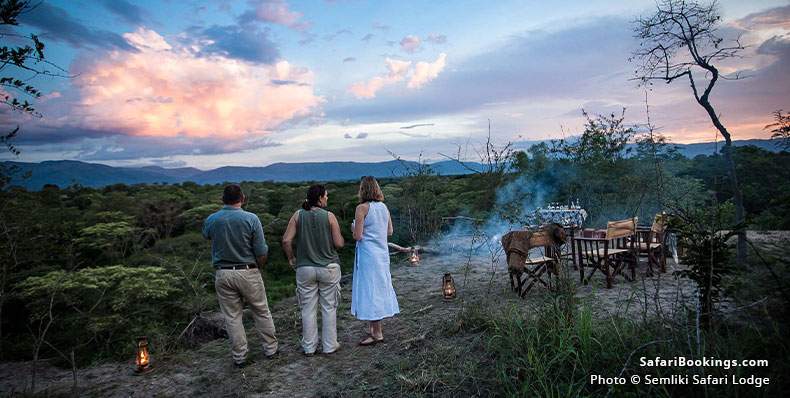
The 8-day northern Uganda luxury safari offers a journey through the country's most dramatic northern and western wildernesses. Traveling via private charter flights and luxury 4x4 Land Cruisers, this itinerary connects the Nile River ecosystems of Murchison Falls National Park, the remote plains of Kidepo Valley National Park, and the savannah waterways of Queen Elizabeth National Park. Guests stay at premier five-star properties—including Chobe Safari Lodge, Apoka Safari Lodge, and Mweya Safari Lodge—combining world-class game viewing, private chalets, and fine dining under the African night sky.
Detailed Itinerary
Day 1: Entebbe to Murchison Falls via Ziwa Rhino Sanctuary
Upon landing at Entebbe International Airport, meet your professional driver-guide and board your private 4x4 vehicle to begin the five-hour journey north toward Murchison Falls National Park. En route, stop at the Ziwa Rhino Sanctuary in Nakasongola for a guided two-hour trek on foot alongside experienced rangers to track southern white rhinos in their natural habitat. Following lunch at the sanctuary, continue driving two hours through local savannah terrain to reach the park boundaries. Check into Chobe Safari Lodge, an exclusive property situated along the northern banks of the Victoria Nile. Unpack in your luxury room, enjoy a multi-course dinner on the terrace, and unwind to the peaceful sounds of the flowing river.
Day 2: Northern Sector Game Drive & Murchison Falls Nile Cruise
Wake at 06:00 for an early morning breakfast before embarking on a four-hour game drive across the northern bank's open savannah grasslands. Accompanied by your guide, track active prides of lions, Rothschild’s giraffes, African bush elephants, and Jackson’s hartebeests. Return to the lodge for lunch and a relaxing afternoon by the multi-tiered swimming pool overlooking the river rapids. At 14:00, board a private launch boat for a three-hour safari heading upstream toward the base of Murchison Falls. Along the riverbanks, observe large pods of hippos, massive Nile crocodiles sunning on sandbars, and diverse birdlife before returning to Chobe Safari Lodge for dinner.
Day 3: Private Charter Flight to Kidepo Valley National Park
Check out of the lodge at 08:00 and take a short transfer to the local airstrip for your 90-minute private charter flight to Kidepo Valley National Park in northeastern Uganda. Enjoy scenic aerial views of the rugged Karamoja mountain ranges during the flight. Upon landing at Apoka Airstrip, your local driver-guide transfers you to Apoka Safari Lodge. Check into your private open-plan chalet, which features canvas walls, natural timber finishes, and private wooden decks. Spend the afternoon relaxing by the lodge's natural rock swimming pool, watching wild elephants and Cape buffaloes gather at the watering hole in the valley below.
Day 4: Full-Day Big Game Safari in the Narus Valley
Begin your day at 06:30 with warm coffee and a boxed breakfast before setting out on a full-day game drive through the Narus Valley. Because the Narus River contains the park's primary permanent water supply during dry periods, wildlife concentrates heavily along the valley floor. Your guide will track resident predators, including cheetahs, leopards, and lions, alongside vast herds of buffaloes. Pause for a scenic picnic lunch beneath the shade of a sausage tree (Kigelia africana) before continuing your drive across the savannah. Return to Apoka Safari Lodge by 16:00 to relax on your private veranda before a gourmet dinner.
Day 5: Karamojong Cultural Visit & Sun Downer Game Drive
Depart the lodge at 08:00 for an enriching three-hour cultural encounter with the local Karamojong pastoralist community. Learn about their semi-nomadic livestock-keeping traditions, traditional Manyatta homestead architecture, and vibrant cultural dances. Return to Apoka Safari Lodge for lunch and enjoy a quiet two-hour afternoon siesta during the heat of the day. At 16:00, head out for a late-afternoon game drive to spot plains wildlife like ostriches, Jackson's hartebeests, and zebras framed by the setting sun over the Mount Morungole backdrop. Spend your final evening at Apoka enjoying dinner under the open stars.
Day 6: Fly to Queen Elizabeth National Park & Crater Lake Walk
Following breakfast at 07:00, take a 30-minute transfer back to Apoka Airstrip for a two-hour private charter flight southwest to Queen Elizabeth National Park. Upon arrival at the local airstrip in western Uganda, your new driver-guide transfers you 45 minutes to Mweya Safari Lodge, positioned on a peninsula overlooking the Kazinga Channel. Check into your private cottage, which features clear views extending toward the Rwenzori Mountains. After lunch at the lodge restaurant, embark on a two-hour guided nature walk around the surrounding volcanic crater lakes before returning to Mweya for dinner and overnight accommodations.
Day 7: Kasenyi Plains Game Drive & Kazinga Channel Boat Cruise
Start the day with an early 06:00 breakfast before heading out on a four-hour game drive across the Kasenyi Plains. Track prides of lions, leopards, and hyenas as they hunt among large herds of Uganda kob and giant forest hogs across open grassland. Return to the lodge for lunch and rest. In the afternoon, head down to Mweya peninsula to board a two-hour boat safari along the Kazinga Channel, a 32-kilometer natural waterway linking Lake George and Lake Edward. Get close-up views of bathing elephants, hippos, waterbucks, and bird species like the African skimmer before returning to Mweya Safari Lodge for your final dinner.
Day 8: Scenic Overland Transfer to Entebbe & International Departure
Enjoy a final early breakfast at 07:00, pack your luggage, and check out of the lodge to begin the seven-hour overland return drive to Entebbe. Travel east through the rolling countryside of western Uganda, stopping midway at the official Equator monument in Kayabwe for a 20-minute stop to take photos, participate in water-coriolis demonstrations, and browse local craft shops. Continue toward Entebbe for a late-afternoon sit-down lunch at a lakeside restaurant before transferring directly to the airport terminal for your international departure flight.
What makes northern Uganda's safari circuit unique compared to southern primate routes?
Northern Uganda offers an expansive, big-game wilderness safari centered around sweeping savannahs, river systems, and dramatic topographical features rather than dense montane rainforests. While southwestern itineraries focus heavily on mountain gorilla and chimpanzee tracking in Bwindi and Kibale, the northern and northeastern circuit—encompassing Murchison Falls, Kidepo Valley, and Queen Elizabeth—emphasizes classic big game viewing, predator tracking, and water-based boat safaris.
In Kidepo Valley, for instance, you experience remote semi-arid plains framed by rugged mountain ranges along the South Sudan border, hosting species rarely seen elsewhere in Uganda, such as cheetahs, ostriches, and bat-eared foxes. Murchison Falls features the powerful Victoria Nile squeezing through a narrow gorge before cascading into calm waters teeming with Nile crocodiles and hippos. Combining private charter flights with open 4x4 vehicle safaris across these northern sectors delivers a tranquil, low-density safari experience far removed from high-traffic tourist routes, appealing to travellers seeking untamed landscapes and exclusive lodge hospitality.
How does flying between national parks by private charter change the safari experience?
Utilizing private charter flights between Murchison Falls, Kidepo Valley, and Queen Elizabeth transforms the entire dynamic of an eight-day itinerary. Reaching Kidepo Valley from Kampala or Murchison Falls by road requires an arduous 10- to 12-hour drive across rugged dirt tracks. A private charter flight reduces that transit to just 90 scenic minutes, preserving your energy for field activities rather than long highway travel.
Flying low over Uganda’s changing landscapes also provides bird’s-eye views of the Karamoja mountain ranges, winding river systems, and crater lakes. Smaller aircraft land directly at airstrips located minutes from your accommodations, such as Apoka Airstrip in Kidepo. This seamless hop-on service maximizes your time on game drives and boat cruises, allowing you to comfortably cover three distinct national parks thousands of kilometers apart within a single week without fatigue.
What wildlife species are unique to Kidepo Valley National Park?
Kidepo Valley National Park shelters several specialized mammal and bird species adapted to its dry, semi-arid savannah ecosystems that are absent from other Ugandan parks. It is the only national park in Uganda where you can regularly spot wild cheetahs hunting across open grassland, as well as ostriches roaming the plains freely. Other localized species include the bat-eared fox, caracal, aardwolf, black-backed jackal, and the rare Patas monkey.
The park also supports massive herds of Cape buffalo—often numbering in the thousands—alongside healthy populations of elephants, Rothschild's giraffes, zebras, Jackson's hartebeests, and oribis. Predators thrive here due to the open terrain; prides of lions routinely rest atop smooth granite outcrops known as kopjes to survey the surrounding Narus Valley. For birdwatchers, Kidepo boasts nearly 475 recorded avian species, including raptors like the secretary bird and localized endemics such as the Karamojong Apalis.
Why is tracking white rhinos at Ziwa Rhino Sanctuary an important stop on Day 1?
Stopping at the Ziwa Rhino Sanctuary in Nakasongola completes the classic "Big Five" safari experience in Uganda. Wild black and white rhinos were completely wiped out across Uganda by the early 1980s due to civil conflict and rampant poaching. Established in 2005 by the Rhino Fund Uganda in partnership with the Uganda Wildlife Authority, Ziwa serves as a secure 7,000-hectare breeding sanctuary aimed at eventual reintroduction into national parks like Murchison Falls.
Tracking rhinos on foot alongside armed local rangers offers a grounded, sensory adventure. Because rhinos roam freely across savannah thickets, guides track fresh footprints and dung piles to locate them safely. Once located, you can observe these massive mammals feeding from a safe distance of six to seven meters while learning about breeding protocols and 24-hour ranger security measures. Visiting Ziwa directly supports rhino conservation funding while breaking up the overland journey from Entebbe toward Murchison Falls.
www.murchisonfallsnationalpark.com
What should I expect on the Murchison Falls Nile River boat cruise?
The boat cruise along the Victoria Nile to the base of Murchison Falls is one of East Africa’s iconic water safaris. Departing from the riverbank, a stable launch vessel navigates slowly upstream toward the devil's cauldron—the base where the entire Nile River forces itself through a narrow seven-meter rock gap before plunging 43 meters below.
Victoria Nile Boat Cruise. Source: Murchison Falls National Park
During the three-hour round trip, the riverbanks host dense concentrations of wildlife. You will sail past hundreds of submerged hippos displaying territorial calls, alongside massive Nile crocodiles basking with open jaws on sunny sandbars. African bush elephants, Cape buffaloes, and waterbucks regularly come down to drink and cool off in the shallows. Avian life along the reed beds includes red-throated bee-eaters nesting in clay cliffs, pied kingfishers, goliath herons, and the prehistoric-looking shoebill stork near the delta marshes.
What makes cultural encounters with the Karamojong community respectful and authentic?
The Karamojong are traditional semi-nomadic pastoralists living in the rugged northeastern Karamoja region surrounding Kidepo Valley. Historically isolated, their culture remains deeply rooted in cattle herding, traditional architecture, and communal governance, drawing comparisons to the Maasai and Samburu of Kenya. A organized cultural visit provides genuine insight into their daily life without feeling staged.
Guided by local community members, you visit an authentic Manyatta—a fortified village enclosed by thorny brush fences designed to protect families and livestock from predators. You learn about traditional mud-and-thatch hut construction, milk and blood dietary traditions, beadwork craftsmanship, and cattle-branding rituals. The visit typically concludes with dynamic energetic dances, where community members perform high-leaping songs celebrating cattle harvests. Revenue generated from these visits flows directly to village development funds, purchasing food supplies, clean water hardware, and educational materials for local children.
How does game viewing in the Narus Valley differ between dry and wet seasons?
The Narus Valley acts as the ecological lifeblood of Kidepo Valley National Park due to its permanent water sources. During the dry season (December to March), the surrounding Kidepo River dries into sandy riverbeds, forcing thousands of buffaloes, elephants, giraffes, and antelopes to concentrate along the remaining waterholes in the Narus floor. This high animal density makes predators like lions, leopards, and hyenas exceptionally easy to track around dry river channels.
During the rainy season (April to September), rainfall transforms the dry plains into lush, tall green grasslands. Water becomes abundant throughout the park, causing wildlife to disperse over wider mountain ridges and distant valleys. While animals spread out, the wet season offers striking green landscapes, crisp air, lower temperatures, and spectacular bird watching as migratory species arrive to breed across the blooming vegetation.
www.kideponationalpark.com+ 1
What five-star luxury amenities can I expect at Chobe, Apoka, and Mweya lodges?
Luxury lodges along this northern circuit combine remote wilderness isolation with high-end architectural design and hospitality. At Chobe Safari Lodge, perched along the Victoria Nile, guests enjoy multi-tiered outdoor infinity pools overlooking river rapids, river-facing private balconies, and open-air dining decks featuring international cuisine.
In Kidepo, Apoka Safari Lodge offers total immersion within open savannah. Luxury canvas chalets feature floor-to-ceiling mesh windows, private wooden decks, and hand-carved outdoor stone bathtubs overlooking a natural rock pool where wild buffaloes and elephants gather to drink. At Mweya Safari Lodge, positioned on a ridge over the Kazinga Channel, private cottages offer air-conditioned luxury, deep soaking tubs, personal butler services, and panoramic views stretching across channel waters toward the Rwenzori mountain range.
How do game drives in the Kasenyi Plains of Queen Elizabeth compare to Kidepo?
While both regions feature vast savannahs, the Kasenyi Plains in Queen Elizabeth National Park offer a distinctly different ecological setting than Kidepo. Kasenyi consists of open grassy plains dotted with euphorbia trees, framed by volcanic crater lakes and the distant, snow-capped Rwenzori range. The primary herbivore here is the Uganda kob; thousands gather in designated breeding grounds (mating leks), which naturally draws hunting prides of lions, hyenas, and secretive leopards.
In contrast, Kidepo’s Narus Valley feels wider, drier, and more rugged, surrounded by tall craggy mountain peaks. Game drives in Kidepo revolve around massive, moving herds of thousands of buffaloes and giraffes traversing yellow oat-grass plains. Kasenyi offers quick predator tracking close to Kazinga Channel, whereas Kidepo provides a vast, uncrowded landscape where you can drive for hours without seeing another safari vehicle.
What health, safety, and packing preparations are required for northern Uganda?
Preparing for a luxury northern Uganda safari requires planning for warm savannah heat, bright sun, and outdoor bush activities. Yellow fever vaccination certificates are mandatory for entry into Uganda, and taking malaria prophylaxis medication is strongly recommended for all national park regions. High-SPF sunscreen, wide-brimmed hats, polarized sunglasses, and DEET-based insect repellent are daily essentials for game drives and boat cruises.
Pack lightweight, breathable clothing in neutral tones—such as khaki, tan, and olive green—to blend into savannah environments. Avoid dark blue or black clothing on safari drives, as these colors can attract tsetse flies in woodland pockets. Sturdy walking shoes or light hiking boots are recommended for the Ziwa rhino tracking walk and Karamojong village tours. Because private charter flights enforce strict luggage weight limits (typically 15 kg per person in soft-sided bags), pack light, high-performance apparel; luxury lodges offer daily laundry services to keep your gear fresh.
Booking Uganda luxury safari with us Roads of Adventure safaris
You can book a high-end, customized itinerary through Roads of Adventure Safaris, a premier local operator based on the Kampala–Entebbe Road. The company specializes in bespoke luxury safaris, handling all high-end accommodations, premium 4x4 transport, private charter flights, and permits for elite gorilla tracking experiences
