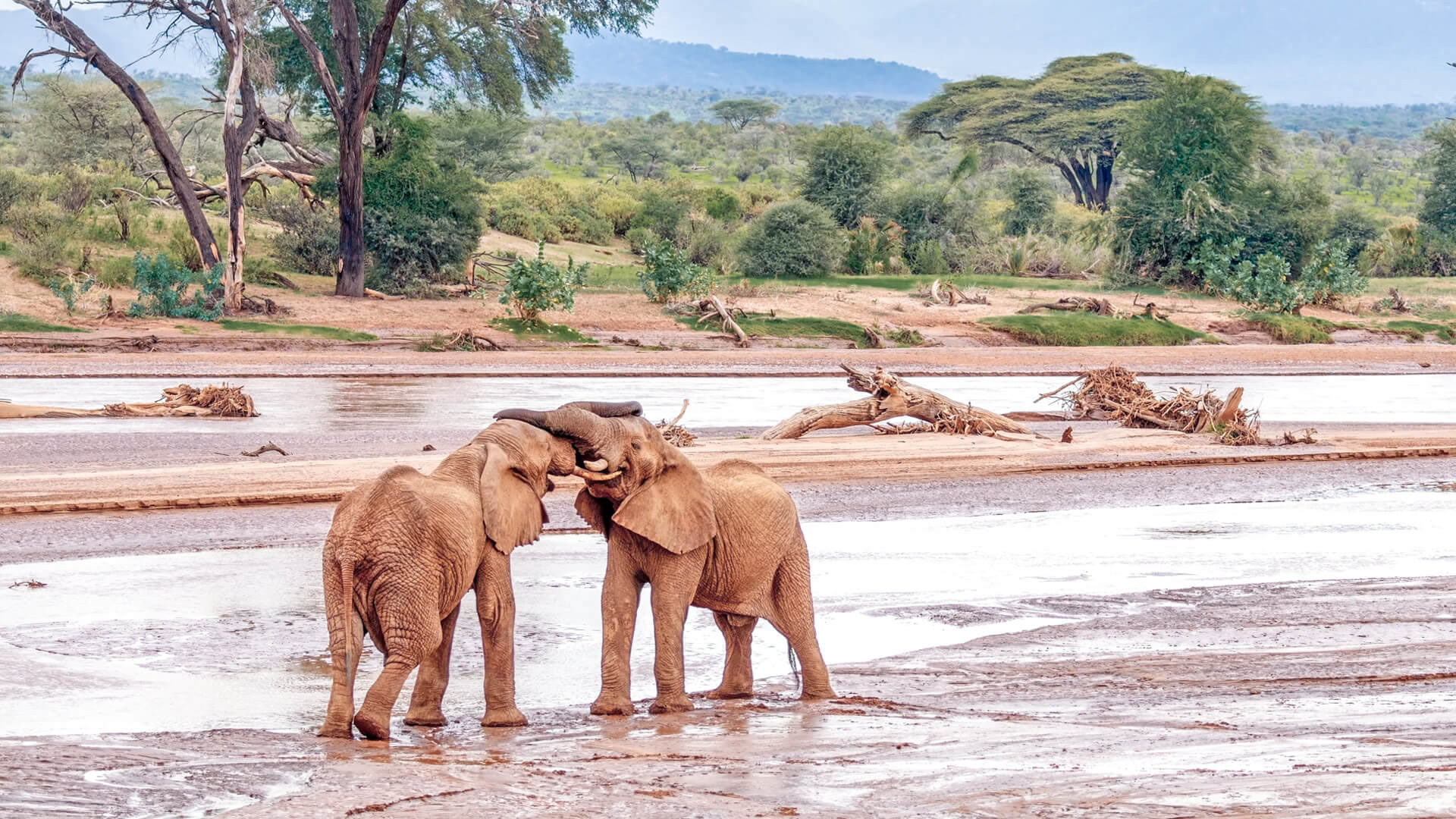
A 3-day safari to Samburu National Reserve (often combined with Buffalo Springs) offers an intimate look at Kenya’s "Special Five" (Grevy’s zebra, Reticulated giraffe, Somali ostrich, Gerenuk, and Beisa oryx). Top itineraries focus on early morning/late afternoon game drives along the Ewaso Ng'iro River, community visits, and birdwatching, generally departing from Nairobi.
3-days-compelling-samburu-national-park-kenya-wildlife-safari-tour-package
4-days-samburu-national-reserve-and-ol-pejeta-kenya-safari-holiday
3-Day Classic Big Five & Special Five Safari
This 3-Day Classic Big Five & Special Five Safari is a journey into the rugged, sun-baked heart of northern Kenya, where the landscape shifts from the lush highlands of the equator to the striking ochre plains of Samburu National Reserve. This itinerary is meticulously crafted for the curious traveler who seeks the iconic "Big Five" while yearning to discover the "Samburu Special Five"—a collection of rare, arid-adapted species found almost nowhere else on Earth. Against a backdrop of the majestic Ewaso Nyiro River and the dramatic volcanic flat-top of Ol Olokwe, you will witness a unique ecological theater. Here, reticulated giraffes and Grevy’s zebras roam alongside desert-adapted lions and leopards. This is more than a wildlife tour; it is an immersion into a starkly beautiful wilderness where the silence of the desert is broken only by the trumpeting of elephants and the rhythmic chants of the local Samburu people.
Day 1: Nairobi to the Northern Frontier
Your adventure begins with a scenic morning drive from Nairobi, traversing the verdant highlands of the Kikuyu heartland and skirting the snow-capped peaks of Mount Kenya. As you cross the equator, the terrain transforms into the dramatic, semi-arid savanna of Samburu. Upon arrival and check-in at your lodge, you’ll enjoy a late lunch before heading out for your first afternoon game drive. This is your introduction to the "Special Five"—keep your eyes peeled for the strikingly patterned reticulated giraffe and the long-necked gerenuk standing on its hind legs to forage. As the sun dips low, painting the landscape in shades of copper and violet, you may spot your first desert-adapted elephants moving toward the river. You return to camp for a warm welcome and a starlit dinner, marking your successful entry into Kenya’s northern wilderness.
Day 2: The Riverine Life and Predator Pursuit
Today is a deep dive into Samburu’s diverse ecosystems, centered around the life-giving Ewaso Nyiro River. Carrying a picnic lunch, you depart at sunrise to track predators when they are most active; this reserve is legendary for its high density of leopards that lounge in the riverine acacia trees. You will explore the lush palm groves where crocodiles bask on the banks and massive elephant herds congregate to bathe. Your guide will focus on locating the rare Grevy’s zebra and the Beisa oryx, completing your "Special Five" checklist. Midday is spent at a scenic viewpoint overlooking the river, providing a front-row seat to the constant drama of the wild. The afternoon continues with a search for Samburu’s famous lion prides, concluding at dusk when the savanna’s apex hunters begin their nightly patrol.
Day 3: Dawn Patrol and the Return Journey
Your final morning is dedicated to the "Dawn Patrol," capitalizing on the crisp morning air and the soft "magic hour" light that is a photographer's dream. This session is your last chance to spot the elusive Somali ostrich or catch a glimpse of a caracal disappearing into the scrub. The early morning provides a crystalline view of the distant mountains, offering a serene atmosphere for a final sweep of the park’s northern corridors. After a hearty bush breakfast and a final equipment pack, you bid farewell to the Samburu plains and begin the drive back toward Nairobi. As you ascend toward the central highlands, you carry with you the unique legacy of the northern frontier—a collection of rare species and rugged vistas that provide a stark, beautiful contrast to the typical African safari.
3-Day Cultural & Conservation Focus Safari
This 3-Day Cultural & Conservation Focus Safari is a masterfully curated expedition into northern Kenya, where the rugged beauty of the desert meets the vibrant soul of the Samburu people. This itinerary goes beyond the traditional game drive to explore the deep-seated connection between community heritage and wildlife preservation. Against the backdrop of the red-earthed Samburu National Reserve, you will track the "Special Five"—rare species like the reticulated giraffe and Grevy’s zebra—while gaining exclusive access to the traditional world of the Samburu Manyatta. This journey is specifically designed for the conscious traveler who values conservation as much as the "Big Five," offering a holistic look at how local wisdom and modern science protect this fragile ecosystem. From the rhythmic chants of red-clad warriors to guided walks through the whistling thorns, this safari provides a profound, multi-dimensional narrative of survival and harmony in Kenya’s wild northern frontier.
Day 1: Arrival and the Northern Specialties
Your journey begins with a scenic transit into the arid heart of Samburu, where the air grows warmer and the soil turns a deep, volcanic ochre. After a fresh lunch at your eco-lodge, you head out for an evening game drive tailored to the reserve's unique biodiversity. The focus today is the "Samburu Special Five"—the gerenuk, reticulated giraffe, Grevy’s zebra, Beisa oryx, and Somali ostrich. As the harsh midday sun softens into a golden glow, you will track these rare, arid-adapted specialists as they congregate near the Ewaso Nyiro River. The evening light provides a dramatic palette for photography, highlighting the intricate patterns of the giraffe and the desert-adapted elephants. You return to camp for a sustainable dinner, falling asleep to the ancient sounds of a wilderness that feels untouched by time.
Day 2: Manyatta Traditions and Sunset Patrols
The morning begins at first light, searching for leopards and lions before they retreat into the shade of the doum palms. Following this, the focus shifts to human heritage with a visit to a local Samburu Manyatta. Unlike typical tourist visits, this is a deep immersion into the pastoralist lifestyle. You will learn about their age-set systems, traditional livestock management, and the intricate beadwork that defines their status. Sitting with the elders offers a rare perspective on how their culture has coexisted with predators for centuries. After a midday rest, you return to the park for a sunset game drive. As the sky turns violet and the cooling air brings the savanna to life, you track the predators emerging for their nightly hunt, witnessing the raw theater of nature in the shadow of Ol Olokwe.
Day 3: Conservation in Action and the Return Journey
Your final morning is dedicated to the "boots on the ground" side of the savanna. You will participate in a guided walking safari in a secure buffer zone or visit a local conservation project, such as an elephant sanctuary or a community-led anti-poaching unit. Walking through the bush allows you to see the "little five" and learn about the medicinal properties of local flora from a Samburu guide. This intimate connection to the land provides a final, meaningful layer to your safari experience. After a hearty bush breakfast, you begin the drive back to Nairobi, ascending from the northern plains toward the lush central highlands. You return with a digital portfolio of rare wildlife and a transformed understanding of how community involvement is the true heartbeat of modern African conservation.
3-Day Birding & Wildlife Photography Focus
This 3-Day Birding & Wildlife Photography Focus is a specialized pilgrimage into the arid, high-contrast landscapes of Samburu, a region where the light and the life are unlike anywhere else in East Africa. For the photographer, northern Kenya offers a unique palette: ochre earth, deep indigo skies, and the striking silhouettes of doum palms. This itinerary prioritizes the "Golden Hours" and the specific habitats of the "Special Five" and Samburu’s 450+ avian species. From the cobalt-blue plumage of the Vulturine Guineafowl to the desert-adapted elephants that glow red from the volcanic dust, every moment is curated for the lens. You will navigate the riverine forests and whistling thorns, seeking out the elusive leopard and rare raptors in the crystalline morning air. It is a journey of patience and precision, designed to capture the raw, prehistoric beauty of a wilderness where every frame tells a story of survival in the northern frontier.
Day 1: Transit and the First Sunset Shoot
Your expedition departs Nairobi early to conquer the long road north, transitioning from the lush Kikuyu highlands to the dramatic, semi-arid plains of the Northern Frontier District. Arriving in Samburu by mid-afternoon, you immediately head out for a sunset game drive. The objective today is "Environmental Portraits," utilizing the long, low-angled light to frame reticulated giraffes and Beisa oryx against the backdrop of the sacred Ol Olokwe mountain. As the sun dips, the dust kicked up by elephant herds creates a ethereal, glowing haze—the perfect conditions for high-contrast silhouette photography. You will focus on capturing the textures of the arid landscape and the vibrant colors of the sky as they reflect off the Ewaso Nyiro River, returning to your lodge to prep your gear for the intensive birding and wildlife sessions ahead.
Day 2: The Special Five and Avian Splendor
Today is a full-day immersion into the heart of Samburu’s biodiversity, with a focus on "The Special Five" and rare avian species. You will spend the morning tracking the Vulturine Guineafowl, whose striking blue and white plumage offers a magnificent challenge for macro and portrait shots. Along the riverbanks, you’ll seek out the Somali Ostrich and the giant kingfishers that patrol the waters. Your guide will position the vehicle to capture the long-necked gerenuk standing on its hind legs—a classic Samburu action shot. Midday is spent in the shade of the riverine forest, photographing raptors and weavers that frequent the acacia canopy. The afternoon is dedicated to tracking predators, using the golden light to highlight the amber eyes of a leopard or the regal mane of a desert-adapted lion.
Day 3: Dawn Patrol and Conservation Snapshots
Your final morning begins with a "Dawn Patrol" game drive to catch the first light hitting the savanna. This is the prime window for high-speed photography of birds in flight or predators returning from a night hunt. If time and logistics permit, you will visit the Reteti Elephant Sanctuary, a community-owned project that provides a heart-warming opportunity for "Conservation Photography." Capturing the interaction between the Samburu keepers and the orphaned calves offers a powerful narrative for your portfolio. After a final sweep of the northern corridors to spot any remaining "Special Five" species, you begin the journey back to Nairobi. You return with a digital archive of rare, desert-adapted wildlife and a collection of birding shots that represent the incredible, rugged beauty of Kenya’s wild northern frontier.
3-Day Budget-Friendly Wildlife Safari
This 3-Day Budget-Friendly Wildlife Safari is a vibrant, high-energy road trip designed for those who want to witness the spectacular "Northern Frontier" without the luxury price tag. By utilizing a shared safari van and traveling by road from Nairobi, you turn the transit into an adventure, watching the landscape shift from the lush, green central highlands and sprawling pineapple plantations to the dramatic, sun-scorched plains of the north. This itinerary focuses on the raw, natural theater of Samburu National Reserve and Buffalo Springs, where the red-earthed savanna plays host to rare species found nowhere else in Kenya. It is a journey built for the social traveler and the wildlife enthusiast who prioritizes "time in the bush" over five-star amenities. From the life-giving Ewaso Nyiro River to the silhouettes of the Samburu warriors, this budget-friendly escape offers a profound and authentic connection to one of Africa’s most ruggedly beautiful wildernesses.
Day 1: Nairobi to the Northern Gate
Your journey begins with an early morning departure from Nairobi in a specialized safari van. As you head north, you’ll cross the equator and marvel at the changing vistas of the Mount Kenya region before descending into the semi-arid plains. After a brief stop in Nanyuki, you arrive at your budget-friendly camp or lodge in time for a warm lunch. The excitement peaks during your first afternoon game drive, where you’ll start your search for the "Special Five." The cooling air brings out the reticulated giraffes and the elegant, long-necked gerenuks. As the sun sets, casting long shadows across the acacia trees, you’ll get a true sense of Samburu’s wild scale. You return to camp for a communal dinner, falling asleep to the rhythmic sounds of the African night after a successful first day on the trail.
Day 2: Samburu and Buffalo Springs Exploration
Today is a full-day immersion into the twin gems of the north: Samburu and Buffalo Springs. Leaving at dawn, the group explores the banks of the Ewaso Nyiro River, a magnet for massive elephant herds and thirsty predators. You’ll cross into Buffalo Springs to witness the contrast of its clear pools against the dry scrubland. With a picnic lunch enjoyed under the shade of a doum palm, you maximize your chances of spotting Grevy’s zebras and the striking Beisa oryx. Your guide will navigate the varied terrain, seeking out lions resting in the thickets and crocodiles basking on the riverbanks. The day is a masterclass in arid-land ecology, offering endless opportunities for photography and wildlife observation before returning to your camp at dusk for a second evening of storytelling around the campfire.
Day 3: Dawn Patrol and the Highland Return
The final morning is dedicated to a "Dawn Patrol" game drive, the prime time to catch leopards returning from their nocturnal hunts or hyenas patrolling the plains. The early morning light provides a crystalline view of the sacred Ol Olokwe mountain, offering a serene farewell to the northern frontier. After a final sweep for any elusive species, you enjoy a hearty breakfast and begin the drive back toward Nairobi. To cap off the experience, the itinerary includes a potential stop at the Giraffe Centre in Karen (time permitting), where you can get a close-up encounter with the endangered Rothschild’s giraffes. You arrive back in the city by late afternoon, carrying a wealth of memories and photographs of Kenya’s most unique wildlife, proving that a world-class safari experience is truly accessible to everyone.
1. What are the best 3-day itinerary ideas for maximizing game sightings in Samburu National Reserve?
To maximize sightings in a short 72-hour window, the most effective strategy is the "Riverine Focus" itinerary. In an arid landscape like Samburu, the Ewaso Ng'iro River acts as a biological magnet. A winning itinerary starts with an afternoon game drive on Day 1 concentrated on the riverbanks, where elephants and leopards are frequently spotted in the dense acacia and doum palm thickets.
Day 2 must be a full-day intensive exploration. By leaving at dawn (6:30 AM) with a packed picnic lunch, you can venture into the northern reaches of the reserve or cross into the adjacent Buffalo Springs. This eliminates the "dead time" spent returning to the lodge for lunch, allowing you to catch predators during their late-morning activity. The afternoon should be spent stationed near a known watering hole or a river crossing, waiting for the "Special Five" to emerge from the scrub to drink.
Finally, Day 3 should feature a "Dawn Patrol" before departure. This is the prime time for feline activity; leopards are often seen returning to their kills in the trees as the sun rises. By focusing on the riverine ecosystem and utilizing a full-day mobile approach on the second day, you effectively double your "eyes-on-prey" time compared to a standard relaxed schedule.
2. Is a 3-day safari enough time to see all the "Samburu Special Five" wildlife species?
Yes, three days is generally considered the perfect duration to track down all members of the "Special Five": the Grevy’s zebra, Somali ostrich, reticulated giraffe, Besia oryx, and the gerenuk. Unlike the "Big Five," which can be elusive and spread over vast distances, the Special Five are highly specialized to this specific arid habitat and are remarkably resident.
On Day 1, you will likely check off the reticulated giraffe and gerenuk within the first hour of entering the gate, as they are ubiquitous in the whistling thorn scrub. Day 2 provides the necessary time to track the more nomadic Grevy’s zebra and the Beisa oryx, which prefer the open, stony plains further from the river. The Somali ostrich is often found in the transition zones between these two habitats.
The success rate for seeing all five in a 3-day window is exceptionally high (over 90%) because Samburu is relatively compact compared to the Serengeti or Tsavo. An experienced guide knows the specific "territories" of each species. While a 1-day trip would be a gamble, 3 days allows for the patience required to find the oryx and zebra, which are the most mobile of the group.
3. What is the typical driving time from Nairobi to Samburu for a 3-day safari itinerary?
The drive from Nairobi to Samburu is a journey of approximately 310 kilometers (192 miles) and typically takes between 5.5 to 7 hours, depending on traffic and road conditions. For a 3-day itinerary, this means you must depart Nairobi no later than 6:30 AM to ensure you arrive at your lodge in time for lunch and a much-needed rest before the 4:00 PM game drive.
The route is spectacular but demanding. You head north through the "breadbasket" of Kenya, passing the lush pineapple plantations of Thika and the rolling Kikuyu highlands. You’ll skirt the western slopes of Mount Kenya, crossing the equator at Nanyuki. After Nanyuki, the road descends sharply into the northern frontier, where the lush greenery abruptly gives way to the red-earthed, semi-arid savanna.
While the majority of the road is well-paved, the final stretch from Isiolo to the Archer’s Post gate can be subject to livestock crossings and occasional construction. Because nearly 14 hours of a 3-day trip are spent in transit, many travelers find the drive worth it for the changing scenery, but it highlights why a 4x4 vehicle is recommended for comfort over such a long distance on a short schedule.
4. Can I do a fly-in 3-day safari to Samburu National Reserve for faster travel times?
Absolutely, and for a 3-day trip, a "Fly-In" itinerary is the gold standard for efficiency. A flight from Nairobi’s Wilson Airport to the Samburu or Buffalo Springs airstrips takes only 1 to 1.5 hours, compared to the 6-hour grueling road trip. This "reclaims" nearly 10 hours of your holiday that would otherwise be spent in a vehicle on the highway.
When you fly in, you typically land by 10:30 AM on Day 1. Instead of a long transit, your safari begins the moment you touch down; the drive from the airstrip to your lodge is effectively your first game drive. You arrive at your camp refreshed, rather than "road-weary," allowing you to fully enjoy the afternoon activity.
On the final day, you can enjoy a full morning game drive and a relaxed breakfast before catching a midday flight back to Nairobi. This allows for two additional game drives compared to a driving itinerary. While the cost of the internal flights adds a premium to the package (typically $300-$400 round trip), the value in terms of time saved and the breathtaking aerial views of Mount Kenya and the Ewaso Ng'iro River make it a highly sought-after option for luxury and time-sensitive travelers.
5. Which accommodation options (lodges or camps) are best located for a 3-day Samburu itinerary?
For a 3-day itinerary, location is everything. You want a lodge that is either inside the reserve or very close to the main Archer's Post gate to minimize transit time at the entrance.
Riverfront Lodges (The Premium Choice): Options like Ashnil Samburu Camp, Samburu Game Lodge, or Elephant Watch Camp are situated directly on the banks of the Ewaso Ng'iro. These are ideal because wildlife—especially elephants and leopards—constantly move through the camp grounds to reach the water. You can literally "safari from your balcony" during the midday heat, making every hour of your 3-day stay productive.
Buffalo Springs Side: Lodges like Sarova Shaba or Simba Lodge offer a slightly different perspective. While Shaba is a separate reserve, it is often included in Samburu itineraries. These are great for those who want a quieter experience, though they may require a bit more driving to reach the "focal" areas of the Samburu side.
Budget Camps: If staying in "joining" tours, you will likely be in permanent tented camps just outside the gate in Archer's Post. While you lose the riverfront view, you are only 5-10 minutes from the gate. For a 3-day trip, avoid any lodge located more than 30 minutes from the gate, as the repetitive transit will eat into your limited wildlife viewing time.
6. How does the 3-day itinerary combine game drives in Samburu National Reserve with Buffalo Springs Reserve?
Samburu and Buffalo Springs are separated only by the Ewaso Ng'iro River, and for all practical wildlife purposes, they function as a single ecosystem. A well-designed 3-day itinerary treats them as a unified playground, typically dedicating Day 1 and Day 3 to the Samburu side and Day 2 to Buffalo Springs.
The Samburu side is generally more rugged and is the best place to find the leopard and the reticulated giraffe among the rocky outcrops and doum palms. On the second day, your guide will cross the bridge into Buffalo Springs. This reserve is flatter and characterized by its namesake crystal-clear volcanic springs. This is the prime area to find the Grevy’s zebra and Beisa oryx, which prefer the more open plains.
The springs themselves are a highlight; you’ll see incredible birdlife and often large herds of elephants bathing in the pools. By splitting the itinerary this way, you ensure you cover the two distinct topographies of the region. Most park tickets allow for transit between the two, making it a seamless "two-for-one" experience that is essential for seeing the full diversity of the Northern Special Five and the resident predators.
7. What time do the daily morning and afternoon game drives begin on a 3-day itinerary?
On a 3-day safari, the schedule is dictated by the "Golden Hours"—the times when the sun is low and the animals are most active. Because Samburu is significantly hotter than the Maasai Mara or Amboseli, sticking to these times is critical.
Morning Drives: These typically begin at 6:15 AM or 6:30 AM. You want to be at the gate or out of your lodge as the first light hits the ground. This is when the temperature is cool, and predators like lions and leopards are still on the move after their night's hunt. By 9:30 AM, the heat begins to rise, and most cats will retreat into the deep shade.
Afternoon Drives: These usually start at 4:00 PM. The midday period (11:00 AM to 3:30 PM) is "dead time" for game viewing, as the sun is too harsh and animals are largely stationary. Starting at 4:00 PM allows you to catch the wildlife as they head back to the river for a final drink before dusk. Drives typically end at 6:30 PM, as most reserves require vehicles to be back at the lodge or outside the gates by dark. This 2.5-to-3-hour window provides the best light for photography and the highest chance of seeing active behavior.
8. Are cultural visits to local Samburu villages included in the 3-day itinerary ideas mentioned here?
Cultural visits are a common and highly recommended optional add-on for the afternoon of Day 2. While the primary focus of a 3-day trip is usually wildlife, a visit to a Samburu Manyatta (homestead) provides an invaluable human context to the landscape.
The Samburu are "cousins" to the Maasai, sharing a similar Nilotic language and pastoralist lifestyle, but they have their own distinct traditions, beadwork, and ceremonies. A visit typically involves being welcomed with traditional songs and dances, a tour of their ingenious mud-and-stick dwellings, and a demonstration of traditional fire-making.
Because a 3-day itinerary is tight, the best way to include this is to visit a village located near the reserve gates during the midday "gap" or at the very start of your afternoon game drive. It usually takes about 1 to 1.5 hours. While it carries an extra cost (typically $20-$30 per person, paid directly to the community), it is a vital way to support the local people who live alongside the wildlife. It turns a "wildlife tour" into a "cultural journey," leaving you with a deeper appreciation for the resilience of the people in this harsh northern frontier.
9. What is the recommended 3-day itinerary for a luxury experience versus a budget camping safari?
The difference between luxury and budget in Samburu comes down to transport, territory, and "tent-style."
Luxury Itinerary: This begins with a flight from Nairobi, landing inside the reserve. You stay at a high-end lodge like Elephant Bedroom Camp or Sasaab, where your "tent" is a palatial suite with a private plunge pool. The game drives are conducted in private, open-sided 4x4 Land Cruisers with highly trained silver-level guides. The itinerary includes "extras" like sundowners in the bush on Day 2 and a private candlelit dinner on the sandbanks of the river. The focus is on exclusivity, comfort, and the ability to dictate your own schedule.
Budget Camping/Joining Safari: This starts with a 6-hour road trip in a shared safari van. You stay in permanent tented camps located just outside the Archer's Post gate. While the tents have beds and en-suite bathrooms, the experience is communal—you eat in a shared dining hall and share your game drives with 5-6 other travelers. The itinerary is more rigid, focusing on maximizing "gate time." On Day 2, you’ll likely do a full-day game drive with a simple packed lunch to save on the cost of returning to camp. It’s a high-energy, "no-frills" adventure that provides the same wildlife sightings as luxury but with a focus on value and social interaction.
10. Does the 3-day itinerary offer opportunities to see predators hunting along the Ewaso Ng'iro River?
Yes, and the Ewaso Ng'iro River is statistically one of the best places in East Africa to witness predation. Because Samburu is semi-desert, the river is the only reliable water source for miles. This forces prey species like impala, waterbuck, and the Special Five to run a gauntlet of predators every time they come to drink.
A 3-day itinerary maximizes these chances by concentrating Day 1 and Day 2 game drives along the riverine forest. Leopards are the stars here; they are famously relaxed around vehicles in Samburu and are often seen stalking along the riverbanks or guarding a kill in the branches of a doum palm. Lions also utilize the tall river reeds for cover, waiting for thirsty zebras or oryx to approach.
The most dramatic action often occurs in the late morning or late afternoon. On Day 2, staying by the river during your picnic lunch can be very rewarding. You might witness crocodiles launching an ambush on a drinking impala or a cheetah using the open riverbed for a high-speed chase. While a hunt is never guaranteed, the "bottleneck" effect of the river means that if a hunt is going to happen in the north, it’s most likely to happen within sight of the water.
11. What should I pack for a 3-day itinerary covering both hot days and cool evenings?
Packing for Samburu requires a "layering" strategy because of the extreme temperature fluctuations. During the day, the northern frontier is intense, with temperatures often soaring to 32°C (90°F) or higher. However, the lack of humidity means that as soon as the sun sets, the temperature drops rapidly, and early morning game drives can be surprisingly chilly.
Essential Clothing:
- Lightweight, breathable cotton/linen: Long-sleeved shirts and trousers in neutral tones (khaki, beige, olive) are best. They protect you from the sun and tsetse flies while keeping you cool.
- The "Safari Fleece": A warm fleece or light jacket is mandatory for the 6:00 AM game drives and the evening campfire.
- A wide-brimmed hat and polarized sunglasses: The glare off the red soil and salt flats can be punishing.
Gear:
- High-SPF Sunscreen: Reapply often; the sun at the equator is unforgiving.
- Binoculars: Essential for spotting the leopard in the trees or the distant Grevy’s zebra.
- Dust Protection: Bring a scarf or buff to cover your face during drives, as the volcanic dust in Samburu is very fine and can get everywhere.
- Portable Power Bank: Especially if staying in budget camps where power might be limited to certain hours.
12. Is it possible to see the Samburu special species on the first day of arrival?
It is not only possible; it is highly probable. Unlike other parks where you might drive for hours to find a specific animal, Samburu’s "Special Five" are well-distributed throughout the reserve. If you enter through the Archer's Post gate around 2:00 PM on Day 1, you will likely see at least three of the five before you even reach your lodge.
The reticulated giraffe and the gerenuk are almost guaranteed on Day 1. The gerenuk, with its iconic long neck, is frequently seen standing on its hind legs to reach the higher acacia leaves right alongside the main tracks. The Somali ostrich is also a common sight in the open scrub near the park entrance.
The Grevy’s zebra and Beisa oryx are slightly more shy and may require the deeper exploration planned for Day 2, but it is not uncommon for a lucky traveler to check off the entire "Special Five" list before their first sunset. This "instant gratification" is part of what makes Samburu so rewarding for a short 3-day trip; you feel the success of the safari from the very first hour.
13. How do the 3-day itinerary options change between the dry season and the wet season?
The season dictates the "flow" of your game drives.
Dry Season (June - October & January - February): This is the classic 3-day itinerary. Wildlife is concentrated entirely along the Ewaso Ng'iro River. The grass is low, and the dust is high, making for perfect visibility. Your itinerary will focus heavily on the riverine forest. This is the best time for a 3-day trip if your priority is high-density sightings and photography.
Wet Season (March - May & November - December): The itinerary becomes more exploratory. With rain, the wildlife disperses into the interior because they no longer need the river to survive. The park turns a stunning, vibrant green, and the dust disappears. On a 3-day trip in the wet season, your guide will spend more time in the "hinterlands" and whistling thorn thickets.
While animals are harder to spot in the lush vegetation, the wet season is the best time for birdwatching and for seeing newborn animals. It is also "low season," meaning you’ll have the reserve almost to yourself. However, the tracks can become slippery, so a 3-day wet season itinerary must be conducted in a 4x4 Land Cruiser rather than a van to ensure you don't get stuck and lose valuable time.
14. What are the best photographic spots included in a 3-day Samburu National Reserve wildlife tour?
For a 3-day photography-focused trip, your guide will prioritize these three iconic locations:
- The Ewaso Ng'iro Riverbanks: This is the best spot for capturing the "Special Five" drinking. The doum palms provide a uniquely "northern" silhouette that creates a different aesthetic than the typical acacia-dotted landscapes of the south. The golden hour light reflecting off the water is world-class.
- Ol Olokwe Viewpoint: As you move through the reserve, the flat-topped Ol Olokwe Mountain dominates the horizon. A shot of a reticulated giraffe or an elephant herd with this sacred mountain in the background is the "hero shot" of any Samburu safari.
- Buffalo Springs Pools: The crystal-clear water reflects the blue sky perfectly, creating a stunning contrast with the red-dusted elephants. It’s an excellent spot for capturing reflections and high-action shots of elephants bathing.
Pro Tip: Samburu's soil is a rich, volcanic red. This acts as a natural "reflector," bathing the underbellies of animals in a warm, ochre glow. A 3-day itinerary allows you to catch the sunset from at least two different angles, ensuring you get both the dramatic silhouettes and the front-lit, high-detail predator portraits.
15. Do the 3-day, 2-night itineraries typically include full-day game drives with packed lunch on day two?
Yes, the full-day game drive on Day 2 is the industry standard for a 3-day Samburu itinerary. Most lodges and tour operators recommend this because it offers the best value for your limited time.
The logic is simple: Samburu is hot. If you return to your lodge for lunch, you typically have to leave the field by 10:30 AM and cannot return until 4:00 PM. That is a 5.5-hour gap during which you are not looking for wildlife. By taking a picnic lunch, you can spend those hours at a shady "blind" or a quiet spot by the river.
While the animals are less active at midday, they still move to the water to drink, and you are often the only vehicle in the area while everyone else is at the buffet. This "exclusive" window is often when the best sightings occur. On Day 2, your lodge will provide a "picnic box" (usually including a sandwich/chicken, fruit, juice, and a snack). Enjoying this meal under a giant acacia tree while watching a family of elephants cross the Ewaso Ng'iro is frequently cited as the highlight of the entire 3-day experience.
Booking Samburu safari with us Roads of Adventure safaris
Book a 3–4-day Samburu National Reserve safari with Roads of Adventure Safaris for tailored wildlife experiences, featuring the "Samburu Special Five" (Grevy’s zebra, reticulated giraffe, etc.) and Ewaso Ng’iro River game drives. Packages include 4x4 transport, knowledgeable guides, and accommodation options
