A 19-day Uganda safari offers the perfect timeframe to experience the country’s diverse ecosystems. The top five itinerary ideas include the Ultimate Primate & Savanna Circuit, the Off-the-Beaten-Path Northern Explorer, the Adrenaline & Culture Journey, the Ultimate Birding Trail, and the Gorilla & Lake Victoria Combo
Most popular 19 Days Uganda safari tour packages
19-days-incredible-uganda-safari-tour-big-five-chimpanzees-and-mountain-gorillas
19-days-incredible-uganda-safari-tour-big-five-chimpanzees-and-mountain-gorillas
19 Days Ultimate Primate & Savanna Circuit (The Classic)
Uganda’s "Ultimate Primate & Savanna Circuit" is the quintessential African adventure, weaving together the raw power of the wild with the profound intimacy of forest life. Over 19 days, you will journey through the "Pearl of Africa," moving from the sun-drenched plains of the savannah to the misty, emerald depths of ancient rainforests. This meticulously curated route isn’t just a checklist of destinations; it is a deep dive into biodiversity. You will track the endangered mountain gorilla in its high-altitude home, witness the roaring majesty of Murchison Falls, and share a moment of quiet connection with habituated chimpanzees. Whether you are gliding across the glassy surface of Lake Bunyonyi or watching tree-climbing lions lounge in the heat of Ishasha, this circuit offers a balanced, transformative escape. By combining big-game thrills with conservation-focused sanctuaries, you’ll leave with a heartbeat synced to the rhythms of the wild, forever changed by the spirit of Uganda.
Days 1–2: Arrival and the Lake Mburo Wilderness
Your journey begins in Entebbe, where the cool breeze of Lake Victoria sets a relaxed tone before your adventure kicks off. Transfer to Lake Mburo National Park, a hidden gem often called the "whispering wild." Unlike Uganda’s larger parks, Mburo offers an intimate setting where you can explore on foot. Spend your second day on a guided walking safari, where you’ll get up close to zebras, elands, and impalas without the barrier of a vehicle. In the afternoon, enjoy a tranquil boat cruise on the lake, where hippos wallow near the banks and the vibrant African Finfoot hides among the papyrus. It is the perfect, gentle introduction to the Ugandan landscape, allowing you to settle into the rhythm of the bush before heading deeper into the primate-rich southwestern highlands.
Days 3–5: Gorilla Trekking and the "Switzerland of Africa"
Head into the dense, emerald embrace of Bwindi Impenetrable National Park. Day 4 is the highlight: a once-in-a-lifetime mountain gorilla trek. Navigating the steep, lush slopes, you’ll eventually find a family of gorillas, watching them play, feed, and interact just meters away—a humbling, soulful experience. On Day 5, journey to Lake Bunyonyi, often called the "Switzerland of Africa." With its deep, blue waters and terraced hills, it’s a paradise for relaxation. Spend your day canoeing between the lake's myriad islands or simply soaking in the view from the shore. This is a time to reflect on your gorilla encounter, surrounded by one of the most serene and beautiful landscapes on the continent.
Days 6–8: Tree-Climbing Lions and the Kazinga Channel
Travel to Queen Elizabeth National Park, a place of extraordinary ecosystem diversity. Spend your first day exploring the Ishasha sector, world-famous for its unique tree-climbing lions. Seeing these majestic predators draped across acacia branches is a rare and unforgettable sight. On Day 7, head to the Mweya Peninsula for a boat cruise along the Kazinga Channel. This is one of the best spots in Africa for wildlife photography; you’ll see massive pods of hippos, sunbathing crocodiles, and elephants coming to the water’s edge. Spend Day 8 on game drives through the vast Kasenyi plains, keeping a keen eye out for leopards and buffaloes. The park’s blend of savannah, craters, and wetlands creates a vivid, ever-changing backdrop for your safari adventure.
Days 9–10: The Chimpanzee Kingdom
Transfer to Kibale Forest National Park, home to the highest concentration of primates in East Africa. On Day 10, enter the forest for your chimpanzee trekking experience. Kibale’s canopy is alive with the chatter of red-tailed monkeys and grey-cheeked mangabeys, but the stars are the chimpanzees. Watching them swing through the trees or forage on the forest floor is a high-energy, exciting contrast to the calm of the gorillas. The forest itself is a magical world of giant ferns and towering hardwoods. In the afternoon, take a guided walk through the Bigodi Wetland Sanctuary, where you can learn about local conservation efforts and spot unique bird species like the Great Blue Turaco, adding a wonderful layer of environmental discovery to your trip.
Days 11–13: The Roar of Murchison Falls
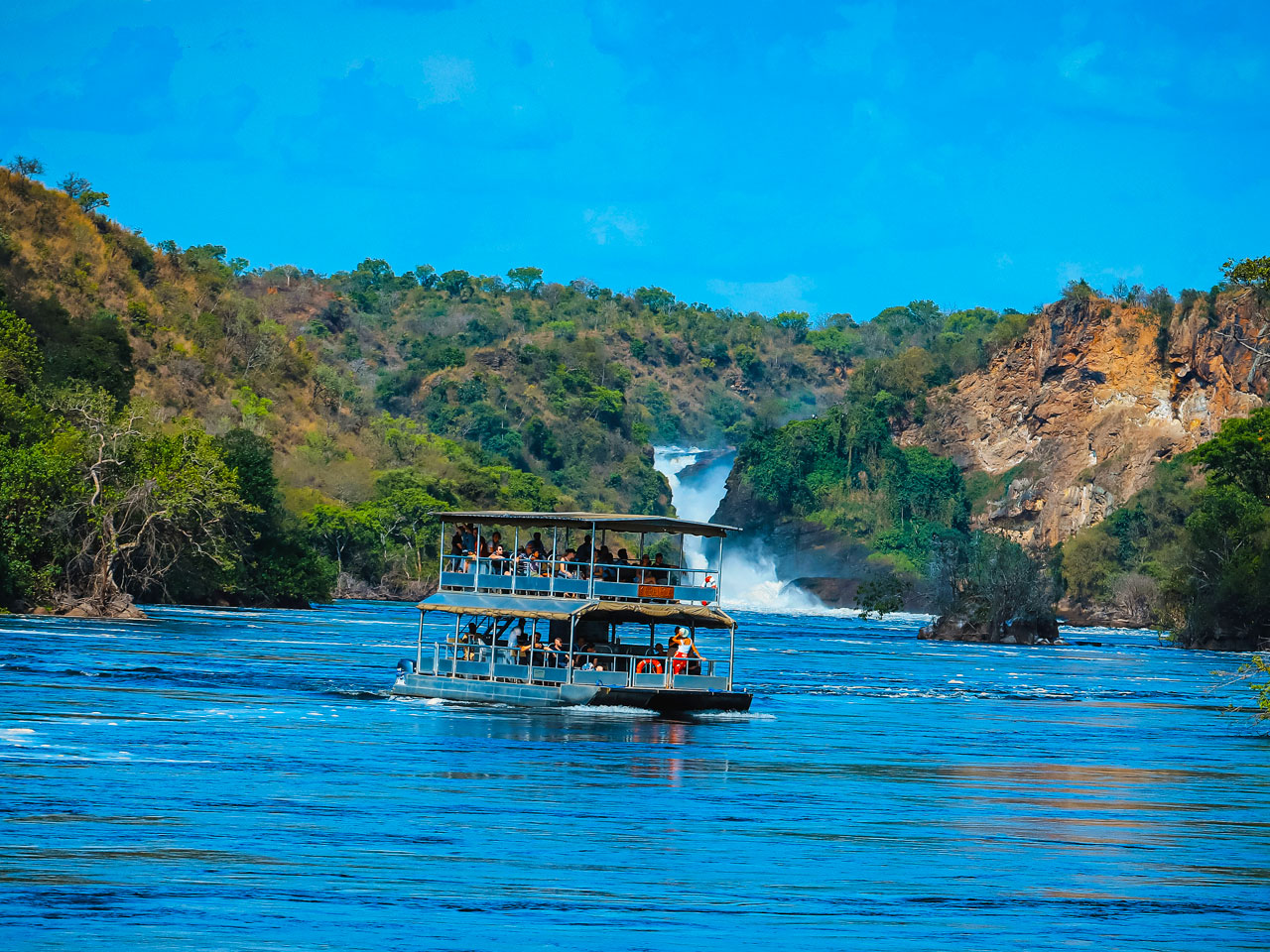
Journey north to Murchison Falls National Park, Uganda’s largest and most dramatic safari destination. The park is bisected by the mighty Nile River, which forces its way through a narrow, seven-meter gorge, creating the spectacular Murchison Falls. Spend your days on game drives across the rolling savannah, where you’ll spot large herds of giraffes, elephants, and hartebeests. On Day 12, take the iconic boat trip to the base of the falls, feeling the spray as the river crashes down around you—a sensory experience that captures the raw power of nature. On Day 13, enjoy a final morning game drive or a walk to the "Top of the Falls" for a panoramic view that will leave you absolutely breathless.
Days 14–19: Rhinos and the Final Goodbye
Your return leg takes you to the Ziwa Rhino Sanctuary, the only place in Uganda where you can track wild rhinos on foot. It’s an intimate, conservation-led experience that perfectly complements your earlier primate treks. Spend your final days back near Entebbe, where you’ll visit the Ngamba Island Chimpanzee Sanctuary. Located on a protected island in Lake Victoria, this sanctuary provides a safe haven for rescued chimps and offers a fascinating look at life-saving conservation work. Spend your last day browsing local craft markets in Kampala or relaxing at the Entebbe Botanical Gardens, reflecting on a 19-day odyssey that took you from the deepest forests to the vastest plains. It is a heartfelt conclusion to your journey through the Pearl of Africa.
19 Days Northern Explorer (Kidepo & Murchison Focus)
Uganda’s "Northern Explorer" is a journey into the soul of true wilderness. Unlike the well-trodden paths of the south, this 19-day odyssey ventures into the rugged, untamed landscapes of the far northeast, where the horizon stretches indefinitely across golden plains. Designed for the intrepid spirit, this circuit prioritizes raw discovery—from the rare, arid-adapted wildlife of Kidepo Valley to the thunderous power of the Murchison Falls. You will traverse diverse ecosystems, gaining insight into the ancient traditions of the Karamajong, tracking elusive chimpanzees in dense forest canopies, and finally, experiencing the ultimate primate encounter with mountain gorillas in the mist-covered Bwindi Forest. By blending high-altitude trekking with vast savanna exploration, this itinerary rewards returning visitors and adventurous souls with an authentic, off-the-grid connection to the "Pearl of Africa," ensuring a profound and deeply personal exploration of Uganda’s most secluded corners.
Days 1–2: Arrival and the Journey North
Upon your arrival at Entebbe International Airport, you will settle into the tranquil rhythms of Uganda. To reach the remote northeastern reaches, we recommend a domestic flight to Apoka or a two-day scenic drive with a stopover in Gulu. This long journey north is a transformation in itself, as the lush, green landscapes of the south gradually give way to the rugged, dramatic terrain of Karamoja. Use your first two days to decompress, handle any necessary briefings, and prepare for the wild beauty ahead. The drive serves as a wonderful introduction to rural Ugandan life, passing through bustling towns and rolling hills before reaching the threshold of the frontier. By the evening of Day 2, you will be stationed at the edge of the wilderness, ready to wake up to the untamed spirit of Kidepo.
Days 3–5: The Wild Heart of Kidepo Valley
Spend three full days in Kidepo Valley National Park, arguably Uganda’s most spectacular and remote wilderness. Here, you are far from the crowds. Kidepo’s landscapes are dominated by jagged mountains and expansive plains, home to specialized wildlife like cheetahs, ostriches, and the elusive greater kudu. Each day brings a new adventure: morning game drives across the Narus Valley to track lions and leopards, and afternoon explorations of the Kidepo Valley itself. A highlight of your stay is a cultural visit to the local Karamajong people. Their traditional manyattas (homesteads) offer a rare glimpse into a lifestyle that has remained largely unchanged for generations. Listening to their stories and learning about their deep connection to the land is a moving experience that adds a profound human dimension to your rugged, wildlife-focused expedition.
Days 6–8: To the Roaring Murchison Falls
Head west to Murchison Falls National Park, a transit that takes you through the beautiful northern Ugandan plains. Murchison Falls is the crown jewel of the Nile, where the river forces its way through a narrow seven-meter gorge, creating a thunderous, misty spectacle. Over these three days, you will experience both sides of the Nile. Enjoy morning game drives in the northern sector to see massive herds of Rothschild’s giraffes, elephants, and Cape buffalo. In the afternoon, take the legendary boat cruise to the base of the falls to spot crocodiles and hippos. This is prime territory for lion sightings, and the lush riverine forests provide excellent birding opportunities. Murchison’s sheer scale and the power of its namesake falls provide a breathtaking transition from the arid north to the vibrant, river-driven ecosystem.
Days 9–12: Chimpanzee Tracking and Crater Lakes
Move south toward Kibale Forest National Park, a journey of approximately 7 to 8 hours that showcases the changing Ugandan geography. Kibale is the primate capital of the world. On Day 10, embark on a chimpanzee tracking trek in the forest canopy; seeing these intelligent creatures in their natural habitat is an adrenaline-filled highlight. Spend your remaining days in the region exploring the stunning crater lakes around Fort Portal. These serene, water-filled volcanic depressions offer a peaceful retreat. You can hike the ridges between lakes, engage in birdwatching, or simply enjoy the lush, green vistas. The transition from the sprawling savannahs of the north to the dense, wet forests of the west highlights the incredible biodiversity that makes Uganda such a unique and rewarding destination for every curious traveler.
Days 13–19: Gorillas, Lakes, and Departure
The final leg of your journey takes you to the southwestern highlands. Spend days 13–15 trekking the iconic mountain gorillas in Bwindi Impenetrable National Park—a life-changing encounter with our closest living relatives. Afterward, journey to Lake Bunyonyi for a few days of well-deserved relaxation; it is the perfect spot for canoeing and reflecting on your safari accomplishments. On Day 18, travel back toward Kampala/Entebbe, with time for a final city tour to explore the vibrant markets and historical sites of the capital. Your journey concludes on Day 19 with a relaxing afternoon in the Entebbe Botanical Gardens before your international departure. From the wild plains of Kidepo to the ancient forests of Bwindi, this 19-day circuit leaves you with a comprehensive, enduring connection to the varied and vibrant soul of Uganda.
19 Days Adrenaline & Culture Journey
This 19-day journey is a masterpiece of contrasts, balancing the high-octane thrills of the Nile with the quiet, transformative power of Uganda’s ancient forests. By pairing the adrenaline capital of Jinja with the raw, untamed beauty of the western parks, this itinerary offers an unparalleled look at the "Pearl of Africa." You’ll experience the rush of Grade 5 white-water rapids, the mist of the thunderous Sipi Falls, and the sheer wonder of coming face-to-face with mountain gorillas in their emerald home. It’s a route designed for the modern explorer—someone who craves both the heart-pounding excitement of adventure sports and the profound, soulful connection found in nature’s most remote corners. This is more than just a tour; it’s a journey that pushes your limits and expands your horizons, leaving you with a deep, lasting appreciation for the vibrant landscapes and cultural richness that define the Ugandan spirit.
Days 1–2: Arrival and the Gateway to Adventure
Your journey begins in Entebbe, where the gentle lap of Lake Victoria greets you. After a warm welcome, you’ll head straight to Jinja, the fabled "Source of the Nile." These first two days are about transitioning from the pace of home to the vibrant energy of East Africa. Enjoy the drive through the lush Mabira Forest, catching glimpses of local life along the way. Upon reaching Jinja, you’ll settle into a lodge overlooking the river, where the sight of the water and the sounds of the bush create an immediate sense of arrival. Use this time to relax, meet your guides, and prepare for the adrenaline-fueled days ahead. Jinja’s atmosphere is infectious, and by the second evening, you’ll be fully immersed in the anticipation of the wild experiences awaiting you.
Days 3–5: The Nile Adrenaline Experience
These three days are the beating heart of your "Adrenaline" journey. Jinja is world-renowned for its intense white-water rafting; you will tackle the famous Grade 5 rapids of the White Nile, an experience that is as exhilarating as it is stunning. When you’re not on the river, the options are endless: take a leap of faith with a bungee jump over the Nile, or feel the wind in your hair as you quad bike through local villages and farmland. These activities aren't just thrills—they provide a unique, ground-level view of the riverbanks and the communities that rely on them. After the rush, take a more contemplative boat trip to the actual source of the Nile, where the water begins its long, legendary journey to the Mediterranean.
Days 6–8: The Cascades of Sipi and Coffee Culture
Travel east toward the foothills of Mount Elgon to explore the majestic Sipi Falls. This region offers a breathtaking change of pace. Over three days, you’ll hike through a series of three spectacular waterfalls, each offering a different perspective on the landscape. The cool mist and the lush, terraced hillsides are a hiker’s dream. Beyond the falls, you will engage in an authentic coffee tour, learning the entire process from bean to cup. This isn't just a demonstration; you'll participate in the picking, drying, and roasting methods used by local farmers. It is a brilliant cultural window into the life of the Sebei people and a chance to savor some of the world's finest Arabica coffee in its natural, breathtaking setting.
Days 9–14: The Wildlife Loop
Now, your journey turns toward the iconic safari circuits. Drive west to Murchison Falls National Park, where you’ll spend your days tracking elephants, giraffes, and lions across the golden savannah. A highlight will be the boat cruise to the base of the "Murchison" itself, where the world’s longest river explodes through a narrow gorge. From here, continue to Kibale Forest, the "primate capital." You will spend a full day tracking chimpanzees, watching them navigate the treetops with incredible agility. The surrounding Bigodi Wetlands offer a quieter, nature-focused experience, perfect for birdwatching and observing smaller primates like the red-tailed monkey. These six days are a deep dive into Uganda’s world-class biodiversity, offering the quintessential safari experience that brings you nose-to-nose with Africa’s most iconic wildlife.
Days 15–19: The Gorilla Finale
The grand finale of your journey takes you to the southwestern highlands and the mist-covered peaks of Bwindi Impenetrable National Park. Tracking mountain gorillas is a profoundly moving experience; you’ll hike through dense, ancient forest until you find a family, spending a precious hour observing their complex social interactions. After this life-changing encounter, enjoy a final stretch of relaxation at Lake Bunyonyi, where you can canoe on the "lake of small birds" and reflect on your adventure. On Day 18, start your scenic drive back toward Kampala, perhaps stopping for a final look at the Equator crossing to celebrate your journey. Your last day in Entebbe allows for a final stroll through the botanical gardens before your departure, leaving you with memories that will surely last a lifetime.
19 Days Ultimate Birding Trail
Uganda is a birder’s paradise, boasting over 1,080 species—more than half of all African bird species. This 19-day itinerary is a masterclass in avian diversity, taking you from the papyrus-lined wetlands of Lake Victoria to the high-altitude montane forests of the Albertine Rift. You will track the prehistoric-looking Shoebill in its swampy stronghold, scan the northern savannahs for rare raptors, and immerse yourself in the dense rainforests where elusive endemics thrive. Whether you are an amateur enthusiast or a professional "twitcher," this route is designed to maximize your sightings in every unique biome. By pairing world-class birding with the breathtaking landscapes and cultural warmth of the "Pearl of Africa," this journey promises a life-changing encounter with nature’s most vibrant winged inhabitants. Prepare to add countless "lifers" to your list while discovering the quiet, awe-inspiring beauty of Uganda’s protected ecosystems.
Days 1–2: The Entebbe Wetlands and Mabamba Quest
Start your expedition by arriving in Entebbe, a hub of avian activity. Dedicate your first full day to the Mabamba Swamp, a RAMSAR-listed wetland and the premier location to spot the elusive Shoebill Stork. Navigating the papyrus channels in a motorized canoe is an exhilarating experience, often yielding sightings of other rarities like the Papyrus Gonolek, Blue-breasted Bee-eater, and the African Jacana. On day two, explore the Entebbe Botanical Gardens, where the lush trees provide a relaxing environment to spot the Great Blue Turaco, African Grey Parrot, and various colorful kingfishers. This initial leg offers a perfect, gentle immersion into Uganda’s wetland birdlife, setting the stage for the diverse habitats you will encounter as you venture further into the heart of the country.
Days 3–7: The Northern Savannahs (Kidepo and Murchison)
Journey north to the dramatic, sprawling landscapes of Kidepo Valley National Park. This remote sanctuary is home to arid-adapted species rarely seen elsewhere, including the Karamoja Apalis and the majestic Ostrich. Scan the golden plains for the Secretary Bird, Kori Bustard, and various raptors that soar above the rugged escarpment. On Day 6, transition to Murchison Falls National Park. Here, the Nile River dictates the ecosystem, attracting Goliath Herons, African Fish Eagles, and the striking Abyssinian Ground Hornbill. Spend your final days in the park exploring the Nile Delta boat circuit, a world-class hotspot for waterbirds like the African Skimmer, Rock Pratincole, and the occasional Shoebill. The diversity of the savannah, combined with the riverine life, creates an unforgettable avian tapestry.
Days 8–11: Deep Rainforests (Kibale and Semuliki)
Move west to the emerald heart of the continent. In Kibale Forest National Park, the primary target is the elusive Green-breasted Pitta, a holy grail for many birders. Trekking through this dense canopy, you’ll also encounter the Red-faced Woodland Warbler and various forest hornbills. On Day 10, head to Semuliki National Park, which serves as an eastern extension of the Congo Ituri rainforest. This unique park hosts Guinea-Congo biome species that are difficult to find anywhere else in East Africa, such as the Nkulengu Rail, White-crested Hornbill, and the Congo Serpent Eagle. The birding here is intense and highly rewarding, offering a deep dive into rare, forest-dwelling species that thrive in the lush, humid atmosphere of the Semuliki Valley.
Days 12–15: Savannah and Wetland Diversity in QENP
Queen Elizabeth National Park (QENP) is arguably Uganda’s most diverse birding destination, with over 600 recorded species. Spend these days exploring the mosaic of habitats: the Kasenyi Plains for savannah raptors, the Maramagambo Forest for woodpeckers and barbets, and the Kazinga Channel for an unparalleled concentration of waterbirds. A boat cruise along the channel is essential, offering close-up views of Pink-backed Pelicans, Great White Pelicans, and African Spoonbills. In the Ishasha sector, keep a sharp lookout for the rare Saddle-billed Stork and various vultures patrolling the skies. The variety of habitats within a single park ensures that every game drive and nature walk feels like a fresh discovery, adding a massive number of species to your total count in a very short time.
Days 16–19: Albertine Endemics and Papyrus Swamps
Conclude your expedition in the mist-covered mountains of the southwest. Spend days 16–17 in Bwindi Impenetrable National Park, a UNESCO World Heritage site and a crucial habitat for Albertine Rift endemics. This is the best place to find the spectacular African Green Broadbill, Shelley’s Crimsonwing, and the handsome Rwenzori Turaco. On day 18, head to the papyrus swamps surrounding Lake Bunyonyi to seek out the Papyrus Yellow Warbler and other wetland specialists. As you prepare for your departure on Day 19, enjoy a final morning of birding on the lush terraced hillsides, reflecting on a journey that has taken you through the most significant avian hotspots in East Africa. You leave not just with a completed checklist, but with a profound understanding of Uganda’s incredible ecological richness.
19 Days Gorilla & Lake Victoria Combo
Uganda’s "Gorilla & Lake Victoria Combo" is a masterclass in balance, blending the raw, pulse-pounding intensity of primate trekking with the restorative, meditative beauty of the country’s great waterways. This 19-day itinerary is designed for the traveler who wants to move beyond the "checklist" safari, offering a slower, more deliberate pace that allows the soul to keep up with the journey. You will travel from the forest-shrouded peaks of Bwindi to the tranquil, island-dotted waters of Lake Bunyonyi and the legendary source of the Nile. By combining high-end wildlife encounters—like habituated gorilla trekking—with gentle cultural immersion and lake-based discovery, this route provides a deep, authentic connection to the "Pearl of Africa." It is the perfect escape for those who want to see the best of Uganda without feeling rushed, ensuring every sunrise, canoe glide, and forest trek is savored to the fullest.
Days 1–2: Arrival and the Chimpanzee Sanctuary
Your journey begins in Entebbe, the lush gateway to Uganda. After settling into your lakeside accommodation, take a short, scenic boat ride to the Ngamba Island Chimpanzee Sanctuary. This island is a primate paradise, home to rescued chimpanzees living in a protected environment. Spend your time observing these fascinating creatures during their feeding sessions from a raised viewing platform, or join an enrichment experience to see them solve puzzles and forage in the forest. It is an inspiring introduction to Uganda’s conservation efforts. On your second day, enjoy a relaxed morning walking the nature trails of the island, spotting monitor lizards and various bird species, before returning to the mainland to prepare for your westward expedition. The gentle pace of these first two days sets the perfect, unhurried tone for your long-form adventure.
Days 3–6: The Bwindi Gorilla Experience
Travel to the emerald depths of Bwindi Impenetrable National Park, a UNESCO World Heritage site. Rather than a quick one-day trek, these four days offer an extended immersion. On Day 4, you will head out for your primary gorilla trekking experience; hiking through the ancient, misty forest to spend a life-changing hour with a mountain gorilla family is a core memory of any African journey. Use Days 5 and 6 to explore the different sectors of the forest, perhaps engaging in a second trek or a guided forest walk to learn about the Batwa pygmies—the forest’s original inhabitants. This extended stay allows for flexibility, ensuring you aren't rushing, and gives you the time to truly absorb the profound silence and sheer biodiversity of one of the world's oldest ecosystems.
Days 7–9: The Serenity of Lake Bunyonyi
A short drive takes you to the "Switzerland of Africa," Lake Bunyonyi. With its deep, blue waters and 29 terraced islands, it is a landscape of extraordinary peace. These three days are dedicated to "slow travel." Spend your mornings canoeing across the glassy surface, visiting local islands to meet the community and learn about their history and traditions. The absence of crocodiles and hippos makes the lake perfectly safe for swimming—a rare treat in East Africa. Spend your afternoons hiking the rolling hills that frame the lake or simply sitting on your balcony with a book, watching the mist roll over the water. This segment is designed specifically for decompression, allowing you to connect with the local culture and the natural rhythm of life in Uganda’s highlands.
Days 10–13: Queen Elizabeth’s Savanna and Craters
Head north to Queen Elizabeth National Park, a land of sprawling plains and dramatic crater lakes. Your pace remains relaxed, focusing on quality over quantity. Enjoy leisurely game drives through the Kasenyi plains, where you’ll spot lions, buffalo, and vast herds of antelope. A standout experience here is a private boat cruise on the Kazinga Channel, which hosts one of the world’s highest concentrations of hippos and aquatic birds. Use your final two days in this region to hike around the spectacular explosion craters, which offer panoramic views and unique geological insights. This park is all about diversity; one moment you are on the open savanna, and the next you are standing on the rim of a dormant volcano, watching the sun set over a shimmering, mirror-like lake.
Days 14–19: The Lake Mburo and Jinja Finale
Your final leg begins with a journey to Lake Mburo National Park, the only place where you can comfortably see zebra and impala alongside the lake. Enjoy a relaxed walking safari or an afternoon boat cruise to spot crocodiles and otters. On Day 16, transition toward the east, making your way to Jinja. Here, you will spend your final days at the Source of the Nile. Enjoy a serene boat trip to the exact point where the Nile begins its 6,000-kilometer journey to the Mediterranean. Spend your last day browsing the local markets or simply lounging by the river, reflecting on the 19 days that took you from the forest canopy to the plains and back to the life-giving waters of the Nile. Your journey concludes with a transfer to Entebbe, leaving you refreshed, centered, and deeply connected to the heart of Uganda.
1. Which national parks are included in a 19-day Uganda safari?
A 19-day itinerary is the ultimate deep dive into the "Pearl of Africa," allowing for a comprehensive circuit that spans the country’s diverse ecological zones. You will typically traverse the savannah parks and dense rainforests that define Uganda's primate and wildlife fame. The route usually includes Murchison Falls National Park, famous for its powerful Nile cataracts; Kibale Forest National Park, the premier destination for chimpanzee tracking; and Queen Elizabeth National Park, which offers a mosaic of crater lakes, wetlands, and expansive grasslands. Moving southwest, the itinerary includes Bwindi Impenetrable National Park and Mgahinga Gorilla National Park, both essential for mountain gorilla trekking. For those seeking the "Northern Explorer" route, Kidepo Valley National Park is a centerpiece, providing a raw, remote, and arid wilderness experience. Additionally, many 19-day plans integrate Lake Mburo National Park, a smaller but vital park known for its zebras and antelope, as well as the Ziwa Rhino Sanctuary, the only place in the country to track wild rhinos on foot. This extensive route ensures you experience the dramatic shift from the semi-arid northeast to the humid, misty mountains of the southwest, covering every major biome that makes Uganda one of the most biodiverse countries in the world.
2. Is Kidepo Valley National Park worth the long drive?
Absolutely. While Kidepo Valley is situated in the remote northeast, far from the central tourist hubs of Kampala and Entebbe, it is widely considered the "jewel" of Uganda’s wilderness. For travelers with 19 days, the long journey is not just "worth it"—it is a transformative part of the adventure. Unlike the western parks that can see higher tourist volumes, Kidepo offers an almost unparalleled sense of solitude and raw, untouched beauty. Its landscapes are dominated by jagged, mountainous horizons and wide-open valleys that resemble the classic, wild Africa of yesteryear. Wildlife enthusiasts are drawn here for species you won't easily find in the west, including cheetahs, ostriches, and the greater kudu. Furthermore, the cultural engagement opportunities with the local Karamajong people—who have preserved their traditional manyatta lifestyle—provide an authentic human connection that is harder to find in more developed areas. By breaking the long drive into segments with overnight stays in Gulu or nearby towns, the journey to Kidepo becomes a fascinating look at the changing geography and rural lifestyle of Uganda, culminating in a park that delivers a truly profound safari experience.
3. Will I see the "Big Five" on this tour?
Yes, a 19-day tour is the perfect window to successfully spot the "Big Five." Uganda’s Big Five circuit is unique because it requires visiting multiple locations, which this itinerary naturally facilitates. You begin at the Ziwa Rhino Sanctuary, the only site in Uganda where southern white rhinos have been successfully reintroduced and protected, allowing for intimate, guided walking trackers. Once you move into the national parks, your safari vehicle becomes your primary tool for spotting the remaining four: lions, leopards, buffaloes, and elephants. Murchison Falls and Queen Elizabeth National Parks are the primary strongholds for these species, where vast herds of buffalo and elephant are commonplace. Lions are regularly sighted across the savannah, with the famous tree-climbing lions of Ishasha (in Queen Elizabeth) being a standout. Leopards are more elusive and solitary, but they are frequently spotted in the riverine woodlands of both Murchison and Queen Elizabeth. While you won't see all five in a single game drive, the 19-day schedule gives you multiple opportunities, morning and evening, across different landscapes, making your chance of completing the Big Five checklist exceptionally high.
4. How close can I get to the mountain gorillas?
Gorilla trekking is a highly regulated, conservation-first experience designed to minimize human impact on these endangered primates. Once your trackers locate a family of gorillas, you are granted exactly one hour to observe them. During this time, you must maintain a mandatory minimum distance of 7 meters (approximately 23 feet). This distance is vital for two reasons: it prevents the transmission of human-borne illnesses to which gorillas are highly susceptible, and it ensures the gorillas do not feel threatened or stressed by human presence. While the gorillas themselves may sometimes move closer to you—as they are habituated to humans and may be curious—you are expected to remain still and back away to maintain that distance. This hour is profoundly intimate; you will watch them grooming, playing, and interacting with their young in their natural mountain forest home. Because of the strict regulation of this experience, the interaction feels deeply personal and respectful, offering a rare glimpse into the complex social lives of our closest living relatives without disrupting their daily rhythms.
5. What is the difference between gorilla trekking and chimpanzee trekking?
While both involve primate tracking, the experiences are fundamentally different in nature. Gorilla trekking is a calm, contemplative, and physically demanding journey. You hike through dense, trackless, and often steep high-altitude rainforests. Once found, gorillas are typically ground-dwelling, and the experience is characterized by a serene, quiet observation as you watch a family navigate the undergrowth. It is a deeply moving, "bucket-list" encounter. In contrast, chimpanzee trekking—centered in the Kibale Forest—is high-energy, loud, and action-packed. Chimpanzees are highly intelligent, social, and energetic; they spend a significant amount of time in the treetops, moving with acrobatic speed. You will likely find yourself rushing to keep up as the troop moves through the forest, calling out to one another, playing, and forging. While gorillas offer a "moment of awe" in the mist, chimpanzees offer an "adventure" of observation. Gorillas are generally easier to photograph because they stay on the ground and move more slowly, whereas chimps provide a more dynamic, chaotic, and playful look at primate social behavior.
6. Do I need permits for chimpanzee and gorilla trekking?
Yes, permits are mandatory and are the most critical logistical element of your trip. As of 2026, the gorilla trekking permit for Foreign Non-Residents is $800 (with a reduced $600 rate in the low season of April, May, and November), and a chimpanzee tracking permit in Kibale is $250 ($200 in low season). Because daily permit numbers are strictly capped by the Uganda Wildlife Authority (UWA) to prevent over-tourism, they often sell out months in advance. You cannot simply show up at the park and expect to hike; you must secure your permits long before your departure date. Furthermore, UWA has moved to an instant-payment system—your permit is only officially confirmed once full payment is processed. The best way to manage this is through a licensed tour operator who knows the UWA booking platform intimately. They can coordinate your permits with your accommodation and transport, ensuring that your tracking dates align perfectly with your 19-day itinerary and saving you the stress of navigating the complex, highly competitive booking process yourself.
7. What should I pack for a 19-day safari?
Packing for a long-form safari in Uganda requires a focus on utility, comfort, and protection from the elements. Because you will be moving between hot savannahs and cool, misty mountains, layering is essential. Bring neutral-colored, lightweight, breathable fabrics like linen or moisture-wicking synthetics—avoid bright colors and dark blues/blacks, which can attract tsetse flies. For the trekking days, a pair of high-quality, waterproof hiking boots with good ankle support is non-negotiable. Additionally, pack long-sleeved shirts and trousers to protect yourself from thorns and stinging nettles in the jungle; many experienced trekkers also bring a pair of durable gardening gloves to protect their hands while pulling themselves up through the dense brush. Essential accessories include a wide-brimmed hat, polarized sunglasses, and high-SPF sunscreen. Bring a good pair of binoculars (8x42 is ideal) and a camera with a robust zoom lens for wildlife. Finally, ensure your gear is packed in a soft-sided, flexible duffel bag, as most internal light-aircraft transfers have strict luggage size and weight constraints.
8. What is the best time of year to visit Uganda?
Uganda is a year-round destination, but the dry seasons are generally considered the "sweet spot" for most travelers. These occur from December to February and June to August. During these periods, the weather is more predictable, and the forest trails in Bwindi and Kibale are drier, making them significantly less slippery and easier to navigate for trekking. For wildlife viewing, the dry season is superior because the vegetation thins out, and animals are forced to congregate around predictable waterholes in the savannah parks, making them much easier to spot. However, traveling in the "shoulder" or even "low" seasons (like April, May, or November) has distinct advantages: permit prices are discounted, the parks are far less crowded, and the landscapes are spectacularly lush and green—which is why it is called the "Pearl of Africa." While rain is more frequent in these months, it usually comes in short, heavy bursts, and the wildlife experience remains incredible. Your choice depends on whether you prioritize the ease of dry trekking and game viewing or the budget savings and quiet of the greener months.
9. Will I do more than just game drives?
Yes, a 19-day itinerary is designed to keep you engaged with a variety of activities that showcase Uganda's immense geographical diversity. Game drives are a staple, but they are just one piece of the puzzle. You will likely spend a significant amount of time on water; boat cruises on the Kazinga Channel or the Nile are essential for viewing hippos, crocodiles, and prolific birdlife at a level you can’t get from a vehicle. For the adventurous, Jinja offers white-water rafting on the Nile, while areas near Sipi Falls provide opportunities for abseiling, rock climbing, and scenic waterfall hikes. Nature walks are another key feature, where you can explore the bush on foot with an armed ranger, learning about tracks, insects, and flora that you’d miss while driving. Additionally, the itinerary will include cultural experiences, such as visiting a Batwa forest community or a local market, which provide a deep, authentic look into Ugandan history and tradition. This variety ensures that your 19 days remain dynamic and refreshing rather than repetitive.
10. What kind of vehicle will we use?
On a 19-day Uganda safari, you will primarily use a 4x4 safari vehicle, which is essential for the country's terrain. Most reputable tour operators provide a customized extended Land Cruiser, which is the gold standard for African safaris. These vehicles are built to handle the sometimes rough, gravel, or muddy tracks found within the national parks. A defining feature is the pop-up roof, which allows you to stand up and have 360-degree views of the landscape and wildlife. This is invaluable for photography, as it provides a stable platform for your camera. These vehicles are also spacious, offering ample legroom and charging ports for your devices, which is critical for long days on the road. Some operators may use a safari minivan, which is also a 4x4, but the extended Land Cruiser is generally preferred for its superior suspension and clearance, ensuring a more comfortable ride over the longer distances you will cover during your 19-day journey.
11. Are the roads in Uganda difficult to travel?
Travel in Uganda is an adventure in itself. While the main arterial highways connecting major cities are paved and in good condition, the roads leading directly into the national parks can be a different story. You should expect gravel, dirt, and potentially uneven surfaces, especially after rain, which can make tracks slippery and bumpy. The mountainous roads in the southwest—where you go for gorilla trekking—are famously winding and steep. However, this is precisely why your 19-day itinerary is structured the way it is. Experienced tour operators account for these road conditions by limiting daily driving times, breaking up long journeys with overnight stops in strategic hubs like Gulu or Fort Portal, and ensuring your vehicle is perfectly suited for the terrain. While you might encounter a bumpy ride, it is a standard part of the "real" African safari experience, and the scenery along the way—featuring rolling hills, tea plantations, and local villages—is so captivating that the time passes quickly.
12. Can I visit local tribes and communities?
Absolutely, and these interactions are often the highlight for many travelers. Cultural engagement is a vital part of the Ugandan safari experience, as it helps you understand the deep link between the communities and the conservation of the land. In the southwest, you can visit the Batwa pygmy tribe. Historically forest-dwellers, they now share their ancient history, medicinal plant knowledge, and survival skills with visitors, providing a moving and educational perspective on their displacement and adaptation. In the northeast, near Kidepo, you have the chance to engage with the Karamajong people, a semi-nomadic group whose manyatta (homestead) culture offers a glimpse into an ancient way of life that has remained resilient for centuries. These are not staged "performances"; they are genuine community-run experiences where your visit directly supports local schools, clinics, or development projects. Engaging with these communities provides a necessary human dimension to your wildlife tour, ensuring you leave with a holistic view of the people, their traditions, and their vital role in protecting Uganda’s natural beauty.
13. What are the accommodations like on safari?
Accommodation in Uganda is incredibly diverse, ranging from rustic, eco-friendly tented camps to world-class, ultra-luxury lodges. The "classic" safari experience often features permanent, high-end tented camps located inside or on the immediate boundary of national parks. These camps offer a true "bush" feel—you can fall asleep to the sound of lions roaring or hippos grazing nearby—but with modern comforts like en-suite bathrooms, hot showers, and gourmet dining. In places like Entebbe or Kampala, you’ll find luxury hotels and lakeside resorts. In the forests, lodges are often built into the canopy, offering spectacular views of the trees where primates live. Whether you choose budget-friendly guesthouses or top-tier lodges, the emphasis is almost always on immersion, with many properties being locally owned and focused on sustainable tourism. Regardless of your budget, you can expect a warm Ugandan welcome, excellent service, and a level of comfort that makes long days of trekking and game viewing feel rejuvenating.
14. Is Uganda safe for tourists?
Yes, Uganda is widely regarded as a safe and stable destination for international tourists. The main "safari circuit"—which includes the parks and cities mentioned in your itinerary—is highly regulated and accustomed to hosting visitors from all over the world. Park authorities and the Uganda Wildlife Authority (UWA) have a consistent and professional security presence in all protected areas to ensure that wildlife encounters and trekking experiences are managed safely. Your tour guide will be a local professional who understands the terrain, local customs, and safety protocols, acting as your primary advocate throughout the journey. Like any travel, it is wise to maintain normal common-sense precautions, especially in busy urban areas or at night, but the overwhelming consensus from travelers is that the Ugandan people are exceptionally hospitable and welcoming. The tourism industry is a major focus for the country, and there is a deep commitment to ensuring that visitors feel secure and well-cared for from the moment they arrive until their departure.
15. How do I start planning a 19-day safari?
Planning a 19-day safari is a complex undertaking due to the requirement for various permits, the need for 4x4 transport, and the logistics of navigating remote areas. The most effective way to start is to partner with a licensed, local Ugandan tour operator. Because these companies are on the ground, they have direct access to UWA permit systems and are best positioned to secure your gorilla and chimp permits before they sell out. You can begin your research by visiting platforms like SafariBookings.com, where you can compare different tour packages, read genuine reviews from other travelers, and directly contact local agencies. When inquiring, provide your specific interests—such as birding, intense trekking, or a relaxed luxury pace—and ask them to build a "bespoke" 19-day itinerary. A reputable operator will not just book your hotels; they will bundle your park fees, professional guide services, and internal logistics into a single, seamless package, ensuring that your long-distance travel is logically paced and that your permit dates are perfectly synchronized with your lodge bookings.
Booking 19 Days Uganda safari with us Roads of Adventure safaris
To book your 19-day Incredible Uganda Safari Tour directly with Roads of Adventure Safaris, you can instantly connect with their reservation team via email at info@roadsofadventuresafaris.com or via WhatsApp at +256 701 041637
