Designing a 12-day Uganda family safari requires a thoughtful layout that balances time on the road with immersive outdoor experiences. Uganda features remarkably diverse landscapes, moving from northern savannah plains and roaring Nile waterfalls down to volcanic crater lakes and misty high-altitude rainforests. To match different age groups and travel preferences, four distinct 12-day circuits allow families to customize their journey across the country. Routes range from classic primate circuits featuring gorilla and chimpanzee tracking to gentle-paced scenic loops focused on calm boat safaris and relaxed lake stays. Active groups can combine River Nile water activities with open savannah game drives, while keen birding enthusiasts can target rare forest species. Every itinerary includes family-focused lodges, private 4x4 vehicle transport, and authentic community visits for an enriching Ugandan holiday.
Popular 12 Day tour packages you can choose for your family safari in Uganda
12-days-all-inclusive-uganda-wildlife-and-primate-safari
12-days-best-uganda-rwanda-primate-safaris-and-akagera-big-five-safaris
12-days-luxury-safari-in-uganda-parks
12-days-best-uganda-safari-big-five-and-uganda-primate-safari
12-days-perfect-rwanda-uganda-gorilla-trekking-safari-holiday-vacation
12-days-uganda-wildlife-primate-experience-and-lake-mutanda-vacation
12-days-uganda-birding-tour-looking-for-rift-valley-endemic-birds-west-circuit
Sample 1: 12 Day Classic Wildlife & Primates Circuit
12-day Uganda family safari means finding the sweet spot between time spent in the vehicle and time spent out in the wild. This circuit loops through Uganda's major national parks, starting with the northern savannahs of Murchison Falls and winding down to the misty forests of Bwindi in the southwest. You will cover varied landscapes—from open plains and river channels to tropical rainforests and crater lakes. We keep road legs manageable by scheduling key mid-way stops and choosing lodges with dedicated family accommodation, swimming pools, and spacious grounds. Along the way, your family will enjoy fresh local meals like matooke (steamed plantains), fresh tilapia from the Nile, and warm rolex chapatis.
Days 1–2: Entebbe to Ziwa Rhino Sanctuary
After landing at Entebbe International Airport, your guide meets you for the 3.5-hour drive north along the Kampala-Gulu highway. You will head straight to Ziwa Rhino Sanctuary in Nakasongola District. Ziwa is the only place in Uganda where wild southern white rhinos roam. Your family stays at Amuka Safari Lodge, which features large family chalets and a secluded swimming pool set in the woodland. In the late afternoon, an armed Uganda Wildlife Authority ranger leads you on foot through the sanctuary. Kids learn how to spot fresh rhino footprints, identify territory markings, and track these 2-ton animals safely from a distance.
Days 3–4: Murchison Falls National Park
From Ziwa, it is a smooth 2.5-hour drive into Murchison Falls National Park. You will check in at Murchison River Lodge, staying in family thatched cottages right on the south bank of the Nile. Early on Day 3, cross the river for a morning game drive across the northern Buligi circuit. You will search for Rothschild’s giraffes, elephants, lions, and Jackson's hartebeests. In the afternoon, take a three-hour boat launch to the base of Murchison Falls, where the Nile squeezes through a narrow 7-meter rock gap. Day 4 includes a drive to the top of the waterfall to feel the spray and see the river drop into the gorge below.
Days 5–6: Kibale Forest National Park & Bigodi Wetland
Day 5 involves a longer 6.5-hour drive south through Hoima and Fort Portal, passing rolling green tea plantations. Your base for the next two nights is Turaco Treetops, a very family-friendly lodge near Kibale Forest with a dedicated play area and forest views. On Day 6, older children (12 and above) go chimpanzee tracking with experienced trackers, observing how wild chimps call to each other and build leafy nests high in the trees. Younger family members take a guided stroll through the Bigodi Wetland Sanctuary with community guides from KAFRED, walking along wooden boardwalks to spot red colobus monkeys, grey-cheeked mangabeys, and colorful blue turacos.
Days 7–8: Queen Elizabeth National Park
It is just a 2-hour drive from Kibale to Queen Elizabeth National Park, crossing the equator along the way. Stay at Mweya Safari Lodge, located on a peninsula overlooking the Kazinga Channel, complete with a swimming pool that kids will appreciate after game drives. Day 7 features a two-hour boat safari along the 32-kilometer Kazinga Channel, home to massive hippo pods, water monitor lizards, and elephants coming down to drink. On Day 8, head out onto the Kasenyi plains for an early game drive to look for Uganda kobs, spotted hyenas, and prides of lions resting after a night of hunting.
Days 9–10: Ishasha Sector to Bwindi Impenetrable Forest
Drive 2 hours south into the Ishasha sector of Queen Elizabeth National Park. Spend the morning scanning the branches of large fig trees, where resident lions often spend the heat of the day sleeping. After lunch at Ishasha Jungle Lodge, continue the 3-hour climb into the cool, misty mountains of Bwindi Impenetrable National Park. Stay at Mahogany Springs Lodge along the Munyaga River in Buhoma. On Day 10, family members aged 15 and older head out for gorilla trekking, spending an unforgettable hour with a wild mountain gorilla family. Non-trekkers can join a guided Batwa village walk to learn about traditional forest survival skills.
Days 11–12: Lake Mburo National Park to Entebbe
Leave Bwindi for a 5-hour drive east to Lake Mburo National Park. Check in at Rwakobo Rock, a scenic lodge perched on a granite outcrop with family cottages and a horizon pool. Because there are no lions here, your family can join a ranger-led walking safari or horseback ride through the park to see zebras, impalas, and topis up close. On Day 12, take a 4.5-hour drive back to Entebbe. Stop at the Equator line in Kayabwe for a fun water-drainage demonstration showing how water swirls in opposite directions across northern and southern hemispheres, then head to the airport for your flight home.
Sample 2: 12 Days Uganda family safari Gentle Explorer (Lower-Altitude & Scenic)
The Gentle Explorer itinerary focuses on shorter driving legs, lower altitudes, and smooth, relaxing activities suitable for younger children or multi-generational family groups. By visiting central and southern spots like Lake Mburo, Lake Bunyonyi, and Queen Elizabeth National Park, you cut out steep forest climbs while keeping wildlife viewing easy and fun. The focus is on calm water trips, gentle nature walks, and friendly village interactions. Accommodations are selected for their quiet settings, child-safe grounds, and warm hospitality. You will also get to sample local treats like roasted sweet yellow bananas, fresh lake fish, and traditional peanut sauce.
Days 1–2: Entebbe & Lake Victoria
Arrive at Entebbe International Airport and transfer 15 minutes to The Boma Entebbe, a cozy heritage guesthouse with family quad rooms, lush gardens, and a pool. Day 2 is all about shaking off jet lag with a private walking tour of the historic Entebbe Botanical Gardens on the shores of Lake Victoria. Your guide will point out black-and-white colobus monkeys leaping through tree branches, along with black-headed herons and hornbills. In the afternoon, take a calm stroll down to the beach to relax and try some local fried Nile perch with fresh tropical fruit juices.
Days 3–4: Lake Mburo National Park
Leave Entebbe for a comfortable 4-hour drive southwest to Lake Mburo National Park. Check into Rwakobo Rock, where family cottages rest right on top of giant boulders. In the afternoon, take a 2-hour boat trip across Lake Mburo to watch hippos resting in the water, dwarf crocodiles on the shore, and bright red-throated bee-eaters nesting in clay banks. On Day 4, take a gentle family bike ride or walking safari led by an armed ranger. Kids will enjoy learning to identify zebra tracks, finding shed feathers, and learning how oxpecker birds ride on the backs of grazing antelopes.
Days 5–6: Lake Bunyonyi
Drive 4.5 hours southwest through scenic green hills to Lake Bunyonyi, situated at 1,962 meters altitude. You will check into Birdnest Resort, which offers lakefront family suites and a natural freshwater pool. Lake Bunyonyi is completely free from bilharzia, hippos, and crocodiles, making it safe for swimming and paddling. On Day 6, hire a traditional wooden dugout canoe (ekiato) to explore some of the 29 islands, including Punishment Island and Sharp's Island. Meet local Bakiga craftswomen who show children how to weave raffia baskets, and end the evening sitting around an open campfire under the stars.
Days 7–8: Queen Elizabeth National Park Savannah
Drive 4 hours north down into the rift valley to Queen Elizabeth National Park. Check into Bush Lodge, where spacious family canvas tents are set along the Kazinga Channel. Wildlife viewing here is kept very comfortable using custom 4x4 vehicles with pop-up roofs. Morning drives across the Kasenyi plains yield views of elephants, buffalos, and lions without long, taxing walks. In the afternoon, board a river boat for an easy two-hour cruise down the Kazinga Channel. The boat offers shaded seating so kids and grandparents can view herds of bathing elephants and hippo pods right from their seats.
Days 9–10: Kyambura Rim & Katwe Salt Lakes
On Day 9, drive 30 minutes to the edge of Kyambura Gorge, known as the "Valley of Apes." Instead of hiking down into the steep gorge, take a gentle walk along the flat rim with binoculars to watch wild chimpanzees and colobus monkeys moving through the tree canopy below. On Day 10, take a scenic drive around the Katwe Explosion Craters, stopping at Katwe Salt Lake. A local guide shows your family how community members mine salt crystals using traditional evaporation pans, explaining the local history and trade in a clear, interactive way.
Days 11–12: Mpigi Royal Drum Makers to Entebbe
The return trip to Entebbe takes about 6.5 hours, spaced out with interesting stops. Stop in Mpigi at the Royal Drum Makers village, where local craftsmen demonstrate how traditional wooden drums (engooma) are carved and wrapped with cowhide. Kids can try drumming and see how different shapes create unique sounds. Stop at the Kayabwe Equator point for lunch, coffee, and souvenir shopping before driving the remaining hour to Entebbe International Airport for your evening flight.
Sample 3: 12 Days Uganda family safari Pearl of Africa Adventure (Jinja & Wildlife)
Planning Designed for energetic families with teenagers or active older kids, this route combines the river adventure hub of Jinja with Uganda's northern and western wildlife reserves. You will start at the Source of the Nile with water activities, horseback riding, and quad biking before heading out on traditional game drives. The driving routes are well connected, moving from Jinja up to Murchison Falls, down through Kibale Forest, and across to Queen Elizabeth. Lodges are chosen for their active environments, scenic views, and quality dining.
Days 1–2: Entebbe to Jinja & Source of the Nile
After arriving in Entebbe, drive 3 hours east across the new Source of the Nile Bridge to Jinja. Check in at The Haven Eco River Lodge, which features family bungalows directly facing the river rapids. On Day 2, take a motorized boat trip to the official Source of the Nile, where Lake Victoria flows into the river. Your guide explains how John Hanning Speke located the source in 1858, while kids spot giant monitor lizards and weaver birds along the banks. Enjoy a lunch of local rolex wraps at a riverside café in the afternoon.
Days 3–4: Nile Outdoor Activities to Murchison Falls
Spend Day 3 enjoying active outdoor options along the Nile. Families can pick between a guided quad-bike safari through rural farm villages, horseback riding along forest tracks, or a family-friendly Class II white-water rafting trip with professional river guides. On Day 4, leave Jinja for a 5.5-hour drive north to Murchison Falls National Park, stopping in Masindi for a hot lunch. Check in at Pakuba Safari Lodge, located inside the park on the eastern bank of the Nile, where warthogs and antelopes often graze around the lodge lawns.
Days 5–6: Murchison Falls National Park
Start early on Day 5 with a game drive across the northern savannah tracks. Your guide helps you track lions, Rothschild’s giraffes, hyenas, and Jackson’s hartebeests. In the afternoon, take a 3-hour boat cruise up to the base of Murchison Falls to see hippos and Nile crocodiles line the banks. Day 6 features a guided hike up the historical trail to the top of the waterfall. You will stand near the edge to see the entire Nile force its way through a narrow rock gap, creating mist clouds and permanent rainbows in the air.
Days 7–8: Kibale Forest Chimpanzees & Bigodi Village
Drive 6.5 hours south along the Albertine escarpment past Hoima town to Kibale Forest National Park. Check into Crater Safari Lodge, set on the edge of the scenic Nyabikere crater lake. On Day 8, head into Kibale Forest for a morning of chimpanzee tracking with UWA rangers, following the loud pant-hoot calls of wild chimps feeding in the trees. In the afternoon, visit Bigodi village to see local banana coffee making, visit the village midwife, and walk across swamp boardwalks to spot blue monkeys and red colobus troops.
Days 9–10: Queen Elizabeth National Park
Drive 2 hours south to Queen Elizabeth National Park, heading to Mweya Safari Lodge. On Day 9, take an afternoon boat safari on the Kazinga Channel to watch elephants bathing, hippos splashing, and skim-lining African skimmer birds along the sandbars. Day 10 focuses on morning game drives through the Kasenyi plains to track lions and Uganda kobs, followed by an evening visit to the salt-mining crater lake of Katwe to learn about local community life.
Days 11–12: Mabamba Swamp Stork Canoe Trip to Entebbe
Drive 6.5 hours back toward Entebbe on Day 11, staying overnight at Karibu Guesthouse. On Day 12, take an early morning canoe trip into Mabamba Bay Wetland on Lake Victoria. Local boatmen guide your wooden canoe through papyrus channels to find the rare, giant Shoebill stork (Balaeniceps rex). Watching this dinosaur-like bird hunt for lungfish is a great finale to your trip. Return to shore for a farewell dinner in Entebbe before heading to the airport for your flight home.
Sample 4: 12 Days Uganda family safari Ultimate Primate & Birding Focus
Overview & Planning This itinerary is built for nature lovers and families who want to focus on primates and bird species across Uganda’s tropical forests and wetlands. Uganda shelters more than half of the world's mountain gorillas, 13 primate species in Kibale, and over 1,000 recorded bird species. This route covers varied forest environments—from low papyrus swamps to high-altitude volcanic bamboo belts. Naturalist guides accompany your family to track chimps, gorillas, and golden monkeys while helping build your family bird list.
Days 1–2: Mabamba Bay Wetland & Entebbe
Arrive in Entebbe and check into Hotel No.5, a tranquil boutique hotel with quiet gardens and a pool. On Day 2, take a morning boat trip across Lake Victoria to Mabamba Bay Wetland. Board a wooden canoe to navigate papyrus channels in search of the rare Shoebill stork, along with African Pygmy-geese, Malachite kingfishers, and Purple herons. Spend the afternoon taking an easy birding walk through Entebbe Botanical Gardens with an expert guide to practice using binoculars and bird books.
Days 3–4: Kibale National Park Primate Haven
Drive 5.5 hours west through Fort Portal to Kibale National Park, checking into Turaco Treetops near the forest edge. Day 4 begins with chimpanzee tracking alongside UWA naturalists, learning how chimps use roots for drumming signals and gather forest fruits. In the afternoon, explore Bigodi Wetland Sanctuary on foot to spot Great Blue Turacos, Black-and-white-casqued hornbills, and rare l’Hoest’s monkeys along the forest edge.
Days 5–6: Queen Elizabeth National Park
Drive 2 hours down to Queen Elizabeth National Park and check into Kasenyi Safari Camp, located right inside the savannah park. Early morning game drives yield sightings of Martial eagles, Temminck’s coursers, lions, and hyenas. In the afternoon, take a Kazinga Channel boat safari to view grey-headed gulls, yellow-billed storks, and African skimmers roosting on sandbanks alongside massive hippo pods. Day 6 takes you through the southern Ishasha sector to look for tree-climbing lions.
Days 7–8: Bwindi Impenetrable Forest Gorilla Tracking
Drive 4.5 hours up into Bwindi Impenetrable Forest, checking into Buhoma Lodge nestled in the forest canopy. On Day 8, family members aged 15 and up go gorilla tracking into the rainforest with experienced UWA rangers, spending a quiet hour watching a family of mountain gorillas feed and interact. Younger children take a guided Batwa cultural trail walk to learn how forest elders historically gathered wild honey and used plants for medicine.
Days 9–10: Mgahinga Volcanoes & Golden Monkeys
Drive 3 hours south to Mgahinga Gorilla National Park, located along the Virunga Volcanoes on the border with Rwanda. Stay at Lake Mulehe Safari Lodge, which offers scenic lake views. On Day 10, take an active trek into the high bamboo zones to track endangered Golden Monkeys (Cercopithecus kandti). Kids will love watching these active, colorful monkeys leap between bamboo stalks and search for shoots against the backdrop of Mount Gahinga and Mount Sabyinyo.
Days 11–12: Kigezi Highlands to Entebbe Airport
Begin the return drive through the terraced green hills of the Kigezi region. Stop at roadside markets to try sweet passion fruits and yellow bananas. Break up the 9-hour travel day with a hot lunch in Mbarara featuring traditional beef stew and matooke, followed by a stop at the Equator crossing in Kayabwe for craft shopping. Finish the trip with a direct transfer to Entebbe International Airport for your evening flight home.
Is a 12-day safari in Uganda suitable for families traveling with young children?
Yes, a 12-day safari works exceptionally well for young families when the route is planned thoughtfully. The main key to success is selecting an itinerary like the Gentle Explorer circuit, which minimizes long driving legs and replaces strenuous mountain hikes with easy boat safaris, flat nature walks, and relaxed lake stays.
Lodges across Uganda cater warmly to families, offering large family chalets, interconnected rooms, swimming pools, and child-friendly menus. Properties like Rwakobo Rock in Lake Mburo or Birdnest Resort on Lake Bunyonyi feature expansive grounds where children can stretch their legs safely between activities.
To keep daily schedules manageable for younger kids, plan shorter travel days (3 to 4 hours maximum) or break up longer journeys with engaging roadside stops, such as watching fruit vendors or taking photos at the Equator. Private 4x4 vehicles allow your family to travel at your own pace, taking spontaneous bathroom breaks or snack stops whenever needed. Substituting intense jungle treks with shaded river cruises on the Kazinga Channel or Lake Mburo ensures young children stay entertained without becoming overly exhausted.
What are the strict age requirements for primate tracking in Uganda?
The Uganda Wildlife Authority (UWA) enforces age limits to protect both young visitors and wild primate populations:
- Mountain Gorilla Trekking: Minimum age is 15 years old.
- Chimpanzee Tracking (Kibale Forest): Minimum age is 12 years old.
- Golden Monkey Trekking (Mgahinga): Minimum age is 12 years old.
These age restrictions are strictly monitored at park headquarters during morning briefings, where rangers verify passport birth dates before issuing permits. The age caps exist because mountain gorilla and chimpanzee trails can involve steep, muddy terrain and long walking hours. Additionally, younger children are more susceptible to common childhood airborne illnesses (like colds or flu), which can easily jump to wild primates.
For families traveling with children under these age thresholds, alternative primate activities are readily available. Kids under 12 can participate in guided nature strolls through the Bigodi Wetland Sanctuary to view red colobus and blue monkeys from flat wooden boardwalks. In Bwindi, younger children can join ranger-led forest rim walks or participate in interactive Batwa community cultural visits while older family members complete their gorilla treks.
How long are the driving transfers between national parks on a 12-day circuit?
Driving times across Uganda vary depending on distance, terrain, and road conditions. On a full 12-day loop, drive times between major stops generally break down as follows:
- Entebbe to Ziwa Rhino Sanctuary: 3.5 hours on paved highways.
- Ziwa to Murchison Falls National Park: 2.5 hours through rural towns and park gates.
- Murchison Falls to Kibale Forest: 6.5 hours along the Albertine escarpment road via Hoima.
- Kibale Forest to Queen Elizabeth National Park: 2 hours crossing the Equator line.
- Queen Elizabeth (Kasenyi) to Bwindi (Buhoma): 5 hours (including a drive through the Ishasha sector).
- Bwindi to Lake Mburo National Park: 5 hours through the terraced Kigezi highlands.
- Lake Mburo to Entebbe: 4.5 hours with a stop at Kayabwe.
While some routes involve longer journeys (such as the leg between Murchison Falls and Kibale Forest), your private safari driver-guide paces the journey with comfortable stops for hot lunches, fuel, fresh fruit tasting, and bathroom breaks.
Can families book internal flights to cut down on long driving transfers?
Yes, domestic scheduled flights offer a convenient alternative to long road journeys across Uganda. Domestic carriers like AeroLink Uganda operate daily scheduled flights using 11- to 20-seater Cessna Caravan aircraft connecting Entebbe with regional park airstrips.
Key domestic flight routes include:
- Entebbe to Pakuba / Bugungu: Serviced for Murchison Falls (approx. 1 hour flight time).
- Entebbe to Kasese / Semliki: Serviced for Kibale Forest and Queen Elizabeth National Park.
- Entebbe to Kihihi / Kisoro: Serviced for Bwindi Impenetrable Forest and Mgahinga National Park.
Taking a fly-in safari reduces a 9-hour road transfer from Bwindi back to Entebbe down to a swift 1-hour and 15-minute flight. This is especially helpful for multi-generational groups traveling with elderly grandparents or very young kids who tire quickly on long drives.
However, keep in mind that domestic flights come with strict baggage weight allowances—typically 15 kg (33 lbs) per passenger in soft-sided duffel bags. Many families choose a hybrid approach: using a private 4x4 safari vehicle for regional park transfers, then taking a one-way domestic flight from Bwindi back to Entebbe on Day 12.
What types of family accommodation are available in Ugandan national parks?
Ugandan safari lodges offer diverse, well-equipped accommodations designed to house families comfortably under one roof. Properties generally fall into three primary styles:
- Family Cottages & Chalets: Standalone wooden or stone structures featuring two separate bedrooms, en-suite bathrooms, and a shared living area. Lodges like Amuka Safari Lodge (Ziwa) and Rwakobo Rock (Lake Mburo) offer spacious family units with private verandas.
- Interconnecting Safari Tents: Permanent luxury canvas tents built on elevated wooden platforms with connecting interior doors. Bush Lodge in Queen Elizabeth and Murchison River Lodge feature tented family options that provide an authentic bush experience while keeping kids close.
- Quad Suites & Villas: Larger hotel-style rooms equipped with multiple queen or twin beds. The Boma Entebbe and Turaco Treetops near Kibale provide multi-bed family rooms surrounded by secure gardens.
Most family-friendly safari lodges feature swimming pools, dedicated children's play spaces, evening campfires, and board games. Kitchen staff routinely accommodate child meal times, serving early suppers and preparing custom dishes for picky eaters.
Is Lake Bunyonyi completely safe for children to swim and paddle in?
Lake Bunyonyi is widely considered one of the safest lakes for water activities in East Africa. Situated high in the Kigezi highlands at 1,962 meters above sea level, the lake is officially free from bilharzia (schistosomiasis), a parasitic flatworm found in many low-altitude African lakes.
Furthermore, Lake Bunyonyi has no hippos, Nile crocodiles, or dangerous aquatic wildlife. The clear, calm waters make it ideal for family recreation, including:
- Canoeing: Renting traditional wooden dugout canoes (ekiato) to row between islands.
- Kayaking & Stand-Up Paddleboarding: Exploring quiet bays along the shoreline.
- Swimming: Enjoying lakefront lodge pools or swimming off designated wooden dock platforms.
Because Lake Bunyonyi is extremely deep (reaching depths up to 900 meters in central areas), open-water swimming should always be done while wearing life jackets, especially for children. Staying at established lakefront properties like Birdnest Resort provides easy access to monitored swimming areas, canoes, and experienced local boat captains.
What safety measures are taken during walking safaris and foot tracking with kids?
Safety on foot safaris is maintained through strict operational protocols set by the Uganda Wildlife Authority (UWA):
- Armed Ranger Escorts: Every walking safari—whether tracking rhinos at Ziwa, walking through Lake Mburo, or exploring Bigodi Wetland—is accompanied by at least one certified, armed UWA ranger who is highly trained in animal behavior.
- Mandatory Safety Briefings: Before stepping onto any trail, rangers conduct a detailed orientation. They teach kids how to walk in a quiet single file, remain calm around wildlife, and respond instantly to ranger instructions.
- Maintained Buffer Zones: Rangers maintain safe physical distances from large mammals. During foot tracking at Ziwa, rangers keep visitors at a safe 30-meter buffer from white rhinos, using wind direction and cover to move safely.
Walks are tailored to match your family's fitness level and comfort. In predator-free environments like Lake Mburo, ranger walks focus on teaching kids how to spot animal tracks, examine dung, and observe zebras and impalas up close without disturbing the herd.
How does Ziwa Rhino Sanctuary cater to young kids during rhino tracking?
Ziwa Rhino Sanctuary offers a safe, hands-on wildlife experience tailored for young kids. Because the sanctuary spans 7,000 hectares of fenced woody savannah, wild southern white rhinos roam freely in a protected environment free from large predators like lions.
Tracking at Ziwa is exceptionally child-friendly for several reasons:
- Manageable Walks: Rangers drive your family close to the area where a rhino crash is resting, minimizing foot walking to a easy 30- to 45-minute stroll over flat ground.
- Educational Focus: Rangers engage kids by teaching them how to identify fresh rhino tracks (spoor), notice territorial scent posts, and recognize crushed vegetation.
- Controlled Environment: Visitors approach rhinos on foot while maintaining a safe 30-meter buffer under the guide's direction.
After the walk, families return to Amuka Safari Lodge, where kids can swim in the pool, observe resident vervet monkeys in the trees, and enjoy meals prepared specifically for children.
What local food options can kids try during a family safari in Uganda?
Ugandan cuisine is wholesome, mild, and accessible for young palates. Meals rely heavily on fresh, locally grown produce, organic fruits, and simple starches:
- Rolex: A popular street food made of a warm fried egg omelet rolled inside a fresh chapati flatbread. Kids love watching it cooked fresh on hot griddles.
- Matooke: Steamed and mashed green savory bananas, often served with a savory groundnut (peanut) sauce or slow-cooked beef stew.
- Fresh Tropical Fruits: Sweet yellow mini-bananas (bogoya), juicy pineapples, passion fruit, papayas, and ripe mangoes served daily at lodge breakfast buffets.
- Fried Nile Perch & Tilapia: Freshly caught lake fish, served breaded or grilled with French fries (chips).
Safari lodges serve a mix of international and continental cuisine, meaning familiar staples—such as grilled chicken, pasta, vegetable soups, and fresh bread—are always available alongside local dishes for fussier eaters.
What is the best time of year for a 12-day Uganda family safari?
The ideal window for a family safari in Uganda coincides with the country’s two distinct dry seasons:
- June to August: Excellent for summer school holidays. Rainfall is minimal, vegetation thins out, and wildlife concentrates around water sources like the Kazinga Channel and Nile River.
- December to February: Ideal for winter breaks. High temperatures make swimming at lakefront lodges enjoyable, and trail conditions in Bwindi and Kibale are drier and less slippery.
During these dry months, dirt roads between parks are firmer and easier to navigate. Forest trails for chimp and gorilla tracking are far less muddy, making walking conditions safer for family members.
Traveling during the shoulder months (March or October) can also work well, offering lower lodge rates and fewer crowds, though families should pack lightweight waterproof jackets for quick afternoon rain showers.
What health and malaria precautions should families take before traveling?
Planning a healthy family trip to Uganda involves a few standard medical preparations completed well in advance:
- Yellow Fever Vaccination: Mandatory for entry into Uganda for all travelers aged 9 months and older. Proof of vaccination must be presented on an official international yellow card upon arrival at Entebbe Airport.
- Malaria Prophylaxis: Uganda is a malaria-risk area. Parents should consult a travel clinic or pediatrician to obtain suitable pediatric oral malaria preventatives (such as Malarone).
- Insect Protection: Lodges provide mosquito netting over beds. Families should pack EPA-approved insect repellent (containing DEET or Picaridin), long-sleeved light shirts, and long trousers for evening hours.
- Hydration & Water: Drink only bottled or purified water, which is provided abundantly in all safari 4x4 vehicles and lodge rooms.
Packing a well-stocked family first-aid kit containing rehydration salts, child-friendly pain relievers, antiseptic cream, motion sickness tabs, and adhesive bandages ensures peace of mind on the road.
What activities exist in Bwindi for kids under 15 who cannot trek gorillas?
While older family members trek mountain gorillas, children under 15 can enjoy several engaging, ranger-led activities around Bwindi Impenetrable Forest:
- Batwa Cultural Experience: Guided by local Batwa elders, kids learn traditional forest survival skills, including how to shoot wooden practice bows, identify medicinal plants, make fire using sticks, and weave traditional grass crafts.
- Munyaga River Trail Walks: Guided nature walks along flat river pathways on the outskirts of the park, where kids can spot blue monkeys, black-and-white colobus monkeys, and colorful butterflies.
- Ride 4 a Woman Community Center: Located in Buhoma, kids can participate in basket-weaving workshops, watch local women create colorful traditional fabrics, and learn basic drumming patterns.
- Lodge Nature Trails: Properties like Mahogany Springs offer secure grounds along riverbanks where children can go on birding walks with lodge naturalists.
Is white-water rafting on the Nile in Jinja safe for teenagers and families?
White-water rafting on the River Nile in Jinja is highly regulated, safe, and easily adaptable to match your family's preferred adventure level. Professional outfits operate with strict safety equipment, high-grade rafts, and qualified river guides.
Families have two distinct choices on the river:
- Family-Friendly Float Trips (Class I–II): Designed for families with younger kids. Rafts navigate gentle river currents, calm pools, and small ripples, avoiding high-grade rapids entirely. Kids can swim safely in warm water under guide supervision.
- Active White-Water Rafting (Class III–V): Suited for teenagers and adults. Professional river captains guide rafts through major rapids, backed by a team of professional safety kayakers who track every raft downstream.
For families who prefer to stay dry, Jinja offers great land-based river activities, including guided horseback rides along forest trails, quad biking through local villages, and motorized sunset cruises to the official Source of the Nile.
Why is the Kazinga Channel boat safari ideal for multi-generational travel?
The two-hour boat safari along the Kazinga Channel in Queen Elizabeth National Park is arguably East Africa's most relaxed wildlife viewing experience, making it perfect for multi-generational groups.
Key reasons families love this excursion include:
- Zero Physical Exertion: Guests board stable, double-decker passenger boats equipped with comfortable shaded seating, wide viewing decks, and onboard safety gear.
- Up-Close Wildlife Viewing: The boat cruises smoothly within meters of the shoreline, allowing toddlers, parents, and grandparents to view hippos, bathing elephants, Nile crocodiles, and waterbirds without needing long walks.
- Calm Waters: The 32-kilometer natural channel connecting Lake George and Lake Edward remains calm and flat, preventing motion sickness.
The easy afternoon departure fits smoothly between morning rest periods, offering prime photography opportunities as animals come down to drink during the warm late-afternoon hours.
How accessible are safari lodges for elderly grandparents traveling with family?
Safari lodges in Uganda cater exceptionally well to multi-generational groups including elderly travelers. To ensure maximum comfort, lodges offer accessible layout options:
- Ground-Floor Chalets: Properties like Mweya Safari Lodge and Amuka Safari Lodge offer ground-level rooms that eliminate the need to climb steep stairs.
- Flat Walkways: Lodges feature level stone or timber pathways connecting guest chalets directly to main dining verandas, lounge spaces, and swimming pools.
- Attentive Staff Support: Lodge staff are available to assist with luggage, support guests along walkways at night, and organize direct vehicle pick-ups right outside room doors.
When booking, specifying mobility needs allows tour operators to secure rooms located closest to main dining areas, ensuring grandparents can travel comfortably alongside their grandchildren.
What should a family pack for a mixed savannah and rainforest safari in Uganda?
Packing for a Ugandan safari requires preparing for both warm savannah sunshine and cool, humid forest climates:
- Clothing Layers: Lightweight, neutral-colored long pants and long-sleeved shirts (tan, khaki, or green) to protect against sun and insects. Avoid blue or black clothing, which can attract tsetse flies in bush areas.
- Footwear: Sturdy broken-in hiking boots for forest tracking, paired with comfortable sneakers or sandals for lodge relaxation.
- Rain Protection: Lightweight, packable waterproof rain jackets or ponchos for forest walks in Kibale and Bwindi.
- Sun & Insect Gear: Wide-brimmed sun hats, UV-blocking sunglasses, high-SPF sunscreen, and insect repellent.
- Gadgets & Optics: Compact binoculars for each family member, camera equipment with extra memory cards, and universal power adapters (UK 3-pin plugs).
Using soft-sided duffel bags instead of hard suitcases makes packing into 4x4 safari vehicles easier and complies with domestic flight weight limits.
What interactive elements make the Bigodi Wetland Walk great for kids?
The Bigodi Wetland Sanctuary, located just outside Kibale Forest, is managed by the local community organization KAFRED and offers a highly interactive nature walk for kids.
Highlights that keep children engaged throughout the 2- to 3-hour stroll include:
- Elevated Wooden Boardwalks: Walking high above papyrus swamps makes the trail feel like an outdoor jungle maze.
- Frequent Primate Encounters: Kids can easily spot 8 different primate species, including cheeky red colobus monkeys, grey-cheeked mangabeys, and black-and-white colobus performing aerial leaps through the trees.
- Colorful Birdlife: Naturalist guides help children spot the iconic Great Blue Turaco, giant hornbills, and colorful kingfishers.
- Hands-On Cultural Demonstrations: After the walk, kids visit local village homesteads to see how coffee beans are picked, roasted, and ground, and observe how local women weave raffia baskets.
How does golden monkey trekking in Mgahinga differ from chimp tracking in Kibale?
While both are memorable primate encounters, golden monkey tracking in Mgahinga and chimpanzee tracking in Kibale offer distinct experiences:
- Environment & Altitude: Golden monkeys live high up in the Virunga Volcanoes (Mgahinga) inside bamboo thickets at elevations above 2,500 meters. Chimpanzees reside in Kibale’s lowland tropical evergreen rainforest.
- Behavior & Movement: Golden monkeys are fast-moving, acrobatic primates that leap continuously through bamboo stalks, making them entertaining to watch. Chimpanzees spend more time on the forest floor, traveling in social fission-fusion groups and communicating via loud pant-hoots.
- Physical Demands: Tracking golden monkeys involves a steady uphill walk into bamboo zones, but finding them is predictable. Chimpanzee tracking in Kibale covers flatter terrain, though tracking distance depends on where chimps nested the night before.
Both activities require children to be at least 12 years old.
19. How do driver-guides manage game drives to keep kids interested?
Professional safari driver-guides use several proven strategies to keep young kids excited and engaged during savannah game drives:
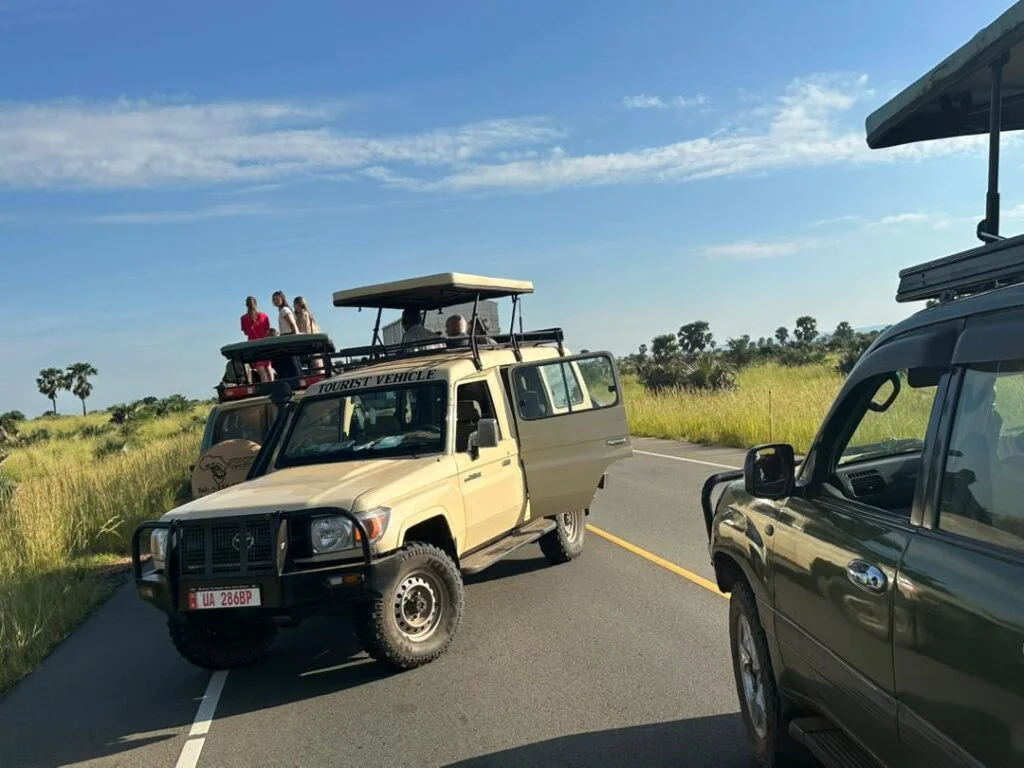
- Pop-Up Vehicle Roofs: Custom 4x4 Land Cruisers feature roofs that pop up completely, allowing kids to stand on seats safely and look out across the savannah.
- Animal Checklists: Guides provide children with illustrated wildlife check-sheets, turning game drives into a fun scavenger hunt for lions, giraffes, elephants, and birds.
- Interactive Learning: Guides share fun facts about animal dung, show kids how to read animal tracks in dust, and explain how acacia trees defend themselves with thorns.
- Flexible Timing: Drivers pace game drives according to family energy levels, stopping for mid-morning juice breaks in designated picnic spots or returning early to the lodge pool when kids need a break.
What cultural experiences are integrated into these 12-day safari routes?
Cultural encounters on a Ugandan family safari are designed to be hands-on, respectful, and educational:
- Batwa Cultural Trail (Bwindi/Mgahinga): Learn forest hunting, honey harvesting, and traditional leaf-crafts directly from indigenous Batwa elders.
- Mpigi Royal Drum Makers: Stop along the equator highway to see craftsmen hollow out logs and stretch cowhide to make traditional engooma drums, giving kids a chance to play different rhythms.
- Katwe Salt Lake Tour: Walk around volcanic salt pans near Queen Elizabeth National Park to learn how local families mine salt crystals using traditional evaporation methods.
- Community Village Walks: Visit coffee farms and school projects near Bigodi and Kibale, where children can interact with local students and see rural African daily life.
How do families handle laundry and day-to-day logistics while moving between lodges?
Managing daily laundry and personal belongings while traveling across Uganda is straightforward:
- Same-Day Lodge Laundry: Almost all safari lodges offer affordable laundry services. Items handed in after morning game drives are washed, line-dried in the sun, and returned to your chalet by evening. (Note: standard lodge policy often excludes female undergarments due to local customs, so packing hand-wash soap is recommended).
- In-Vehicle Charging: Safari 4x4 vehicles come equipped with power sockets and USB ports, allowing families to charge phones, tablets, and camera batteries while driving between parks.
- Daily Hydration: Vehicles carry built-in ice chests stocked with complimentary bottled water, juices, and snacks for long road legs.
Using color-coded packing cubes inside duffel bags helps families stay organized when changing lodges every two nights.
What makes Murchison Falls National Park a top pick for family itineraries?
Murchison Falls National Park stands out as one of Uganda’s most dynamic reserves because it combines land, river, and dramatic landscapes in a single location:
- Abundant Big Game: Northern savannah game drives deliver high-density sightings of Rothschild’s giraffes, elephant herds, lions, Jackson’s hartebeests, and buffalos.
- Nile River Launch Cruises: Shaded boat trips travel up the Victoria Nile to the base of the waterfall, offering safe views of massive hippo pods and basking Nile crocodiles.
- The Waterfall Experience: Seeing the entire Nile River squeeze through a tiny 7-meter rock gap into a roaring gorge provides a memorable lesson in natural geography.
Combined with a stop at nearby Ziwa Rhino Sanctuary, visiting Murchison Falls allows families to check off wild rhinos, lions, giraffes, and waterfalls within the first four days of their safari.
Is it possible to customize these 12-day itineraries to add extra rest days?
Yes, custom itineraries can be adapted to match your family's desired pace. Adding rest days is easy to incorporate:
- Extra Night at Lake Bunyonyi: Extend your stay to enjoy a full day of swimming, canoeing, and reading by the lake without any driving.
- Relaxed Mornings in Kibale: Add an extra night at Turaco Treetops to spend a full morning relaxing by the lodge pool between chimp tracking and Bigodi swamp walks.
- Lake Mburo Extension: Spend an extra day enjoying gentle horseback safaris, boat trips, and bush dinners.
Tailoring the schedule to include 3-night stays at key lodges reduces packing and unpacking, creating a more relaxed vacation rhythm for multi-generational groups.
What type of vehicle is used for a family road safari in Uganda?
Family safaris are conducted in customized 4x4 Toyota Land Cruisers, specifically built to handle Ugandan terrain comfortably:
- Pop-Up Roofs: The entire roof pops up, giving every family member 360-degree clear views for photography and game viewing.
- Guaranteed Window Seats: Vehicles feature individual bucket seats arranged so every passenger has a dedicated window seat.
- Onboard Amenities: Outfitted with an electric fridge/cooler box for cold drinks, 220V power outlets for charging devices, a first-aid kit, and extended suspension for smooth rides over unpaved park roads.
- Dedicated Driver-Guide: An experienced local driver-guide handles all driving, navigation, park entry fees, and wildlife tracking throughout your trip.
How do parents keep children entertained during longer road transfers?
Keeping kids engaged during 4- to 6-hour travel days is simple with a little preparation:
- Roadside Audiobooks & Podcasts: Download family audiobooks or nature podcasts about African wildlife to play over the vehicle sound system.
- Interactive Road Games: Play travel games based on spotting local sights (e.g., counting banana trucks, spotting long-horned Ankole cattle, or identifying colorful roadside fruit stands).
- Frequent Scenic Stops: Guides schedule stops every 2 hours at craft markets, fruit stalls, or Equator monuments to stretch legs, buy fresh snacks, and use restroom facilities.
- Wildlife Field Guides: Keep animal and bird identification guidebooks in the vehicle so kids can look up species they saw during morning drives.
Why is Mabamba Swamp an ideal stop at the beginning or end of a safari?
Mabamba Bay Wetland is located just 45 minutes from Entebbe International Airport, making it a great logistically convenient stop:
- Easy Access: It requires no long road travel, offering a quiet water activity right after arriving on an international flight or just before departing home.
- The Shoebill Stork: Mabamba is one of the best locations in Africa to spot the rare, prehistoric Shoebill stork (Balaeniceps rex) hunting lungfish in papyrus channels.
- Gentle Canoe Excursion: Families board flat-bottomed wooden canoes paddled by local community boatmen, offering a quiet, low-impact introduction to Uganda's birdlife.
It provides a peaceful natural transition at the start or finish of an active 12-day safari.
What internet and cellular connectivity can families expect at safari lodges?
Staying connected across Uganda is generally reliable, though service levels vary by location:
- Lodge Wi-Fi: Most safari lodges offer complimentary Wi-Fi in main central lounges, dining verandas, and reception areas. Signal strength is sufficient for emails, messaging apps (WhatsApp), and photo sharing, though video streaming may be slow in remote areas.
- Cellular Coverage: Uganda has robust 4G mobile coverage provided by major networks like MTN and Airtel.
- Local SIM Cards: Parents can easily purchase a local SIM card with data at Entebbe Airport upon arrival for a few dollars, providing reliable connectivity during road transfers between parks.
Deep inside forest gorges like Bwindi or Kyambura, signal drops naturally, giving families a welcome opportunity to unplug and enjoy the natural surroundings.
Are dietary restrictions (vegetarian, gluten-free, allergies) easily accommodated?
Ugandan safari lodges excel at accommodating specific dietary preferences and food allergies when notified in advance:
- Vegetarian & Vegan: Fresh, locally grown vegetables, legumes, rice, plantains, avocados, and fruit are staples of Ugandan food, making vegetarian dining easy and varied.
- Gluten-Free & Dairy-Free: Lodge chefs routinely prepare custom gluten-free breads, soups, and grilled meat/fish dishes using fresh local ingredients.
- Severe Allergies (Nut/Peanut): Because groundnut (g-nut) sauce is a traditional Ugandan dish, kitchens take strict precautions to prevent cross-contamination when nut allergies are flagged.
Communicating dietary needs to your safari planner prior to travel ensures lodge kitchens stock necessary ingredients before your family arrives.
How does tipping work for safari guides, rangers, and lodge staff?
Tipping in Uganda is a customary way to express appreciation for good service. Standard guidelines for a family safari include:
- Private Safari Driver-Guide: Recommended $15 – $20 USD per day total from the family group, presented at the end of the trip.
- UWA Park Rangers & Trackers: Recommended $10 – $15 USD total per family group per tracking activity (gorillas, chimps, or rhinos), given directly to the main lead ranger after the trek.
- Lodge Staff Tip Boxes: Most safari lodges maintain a central tip box in the main reception. A tip of $10 – $15 USD per day from the family is distributed fairly among back-of-house staff, housekeepers, and kitchen crews.
Tipping in U.S. Dollars (crisp bills printed after 2013) or local Ugandan Shillings (UGX) is widely accepted.
What budget factors influence the overall cost of a 12-day family safari?
Several main components determine the total cost of a 12-day family vacation in Uganda:
- Primate Tracking Permits: Fixed statutory fees set by UWA. Gorilla permits cost $800 USD per person (ages 15+), while Kibale chimpanzee permits cost $250 USD per person (ages 12+).
- Seasonality: Traveling during low/shoulder seasons (April–May or November) yields discounted lodge rates compared to peak dry season months (July–August).
- Accommodation Tier: Choosing mid-range family cottages over high-end luxury lodges significantly reduces total trip expenses while maintaining great comfort, pools, and service.
- Transport Choice: Opting for a private 4x4 safari vehicle for the entire loop is more economical for a family group than booking multiple internal domestic flights.
Booking 12 Days Uganda family safari with us Roads of Adventure safaris
You can book a 12-day Uganda family safari by contacting Roads of Adventure Safaris via email at info@roadsofadventuresafaris.com or by phone and WhatsApp at +256 701041637
