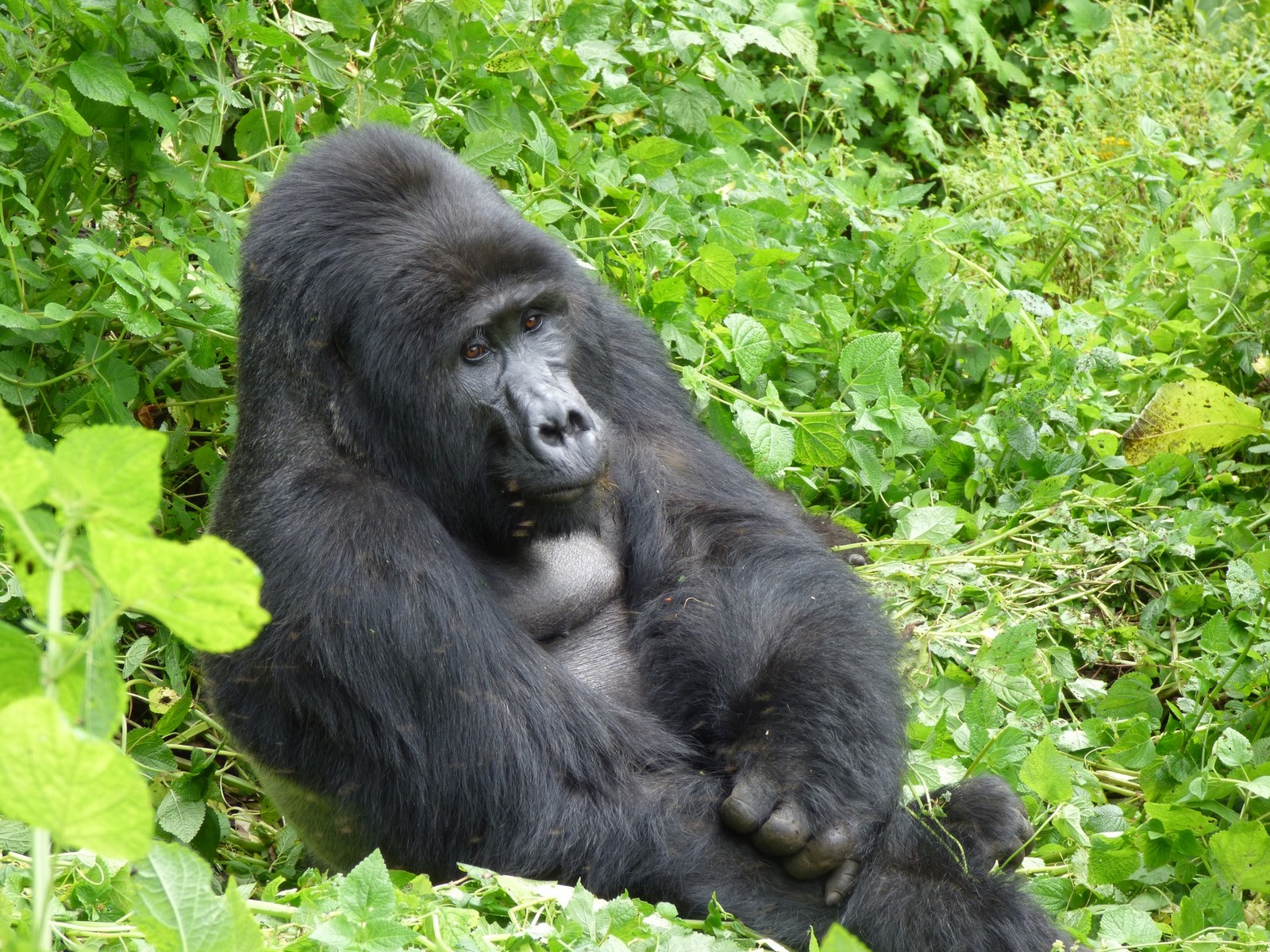
A 3-day gorilla trekking tour in the Buhoma sector of Bwindi Impenetrable National Park offers a thrilling adventure to see the endangered mountain gorillas. The package includes your gorilla permit ($800 for foreign non-residents), two nights of accommodation, park guides, and private 4x4 transport from Entebbe or Kampala.
Tour highlights for 3 Days Gorilla trekking tour in Buhoma sector of Bwindi impenetrable forest park
Uganda Equator crossing
Scenic rolling hills
Buhoma lodge stay
Rainforest gorilla trek
Wild silverback encounter
One magical hour
Batwa cultural tour
Official trekking certificate
Day by day 3 Days Gorilla trekking tour in Buhoma sector of Bwindi impenetrable forest park
Day 1: Journey to Buhoma Sector
Your incredible 3 Days Gorilla trekking tour in Buhoma sector of Bwindi impenetrable forest park begins with an early morning pickup from your hotel in Kampala or Entebbe by one of our dedicated Roads of Adventure field guides. Leaving the bustling capital behind, we embark on a highly scenic drive southwest through beautiful and spectacular landscapes. Our first major stop is the iconic Uganda Equator line, where you can capture memorable photographs standing in two hemispheres simultaneously and enjoy a quick coffee break. Continuing the journey, we navigate through the rolling, terraced hills that earn this region the title of the "Switzerland of Africa," stopping for a delicious, freshly prepared lunch in the vibrant towns of Mbarara or Kabale. As late afternoon approaches, the dense, misty canopy of Bwindi comes into view. You will arrive in the premier Buhoma sector, checking into your chosen luxury or premium forest lodge to relax, enjoy a gourmet dinner, and rest deeply before tomorrow.
Day 2: The Gorilla Trekking Experience
The ultimate highlight of this 3 Days Gorilla trekking tour in Buhoma sector of Bwindi impenetrable forest park starts at eight in the morning sharp. Following a hearty breakfast, you will head to the park headquarters for a comprehensive safety and tracking briefing from expert Uganda Wildlife Authority rangers. Equipped and ready, you will venture deep into the thick, misty rainforest canopy. Depending on the movement of your assigned habituated gorilla family, the hike takes anywhere from two to six hours, navigating steep, verdant ridges. The physical effort completely vanishes during the magical encounter. You are granted one uninterrupted hour to stand just meters away, observing the magnificent silverback and playful juveniles interact in their natural habitat. Upon returning to the headquarters, you will proudly receive your official trekking certificate. In the late afternoon, you can choose to unwind at the lodge, take a guided nature walk, or participate in an enriching cultural tour with the local Batwa pygmy community.
Day 3: Return Journey
The final morning of your wonderful 3 Days Gorilla trekking tour in Buhoma sector of Bwindi impenetrable forest park begins with a leisurely, hearty breakfast served at your forest lodge. You can take a few last moments to breathe in the crisp, misty mountain air and listen to the dawn chorus of unique Albertine Rift bird species before checking out of your room. Once your luggage is securely packed, you will rejoin your dedicated driver for the scenic return journey out of the steep highlands. We retrace our route back through the stunning, rolling landscapes of southwestern Uganda, enjoying the peaceful countryside views. A carefully scheduled stop for a hot, delicious lunch will break up the transit perfectly, ensuring you remain comfortable throughout the drive. By late afternoon or early evening, you will arrive safely back at your hotel in Kampala, or directly at Entebbe International Airport, carrying extraordinary memories as we officially conclude your spectacular primate tracking safari adventure.
Here is a comprehensive breakdown of the 15 most critical questions regarding a 3 Days Gorilla trekking tour in Buhoma sector of Bwindi impenetrable forest park, detailing exactly what you can expect operationally, physically, and logistically.
1. Why is Buhoma considered the premier trailhead for a short 3-day Bwindi gorilla trek?
Buhoma is the birthplace of gorilla tourism in Uganda, serving as the park's first operational headquarters established back in 1993. When booking a brief 3-day safari, efficiency is everything, and Buhoma delivers this better than any other sector. It sits at a lower altitude compared to southern trailheads like Rushaga or Nkuringo, meaning the vegetation is distinct and the terrain—while still rugged—is generally less punishing.
Furthermore, its infrastructure is unmatched. Buhoma features the most seamless concentration of lodges, varying from high-end luxury properties to budget-friendly community camps, almost all positioned within walking distance of the main briefing point. Because it is highly accessible from the northern highway via Kihihi, it significantly reduces the grueling navigation of treacherous mountain dirt roads on Day 1 and Day 3.
The sector hosts several of the oldest habituated gorilla families, including the legendary Mubare family (the very first to be habituated), the Habinyanja family, and the Rushegura family. These groups have decades of peaceful interaction with humans, making their behavior highly predictable and providing outstanding photographic opportunities. Choosing Buhoma for a tight 3-day timeline ensures less time spent wrestling with logistics and more time enjoying the rainforest.
2. How physically demanding is the gorilla trek in Buhoma compared to other sectors?
The terrain in Bwindi is never flat, but Buhoma offers a distinct structural advantage. Sitting at a base altitude of roughly 1,400 meters, it is considerably lower than Nkuringo, which sits well above 2,000 meters. This altitude gap means you will struggle far less with thin air and respiratory fatigue.
However, do not mistake it for a casual walk in the park. The trek involves hiking through dense undergrowth, crossing small forest streams, and climbing slippery clay ridges. The duration of the trek varies dynamically based on the movement of the gorillas:
Trek Intensity
Duration
Typical Group Tracked
Mild / Short
2–3 Hours
Rushegura (often moves closer to the park boundaries)
Moderate
3–5 Hours
Habinyanja (frequently roams the mid-ridges)
Challenging
5–7 Hours
Muyambi or Binyindo (can move deep into primary forest)
The vegetation here is truly "impenetrable," dominated by thick ferns, hanging vines, and stinging nettles. Rangers carry machetes to clear paths where no trails exist. Your knees, ankles, and thighs will get a serious workout as you step over giant roots and slide down muddy slopes. While it is physically demanding, the park rangers pace the hike to match the slowest member of the tracking group, ensuring that anyone with a baseline level of fitness can successfully complete the journey.
3. What is the best way to handle the long transit from Entebbe to Buhoma on a 3-day itinerary?
The overland journey from Entebbe or Kampala to Buhoma is roughly 500 kilometers and takes between 8 to 10 hours of continuous driving. On a 3-day itinerary, Day 1 and Day 3 are almost entirely dedicated to transit. To make this manageable, your safari vehicle must be a 4x4 land cruiser with customized pop-up roofs and heavy-duty suspension.
To break up the long drive, strategic stops are built directly into the schedule:
- The Equator (Kayabwe): Reached roughly 2 hours into the drive. Perfect for leg-stretching, dynamic water experiments, and early morning photos.
- Mbarara Town: The halfway mark, ideal for a sit-down hot lunch to recharge.
- Rukungiri / Kanungu Terraces: Offers magnificent views of rolling tea plantations and hills to keep you engaged during the final stretch.
The Flying Alternative: If you want to bypass the long drive entirely, you can book a domestic scheduled flight from Entebbe International Airport () to Kihihi Airstrip.
The flight takes just 1 hour and 15 minutes, followed by a smooth 45-minute road transfer to Buhoma. While this option increases the overall tour cost, it saves you 16 hours of road travel, converting your transit days into relaxing, scenic afternoons at your lodge.
4. What should a traveler look for when choosing luxury or mid-range lodging in Buhoma?
Because Buhoma has been hosting travelers for over three decades, its lodging landscape is highly mature. When selecting accommodation for your 3-day tour, your primary consideration should be proximity to the park headquarters. Staying outside the sector means waking up at 5:00 AM just to drive to the 8:00 AM briefing, which defeats the purpose of a relaxing safari.
High-end luxury properties like Buhoma Lodge, Sanctuary Gorilla Forest Camp, or Volcanoes Bwindi Lodge are built directly on or mere meters from the park boundary line. They offer self-contained luxury cottages, private verandas overlooking the misty canopy, open fireplaces, and complimentary massage therapies—which are an absolute lifesaver for sore muscles after your trek.
For mid-range preferences, options like Haven Lodge Buhoma or Buhoma Community Rest Camp provide spectacular, clean, and comfortable self-contained chalets run on eco-friendly solar power. Ensure your choice offers hot running water (essential for scrubbing off forest mud), boots-cleaning services, and early morning packing lunches, as you will be away in the forest during standard lunch hours on Day 2.
5. How does the permitting process work for a 3-day Buhoma gorilla safari?
Securing a gorilla trekking permit is the single most important step of planning your tour. The Uganda Wildlife Authority () strictly regulates access to protect the mountain gorillas from stress and human-borne diseases.
- Availability: Only 8 permits are issued per habituated gorilla family per day. Because Buhoma has a limited number of groups, permits sell out up to a year in advance, especially during the peak dry seasons.
- Cost: As of recent regulations, a single permit costs $800 USD for international non-residents. This fee is non-refundable and must be paid in full at the time of booking to secure your specific date.
- Minimum Age: The minimum age for tracking gorillas in Uganda is strictly enforced at 15 years.
Your tour operator handles the complex logistics of purchasing and verifying these permits through the central portal. When you arrive at the park headquarters on Day 2, your physical passport will be cross-referenced with your permit allocation. You cannot choose your specific gorilla family online; allocations are decided dynamically during the morning briefing based on your age, physical fitness level, and the current location of the gorilla groups.
6. What are the essential packing items specifically required for trekking in Buhoma's rainforest?
Dressing improperly for Bwindi can transform a magical encounter into an incredibly uncomfortable ordeal. The forest floor is damp, dark, and filled with insects, requiring specialized gear.
[Pack Light, Pack Smart]
├── Footwear: Broken-in hiking boots with deep tread + long socks
├── Clothing: Lightweight long pants + long-sleeved moisture-wicking shirts
├── Protection: Heavy-duty gardening gloves + wide-brimmed safari hat
└── Gear: Waterproof rain jacket + insect repellent (DEET-based)
Your pants should be tucked completely into your socks to prevent safari ants from crawling up your legs. The gardening gloves are crucial because you will constantly grab onto branches, muddy vines, and thistles to balance yourself on steep slopes.
Avoid wearing bright colors like neon pinks or yellows, which attract stinging insects; instead, opt for neutral earth tones like khaki, green, or brown. Camouflage clothing is illegal for civilians in Uganda, so leave those patterns at home. Lastly, pack a waterproof dry bag for your camera equipment and smartphone—Bwindi is a rainforest, and sudden, heavy downpours can happen at any moment, regardless of the season.
7. Can a 3-day Buhoma itinerary accommodate travelers with limited mobility or physical challenges?
Yes, the Buhoma sector is remarkably adaptive and stands out as the most accessible trailhead for travelers with physical disabilities or advanced age. The local community and park management have developed an ingenious system to ensure nobody misses out on seeing the gorillas.
For individuals who cannot hike, you can hire a specialized "African Helicopter". This is a heavy-duty, specially engineered sedan chair made of lightweight steel or bamboo, equipped with secure seatbelts and handles. A dedicated team of 8 to 12 local porters will physically carry you on their shoulders into the deep forest, navigating the hills smoothly and safely.
[Sedan Chair Deployment]
├── Cost: Approx. $300 - $500 USD (directly supports local porters)
├── Team: 8-12 porters working in rotating shifts
├── Allocation: Sent with the closest gorilla family (e.g., Rushegura)
└── Outcome: Complete inclusion for mobility-challenged trackers
Rangers will intentionally allocate mobility-challenged guests to the gorilla family currently located closest to the park boundary. The porters will carry you right up to the point where the gorillas are nesting, letting you step down or remain comfortably seated to enjoy your one-hour encounter. It is a highly dignified, safe, and profoundly moving service that must be coordinated through your tour operator ahead of time.
8. What specific rules must trackers follow during the one-hour encounter with the mountain gorillas?
Once the trackers and rangers locate the gorilla family, the clock starts ticking on your precious 60 minutes. To guarantee both human safety and primate conservation, the Uganda Wildlife Authority enforces strict behavioural guidelines.
First and foremost, you must maintain a minimum distance of 7 meters (23 feet) from the gorillas at all times. If a curious juvenile steps toward you, you must slowly back away as instructed by your ranger. You are required to wear a medical mask during the face-to-face encounter to prevent the transmission of common human colds or respiratory viruses, to which gorillas have no natural immunity.
Flash photography is strictly prohibited, as bright, sudden flashes can easily startle a 400-pound silverback, causing an aggressive defensive charge. Keep your voice down to a low whisper, avoid making direct, prolonged eye contact with the silverback (which can be interpreted as a challenge), and never eat, drink, or smoke within sight of the primates. Following these rules keeps the encounter peaceful and deeply intimate.
9. How does the Batwa cultural experience enrich a 3-day gorilla tour itinerary?
The Batwa Pygmies are the original hunter-gatherer inhabitants of Bwindi Impenetrable Forest. They lived in perfect harmony with the forest ecosystem for millennia until Bwindi was gazetted as a national park in 1991, leading to their eviction to the forest fringes. Incorporating a Batwa cultural tour on the evening of Day 2 adds profound human context to your wildlife safari.
The experience is fully curated by the Batwa community themselves, ensuring the conservation of their rich oral history. Walking along the community trail on the forest edge, elders will demonstrate:
- How they harvested wild honey and medicinal herbs from forest bark.
- The ancient art of starting fires using friction from dry sticks.
- Traditional tracking techniques and camouflaged hunting traps.
- Devotional polyphonic songs and high-energy dances celebrating the forest.
Visiting the Batwa turns your safari into a holistic journey, allowing you to understand the delicate balance between wildlife conservation and human heritage.
The entry fees go directly into community funds that pay for healthcare and schooling for Batwa children, making it a highly ethical addition to your short safari.
10. Is a 3-day itinerary sufficient, or should travelers extend their stay in Buhoma?
A 3-day itinerary is the absolute minimum time required to complete a gorilla safari due to Uganda's vast geography. It is highly efficient and perfect for travelers with tight business schedules or those combining Uganda with a broader East African itinerary. However, it leaves very little room for relaxation or alternative exploration.
If your schedule permits, extending your tour to 4 or 5 days transforms the experience. An extra day allows you to embark on the Buhoma Village Walk, which visits local banana-wine breweries, traditional healers, and women's craft cooperatives.
Alternatively, bird enthusiasts can spend a full day exploring the Waterfall Trail, looking for endemic Albertine Rift bird species that are impossible to spot while focused purely on gorilla tracking. An extended stay also eliminates the fatigue of back-to-back long drives, giving you a full day to sit on your lodge deck, sip Ugandan coffee, and absorb the ancient atmosphere of the forest.
11. What is the success rate of finding mountain gorillas in Buhoma on a short 3-day tour?
The success rate of finding mountain gorillas in the Buhoma sector is incredibly high, sitting at over 99%. Travelers often worry about the "wild" aspect of the experience, fearing they might hike for hours and return empty-handed. Fortunately, the park's operational deployment completely eliminates this risk.
Every single morning, long before you finish your breakfast at the lodge, an advanced team of expert park trackers sets off into the forest. These trackers head directly to the exact location where the gorilla family spent the previous night. Mountain gorillas build new nests every evening, meaning they rarely move more than a kilometer or two from their last known sleeping spot.
[Tracking Communication Flow]
Advance Trackers (Locate nests & follow fresh footprints)
│
▼ (Real-time radio update)
Main Group Rangers (Lead tourists directly to coordinates)
The advance team follows fresh footprints, broken bamboo shoots, and dung samples until they visually locate the moving group. They then radio the exact GPS coordinates back to your lead tracking ranger. This continuous communication ensures that you are walking toward a confirmed location, completely guaranteeing a successful encounter on your short tour.
12. How do seasonal weather variations affect a 3-day gorilla safari in the Buhoma sector?
Bwindi sits right on the equator and experiences an equatorial tropical climate, meaning rain can fall at literally any hour of any day. However, the region follows two distinct seasonal patterns:
Season
Months
Pros
Cons
Peak Dry
Jun–Aug, Dec–Feb
Drier trails, easier footing, clear skies for photography
High permit competition, higher lodge rates
Emerald Wet
Mar–May, Sep–Nov
Lush green backdrops, gorillas often forage lower down
Muddy trails, heavy downpours, humid hiking
Trekking during the wet season offers unique perks. Because food is abundant on the lower slopes, the gorilla families often wander down near the park boundaries, significantly shortening your hiking time.
Conversely, the dry season makes navigating the clay ridges much easier on the feet, though the gorillas may climb higher up the mountains in search of water and tender bamboo shoots. Regardless of when you travel, the temperature in Buhoma remains remarkably stable year-round, ranging between 15°C to 27°C, offering a comfortable climate for high-exertion hiking.
13. What other wildlife or unique bird species can be spotted during a 3-day stay in Buhoma?
While the mountain gorillas are the indisputable stars of the show, Bwindi Impenetrable National Park is one of the most biologically diverse forests on Earth. The Buhoma sector features a rich overlap of unique species that you will encounter along the forest pathways.
Keep your eyes on the mid-canopy for diverse primates, including the loud L'Hoest’s Monkey with its distinctive white beard, the playful Black-and-white Colobus, and the agile Blue Monkey. If you are incredibly lucky, you might spot fresh tracks of the elusive forest elephants, which are smaller and hairier than their savannah cousins.
[Buhoma Avian & Primate Checklist]
├── Primate: L'Hoest's Monkey, Red-tailed Monkey, Olive Baboons
├── Bird (Canopy): Great Blue Turaco, African Green Broadbill
└── Bird (Undergrowth): Short-tailed Warbler, Regal Sunbird
For birders, Buhoma is paradise. The sector is home to legendary species like the stunning Great Blue Turaco and the Black Bee-eater. Walking along the rushing mountain streams, you are likely to encounter the African Black Duck and the brilliant White-tailed Blue Flycatcher, making every minute of your hike a rewarding multi-species safari.
14. Why is hiring a local porter highly recommended for the Buhoma gorilla trek?
Hiring a porter is often perceived by incoming tourists as an unnecessary luxury, but it is actually one of the most impactful decisions you can make on your tour. A porter is a local community member who accompanies you into the forest to carry your heavy backpack, hold your camera gear, and physically pull or steady you up slippery clay slopes.
The cost of a porter is remarkably modest—typically $20 USD plus a discretionary tip. For you, this small expense completely transforms your hike, freeing you from carrying weight so you can focus entirely on your footing and photography.
[Impact of Hiring a Porter]
├── For You: Safety on slippery slopes, weightless hiking, photography focus
└── For the Community: Direct income, stops poaching, funds local families
More importantly, hiring a porter is a vital pillar of community conservation. Many porters are reformed poachers or young men and women who rely entirely on this seasonal income to pay school fees and buy food for their families. By putting money directly into their hands, you transform the live forest into a valuable economic asset for the local community, turning them into passionate guardians of the mountain gorillas.
15. How does a 3-day Buhoma gorilla tour directly impact local community conservation efforts?
Your participation in a 3-day gorilla tour is not just a vacation; it is a direct financial lifeline for one of the most successful conservation models in the world. Decades ago, mountain gorillas were on the brink of extinction due to poaching, logging, and habitat loss. Today, their numbers are rising steadily, thanks to eco-tourism.
A substantial 20% of all park entry fees and permit revenues collected by the Uganda Wildlife Authority is distributed directly to the local communities living along the park borders. In Buhoma, this revenue sharing has funded the construction of modern health clinics, clean water storage tanks, and primary schools.
Furthermore, the Buhoma Community Rest Camp is owned entirely by the local village, with all profits directly supporting community development projects. When local farmers see that live gorillas bring schools, roads, jobs, and clean water into their families' lives, they actively fight against poaching and illegal logging. Your journey creates a sustainable cycle that keeps Bwindi impenetrable and its gorillas safe for generations to come.
Booking 3 Days Gorilla trekking tour in Buhoma with us Roads of Adventure safaris
Book a 3-day gorilla trekking tour in Buhoma with Roads of Adventure Safaris for a tailored and memorable experience. The typical itinerary includes securing your gorilla permit, arranging transportation, and booking nearby lodge accommodations
