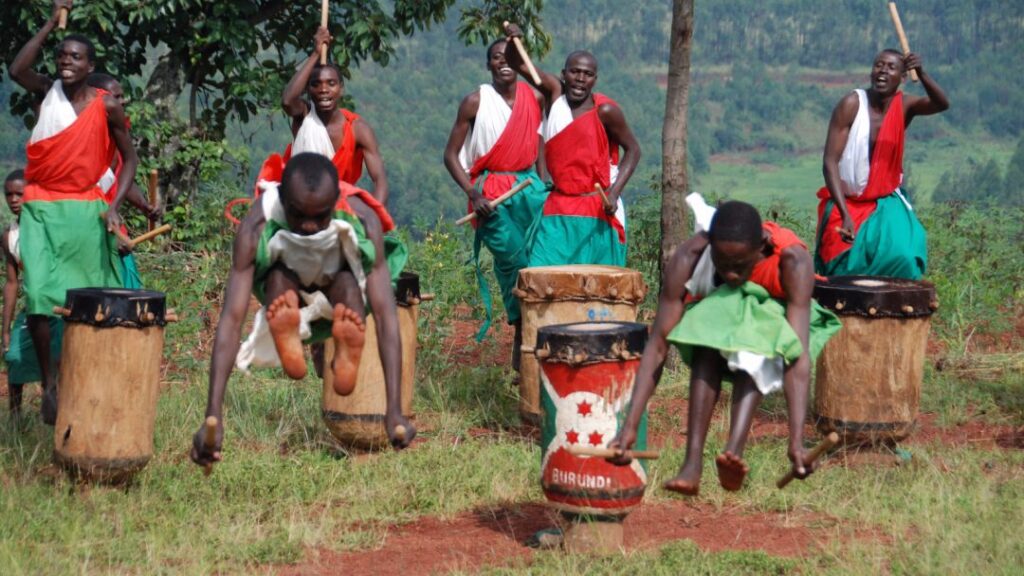
Burundi safari tours offer a unique blend of dense primate forests, dramatic waterfalls, and cultural immersion, all centered around Lake Tanganyika. Highlights include tracking chimpanzees in Kibira, visiting the famous Gishora drummers, watching enormous crocodiles in Rusizi National Park, and exploring the historic Livingstone-Stanley Monument.
20-days-perfect-rwanda-burundi-uganda-safari-vacation-with-cultural-experience
16-days-burundi-safari-and-culture-to-rwanda-uganda-primate-safari-vacation
15-day-best-of-burundi-and-rwanda-safari-holiday-vacation
14-days-best-burundi-rwanda-uganda-safari-combo-with-cultural-discovery
13-days-uganda-rwanda-safari-combined-with-burundi-safari-tour
12-days-perfect-burundi-cultural-safari-and-wildlife-safari-itinerary
11-days-amazing-burundi-safari-with-cultural-exposure
10-days-best-of-burundi-wildlife-safari-vacation-all-best-palaces-in-burundi
9-days-best-rwanda-safari-and-burundi-safari-holiday-vacation-combo
8-days-perfect-rwanda-gorilla-trekking-and-burundi-tour-combo
8-days-best-of-burundi-safari-holiday-combined-with-cultural-experience
7-days-exclusive-burundi-cultural-tour-and-chimpanzee-tracking-in-kibira-park
6-days-burundi-culture-safari-and-wildlife-experience
5-days-rusizi-kibira-national-park-burundi-safari-holiday
5-days-bujumbura-rusizi-national-park-karera-waterfalls-falls-drum-sanctuary-tour-package
Gustave the Crocodile
Gustave is a legendary Nile crocodile reputedly inhabiting the Rusizi River and surrounding marshes between Burundi and the Democratic Republic of Congo. Local lore credits him with an enormous size—often cited at over six meters—and with having killed scores or even hundreds of people over several decades. The crocodile rose to international notoriety in the 1990s, inspiring books, documentaries and occasional attempted capture missions by wildlife authorities and private teams. Scientific confirmation of Gustave’s identity is tricky: large Nile crocodiles do occur in the region, and individual man‑eaters can develop a taste for humans, but precise casualty numbers and Gustave’s singular culpability are hard to verify. The combination of dense riverside vegetation, poor lighting at night, and communities living close to water creates conditions where crocodile attacks can tragically occur. For travelers, the Gustave story underscores the need for caution around rivers and wetlands—avoid swimming after dark, use established landing points, and heed local guidance. Conservationists caution against demonizing apex predators: Nile crocodiles are ecologically important, yet human–wildlife conflict must be managed through community education, safe water access, and habitat protection. Whether Gustave is one infamous individual or an emblem for broader crocodile risk in the Rusizi system, his myth highlights both cultural fascination and serious conservation and safety issues.
Lake Tanganyika
Lake Tanganyika is one of Africa’s great freshwater jewels—stretching approximately 673 kilometers, it ranks as the world’s longest freshwater lake and one of the planet’s oldest, with origins dating back some 9–12 million years. The lake’s great depth (second only to Baikal among freshwater lakes) and ancient lineage have fostered extraordinary biodiversity and clear waters favored by divers and snorkelers. Sandy beaches like Saga Beach offer relaxed shorelines, while rocky headlands and deep drop‑offs create dramatic dive sites with endemic fish communities and submerged geological features. Fishing is central to lakeshore life, with species such as the prized mukeke providing both cultural and gastronomic significance. The lake forms an international border—framing parts of Burundi, Tanzania, Zambia and the DRC—and supports transport, livelihoods and trade for lakeside communities. Ecologically, Tanganyika’s thermal stratification and unique habitats support many endemic cichlids and catfish species, making it a hotspot for evolutionary study. For visitors, activities span diving, fishing, boat tours, kayaking, and beach relaxation; remote and lightly developed shores yield an off‑the‑beaten‑path feel. Conservation challenges include overfishing, habitat degradation, and pollution; preserving Tanganyika’s ecological integrity is vital for regional food security and biodiversity. Well‑managed, low‑impact tourism can help protect the lake while offering visitors unforgettable natural and cultural experiences.
Unique Endemic Fish of Lake Tanganyika
Lake Tanganyika’s long isolation and stable environment have driven spectacular evolutionary diversification among its fish fauna. The lake hosts over 350 described fish species, and remarkably about 95% of those species are endemic—found nowhere else on Earth. This high endemism is especially pronounced among cichlids: a dazzling array of shapes, colors, behaviors and ecological niches evolved as populations adapted to rocky shores, sandy expanses and deep water. Cichlid species exhibit complex breeding systems, including mouthbrooding and specialized substrate spawning, and demonstrate fine‑scale habitat partitioning that allows many species to coexist. Beyond cichlids, endemic catfish, spiny eels and tanganyika‑specific killifish add to the lake’s distinctiveness. For evolutionary biologists and aquarists, Tanganyika is a living laboratory of speciation, sexual selection, and adaptive radiation. For anglers and locals, several endemic species—like mukeke—are economically important. The lake’s fish biodiversity supports tourism (diving, snorkeling and ecological tours) and local diets, but it is vulnerable to overfishing, sedimentation from upstream land use, and invasive species. Protecting the unique fish assemblage requires community‑based fisheries management, habitat protection, and responsible tourism that values conservation. Encountering Tanganyika’s endemics—whether through snorkeling rocky reefs or observing colorful cichlids in shallow bays—offers a vivid glimpse of evolutionary creativity shaped across millions of years.
Kibira National Park
Kibira National Park occupies Burundi’s mountainous northwest and is the country’s most extensive remaining block of montane rainforest. As a rugged, high‑altitude jungle it protects watersheds that feed rivers flowing into Lake Tanganyika and forms part of the wider Albertine Rift biodiversity hotspot. Dense, mossy forests, steep ridgelines and cloud‑shrouded valleys create a cool, humid environment that supports a rich assemblage of flora and fauna. Kibira is particularly important as a refuge for primates—chimpanzees persist in its remote forests alongside olive baboons and various guenon species—though populations are fragmented and shy. The park also shelters rare birds, forest duikers, and numerous endemic plant species. For visitors, Kibira offers hiking, guided forest walks and opportunities to experience traditional communities living in buffer zones—Burundian culture is closely intertwined with forest resources and spiritual landscapes. Access can be challenging: trails are steep, rains can be heavy, and lodgings are simple, making Kibira an adventure for travelers seeking pristine, less touristed forest experiences. Conservation pressures include agricultural encroachment, woodcutting and hunting, exacerbated by poverty and land scarcity. Effective protection hinges on integrating local livelihoods, strengthening patrolling, and supporting alternative income projects. Kibira’s ecological and hydrological value—sustaining downstream fisheries and agriculture—makes its conservation crucial for both biodiversity and human well‑being.
Ruvubu National Park
Ruvubu National Park, Burundi’s largest protected area, sprawls across rolling savanna and gallery forest carved by the Ruvubu River, after which the park is named. Located in the eastern part of the country, Ruvubu conserves important riverine habitats and seasonally flooded plains that support sizeable wildlife populations—hippopotamuses and Nile crocodiles frequent the deeper river channels, while herds of Cape buffalo and various antelope species use the adjacent grasslands. The park’s mosaic of wetlands, woodlands and miombo‑type vegetation also attracts a wide bird list, making it valuable for both biodiversity and ecotourism potential. Historically under‑resourced, Ruvubu has faced pressures from poaching, illegal logging and human settlement, but it remains a cornerstone for national conservation and a critical corridor for wildlife movement in the region. For visitors, Ruvubu offers game‑drive potential, canoeing along calmer river stretches, and opportunities to engage with local communities practicing traditional agriculture. Conservation efforts increasingly focus on bolstering ranger capacity, community engagement and sustainable livelihood alternatives to reduce pressure on park resources. Protecting Ruvubu preserves not only iconic species like hippos and buffalo but also freshwater ecosystems, migratory birds and the natural heritage crucial to Burundi’s ecological resilience.
Chutes de la Karera (Karera Waterfalls)
The Karera Waterfalls, known locally as Chutes de la Karera, form a dramatic cascade system in southern Burundi and are among the country’s most stunning natural attractions. The falls occur where rivers descend through a series of rocky steps and gorges, producing multiple cataracts and plunge pools set within lush riparian vegetation. The landscape around Karera is scenically impressive—steep cliffs, polished rocks and verdant forest create striking viewpoints and photographic opportunities. The site holds cultural and recreational value for locals and visitors: picnicking, short hikes, birdwatching and swimming in safe pools (where permitted) are common activities. Accessibility has improved over time, making Karera a feasible day trip from regional towns, though infrastructure remains basic in places, preserving a sense of wildness. Conservation at Karera centers on protecting riparian forest from charcoal production and unsustainable agriculture, maintaining water quality, and managing visitor use to prevent erosion and litter. Local guides can enrich visits with stories, ecological interpretation and assistance locating the best vistas. For travelers seeking Burundi’s natural beauty beyond savannas and lakeshores, the Karera Waterfalls provide an evocative, photogenic stop that highlights the country’s varied topography and freshwater systems.
Kigwena Natural Forest
Kigwena Natural Forest is a compact but ecologically significant forest reserve near Burundi’s Lake Tanganyika shoreline. Despite its small size, Kigwena is densely vegetated with mixed evergreen and semi‑deciduous trees, offering a refuge for forest‑dependent mammals—such as chimpanzees and various monkeys—plus a variety of exotic and endemic bird species. The forest acts as an important biodiversity island in a landscape increasingly converted to agriculture, helping to maintain local microclimates and protect water catchments that feed nearby communities and the lake. For wildlife watchers, Kigwena presents an accessible option for short forest walks and primate observation without the remoteness of larger national parks, though sightings can be elusive and benefit from experienced local trackers. Conservation measures often center on community engagement: because the forest lies close to settlements, sustainable use agreements, reforestation projects and environmental education are critical to prevent illegal logging and hunting. From a cultural perspective, small forests like Kigwena frequently hold spiritual significance and traditional use rights that must be integrated into conservation strategy. Visitors who come respectfully—using licensed guides and supporting community enterprises—can experience rich birdlife, primate behavior and intimate forest habitats while contributing to local conservation and sustainable tourism development.
Rusizi National Park
Rusizi National Park lies on the outskirts of Bujumbura and protects the lower Rusizi River corridor as it flows toward Lake Tanganyika. The park’s riparian and floodplain habitats are prime for spotting hippos wallowing in river channels, Nile crocodiles along banks, various antelope species on grassy flats, and a wide assortment of waterbirds and raptors. Because of its proximity to the capital, Rusizi serves as an accessible introduction to Burundi’s wildlife for visitors with limited time, offering boat excursions, short game drives and birdwatching walks. The park’s landscape—river meanders, seasonal marshes and gallery forest—supports rich biodiversity, though it also confronts urban pressures: encroachment, pollution and informal settlement can degrade habitats if not carefully managed. Park authorities and community partners thus emphasize education, regulated access, and sustainable visitor infrastructure to balance recreation with conservation. Rusizi’s birdlife is particularly rewarding; migratory species augment resident populations in wet seasons, making it an attractive stop for birders. For travelers staying in or near Bujumbura, a guided half‑day trip to Rusizi offers close encounters with hippos and birds and a scenic riverside contrast to urban surroundings, while also highlighting the need for integrated conservation in densely populated catchments.
Birdwatching in Ruvubu National Park
Ruvubu National Park’s habitat diversity—riverine corridors, floodplain grasslands, miombo‑type woodlands and forest patches—supports a rich avifauna exceeding 200 species, establishing it as one of Burundi’s premier birding sites. Birdwatchers visiting the park can expect a mix of waterbirds (herons, egrets, and kingfishers) along the Ruvubu River and marsh fringes, raptors soaring overhead, and woodland species such as hornbills, turacos and various flycatchers in the drier upland zones. Seasonal movements bring Palearctic migrants and regional shifts in local populations, meaning different times of year yield different highlights—dry seasons often concentrate birds around remaining water, easing detection. The park’s relative remoteness and lower visitation rates compared with more famous African reserves mean birding can be quiet and rewarding, with opportunities to find localized or shy species. Guides with local knowledge significantly increase the chance of sightings, helping locate secretive species and interpret calls. For conservation‑minded birders, visits can support habitat protection through park fees and community initiatives. Infrastructure remains basic—expect rustic trails and limited lodging—so trips are best for prepared, flexible travelers seeking authentic field birding rather than luxury amenities. Ruvubu’s avifauna offers both visual spectacle and a meaningful contribution to Burundi’s natural heritage.
Eco‑friendly Tourism in Bururi National Reserve
Bururi National Reserve, situated in southwestern Burundi, is a biodiversity hotspot known for its montane forest, unique tree communities and secretive chimpanzee populations. With over 90 locally significant tree species and a layered forest structure, Bururi sustains high levels of plant and animal diversity, including numerous birds, primates and small mammals. Eco‑friendly tourism initiatives in Bururi focus on minimizing environmental footprint while maximizing local benefits—community‑run guesthouses, trained local guides, controlled visitor numbers on sensitive trails, and revenue‑sharing arrangements that incentivize forest protection. This approach bolsters conservation by providing tangible alternatives to destructive resource use (e.g., charcoal production and illegal logging). For visitors, Bururi offers peaceful forest walks, canopy birdwatching, and chances to see shy chimpanzees in less crowded settings than better‑known parks. Scientific and conservation projects in the reserve often involve reforestation, anti‑poaching patrols, and education programs that integrate traditional ecological knowledge. Challenges remain: funding limitations, land‑use pressure, and the need for capacity building. Still, eco‑tourism provides a pragmatic pathway for sustainable development—when carefully managed, visitor dollars help protect Bururi’s unique ecology, support community livelihoods, and preserve one of Burundi’s most important natural refuges for future generations.
The Royal Drummers of Gishora
The Royal Drummers of Gishora represent one of Burundi’s most iconic cultural traditions—an energetic, sacred drumming performance that blends rhythm, choreography and deep historical meaning. The Gishora drum sanctuary preserves patterns of drumming that were historically associated with the royal court and important civic ceremonies. Performances are visually striking: drummers execute powerful, synchronized rhythms on large, ornately carved drums while dancers perform acrobatic feats and stylized movements. Drumming is not merely entertainment; it plays a ceremonial role in rites of passage, royal pageantry and community cohesion. For visitors, an authentic Gishora performance provides an immersive window into Burundi’s cultural heritage, evoking centuries of musical craftsmanship and social symbolism. The sanctuary also often incorporates storytelling and explanations about drum‑making, costume significance and the ritual contexts in which drumming was historically performed. Supporting Gishora performances helps sustain living traditions and local artisans who carve drums and sew regalia, but respectful visitation is essential: some drumming is sacred and bound by cultural protocols, so visitors should follow local guidance and avoid inappropriate photography or disruptive behavior. Experiencing the Royal Drummers of Gishora is both educational and emotionally powerful, offering one of the most memorable cultural highlights for travelers to Burundi.
Livingstone‑Stanley Monument (Mugere)
The Livingstone‑Stanley site at Mugere commemorates a notable moment in 19th‑century exploration when the missionary‑explorer Dr. David Livingstone and journalist‑explorer Henry Morton Stanley visited the area—famously prompting Stanley’s reputed greeting, "Dr. Livingstone, I presume?" The Mugere location offers historical context for East African exploration, colonial encounters, and the complex legacy of European exploration in the region. The site often features monuments or interpretive panels describing the explorers’ routes, interactions with local communities, and the broader historical impacts on trade, missionary activity and mapping of the African interior. For visitors, Mugere provides a tangible link to a formative chapter of regional history and an opportunity to reflect on both adventure narratives and their consequences for indigenous societies. Local guides can enrich visits by recounting oral histories, discussing pre‑colonial lifeways, and explaining how the explorers’ journeys intersected with local political dynamics. As with any colonial heritage site, interpretation should be balanced—recognizing exploration feats while acknowledging the disruptions these contacts brought. Visiting Mugere complements natural attractions by adding cultural and historical depth to travel in Burundi.
Language Diversity in Burundi
Burundi’s linguistic landscape reflects its historical and regional connections: Kirundi is the national language widely spoken by virtually the entire population and serves as a strong marker of cultural identity. French—introduced during colonial periods—remains important for government, business and formal education, while Swahili functions as a regional lingua franca across East Africa and is commonly used in trade and urban centers. This multilingual environment enriches interpersonal communication: visitors often find locals who can switch between Kirundi, French and Swahili depending on context, enabling both practical transactions and deeper cultural exchange. Language diversity also influences media, signage and public services—French and Swahili may appear in official settings, while Kirundi dominates daily life and cultural expression. For travelers, learning a few Kirundi phrases is appreciated and signals respect; French or Swahili can ease logistics, especially in cities or when interacting with government offices. Linguistic plurality also shapes education and social mobility, as proficiency in French or Swahili can open additional economic and regional opportunities. Preserving Kirundi as a living language while balancing multilingual competency is part of Burundi’s social fabric and contributes to a rich, accessible cultural experience for visitors.
Traditional Crafts
Burundi’s artisans maintain a strong tradition of handcrafts—particularly basketry, sculpture and pottery—that blend practicality with aesthetics and cultural symbolism. Woven baskets, often made from local reeds and grasses, are celebrated for intricate geometric patterns and vibrant color bands; they serve practical functions in households and ceremonies while also being prized exportable handicrafts. Wood carving and sculpture draw on local motifs—ancestral figures, animals and everyday life—reflecting both utility and storytelling. Pottery, produced in many rural areas, remains an accessible craft used for food storage, cooking and ceremonial purposes; finished pieces can be both functional and decorative. Craftsmanship often passes through generations as family skills, with women playing central roles in basket weaving and pottery, while men may lead carving traditions. For visitors, purchasing crafts directly from artisans supports livelihoods and preserves intangible cultural heritage, but fair trade practices and transparent pricing are important to ensure genuine community benefit. Craft centers and markets in urban areas make sourcing easier, while village visits can provide insight into production techniques and social contexts. Traditional crafts are not just souvenirs; they embody local materials, aesthetics, and communal memory—sustaining them through ethical tourism strengthens cultural continuity and economic resilience.
Banana Beer
Banana beer (often called urwagwa in local vernaculars) is a traditional fermented beverage widely enjoyed across Burundi and neighboring regions. Made from mashed ripe bananas blended with sorghum or millet as a fermenting agent, banana beer has a mildly sweet, slightly tangy flavor and modest alcohol content, and is central to many social rituals, celebrations and everyday hospitality. Brewing is typically a domestic or communal activity, with recipes and techniques varying by household—timing, fermentation duration and proportions produce subtle differences in taste and strength. Serving banana beer often accompanies communal meals, weddings, and rites of passage; it’s an emblem of hospitality and local identity. For travelers, sampling banana beer offers a direct cultural experience: drinking it in village settings provides opportunities for social exchange and learning about traditional production methods. Because the drink is unpasteurized and produced in small batches, hygiene and storage vary, so visitors should drink from trusted hosts or established community enterprises. Some social enterprises now bottle and market traditional beverages, improving quality control and providing income streams for women brewers. Enjoying banana beer responsibly is a delightful way to connect with Burundian culinary heritage and rural conviviality.
The Three Tribes: Twa, Tutsi and Hutu
Burundi’s social history is shaped by three principal groups often referred to as the Twa, Tutsi and Hutu—categories that encompass complex identities, social roles and historical relationships rather than rigid biological distinctions. The Hutu historically formed the majority and were predominantly agriculturalists; the Tutsi were often associated with cattle herding and historically occupied influential political and pastoral roles; the Twa, a smaller group of forest‑dwelling hunter‑gatherers, have unique cultural traditions and deep ancestral ties to forested landscapes. Over centuries, intermarriage, cultural exchange and shifting social structures blurred strict distinctions, but colonial rule and modern politics sometimes institutionalized ethnic divisions with profound consequences for social cohesion. Contemporary Burundi continues reconciling these legacies: national reconciliation, power‑sharing arrangements and community programs attempt to foster unity while recognizing plural cultural heritages. Travelers encountering local communities will find rich cultural traditions—music, dance, craft and agricultural practices—that transcend simplified ethnic stereotypes. Respectful engagement involves understanding historical sensitivities, avoiding reductive labels, and prioritizing local voices and stories. Supporting inclusive development and cultural preservation initiatives helps ensure all communities—the Twa, Tutsi and Hutu—retain dignity, rights and access to livelihoods in Burundi’s path forward.
No‑Jogging Rule (2004)
In 2004 Burundi made headlines for a government policy that effectively restricted morning jogging—part of measures aimed at preventing organized public gatherings that could spark unrest in a country still stabilizing after civil conflict. While phrased in travel guides as a "no‑jogging rule," the regulation reflected broader concerns about sudden assemblies and the potential for political demonstrations during vulnerable times of day. For travelers, the historical note serves as a reminder that political sensitivities can shape public life and mobility; those visiting should stay informed of current local guidance and respect rules intended to protect public safety. The specific enforcement and relevance of such a measure can change over time with shifts in governance and security contexts, so up‑to‑date advice from embassies, local hosts and authorities is essential. More generally, travelers should exercise common‑sense safety practices—avoid isolated early‑morning routes in unfamiliar or tense areas, wear visible clothing, and inform hosts of planned activities. Understanding the background to the 2004 policy underscores how governance and security concerns intersect with daily routines and why cultural and political awareness is part of responsible travel in post‑conflict settings.
Tropical But Cool: Kibira Highlands Climate
Although Burundi lies within the tropics, its varied topography—especially the highland and montane zones like Kibira—produces cooler temperatures and distinct microclimates. Kibira’s cloud‑shrouded forests and elevations create mornings and late afternoons that can be quite chilly, with persistent mist and high relative humidity; daytime temperatures moderate but rains can be frequent. This climate shapes both biodiversity and visitor comfort: cool, moist conditions favor mossy forest, epiphytes and prime habitats for chimpanzees and many bird species, while hikers should prepare with warm layers, waterproof gear and sturdy footwear. For travelers planning trekking or forest walks, early starts are common for wildlife activity but require warm clothing; evenings can demand sweaters or jackets even if lowlands remain warm. Understanding these microclimates helps with packing and itinerary planning and highlights the ecological importance of montane forests as climate refugia. Conservation of these highland zones also matters for water regulation—cloud forests capture moisture and sustain downstream agriculture and fisheries—so their preservation benefits both biodiversity and human livelihoods.
Signature Dish: Mukeke Fish
Mukeke, a prized freshwater fish from Lake Tanganyika, is a culinary staple and regional delicacy in Burundi and along the lake’s shores. Often prepared grilled over charcoal, fried or served in tomato‑based sauces, mukeke is celebrated for its firm texture and rich flavor. The fish is central to local diets and cultural meals, frequently enjoyed with staples such as rice, plantains or cassava. Fishing for mukeke supports livelihoods in lakeshore communities, with artisanal fishers using traditional methods from small boats. For visitors, tasting mukeke offers an authentic culinary connection to the lake’s resources and local gastronomy. Sustainable management is crucial: overfishing and gear changes can threaten stocks and local food security, so supporting responsibly sourced mukeke—caught using community‑managed practices—helps preserve both the fishery and livelihoods. Food markets and lakeside restaurants provide opportunities to sample mukeke in varied preparations, often accompanied by fresh salads and local sides, making it a memorable part of a lakeshore itinerary.
Best Time to Visit: June to September
June through September corresponds to Burundi’s drier months and is generally the best period for wildlife viewing, hiking and travel ease. Reduced rainfall means lower vegetation density, improved road access, and increased wildlife concentrations around remaining water sources—conditions that make spotting hippos, buffalo and birds easier in parks like Ruvubu and Rusizi. Cooler, clearer weather enhances visibility and comfort for trekking in highland areas such as Kibira and Bururi. Birding can also be productive as species concentrate near water, though migratory influxes vary seasonally. Dry season tourism reduces the risk of trail washouts and makes boat and road transfers more reliable. However, travel during these months can coincide with higher demand for limited lodgings, so early booking is recommended. For travelers prioritizing lush landscapes, smaller crowds, or the spectacle of green season breeding behavior, short rains or shoulder seasons may still be attractive—though expect more challenging logistics. In sum, June–September offers the best balance for reliable wildlife viewing and easier travel conditions in Burundi.
What makes Burundi safari tours unique?
Burundi’s safari tours are distinctive because they compress an extraordinary range of natural and cultural attractions into a small, seldom-visited country, creating an intimate and off-the-beaten-path experience. Unlike the broad savannah panoramas that define larger East African safari destinations, Burundi offers dense montane rainforests like Kibira, the dramatic escarpments of the Congo-Nile Divide, and lush, terraced hillsides woven with coffee and tea plantations. The compact geography means travel times between very different ecosystems are short, enabling visitors to combine chimpanzee tracking, birdwatching, highland hiking, and lakefront relaxation within a single itinerary. A defining highlight is Lake Tanganyika, the world’s second-deepest lake, whose freshwater biodiversity and lengthy sandy shores provide uncommon freshwater diving, snorkeling, and beach experiences that aren’t typically paired with African safaris. Burundi also prizes niche wildlife encounters — Kibira National Park offers chimpanzee tracking and sightings of colobus monkeys and other primates, while Rusizi National Park and its riverine systems host pods of hippos, sitatunga antelopes, and a rich birdlife concentrated around wetlands. The historic and cultural layer deepens the uniqueness: traditional drumming ceremonies at the Gishora Drum Sanctuary (celebrating Burundi’s royal drumming heritage) and the country’s several sites tied to the Nile’s southernmost sources give tours a strong cultural narrative. Small-group, locally led tours are common; they provide access to community-based reserves, coffee-farm visits, and market walks that connect tourists to daily life in villages and towns such as Gitega and Bujumbura. Logistics and governance have limited mass tourism, so Burundi remains quiet, uncrowded, and authentic. For travelers seeking genuine discovery, a Burundi safari feels exploratory and personal: fewer tourists, generous hospitality, and a mix of rainforest trekking, freshwater adventures, and vibrant cultural immersion — all within a compact, green, and mountainous landscape.
Can I see chimpanzees on Burundi safari tours?
Yes — chimpanzee encounters are one of the most compelling wildlife experiences on Burundi safari tours, primarily in Kibira National Park. Kibira covers montane rainforest on Burundi’s northwest spine and is an extension of the same forest block as Rwanda’s Nyungwe. This dense, misty forest supports resident chimpanzee communities as well as black-and-white colobus monkeys, blue monkeys, and a rich primate assemblage. Guided chimp trekking in Kibira typically involves experienced local trackers and rangers who know chimp ranging patterns and minimize disturbance. Treks can be physically demanding: the trails are steep, the canopy thick, and weather conditions often cool and wet. Visitors should be prepared with sturdy walking shoes, layered clothing, insect repellent, and sensible trekking fitness. Encounters are regulated to maintain chimp welfare — small groups, quiet observation, and time-limited visits — so while sightings can’t be guaranteed, the knowledgeable guides greatly increase the odds. Besides Kibira, some community forest patches and riparian corridors elsewhere in Burundi offer opportunities to see primates, though chimp habituation levels differ. Sightings of chimpanzees are often paired with broader forest experiences such as birdwatching (the forest is rich in endemics and montane specialists), forest canopy walks where available, and cultural visits to local communities bordering the park. Conservation-minded travelers appreciate that chimp tracking in Burundi contributes to community livelihoods and anti-poaching efforts. Because infrastructure is modest, planning ahead is advisable: arrange permits, book through reputable operators, and allow for flexible itineraries to adapt to weather and animal movements. When conditions align, seeing chimpanzees in Kibira is a profound, immersive highlight of Burundi safari tours — intimate, mist-wrapped encounters in a green, biodiverse highland rainforest that few other safari destinations combine with lake and savannah experiences.
What is the famous Nile source seen on Burundi safari tours?
Burundi is often highlighted for the southernmost headwaters of the Nile River system, a geographic curiosity frequently visited on Burundi safari tours. Near the town of Rutovu in southern Burundi, springs and marshes feed streams that become tributaries contributing to the Nile basin. While the “source of the Nile” has multiple claimants and historical debates (with the Blue Nile, White Nile, and Lake Victoria headwaters all part of the discussion), Burundi’s Rutovu area is notable as one of the southernmost populations of small springs and streams that ultimately feed into the Nile network through a complex chain of rivers and lakes. For visitors, a tour to the Nile’s southern fringe is less about discovering a single dramatic fountainhead and more about appreciating the hydrological beginnings — lush wetlands, clear springs, and pastoral landscapes where water accumulates and begins its long journey north. Rutovu’s surroundings are evocative: rolling hills, terraced agriculture, and small forests where springs bubble from the ground, creating marsh channels that feed downstream. Guides often frame the visit with historical and cultural context, discussing ancient exploration, indigenous perspectives on waterways, and the monumental significance of the Nile to African civilizations. The site is accessible from Gitega or Bujumbura and is commonly folded into a broader cultural or nature circuit that includes coffee farms, waterfalls, and nearby cultural sites. Visiting the Nile’s southernmost sources in Burundi offers a quieter, reflective experience compared with the touristier Nile landmarks elsewhere: you stand at humble springs, consider the river’s immense scale, and imagine water coalescing into a stream that will traverse thousands of kilometers. The moment is poetic — a modest, green setting where local people and wildlife rely on these freshwater origins. For many travelers, seeing this little-known headwater feels like discovering a hidden chapter of the Nile’s epic story, and it complements Burundi safari tours that emphasize exploration over spectacle.
Are there beach experiences on Burundi safari tours?
Yes — Lake Tanganyika’s shoreline in Burundi offers gratifying beach experiences that pair naturally with inland safari activities, creating a coastal-then-wilderness balance uncommon in many African safaris. Although Burundi’s coastline is freshwater rather than oceanic, Lake Tanganyika is immense — one of the world’s deepest and longest lakes — and its sandy bays and clear shallows make for pleasant beach time. Popular spots like Saga Beach and other stretches near Bujumbura provide soft sand, warm shallow water, and informal beach bars or picnic areas where travelers relax after trekking or game drives. The lake’s water is appealing for leisurely swimming, sunbathing, and low-impact watersports such as kayaking and stand-up paddleboarding. Boat trips and snorkeling are also possible: Tanganyika’s clear water harbors a unique assemblage of cichlid fish and other freshwater species that interest snorkelers and divers, though diving infrastructure is basic compared with major dive centers. Many Burundi safari itineraries schedule lake beach time as a restorative finale following active days in Kibira or Rusizi National Park, or they use lakeside accommodation as a comfortable base with scenic sunsets over the water. Lakeside communities offer culinary highlights focused on fresh fish — grilled or stewed — and convivial markets where local life unfolds. Safety and comfort are best ensured by choosing guided or lodge-arranged activities: local operators provide secure boat services and recommend beaches best suited to swimming versus fishing or boating. Because Burundi has not been overrun by mass tourism, the beaches are typically quiet and authentic rather than resort-heavy, offering privacy and a relaxed atmosphere. For travelers who want both wildlife and water, Lake Tanganyika’s beaches add a refreshing, scenic, and culturally rich dimension to Burundi safari tours — freshwater shoreline, unique aquatic biodiversity, and the simple pleasure of a tranquil beach in a green, mountainous backdrop.
What is the "Gustave" story for Burundi safari tours?
Gustave is an infamous and almost mythic Nile crocodile associated with the Rusizi River region near the border of Burundi. Stories about Gustave — a reportedly massive, man-eating crocodile — have circulated for decades, capturing public imagination and becoming part of local lore and tour narratives. For visitors on Burundi safari tours, Gustave’s legend adds an element of dark intrigue: guides recount sightings, alleged victim lists, and attempts by various parties to capture or kill the beast. Estimates of Gustave’s size vary wildly, with some accounts claiming lengths of several meters and a weight suggesting exceptional longevity. Whether Gustave is an individual crocodile, an amalgam of several large crocodiles, or a myth amplified by rumor, the story functions as a cultural and natural-history vignette that helps frame the Rusizi River’s raw power and the close human-wildlife interface in the region. Rusizi National Park, which includes river channels, papyrus swamps, and lakeshore habitats, is nonetheless a legitimate wildlife area where one can see hippos, waterbirds, sitatunga antelopes, and crocodiles. Boat safaris along the Rusizi and adjacent waterways are conducted with experienced guides who stress safety, distance, and respect for wildlife. Tour operators often recount Gustave anecdotes as part of interpretive narration, but responsible guides make clear the difference between storytelling and verified science. The Gustave narrative can also catalyze conversations about crocodile behavior, riverine ecosystem dynamics, and the history of human settlements along powerful waterways. For some travelers, the allure is purely narrative — a brush with an almost cinematic predator tale — whereas others appreciate understanding the ecological realities behind the myth. Either way, Gustave contributes to the dramatic and cautionary dimension of Rusizi-centered Burundi safari tours: the river is both life-giving and potentially dangerous, and local people have long negotiated that balance.
Are Burundi safari tours good for birdwatchers?
Absolutely. Burundi is a rewarding destination for birdwatchers, despite its small size, because the country’s varied habitats — montane forests, wetlands, lake shores, and savannah mosaics — concentrate a high diversity of bird species. Over 600 bird species have been recorded, encompassing forest specialists, waterbirds, and highland endemics. Kibira National Park and other montane forests are excellent for forest-dependent species, including sunbirds, turacos, and specialized montane passerines, while the Lake Tanganyika shoreline and wetlands like Lake Rwihinda Natural Reserve (also known as the Vyanda or Rwihinda marshes) attract waterfowl, raptors, waders, and migrant species. Rusizi National Park is particularly important for wetland and riverine species; boat safaris and shoreline walks reveal herons, egrets, kingfishers, and forest edge species. Birders seeking specialties will be attentive to highland endemics and regional rarities: montane habitats can yield species absent from lower elevations, and forest patches often support shy and localized birds hard to find elsewhere. Because Burundi has not been heavily developed for mass ecotourism, many birding experiences are intimate and guide-led, with local experts or visiting ornithologists often accompanying tours. The compactness of the country lets birdwatchers shift quickly between habitats — one day in misty montane forest, the next along expansive lakeshore — maximizing species-turnover. Practical tips for birders: bring good binoculars, a field guide covering the Albertine Rift and East Africa, waterproof clothing for unpredictable mountain weather, and sneakers or light hiking boots for forest trails and wetlands. Early morning walks and boat trips are prime for activity. Community-run reserves and small wetlands also benefit from conservation projects, and birders contribute to local economies and citizen-science efforts. For anyone who loves birds, Burundi offers concentrated diversity, rare species opportunities, and quiet, engaging birding without the crowds typical in larger African avian hotspots.
What cultural performances are part of Burundi safari tours?
Cultural performances are a compelling and essential part of many Burundi safari tours, with traditional drumming and dance taking center stage. The Royal Drummers, associated with the Gishora Drum Sanctuary and various cultural troupes, perform complex, rhythmic drumming that is both artistic and deeply symbolic in Burundian culture. Drumming has historical ties to royal courts and communal ceremonies; the performances blend percussive precision, choreographed movement, and costume in a powerful, visceral display. Tourists often attend a Gishora performance or similar local drum troupe demonstration that includes not only drumming but also dance, call-and-response singing, and storytelling that conveys historical narratives, rites of passage, and social values. Beyond drumming, cultural encounters on Burundi safari tours can include visits to local villages where markets, crafts (such as basketry and weaving), and traditional dress are showcased. Travelers might participate in coffee-processing demonstrations on smallholder farms — observing bean picking, drying, and roasting — which combine cultural insight with economic context. Some tours include homestays or community visits where guests meet artisans, sample local cuisine, and witness customary ceremonies or seasonal festivals. Museum visits in Gitega and Bujumbura provide curated context about Burundi’s monarchy, colonial history, and diverse ethnic traditions. Responsible tour operators emphasize respectful engagement: photography etiquette, small-group visits, and compensation for performers and craftspeople. For many visitors, the highlight is the immediacy of the drumming: the communal energy, the synchronization of movement and sound, and the realization that these performances are living traditions, not staged tourist spectacles. In short, Burundi safari tours often pair natural exploration with rich cultural immersion, where drum performances like those at Gishora anchor a distinctive and memorable element of the visitor experience.
Where can I see hippos on Burundi safari tours?
Hippos are among the most visible large mammals on Burundi safari tours, and Rusizi National Park is the prime location for reliable sightings. The park’s river systems, lagoons, and wetlands provide ideal hippo habitat, and boat safaris along the Rusizi River and adjacent waterways allow visitors to observe pods of hippos in their aquatic lairs. Early morning and late afternoon are prime times when hippos may be active in the shallows or moving to grazing sites. Boat-guided excursions enable close but safe viewing: experienced guides maintain distance and follow wildlife-safety protocols, while explaining hippo behavior and the ecology of riverine systems. Beyond Rusizi, parts of Lake Tanganyika’s shoreline and other rivers and wetlands across the country may host hippos, though Rusizi concentrates sightings due to its protected status and accessible waterways. Alongside hippos, visitors may see other riverine specialists such as sitatunga antelopes — a swamp-dwelling, shy species notable for its splayed hooves and preference for dense papyrus and marsh vegetation. Hippos can be dangerous if disturbed, so guided boat trips are strongly recommended; never approach hippos on foot or attempt to swim near them. For photographers, dusk and dawn offer dramatic light and opportunities to capture hippos surfacing or interacting in groups. Rusizi National Park is also rich in birdlife and crocodiles, so combined boat trips deliver a varied wildlife tableau. Practical tips: book park-sanctioned boat safari operators, bring binoculars and a telephoto lens for close-ups, wear neutral clothing to blend in, and heed ranger guidance about noise and flash photography. Observing hippos in Burundi is a vivid reminder of the power and vulnerability of freshwater ecosystems: guests leave with memorable scenes of massive mammals loafing in sunlit channels and the knowledge that protecting wetland habitats sustains both wildlife and human livelihoods.
When is the best time for Burundi safari tours?
The best time to visit Burundi for safari tours is generally during the dry season, which runs from May to September. Dry months bring more stable weather, better road conditions, and improved accessibility to parks and forest trails that can be muddy or slippery during the rains. Wildlife viewing tends to be easier in the dry season because animals concentrate around permanent water sources, and forest trails are safer and more comfortable for trekking, including chimpanzee tracking in Kibira. Birdwatching also benefits from dryer conditions and clearer skies, though migratory species may be present in specific months. The cool, crisp highland mornings during the dry season create pleasant trekking conditions for montane hikes. The main rainy season, roughly October to April (with heavy rains typically peaking in November and March–April), can make travel more challenging: unpaved roads become treacherous, river crossings might be limited, and some lodges or community sites can be harder to reach. However, travel during the shoulder or wet seasons has advantages for certain interests: rain brings lush vegetation, attractive waterfalls (full and dramatic), breeding bird activity, and fewer tourists. If your focus is lake activities (Lake Tanganyika beaches, snorkeling, or diving), the transition months may still be appealing, and the lake climate is relatively moderated by altitude. Planning-wise, the dry season also coincides with easier logistics for permits and park access, and local guides are more likely to maintain regular schedules. For chimp tracking specifically, check with local operators about habituation and tracking windows. Also consider national public holidays and cultural festivals (which can enrich or complicate bookings and accommodation). In summary, for the broadest combination of comfortable trekking, reliable wildlife viewing, and better road travel, aim for May through September, but tailor timing if you want lush scenery or seasonal bird migrations.
Is it safe to do boat rides on Burundi safari tours?
Yes — guided boat rides on Lake Tanganyika and the Rusizi River are generally safe and commonly included in Burundi safari tours, provided you use reputable operators and follow standard safety precautions. Professional local guides and operators understand seasonal water conditions, wildlife behavior, and navigational hazards; they provide appropriate vessels, life jackets, and briefings on safety rules before trips. Boat safaris are often the best way to view hippos, waterbirds, crocodiles, and riverine vegetation while maintaining a safe distance from large aquatic animals. Operators typically choose times when animals are most visible and conditions are calm — early morning and late afternoon — and they keep an appropriate buffer from wildlife that can be dangerous if disturbed, particularly hippos and crocodiles. Weather is an important factor: wind and storms on Lake Tanganyika can make open-water excursions uncomfortable or risky, so responsible operators monitor forecasts and postpone or reroute trips as needed. Port facilities and boat quality vary by location; higher-end lodges often offer more comfortable, well-maintained boats, while community operators provide simpler but locally rooted experiences. When booking, ask about life jacket availability, boat capacity, safety equipment, and the guide’s experience and licensing. For snorkeling or diving on Tanganyika, ensure operators follow dive-safety standards and provide appropriate equipment and briefings. Children and non-swimmers should be provided with life jackets and given clear guidance. Finally, while boat rides are safe in a managed context, visitors should avoid unregulated or informal boat services, and always follow the guide’s instructions regarding distances, noise, and feeding wildlife (never feed). With sensible precautions and a reputable operator, boat safaris are both safe and rewarding components of Burundi safari tours.
Do Burundi safari tours visit local cities?
Yes — many Burundi safari tours include visits to local cities such as Gitega (the current political capital) and Bujumbura (the former capital and lakeside hub), offering cultural, historical, and urban contrasts to natural excursions. Gitega is rich in cultural heritage: it houses national museums, traditional sites tied to the monarchy, and cultural centers where visitors can learn about Burundian history and arts. The Gitega National Museum provides anthropological context, and the city often serves as a launching point for cultural performances like the Royal Drummers at the Gishora Drum Sanctuary. Bujumbura, located on the northern edge of Lake Tanganyika, offers a lakeside ambiance with markets, waterfront promenades, restaurants serving fresh fish, and access to Saga Beach and other lakeshore spots. Bujumbura’s Memorial and historical neighborhoods give insight into colonial-era architecture, while bustling markets such as the central market offer a chance to see everyday commerce, crafts, coffee beans, and local food. City visits are useful logistically: they host better road links, air connections, and lodging options that range from basic guesthouses to comfortable lakeside hotels. Tours often schedule urban time for visa or permit processing, cultural briefings, and shopping for artisan souvenirs like woven baskets and textiles. Urban stops can be kept short and focused — a half-day museum visit, a guided market walk, or an evening drumming show — or extended if travelers want more time for restaurants, cafés, and lakeside walks. As with rural experiences, responsible tourism practices are emphasized: visiting community-run projects, using local guides, and respecting local customs. Including cities in Burundi safari tours adds cultural texture, logistical convenience, and a chance to contrast highland forests and lake shores with the rhythms of urban life.
Are there any unique, small waterfalls on Burundi safari tours?
Yes — Burundi’s green, hilly terrain produces many charming small waterfalls that are often included as serene side visits on safari tours. Waterfalls such as Kagera and Rwegura (and several lesser-known cascades tucked into forested valleys) provide scenic stops that combine easy walking with photographic opportunities and refreshing natural settings. These falls are typically smaller and more intimate than large cascades elsewhere in Africa, but they are prized for their lush surroundings: terraced hillsides, streamside forest, and nearby plantations make the sites picturesque and culturally resonant. Waterfalls are frequently paired with village visits, coffee-plantation tours, or short hikes along rivulets that feed the cascades. The best times to see them at full flow are during or just after the rainy season, when the water volume rises and the falls become more dramatic — but the trails can be muddier then. During the dry season the falls may be gentler yet remain attractive for photos and picnics. Local guides know safe vantage points and can often arrange community-hosted refreshment stops or traditional music demonstrations near the falls. For travelers who enjoy hiking or nature photography, visiting multiple small waterfalls on a single day offers varied scenery without long drives: each falls reveals subtle differences in geology, vegetation, and local land use. Safety is straightforward: observe signage, avoid slippery rocks near the edge, and heed guide instructions. These waterfall visits highlight Burundi’s micro-landscapes — quiet, verdant pockets of natural beauty that complement the larger safari attractions and provide opportunities for relaxed exploration and connection with rural life.
What is the terrain like on Burundi safari tours?
Burundi’s terrain is strikingly varied despite the country’s small size, offering green, mountainous landscapes interspersed with valleys, plateaus, and lakeshore plains — a mosaic that shapes the character of Burundi safari tours. The backbone of the country is the Congo-Nile Divide: a series of highlands and ridges that produce steep, terraced hillsides cultivated intensively for coffee, tea, and subsistence crops. Elevation ranges create cool, misty montane forests in places like Kibira, where dense canopy, mossy trunks, and steep ravines dominate. These areas demand good hiking fitness and sturdy footwear. The central plateau and eastern lowlands transition into more gentle savannah-like plains and wetlands, especially near river systems and Lake Tanganyika. Lake Tanganyika itself forms a dramatic escarpment along the west, where cliffs drop to the deep, clear waters and sandy beaches appear in sheltered bays. River valleys such as the Rusizi corridor carve papyrus-lined marshes and floodplain habitats that host hippos and sitatunga antelopes. Roads vary from paved arteries connecting major towns to rough, unpaved rural tracks that can become challenging in heavy rains; 4x4 vehicles are often advisable for remote park access. For visitors, the terrain offers a blend of vigorous trekking opportunities in the highlands, calm boat rides in riverine lowlands, and relaxed lakeside beach walks. Agricultural terraces and patchwork fields create a pastoral human landscape that complements natural features: smallholder farms, coffee gardens, and tea estates are visual staples. Overall, Burundi’s terrain rewards travelers with diversity — steep forested slopes for primate tracking, rolling hills for cultural immersion, and expansive freshwater habitats for birding and hippo watching — all within compact travel distances.
Is coffee part of the experience on Burundi safari tours?
Yes — coffee is an essential cultural and economic element woven into many Burundi safari tours. Burundi is a specialty-coffee producer with thousands of smallholder farms cultivating Arabica beans on steep, fertile slopes. Coffee tourism often includes visits to local cooperatives and farms where travelers observe each step of the bean’s journey: picking ripe cherries, hand-sorting, pulping, fermenting, washing, drying on raised beds, and sometimes roasting. These experiences provide insight into rural livelihoods, the labor-intensive nature of specialty coffee production, and the quality attributes that make Burundi beans prized in international markets. Many tours feature tastings and cupping sessions at cooperative facilities or artisanal micro-roasteries, where guides explain flavor profiles such as floral aromatics, bright acidity, and nuanced fruit notes — hallmarks of Burundian coffees grown at altitude. Interacting directly with farmers highlights fair-trade or direct-trade practices that benefit communities, and some itineraries include purchases of fresh-roasted beans to support local incomes. For travelers interested in sustainable tourism, coffee visits offer tangible ties to community development: proceeds from tourism often supplement farm incomes and fund local projects. Coffee routes pair well with mountain hikes and cultural stops, creating a sensory and educational dimension to the safari. Practical tips: be prepared for steep terrain on farm visits, bring a reusable bag for purchases, and ask about seasonal picking times (harvest windows vary by region). Overall, coffee-focused experiences deepen the connection between landscape, culture, and commerce on Burundi safari tours, turning a cup of coffee into a meaningful story of place.
What is a "must-do" activity on Burundi safari tours?
A must-do activity on Burundi safari tours is taking a boat trip on Lake Tanganyika to the point where the Rusizi River flows into the lake. This combined river-and-lake excursion encapsulates many of Burundi’s core attractions in a single experience: freshwater biodiversity, dramatic scenery, wildlife viewing, and local lakeside culture. The boat ride along the Rusizi corridor offers prime hippo and birdwatching opportunities, with papyrus-fringed channels and small islands where waterbirds congregate. As the vessel moves into the broad expanse of Lake Tanganyika, passengers witness the striking contrast between narrow river channels and the vast, deep lake basin fringed by green hills. The confluence area is scenically beautiful and ecologically rich, often featuring fishing boats, shoreline communities, and clear water revealing cichlid fish — ideal for snorkeling or shallow-water exploration. Sunset cruises on Tanganyika are particularly memorable: the light over the water and distant cliffs makes for dramatic photography and relaxed contemplation. Many operators include stops for lakeside swimming, a beach picnic, or visits to small fishing villages, adding cultural texture to the natural spectacle. The combined Rusizi–Tanganyika trip is accessible from Bujumbura and Rusizi National Park, and it is suitable for a wide range of travelers because boat operations vary from simple local pirogues to more comfortable motorized craft provided by lodges. Safety-conscious guides maintain distance from wildlife and ensure passenger comfort, while narrating local stories such as Gustave the crocodile and explaining the region’s ecology. Because it blends riverine wildlife, lake scenery, and community interaction, this boat trip is often the single most evocative and recommended activity on a Burundi safari.
What makes Burundi safari tours unique?
Burundi’s safari tours distinguish themselves by offering concentrated, varied experiences in a compact setting — combining montane rainforest trekking, chimpanzee encounters, freshwater lake adventures, and rich cultural performances within manageable travel distances. The country’s small scale is an asset: visitors can move swiftly from Kibira’s misty canopy to the sandy bays of Lake Tanganyika, taking in waterfalls, coffee plantations, and village markets along the way. The lack of mass tourism keeps parks and beaches quiet, fostering intimate wildlife encounters and authentic cultural interactions. Ecologically, Burundi occupies a transitional zone where Albertine Rift montane species, Congo basin influences, and freshwater Tanganyika endemics converge; that biodiversity mix is rare in such a tight geographic footprint. Culturally, the Royal Drummers and community-based initiatives provide living heritage experiences that dovetail with nature excursions, making tours both informative and emotionally resonant. Logistically, smaller group sizes and locally led operations create flexible, immersive itineraries tailored to interests like birding, primate tracking, or coffee routes. The result is a discovery-style safari: fewer crowds, meaningful conservation connections, scenic contrasts, and stories — from the Nile’s southern springs to Gustave’s river legends — that give each trip a memorable narrative arc.
Can I see chimpanzees on Burundi safari tours?
Yes. Kibira National Park is the primary site for chimpanzee tracking on Burundi safari tours. The park’s montane rainforest supports chimp communities as well as colobus and blue monkeys, and guided treks with experienced trackers improve the chance of sightings. Treks are sometimes strenuous due to steep terrain and dense undergrowth; small-group, time-limited visits protect the animals’ welfare. Combining chimp tracking with birding and cultural visits maximizes the tour experience, and visiting during the dry season (May–September) often yields easier trail conditions and better chances for sightings.
What is the famous Nile source seen on Burundi safari tours?
Burundi’s Rutovu area contains springs and marshes regarded as among the southernmost headwaters feeding the Nile basin. Tours here offer a contemplative experience rather than a single dramatic source: visitors see clear springs, small channels, and marshy landscapes where water gathers and begins its long journey north. The site is rich in pastoral scenery and cultural context, and it’s often paired with visits to nearby waterfalls, coffee farms, or historical sites. The Rutovu springs invite reflection on hydrology and the Nile’s continental significance while providing a quieter alternative to more touristy Nile landmarks.
Booking Burundi safari tours with us Roads of Adventure safaris
Book your unforgettable Burundi safari with Roads of Adventure Safaris for a bespoke, immersive journey into the heart of Africa. We offer tailor-made itineraries—ranging from 3 to 14 days—exploring the Gishora Drum Sanctuary, breathtaking Karera Waterfalls, and primate tracking in Kibira National Park. Our expert local guides guarantee a safe, authentic experience, blending rich cultural heritage with stunning landscapes. Experience the best of Burundi’s wildlife, culture, and Lake Tanganyika beaches with our personalized service. Book your tailor-made Burundi safari today to explore this unique destination.
