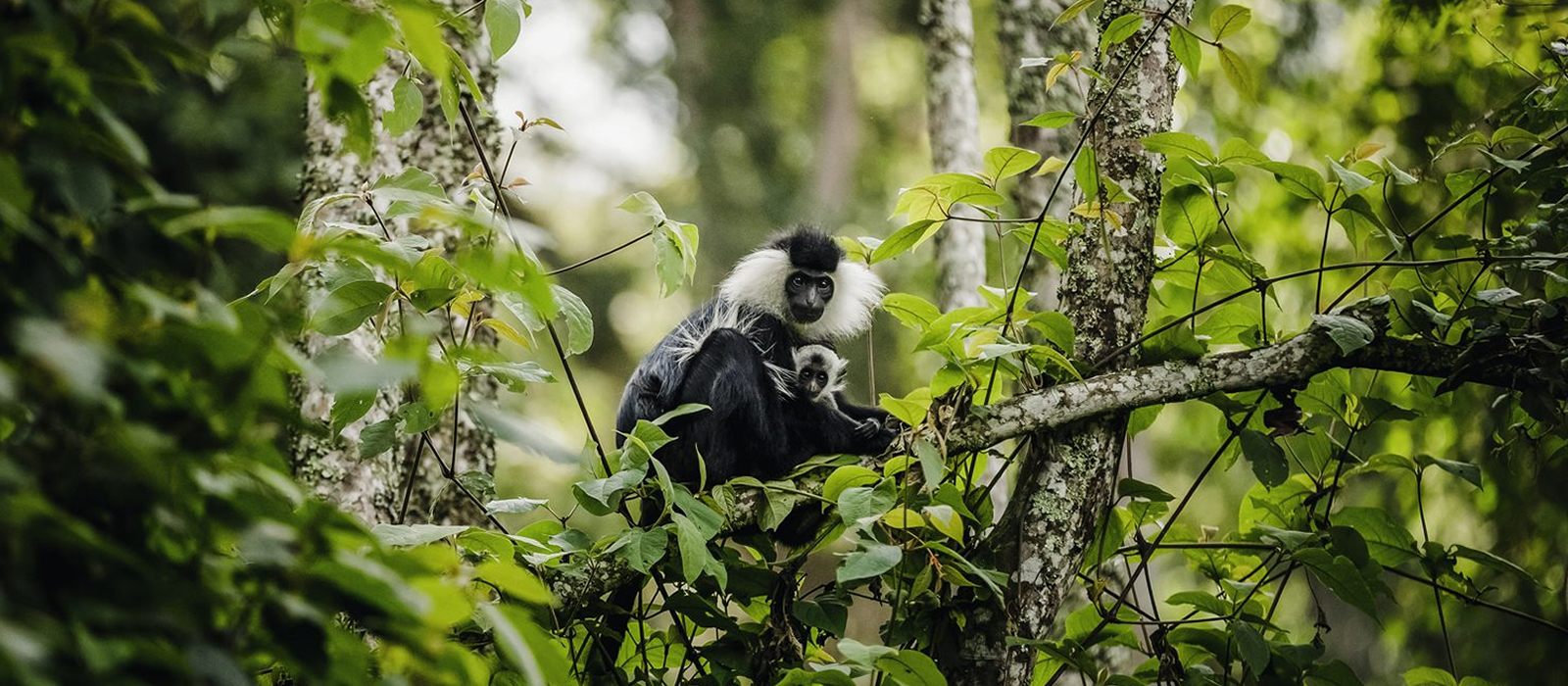
Nyungwe National Park in southwest Rwanda is a premier African primate destination, holding the title of the continent's oldest montane rainforest. It hosts over 500 chimpanzees, 13 total primate species—including large troops of Rwenzori colobus—and offers unique canopy walkway experiences. It is a vital biodiversity hotspot featuring massive floral diversity and montane wetlands
21-days-rwanda-primate-safari-culture-history-and-wildlife-holiday
20-days-complete-rwanda-uganda-safari-tour-combo
14-days-luxury-rwanda-primate-safari-and-uganda-safari-tour-combo
14-days-magical-rwanda-photography-safari
12-days-best-rwanda-wildlife-safari-and-rwanda-primate-safari-vacation
11-days-classic-uganda-rwanda-tour-combined-itinerary
10-days-9-nights-midrange-rwanda-gorilla-trekking-wildlife-and-culture
9-day-romantic-honeymoon-rwanda-wildlife-safari-itinerary
9-days-best-family-rwanda-safari-holiday-big-five-canopy-walk-and-chimpanzee
8-days-best-africa-big-five-rwanda-safari-and-gorilla-trekking
6-days-rwanda-gorilla-trekking-chimpanzee-tracking-and-birdwatching
13 Primate Species
Nyungwe Forest hosts an extraordinary primate assemblage—13 species, roughly a quarter of Africa’s primate diversity—making it one of the continent’s top sites for primate watching. This richness reflects the forest’s long-term ecological stability and varied habitats: canopy, montane understory, swamp margins and riverine corridors all support different primate niches. Sightings can range from arboreal acrobatics of squirrel monkeys and gregarious colobus troops to quieter, more elusive forest dwellers. Because many species use different vertical layers of the forest, guided walks and canopy activities are particularly effective: guides can interpret calls, locate feeding trees and follow trails to improve viewing success. The presence of so many species also makes Nyungwe important for research and conservation—populations can be monitored for trends, and the forest serves as a stronghold for species that are declining elsewhere. Visitors gain an intensive primate experience within a relatively compact park and often combine primate tracking with birding or canopy walks. Protection of these species depends on intact habitat, anti‑poaching efforts and community engagement; revenues from tourism that emphasize responsible primate encounters help fund conservation and support neighboring communities.
Chimpanzee Population (≈500; two habituated groups)
Nyungwe’s chimpanzee population—about 500 individuals with two habituated groups open to tourism—offers one of Rwanda’s premier primate experiences. Habituation means these chimp groups are accustomed to human presence, allowing guided tracking that reveals social interactions, foraging behavior and tool use at relatively close range while minimizing disturbance when conducted under strict rules. Chimp tracking in Nyungwe is a half‑day or full‑day activity conducted by trained guides and trackers who follow established protocols to protect both apes and visitors. Encountering chimpanzees in their natural montane forest home is not only thrilling but educational: visitors learn about chimp social structure, diet, territorial behavior and conservation threats such as habitat loss and disease. Tourism revenue supports monitoring, anti‑poaching patrols and community benefit programs that reduce local pressures on the forest. Although habituated groups provide reliable viewing, sightings are never guaranteed—conditions such as weather, food availability and group movements affect success. Overall, Nyungwe’s sizable chimp population and the availability of habituated groups place it among the region’s top primate destinations, combining high-quality wildlife encounters with strong conservation safeguards.
Large Colobus Troops (Ruwenzori Black-and-White Colobus)
Nyungwe is famed for hosting one of the world’s largest Ruwenzori black-and-white colobus troops—sometimes numbering in the hundreds—making it a spectacular sight for visitors. These striking primates, with bold black-and-white pelage and flowing white tails, are primarily folivorous and move in cohesive, loud troops that are often visible along forest edges and canopy trails. Their large group sizes reflect both abundant food resources and successful protection of forest habitat in Nyungwe. Colobus troops play an important ecological role by browsing foliage and dispersing seeds, thereby shaping vegetation dynamics. For visitors, encountering a massive colobus troop is memorable: their vocalizations, coordinated movement through the canopy, and frequent tree‑to‑tree progression are photogenic and behaviorally interesting. Guided walks in areas where colobus concentrate—especially along popular trails and riverine corridors—enhance viewing odds. Conservation of these large troops depends on preserving contiguous canopy, preventing hunting and maintaining corridors that allow troop movements. The presence of such unusually large colobus groups underscores Nyungwe’s global significance as a refuge for primate biodiversity.
Rare Monkeys (Owl-faced, L’Hoest’s, Grey-cheeked Mangabey)
Nyungwe’s primate list includes several rare and range-restricted species that delight visitors and underline the forest’s conservation importance: the owl-faced monkey, L’Hoest’s monkey, and the grey-cheeked mangabey. Each species occupies distinct ecological niches—some preferring montane understory or swampy fringes—so trackers and guides use specialized knowledge to find them. Owl-faced monkeys are notable for their nocturnally adapted facial features and secretive habits, L’Hoest’s monkeys favor higher altitudes and steep slopes, and grey-cheeked mangabeys inhabit mature forest with layered canopies. Sightings of these rarer monkeys are less predictable than more common species, making successful encounters especially rewarding for keen primate enthusiasts. Their presence highlights the need to maintain habitat heterogeneity and intact forest structure: fragmentation and hunting pose primary threats to their populations. Responsible tourism—guided walks that respect quiet observation distances and limit group sizes—supports ongoing monitoring and protection. For researchers and naturalists, Nyungwe offers an accessible laboratory to study these lesser-known primates’ behavior, diet and ecology, contributing to wider efforts to conserve African montane primate diversity.
Birding Paradise (300+ species; 29 Albertine Rift endemics)
Nyungwe is a birdwatcher’s paradise with over 300 species recorded, including 29 Albertine Rift endemics such as the Rwenzori turaco, making it essential for anyone seeking regional specialities. The park’s elevational gradients—ranging from low riverine zones to montane canopy—and varied habitats (swamps, bamboo, primary forest and riverine corridors) support diverse avifauna: raptors, sunbirds, turacos, seed‑eaters and elusive forest species thrive here. Key birding experiences include early‑morning guided walks and canopy outings where misty forest and layered vegetation reveal singing males, display flights and feeding flocks. Endemics and near‑endemics attract international birders targeting species absent elsewhere, while resident forest species offer year‑round interest. Guides are adept at locating and calling in shy birds, and local bird lists and hides enhance the chance of seeing rarities like the Rwenzori turaco or Grauer’s rush warbler. Conservation of this avian richness relies on protecting hydrology and forest cover; tourism income helps fund park management and community programs that reduce habitat conversion. In short, Nyungwe’s mix of high species richness and endemism places it among East Africa’s premier birding landscapes.
Rich Flora (1,000+ plant species; ~140 orchids)
Nyungwe’s botanical diversity is remarkable: more than 1,000 plant species and roughly 140 orchid species flourish within its montane rainforest, creating a lush, multilayered ecosystem. This extraordinary flora includes towering canopy trees, dense understory shrubs, epiphytes and an astonishing variety of orchids that color the forest with seasonal blooms. The complex plant community supports rich food webs—frugivores, folivores and pollinators all depend on particular plant species for sustenance and breeding. For visitors, botanical highlights appear on nature walks and specialized floral tours: wild orchids, giant tree ferns, and diverse mosses and lichens provide close‑up interest alongside grand forest vistas. The forest’s plant diversity also has scientific, medicinal and cultural value; ethnobotanical knowledge among local communities helps identify species used for traditional purposes. Conservation of Nyungwe’s flora hinges on preventing logging, limiting unsustainable harvesting, and maintaining watershed integrity since hydrology deeply influences plant distributions. Botanical research and guided interpretation enrich visitor experiences while supporting conservation goals. Overall, Nyungwe’s rich flora is a cornerstone of its ecological identity and a major draw for naturalists, photographers and researchers.
Endemic Wildlife (Albertine Rift Montane Forest uniqueness)
Nyungwe’s wildlife includes many species endemic to the Albertine Rift Montane Forest ecoregion, underscoring the park’s global conservation significance. Endemism arises because the Albertine Rift’s isolated mountains and varied microclimates have promoted speciation over millennia, producing unique mammals, birds, amphibians and plants found nowhere else. This endemism means Nyungwe is irreplaceable for preserving evolutionary lineages and ecological functions particular to montane forests. For tourists and scientists alike, seeing endemic species—whether a specialized bird, primate or plant—provides a powerful sense of place and urgency for protection. Conservation strategies emphasize habitat connectivity across the Albertine Rift, monitoring endemic population trends, and targeted protection for small‑range species vulnerable to climate shifts and habitat fragmentation. By supporting sustainable tourism and community benefits, Nyungwe helps secure these endemic species while providing economic incentives that reduce pressures from agriculture and resource extraction. The park’s role within the larger Rift landscape makes it a key node in regional biodiversity conservation.
Other Mammals (75–85 species; serval, side-striped jackal)
Beyond its primates, Nyungwe supports a broad mammal assemblage—an estimated 75–85 species—that includes both small carnivores and larger ungulates adapted to montane forest life. Notable mammals include serval cats, which hunt in forest clearings and swamp edges, and side‑striped jackals, a shy canid adapted to dense habitats. Other mammals range from duikers and genets to civets and arboreal rodents, each contributing to ecosystem dynamics as seed dispersers, predators or prey. Mammal diversity in Nyungwe reflects habitat heterogeneity: swampy areas, bamboo stands and primary forest all provide niches for different species. For visitors, mammal sightings complement primate and birdwatching activities—tracking nocturnal species on night walks or spotting small carnivores at dawn adds depth to the safari experience. Conservation efforts address threats such as hunting pressure and habitat encroachment; ranger patrols, community outreach and regulated tourism help mitigate impacts. Monitoring programs provide data on population trends, informing management decisions to preserve Nyungwe’s full complement of mammalian biodiversity.
Geographic & Historical Significance (Ancient rainforest; UNESCO 2023)
Nyungwe Forest is geographically and historically profound—an ancient rainforest that remained green through the last Ice Age and, as of September 2023, a UNESCO World Heritage Site, the first in Rwanda. Its long continuity has allowed complex ecosystems to persist and diversify, making it a living archive of evolutionary and ecological history. Nyungwe functions as a vital water tower, supplying roughly 70% of Rwanda’s freshwater and feeding both the Nile and Congo basins; this hydrological service underpins agriculture, domestic use and downstream ecosystems. Covering about 1,019 km² in southwestern Rwanda, Nyungwe forms a trans‑frontier block with Burundi’s Kibira National Park, enhancing landscape‑scale connectivity important for wide‑ranging species. The forest’s formal protection began early—gazetted as a reserve in 1933 and later designated a national park—yet its recent UNESCO listing elevates international recognition and support for conservation. This combination of ancient continuity, crucial hydrology and global heritage status makes Nyungwe not just a biodiversity hotspot but a landscape of cultural and ecological significance whose preservation has implications far beyond Rwanda’s borders.
Safari Experience & Activities (Canopy walkway; 140+ km trails; Kamiranzovu swamp; community revenue)
Nyungwe offers a rich array of safari activities framed by distinctive features: East Africa’s first canopy walkway suspended about 70 meters above the forest floor provides unparalleled views into the upper forest strata and excellent birding and primate‑watching opportunities. Over 140 km of trails accommodate diverse visitors—from casual nature walks to strenuous treks like Mount Bigugu—allowing deep immersion in the forest’s ecology. Kamiranzovu Swamp, the largest protected marshland in Rwanda, is a focal point for birding and gentle nature walks, its papyrus and sedge habitats supporting specialized species. Responsible tourism is intertwined with community support: 10% of park tourism revenue is shared with local communities to fund development and incentivize conservation, helping reduce encroachment and poaching. Accommodation options span budget to luxury, enabling varied visitor types to experience Nyungwe while contributing to local economies. The park is accessible year‑round, though the dry season is optimal for trekking. Overall, Nyungwe combines high‑quality infrastructure and activities with conservation‑driven community benefits, delivering a safari experience that balances adventure, science and sustainable development.
What is the best time for a Rwanda primate safari to Nyungwe?
The best time to visit Nyungwe National Park for a primate safari is during Rwanda’s dry seasons—roughly June to September and December to February. Dry conditions make forest paths firmer and trekking safer and more comfortable, which is especially important in Nyungwe’s montane rainforest where trails can become slippery and muddy during rains. Lower humidity and reduced rainfall improve visibility on forest walks and canopy activities, making wildlife detection and photography easier. Birding is also excellent in the dry months because many birds become more conspicuous.
However, there are trade‑offs. The dry season can coincide with higher tourist numbers, so book permits, guides and accommodation well in advance if you travel then. The wetter months (March–May and October–November) offer advantages too: Uganda’s and Rwanda’s rainforests are lush and vibrant after rains, vegetation is denser, waterfalls are at their most dramatic, and insect and amphibian life can be abundant. In some periods, chimpanzee and monkey activity patterns may differ seasonally, but habituated chimp groups are tracked year‑round with high success rates.
For photographers and hikers who prioritize ease of trekking and predictable trail conditions, the dry seasons are preferable. If you are focused on solitude, green scenery and lower prices, the shoulder or wet months are viable with appropriate waterproof gear and flexible scheduling. Whatever season you choose, pack breathable waterproofs, sturdy waterproof boots with good grip, and layered clothing for rapidly changing montane weather. Confirm trekking schedules and canopy walk availability in advance, and coordinate permits with Rwanda Development Board to secure your preferred dates.
How many primate species can I see on a Rwanda primate safari here?
Nyungwe National Park is one of East Africa’s richest primate habitats, hosting 13 recorded primate species—an exceptional diversity for a single protected area. This includes habituated chimpanzees (Pan troglodytes), Liberia‑related or common chimp groups in various sectors, and diverse monkey species such as the Rwenzori colobus (Colobus angolensis ruwenzorii), black‑and‑white colobus, gray‑cheeked mangabey (Lophocebus albigena), L’Hoest’s monkey (Allochrocebus lhoesti), blue monkeys (Cercopithecus mitis), vervet monkeys, and the golden‑tailed and silver monkeys depending on exact ranges and sightings. Each species occupies particular forest niches—some favor mid‑canopy strata, others the forest floor or riverine corridors—so a well‑planned itinerary increases your chances of seeing multiple species.
Habitats in Nyungwe vary from montane forest slopes to swampy bogs and streams, providing rich foraging opportunities and species separation. Guided walks targeting different trails—such as Isumo, Igishigishigi, Uwinka, and the Cyamudongo or Gisakura sectors—maximize species encounters because each trail crosses different microhabitats. The canopy walkway gives a unique vantage point to observe arboreal primates that are otherwise elusive from the ground.
Guides in Nyungwe are skilled at locating troops and understanding seasonal fruiting patterns that influence primate movement. To see the widest range, combine chimpanzee trekking with general forest walks, the canopy walk, and early morning or late afternoon sessions when primates are typically most active. Because species’ activity varies by weather and fruit availability, remain flexible and follow your guide’s recommendations—the park’s biodiversity rewards patient, targeted exploration.
What are the chances of seeing chimpanzees on a Rwanda primate safari?
Chimpanzee sighting chances in Nyungwe are high—often quoted near 90% when tracking habituated groups, especially in accessible sectors like Cyamudongo and Uwinka where habituation and concentrated research efforts increase predictability. Success rates depend on multiple factors: the specific chimp group targeted, recent movements, the tracker team’s experience, weather, and seasonal fruiting patterns that can disperse chimps over larger areas.
Habituated groups are used to guided visits by trained trackers and researchers, making encounters more reliable. The Rwanda Development Board limits group sizes and observation durations (typically one hour) to minimize disturbance, which also helps in maintaining chimp tolerance of human presence. In Cyamudongo, chimp parties have comparatively small home ranges and are frequently visited, boosting encounter rates. In other, more remote sectors, trekking may be longer and sightings less certain, though still reasonably probable because of active monitoring.
To optimize your chances, book permits for habituated chimp tracking well in advance and choose experienced local guides. Early morning treks often coincide with higher chimp activity as they search for food, increasing visibility. Keep in mind that “success” also includes observing natural behaviors—feeding, grooming, tool use and vocalizations—rather than merely obtaining a distant glimpse. Patience is key: chases are rare—guides emphasize slow, quiet movements.
Lastly, COVID‑era or health‑safety measures may modify access rules (masks, minimum distances) to protect both chimps and visitors; check current RDB guidelines. With competent tracking teams, a bit of luck, and respectful behavior, chimpanzee sightings in Nyungwe are a highlight many visitors reliably experience.
How long does chimpanzee trekking last on a Rwanda primate safari?
Chimpanzee trekking durations in Nyungwe typically range from 2 to 6 hours, though actual times vary and are inherently unpredictable because they depend on where the chimp group is at the time of your trek. Treks begin early—often before or at dawn—with trackers and guides following recent nest counts and vocalization reports to locate groups. Locating a habituated group may take as little as 30–45 minutes in sectors with frequent monitoring, or several hours in more remote or dispersed areas.
Once the chimpanzees are found, regulations usually allow a maximum observation window of one hour, during which visitors must remain silent, follow guide instructions and maintain the required distance to minimize disease transmission and stress to the animals. The trekking time includes reaching the group and walking back to the trailhead or rendezvous point. Expect varied terrain: some paths are well defined while others require negotiating steep slopes, roots and muddy sections—so physical fitness and appropriate footwear matter.
Prepare for a full‑morning commitment even if the locating time is short—permits are often scheduled in half‑day blocks, and logistics (briefings, travel to trailheads, and return transfers) add to the day’s length. Bring water, light snacks, a rain jacket, binoculars, insect repellent and camera gear with silent shutter options if possible. If you’re unable to keep pace, porters may be available to assist with luggage, but ethical rules prohibit porters from entering restricted chimp viewing areas.
Because durations vary, plan the day with flexibility and avoid scheduling other time‑sensitive activities immediately after a trek. The outcome—close observation of chimp social life—is well worth the variable time investment for most visitors.
What is the age limit for chimpanzee trekking on a Rwanda primate safari?
The minimum age limit for chimpanzee trekking in Nyungwe National Park is 15 years. This rule reflects conservation and safety concerns: chimpanzees can be sensitive to human diseases, and managing group behavior during a trek requires maturity and discipline that younger children may struggle to maintain. Limiting participation to those 15 and older helps ensure trekkers understand and comply with park rules—maintaining quiet, keeping appropriate distances, and following guide instructions to reduce stress and disease risk for the primates.
The 15‑year minimum aligns with habituation protocols and international best practices for primate tourism, where close contact is restricted and groups are kept small. For families traveling with younger children, alternatives include guided forest walks, birding excursions, the canopy walkway, or visiting less sensitive wildlife areas where children can enjoy nature without breaking age regulations. Many lodges provide family‑friendly activities that showcase biodiversity without requiring chimp permits.
If you have a teenager near the age threshold, contact Rwanda Development Board or your tour operator in advance to confirm rules and documentation required at permit booking. Observance of the age limit also helps protect young visitors—some treks involve steep, muddy terrain requiring steady footing and endurance. Finally, remember health safeguards: anyone participating should be in good health and free of contagious illnesses; guides may deny access if a visitor appears unwell to prevent zoonotic transmission. By adhering to age and health rules, you support both chimpanzee welfare and safe, rewarding experiences.
Can I see monkeys other than chimpanzees on a Rwanda primate safari?
Yes—Nyungwe offers excellent opportunities to observe many monkey species beyond chimpanzees, making it one of East Africa’s premier primate destinations. You’re likely to encounter large troops of Rwenzori or Angola colobus (the black‑and‑white colobus unique to the Albertine Rift), gray‑cheeked mangabeys, blue monkeys, vervet monkeys, and L’Hoest’s monkeys among others. These species occupy different forest layers: colobus monkeys are highly arboreal and often seen in large, vocal groups high in the canopy, while mangabeys and blue monkeys range through mid‑and lower canopy zones.
The park’s canopy walkway is particularly valuable for observing arboreal species that are otherwise difficult to see from the forest floor; from the suspended bridge you can watch colobus troops move through treetops at eye level. Morning and late afternoon are prime times to spot active troops as they forage and move between feeding sites. Guided forest walks are tailored to microhabitats known for particular species—riverine corridors for some monkeys, riparian fringes for others—so working with experienced guides increases sighting odds.
Behaviorally, monkeys provide lively viewing: colobus mobs exhibit social grooming and dramatic leaping, mangabeys use vocal alarms, and mixed‑species associations are not uncommon when foraging on fruiting trees. Photography can be rewarding, but a telephoto lens helps because many monkeys stay in higher strata. For travelers keen on primate diversity, combine chimp tracking with canopy crossings and targeted walks on different trails—this strategy yields both high species counts and varied behavioral observations.
What is the famous "Canopy Walkway" experience on a Rwanda primate safari?
The Canopy Walkway in Nyungwe is one of Rwanda’s signature nature experiences—a 160‑meter suspension bridge that arcs across a forest ravine roughly 70 meters above the ground, offering dramatic panoramic views of the montane rainforest canopy. Walking the bridge provides a rare vantage for seeing arboreal wildlife—especially colobus monkeys, various smaller primates, birds and epiphyte‑rich trees—at eye level. The walkway is carefully engineered and managed to ensure visitor safety, with guided crossings to limit numbers and preserve the forest’s calm.
The sensory experience is striking: from the walkway you hear primate calls resonating through multiple canopy layers, watch sunlight play across distant ridgelines, and witness treetop behaviors rarely visible from ground trails. Photographers appreciate the unobstructed lines of sight and the opportunity to capture monkeys in natural, canopy‑level settings. For birders, the elevated perspective reveals species that inhabit mid‑to‑high strata, adding to the park’s already impressive avian list.
Access is regulated; visitor numbers are controlled to minimize disturbance. Guided walks typically include an orientation on walkway etiquette—no sudden movements, maintaining distance from wildlife, and adhering to time limits. The walkway is suitable for most visitors with moderate mobility, though those uncomfortable with heights should evaluate their comfort levels beforehand.
Combining the canopy walk with ground hikes or chimpanzee treks creates a comprehensive primate experience: observe colobus and other monkeys from above, then explore chimp behavior on forest trails. The canopy walk also complements conservation messaging, showcasing forest architecture and the interconnectedness of montane ecosystems that Nyungwe protects.
How far is Nyungwe from Kigali for a Rwanda primate safari?
Nyungwe National Park is approximately 225 kilometers (140 miles) from Kigali by road, and the drive typically takes about 4 to 5 hours depending on traffic, weather and exact start/end points. The journey passes through scenic highlands, tea plantations—such as Gisakura—and small towns that give a sense of rural Rwandan life. Road conditions are generally good along the primary route, which is mostly paved, though narrow mountain roads and occasional slower sections mean drive times can vary.
For travelers based in Kigali, an early departure is common to maximize time in Nyungwe upon arrival. Many lodges can arrange comfortable private transfers with experienced drivers who know the terrain, stop options and best places for lunch or photography breaks. Alternatively, domestic scheduled flights or charters are available to nearby airstrips (e.g., Nemba or Nyungwe area airstrips) that cut travel time significantly and are useful for travelers on tight schedules or those preferring less road time.
Consider combining the Nyungwe visit with other Rwandan highlights—Akagera for savanna wildlife or Volcanoes for gorillas—by planning logistics that minimize backtracking. If you prefer a more relaxed approach, split the transfer into stages with an overnight stop en route or include a guided visit to tea estates or cultural sites along the way. Always allow for buffer time in case of delays and coordinate with your lodge for estimated arrival times so they can prepare check‑in and any afternoon activities.
Do I need a permit for a Rwanda primate safari in Nyungwe?
Yes—permits are required for chimpanzee trekking in Nyungwe, and they must be booked in advance through the Rwanda Development Board (RDB) or an authorized tour operator. Permits regulate group sizes, designate trekking sectors, and ensure visits comply with conservation protocols that protect chimpanzees from disturbance and disease. Because habituated chimp groups are limited and permits are finite—especially during high season—it’s wise to secure them as early as possible to guarantee your preferred dates.
Permit fees contribute directly to conservation, local community benefits and park management, helping sustain long‑term protection of Nyungwe’s unique biodiversity. When you book a permit, you’ll be assigned a meeting point and time; arrive punctually for briefings and follow the guidance of trackers and rangers. Payment processes and availability can vary, so work with your lodge or operator to handle the logistics smoothly: they often assist with permit applications, transport arrangements and coordinating the tracker teams.
Note that Nyungwe also manages other activities that may require booking—canopy walkway access, guided birding or trail permits—so include these in your planning. Be aware of current health and safety rules: temporary restrictions or additional measures (mask use, minimum distances) can be applied to protect primates, particularly during disease outbreaks. Confirm the latest RDB policies before travel. Securing permits ahead of time ensures your primate safari proceeds without last‑minute disappointment and supports the park’s conservation mission.
What should I pack for a Rwanda primate safari in Nyungwe?
Packing for Nyungwe requires balancing rainforest practicality with comfort. Footwear is critical: sturdy, waterproof hiking boots with good ankle support and a grippy sole are essential for muddy, steep or root‑covered trails. Bring comfortable, moisture‑wicking long‑sleeved shirts and trousers to reduce insect bites and protect against undergrowth; lightweight thermal layers for cool mornings; and a breathable rain jacket or poncho—Nyungwe’s montane climate can change quickly. Gaiters and a pair of gardening or trekking gloves are useful for gripping vegetation during steep sections and preventing scratches.
Pack insect repellent with DEET or picaridin, and consider malaria prophylaxis as recommended by your health provider. Binoculars (compact 8x or 10x) significantly enhance primate and bird viewing, while a telephoto camera lens (200–400mm) is helpful for canopy shots. Bring spare batteries, memory cards and a small dry bag or waterproof case for electronics. A reusable water bottle, energy bars, and basic snacks sustain energy during long treks; some lodges provide sealed drinking water.
Other items: sun protection (hat, sunscreen), blister plasters, basic first‑aid kit, personal medications, and a headlamp for early starts. Pack light clothing for evenings at lower elevations and include a small daypack for treks. If you’re doing the canopy walk or chimp tracking, wear neutral colors rather than bright hues that might disturb wildlife. Finally, bring a printed copy of permits and travel documents, and confirm with your lodge about any provided items (some supply gaiters, boots or walking sticks). Thoughtful packing makes the forest experience safer and more enjoyable.
Are there other hiking trails to enjoy on a Rwanda primate safari?
Yes—Nyungwe offers a network of more than a dozen marked trails catering to different interests and fitness levels, making it an excellent destination for hikers and nature lovers beyond primate tracking. Trails range from short, accessible routes like Igishigishigi and Uwinka Nature Trail, to longer, more challenging hikes such as the Isumo Waterfall trail and the Kamiranzovu swamp route. The Isumo trail leads to a scenic waterfall and includes boardwalks and viewpoints ideal for photography and birding. Longer routes traverse ridge lines and remote forest habitats, offering solitude and the chance to encounter diverse flora, fauna and endemic bird species.
Each trail highlights different park features—swamp ecosystems, montane forest ridges, riverine corridors and wildlife corridors—so choosing multiple trails during your stay provides a fuller appreciation of Nyungwe’s ecological variety. Guided hikes enhance the experience: local guides interpret plant uses, point out insect life, and help locate primates and birds. Night walks are also possible in allocated zones and reveal nocturnal species like bushbabies, owls and amphibians.
Trail difficulty varies; some paths involve steep climbs and uneven footing, so assess your fitness and choose routes accordingly. Secure permits or guide bookings for specific hikes, and pack suitable gear—waterproof boots, rain gear, and insect repellent. With varied options, hikers can tailor days between canopy walks, chimp trekking and immersive trail experiences.
What is the significance of the Cyamudongo forest in a Rwanda primate safari?
Cyamudongo is a small but ecologically important fragment of Nyungwe National Park located near the Gisakura region. Ecologically significant, Cyamudongo is renowned for hosting habituated chimpanzee groups that are relatively easy to access, leading to consistently high sighting rates and making it an attractive option for visitors focused on reliable chimp encounters. Its relatively confined area and concentrated primate monitoring mean trackers can often predict chimp movements with greater accuracy than in more expansive sectors.
Beyond chimps, Cyamudongo supports diverse primate and birdlife and serves as an important genetic and habitat corridor within the greater Nyungwe ecosystem. For visitors, the forest’s accessibility translates to shorter approach times from some lodges and a manageable trekking experience compared with longer, more rugged routes elsewhere in the park. The area also illustrates conservation challenges—forest fragments require active protection to maintain connectivity, manage edge effects and support species that depend on interior forest conditions.
From a visitor planning perspective, Cyamudongo permits are popular and should be booked in advance. Combine a Cyamudongo chimp trek with nearby activities—tea estate visits at Gisakura, birding along guided trails, or a stay at lodges that specialize in chimp tourism—to create an efficient itinerary. By visiting Cyamudongo, travelers support targeted conservation and community benefits while enjoying a dependable primate experience.
Can I visit the Gisakura tea plantation during my Rwanda primate safari?
Yes—the Gisakura tea plantation is an accessible and scenic stop often included before or after visits to Nyungwe. Located near the park’s southern edge, the plantation showcases Rwanda’s highland agricultural landscapes and offers a complementary cultural and agro‑ecotourism experience. Many tours include guided visits to the processing facilities where you can observe tea plucking demonstrations, learn about sustainable practices, and taste locally produced teas. The rolling green terraces provide striking photo opportunities and a pleasant contrast to dense montane forest scenery.
A visit supports local economies and gives insight into land use patterns that coexist with protected areas. Some lodges and operators arrange short walks through plantation tracks or meetings with local workers for more in‑depth cultural exchange. If you plan to shop for tea souvenirs, buy direct from cooperative outlets to ensure proceeds benefit producers.
Timing a tea stop en route to Nyungwe helps break up the drive from Kigali, offering a refreshing pause with scenic viewpoints and a chance to acclimatize before forest activities. Check whether your lodge or driver includes a stop at Gisakura in your itinerary, and consider combining it with a short guided walk or a tea‑tasting session for a fuller experience.
How does a Rwanda primate safari contribute to conservation?
A Rwanda primate safari directly funds conservation through permit fees, park revenues and eco‑tourism spending that support park management, anti‑poaching patrols, habitat protection and scientific research. Revenue from chimpanzee and canopy walk permits is reinvested into monitoring teams, community outreach and the maintenance of trails and facilities—critical elements for long‑term protection of Nyungwe’s unique montane rainforest. Tourism creates economic incentives for local communities to support conservation rather than engage in activities that could degrade habitat.
Beyond direct funding, responsible tourism raises awareness of conservation issues. Guided visits often include educational components about forest ecology, primate behavior, and threats such as habitat fragmentation, climate change and disease transmission. Many tourism projects incorporate community benefit schemes—revenue sharing, employment of local guides and lodge staff, and support for local schools and health projects—fostering positive relationships between park managers and neighboring populations.
Moreover, regulated tourism enforces strict protocols (limited group sizes, minimum distances, health screening) that reduce disturbance and disease risk to primates. Research and monitoring programs financed partly by tourism improve our understanding of primate ecology and inform adaptive conservation strategies. By choosing operators with transparent community and conservation policies, visitors ensure their trip contributes meaningfully to protecting Nyungwe for future generations.
What is the accommodation like near the park during a Rwanda primate safari?
Accommodation near Nyungwe covers a wide spectrum—from luxury lodges like One&Only Nyungwe House offering high‑end amenities, curated activities and expansive views, to comfortable mid‑range hotels and basic eco‑friendly guesthouses catering to budget travelers. Luxury properties emphasize personalized service, fine dining, guided experiences and sometimes spa services—ideal for travelers who want to combine active days with restful, upscale evenings. Mid‑range options provide comfortable rooms, good food and helpful guides, often with strong local character and proximity to trailheads.
Lodges and hotels typically integrate conservation principles—using local materials, hiring local staff and supporting community projects. Many establishments offer packages that include permits, transfers, guided trails and the canopy walk, simplifying logistics. For a more immersive stay, select lodges located close to trailheads (Gisakura, Uwinka) for early starts, while those farther out suit guests preferring scenic drives and expansive vistas.
During high season, book early to secure preferred accommodation and request rooms with views or quick access to dining and briefing areas. If you want an intimate, honeymoon‑style experience, ask lodges about private dining, guided after‑hours walks or tailored itineraries. Whatever your budget, Nyungwe’s accommodation options allow you to balance comfort and access to prime primate experiences.
Booking Rwanda primate safari with us Roads of Adventure safaris
Book a Rwanda primate safari with Roads of Adventure Safaris for expert-guided trekking to see endangered mountain gorillas in Volcanoes National Park ($1,500 permit) and golden monkeys. Offering tailored luxury and mid-range tours (including 14-day Rwanda/Uganda combos), they handle permits, 4x4 transport, and lodge bookings for an unforgettable experience.
