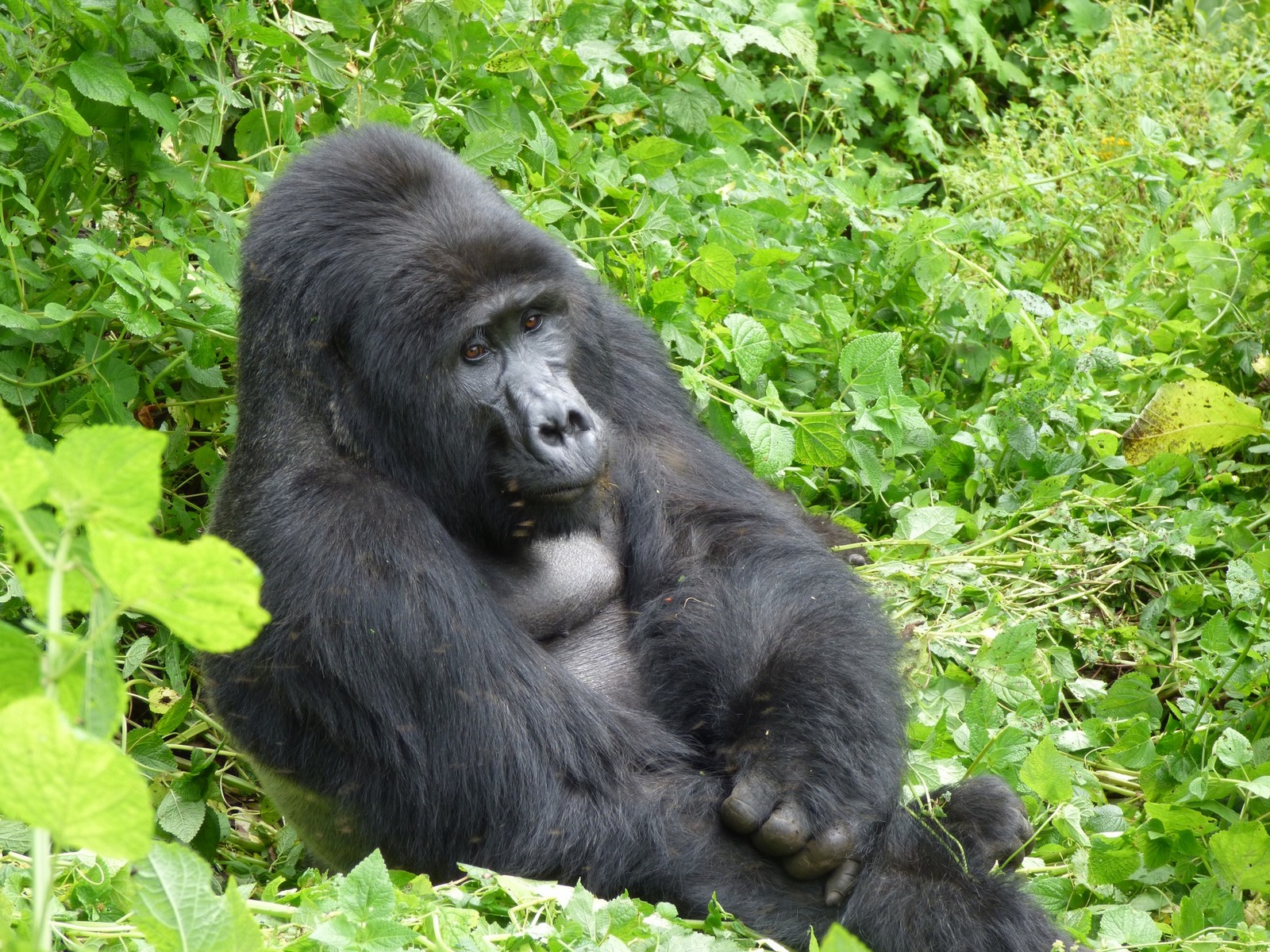
Combine a gorilla trek in Volcanoes National Park (Rwanda) with a Kruger National Park safari (South Africa) by flying from Kigali to Johannesburg, then taking a connecting flight or road transfer to Kruger. Dedicate 2 days to gorilla trekking and 4 days to Kruger for a complete African wildlife experience.
2-days-best-gorilla-trekking-safari-tour-via-kigali-to-bwindi-impenetrable-forest-park
2-days-quick-escape-to-bwindi-impenetrable-to-trek-mountain-gorilla-from-kigali
2 Days Rwanda Gorilla Trekking
A 2 Days gorilla trekking safari in Rwanda is the ultimate high-efficiency power trip for wildlife lovers who are short on time but refuse to compromise on bucket-list experiences. Volcanoes National Park is uniquely positioned globally to make a 48-hour mountain gorilla encounter possible, thanks to its exceptional infrastructure. Unlike neighbor countries where rugged, unpaved terrain stretches travel days into long overland slogs, Rwanda features perfectly paved networks connecting the capital directly to the Virunga Mountains. This means you can comfortably touch down on Rwandan soil, pay respects to the country’s moving history, hike up a rain-forested volcanic slope to stare directly into the eyes of a 400-pound silverback, and head right back to the runway for your international flight home within a tight 48-hour window. It is rapid, intense, and deeply impactful.
Day 1: Arrival & Transfer
Your trip kicks off with an 8:00 AM touchdown at Kigali International Airport. By 9:30 AM, your private guide will pull up to the Kigali Genocide Memorial in Gisozi, where 250,000 victims are laid to rest. Spending 2 educational hours here gives you vital historical context before you hit the road. At noon, you will start the scenic 70-mile drive northwest to Musanze along the impeccably paved RN4 highway. The 2.5-hour journey winds through steep hillsides terrace-farmed with potatoes and tea, climbing from Kigali’s 5,100 feet to Musanze's chilly 6,100 feet. By 3:30 PM, you will check into a lodge like the Bishop's House, unpack your gaiters, and sip a warm cup of local bourbon Arabica coffee. You will have an early 6:00 PM dinner to prep for tomorrow's predawn wake-up.
Day 2: Trekking & Departure
The alarm rings at 5:30 AM for a quick breakfast before driving 25 minutes to the Kinigi park headquarters. By 7:00 AM, rangers will inspect your $1,500 permit and assign you to one of 12 habituated gorilla groups, keeping tracking parties to a strict maximum of 8 people. You will hit the trail by 8:30 AM, hiking anywhere from 45 minutes to 3 hours through thick bamboo zones up to altitudes of 9,000 feet. Once you locate the family, your 60-minute contact window begins; you will watch juveniles wrestle while staying exactly 32 feet away. By 1:00 PM, you are back at the trailhead collecting your trekking certificate. You will grab a quick lunch, drive the 2.5 hours back to Kigali, and arrive by 5:30 PM for your evening flight home.
4 Days Kruger National Park Safari (South Africa)
Kruger National Park is South Africa’s undisputed flagship reserve, sprawling across 7,500 square miles of pristine, thorny bushveld along the Mozambique border. It is globally recognized as one of the ultimate sanctuaries for spotting the legendary Big Five—lion, leopard, elephant, rhino, and African buffalo—in their completely natural habitat. What sets Kruger apart from other wilderness areas is its exceptional infrastructure and the density of its resident wildlife, particularly its stable predator populations. By choosing a 4-day itinerary, you give yourself the perfect window of time to explore multiple distinct ecological zones, moving from the riverine forests of the south to the open savanna plains. Whether you stay in a fully catered luxury lodge or a private concession, this short safari delivers an intense, immersive introduction to the raw rhythms of the African bush.
Day 1: Arrival Your safari begins with a 4-hour flight from Kigali to Johannesburg’s O.R. Tambo International Airport. From there, you will board a 50-minute domestic flight directly into the bush, landing at Skukuza Airport inside the park. By 2:30 PM, you will check into a private concession lodge like Rhino Walking Safaris or a luxury camp along the Sabie River. After a quick afternoon tea, you will head out at 4:00 PM for your first 3-hour sunset game drive in an open 4x4 vehicle. As daylight fades, your tracker will deploy a powerful spotlight to locate nocturnal predators like leopards starting their nightly hunt. You will return to camp by 7:30 PM for a traditional boma dinner around a roaring wood fire.
Day 2 & 3: Full-Day Safaris These days follow the strict rhythm of the African bush, starting with a 5:00 AM wake-up call. By 5:30 AM, you are out on a 4-hour morning game drive, maximizing your chances of catching lions or hyenas active before the heat of the day peaks at 30°C. You will head back to the lodge for an 11:00 AM brunch, followed by a mid-day rest. At 1:30 PM, you can swap the vehicle for a thrilling 2-hour guided bush walk, where armed trails guides teach you to track white rhinos on foot by reading dung and footprints. At 4:00 PM, you will set off on another afternoon drive, stopping at a scenic viewpoint for sundowner drinks before tracking elephants and buffalo herds back to camp under the stars.
Day 4: Final Drive & Departure Your final day starts with a shortened 2-hour sunrise game drive at 5:30 AM, offering one last opportunity to spot elusive cheetahs or a pack of endangered African wild dogs on the move. You will return to the lodge by 8:00 AM for a full cooked breakfast and to pack your bags. At 9:30 AM, your private transfer will pick you up for the short 20-minute drive back to Skukuza Airport. You will board the 11:20 AM flight back to Johannesburg, landing by 12:10 PM. This gives you a comfortable 3-hour window to clear security, browse the local curio shops, and check in for your international flight home.
What are the main entry requirements for South Africa?
Traveling to South Africa requires a bit of paperwork prep, but it is straightforward if you check the boxes early. First, your passport must be valid for at least 30 days beyond your intended departure date, though most airlines rigidly enforce a six-month rule, so it is safer to stick to that. Crucially, you need at least two entirely blank visa pages facing each other for entry and exit stamps; if you don't have this, border officials can legally deny you boarding right at the gate.
Citizens from countries like the US, UK, Canada, and Australia do not need to apply for a tourist visa in advance for stays under 90 days—you will get a free entry sticker at passport control.
However, if you are traveling with children under 18, South Africa has incredibly strict anti-trafficking laws. You must carry their full, unabridged birth certificates listing both parents' details, along with parental consent affidavits if only one parent is traveling. On the medical front, while South Africa doesn't require a yellow fever certificate for most Western travelers, you must present one if you are arriving from or transiting through a yellow fever endemic country like Rwanda or Uganda.
How much does a Kruger safari package typically cost?
The budget for a Kruger National Park safari varies drastically depending on whether you choose a self-drive DIY route or a fully inclusive luxury lodge. On the entry-level side, renting a standard sedan and staying in the park's government-run SANParks rest camps in a basic bungalow or safari tent can cost between $150 to $250 per night for two people, excluding food and daily conservation fees, which sit at roughly $28 per international adult per day.
If you opt for a mid-range guided safari package that includes open-vehicle game drives, transfers, and comfortable lodging just outside the park gates, expect to pay around $400 to $700 per person, per night.
For the ultimate bucket-list experience, private concessions inside the park or adjacent reserves like Sabi Sands feature ultra-luxury lodges like Singita or Lion Sands. These all-inclusive packages cost anywhere from $1,200 to over $3,500 per person, per night. While expensive, this price tags covers premier chef-prepared meals, premium drinks, master trackers, off-road driving privileges to get closer to predators, and highly exclusive wildlife viewings capped at just six guests per vehicle.
When is the best time to visit Kruger Park?
The absolute prime window to visit Kruger National Park is during the dry winter months, which run from May to September. During this time, the weather is incredibly pleasant, with daytime temperatures hovering around a comfortable 26°C, though the early mornings and nights drop significantly, sometimes dipping below 10°C, requiring heavy winter layers for morning drives. The dry season is ideal for wildlife viewing for two major structural reasons.
First, the lack of rain causes the dense summer bush to dry up and die back, drastically improving your visibility through the thorny thickets so you can spot camouflaged leopards and lions.
Second, because water becomes scarce, seasonal watering holes dry up completely, forcing animals to congregate predictably around the remaining permanent rivers and large dams. You can simply park your vehicle by a water source and watch elephants, zebras, and impalas come to you. By contrast, the wet summer months from October to April turn the park into a lush, green paradise filled with newborn animals and migratory birds, but the thick foliage makes tracking predators much more difficult, and daytime heat can frequently soar past 38°C.
Is malaria a major risk in Kruger National Park?
Kruger National Park is located within a low-to-medium risk malaria zone, particularly the far northern regions and the wetter southeastern sections along the Mozambique and Eswatini borders. Because the malaria-carrying Anopheles mosquitoes require warmth and stagnant water to breed, the risk shifts heavily depending on the season. During the dry, cold winter months from May to September, the mosquito population drops dramatically, making the risk incredibly low.
However, during the hot, rainy summer months from October to April, the risk increases substantially as water collects in local puddles and clay tracks.
Medical professionals highly recommend that safari travelers consult their doctors or a travel clinic at least four weeks before departure to secure prescription malaria prophylactics, such as Malarone or Doxycycline. Beyond medication, simple physical prevention is your best line of defense. Mosquitoes are most active at dawn and dusk, which happens to line up perfectly with your game drive times. You should wear long-sleeved shirts, long trousers, and closed shoes during these hours, and apply a high-quality insect repellent containing at least 30% DEET to any exposed skin.
What is the difference between open and closed vehicles?
The choice between an open or closed safari vehicle completely changes how you experience the African bush. Open safari vehicles, which are standard at private lodges and guided tour companies, are specially modified Toyota Land Cruisers or Land Rovers with no windows and elevated, tiered seating rows under a canvas canopy. This design offers uncompromised, 360-degree panoramic views, making it easy to spot a leopard hidden high up in a marula tree or track a pride of lions moving through the grass.
It also immerses your senses, allowing you to smell the wild sage and hear the low rumble of an elephant herd right next to you.
Closed vehicles, usually standard minivans or closed 4x4 SUVs, are typically used by self-drive visitors or budget transit tours. While they offer air-conditioned comfort during the scorching mid-day heat and protect you from the park's intense dust and sudden downpours, your visibility is limited by window frames and glass glare, which can make wildlife photography frustrating. Furthermore, open vehicles are accompanied by professional guides who communicate via radio networks, meaning they can locate big cats far more efficiently than someone searching alone in a closed rental car.
Can I self-drive through Kruger National Park safely?
Yes, self-driving through Kruger National Park is incredibly safe, popular, and one of the easiest ways to experience an African safari on your own terms. The park features an exceptional infrastructure network spanning over 500 miles of well-maintained tarred highways and smooth gravel roads. You do not even need a heavy-duty 4x4 vehicle; a standard compact rental sedan is perfectly fine for navigating the main tourist loops.
The park is clearly signposted, and you can buy detailed map books at any entry gate or rest camp shop to track your route.
The safety rules are strict but simple: you are legally required to remain inside your vehicle at all times, unless you are inside a designated, fenced rest camp or at a specifically marked, walled picnic site. The wild animals are completely habituated to the shapes and sounds of vehicles, viewing them as non-threatening objects. However, elephants and rhinos have the right of way; if a herd steps onto the tarmac, you must switch off your engine, give them at least 30 meters of space, and wait calmly for them to cross without revving your engine or blowing your horn.
What type of camera gear should I pack?
To capture clean, sharp wildlife photos in Kruger, you need to think beyond your smartphone camera. While modern phones are great for wide landscape shots or close-up elephant encounters next to your vehicle, they fail completely when trying to photograph a lion resting 50 meters out in the savanna. The ideal setup is a DSLR or mirrorless camera body paired with a versatile telephoto zoom lens, such as a 100-400mm or a 70-300mm.
This focal range allows you to frame distant animals tightly without losing image resolution, which is vital for capturing small details like a leopard’s spots or a colorful lilac-breasted roller.
Because wildlife is most active during the golden hours of dawn and dusk, you will be shooting in low-light conditions, so a lens with a wide aperture like f/4 or f/2.8 is an asset. Dust is a massive factor on open-vehicle safaris, so avoid changing lenses while out in the bush to protect your camera sensor. Instead, pack a lens cleaning kit with a blower brush, and bring a lightweight beanbag or a monopod to stabilize your camera against the vehicle’s vibrating frame during long shots.
How do private concessions differ from public areas?
The main difference between Kruger’s public areas and private concessions comes down to exclusivity, crowding, and strict park regulations. The public sectors of Kruger are open to anyone who pays the daily conservation fee, meaning roads can get heavily congested. When a rare lion or leopard sighting occurs near a main tar road, it can quickly trigger a "traffic jam" of dozens of self-drive cars, minivans, and massive tour buses jostling for a view.
Furthermore, public visitors must strictly obey the park's sunrise-to-sunset gate hours and are legally confined to the paved and graded dirt roads.
In contrast, private concessions are exclusive, fenced-off tracts of land inside or adjacent to the park, reserved solely for guests staying at those specific luxury lodges. Vehicles are capped at a maximum of three per sighting, ensuring a quiet, intimate experience. More importantly, concession guides are legally permitted to drive off-road through the bushes to follow a hunting pride of lions, and they can conduct night game drives with spotlights after the main public gates have locked for the evening.
What should I wear on a morning drive?
Dressing for a morning game drive requires a strategic, multi-layered approach because the temperature swings wildly over a short four-hour window. When you climb into an open, windowless 4x4 vehicle at 5:30 AM, the air is bitter, and the wind chill from driving at 20 miles per hour makes it feel significantly colder than the actual air temperature. Your base layer should be a lightweight cotton t-shirt or safari shirt.
Over that, add a warm fleece or a thick sweater, followed by a windproof, water-resistant jacket as your outer shield.
Do not forget to pack a warm beanie, a scarf, and lightweight gloves; your hands and ears will feel the bite of the wind immediately. As the safari progresses and the African sun climbs higher, the temperature will rise rapidly, often climbing from a chilly 8°C at dawn to a warm 25°C by 10:00 AM. A layered approach allows you to peel off your jacket and fleece one by one, keeping you comfortable. Stick to neutral, earth-toned clothing colors like khaki, olive green, brown, and grey. Avoid bright whites and neon colors which can startle wildlife, and skip dark blue or black, which actively attracts biting tsetse flies.
What options exist for flying into the park?
Reaching Kruger National Park via air travel is incredibly efficient, with three main regional airports serving different sectors of the reserve. The most convenient option for the southern, wildlife-dense region of the park is Skukuza Airport, which is the only commercial runway located directly inside the park's boundaries. Daily commercial flights run from Johannesburg and Cape Town straight into this eco-friendly, thatched-roof airport, allowing you to hop off the plane and be on a game drive within 15 minutes of landing.
If you are staying in the central or northern private game reserves like Sabi Sands or Kapama, Hoedspruit Eastgate Airport is your best target, located just outside the park gates.
The third option is Kruger Mpumalanga International Airport, situated near Nelspruit. While it requires a longer 60-to-90-minute road transfer to reach the southern park gates, it features larger facilities and serves as an excellent hub if you want to rent a self-drive car right at the terminal. Many high-end luxury lodges also operate private asphalt airstrips, allowing guests to charter tiny, 12-seater bush planes that fly directly from Johannesburg straight to the lodge's front doorstep.
Booking gorilla trekking safari with us Roads of Adventure safaris
Locking in a trip with Roads of Adventure Safaris is incredibly easy, but timing is everything. Because those highly regulated primate tracking passes sell out nearly half a year ahead, you will want to reach out to them three to six months before your target dates.
Simply pick your favorite package on their platform, and their Kampala-based team handles the heavy lifting, securing your $800 Bwindi or Mgahinga permits instantly. You can hammer out your logistics directly with them via email at info@roadsofadventuresafaris.com or ping them on WhatsApp at +256 773 796644 to get your Ugandan expedition finalized.
