A 14-day Rwanda safari is highly rewarding for families, offering a diverse blend of wildlife, education, and relaxation. While 14 days allows for a deep, immersive experience, it requires careful pacing to keep kids engaged. Key highlights include Big Five game drives in Akagera, boat trips on Lake Kivu, cultural visits, and for older children (15+), chimpanzee and gorilla trekking.
14-days-luxury-rwanda-primate-safari-and-uganda-safari-tour-combo
14-days-magical-rwanda-photography-safari
14-days-uganda-and-rwanda-safari-tour-itinerary
14-days-of-rwanda-uganda-gorilla-safari-and-zanzibar-beach-holidays
Is it Worth It for Families?
Balance of Activity & Rest
A 14-day Rwanda safari is strategically designed to respect the physical demands of high-altitude trekking. Unlike shorter itineraries that force travelers into a relentless "briefing-trek-transfer" cycle, a two-week duration acknowledges that standing face-to-face with a 400-pound silverback is as emotionally taxing as it is physically exhausting. By day eight or nine, the adrenaline of the first gorilla encounter typically gives way to "safari fatigue." This is where the 14-day model excels, providing a necessary middle-act at Lake Kivu.
Spending three nights along the shores of Kibuye or Gisenyi allows the body to recover from the steep, humid climbs of Nyungwe and prepare for the volcanic slopes of the north. This downtime isn't merely "empty" time; it is an opportunity for passive immersion. You can watch the "singing fishermen" from your balcony, take gentle boat rides to Napoleon Island, or simply enjoy the temperate lakeside breeze. This restorative phase ensures that when you finally reach Volcanoes National Park for your second gorilla trek or golden monkey search, you are doing so with fresh legs and a clear mind, rather than through a haze of exhaustion.
Educational Impact
For families and lifelong learners, a 14-day journey serves as a living classroom. Rwanda offers a unique "dual-narrative" of tragedy and triumph that is best digested slowly. The Kigali Genocide Memorial provides a profound lesson in humanity, forgiveness, and national reconstruction. When visited at the start of a long trip, it provides the essential context for the "New Rwanda" that visitors see in the smiles and unity of the people they meet later in the villages.
The educational journey continues into the realm of science and natural history at the Ellen DeGeneres Campus of the Dian Fossey Gorilla Fund and the historic Karisoke Research Center. Here, children and adults alike learn about the "Edge of Extinction" and the specific biological requirements of the mountain gorilla. Hiking to Dian Fossey’s tomb is not just a physical challenge; it is a history lesson on one woman’s radical commitment to a species. These experiences foster a "Conservation Mindset," teaching visitors that wildlife protection is inextricably linked to community health and international cooperation, a lesson far more impactful than any textbook can provide.
Diverse Wildlife & Scenery
A common misconception is that Rwanda is only about primates; a 14-day itinerary corrects this by showcasing the stunning diversity of Akagera National Park. Located on the eastern border with Tanzania, Akagera represents a classic African savanna ecosystem that provides a dramatic visual contrast to the vertical rainforests of the west. In two weeks, you move from the "Thousand Hills" to the low-lying wetlands and acacia woodlands where the Big Five (lion, leopard, rhino, elephant, and buffalo) now roam freely thanks to successful reintroduction programs.
The scenery in Akagera is dominated by a complex system of lakes and papyrus swamps, which support one of the highest concentrations of hippos and crocodiles in East Africa. Watching a pride of lions traverse the open plains in the morning, followed by a boat safari on Lake Ihema in the afternoon, offers a comprehensive wildlife experience that rivals its larger neighbors. By the time you reach the mist-shrouded Virunga volcanoes at the end of your trip, you have witnessed a complete biological cross-section of the continent, from the aquatic giants of the east to the great apes of the high-altitude west.
Ideal Age Activity Mix
The 14-day structure is particularly effective for families traveling with children of different ages. While the legal age for gorilla trekking is 15+, a longer trip ensures that younger family members are never "left out" of the adventure. Rwanda has developed a suite of high-value activities that cater to a younger demographic. Children as young as six can enjoy the Nyungwe Canopy Walk, a thrilling suspension bridge that offers a safe but exhilarating bird’s-eye view of the ancient forest.
Furthermore, golden monkey tracking in Volcanoes National Park is often accessible to younger teenagers (usually 12+, though local discretion applies), as these primates stay at lower, flatter altitudes compared to the gorillas. Akagera’s vehicle-based safaris and boat trips are perfect for all ages, allowing children to see "The Lion King" cast in real life without the physical strain of trekking. By mixing these activities with cultural visits to the Gorilla Guardians Village—where kids can learn to shoot traditional bows or participate in high-energy drumming—the 14-day safari becomes a multi-generational bonding experience where every member of the family finds their own "peak" moment.
14 Days Rwanda safari tour
This 14-day Rwanda safari tour is a definitive exploration of the "Land of a Thousand Hills," meticulously designed to showcase the country’s remarkable recovery, its profound natural beauty, and its status as a premier conservation destination. This journey transitions from the vibrant, clean streets of Kigali to the savanna plains of Akagera, the ancient mountain rainforests of Nyungwe, and the misty volcanic peaks of the Virungas. You will engage in deeply moving cultural exchanges, witness the "Big Five" in the east, and stand in the presence of mountain gorillas and chimpanzees in the west. This itinerary is expertly paced to allow for both high-adrenaline trekking and tranquil moments along the shores of Lake Kivu. By visiting Rwanda’s three distinct national parks, you gain a comprehensive understanding of the diverse ecosystems and successful community-led conservation models that define modern Rwanda. Prepare for a transformative journey through one of Africa’s most resilient and breathtaking landscapes.
Day 1: Arrival and Kigali Immersion
Your Rwandan odyssey begins at Kigali International Airport, where you will be met by your private guide. Kigali is widely regarded as Africa’s cleanest and safest capital, and your first day is dedicated to understanding its history and heartbeat. After settling into your hotel, you will take a city tour that includes the Kigali Genocide Memorial. While solemn, this visit is essential for understanding the resilience and unity of the Rwandan people today. You will also visit local markets and the Inema Arts Center to see the city's thriving contemporary art scene. The evening features a welcome dinner at a local restaurant, offering your first taste of Rwandan hospitality and cuisine. This day sets the cultural context for the wildlife and nature experiences that follow in the coming two weeks.
Day 2: The Journey South to Nyungwe
After breakfast, you begin the scenic six-hour drive toward Nyungwe Forest National Park in the southwest. This journey is a highlight in itself, as you pass through rolling hills and terraced landscapes that explain Rwanda’s nickname. Along the way, you will stop in Nyanza to visit the King’s Palace Museum, a reconstruction of the traditional royal residence. You will also visit the Ethnographic Museum in Huye (formerly Butare), which houses one of Africa's finest collections of traditional tools and artifacts. These stops provide a deep dive into Rwanda’s pre-colonial history and royal traditions. As you approach Nyungwe, the air becomes cooler and the vegetation more dense. You will arrive at your lodge on the forest's edge in the late afternoon, greeted by the sounds of the high-altitude canopy.
Day 3: Chimpanzee Tracking and Canopy Walk
Your day begins before dawn as you head into the ancient rainforest to track chimpanzees. Nyungwe is home to a significant population of these intelligent primates, and the experience of following their vocalizations through the thick undergrowth is exhilarating. You will spend an hour observing their social interactions and acrobatic displays in the canopy. In the afternoon, you will experience the famous Nyungwe Canopy Walk. Suspended 70 meters above the forest floor on a sturdy metal bridge, you will have a bird’s-eye view of the ancient trees and colorful birdlife. This perspective allows you to appreciate the vastness of the 1,000-square-kilometer forest from a unique vantage point. It is a day of high-adrenaline nature exploration that defines the primate-focused portion of your 14-day safari.
Day 4: Colobus Monkey Trek and Nature Hike
Nyungwe is famous for its 13 species of primates, and today you will search for the striking Black-and-White Colobus monkeys. These primates are known for their long white tails and are often found in "mega-troops" numbering in the hundreds. The trek to find them is usually less strenuous than chimp tracking and offers excellent photographic opportunities as they leap between branches. In the afternoon, you can choose to explore one of the park's 19 nature trails, such as the Isumo Waterfall trail. This hike takes you through tea plantations and deep into the forest to a spectacular 17-meter waterfall. This day highlights the harmony between the protected forest and the agricultural communities that surround it, showing the importance of the forest as a vital watershed for the region.
Day 5: Transfer to Gisenyi and Lake Kivu Boat Ride
Leaving the rainforest behind, you drive northward toward the shores of Lake Kivu, one of Africa's Great Lakes. Your destination is the resort town of Gisenyi (Rubavu). This drive follows the scenic Congo Nile Trail, offering constant views of the turquoise water and the distant mountains of the DR Congo. Upon arrival, you will check into your lakeside hotel and have lunch. In the afternoon, you will embark on a boat ride to explore the surrounding islands, which are home to various bird species and offer a unique perspective on local fishing life. Gisenyi has a tropical feel with sandy beaches and palm trees, providing a perfect mid-trip break. The evening is spent at leisure, perhaps enjoying a sunset walk along the waterfront.
Day 6: Relaxation and Cultural Life in Gisenyi
Today is a dedicated "buffer day" to prevent safari fatigue. You have the morning to relax by the lake or visit the local hot springs, which are a popular social hub for the community. In the afternoon, you can engage in a coffee tour at a nearby washing station, learning about Rwanda's world-class coffee production from bean to cup. Alternatively, you can visit the Imbabazi Orphanage, founded by Rosamond Carr, which has a beautiful garden and a touching history. This day allows you to absorb the local rhythms of life on the lake before heading into the high-intensity trekking region of the north. It is a moment of tranquility that balances the physical demands of the past and future treks.
Day 7: Transfer to Ruhengeri and Iby’iwacu Village
After a relaxed morning, you make the short drive to Ruhengeri (Musanze), the gateway to Volcanoes National Park. The landscape becomes more dramatic as the massive Virunga Volcanoes begin to loom in the distance. Upon arrival, you will visit the Iby’iwacu Cultural Village (Gorilla Guardians Village). This community project is run by former poachers who have turned to conservation and tourism. You will participate in traditional dancing, learn about ancient medicinal plants, and see a demonstration of a traditional Rwandan wedding. It is a joyful celebration of the "New Rwanda" where tourism directly supports community livelihoods and wildlife protection. This cultural immersion provides essential context for the conservation success story you are about to witness in the forest.
Day 8: The Mountain Gorilla Trek
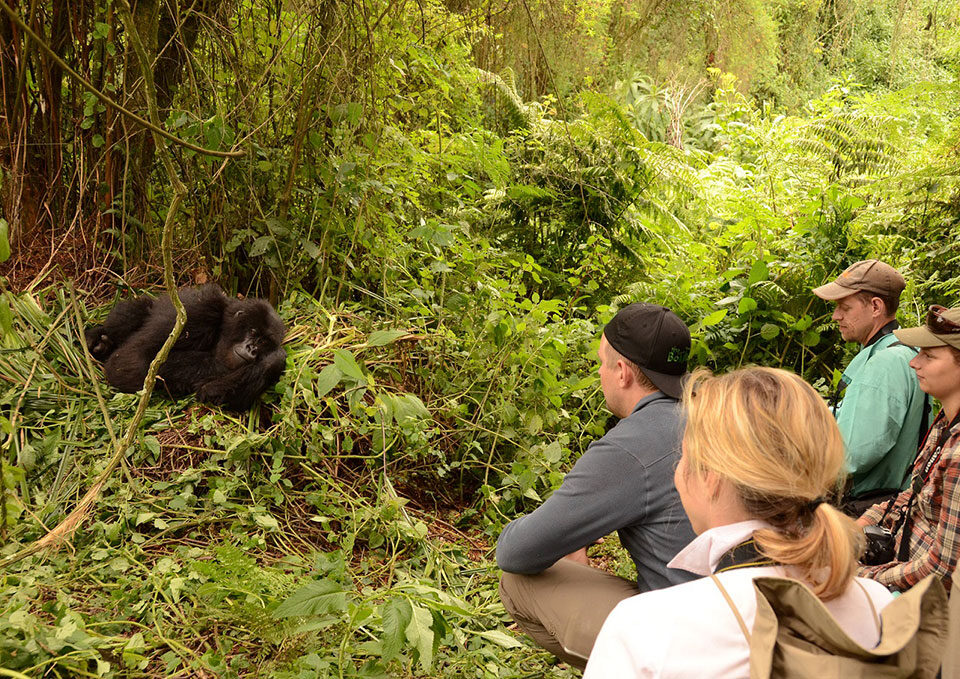
This is the pinnacle of your 14-day Rwanda safari. After an early breakfast, you head to the park headquarters in Kinigi for a briefing and to be assigned a gorilla family. Accompanied by expert rangers and armed guards, you enter the thick bamboo forest. The trek can take anywhere from one to five hours depending on the gorillas' location. Once they are located, you will spend one magical hour standing just meters away from them. Watching a silverback lead his family or infants playing is a profound experience that defies description. The silence of the forest is broken only by the gorillas' grunts and the rustle of leaves. After the trek, you return to the lodge for a celebratory lunch and a "gorilla certificate" ceremony, reflecting on a life-changing encounter.
Day 9: Golden Monkey Tracking and Twin Lakes
Today you return to the forest to track the rare and playful Golden Monkeys. These primates are endemic to the high-altitude forests of the Virungas and are known for their striking orange-gold fur. They live in large groups in the bamboo zones and are much more active than the gorillas, often leaping through the trees or foraging on the ground nearby. It is a lighter, more energetic trek that complements the gravity of the gorilla experience. In the afternoon, you will drive to the scenic Twin Lakes, Burera and Ruhondo. These deep blue lakes sit at the base of the volcanoes and offer spectacular views of the volcanic chain. A boat ride or a short hike around the lakeshore provides a peaceful end to your time in the mountains.
Day 10: Hiking Mount Bisoke
For those seeking a physical challenge, today is dedicated to hiking Mount Bisoke, one of the most prominent volcanoes in the range. The trek takes about six to seven hours in total and leads to a stunning crater lake at the summit (3,711 meters). The climb is steep and can be muddy, but the views across the Virunga chain and into the neighboring DR Congo are unrivaled. Along the way, you will pass through different vegetation zones, from bamboo forests to alpine meadows. If you prefer a less strenuous activity, you can opt to hike to the Dian Fossey tomb and the ruins of the Karisoke Research Center, where you can learn about the history of gorilla conservation. This day highlights the rugged, volcanic soul of Rwanda’s northern highlands.
Day 11: Transfer to Akagera National Park
The journey now turns toward the east. You will drive back through Kigali for a quick lunch before continuing to Akagera National Park. The landscape shifts dramatically from the mountainous north to the low-lying savanna and wetlands of the eastern border. Akagera is Rwanda's only savanna park and has undergone a massive restoration, including the reintroduction of lions and rhinos. Upon arrival, you will check into your lodge and head out for an evening game drive. This transition to the savanna highlights the ecological diversity of Rwanda, which many travelers overlook. As the sun sets, you may spot elephants heading toward the water or predators beginning their nightly hunt. The sounds of the bush replace the mist of the mountains as you begin the final leg of your safari.
Day 12: Full Day Safari in Akagera
Today is dedicated to exploring the northern reaches of Akagera, where wildlife density is highest. You will embark on a full-day game drive with a picnic lunch, searching for the "Big Five." The park's diverse habitats—from rocky outcrops to marshes—support a wide range of animals. You will navigate the park’s network of tracks, stopping at various lookout points over the vast Kilala plains. You can expect to see giraffes, zebras, buffaloes, and several species of antelope like the impala and topi. The park is also home to over 480 bird species, making it a paradise for birdwatchers. This full day in the wild allows for a deep immersion in the savanna rhythm, providing a classic African safari experience that contrasts beautifully with the primate treks of the previous week.
Day 13: Morning Game Drive and Lake Ihema Boat Cruise
Your second-to-last day begins with an early morning game drive in the southern sector of Akagera. This is often the best time to catch the early risers and predators returning from their hunts. After breakfast back at the lodge, you will embark on a boat safari on Lake Ihema, the park's largest lake. This is a highlight for aquatic wildlife, offering close-up views of large pods of hippos and massive Nile crocodiles basking on the banks. You will also see a variety of water birds, including fish eagles and kingfishers. The rest of the afternoon is spent at leisure at the lodge, perhaps taking a walk along the shore or relaxing by the pool. This blend of land and water safaris provides a comprehensive view of Akagera’s thriving ecosystem.
Day 14: Return to Kigali and Departure
On the final day of your 14-day Rwanda safari, you will enjoy a last breakfast overlooking the plains before driving back to Kigali (approximately 2-3 hours). Depending on your flight schedule, you will have time for any last-minute souvenir shopping at the Caplaki Craft Village or a final Rwandan coffee at a local cafe. Your guide will then transfer you to Kigali International Airport for your departure. You leave Rwanda with a complete picture of the country—from its savanna giants and mountain primates to its resilient people and stunning landscapes. This journey concludes with a deep appreciation for the profound beauty and progress of this remarkable African nation, having explored every major corner of the "Land of a Thousand Hills."
Is 14 days too long for a Rwanda safari with kids?
Far from being too long, 14 days is actually the ideal duration for a family safari. In the travel world, there is a concept known as "slow travel," which is particularly vital when children are involved. A 14-day itinerary allows you to adopt a "2-3 nights per camp" rule. This prevents the "safari fatigue" that occurs when kids are packed and unpacked every single morning.
By staying longer at each location, children have time to bond with the lodge staff, explore the grounds, and actually enjoy the swimming pools or play areas. It also provides "buffer time"—if a child is feeling unwell or simply needs a nap, you don't miss out on the only activity scheduled for that location. Two weeks allows you to intersperse high-energy trekking days with "do-nothing" days at Lake Kivu, ensuring that the family returns home feeling inspired rather than exhausted.
What is the minimum age for gorilla trekking in Rwanda?
The strict minimum age for gorilla trekking is 15 years. This regulation is enforced by the Rwanda Development Board (RDB) to protect both the children and the mountain gorillas. From a conservation standpoint, younger children are more likely to carry common childhood illnesses (like coughs or colds) to which gorillas have no immunity.
From a safety standpoint, a 15-year-old is generally considered to have the physical stamina and emotional maturity to remain calm and follow instructions if a silverback makes a "mock charge" or vocalizes loudly. Permits are checked against passports at the park headquarters, and there are virtually no exceptions to this rule. For families with children under 15, the 14-day itinerary must be designed with "parallel programming," where the adults trek while the children engage in supervised, age-appropriate activities nearby.
Are there activities for younger children (under 15)?
Absolutely. While the gorillas have a high age limit, Rwanda has worked hard to become a multi-generational destination. Children as young as six years old can participate in Golden Monkey tracking in Volcanoes National Park. This trek is generally shorter and flatter, and the monkeys' playful, high-energy behavior is often more entertaining for kids than the stationary nature of gorillas.
Beyond primates, younger children can enjoy boat trips on Lake Ihema (Akagera) or Lake Kivu, where they can spot hippos and bats. Cultural visits to the Iby’iwacu Village allow kids to learn traditional drumming, archery, and dancing. Even the Nyungwe Canopy Walk is open to children aged six and up (with parental supervision), offering a thrilling "bridge in the sky" experience. A 14-day trip ensures you can sprinkle these kid-friendly wins throughout the journey.
Is Rwanda safe for children?
Rwanda is widely regarded as one of the safest and most organized countries in Africa, making it an excellent choice for families. The streets of Kigali are remarkably clean and well-lit, and the country has a "zero-tolerance" approach to petty crime. For parents, the primary "safety" concern is usually health and logistics.
The national parks are managed with military precision; when you go into the forest, you are accompanied by professional, child-friendly rangers who prioritize your family's security. The roads are paved and well-maintained, reducing the risk of travel accidents often associated with "bush driving." Furthermore, Rwandans have a deeply child-centric culture; your children will likely be greeted with genuine warmth and "celebrity" status wherever you go, creating a welcoming atmosphere that puts both parents and kids at ease.
When is the best time for a family Rwanda safari trip?
The best time for a family trip is during the long dry season (June to September) or the short dry season (December to February). For families, the "dryness" of the season is a functional necessity. Drier trails mean less slipping, fewer "mucky" clothes to wash, and a significantly lower risk of a child becoming cold and miserable during a forest walk.
During these months, the weather is predictable, with sunny days and cool nights. In Akagera, the dry season makes wildlife viewing much easier for kids with shorter attention spans, as animals congregate predictably around water holes. The December-January window is particularly popular for families, as it aligns with school holidays and offers a spectacular "tropical Christmas" experience. While the dry season is "peak" in terms of cost, the ease of travel it provides is worth the investment for those traveling with young ones.
Can we do a safari in 14 days without long drives?
Yes, it is entirely possible to navigate Rwanda without the grueling 10-hour drives common in other African destinations. Because Rwanda is small (roughly the size of Albania or the state of Maryland), the drive between any two major hubs is rarely more than 3 to 5 hours. Using a private 4x4 vehicle allows you to stop whenever the kids need a bathroom break or a "stretch."
For families who want to eliminate driving entirely, Akagera Aviation offers helicopter transfers between Kigali, Nyungwe, and Volcanoes National Park. A flight that takes 30 minutes can replace a 5-hour drive, providing a thrilling "aerial safari" for the kids while maximizing your time at the lodges. Even without helicopters, a 14-day pace means you only move every few days, making the transit days feel like a scenic part of the adventure rather than a chore.
What family-friendly accommodation options exist?
The luxury lodge circuit in Rwanda has embraced the family market with "eco-chic" specialized suites. Properties like Bisate Lodge and Singita Kwitonda offer multi-bedroom villas that allow parents and children to stay under one roof while maintaining privacy. These lodges are designed with security in mind, often featuring fenced perimeters or elevated walkways.
Lower-priced but excellent options like Akagera Game Lodge or Mantis Kivu Queen (a house-boat) offer swimming pools and interconnected rooms. Many of these lodges provide "safari nannies" or specialized guides who can take the kids on "bug hunts" or storytelling sessions while the adults are at dinner. For a 14-day trip, choosing lodges with significant "living space" is key, ensuring the kids don't feel "room-bound" during downtime.
Do I need a private guide?
For a family, a private guide and vehicle are essential. While some parks offer "join-in" safaris, a private guide allows you to control the schedule. If your toddler has a meltdown at 10:00 AM, you can head back to the lodge immediately without worrying about other passengers. If your ten-year-old becomes obsessed with a specific dung beetle, your guide can spend an hour explaining it.
A private guide also becomes an "extended family member" for the 14 days. Rwandan guides are famously patient and often serve as incredible teachers for children, explaining the history and nature of the country in an engaging way. Having the same vehicle and driver for the entire two weeks provides a sense of consistency and security for children, who often find comfort in familiar faces while in a foreign environment.
What to pack for kids for a 14-day Rwanda safari trip?
Packing for kids requires a "layered and waterproof" strategy. Even in the dry season, the rainforests are damp and the mornings are cold. You need high-quality waterproof jackets and trousers, and most importantly, sturdy hiking boots that have been broken in before arrival.
Pack long-sleeved shirts and trousers to protect against stinging nettles and insects. Because 14 days is a long time, bring a "comfort bag" from home—favorite snacks, a tablet with downloaded movies for drives, and a few small toys. Don't forget high-SPF sunscreen and a wide-brimmed hat with a chin strap. It is also wise to bring a few "modest" outfits (covering knees and shoulders) for when the family visits local villages or the Genocide Memorial, ensuring the children are culturally respectful.
How do I prevent malaria during the trip?
Malaria prevention is a two-pronged approach: medication and bite avoidance. You must consult a travel clinic or your pediatrician well in advance to get the correct malaria prophylactics (such as Malarone) for your children. Rwanda is a malaria-risk zone, particularly in lower altitudes like Akagera and Lake Kivu.
Bite avoidance is equally critical. Ensure your children wear long sleeves and trousers from dusk until dawn, and apply a child-safe insect repellent containing DEET or Picaridin. All reputable lodges provide mosquito nets over the beds and perform "turn-down" services where they spray the rooms with insecticide. In a 14-day trip, being diligent every single evening is the key. Most families find that with proper medication and these simple precautions, the risk is managed very effectively.
Are the hotels suitable for children?
Modern Rwandan hotels and lodges are remarkably well-suited for children. Most high-end and mid-range properties feature swimming pools, which are the ultimate "reset button" for kids after a long day in the bush. The gardens are usually expansive and secure, providing space for children to run around.
In terms of dining, Rwandan lodges are very accommodating. While they serve sophisticated local and international cuisine, the chefs are almost always happy to whip up child-friendly menus like pasta, grilled chicken, or fresh fruit platters. For a 14-day stay, this flexibility is vital to avoid "food fatigue." Many lodges also offer laundry services with a 24-hour turnaround, which is a lifesaver for parents whose kids have inevitably found the nearest mud puddle in the rainforest.
What should we do with younger kids during gorilla treks?
This is a common concern for parents of children under 15. The solution provided by Rwanda’s luxury lodges is world-class "Junior Ranger" programs. While parents are trekking, children stay at the lodge under the care of specialized childminders. They don't just "sit in a room"; they engage in nature-based activities like making traditional crafts, learning animal tracking, or identifying birds in the lodge gardens.
Some lodges even arrange for a "mini-trek" to a nearby community school or a visit to the Dian Fossey Campus for interactive learning. This ensures the children feel they are on their own "safari" rather than being "left behind." For a 14-day trip, scheduling these days with pre-planned activities for the kids ensures the parents can enjoy their gorilla encounter without any "parental guilt" or worry about the children's safety.
Is it necessary to visit Akagera National Park for kids?
Yes, Akagera is an absolute "must" for families. While the gorillas are the "bucket list" item, Akagera provides the variety that keeps children engaged. It is the only place in Rwanda to see the "Big Five," and for a child, seeing a lion or a giraffe is often more exciting than seeing a primate.
The park offers boat rides on Lake Ihema, which is a low-impact way to see hippos and crocodiles—perfect for kids who might find long game drives tiring. The landscape is open and sunny, providing a nice contrast to the dark, enclosed forests of the west. In a 14-day itinerary, Akagera is usually the first stop, serving as a high-energy "hook" that gets the children excited about the wildlife adventure that lies ahead.
How early should we book the 14-day Rwanda safari itinerary?
For a family, the "booking window" should be 4 to 6 months in advance, or even longer if you are traveling during the Christmas or Summer holidays. The primary bottleneck is gorilla permits and family suites. There are only 96 gorilla permits available per day in the entire country; if your family needs four or five permits on the same day for the same family group, you need to be at the front of the queue.
Furthermore, many lodges only have one or two "Family Villas" or interconnected rooms. Once these are gone, your family might have to stay in separate rooms, which is often not ideal for parents with young children. A 14-day trip involves many moving parts—vehicle, guide, permits, and specific room types—so early planning is the only way to ensure the itinerary remains seamless and "family-friendly."
What is a good family route for 14 days Rwanda safari?
The most effective family route follows a "Circle of Discovery" that minimizes back-tracking.
- Days 1-2: Kigali. Start slow. Visit the Genocide Memorial for the older kids and the local markets for the younger ones.
- Days 3-5: Akagera. Head east for the Big Five and boat rides.
- Days 6-8: Nyungwe. Drive south for the Canopy Walk and chimpanzees (for older kids) or birding and falls (for younger ones).
- Days 9-11: Lake Kivu. This is the crucial "middle rest." Swim, kayak, and relax.
- Days 12-14: Volcanoes. End with the gorillas and golden monkeys.
Booking 14 days Rwanda safari with us Roads of Adventure safaris
To book your 14-day Rwanda safari with Roads of Adventure Safaris, you can contact them directly through their Official Website or by emailing info@roadsofadventuresafaris.com. They are a reputable operator specializing in personalized primate and wildlife experiences across East Africa.
