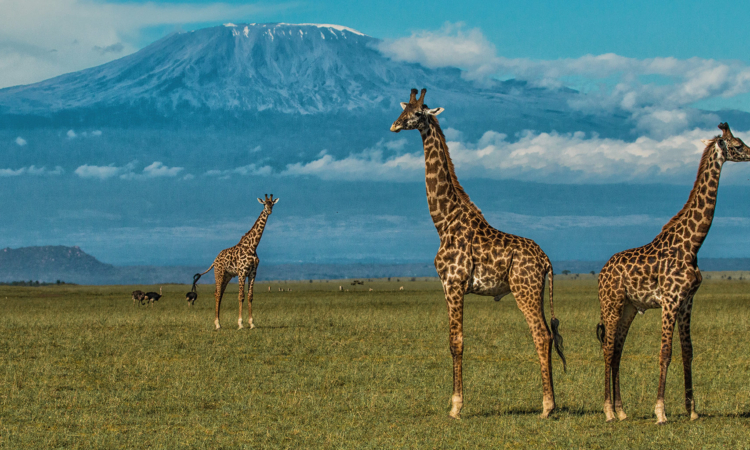
Amboseli National Park delivers arguably the most iconic wilderness experience in East Africa. Nestled right beneath the shadow of Mount Kilimanjaro—Africa’s highest peak at 5,895 meters (19,341 feet)—this 392-square-kilometer haven is world-renowned for its booming population of over 2,000 free-ranging African elephants. What makes Amboseli so special is the dramatic contrast in its landscape. Underground meltwater from Kilimanjaro feeds permanent, emerald-green marshes like Enkongo Narok, attracting massive tuskers, hippos, and over 400 bird species to graze against the dry, dusty plains. Located just a 4-to-5-hour drive or 35-minute bush flight from Nairobi, it fits effortlessly into any wider safari circuit. Whether you're climbing Observation Hill for 360-degree panoramas or visiting a Maasai Manyatta, Amboseli delivers unforgettable, year-round magic.
Popular Amboseli safari tour packages
2-days-best-amboseli-safari-in-kenya
3-days-best-amboseli-tour-package
4-days-luxury-amboseli-national-park-from-nairobi
5-days-best-of-kenya-wildlife-safari-to-masai-mara-lake-nakuru-and-amboseli-national-park
5-days-amboseli-tsavo-west-and-tsavo-east-kenya-wildlife-safari-tour
5-days-best-of-amboseli-tsavo-and-mombasa-beach-holidays
7-days-amboseli-kenya-and-serengeti-fly-in-tanzania-safari
1. Iconic Elephant Populations
When it comes to witnessing free-ranging African elephants up close, few places on earth can rival Amboseli National Park. Monitored continuously for over five decades by researchers with the Amboseli Elephant Research Project, the park boasts a thriving population of over 2,000 individual elephants living in tightly knit family units. Because these gentle giants have been carefully protected for generations, they exhibit remarkably relaxed behavior around vehicles on a Kenya wildlife safari.
It’s an incredible privilege to watch mature matriarchs lead multiple generations across dusty tracks, with playful calves tumbling through the dry soil alongside protective aunts. Amboseli is also world-famous for being one of the final strongholds for Africa's rare "Super Tuskers"—legendary bull elephants carrying ivory tusks so heavy and long that they sweep the ground. Spending an afternoon parked quietly as a family herd glides silently past your 4x4, trunk to tail, offers an intimate connection to wildlife that stays with you forever.
2. Mount Kilimanjaro Views
Rising dramatically just across the border in Tanzania, Mount Kilimanjaro serves as the breathtaking, iconic backdrop for your safari adventures in Amboseli. Standing at an imposing 5,895 meters (19,341 feet) above sea level, "Kili" is the tallest free-standing mountain in the world. Its snow-capped peak, Kibo, dominates the southern horizon and creates a striking visual contrast against the gold and dust of the open savannah.
The early morning hours—between 6:00 AM and 8:30 AM—offer the clearest views before equatorial heat generates thick cloud cover that often wraps around the summit by midday. Photographing a towering elephant matriarch or a long line of giraffes walking across golden plains with the gleaming snows of Kilimanjaro framed behind them is widely considered the holy grail of African photography. It turns every game drive on a Kenya wildlife safari into a living masterpiece.
3. Observation Hill (Normatior)
Located in the western sector of the park, Observation Hill—known locally in the Maa language as Normatior—is a prominent volcanic hill that offers a rare and welcome opportunity to stretch your legs on foot. Because visitors are generally required to stay inside their vehicles while inside national parks, this designated, ranger-monitored lookout site is a favorite stop for travelers taking a break from game drives.
A gentle, stone-paved staircase with roughly 100 steps winds up the hill to a shaded wooden viewing pavilion at the summit. Once you reach the top, you are rewarded with an extraordinary 360-degree panoramic view of the entire 392-square-kilometer reserve. From this elevated vantage point, you can look down over the shimmering white expanse of the dry Lake Amboseli basin on one side, and scan the vibrant, green reed-beds of the Enkongo Narok swamp on the other. Equipped with binoculars, you can watch herds of buffalo, hippos, and elephants moving through the marshlands below like small miniatures in a massive natural canvas.
4. Ol Tukai and Enkongo Narok Swamps
Amboseli’s defining feature is its vibrant network of permanent, spring-fed marshes, with Ol Tukai and Enkongo Narok serving as the ecological heart of the park. Despite receiving low annual rainfall, Amboseli remains a lush oasis because melting snow and underground streams from Mount Kilimanjaro filter through porous volcanic rock, emerging as crystal-clear freshwater springs in the center of the plains.
While the surrounding savannah becomes dry and dusty during dry seasons, these green wetlands remain rich in water and vegetation year-round. They act as a magnet for thousands of animals, creating incredible concentrations of wildlife within compact areas. You’ll frequently spot herds of elephants wading deep into the emerald-green reeds to feed on succulent water plants, while hippos splash in deep pools and Cape buffaloes wallow in cool mud to beat the afternoon heat. These swamps serve as life-sustaining oases that keep wildlife thriving throughout the year on your Kenya wildlife safari.
5. Exceptional Birdwatching
For bird lovers and nature enthusiasts, Amboseli is nothing short of a paradise, boasting over 400 recorded avian species across its varied habitats. The dramatic transition from dry acacia scrubland to expansive freshwater marshes allows you to spot an extraordinary diversity of birdlife within a single game drive.
Around the edges of the Enkongo Narok and Longinye swamps, waterbirds gather in astonishing numbers. You will easily spot elegant Grey Crowned Cranes—Kenya’s national bird—strutting through the grass, alongside Great White Pelicans, Saddle-billed Storks, Goliath Herons, and African Fish Eagles perched high on dead snags. In the drier bush, vivid flashes of color catch your eye as Lilac-breasted Rollers, Superb Starlings, and Little Bee-eaters dart between thorn branches. During the wet season from November to April, migratory birds from Europe and North Africa arrive to join the resident populations, turning the seasonal lakes into vibrant hubs filled with flamingos and wading birds.
6. Diverse Predator Sightings
While herbivores like elephants, zebras, and wildebeests dominate the open landscape, Amboseli is also home to a healthy population of carnivores. The open, flat terrain of the park makes tracking predators significantly easier than in areas with dense vegetation, providing fantastic opportunities for wildlife lovers on a Kenya wildlife safari.
Lions are frequently spotted resting on warm dirt mounds or patrolling the tree line along the marshes early in the morning before heat sets in. Cheetahs thrive in the open grassland sectors, using fallen trees or low mounds as vantage points to scan for Thomson's gazelles. Spotted hyenas are particularly abundant here, often seen wading through shallow swamp waters or scavenging near kill sites. While leopards are more secretive, careful scanning of the acacia trees along the dry riverbeds near Kimana Gate can reward patient visitors with a rare look at these masterfully camouflaged big cats.
7. Authentic Maasai Culture
An Amboseli safari extends beyond wildlife to offer deep cultural connections with the Maasai people, who have lived in harmony alongside the region's wildlife for centuries. Surrounding the national park are community group ranches where local Maasai families maintain their semi-nomadic pastoralist way of life. Visiting an authentic Maasai village (Manyatta) provides a respectful look into their vibrant customs, heritage, and deep connection to the land.
Your visit begins with a energetic welcome ceremony, where young warriors (Morans) perform the famous Adumu jumping dance while chanting traditional songs. A village elder will guide you inside the thorny acacia perimeter fence (boma) to tour a mud-and-thatch home (nkaji), built by Maasai women using earth, wood, and thatch. You’ll learn firsthand about their cattle-herding traditions, age-old bush medicines, and how community conservancies help protect wildlife habitats while funding local schools and clean water projects.
8. Stunning Photography
Whether you are a seasoned professional carrying telephoto lenses or an enthusiast capturing memories on a smartphone, Amboseli delivers unmatched photographic inspiration. The ecosystem offers incredible dramatic contrasts: blinding white dust bowls on the dry Lake Amboseli bed, emerald-green marshlands filled with water lilies, and dark acacia woodlands, all framed beneath the towering, snow-dusted peak of Mount Kilimanjaro.
The light here is legendary. In the early morning, soft golden light illuminates the snows of Kilimanjaro while dust kicked up by marching elephant herds creates a glowing, hazy atmosphere. In the late afternoon, as the equatorial sun dips below the horizon, dramatic silhouettes of giraffes and acacia trees stand out against fiery orange and purple skies. From intimate animal portraits to sweeping landscape shots, every angle in Amboseli offers a picture-perfect frame.
9. Accessibility and Itinerary Flow
One of Amboseli’s biggest advantages is its prime location and ease of access. Situated in southern Kenya near the Tanzanian border, the park is approximately 220 to 240 kilometers (136 to 150 miles) south of Nairobi. The drive takes just 4 to 5 hours along smooth, paved highways before turning onto unpaved park access roads, making it an easy, comfortable overland journey.
For those looking to maximize their time in the bush, daily 35-minute domestic flights operate from Nairobi’s Wilson Airport (WIL) directly to the Amboseli Airstrip. Because of its convenient position, Amboseli fits seamlessly into broader East African travel routes. It pairs effortlessly with nearby destinations like Tsavo West National Park or Lake Naivasha, serves as a great starting point for a longer circuit heading into the Masai Mara, and offers simple road transfers across the Namanga border for travelers continuing their Kenya wildlife safari onward into Tanzania.
10. Year-Round Accessibility
Amboseli is a year-round safari destination, with each season offering its own unique charm and distinct advantages. The long dry season—spanning from June through October—is widely considered the peak period for wildlife viewing. As surface water dries up across the wider ecosystem, thousands of animals concentrate around the permanent swamps of Ol Tukai and Enkongo Narok, creating dense clusters of game that are easy to locate.
Conversely, the wet seasons (November to December and March to May) transform the landscape into a lush, green paradise. During these months, the air clears of dust, revealing crisp, crystal-clear views of Mount Kilimanjaro. Rainwater fills the dry lake basin, attracting thousands of migratory birds, while lower tourist numbers mean a quieter, more exclusive experience on the trail. No matter what month you choose to travel, Amboseli promises incredible wildlife encounters and breathtaking mountain vistas.
Why is Amboseli famous for close elephant encounters in Kenya?
If getting up close to elephant herds is top on your wish list, Amboseli National Park is an absolute must-visit. Continuous monitoring by the Amboseli Elephant Research Project for over 50 years has cultivated a sanctuary for more than 2,000 African elephants. Because generations of these animals have grown up protected from poaching, they exhibit remarkably calm, natural behavior around humans, making for extraordinarily peaceful encounters.
Watching matriarchs lead their families across dusty savannah tracks—with playful, wobbly calves kicking up fine soil alongside protective aunts—is an intimate experience you won't easily find elsewhere. Amboseli also stands out as one of Africa's final refuges for legendary "Super Tuskers"—mature bull elephants whose ivory tusks are so exceptionally long they sweep the ground. Spending an afternoon parked quietly in a 4x4 while a mega-herd glides past, trunk-to-tail, gives you a profound, heart-warming sense of connection to nature. It is this rare level of trust between wild giants and visitors that makes including Amboseli on your Kenya wildlife safari itinerary completely unforgettable.
How clear are Mount Kilimanjaro views from Amboseli National Park?
Rising majestically just across the Tanzanian border, Mount Kilimanjaro serves as Amboseli’s most breathtaking, iconic backdrop. Standing at an imposing 5,895 meters (19,341 feet), "Kili" is the highest free-standing mountain on Earth. Its snow-dusted peak, Kibo, looms over the southern horizon, creating a striking visual contrast against the golden, sun-baked plains below.
The early morning hours—between 6:00 AM and 8:30 AM—offer the clearest vistas. Before equatorial midday heat builds thick cloud cover around the summit, the air remains crisp and crystal-clear. Framing a towering elephant matriarch or a tall giraffe walking across the savannah with the gleaming snows of Kilimanjaro in the background is widely considered the holy grail of African wildlife photography. Including Amboseli on your itinerary guarantees a front-row seat to this living masterpiece, ensuring every dawn game drive feels like stepping right into a postcard.
What makes Observation Hill a must-visit site in Amboseli?
Located in the park’s western sector, Observation Hill (known locally as Normatior in Maa) offers a rare and welcome chance to step out of your safari vehicle and explore on foot. Because national park safety regulations generally keep visitors inside cars, this ranger-monitored lookout provides a refreshing change of pace during a long day of game drives.
A gentle stone staircase with roughly 100 steps leads up to a shaded wooden pavilion at the summit. Once you reach the top, you are rewarded with a sweeping 360-degree panoramic view across the entire 392-square-kilometer reserve. Looking out, you can take in the stark, white expanse of the dry Lake Amboseli basin on one side, while scanning the vibrant green reed-beds of the Enkongo Narok swamp on the other. Binoculars in hand, you'll watch herds of Cape buffalo, hippos, and elephants moving through the marshlands far below, putting the sheer scale of this thriving ecosystem into clear, beautiful perspective.
How do Kilimanjaro springs feed Amboseli’s permanent marshy swamps?
Despite receiving minimal annual rainfall, Amboseli remains a lush, life-sustaining oasis thanks to an incredible geological feature. Melting snow caps and underground streams from Mount Kilimanjaro filter down through miles of porous volcanic rock beneath the earth, surfacing directly in the heart of the park as crystal-clear, freshwater springs.
These permanent springs feed the expansive Ol Tukai and Enkongo Narok swamps, creating rich wetlands that stay green even during the driest seasons. While surrounding grasslands dry into dust, these marshes act as natural magnets for thousands of animals. You’ll frequently spot elephant families wading waist-deep into emerald-green reeds to feed on lush aquatic plants, while hippos splash in deep channels and buffaloes wallow in cool mud to escape the heat. Including Amboseli on your itinerary lets you witness this unique natural miracle, where mountain meltwater keeps thousands of wild animals thriving year-round in an otherwise arid landscape.
Why is Amboseli considered a top paradise for bird watchers?
For birding enthusiasts and casual nature lovers alike, Amboseli National Park is an absolute paradise, boasting over 400 recorded avian species. The sharp transition from dry acacia scrubland to expansive freshwater marshes creates diverse micro-habitats that attract an incredible variety of birdlife within a single game drive.
Along the marshy margins of the Enkongo Narok and Longinye swamps, giant waterbirds gather in astonishing numbers. You’ll easily spot elegant Grey Crowned Cranes—Kenya’s national bird—strutting through the grass, alongside Great White Pelicans, Saddle-billed Storks, Goliath Herons, and African Fish Eagles calling from dead trees. In the drier scrub, bright pops of color catch your eye as Lilac-breasted Rollers, Superb Starlings, and Little Bee-eaters dart between thorn branches. During the wet season from November to April, thousands of European and African migratory birds arrive, transforming seasonal lakes into vibrant, noisy hubs filled with flamingos and shorebirds.
Can you spot big cats during game drives in Amboseli?
While giant herbivores dominate the headlines, Amboseli is also home to a thriving population of stealthy carnivores. The park’s open, flat terrain makes tracking predators significantly easier than in parks with dense bush, rewarding keen eyes with thrilling big cat sightings during early morning drives.
Lions are frequently spotted resting on warm dirt mounds or patrolling swamp tree lines before the sun gets too hot. Cheetahs love the wide-open grassland sectors, using fallen logs or low anthills as elevated lookouts to scan for Thomson's gazelles. Spotted hyenas are particularly abundant here, often seen splashing through shallow marsh waters or scavenging near kill sites. While leopards are naturally secretive, scanning the acacia trees along dry riverbeds near Kimana Gate often rewards patient visitors with a glimpse of a masterfully camouflaged cat resting in the branches. Adding Amboseli to your circuit ensures a well-rounded predator-and-prey wildlife experience.
How does visiting a Maasai Manyatta enrich your safari?
Including a visit to a traditional Maasai homestead (Manyatta) in the community group ranches surrounding Amboseli adds a deeply meaningful human connection to your wildlife journey. The Maasai people have lived in harmony alongside roaming wildlife for centuries, and visiting an authentic village offers a respectful window into their rich culture and semi-nomadic pastoralist lifestyle.
Your visit begins with a high-energy welcome ceremony, where young warriors (Morans) perform the iconic Adumu jumping dance accompanied by rhythmic chanting. A village host will guide you inside a mud-and-thatch home (nkaji), constructed by local women using earth, wood, and thatch. Sitting inside, you’ll engage in open conversations about cattle herding traditions, ancestral bush medicines, and how community conservancies protect wildlife corridors while funding local schools and clean water. Purchasing handmade beadwork directly from women artisans before you leave provides direct support to host communities, making your visit impactfully rewarding.
What makes Amboseli a world-class destination for wildlife photography?
Whether you are a seasoned photographer with heavy telephoto lenses or an enthusiast capturing memories on a smartphone, Amboseli delivers unmatched visual drama. The landscape offers stunning, high-contrast textures: blinding white dust bowls on the dry Lake Amboseli bed, emerald-green marshes packed with water lilies, and dark acacia woodlands—all set beneath the towering, snow-capped peak of Mount Kilimanjaro.
The natural light here is legendary among photographers. In the early morning, soft golden rays illuminate Kilimanjaro’s glaciers while dust kicked up by marching elephant herds creates a glowing, ethereal atmosphere. In the late afternoon, as the equatorial sun dips low, dramatic silhouettes of giraffes and umbrella acacias stand out against fiery orange and deep purple skies. From close-up wildlife portraits to sweeping landscape compositions, every single angle in Amboseli offers a picture-perfect, frame-worthy shot.
How easily does Amboseli fit into wider Kenya itineraries?
One of Amboseli’s absolute best features is its convenient geographic location and smooth travel logistics. Situated in southern Kenya near the Tanzanian border, the park lies approximately 220 to 240 kilometers (136 to 150 miles) south of Nairobi. The overland drive takes roughly 4 to 5 hours along paved highways, making it a comfortable, budget-friendly journey.
For travelers looking to maximize time in the bush, daily 35-minute domestic flights operate directly from Nairobi’s Wilson Airport (WIL) to the Amboseli Airstrip. Because of its strategic position, Amboseli integrates seamlessly into broader travel plans. It pairs naturally with nearby destinations like Tsavo West National Park or Lake Naivasha, serves as an easy stepping stone before flying into the Masai Mara, and offers simple road transfers across the Namanga border for travelers continuing their safari onward into Tanzania’s northern circuit.
Is Amboseli National Park worth visiting at any season?
Amboseli is a true year-round safari destination, with each season offering its own unique appeal and distinct advantages. The long dry season—spanning from June through October—is widely considered peak wildlife viewing time. As surface water dries up across wider regional plains, thousands of animals concentrate around the permanent swamps of Ol Tukai and Enkongo Narok, creating incredible, high-density wildlife viewing.
On the flip side, the wet seasons (November to December and March to May) transform the dusty landscape into a lush, green paradise. Rain washes the air clean of dust, revealing crisp, crystal-clear views of Mount Kilimanjaro. Water fills the dry lake basins, attracting thousands of migratory birds, while lower tourist numbers mean a quieter, more exclusive safari experience on the trails. No matter what month you decide to travel, Amboseli promises breathtaking mountain views and unforgettable animal encounters.
Booking Kenya wildlife safari with us Roads of Adventure safaris
Planning your dream Kenya safari with Roads of Adventure Safaris is simple and completely stress-free. As a local ground operator, they build custom, tailorable itineraries to fit your exact budget, schedule, and travel style—whether that’s a classic 7-day Masai Mara and Amboseli circuit or an epic 10-day Kenya safari and Uganda gorilla trekking combo.
From your initial inquiry, their team manages all ground logistics: reserving handpicked lodges, securing park permits, and providing custom 4x4 Land Cruisers with expert local driver-guides. All you need to do is pick your dates and get ready for the ultimate African adventure!
