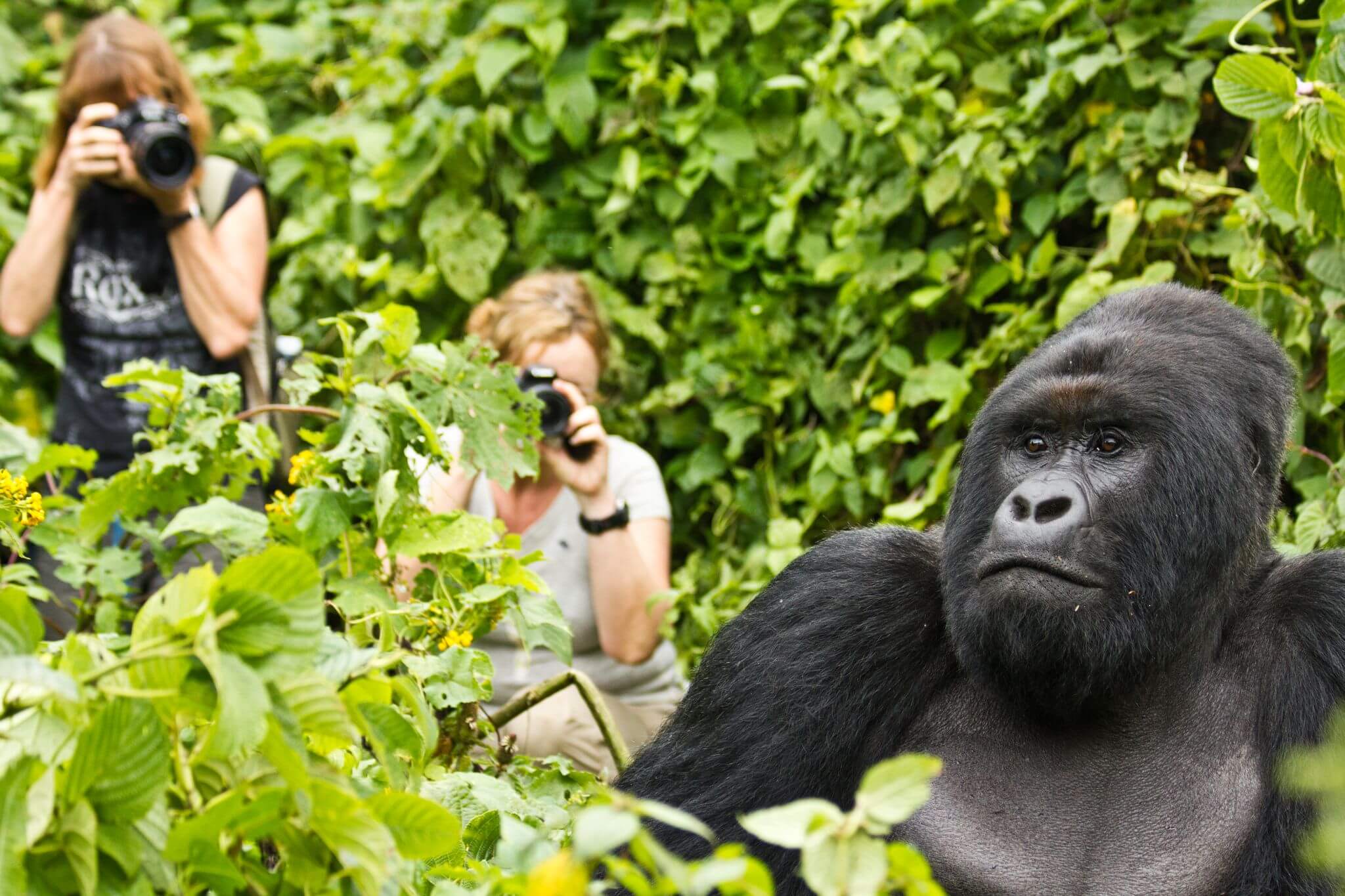
A Rwanda Gorilla Trekking Safari is an unforgettable experience. In Volcanoes National Park, visitors can watch endangered mountain gorillas in their natural forest habitat. But seeing them up close comes with an important responsibility: give the gorillas plenty of space and follow your ranger’s instructions throughout the visit.
You may see the minimum distance described as 7 metres (about 23 feet) in some travel information. However, distance guidance has varied over time, and Rwanda Development Board visitor guidance has also specified 10 metres. Before your trek, check the latest rules with the Rwanda Development Board or your tour operator. On the day, your park guide’s instructions take priority.
2-days-luxury-rwanda-gorilla-trekking-safari-from-kigali-city
3-days-rwanda-gorilla-trekking-and-golden-monkey-tracking-in-volcanoes
3-days-rwanda-gorilla-trekking-safari-itinerary-in-volcanoes-park
4-days-rwanda-golden-monkey-tracking-and-bisoke-hiking-tour-package
4-days-best-volcanoes-and-bwindi-impenetrable-national-park-double-gorilla-trekking
4-days-rwanda-primates-safari-gorilla-trekking-and-chimpanzee-all-inclusive-package
5-days-best-chimpanzee-tracking-golden-monkey-tracking-and-visit-to-lake-kivu
5-days-rwanda-double-gorilla-trekking-and-golden-monkey-tracking
5-days-uganda-gorilla-trekking-chimps-and-rwanda-golden-monkey-tracking-combo
6-days-gorillas-trekking-chimpanzee-tracking-and-golden-monkeys-safari-in-rwanda
7-days-best-gorilla-trekking-and-other-highlights-of-rwanda-tour
8-days-best-of-rwanda-uganda-safari-volcanoes-to-best-uganda-safari-parks
1. Protecting gorillas from human illnesses
Mountain gorillas can be vulnerable to illnesses carried by people. A respiratory infection that feels mild to a visitor may pose a serious risk to a gorilla. Keeping a respectful distance helps reduce close-range exposure to coughs, sneezes and other respiratory droplets.
For the same reason, don’t trek if you feel unwell. Follow the park’s current hygiene and mask instructions; requirements may change, so don’t assume masks will be supplied. Visitors should never touch a gorilla, even if one comes close, and should avoid leaving rubbish or personal items in the forest.
2. Giving gorilla families room to behave naturally
The gorillas visited on a Rwanda trek are accustomed to seeing people, but they remain wild animals. Too much noise or crowding can interrupt their feeding, grooming and rest.
A calm, well-spaced group gives the gorillas more room to move and helps make the encounter less intrusive. Gorilla visits are also time-limited, and visitor numbers are restricted. Rwanda’s published booking guidance sets a maximum of eight visitors per gorilla group per day, though visitors should confirm current arrangements when booking.
3. Staying safe around powerful wild animals
Gorillas are generally peaceful, but they are strong animals and may react if they feel threatened or crowded. Keeping the recommended distance gives both gorillas and visitors more space. It also helps the group respond calmly if a gorilla changes direction or moves nearby.
Your guide knows how to read the situation and will tell you where to stand and when to move. Stay close to the group, avoid sudden movements and follow instructions promptly. Never try to approach a gorilla for a better photograph.
What if a gorilla comes closer?
Gorillas move freely through the forest, so one may approach or pass near visitors. If that happens:
· Stay calm and still. Don’t reach out, step toward the gorilla or try to touch it.
· Follow your ranger’s instructions. Move only when and how your guide directs.
· Keep your voice low. Avoid shouting, sudden gestures or startling movements.
· Give the gorilla a clear path. Let it decide where to go; don’t block or follow it.
· Don’t run. If you feel unsure, focus on your guide and follow their lead.
Make your gorilla trek respectful
The distance rule is about more than getting a good view. It helps protect gorillas from disease, reduces disturbance and makes the encounter safer for everyone. Before setting out for your Rwanda gorilla trekking safari, attend the park briefing, check the latest guidance and listen to your ranger throughout the visit.
Why do park authorities enforce a distance rule during a gorilla trek?
The primary goal is protecting endangered mountain gorillas while keeping human visitors safe. Mountain gorillas share nearly 98% of our DNA, making them uniquely susceptible to airborne human pathogens. Maintaining distance minimizes the transmission risk of respiratory viruses, colds, and bacteria. Beyond health factors, the buffer preserves wild gorilla dynamics. Even habituated troops require physical space to feed, groom, and rest without feeling cornered. Enforcing a physical boundary prevents chronic stress in the habituated families, ensuring eco-tourism remains sustainable. Furthermore, adult male silverbacks are exceptionally powerful wild animals weighing up to 400 pounds. Keeping space helps prevent defensive posturing or territorial charges, allowing park rangers to manage group positioning smoothly. Ultimately, distance rules safeguard fragile wildlife, preserve natural animal behaviors, and guarantee a secure, peaceful environment for everyone involved.
Is the official minimum tracking distance 7 meters or 10 meters in Rwanda?
Historically, wildlife authorities like the Rwanda Development Board enforced a strict 7-meter (23-foot) buffer zone. However, in recent years—particularly following global health heightenings—guidelines updated to recommend a 10-meter (33-foot) distance to enhance biological security. In practice, travelers may encounter marketing materials or older guidebooks citing 7 meters, while official park briefings stress 10 meters. The golden rule on any trek is simple: follow your specific ranger’s real-time instructions. Forest terrain, dense bamboo thickets, and moving wildlife alter spatial dynamics constantly. Rangers understand local vegetation density, troop behavior, and current conservation protocols intimately. Whether the official baseline stated on paper is 7 or 10 meters, maintaining maximum practical space keeps the habituated troop relaxed while ensuring your group adheres to the highest conservation standards throughout the encounter.
How easily can mountain gorillas catch respiratory illnesses from human visitors?
Because of our shared genetic heritage, mountain gorillas lack immunity to many common human pathogens. Microscopic respiratory droplets expelled when coughing, sneezing, or breathing heavily can travel several feet through humid forest air. A minor virus that causes a mild runny nose or tickle in a human throat can escalate into severe pneumonia within an isolated gorilla troop, potentially causing fatal outcomes. Because these primates live in close-knit family structures, an infection introduced to one individual quickly spreads across the entire group. This extreme biological vulnerability is precisely why strict distance guidelines, mandatory surgical face masks around primates, and clear health reporting policies exist. Protecting these magnificent creatures requires constant vigilance, as keeping a clean environment and adequate spatial distance remains the absolute first line of defense against devastating viral outbreaks.
What should you do if a curious juvenile or adult gorilla walks toward you?
Wild animals do not measure meter distances, so young, playful juveniles or moving adults frequently close the gap on their own. If a gorilla approaches your position, remain completely calm and hold your ground. Do not step forward, reach out, or attempt to touch the animal, even if a playful infant brushes against your trousers. Gently lower your eye line, step back slowly only if directed by your lead tracker, and ensure you never block the gorilla’s path of movement. Avoid making direct eye contact, as intense eye contact can be interpreted as a aggressive challenge by dominant members. Keep your voice to a quiet whisper, crouch slightly to appear smaller and non-threatening, and let the ranger handle the troop's movement while you quietly enjoy the moment.
What health protocols apply if a traveler feels sick on the morning of their trek?
If you wake up with symptoms of a cold, flu, fever, cough, or stomach bug, you must report it immediately to park authorities or your tour operator. Guests who display active symptoms of contagious illness are prohibited from joining gorilla tracking groups to prevent introducing dangerous infections into the forest. While missing a long-anticipated excursion feels disappointing, conservation regulations prioritize gorilla health above all else. In most cases, reporting your illness promptly allows park managers to review your booking and help arrange alternative solutions or rescheduled permits where policies permit. Additionally, all trekking guests must wear protective face masks upon approaching the gorillas and practice thorough hand hygiene, ensuring that even asymptomatic travelers avoid accidental contamination in the fragile jungle habitat.
Why are gorilla visits limited to eight people for just one hour per day?
Limiting group size to eight visitors per habituated family keeps the human footprint minimal and minimizes stress on the troop. Large crowds generate noise, take up extensive space in dense brush, and overwhelm animals, whereas a compact group stays unobtrusive. Restricting the actual contact time to exactly 60 minutes prevents daily routines from being disrupted. Gorillas require vast amounts of uninterrupted time to forage for bamboo shoots, digest fibrous foliage, nap, and engage in vital social grooming. Prolonged human contact risks altering wild habits, increasing stress hormones, or making primates overly accustomed to human presence. By capping daily visitor quotas and enforcing a strict one-hour clock, wildlife managers maintain a delicate balance between revenue-generating conservation tourism and genuine wildlife protection.
How does keeping a respectful distance encourage natural gorilla behaviors?
When mountain gorillas feel unthreatened by human observers, they continue their daily activities naturally rather than halting, hiding, or displaying defensive behaviors. Maintaining a wide physical buffer allows silverbacks to focus on guarding their family, females to nurse infants comfortably, and juveniles to wrestle playfully in the vegetation. If tourists crowd too close, primates often become tense, stop feeding, or move into dense cover where visibility is poor. Spatial distance transforms visitors from intrusive threats into neutral background presence. This calm atmosphere gives travelers an authentic glimpse into genuine wild primate life in Volcanoes National Park. Observing uninhibited feeding, grooming, and social bonding creates far richer photographic opportunities and far deeper personal memories than watching stressed animals react nervously to crowded surroundings.
What protective equipment or hygiene practices are required during a trek?
Trekkers are required to follow strict hygiene measures before and during their trek into Volcanoes National Park. Before entering the forest, visitors must sanitize their hands at the park station. When approaching the gorilla family—usually when trackers signal you are within range—all guests must put on clean surgical face masks covering both nose and mouth. Wearing masks reduces the spread of airborne droplets in the humid air. Additionally, visitors must pack out all trash, tuck away loose gear, and avoid eating or drinking within close proximity of the primates. Dropping food scraps or litter introduces foreign bacteria and encourages scavenging behaviors. Following these simple equipment and hygiene protocols safeguards the ecosystem and keeps the gorillas' living space pristine for future generations.
How do park rangers handle situations where a silverback displays defensive behavior?
Silverbacks are fiercely protective of their troops and may beat their chests, vocalize, or perform a sudden "bluff charge" if they feel their space is invaded or their infants are threatened. If a silverback acts aggressively, park rangers immediately step in to de-escalate the situation. Rangers interpret animal vocalizations and body language expert level, knowing instantly whether a charge is a bluff or a serious warning. They will instruct your group to stay still, crouch low, and avoid eye contact while making soothing, guttural vocalizations that reassure the dominant male. Rangers maintain clear group organization so visitors never panic, run, or make sudden movements. Following your guide's instructions keeps the encounter calm, safe, and controlled, even during intense wildlife displays.
How can travelers best prepare to respect distance rules and stay safe on safari?
Preparation begins long before arriving at Volcanoes National Park. Travelers should pack appropriate gear, including surgical face masks, neutral-colored long clothing, sturdy hiking boots, and a waterproof camera lens that allows quality photography from a distance without stepping closer. Attend the morning briefing attentively, where rangers outline safety guidelines, spatial rules, and current troop locations. During the hike, maintain focus on your guide, follow their pacing, and avoid wandering off marked paths. Keep your daypack secure, avoid eating near the animals, and keep camera shutters or electronic devices on silent mode. By combining proper preparation with high respect for park regulations, visitors contribute directly to gorilla conservation while enjoying one of Africa's most extraordinary safari adventures.
Booking Rwanda gorilla trekking safari with us Roads of Adventure safaris
You can book a Rwanda gorilla trekking safari in Volcanoes National Park with Roads of Adventure Safaris. Based in Kampala, Uganda, they arrange custom and multi-day itineraries—such as a 3-day trek about 2.5 to 3 hours from Kigali—including your Rwanda Development Board permit, 4x4 transport, and lodge stays. Permits are limited to one hour with the gorillas and typically cost $1,500 for foreign non-residents ($500 for foreign/African residents; $200 for EAC citizens), so booking early is essential.