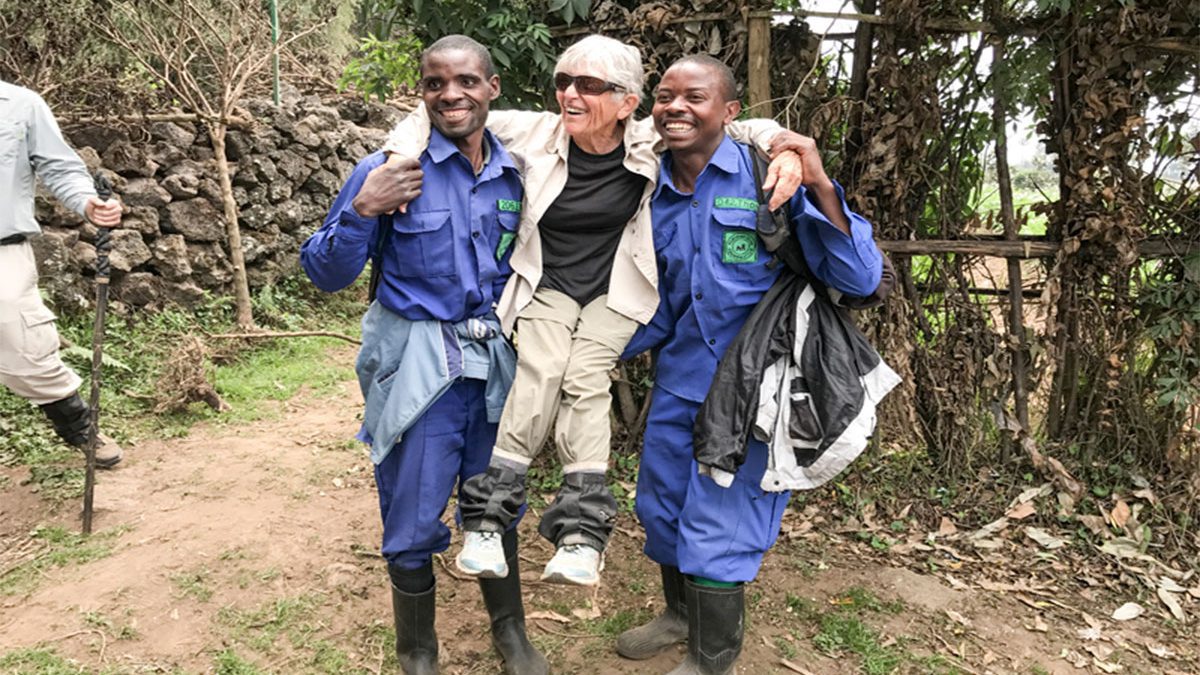
Hiring a local porter during your gorilla trek in places like Bwindi Impenetrable National Park or Volcanoes National Park transforms a challenging trek into an extraordinary, community-focused adventure. While carrying a daypack might seem manageable, high altitudes, steep terrain, and slick jungle mud can drain your energy rapidly.
A local porter does far more than lift your heavy bag; they lend a steadying hand across tricky footing, guide your steps, and share invaluable local insight. Most importantly, hiring a porter ensures your travel dollars land directly in the hands of nearby residents. This direct financial support creates a sustainable income stream for forest-edge families, turning local communities into active partners in mountain gorilla conservation.
5-days-rwanda-uganda-safari-combined-volcanoes-to-queen-elizabeth-national-park
3-days-luxury-gorilla-trekking-in-nkuringo-sector-of-bwindi
4-days-luxury-gorilla-trekking-safari-in-bwindi-fly-in-all-inclusive-tour
8-days-best-uganda-rwanda-safari-holiday-ending-in-kigali
8-days-exclusive-gorilla-trekking-chimpanzee-and-big-five
9-days-luxury-gorilla-and-uganda-safari-tour-package
10-days-luxury-uganda-gorilla-trekking-safari-and-big-five-safari-vacation
12-days-luxury-safari-in-uganda-parks
Benefits of Hiring a Porter
1. Direct Community Income
Hiring a local porter ensures your money directly benefits families living right on the edges of national parks like Bwindi Impenetrable, Mgahinga, or Volcanoes. Porters are recruited from nearby indigenous communities, and the hiring fee goes directly into their hands without middleman deductions. This reliable income helps cover everyday household necessities, supports local healthcare costs, buys nutritious food, and pays children's school fees. By hiring a porter, your safari investment instantly transforms into a tangible driver of rural economic development, uplifting local livelihoods and empowering surrounding villages directly through sustainable wildlife tourism.
2. Trail Safety and Support
Mountain trekking in East African rainforests involves steep ridges, thick vines, and extremely slick, muddy trails that can challenge even experienced hikers. Porters are local residents who have navigated these rugged terrains their entire lives and know every slippery root and hidden slope. On the trail, your porter acts as a personal guide and safety anchor. They will patiently steady your balance, lend a supporting hand up steep scrambles, guide you around treacherous mud holes, and ensure you traverse hazardous sections safely. Their physical assistance prevents falls, reduces injury risk, and makes the demanding trek significantly more secure.
3. Lighter Backpack
Trekking through dense equatorial forest at high altitudes can rapidly exhaust your stamina, especially if you are carrying heavy camera lenses, extra water bottles, and gear. Hiring a porter frees you from carrying a heavy backpack throughout a 4-to-8-hour hike. The porter comfortably handles your main daypack, leaving you with only your camera, phone, and water bottle. Walking unencumbered allows you to maintain better balance, breathe easier on steep ascents, conserve your physical energy, and focus your full attention on taking photographs, spotting wildlife, and soaking in the magnificent surrounding rainforest scenery.
4. Protecting Nature
The porter program is a vital anti-poaching and forest conservation strategy. Many porters are former hunters, timber cutters, or individuals from subsistence farming communities who previously relied on forest resources to survive. By providing local residents with formal, dignified employment in tourism, hiring a porter gives them a direct financial incentive to protect the national parks. When communities see that living gorillas, chimpanzees, and intact ecosystems generate steady income for their families, they actively reject illegal poaching, stop deforestation, report wildlife threats, and become dedicated guardians of the natural environment and its biodiversity.
5. Cultural Connection
Walking alongside your porter offers an authentic cultural bridge that deeply enriches your safari experience. As you navigate the trail together, you gain a personal, first-hand connection with someone who calls the forest home. Porters love sharing stories about their traditional ways of life, village customs, indigenous plant uses, and historical connections to the wilderness. They often point out hidden medicinal herbs, bird calls, and subtle animal signs you would otherwise miss. This friendly, one-on-one conversation turns a physical hike into a meaningful cross-cultural exchange, leaving you with fond memories of genuine human connection.
What does a gorilla trekking porter actually do during the hike?
A porter carries your daypack—containing your water, rain gear, camera lenses, and packed lunch—so you can focus on staying upright and conserving energy. But their role goes far beyond being a backpack carrier. They act as your personal trail assistant: helping you navigate steep, muddy inclines, pulling you up slippery banks, offering a steadying hand across rivers, and pushing dense vegetation out of your path.
How difficult is the terrain during gorilla trekking, really?
The terrain is famously challenging. "Bwindi" literally translates to "a place of darkness," named for its thick, tangled jungle canopy. Treks involve off-trail hiking on steep ridges, loose soil, hidden roots, and slick mud at high altitudes (often between 1,100 and 2,600 meters). Weather changes rapidly, turning dry paths into muddy slides within minutes. A porter knows how to read this ground effortlessly.
I am young and physically fit. Do I still need a porter?
Yes, absolutely. Even seasoned marathoners and mountain climbers are often caught off guard by the combination of high humidity, thin air, and slick jungle underbrush. Carrying 7 to 10 kilograms of camera gear and water on a 6-hour trek through dense vegetation drains your energy rapidly. Leaving your pack with a porter lets you keep your hands free for balance and photography.
How do porters help prevent falls and injuries on the trail?
Porters have spent their entire lives walking these mountains. They possess an instinctive sense of foot placement and stability. When descending a mud-soaked slope, a porter will position themselves below you to catch you if you slip, or guide your foot onto hidden, secure roots. Their steady physical support prevents sprained ankles, twisted knees, and hard tumbles that could otherwise end your trek early.
What gear will the porter carry for me, and what should I keep on myself?
Your porter will carry your entire main daypack, which usually holds extra layers, rain jacket, gaiters, packed lunch, extra water bottles, and spare camera equipment. You should keep your camera around your neck or in a small chest holster if you want immediate access to it, though many porters are even happy to hold your camera safely until you reach the gorilla family.
Will having a porter slow down the rest of my trekking group?
Quite the opposite—a porter actually speeds up your pace! Without a porter, struggling with a heavy bag, slipping on mud, or pausing frequently to catch your breath will slow down your entire group. With a porter supporting your balance and taking the weight off your shoulders, you will hike faster, move more smoothly, and keep up easily with the rangers leading the way.
How does hiring a porter directly protect mountain gorillas?
This is perhaps the most critical reason to hire a porter. Historically, many porters were former poachers or from families that relied on forest resources to survive. By hiring a porter, you provide a direct, reliable source of income derived from live gorillas. When local communities see tangible economic benefit from tourism, they become active protectors of wildlife rather than competitors for forest resources.
What kind of economic difference does my porter fee make locally?
The standard porter fee (typically $15–$20 USD plus tip) may seem modest to an international traveler, but in rural mountain communities surrounding national parks, it is a significant wage. This income pays for school fees, medical care, home repairs, and food for an entire household. A single day's work as a porter can feed a family for a week.
Are porters organized through an official system or park association?
Yes. At park headquarters, porters operate through registered local associations. They work on a fair rotation system so that every member of the community gets an equal opportunity to earn income from visiting tourists. This organized structure ensures that tourism revenue is distributed broadly across edge communities rather than concentrated among a select few.
Who are the porters? Are they members of the local community?
Porters are local men and women living in the villages adjacent to the national parks. Many are young adults working to pay for higher education, while others are heads of households supporting large families. Some are reformed poachers who turned to eco-tourism. Hiring them gives you a direct connection to the indigenous people who have lived alongside these forests for generations.
Can female porters carry heavy bags just as well as male porters?
Absolutely. Female porters are just as strong, capable, and skilled as their male counterparts. Many women in these mountainous regions carry heavy loads up steep slopes every day as part of agricultural life. Hiring female porters also plays a huge role in local women's empowerment, granting financial independence and leadership within their rural communities.
How does hiring a porter build goodwill between parks and local villages?
National parks often restrict local access to traditional hunting and foraging grounds. Without tourism benefits, local residents can view parks as a loss of land. When travelers hire local porters, the park becomes a direct engine of economic prosperity. This goodwill turns local villages into the primary line of defense against illegal snaring and deforestation.
How much does it cost to hire a porter for a gorilla trek?
The standard base fee to hire a porter in Uganda (Bwindi and Mgahinga) or Rwanda (Volcanoes National Park) is $15 to $20 USD per trek. This fee is paid directly to the porter or organized through your ranger guide during the morning briefing before you set off on the trail.
Should I tip my porter, and how much is customary?
Yes, tipping is highly recommended and deeply appreciated. A customary tip ranges from $10 to $20 USD (or equivalent local currency) depending on the length and difficulty of the trek and the level of service provided. Giving your tip directly to your porter with a warm handshake at the end of the trek is a lovely gesture.
In what currency should I pay and tip my porter?
Local currency (such as Ugandan Shillings or Rwandan Francs) is always preferred because it avoids exchange fees for the porter when buying groceries or paying local bills. However, crisp, clean US Dollars (printed in 2013 or newer, without tears or marks) are also widely accepted.
Where and when do I hire a porter on the morning of the trek?
You hire your porter during the morning briefing at the national park headquarters. After your ranger assigns you to a specific gorilla family, porters will be standing nearby with official high-visibility vests. Your guide or ranger will help match you with a porter before you drive or walk to the trail trailhead.
What happens if I don't need help carrying my bag? Should I still hire one?
Yes, you should still hire a porter! Even if your backpack is light as a feather, think of hiring a porter as an direct charitable contribution to community conservation where you get a personal guide and steadying hand in return. You can hand them a lightweight daypack or simply ask them to walk beside you to assist on steep sections.
What if my trek turns out to be short and easy?
Gorilla movements are unpredictable—a trek can take 45 minutes or 7 hours. Even if your trek turns out to be short and gentle, your porter still prepared for the day, traveled to the park station, and dedicated their morning to you. They will receive their full fee, and your contribution remains invaluable.
How does having a porter enhance my overall trek experience?
A porter transforms your trek from a silent physical ordeal into an enriching cultural exchange. As you walk through the jungle together, they share stories about life in the surrounding villages, explain how local plants are used in traditional medicine, and point out hidden birds, insects, and flora that you would otherwise pass right by.
Do porters speak English?
Most porters speak functional English, ranging from basic conversational phrases to fluent English. Even when vocabulary is limited, their warmth, gestures, and genuine care cross any language barrier effortless. Rangers are also nearby to translate if you want to ask deeper questions about local life.
Will my porter stay with me when we reach the gorilla family?
When you reach the gorillas, porters step back and wait in a designated safety buffer area roughly 50 to 100 meters away with your heavy backpacks. This minimizes human clutter and noise around the gorilla family. You will carry only your camera or phone forward for the magical 1-hour viewing experience.
Can a porter help me take photos or videos along the trail?
Yes! Many porters have escorted hundreds of tourists and know their way around camera equipment. They are happy to hold your camera when you cross difficult terrain, snap photos of you on scenic viewpoints, or shoot behind-the-scenes video footage of you hiking through the rainforest canopy.
What should I wear or pack to make my porter’s job easier?
Ensure your backpack is in good condition with sturdy zippers and comfortable straps. Make sure your water bottles are sealed tightly so they don't leak inside the bag. Keeping your bag organized and under 10 kilograms makes carrying it comfortable and safe for your porter throughout the steep hike.
What kind of relationship do porters have with park rangers and trackers?
Porters work seamlessly alongside park rangers and advance trackers. They form a tight-knit ecosystem of forest personnel. Many porters aspire to become certified park rangers or community guides, and working as a porter serves as an informal apprenticeship in wildlife conservation and hospitality.
Is hiring a porter seen as "lazy" or "entitled"?
This is the single most common misconception among first-time trekkers. In North America or Europe, hiring someone to carry your bag might feel decadent. In East Africa, it is viewed as a responsible, respectful act of eco-tourism. Refusing a porter out of pride denies a local community member an opportunity to earn an honest living.
Can a porter assist senior travelers or people with mobility challenges?
Yes, remarkably so. Porters and rangers frequently assist elderly travelers, individuals with joint issues, or visitors with physical disabilities. For those unable to walk long distances, teams of local porters can even carry guests on traditional bamboo stretchers ("sedan chairs") so that everyone, regardless of mobility, can experience gorillas.
What if I get tired or sick halfway through the trek?
If you suffer from exhaustion, altitude sickness, or dehydration, your porter becomes your lifeline. They will take all physical strain off you, hold your arm to support your steps, carry extra water, and encourage you mentally to reach the finish line safely.
What clothing or equipment do porters wear?
Porters wear official identification vests or uniforms provided by their local association. While park authorities work to equip them, many porters wear simple rubber boots or worn sneakers. A great way to show extra gratitude is leaving behind high-quality trail socks, rain ponchos, or gloves as additional gifts after your trek.
Can I hire two porters if I have heavy camera gear?
Yes, professional photographers and videographers frequently hire two porters—one to carry heavy pelican cases or tripod bags, and another to assist with personal gear and trail balance. This ensures gear stays completely dry and safe from accidental slips on steep muddy slopes.
How will I feel about my decision to hire a porter after the trek is over?
Almost every trekker leaves Bwindi or Volcanoes National Park saying their porter was the unsung hero of their trip. Long after you return home, when you look back at your photos, you will remember not just the magnificent silverback gorilla, but also the warm smile and steady hand of the local porter who helped you get there.
Booking gorilla trekking with us Roads of Adventure safaris
Booking a gorilla trekking safari with Roads of Adventure Safaris involves contacting their Kampala-based team to secure your permits, select dates, and plan trips to destinations like Bwindi Impenetrable National Park. Permits cost $800 in Uganda and $1,500 in Rwanda
