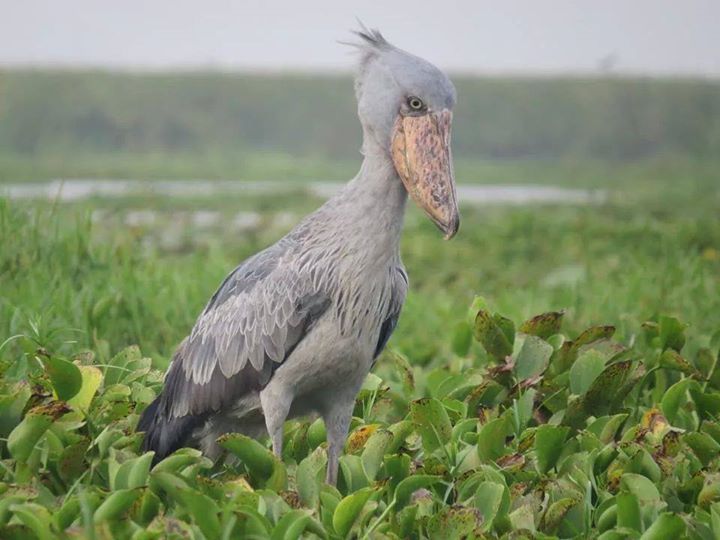
Mabamba Swamp stands out as the absolute premier site for tracking the iconic Shoebill stork (Balaeniceps rex) because it brings together a massive, ideal wetland habitat, high prey availability, and effortless accessibility for travelers landing in Uganda.
Situated in Wakiso District along the edge of Lake Victoria—just about an hour's drive from Entebbe International Airport or Kampala—this RAMSAR-designated wetland spans over 2,400 hectares of sprawling papyrus channels, flooded grasslands, and water lily carpets. This specific environment is the ideal hunting ground for the solitary Shoebill, which relies on dense aquatic vegetation to stealthily wade and perform its signature "collapse" strike on large prey, particularly its absolute favorite meal, the lungfish (mamba in the local Luganda language).
What truly sets Mabamba apart from other remote swamps in East Africa is its exceptional sighting reliability combined with low-impact community conservation. Local fishermen-turned-guides navigate the quiet, narrow waterways in traditional wooden canoes or motorized boats every single day, keeping close tabs on individual resident birds without disturbing their nesting or foraging behavior. As the morning mist clears over the water, these expert local boatmen can guide birders to within just a few meters of a standing, motionless Shoebill, yielding a near 100% sighting success rate for anyone embarking on a Uganda birding safari.
9-days-classic-uganda-birding-safari-tourn
13-days-uganda-birding-safari-and-wildlife
20-days-uganda-birding-safari-to-uganda-national-park
21-days-uganda-birding-safari-extravaganza-to-best-uganda-safari-parks
10-days-best-uganda-birding-safari-and-wildlife-experience
9-days-best-uganda-birding-safari-tour-from-swamps-to-savannah-eastern-route
30-days-best-uganda-birding-safari-extravaganza-and-wildlife-safari
25-days-complete-uganda-birding-safari-extravaganza-with-wildlife-viewing
High Sighting Reliability & Habitat
- Ideal Foraging Ground: Thick papyrus marshes, water lilies, and shallow channels provide cover and hunting grounds for lungfish, a key prey species for the shoebill.
- Quiet Canoe Access: Narrow, shallow water channels allow visitors to drift quietly in wooden canoes without startling the birds.
- Experienced Local Guides: Guides track resident birds' daily routines and territories, boosting spotting success.
Easy Accessibility & Broader Birding
- Convenient Day-Trip Location: Situated near Entebbe and Kampala, it works well for half-day or full-day excursions compared to more remote wetlands.
- Protected Wetland Status: Designated as a Ramsar Wetland of International Importance and Important Bird Area, it supports over 300 bird species, including African jacanas, purple herons, malachite kingfishers, and the papyrus gonolek
Where is Mabamba Swamp located and how accessible is it for birders?
Mabamba Bay Wetland is situated in Wakiso District on the northern shores of Lake Victoria, west of the Entebbe peninsula. Its strategic location makes it the most accessible top-tier birding destination in the country, lying just 40 to 50 kilometers from Kampala and roughly an hour's drive or boat ride from Entebbe International Airport. Visitors can reach the swamp via a scenic road drive passing through local trading centers or take a direct speedboat across Lake Victoria from Nakiwogo landing site in Entebbe to Kasanje landing site. Because of this proximity, Mabamba serves as an ideal half-day or full-day excursion for international travelers landing in Uganda or waiting for evening outbound flights. Unlike remote wildlife reserves in northern or western Uganda that require full-day road transfers or domestic charter flights, Mabamba allows travelers to experience world-class wetland birding immediately upon arrival without long travel times, fitting smoothly into tight safari itineraries.
Why is the Shoebill stork (Balaeniceps rex) the main attraction at Mabamba Swamp?
The Shoebill stork (Balaeniceps rex) is one of the most sought-after avian species on the planet, often described as a "prehistoric" or "dinosaur-like" bird due to its massive, shoe-shaped bill and intense yellow eyes. Taxonomically unique as the sole member of the family Balaenicipitidae, this rare bird draws ornithologists and wildlife photography enthusiasts from around the globe. Mabamba Swamp has gained international fame because it shelters one of the highest concentrated resident populations of Shoebills in East Africa, offering visitors an almost guaranteed sighting success rate. The bird's unique hunting technique—standing completely motionless for hours before violently plunging into the water to catch prey—makes for an unforgettable spectacle. Because Shoebills are listed as Vulnerable on the IUCN Red List due to habitat destruction and illegal trade, seeing one in its pristine natural habitat remains a bucket-list milestone for birders on a Uganda birding safari.
What prey species attract Shoebills to the Mabamba Bay ecosystem?
The primary dietary driver for the Shoebill population in Mabamba Bay is the marbled lungfish (Protopterus aethiopicus), known locally in Luganda as mamba—from which the swamp derives its name. Lungfish thrive in the oxygen-depleted, muddy waters beneath dense papyrus mats because they possess primitive lungs that require them to surface periodically for air. This breathing behavior makes them vulnerable targets for the patient Shoebill. In addition to lungfish, the rich wetland ecology of Mabamba supports secondary prey species including catfish (Clarias species), tilapia, water snakes, frogs, and young monitor lizards. The abundant supply of large aquatic prey within shallow, vegetation-choked water channels provides the high-calorie diet necessary to sustain these large birds, which can stand up to 1.5 meters tall. The natural balance between papyrus cover and fish populations creates a sustainable foraging environment year-round.
How do traditional wooden canoes enhance the birding experience at Mabamba?
Exploring Mabamba Swamp in traditional wooden dugout canoes or small motorized wooden boats guided by local paddlers is essential for low-impact wildlife viewing. The shallow water channels and dense mats of floating vegetation make it impossible for large motorboats or land vehicles to navigate the interior of the wetland. Wooden canoes glide quietly through the narrow reed channels without generating disruptive engine noise or heavy water wakes that would flush skittish birds. This silent approach allows birders to drift to within a few meters of a foraging Shoebill, securing clear photo opportunities without disturbing the bird's natural feeding behavior. Furthermore, the low vantage point from a canoe puts observers at eye level with water lilies, reed beds, and lurking waterbirds, creating an intimate safari experience that emphasizes the tranquility of the wetland environment.
What role do local fishermen and guides play in Shoebill conservation at Mabamba?
Local community members, particularly former fishermen, play a pivotal role in protecting Mabamba Swamp through eco-tourism initiatives organized under local site-guide associations. In the past, Shoebills were occasionally targeted due to competition over lungfish or captured for the illegal wildlife trade. Today, local fishermen have transitioned into certified bird guides and boat captains. Because these guides navigate the swamp daily, they monitor individual bird territories, track active nesting sites, and report any illegal poaching or habitat encroachment to authorities. Tourism revenue generated from boat fees directly benefits the surrounding community, providing sustainable livelihoods and funding local infrastructure. This community-based conservation model transforms the local population into primary guardians of the wetland, ensuring that resident Shoebills are protected while delivering an authentic experience for visitors on a Uganda birding safari.
What other notable bird species can be spotted at Mabamba Bay besides the Shoebill?
While the Shoebill takes center stage, Mabamba Bay Wetland is an Important Bird Area (IBA) hosting over 300 recorded bird species, making it a comprehensive birdwatching haven. Papyrus endemic specialists thrive here, including the striking Papyrus Gonolek with its crimson breast and yellow crown, the Papyrus Yellow Warbler, White-winged Warbler, Blue-headed Coucal, and Papyrus Canary. Waterfowl and marsh-dwellers are abundant along the channels, featuring the African Pygmy Goose, Malachite Kingfisher, Pied Kingfisher, African Jacana, Long-toed Lapwing, Purple Heron, Squacco Heron, and Black Crake. Overhead, raptors like the African Fish Eagle and African Marsh Harrier regularly hunt across the marshlands. During the northern hemisphere winter, the swamp also shelters migratory Palearctic waterbirds, allowing birders to compile an extensive species tally in a single morning outing.
Why is Mabamba Swamp designated as a RAMSAR Site of International Importance?
Mabamba Bay was officially designated as a RAMSAR Site of International Importance in 2006 due to its crucial ecological role as a freshwater wetland system and a sanctuary for globally threatened bird species. Spanning over 2,400 hectares, the wetland acts as a natural bio-filter for water entering Lake Victoria, trapping sediments and absorbing excess nutrients. Geographically, it serves as a critical breeding and foraging habitat for the Vulnerable Shoebill (Balaeniceps rex) and supports significant populations of papyrus-restricted endemics. Additionally, Mabamba provides vital stopover habitat for thousands of migratory bird species traveling along the East Asian-East African flyway. Its RAMSAR status highlights its biodiversity value, bringing international recognition and conservation support to preserve the fragile equilibrium between local human resource use and wetland wildlife preservation.
What is the best time of day for a birdwatching trip to Mabamba Swamp?
The early morning hours, between 6:30 AM and 10:00 AM, represent the absolute best time of day to conduct a birdwatching trip at Mabamba Swamp. During early morning, water temperatures remain cool, causing lungfish to surface more frequently for air, which prompts Shoebills to actively hunt along the open channel edges. The morning light provides ideal conditions for photography, while water surfaces are calm and wind levels low, making canoe paddling smooth. Birds are also most vocal during dawn, easing the identification of cryptic species like the Papyrus Gonolek and Black Crake by their calls. As afternoon heat builds, Shoebills tend to retreat deeper into impenetrable papyrus thickets to seek shade or take flight to soar on thermals high above the marsh, making them significantly harder to spot from water channels.
How does the weather and season affect birding conditions at Mabamba Swamp?
Birdwatching at Mabamba is productive year-round, but seasonal weather patterns influence wetland navigation and bird behavior. The dry seasons from December to February and June to August offer comfortable birding conditions, dry access roads, and minimal rain during canoe trips. During these dry stretches, water levels recede slightly, concentrating fish in shallow channels where Shoebills gather to hunt. Conversely, the wet seasons from March to May and September to November bring heavy rainfall that raises water levels, spreading fish across broader flooded zones. While rainy months make road transit slipperier, they coincide with the arrival of migratory Palearctic bird species and peak breeding plumage for resident waterbirds. Early morning excursions remain effective in both seasons provided travelers carry suitable waterproof gear.
How does Mabamba compare to other Shoebill tracking sites in Uganda?
Mabamba Swamp is widely regarded as the premier Shoebill tracking site in Uganda when compared to alternative locations like the Nile Delta in Murchison Falls National Park, Lake Mburo, Ziwa Rhino Sanctuary, or Semliki Wildlife Reserve. While Murchison Falls offers excellent Shoebill sightings along the Nile Delta, reaching it requires traveling over 300 kilometers from the capital and booking multi-day park itineraries. Ziwa Rhino Sanctuary and Lake Mburo feature smaller populations with more variable sighting consistency. Mabamba's close proximity to Entebbe, high population density of resident birds, near 100% sighting success rate, and silent wooden canoe access make it the most reliable, cost-effective, and time-efficient option for travelers prioritizing the Shoebill on their Uganda birding safari.
What vegetation types dominate the Mabamba Bay ecosystem?
The Mabamba Bay ecosystem is dominated by extensive stands of papyrus (Cyperus papyrus), intertwined with miscanthidium grasses, tall reeds, and floating aquatic plants. Papyrus forms thick, buoyant mats over shallow water, creating sheltered micro-habitats where fish breed and small wetland birds build nests. Interspersed among the papyrus channels are open water pools covered with pink and white water lilies (Nymphaea species) and submerged macrophytes. The edges of the wetland transition into flooded grasslands, sedge marshes, and riverine bushlands lined with palms and fig trees. This varied mosaic of aquatic vegetation provides shelter, nesting materials, and hunting perches for diverse bird species, ranging from heavy-billed Shoebills that walk on floating vegetation to delicate jacanas that step across lily pads.
How does the Shoebill’s hunting technique function in Mabamba's environment?
The Shoebill employs a specialized hunting technique known as "standing and waiting," perfectly adapted to Mabamba’s shallow papyrus channels. The bird stands completely motionless for extended periods, staring intently into the water with its sharp binocular vision. When a lungfish or catfish surfaces for air, the Shoebill executes a rapid, violent motion called a "collapse"—lunging forward with its body and spreading wings to crush target prey under its heavy, hooked bill. The sharp, curved nail at the tip of the upper mandible grips slippery fish, while edges of the bill shear away aquatic vegetation. After securing the catch, the bird shakes off excess mud and swallows the fish headfirst. This energy-intensive strike relies on undisturbed, calm waters, which quiet canoe navigation helps preserve.
What environmental threats face the long-term survival of Mabamba Swamp?
Despite its protected RAMSAR status, Mabamba Swamp faces ongoing environmental threats stemming from human population growth around Lake Victoria. Habitat degradation caused by illegal papyrus harvesting, wetland reclamation for agriculture, and coastal property development encroaches on delicate marsh boundaries. Water pollution from agricultural runoff and domestic waste entering Lake Victoria alters water quality, impacting fish stock health. Invasive plant species, particularly the water hyacinth (Eichhornia crassipes), occasionally choke navigation channels, blocking canoe access and smothering native water lilies. Additionally, climate change-induced fluctuations in Lake Victoria’s water levels can flood low-lying nesting sites. Continued community sensitization, strict environmental law enforcement, and sustainable tourism revenue allocation remain essential to mitigate these pressures.
What combination of travel gear is recommended for a Mabamba birding trip?
To maximize comfort and photography during a Mabamba birding trip, visitors should pack lightweight, practical field gear. Essential optical equipment includes 8x42 or 10x42 waterproof binoculars for spotting distant reed species, alongside a telephoto camera lens (400mm to 600mm) with a protective rain cover for close-up wildlife photography. Clothing should feature neutral earth tones like olive green or khaki, avoiding bright colors that startle shy waterbirds. Recommended apparel includes a wide-brimmed sun hat, UV-protective long-sleeved shirts, lightweight trousers, and sturdy rubber-soled shoes or waterproof boots for boat embarking. Sunscreen, insect repellent, a lightweight rain jacket, and a dry bag for electronics are also recommended during open canoe transit across Lake Victoria's marsh edges.
How long does a typical Mabamba Swamp birding excursion take?
A standard Mabamba Swamp birding excursion takes approximately 3 to 4 hours on the water, making it a manageable half-day activity. Including travel transfers from Entebbe or Kampala, the entire outing spans roughly 5 to 6 hours. The boat journey departs from Kasanje landing site, with guides paddling or motoring through main channels toward known Shoebill feeding zones. Once a Shoebill is located, craft spend 30 to 45 minutes quietly observing and photographing the bird at a safe distance. The remaining time is spent exploring secondary channels, lily beds, and shoreline bushes to spot papyrus endemics and kingfishers. Full-day itineraries often combine the morning swamp canoe ride with afternoon birding at the nearby Entebbe Botanical Gardens.
How does a Mabamba trip fit into a broader Uganda birding safari itinerary?
A Mabamba trip serves as the natural starting or ending chapter of a broader multi-day Uganda birding safari. Positioned near Entebbe International Airport, it offers an immediate high-value excursion on Day 1 after arrival or on the final day before an evening departure. After ticking off the Shoebill and papyrus endemics at Mabamba, birding circuits typically head west toward Ziwa Rhino Sanctuary and Murchison Falls for savanna species, proceed to Kibale Forest for the Green-breasted Pitta, move onward to Queen Elizabeth for waterbird concentrations along Kazinga Channel, and finish in Bwindi Impenetrable Forest for high-altitude Albertine Rift endemics. Including Mabamba ensures birders check off the country's most iconic wetland target right away.
What photographic challenges exist when capturing Shoebills at Mabamba?
Photographing Shoebills at Mabamba presents unique lighting and environmental challenges that require adjustments by wildlife photographers. Because boats sit low on the water, camera equipment is exposed to water splashes and bright reflections off Lake Victoria's surface. Early morning trips feature low ambient light, requiring wide apertures and elevated ISO settings to freeze sudden hunting movements. As the sun rises, harsh glare off the water and high-contrast backlighting behind dark papyrus stems can cause overexposure or silhouetting. Photographers must manage lens stability from moving canoes, balancing shutter speed to offset gentle hull rocking. Utilizing spot metering, lens hoods, polarizers, and beanbags for support helps secure sharp, balanced images of motionless birds.
Why is the Papyrus Gonolek another prized target at Mabamba Swamp?
While the Shoebill attracts global headlines, the Papyrus Gonolek (Laniarius mufumbiri) is equally prized by hardcore birders visiting Mabamba. This colorful bush-shrike is an obligate papyrus endemic, meaning it lives exclusively within dense papyrus swamps across East-Central Africa. Featuring a striking canary-yellow crown, jet-black upperparts, and a vivid crimson breast, its brilliant plumage contrasts sharply with drab marsh vegetation. Despite its bright appearance, the Papyrus Gonolek is notoriously shy and skittish, skulking deep within thick reed stems and making it difficult to photograph. Local guides track its synchronized duet calls—a clear whistle paired with a low rasp—to help birders spot it as it moves through the papyrus edge.
Can Mabamba Swamp be visited combined with Entebbe Botanical Gardens?
Yes, pairing Mabamba Swamp with the historic Entebbe Botanical Gardens creates a balanced, full-day birding itinerary near the capital. Established in 1898 along the shores of Lake Victoria, the Botanical Gardens provide an open-canopy forest environment that contrasts with Mabamba's flooded wetlands. After spending the morning in a canoe tracking Shoebills and aquatic species, birders can spend the afternoon strolling along shady forest trails lined with giant mahogany trees. The gardens add over 200 woodland and forest-edge bird species to the day's tally, including the Great Blue Turaco, Ross's Turaco, Black-and-white-casqued Hornbill, African Gray Parrot, Eastern Grey Plantain-eater, and various sunbirds, delivering a rewarding 1-day birding package.
What economic impact does Shoebill tourism have on the Kasanje community?
Shoebill-focused tourism at Mabamba Swamp generates direct economic benefits for the Kasanje local community, fostering local economic development tied directly to biodiversity conservation. Revenue collected from boat rental fees, entry charges, and guide gratuities funds community projects, including local primary schools, clean water sanitation, and health clinics. Boat captains, bird guides, handicraft makers, and site management staff are hired directly from surrounding villages, creating non-agricultural employment. This financial incentive encourages residents to protect the swamp from illegal swamp burning, land drainage, and poaching. By transforming a rare bird into a sustainable economic asset, tourism ensures that both the Shoebill and the local community thrive side by side.
Booking Uganda birding safari in Mabamba swamp with us Roads of Adventure safaris
Experience an unforgettable 1-day birding excursion to Mabamba Swamp with Roads of Adventure Safaris, priced between $193 and $275 USD. Located just an hour from Entebbe or Kampala along the northern shores of Lake Victoria, this premier Ramsar wetland site offers a 3-hour morning motorized or dugout canoe journey through dense papyrus channels. Best enjoyed between 7:00 AM and 9:00 AM, the tour gives you a front-row view of the prehistoric Shoebill Stork, alongside over 300 other avian species including the Papyrus Yellow Warbler and various migratory birds.