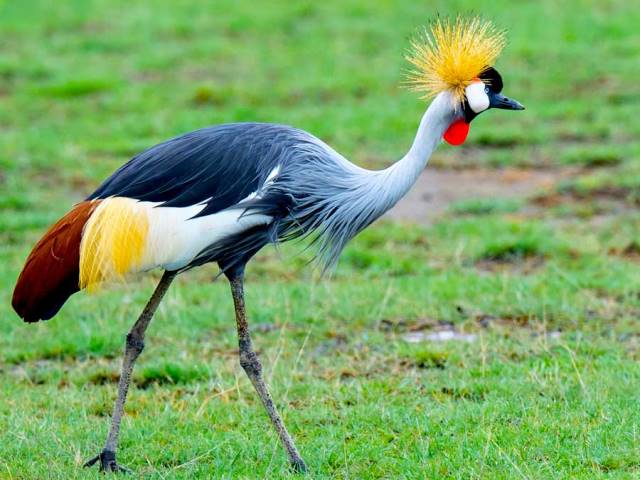
Queen Elizabeth National Park is a top choice for a Uganda birding safari because it hosts over 600 bird species—one of the highest concentrations in Africa—across diverse habitats like open savannah, wetlands, and dense forests, allowing visitors to spot iconic waterbirds, raptors, and rare species in one location
1-day-perfect-mabamba-swamp-shoebill-stork-uganda-birding-safari
5-days-uganda-bird-watching-safari-lake-victoria-shores-and-lake-mburo
30-days-best-uganda-birding-safari-extravaganza-and-wildlife-safari
11-days-uganda-birding-safari-and-primate-experience
20-days-uganda-birding-safari-wildlife-gorilla-and-chimpanzee-tracking
21-days-uganda-birding-safari-extravaganza-to-best-uganda-safari-parks
25-days-complete-uganda-birding-safari-extravaganza-with-wildlife-viewing
Key Birding Highlights
- Kazinga Channel: Spot massive flocks of pelicans, African fish eagles, and various kingfishers during a boat launch.
- Maramagambo Forest: Track forest-dwelling species, raptors, and the rare African broadbill.
- Kasenyi Plains & Mweya Peninsula: View open-country birds like the red-capped lark and little bee-eater.
- Crater Lakes: Watch resident flocks of flamingos gathered around the scenic volcanic lakes
Why does Queen Elizabeth National Park hold the highest bird species count in East Africa?
The park’s secret lies in its unmatched habitat diversity. Within a single day, you transition from open savannahs to crater lakes, papyrus swamps, riverine forests, and dense tropical rainforests. Because the park bridges East African savannah ecosystems with Central Africa’s Congo basin rainforests, it attracts species from both realms alongside palearctic migrants.
How does the park's location along the Albertine Rift affect bird life?
The Albertine Rift is one of Africa’s most important biodiversity hotspots. QENP sits right on its floor, framed by the Rwenzori Mountains and Lake Edward. This rift geology creates varied microclimates, thermal updrafts for raptors, and isolated micro-habitats that shelter rare, endemic, and threatened bird species.
What makes QENP an Important Bird Area (IBA)?
Designated by BirdLife International, QENP qualifies as an IBA because it hosts globally threatened species, restricted-range species, and massive seasonal congregations of waterbirds. Places like Lake George are even recognized as international Ramsar sites due to their vital role in wetland conservation.
How many migratory bird species visit Queen Elizabeth National Park each year?
Over 300 migratory species journey through or winter in QENP between October and April. Palearctic migrants fleeing European and North Asian winters (such as sandpipers, terns, and storks) mix seamlessly with intra-African migrants following rain and food cycles.
Can you see Central African forest bird species in QENP?
Yes. Thanks to Maramagambo Forest—which connects westward toward the Congo basin—you can tick off Central African forest specialists like the Black Bee-eater, African Broadbill, and Chestnut Wattle-eye without crossing the border into the Democratic Republic of Congo.
What role do the salt crater lakes play in avian concentration?
Crater lakes like Lake Katwe and Lake Munyanyange create hypersaline environments rich in algae and small invertebrates. These unique conditions pull in huge flocks of Greater and Lesser Flamingos as well as specialized migratory waders.
Why is birding in QENP so rewarding even for non-expert birders?
The sheer density and visibility of birds make it effortless. Along the water channels or savannah drives, birds aren't skittish or hidden high in dense canopies; they sit on open perches, wade on mudflats, or soar right past your vehicle at eye level.
Why is the Kazinga Channel considered a world-class boat birding venue?
The 32-kilometer Kazinga Channel connects Lake George and Lake Edward. A boat cruise places you meters away from African Fish Eagles, Skimmers, Pelicans, Kingfishers, and Storks feeding peacefully alongside hippos and elephants.
What birding highlights await inside Maramagambo Forest?
Maramagambo is a shaded haven for forest dwellers. Key targets include the rare Chapin's Flycatcher, African Finfoot on quiet forest crater edges, Black Bee-eater, Red-chested Cuckoo, and several species of Greenbuls and Illadopsises.
How does the Kasenyi Plains sector contribute to grassland birding?
Kasenyi's open savannah is ideal for spotting ground-dwelling birds and birds of prey. It is the best area to find White-tailed Larks, Black-rumped Buttonquails, Crowned Lapwings, Martial Eagles, and Temminck's Coursers.
What birds inhabit the Kyambura Gorge?
Known as the "Valley of Apes," this sunken tropical rainforest holds unique eco-niches. Aside from chimps, birders can find Verreaux's Eagle-Owl, Black-and-white-casqued Hornbill, Red-throated Wryneck, and various flycatchers navigating the gorge canopy.
Why are the Katunguru Bridge and papyrus swamps important?
The papyrus thickets around the Katunguru Bridge and Lake George margins host papyrus endemics. This is one of the premier spots in East Africa to search for the fiery Papyrus Gonolek, Papyrus Yellow Warbler, and White-winged Warbler.
What can birders expect in the Ishasha sector?
While famous for tree-climbing lions, Ishasha’s riverine woodland and acacia savannas shelter birds like the Shoebill along marshy borders, Martial Eagles, Wattled Lapwings, and various Cisticolas.
What makes Lake George a Ramsar Wetland of International Importance?
Lake George features extensive papyrus swamps and shallow mudflats. Hosting over 490 bird species—including 167 wetland specialists—it serves as a crucial feeding, breeding, and nursery ground for threatened waterbirds.
Can you spot the prehistoric Shoebill Stork in Queen Elizabeth National Park?
Yes! While Bwamba and Mabamba are famous for Shoebills, QENP's Lake George papyrus swamps and Ishasha marshy sectors regularly yield sightings of this iconic, shoe-billed giant.
Why is QENP one of Africa's best places to see the African Skimmer?
Flocks of African Skimmers gather on sandbanks along the Kazinga Channel. Watching them glide inches above the water, dipping their longer lower mandibles into the surface to catch fish, is a signature QENP experience.
Which raptor species can be observed in the park?
With 54 raptor species recorded, QENP is a heaven for birds of prey. Highlights include the massive Martial Eagle, African Fish Eagle, Bateleur, Black-chested Snake Eagle, Verreaux's Eagle-Owl, and Crested Guineafowl.
Where do you find the Papyrus Gonolek, and why is it so prized?
This striking black, yellow-capped, and crimson-breasted bird lives deep within papyrus reedy thickets. It is notoriously skittish, but its loud duetting calls at Katunguru allow skilled guides to pin down its location.
What kingfisher species can be ticked off in a single outing?
Along the Kazinga Channel and crater rims, you can spot up to six kingfisher species in one morning: Pied, Malachite, Giant, Woodland, Grey-headed, and Blue-breasted Kingfishers.
How easy is it to see the Great Blue Turaco here?
Very easy. Found in the woodland patches of Mweya and Maramagambo, these spectacular, brightly colored blue, yellow, and red birds are large, inquisitive, and frequently seen hopping across tree branches.
What elusive waterbirds inhabit the park’s forest streams?
The secretive African Finfoot—a shy, duck-like bird with bright red webbed feet—can be spotted swimming along quiet, overhung forested shorelines in Maramagambo's crater lakes.
Are flamingos guaranteed in Queen Elizabeth National Park?
Flamingos are seasonal visitors. Flamingos flock to crater lakes like Lake Munyanyange between October and April, turning the saline shores pink.
When is the best time of year for a birding safari in QENP?
Late May through September offers dry weather and easy navigation. However, November through April is the absolute peak for bird numbers because hundreds of palearctic migratory species arrive.
How does birding in QENP combine with big game viewing?
Unlike dense forest reserves where mammal sightings are rare, QENP offers world-class classic safari game viewing alongside birding. You'll tick off endemics while watching tree-climbing lions, elephants, buffaloes, and leopards.
How many days should you allocate specifically for birding in QENP?
At least 3 to 4 full days. This allows dedicated time for a Kazinga Channel boat trip, savannah game drives in Kasenyi/Ishasha, forest walks in Maramagambo, and swamp birding around Katunguru.
What essential birding gear should you pack?
Bring quality 8x42 or 10x42 binoculars, a telephoto camera lens (300mm+), lightweight neutral-colored clothing, sturdy walking boots for Maramagambo, a rain poncho, and an updated East African bird field guide.
Why are local bird guides crucial for a successful QENP safari?
Ugandan birding guides possess incredible ear-birding knowledge. They can identify hundreds of subtle calls in dense papyrus or canopy cover, know active nesting sites, and understand seasonal movements better than anyone else.
How does QENP compare to Bwindi Impenetrable or Kibale National Park for birders?
While Bwindi specializes in high-altitude Albertine Rift endemics and Kibale in forest interior species, QENP excels in waterbirds, raptors, and open savannah species. Combining all three gives you a complete Ugandan birding itinerary.
Is boat-based birding accessible for travelers with mobility limitations?
Extremely. The spacious double-decker or private launch boats on the Kazinga Channel allow comfortable seated birdwatching with smooth conditions and zero strenuous walking required.
How does visiting QENP support local community conservation?
Park entrance fees and local guide hiring directly fund community development around the park borders. Sustainable eco-tourism incentivizes local communities to protect vital bird habitats like papyrus swamps and crater lake shorelines from encroachment.
Booking Uganda birding safari with us Roads of Adventure safaris
To book a birding safari in Uganda with Roads of Adventure Safaris, you can request a customized itinerary targeting over 1,065 bird species. Typical packages range from 7 to 20 days, covering prime spots like Mabamba Swamp, Queen Elizabeth Park, Bwindi Impenetrable Forest, and Murchison Falls, with costs generally spanning $1,500 to $3,500 per person
