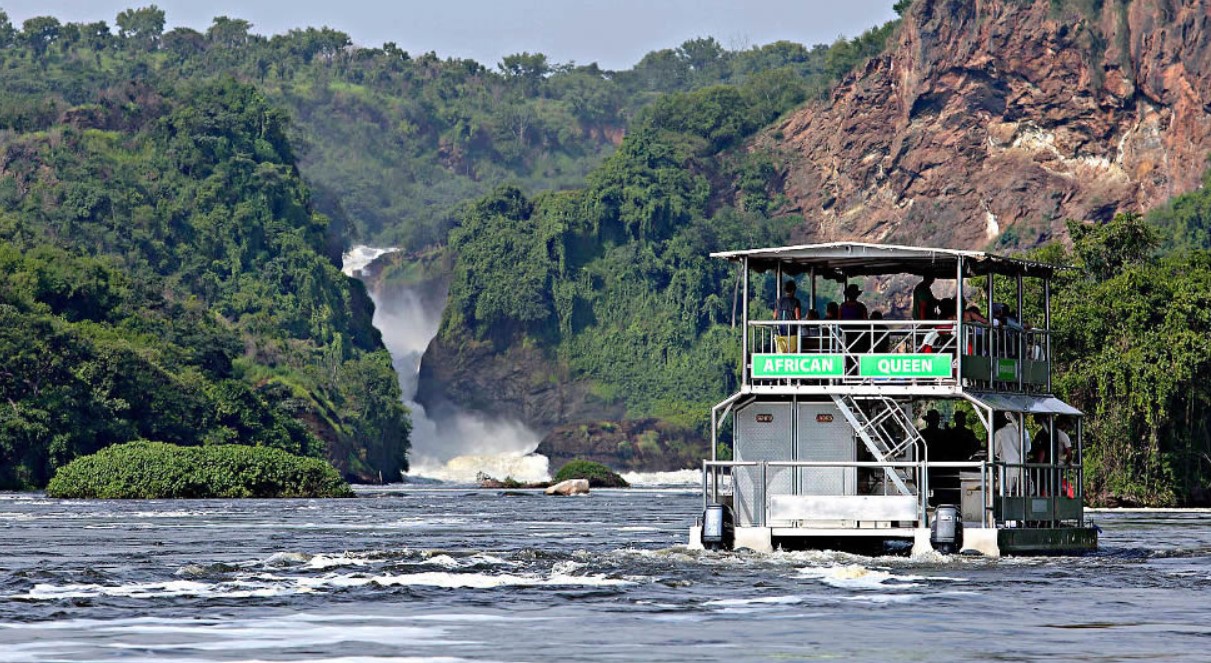
A 14-day Uganda wildlife safari offers a comprehensive experience, allowing you to see the "Big Five" (lion, leopard, elephant, buffalo, and rhino), rare mountain gorillas, and chimpanzees. Key wildlife highlights include Rothschild giraffes, hippos, Nile crocodiles, and diverse antelope species like the Uganda kob.
14-days-family-uganda-safari-holiday-vacation-escape
14-days-uganda-and-rwanda-safari-tour-itinerary
14-days-classic-uganda-birding-safari-expedition
14-days-complete-uganda-safari-tour-and-primate-safari-experience
14-days-uganda-primate-safari-and-jinja-white-water-rafting
14-days-best-africa-big-five-safari-in-uganda-and-best-gorilla-trekking-adventure
14-days-luxury-uganda-primate-safari-holiday
Primates: The Great Apes and Beyond
The undisputed crown jewels of a 14-day Ugandan odyssey are the primates. Uganda is home to more than half of the world’s remaining Mountain Gorillas, found in the ancient, misty corridors of Bwindi Impenetrable National Park. A 14-day itinerary provides the necessary time to acclimate to the high altitudes of the Kigezi Highlands before the physical challenge of the trek. Observing a silverback and his family for an hour is often cited as the most profound wildlife encounter on earth. This is complemented by a visit to Kibale Forest, the "Primate Capital of the World," where over 1,500 habituated Chimpanzees reside. Unlike the quiet, slow-moving gorillas, chimpanzees are high-energy and vocal, offering a thrillingly different perspective on our closest living relatives. For those visiting Mgahinga, the "Gold meets Silver" experience allows for tracking the endemic Golden Monkeys. Throughout the two weeks, you will also encounter olive baboons, black-and-white colobus monkeys, and L'Hoest's monkeys, creating a comprehensive primate record that is unmatched elsewhere in Africa.
Big Five and Large Mammals
While Uganda is famous for its forests, its savannas are equally teeming with heavyweights. A 14-day circuit is specifically designed to check off the Full Big Five. The journey typically begins at the Ziwa Rhino Sanctuary, the only place in the country to track white rhinos on foot. Moving north to Murchison Falls and south to Queen Elizabeth National Park, you encounter massive herds of Elephants and Cape Buffaloes. The predator sightings are a major highlight; Murchison Falls is excellent for lions and the elusive leopard, but the 14-day route uniquely includes the Ishasha Sector. Here, you can witness the world-famous tree-climbing lions, a rare behavioral phenomenon where prides lounge in ancient fig trees to escape the heat. Having 14 days ensures multiple game drives across different parks, significantly increasing your statistical probability of seeing a leopard on a kill or a lion pride on the hunt, providing the "classic" African safari experience alongside the specialized forest treks.
Savanna Wildlife: The Diversity of the Plains
Beyond the headline predators, Uganda’s savannas host an incredible array of specialized herbivores that define the landscape. In the north, Murchison Falls National Park is the stronghold for the Rothschild’s Giraffe, the world’s most endangered giraffe subspecies. Seeing them move gracefully among the Borassus palms is a quintessential Ugandan image. As you move south to Lake Mburo, the ecosystem shifts to acacia woodlands, the only place on the western circuit to see Plains Zebras and Impalas. The 14-day itinerary allows for the observation of unique regional specialties like the Jackson’s Hartebeest, the leggy Topi of Ishasha, and the ubiquitous Uganda Kob, which serves as the primary prey for the park's lions. You will also encounter the massive Waterbuck near the riverbanks and the comical warthog families scurrying across the tracks. This diversity of "plains game" provides a constant, vibrant backdrop to the more intensive tracking activities, ensuring that every game drive offers something new.
Aquatic Wildlife: Giants of the Nile and Channels
Uganda is a land of water, and a 14-day safari utilizes the country’s river systems to offer "aquatic safaris" that are often the highlights of the trip. The Victoria Nile in Murchison Falls and the Kazinga Channel in Queen Elizabeth National Park host some of the highest concentrations of Hippos in the world. From the safety of a boat, you can observe these three-tonne giants huddling in "schools," yawning to show off massive tusks, or submerged with only their eyes and ears visible. Alongside them, Nile Crocodiles—some of the largest on the continent—bask on the sandy banks with their mouths agape to regulate body temperature. You will also see elephants and buffaloes coming to the water’s edge to bathe and drink, providing intimate, low-angle photography opportunities that are impossible from a vehicle. These water-based encounters offer a refreshing, relaxed break from the dusty savanna tracks, allowing you to witness the intense "life at the water's edge" that sustains the African wilderness.
Birdlife: An Avian Paradise
With over 1,000 recorded bird species, Uganda is arguably the premier birding destination in Africa. A 14-day safari moves through enough distinct biomes—from the high-altitude Albertine Rift forests to the swampy Nile deltas—to satisfy even the most casual observer. The "holy grail" for many is the Shoebill Stork, a prehistoric-looking giant often found in the Mabamba Swamp or the Nile delta in Murchison Falls. Throughout the journey, you will see the iconic African Fish Eagle perched high above the water, the vibrant Great Blue Turaco in the forest canopies, and the massive Goliath Heron along the riverbanks. The Kazinga Channel alone can yield over 60 species in a single two-hour boat trip, including skimmers, kingfishers, and pelicans. For 14 days, the "Pearl of Africa" provides a constant soundtrack of avian calls and a kaleidoscope of colors, making it clear why the country is a global pilgrimage site for ornithologists and nature photographers.
Location-Based Spotting wildlife on 14 days Uganda wildlife safari
Murchison Falls National Park: The Nile's Giants
Murchison Falls is Uganda’s largest protected area and is defined by the Victoria Nile, which bisects the park. The northern sector is a classic savanna dominated by Borassus palms, providing the ideal habitat for the world’s largest population of Rothschild’s giraffes. During morning game drives, you will encounter massive herds of elephants and Cape buffaloes, while the golden grasslands are prime hunting grounds for lions and leopards. The aquatic experience is equally formidable; the Nile hosts some of Africa's highest concentrations of hippos and enormous Nile crocodiles, some reaching over five meters in length. Birders often flock here for the prehistoric Shoebill stork, frequently spotted in the delta wetlands. This park offers a high-action, multi-sensory safari where the thundering water of the falls serves as a backdrop to a landscape teeming with "Big Five" heavyweights.
Kibale Forest National Park: The Primate Capital
Kibale Forest is a lush, tropical ecosystem that holds the title for the highest density and diversity of primates in East Africa. The park is home to 13 distinct species, but the primary draw is the population of over 1,500 chimpanzees. Tracking these intelligent great apes through the dense canopy is a high-energy experience, often accompanied by their deafening "pant-hoot" vocalizations. Beyond the chimps, you are likely to spot several other primate species in a single walk, including the Red Colobus, L'Hoest's monkey, and the Grey-cheeked mangabey. The forest is an avian paradise as well, hosting the rare Green-breasted Pitta. Kibale’s unique combination of high habituation success rates and overwhelming primate variety makes it the premier global destination for those seeking an intimate look into the lives of our closest living relatives in their natural rainforest habitat.
Queen Elizabeth National Park: The Medley of Wonders
This UNESCO Biosphere Reserve is arguably Uganda’s most diverse park, offering a blend of savanna, wetlands, and lowland forest. The southern Ishasha sector is world-renowned for its unique tree-climbing lions, which spend their afternoons lounging in the sprawling branches of ancient Sycamore Fig trees. In the northern sector, the Kazinga Channel serves as a natural magnet for wildlife; a boat safari here reveals massive hippo pods and elephants cooling off at the water's edge. The park's varied terrain, including volcanic explosion craters and the "underground" forest of Kyambura Gorge, supports a vast array of mammals and over 600 bird species. Whether you are tracking predators on the Kasenyi Plains or gliding past crocodiles on the channel, Queen Elizabeth provides a comprehensive "sampler" of Africa's most iconic wildlife and geological beauty.
Bwindi Impenetrable National Park: The Gorilla Sanctuary
Bwindi is an ancient, UNESCO-listed rainforest that clings to the steep ridges of the Albertine Rift. It is world-renowned as the primary sanctuary for nearly half of the remaining Mountain Gorillas. Trekking through the dense, multi-layered vegetation to find one of the habituated families is the emotional peak of a Ugandan safari. The park is divided into four sectors—Buhoma, Ruhija, Rushaga, and Nkuringo—each offering a unique perspective on these gentle giants. Aside from the gorillas, Bwindi is a critical site for endemic bird species, such as the African Broadbill and the Handsome Francolin. The forest's extreme age and isolation have created a biological "island" where thousands of species of plants, butterflies, and amphibians thrive, making every trek a deep dive into one of the most ecologically significant and primal landscapes on the planet.
Lake Mburo National Park: The Savanna of Stripes
Lake Mburo is a compact, acacia-dotted gem that offers a peaceful contrast to the larger parks. It is the only location in southern Uganda where you can view plains zebras, and it boasts the highest concentration of impalas in the country. The park is also one of the few places to see the massive Eland, Africa's largest antelope. Because the park lacks elephants and lions, it provides a unique opportunity for walking safaris and horseback tours, allowing you to get remarkably close to the wildlife without the barrier of a vehicle. The network of five lakes within the park attracts diverse water birds and hippos, while the rocky outcrops are home to a healthy population of leopards, often spotted on night game drives. Mburo’s intimate scale and specialized species make it the perfect final stop on a western circuit safari.
Ziwa Rhino Sanctuary: The Return of the White Rhino
Located in the Nakasongola district, the Ziwa Rhino Sanctuary is the only place in Uganda where you can see southern white rhinos in their natural environment. Established as a breeding program to reintroduce rhinos to Uganda's national parks, the sanctuary is home to a growing population of these prehistoric-looking giants. The primary activity is on-foot rhino tracking; accompanied by expert rangers, you walk through the bush to observe the rhinos at close range. This is a visceral and educational experience that highlights the success of intensive conservation efforts. The 27-square-mile ranch also hosts diverse wildlife, including leopards, hippos, and over 300 bird species. As a bridge between Kampala and Murchison Falls, Ziwa serves as a critical first step in completing the "Big Five" checklist before entering the larger northern savannas.
Kidepo Valley National Park: The Wild Frontier
Tucked into the remote northeastern corner of Uganda, Kidepo Valley is often described as the most picturesque park in Africa. It offers a rugged, semi-arid landscape that feels like a trip back in time to an era of "lost" wilderness. This is the only park in Uganda where you have a strong opportunity to see cheetahs, which utilize the vast, open plains to hunt. Kidepo is also home to species found nowhere else in the country, such as the ostrich, the caracal, and the bat-eared fox. The park features massive herds of buffalo—sometimes numbering over 1,000—and a backdrop of the Morungole Mountains that provides breathtaking vistas. Its isolation ensures that you encounter very few other tourists, offering a "Grand Safari" experience that is defined by solitude, raw natural beauty, and the unique culture of the local Karamojong people.
What primates can I see on a 14 Days Uganda wildlife safari?
Uganda is arguably the premier primate destination on the planet, and a 14-day itinerary allows you to witness the full spectrum of our closest relatives. The highlights are the Mountain Gorillas of Bwindi and the Chimpanzees of Kibale Forest, but the diversity extends much further. Throughout the journey, you will encounter the Olive Baboon, often seen lounging along the roadsides of Murchison Falls. In the lush canopy of Kibale and Bwindi, you will spot the striking Black-and-white Colobus, the playful Red-tailed Monkey, and the terrestrial L'Hoest's Monkey. If your route includes the Albertine Rift forests, you may also see the Grey-cheeked Mangabey and the Blue Monkey. The sheer density of primates—13 species in Kibale alone—means that every forest walk is a multi-layered experience of vocalizations and high-speed canopy movement. For those visiting Mgahinga, the "Gold meets Silver" experience allows for tracking the endemic Golden Monkeys, ensuring your 14-day primate list is truly world-class.
Can I see the "Big Five" on a 14 Days Uganda wildlife safari?
Yes, a 14-day itinerary is specifically designed to secure the Full Big Five checklist. While many African destinations struggle to offer all five in a single trip, Uganda's western circuit makes this a reality. The journey typically begins at Ziwa Rhino Sanctuary, the only place in the country to track white rhinos on foot. Moving north to Murchison Falls, you will encounter massive herds of Elephants and Cape Buffaloes. The predators—Lions and Leopards—are the stars of game drives in both Murchison Falls and Queen Elizabeth National Parks. Because 14 days provide multiple game drives across different ecosystems, your statistical probability of seeing the more elusive members, particularly the leopard, increases significantly compared to a shorter expedition. By the time you reach the end of your two-week loop, you will have navigated the savanna, the riverbanks, and the woodlands to successfully witness Africa’s most iconic and powerful mammalian quintet.
Will I see lions on a 14 Days Uganda wildlife safari?
Lions are a core highlight of a 14-day safari, with sightings occurring across two distinct major national parks. In Murchison Falls, prides are often seen in the golden grasslands of the northern bank, frequently hunting Uganda kobs or resting under Borassus palms. In Queen Elizabeth National Park, the Kasenyi Plains are a hotspot for lion activity. Most importantly, a 14-day tour allows for a dedicated visit to the remote Ishasha Sector, world-famous for its tree-climbing lions. Finding a pride draped across the sprawling branches of an ancient fig tree is a rare phenomenon found in only a few places globally. This duration ensures you don't just "glimpse" a lion, but actually witness their social dynamics, territorial marking, and specialized hunting behaviors. Whether perched in a tree or prowling the savanna at dawn, the "King of the Jungle" is a frequent and majestic presence throughout this comprehensive 14-day Ugandan itinerary.
Are giraffes visible on a 14 Days Uganda wildlife safari?
Yes, and you will be seeing the world's most endangered subspecies: the Rothschild's Giraffe. Murchison Falls National Park is the primary stronghold for these "towers" of giraffes, where they are commonly seen moving gracefully among the palm trees. A 14-day itinerary that includes a northern loop provides ample time to observe large nursery groups and dominant males. If your journey extends to the remote Kidepo Valley National Park in the northeast, you will find another thriving population in a rugged, mountainous setting. Seeing these majestic giants against the backdrop of the Nile or the Morungole Mountains is a quintessential Ugandan image that defines the "savanna" portion of your two-week odyssey. Because they are restricted to these specific northern parks, a 14-day tour is the best way to ensure you visit the exact habitats where they flourish, allowing for close-up photography of their unique coat patterns and towering silhouettes.
What animals are in Queen Elizabeth NP during a 14 Days Uganda wildlife safari?
Queen Elizabeth National Park is often called a "Medley of Wonders" because of its incredible concentration of wildlife. During your 14-day safari, you can expect to see four of the Big Five: Lions, Leopards, Elephants, and Buffaloes. The park is famous for its Uganda Kobs, the national animal, which congregate in the thousands. You will also see comical Warthog families, the elusive Giant Forest Hog (the largest pig species in the world), and massive schools of Hippos in the Kazinga Channel. The park's diverse terrain—ranging from volcanic crater lakes to the "underground" forest of Kyambura Gorge—ensures that every game drive or boat cruise reveals a different layer of the African wilderness. Additionally, you may spot the Topi antelope in the southern Ishasha sector and various primates like the Chimpanzee or Black-and-white Colobus, making this park one of the most species-rich stops on your entire 14-day journey through the Pearl of Africa.
Will I see hippos and crocodiles on a 14 Days Uganda wildlife safari?
Absolutely. Uganda is a land of water, and a 14-day safari utilizes the country’s river systems to offer "aquatic safaris" that are often the highlights of the trip. The Victoria Nile in Murchison Falls and the Kazinga Channel in Queen Elizabeth National Park host some of the highest concentrations of Hippos in the world. From the safety of a boat, you can observe these three-tonne giants huddling in "schools" or submerged with only their eyes visible. Alongside them, Nile Crocodiles—some reaching over five meters—bask on the sandy banks. You will see them from a remarkably close distance, providing intimate, low-angle photography opportunities that are simply impossible to achieve from a traditional safari vehicle. These water-based encounters offer a refreshing break from the dusty savanna tracks, allowing you to witness the intense "life at the water's edge" that sustains the African wilderness throughout your two-week exploration of these aquatic life-veins.
Is it likely to see leopards on a 14 Days Uganda wildlife safari?
While leopards are famously the most elusive of the Big Five, a 14-day safari provides the time necessary to increase your odds. These solitary cats are masters of camouflage, but they are frequently spotted during early morning or late afternoon game drives when they are most active. In Murchison Falls, they are often seen in the thickets of the northern bank, while in Queen Elizabeth Park, they favor the euphorbia-dotted landscape of the Kasenyi tracks. Many 14-day itineraries also include a night game drive in Lake Mburo, which is widely considered the best place in Uganda to see leopards, as they become more confident under the cover of darkness. Having 14 days means you have approximately 20 to 24 separate game drives; this repetition is the secret to finding a leopard on a kill or lounging in a tree, ensuring that even this shyest of predators makes an appearance.
What unique antelopes can I see on a 14 Days Uganda wildlife safari?
Uganda is home to several specialized antelopes that you won't easily find elsewhere. The most iconic is the Uganda Kob, known for its beautiful reddish-brown coat and white eye-rings. You will also encounter the Defassa Waterbuck, easily identified by its shaggy coat and white rump, and the shy Bushbuck hiding in the forest edges. In the northern savannas, you will see the Jackson's Hartebeest with its elongated face and the tiny, delicate Oribi. For those visiting Lake Mburo, you will see the Impala—found only here in the western circuit—and the massive Eland, Africa's largest antelope. In the south, you might spot the Sitatunga in swampy areas or the Topi in the Ishasha plains. This diversity of "plains game" provides a constant and vibrant backdrop to your journey, ensuring that every game drive offers a new species to identify across the country’s varied 14-day itinerary.
Will I see rhinos on a 14 Days Uganda wildlife safari?
Yes, but they are found in only one specific location: the Ziwa Rhino Sanctuary. Historically, rhinos were poached to extinction in Uganda's national parks, but Ziwa was established to reintroduce them. A 14-day safari almost always includes a stop here on the way to Murchison Falls for on-foot rhino tracking. Accompanied by armed rangers, you walk through the bush to find these prehistoric giants, often getting within 10 to 20 meters. This experience is visceral and educational, highlighting the success of intensive conservation efforts and allowing you to officially check off the final member of the "Big Five" before you even reach the northern savanna. This stop is a mandatory part of any comprehensive 14-day route, as it bridges the gap between the modern capital and the untamed wilderness, offering a rare chance to see these armored titans in a safe, managed sanctuary environment.
What is the chance of seeing chimps on a 14 Days Uganda wildlife safari?
The chance is extremely high, reaching nearly 99% in Kibale Forest National Park. Known as the "Primate Capital of the World," Kibale hosts over 1,500 chimpanzees and has the most successful habituation program in Africa. During your 14-day safari, you will join an expert-led trek to locate a family. Unlike the quiet gorillas, chimpanzees are loud and social; you will likely hear their deafening "pant-hoot" calls long before you see them swinging through the canopy. The 14-day itinerary allows for a focused, high-quality trek, ensuring you spend a full, unforgettable hour (or four hours if you choose the habituation experience) in their presence. Because you have two weeks, you can also include a secondary chimp trek in Kyambura Gorge or Budongo Forest, providing different ecological contexts and virtually guaranteeing multiple, high-quality encounters with our closest living evolutionary relatives.
Are there zebras on a 14 Days Uganda wildlife safari?
Yes, but they are localized to specific regions. In a standard 14-day western circuit itinerary, you will see Plains Zebras in Lake Mburo National Park. This park is the only one in the southern/western region where zebras are found, making it a mandatory stop for those who love the "savanna stripes." Because Lake Mburo lacks lions and elephants, it is one of the few places where you can do a walking safari or a horseback safari among the zebras, getting a rare, on-foot perspective of these beautiful equines. If your tour extends to Kidepo Valley in the north, you will encounter even larger herds in a stunning, mountainous desert-savanna setting. Including these specific parks in your 14-day route ensures that you see the zebra, which is often missing from shorter trips that focus solely on gorillas or the Nile, rounding out your mammalian checklist.
What bird species can I see on a 14 Days Uganda wildlife safari?
Uganda is a global birding pilgrimage site with over 1,000 recorded species. On a 14-day tour, even non-birders are mesmerized by the variety. The "holy grail" is the prehistoric Shoebill Stork, often found in the Mabamba Swamp or the Nile delta in Murchison Falls. You will see the African Fish Eagle perched over the Kazinga Channel, the colorful Great Blue Turaco in the rainforests, and the Grey Crowned Crane—Uganda's national bird—in the wetlands. From tiny sunbirds and iridescent starlings to massive Goliath Herons and Marabou Storks, the country provides a constant kaleidoscope of avian color. A 14-day trip moves through enough distinct biomes (swamps, forests, savannas, and crater lakes) to ensure your "life list" of sightings is exceptionally long, proving that the Pearl of Africa is as much a paradise for birdlife as it is for the famous great apes and big game.
Will I see elephants on a 14 Days Uganda wildlife safari?
Elephants are perhaps the most frequently seen of the large mammals on a 14-day tour. You will encounter them in nearly every savanna park, particularly in Murchison Falls and Queen Elizabeth. Uganda is unique because it is home to both the massive Savanna Elephant and the smaller, shaggier Forest Elephant (often seen in the corridors of Kibale or Bwindi). During your two weeks, you will see them in diverse contexts: crossing the road in front of your vehicle, bathing in the Nile, or grazing on the candelabra euphorbia trees of the rift valley. Their presence is a constant reminder of the raw, prehistoric scale of the Ugandan wilderness. Having 14 days allows you to witness complex herd behaviors, from protective mothers guiding calves to the solitary roamings of massive bulls, making the "Elephant experience" a profound and recurring theme throughout your entire journey across the country.
What to expect in Murchison Falls NP on a 14 Days Uganda wildlife safari?
Murchison Falls is the "Big Game" anchor of the northern leg of your 14-day safari. You can expect a landscape of palm-dotted savannas teeming with Giraffes, Lions, and Elephants. The game drives on the northern bank are legendary for sightings of Jackson's Hartebeest, Oribis, and Buffaloes. However, the "heart" of the park is the river itself. You should expect a dramatic boat cruise to the base of the falls, where you will see hundreds of Hippos and some of the largest Nile Crocodiles in Africa. The day culminates with a hike to the Top of the Falls, where the entire Nile explodes through a narrow gorge, creating a sensory experience of sound, mist, and power. For a 14-day visitor, Murchison Falls provides the scale and raw energy that defines the northern savanna, serving as the perfect high-action counterpart to the quiet, misty gorilla forests of the south.
Will I see gorillas on a 14 Days Uganda wildlife safari?
Absolutely. Mountain Gorilla Trekking in Bwindi Impenetrable National Park or Mgahinga Gorilla National Park is the undisputed climax of a 14-day Uganda safari. These longer itineraries are carefully built around your gorilla permit date. You will spend a day trekking through ancient, misty rainforest to find a habituated family. Once located, you have one hour of silent observation as the silverback, females, and playful juveniles go about their daily lives just meters away. A 14-day tour is superior because it allows you to arrive in the mountains a day early, helping you acclimate to the cool, high-altitude air so you are fully energized for what is often described as the most moving wildlife encounter on earth. Having two weeks also gives you the flexibility to do a second trek or the Habituation Experience, allowing for a much deeper and more intimate connection with these gentle, endangered giants.
Booking 14 days Uganda wildlife safari with us Roads of Adventure
Booking a 14-day Uganda wildlife safari with Roads of Adventure Safaris offers a tailored experience, typically including gorilla tracking, Chimpanzee trekking, and savanna game drives in parks like Murchison Falls and Queen Elizabeth. The process involves contacting them via email (info@roadsofadventuresafaris.com) or phone (+256 701041637), with a 30% deposit required to secure bookings, which should be made 4–6 months in advance
