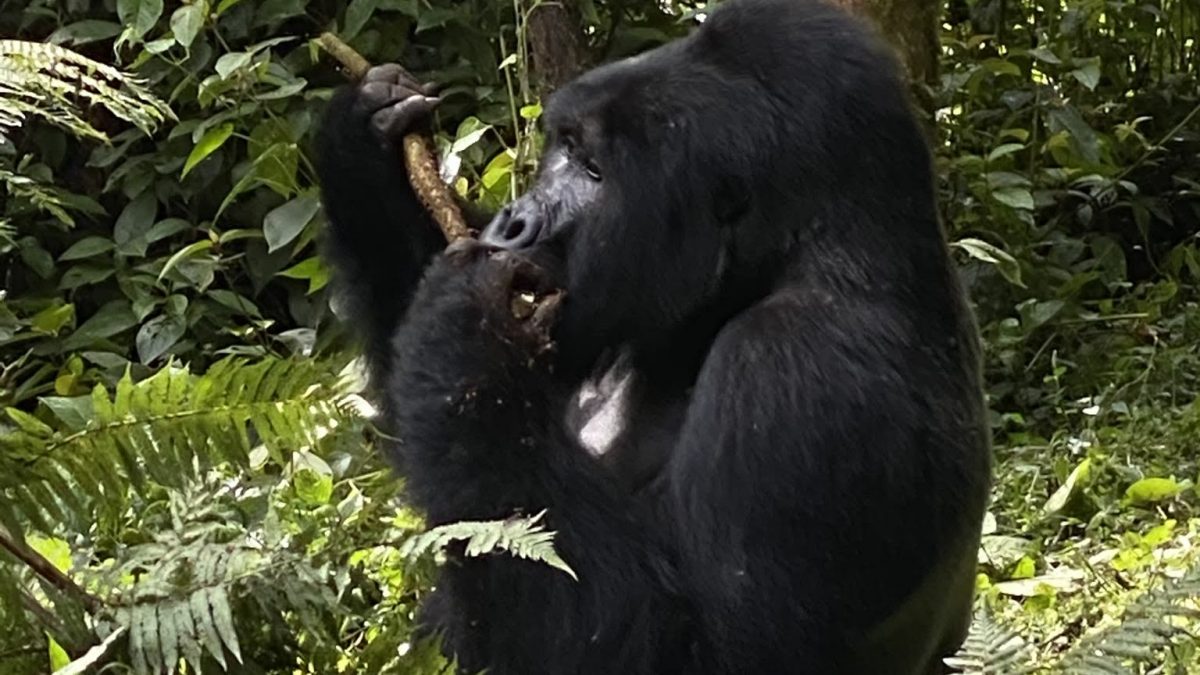
Mountain gorillas in Uganda are primarily found in Bwindi Impenetrable National Park and Mgahinga Gorilla National Park, located in the southwestern region. Bwindi, a UNESCO World Heritage site, is home to over half the world’s mountain gorilla population with four major trekking sectors—Buhoma, Ruhija, Rushaga, and Nkuringo
20-days-uganda-birding-safari-wildlife-gorilla-and-chimpanzee-tracking
20-days-uganda-birding-safari-to-uganda-national-park
20-days-uganda-safari-holiday-tour-package-itinerary
19-days-best-photography-uganda-birding-safari-and-wildlife-adventure
19-days-incredible-uganda-safari-tour-big-five-chimpanzees-and-mountain-gorillas
18-days-best-of-uganda-safari-holiday-vacation-to-all-best-parks
17-days-uganda-honeymoon-safari-holiday-tour
17-days-uganda-birding-safari-itinerary
17-days-best-safari-in-uganda-ending-in-kigali-rwanda
16-days-ultimate-uganda-safari-to-rwanda-safari-tour-package-combo
16-days-best-of-uganda-birding-safari-holiday-extravaganza
7-day-ultimate-uganda-primate-safari-chimpanzees-and-game-drives
6-days-best-gorilla-trekking-and-safari-uganda-parks
Bwindi Impenetrable National Park
Hosts 17 habituated gorilla families, offering the most varied trekking experience from4 main, distinct trailheads (Buhoma, Ruhija, Rushaga, and Nkuringo).
Mgahinga Gorilla National Park
Offers the chance to see the Nyakagezi group, usually with less crowded trails set against stunning volcanic scenery
Where exactly in Uganda can tourists go to see wild mountain gorillas?
In Uganda, the opportunity to witness wild mountain gorillas is concentrated in two distinct southwestern locations: Bwindi Impenetrable National Park and Mgahinga Gorilla National Park. Both parks are situated along the edges of the Albertine Rift, part of the larger Virunga Landscape that straddles the borders of Uganda, Rwanda, and the Democratic Republic of Congo. Bwindi is the more famous of the two, characterized by its ancient, dense, and multi-layered rainforest that has survived since the last Ice Age. Because of its vast size and varied terrain, Bwindi is divided into four trekking sectors—Buhoma, Ruhija, Rushaga, and Nkuringo—each offering a slightly different trekking environment and access point.
Mgahinga Gorilla National Park, while smaller, offers a completely different aesthetic. It is part of the Virunga Massif, a chain of eight extinct and active volcanoes. In Mgahinga, tourists trek through bamboo forests and alpine moorlands on the slopes of three iconic volcanoes: Mount Muhabura, Mount Gahinga, and Mount Sabinyo. While Bwindi is a "jungle" experience, Mgahinga is a "mountain" experience. To reach these parks, tourists typically fly into Entebbe International Airport followed by a domestic flight to Kihihi or Kisoro airstrips, or embark on a scenic 8-to-10-hour drive from Kampala. Regardless of the park chosen, the destination is a remote, mist-covered sanctuary where the world’s last remaining mountain gorillas find their home.
Which national park in Uganda holds the highest population of mountain gorillas?
Bwindi Impenetrable National Park holds the title for the highest population of mountain gorillas in Uganda, and indeed, one of the highest concentrations in the world. As of the most recent census data available in 2026, Bwindi is home to roughly half of the world's total mountain gorilla population. While the global population of these great apes has successfully surpassed the 1,000 mark—a significant conservation milestone—nearly 459 individuals reside within the 321 square kilometers of Bwindi's dense canopy.
The significance of Bwindi’s population lies in its isolation; unlike the gorillas in Mgahinga, which are part of the larger Virunga Massif population that moves freely between Rwanda and Congo, Bwindi’s gorillas are a distinct community. This high density is what makes Bwindi the premier destination for trekking. Because there are so many individuals and social groups, the park has been able to habituate a large number of families for tourism. This ensures that even during peak seasons, there is a high availability of permits across the four different sectors. The success of Bwindi's population is a direct result of intensive "extreme conservation" efforts, including 24-hour monitoring by trackers and veterinary care from groups like "Gorilla Doctors," ensuring this ancient forest remains a thriving stronghold for the species.
What is the best time of year to go gorilla trekking in Uganda?
The absolute best time for gorilla trekking in Uganda is during the two dry seasons: from June to August and from December to February. These months offer the most comfortable trekking conditions. Because Bwindi and Mgahinga are rainforests, the ground can become incredibly slippery and muddy during the rains. In the dry season, the trails are firmer, making the steep ascents and descents much more manageable for the average trekker. Additionally, the lack of heavy rain means there is less thick mist, providing better visibility for photography and a clearer view of the gorillas as they move through the undergrowth.
However, there is a "secret" advantage to trekking during the wet seasons (March to May and September to November). During these months, the gorillas often descend to the lower slopes of the mountains because food—such as bamboo shoots and wild fruits—is more abundant at lower altitudes. This can sometimes result in shorter, less strenuous treks. Furthermore, the rainy season is considered "low season" in the tourism industry. Many high-end luxury lodges offer discounted rates, and the parks are much quieter, providing a more solitary and intimate experience with the gorillas. If you choose the wet season, the "trade-off" is simply a higher chance of a downpour, but for many, the lush, emerald-green scenery and lower costs make it a highly attractive alternative.
How many habituated mountain gorilla families are currently available for tracking in Bwindi?
As of 2026, Bwindi Impenetrable National Park has approximately 21 habituated gorilla families open for tourism. "Habituation" is a gentle, years-long process where researchers and trackers visit a wild gorilla group daily until the animals become accustomed to the presence of humans without changing their natural behavior. This high number of families is what makes Bwindi the most reliable place in the world for gorilla tourism. These families are spread across four administrative sectors: Buhoma (the oldest sector), Ruhija (the highest altitude), Rushaga (the most families), and Nkuringo (the most challenging terrain).
The availability of 21 families means that a total of 168 permits are issued per day (since only 8 people can visit one family). Among the most famous groups are the Mubare family, which was the first group to be habituated in 1993, and the Rushegura group, known for occasionally wandering near the park headquarters. Having multiple families available is a critical conservation strategy; it prevents "over-visitation" of any single group and allows the park to manage human impact across a wider geographic area. When you book a permit, you are assigned to one of these specific families on the morning of the trek, based on your fitness level and the gorillas' current location, ensuring a safe and controlled encounter for both species.
What is the difference between gorilla trekking in Bwindi and Mgahinga National Park?
The choice between Bwindi and Mgahinga comes down to the environment and the logistics of the encounter. Bwindi is a true "jungle" experience. It is an ancient, primary rainforest with thick undergrowth, massive ferns, and no defined paths. Trekking here involves "bush-whacking" through dense vegetation, and the terrain is a constant series of steep ridges and valleys. Bwindi is the better choice for those who want a wide variety of habituated groups and a greater choice of luxury accommodation. Because it has four sectors, it also offers more flexibility in terms of trek difficulty.
Mgahinga, on the other hand, is a volcanic landscape. The park is smaller and higher in altitude. The vegetation is primarily bamboo forest and open moorland, which often allows for better light and clearer sightlines for photography. In Mgahinga, there is only one habituated group, the Nyakagezi family. Historically, this family was known for being migratory, often crossing into Rwanda, but for several years now, they have stayed permanently in Uganda. Trekking in Mgahinga often feels more "alpine"; you are walking on the slopes of volcanoes like Mount Sabinyo. It is generally quieter and less crowded than Bwindi, making it perfect for travelers who want a more "off-the-beaten-path" experience and a chance to combine gorilla trekking with a search for the rare Golden Monkeys, which are also found there.
How much does a single mountain gorilla trekking permit cost in Uganda currently?
In 2026, the price of a mountain gorilla trekking permit in Uganda is $800 USD for Foreign Non-Residents. For Foreign Residents (those living in East Africa with a valid work permit), the price is $700 USD, and for East African Citizens (Uganda, Kenya, Rwanda, Tanzania, Burundi, and South Sudan), the cost is UGX 300,000. These prices are set by the Uganda Wildlife Authority (UWA) and are standardized across both Bwindi and Mgahinga. While this may seem like a significant investment for a one-hour encounter, it is important to understand where the money goes.
The permit fee is a critical tool for "High-Value, Low-Impact" tourism. A large portion of the revenue is directly reinvested into the protection of the gorillas—funding the salaries of the rangers and trackers who guard them 24/7. Additionally, 20% of all park entry fees and permit revenues are shared with the local communities living around the parks. This "revenue sharing" has been the single most effective way to end poaching, as it provides local people with schools, hospitals, and clean water, turning them into the gorillas' most fierce protectors. Compared to neighboring Rwanda, where a permit costs $1,500 USD, Uganda remains a more accessible option for many travelers, while still maintaining the highest standards of conservation and safety.
How long does the actual gorilla trekking experience usually take in the forest?
The duration of a gorilla trek is one of the few things that cannot be scheduled, as it depends entirely on the movement of the gorillas. On average, a trek can take anywhere from 2 to 6 hours. The day begins at 8:00 AM with a briefing, after which you head into the forest. Trackers go out even earlier to find the spot where the gorillas nested the previous night and then follow their trail. Once the trackers locate the group, they radio your lead guide to navigate you to that specific spot.
In some cases, you might find the gorillas in as little as 45 minutes if they are feeding near the park boundary. In other cases, if the family has moved deep into the valley in search of specific fruits or bamboo shoots, you could be trekking for 7 or 8 hours. This uncertainty is part of the adventure. The trek involves navigating steep slopes, crossing small streams, and pushing through thick vines. Regardless of how long it takes to find them, once you make contact, the "clock starts," and you are allowed exactly one hour to observe, photograph, and stay in their presence. This time limit is strictly enforced to minimize the stress on the animals and to reduce the risk of any potential disease transmission between humans and gorillas.
What should I wear and pack for a gorilla trekking safari in Uganda?
Because you are entering a "Bwindi" (which means "impenetrable") forest, your clothing needs to be functional and protective. The most important item is a pair of sturdy, waterproof hiking boots with good ankle support and grip, as the terrain is often muddy and uneven. You should wear long-sleeved shirts and long trousers to protect your skin from stinging nettles, thorny branches, and "safari ants." Pro tip: many trekkers tuck their trousers into their socks to prevent ants from crawling up their legs.
You should also pack a lightweight rain jacket or poncho, even in the dry season, as rain can fall at any time in the rainforest. Gardening gloves are surprisingly useful; they allow you to grab onto branches and vines for support without getting pricked or scratched. In your daypack, you should carry at least 2 liters of water and a packed lunch, as you never know how long the trek will last. Don't forget a hat and sunblock for the open ridges, and insect repellent with a high DEET concentration. Finally, ensure your camera has a large memory card and a spare battery, but remember that flash photography is strictly forbidden, so adjust your settings for the low-light forest canopy before you reach the gorillas.
Is it possible to see gorillas in Uganda without doing a long hike?
While gorilla trekking is inherently a physical activity, there are ways to minimize the exertion. When you arrive at the park headquarters for your morning briefing, the rangers will ask about your fitness level. If you have mobility issues or are concerned about your stamina, you can request to be assigned to a "near" family. These are groups that are known to stay closer to the park boundaries. While there are no guarantees (gorillas move wherever they want), the rangers do their best to accommodate these requests.
For those who truly cannot hike, Uganda offers the "Sedan Chair" (the "Goran-chair") service. For a fee of approximately $300 to $500 USD, a team of 8 to 12 local porters will carry you into the forest on a specially designed stretcher or chair with handles. This service is a fantastic way to ensure that the elderly or those with physical disabilities can still participate in this life-changing experience. Additionally, it provides valuable income for the local community. It is also highly recommended to hire a personal porter ($20 USD) regardless of your fitness. They carry your bag and offer a steady hand during slippery parts of the trail, significantly reducing the "workload" of the trek and allowing you to focus entirely on the scenery.
What is the minimum age requirement to trek with mountain gorillas in Uganda?
The minimum age for gorilla trekking in Uganda is 15 years old. This rule is strictly enforced by the Uganda Wildlife Authority. There are two primary reasons for this age limit. First, children are often more susceptible to childhood diseases like mumps, chickenpox, or the common cold. Because mountain gorillas share approximately 98% of our DNA, they are highly vulnerable to human respiratory illnesses, which can be fatal to an entire family group that has no natural immunity.
Second, the trekking experience requires a certain level of emotional and physical maturity. The hike can be grueling, and once you encounter the gorillas, it is vital to remain calm, quiet, and follow the guide's instructions perfectly. A child might become frightened or react impulsively if a large Silverback makes a sudden movement or a vocalization. However, if you are traveling with children under 15, many lodges in Bwindi offer specialized childcare services or "nature walks" outside the park boundaries while the parents are trekking. In very rare cases, an exception can be made if a child is nearly 15 and is physically fit, but this requires a special application and prior approval from the UWA officials.
How many people are allowed to visit a single gorilla family per day?
To ensure the well-being and conservation of the mountain gorillas, the Uganda Wildlife Authority limits visitation to exactly 8 people per gorilla family per day. This small group size is a global standard in primate tourism. The primary goal is to minimize stress on the gorillas. These are wild animals, and even though they are habituated to human presence, a large crowd would be perceived as a threat or a disturbance to their social dynamics and feeding routines.
The limit also serves a health purpose. By restricting the number of visitors, the park reduces the total "pathogen load" introduced into the gorillas' environment. Humans and gorillas are so closely related that even a simple sneeze can have devastating consequences for a gorilla group. Furthermore, a smaller group ensures a higher quality experience for the tourists. It allows everyone to have a clear view, plenty of space for photography, and a quiet environment where you can hear the gorillas' grunts, the snapping of bamboo, and the heavy breathing of the Silverback. This exclusivity is what makes the encounter feel so personal; for one hour, you are not a tourist in a crowd, but a quiet observer in their home.
What should I do if a gorilla comes near me during the trek?
It is important to remember that during a gorilla encounter, you are a guest in their living room. While the rangers will try to maintain a 7-meter (21-foot) distance, the gorillas do not always follow the rules. Occasionally, a curious juvenile or even a relaxed Silverback may approach you or walk right past you on a narrow trail. If this happens, the most important rule is to remain calm and still. Do not run away, as this could trigger a "chase" instinct or be interpreted as a sign of hostility.
Instead, you should lower your eyes and look at the ground; in gorilla culture, a direct, sustained stare is a challenge and a sign of aggression. You should also crouch down slightly to make yourself appear smaller and less threatening. If the Silverback makes a "mock charge" or beats his chest, simply stay still, keep your head down, and wait for your guide’s instructions. The guides are experts in "gorilla language" and will often make soft, guttural "belch" sounds to reassure the group that you are friendly. Above all, never attempt to touch a gorilla, even if they are within reach. They are 400-pound wild animals with immense strength, and maintaining a respectful "no-contact" policy is essential for the safety of both parties.
Are trackers allowed to take photos of the mountain gorillas using a flash?
No, flash photography is strictly prohibited during gorilla trekking. This is one of the most important rules of the encounter. The sudden, bright burst of a flash can be extremely startling to a gorilla. In the dim, shaded light of the forest canopy, a flash can be perceived as a threat or an aggressive act, potentially causing the Silverback to react defensively to protect his family. Furthermore, repeated flashes from multiple cameras would be highly disruptive to their natural behavior and could lead to the group becoming "de-habituated" over time.
Because the forest can be quite dark, you should prepare your camera equipment in advance. Use a camera with good low-light performance and set your ISO to a higher level (800, 1600, or even 3200) to compensate for the shade. A lens with a wide aperture (f/2.8 or f/4) is also very helpful. Since you will be relatively close to the gorillas, a massive telephoto lens isn't always necessary; a 70-200mm lens is usually perfect for capturing both portraits and group interactions. If you are using a smartphone, ensure the "Flash" setting is manually turned OFF before you reach the group. By following this rule, you ensure the gorillas remain relaxed, allowing for a much more natural and peaceful one-hour encounter.
What are the four different trekking sectors within Bwindi Impenetrable National Park?
Bwindi is so vast and topographically diverse that it is managed in four distinct sectors, each with its own park office, habituated families, and characteristics.
- Buhoma (North): This is the "birthplace" of gorilla tourism in Uganda. It is the most developed sector with the widest range of luxury lodges. The terrain is generally considered less steep than the southern sectors, making it popular for those seeking a "moderate" trek.
- Ruhija (East): This is the highest sector in terms of altitude (reaching up to 2,500m). It is cooler than the others and offers incredible views of the Virunga Volcanoes. It is a favorite for birdwatchers, as many Albertine Rift endemics are found here.
- Rushaga (South): This sector has the highest number of habituated families (currently 8). Because of the high volume of permits, it is a bustling hub. It is also the only sector where the "Gorilla Habituation Experience" is offered.
- Nkuringo (South): Located on a high ridge overlooking the Kashasha River valley, Nkuringo is famous for having the most challenging terrain. The hikes here are steep and demanding, but the rewards are spectacular views and an encounter with the famous Nkuringo family, often led by multiple Silverbacks.
When booking your safari, it is vital to know which sector your permit is for, as the sectors are several hours apart by road.
Do I need to be extremely fit to go mountain gorilla trekking in Uganda?
You do not need to be a professional athlete, but you should have a moderate level of physical fitness. Gorilla trekking is a "dynamic" activity; you are not walking on a flat, paved path. You will be hiking through thick vegetation, navigating slippery mud, and climbing steep slopes at altitudes ranging from 1,100 to 2,500 meters. The air is thinner at these altitudes, which can make you tire more quickly if you are not used to it.
The best way to prepare is to engage in some cardiovascular exercise—like hiking, walking, or stair-climbing—for a few weeks before your trip. However, because the rangers assign groups based on fitness, the experience is accessible to most people. If you have knee problems or are a slower walker, the rangers will place you in a group targeting a "near" family. The pace of the trek is always dictated by the slowest member of the group, and the guides take frequent breaks. With the help of a porter to carry your gear and a sturdy walking stick (provided at the start), most travelers find the physical challenge to be a rewarding part of the journey. The adrenaline and excitement of finally seeing the gorillas usually make any muscle aches disappear instantly.
Can I purchase my gorilla trekking permit directly from the Uganda Wildlife Authority?
Yes, it is possible for an individual to purchase a permit directly from the Uganda Wildlife Authority (UWA) headquarters in Kampala. However, for most international travelers, this is not the most practical route. Most permits (over 80%) are pre-purchased by registered tour operators on behalf of their clients. This is because the process involves checking real-time availability across four different sectors and making payments through specific banking systems that can be difficult to navigate from abroad.
Working with a tour operator is highly recommended for two reasons. First, they can secure the permit months in advance, which is essential for peak seasons (June-September) when permits sell out over a year ahead. Second, the permit is only one piece of the puzzle. You also need to coordinate transportation and accommodation within the same sector as your permit. If you buy a permit for Buhoma but book a lodge in Rushaga, you will face a 4-hour drive on rough roads starting at 3:00 AM to make your briefing. A tour operator ensures all these logistics are seamlessly aligned, giving you peace of mind and allowing you to focus entirely on the experience.
What happens if I am sick on the day of my gorilla trek?
If you have a cold, flu, cough, or any contagious stomach ailment on the day of your trek, you will not be allowed to visit the gorillas. While this is undeniably disappointing, it is a non-negotiable rule for the protection of the species. Because gorillas share so much of our DNA, they are susceptible to human viruses, and a simple cold can turn into pneumonia and kill a gorilla. The survival of these endangered animals depends on our "biological distance."
If you are honest with the rangers about your illness, the Uganda Wildlife Authority has a refund/rescheduling policy. If you are found to be unfit to trek by the park’s medical staff or the lead ranger, you are typically eligible for a 50% refund of the permit fee, or the park will attempt to reschedule your trek to a later date if your health improves and permits are available. Many travelers also choose to wear a medical mask during the one-hour encounter as an extra layer of protection for the gorillas. Always check your travel insurance policy beforehand, as many "Platinum" plans will cover the cost of the permit if you are forced to cancel due to medical reasons.
What is the difference between gorilla trekking and the gorilla habituation experience?
Standard gorilla trekking involves visiting a family that is already fully habituated. You spend exactly one hour with them, observing their feeding, playing, and resting behaviors from a distance. It is a "polished" tourism product designed for maximum viewing quality in a limited time frame.
The Gorilla Habituation Experience (GHE), which is only available in the Rushaga sector of Bwindi, is a more "raw" and educational encounter. On a GHE trek, you accompany researchers and trackers as they visit a group that is still in the process of becoming habituated. This experience allows you to spend four hours with the gorillas. The price is higher ($1,500 USD), and the group size is smaller (only 4 people per group). During these four hours, the gorillas may be more shy or move more frequently, as they are not yet fully comfortable with humans. It is a fascinating opportunity to learn about gorilla behavior, vocalizations, and the science of conservation from the experts who work with them every day. For serious wildlife enthusiasts and photographers, the extra time and the deeper insight into the habituation process make the GHE a truly elite and unique experience.
Are there any restrictions on visiting mountain gorillas if I am pregnant?
There is no official rule prohibiting pregnant women from gorilla trekking. However, it is a decision that should be made with a doctor's consultation and a clear understanding of the physical demands. The trek involves hiking at high altitudes, navigating steep and often slippery slopes, and could last for several hours. The primary risks are physical exhaustion, the potential for a fall on the uneven terrain, and the distance from advanced medical facilities.
If you are in your first or early second trimester and are physically active, many women find the trek manageable, especially if they hire porters and request a "near" family. However, trekking in the third trimester is generally discouraged due to the physical strain and the risk of dehydration. If you choose to trek while pregnant, it is essential to listen to your body, take frequent breaks, and ensure you are staying hydrated. Many lodges in Bwindi are located at high altitudes with many stairs, so you should also consider your choice of accommodation. Ultimately, while the encounter itself is peaceful, the "journey" to get there is a strenuous mountain hike that requires careful consideration of your health and comfort.
How close can I get to the mountain gorillas during the one-hour encounter?
The official conservation rule states that visitors must maintain a distance of at least 7 meters (21 feet) from the mountain gorillas. This distance is calculated to be far enough to prevent the transmission of airborne diseases and to give the gorillas their "personal space," while still being close enough for a spectacular and detailed viewing experience. The 7-meter rule is the cornerstone of responsible gorilla tourism.
In reality, the forest is a dynamic environment. Sometimes the gorillas are in a thicket where you can only see them from 10 meters away; other times, a playful baby might break the rules and tumble toward your feet, or a Silverback might decide to walk down the same path you are standing on. In these moments, your guide will instruct you to step back or move aside to restore the distance. You should never reach out to touch them or move closer than the guide allows. Even at 7 meters, the experience is incredibly powerful. You are close enough to see the individual hairs on their arms, the unique "nose prints" used by researchers for identification, and the profound, human-like expressions in their eyes. Maintaining this respectful distance is the best way to ensure that these magnificent "Gentle Giants" remain wild and protected for generations to come.
Booking Uganda gorilla trekking with us Roads of Adventure safaris
Book your Uganda gorilla trekking with Roads of Adventure Safaris for tailored 3-day to 20-day+ itineraries exploring Bwindi Impenetrable and Mgahinga National Parks. Offering expert-guided, all-inclusive packages ranging from budget to luxury, they ensure permits, transport, and lodging. Best trekking is June–September/December–February.
