A 14-day Uganda safari should prioritize a "best of" circuit combining savannah game drives, primate trekking, and scenic relaxation, focusing on Murchison Falls, Kibale Forest, Queen Elizabeth, and Bwindi Impenetrable National Parks. Key stops include tracking mountain gorillas and chimpanzees, boat cruises on the Nile and Kazinga Channel, and relaxing at Lake Bunyonyi or Jinja
14-days-family-uganda-safari-holiday-vacation-escape
14-days-uganda-and-rwanda-safari-tour-itinerary
14-days-classic-uganda-birding-safari-expedition
14-days-complete-uganda-safari-tour-and-primate-safari-experience
14-days-uganda-primate-safari-and-jinja-white-water-rafting
14-days-best-africa-big-five-safari-in-uganda-and-best-gorilla-trekking-adventure
14-days-luxury-uganda-primate-safari-holiday
14-Day Uganda Safari
The 14-Day Uganda Safari is a comprehensive "Grand Circuit" designed to showcase the staggering diversity of the "Pearl of Africa." This masterfully structured itinerary bridges the gap between the thundering savannas of the north and the ancient, misty rainforests of the south. Over two weeks, you will experience the visceral power of Murchison Falls, the primate-rich corridors of Kibale Forest, and the iconic plains of Queen Elizabeth National Park. The journey reaches its emotional peak with mountain gorilla trekking in Bwindi before offering a tranquil retreat at Lake Bunyonyi. This is more than a wildlife tour; it is a deep immersion into a land where the East African savanna meets the West African jungle. Guided by experts and staying in hand-picked lodges, travelers will discover a seamless narrative of conservation, community, and untamed beauty, ensuring every bucket-list encounter—from the "Big Five" to the Great Apes—is checked with grace and depth.
Days 1–3: Murchison Falls and the Rhino Sanctuary
The adventure begins with a journey north, stopping at the Ziwa Rhino Sanctuary. Here, you will track southern white rhinos on foot, a vital conservation success story that marks your first encounter with the "Big Five." Upon entering Murchison Falls National Park, the landscape opens into palm-dotted savannas. You will engage in sunrise game drives across the Buligi Circuit, home to lions, leopards, and the world’s largest population of Rothschild’s giraffes. The highlight is a launch cruise on the Victoria Nile, where you glide past massive pods of hippos and giant Nile crocodiles toward the base of the world’s most powerful waterfall. Witnessing the entire Nile surge through a seven-meter gorge is a sensory marvel. These initial days establish a high-energy rhythm, blending classic savanna wildlife with the raw hydraulic power of the historic river.
Days 4–5: Kibale National Park – The Primate Capital
Leaving the savanna, you transit through the verdant tea estates of Fort Portal to Kibale National Park. This ancient rainforest is home to the highest density of primates in Africa, most notably over 1,500 chimpanzees. You will join an expert-led trek to locate a habituated community, witnessing our closest living relatives as they vocalize, groom, and swing through the canopy. This profound encounter is complemented by a visit to the Bigodi Wetland Sanctuary, a community-run project on the forest’s edge. Here, you will spot rare birds like the Great Blue Turaco and several other primate species, including the Red Colobus and L'Hoest's monkeys. These days offer a sharp contrast to the open plains, immersing you in the humid, vocal, and high-energy world of the tropical rainforest.
Days 6–8: Queen Elizabeth Wildlife and Ishasha’s Lions
You descend into the Albertine Rift to explore Queen Elizabeth National Park. The experience starts on the Kasenyi Plains, a prime breeding ground for Uganda kobs and a strategic hunting territory for lions and leopards. A 2-hour boat cruise on the Kazinga Channel provides an aquatic safari like no other, offering up-close views of buffaloes, elephants, and hundreds of bird species lining the banks. The final day in this sector is dedicated to the remote Ishasha Sector. This area is world-famous for its tree-climbing lions, which lounge in the branches of ancient fig trees to escape the afternoon heat. This segment of the tour showcases the park's "Medley of Wonders," from volcanic crater lakes to unique feline behaviors, providing a comprehensive view of one of Africa’s most ecologically diverse protected areas.
Days 9–10: Bwindi – The Gorilla Encounter
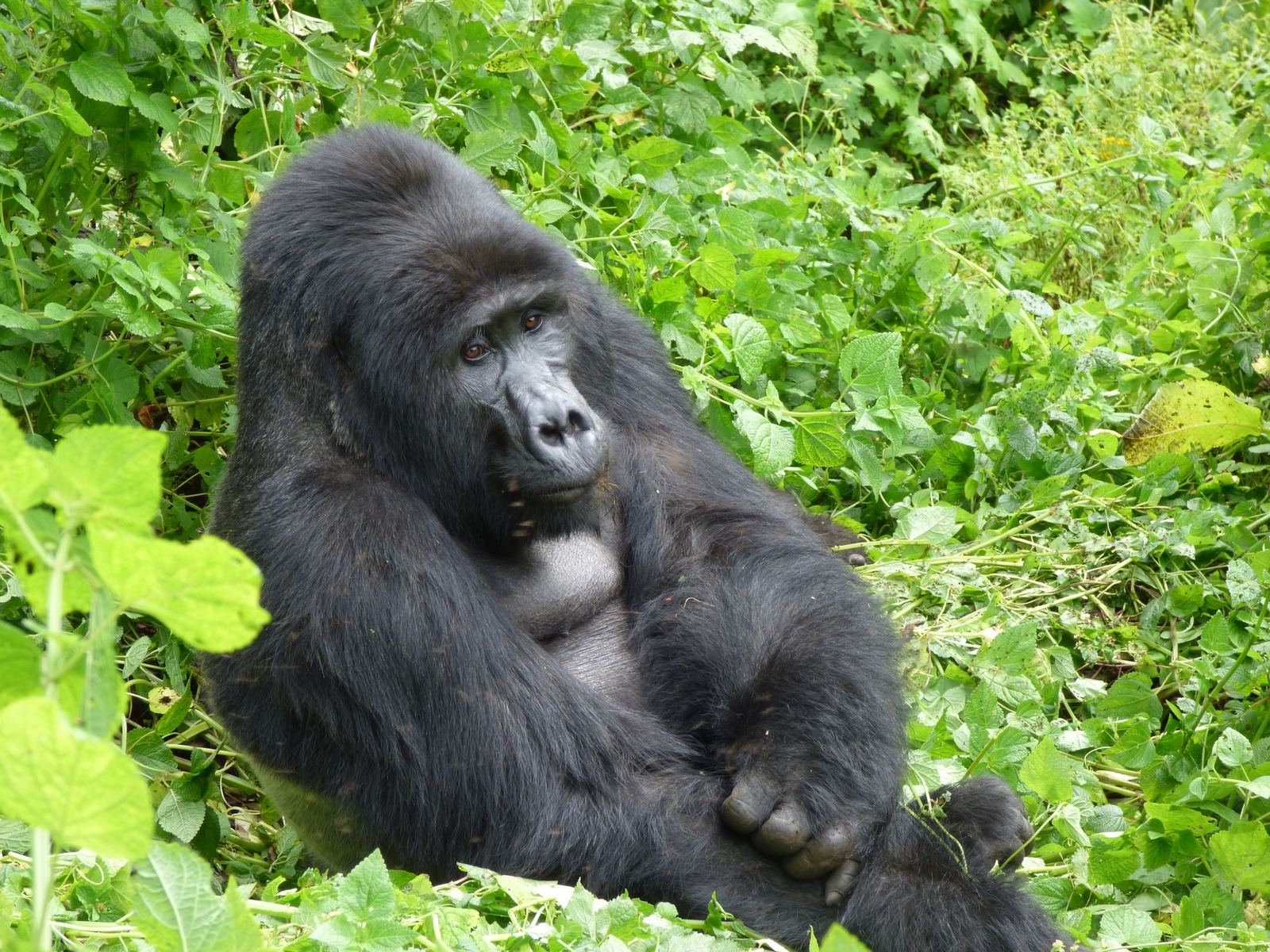
The journey climbs into the Kigezi Highlands, arriving at the UNESCO-listed Bwindi Impenetrable National Park. This is the emotional heart of the safari. After a briefing on forest etiquette, you will trek through dense, ancient vegetation in search of one of the world's remaining mountain gorilla families. The encounter—limited to one hour—is life-altering. Watching a 400-pound silverback and his troop just meters away creates a silent, soul-stirring connection that defies description. The "Impenetrable" forest lives up to its name, offering a primal backdrop for this once-in-a-lifetime experience. These days are not just about the trek; they are about the deep, misty silence of the mountains and the profound realization of our shared biological heritage with these gentle giants in their last remaining sanctuary.
Days 11–12: Relaxation at Lake Bunyonyi
Following the physical intensity of gorilla trekking, you move to the tranquil shores of Lake Bunyonyi. Known as the "Place of Little Birds," this bilharzia-free lake is dotted with 29 islands and surrounded by steep, terraced hillsides. These days are designed for restoration. You can explore the lake’s history by traditional dugout canoe, visit local island communities, or simply enjoy the temperate climate and spectacular views from your lodge. It is a perfect moment in the itinerary to decompress and process the intense wildlife experiences of the previous ten days. The serene atmosphere of Bunyonyi provides a cultural and scenic bridge, allowing you to reflect on your journey through the "Switzerland of Africa" while enjoying one of the most beautiful and peaceful landscapes in the East African region.
Days 13–14: Lake Mburo and the Equator Finale
The final leg takes you to Lake Mburo National Park, a compact jewel and the only place in southern Uganda to see plains zebras and impalas. Here, you can engage in a guided walking safari, getting a rare "on-foot" perspective of the savanna giants. The park’s peaceful atmosphere and varied acacia woodland provide a gentle conclusion to your wildlife viewing. On the final day, you begin the drive back toward Kampala or Entebbe. A mandatory stop at the Equator Crossing allows for the classic "two hemispheres" photo and last-minute souvenir shopping. As you reach the city, the 14-day loop is complete. You leave with a profound understanding of Uganda’s multifaceted identity, from its thundering falls and silent silverbacks to the vibrant communities that call this "Pearl of Africa" home.
A 14-day Uganda safari offers the luxury of time to explore the country's diverse landscapes, from the semi-arid northern plains to the dense southwestern rainforests. This extended duration allows for a "Grand Circuit" that balances high-intensity wildlife tracking with necessary relaxation.
Below is a detailed guide to each segment of such a journey.
Which parks are best to visit during a 14-day Uganda safari?
A 14-day itinerary typically follows the "Classic Western Circuit," which hits the heavy hitters of Ugandan biodiversity. Murchison Falls National Park is essential for its powerful waterfall and vast savanna, while Kibale Forest National Park is the primary destination for chimpanzee tracking. Queen Elizabeth National Park offers a unique mix of crater lakes, savanna, and the famous Kazinga Channel. Finally, Bwindi Impenetrable National Park serves as the climax for mountain gorilla trekking. For a 14-day trip, adding Lake Mburo National Park provides a great transition between the southwestern forests and the central region, offering a quieter, bush-walk-focused experience.
Where is the best place to start a 14-day Uganda safari?
Almost all safaris begin in Entebbe or Kampala. Entebbe is home to the international airport, making it a convenient arrival point for a "meet and greet" before heading inland. Starting here allows for an early stop at the Ziwa Rhino Sanctuary in Nakasongola, which is strategically located on the road to the north. This route ensures you start your wildlife sightings early and break up the 5–6 hour drive to Murchison Falls.
Should I include Kidepo Valley on a 14-day Uganda safari?
If you want a truly remote, "undiscovered" Africa experience, Kidepo Valley National Park is a spectacular addition, though it requires careful planning. Located in the far northeast corner bordering South Sudan and Kenya, it is often called the most beautiful park in Africa. Including it in a 14-day trip usually requires a domestic flight to save time, or an extra two days of driving. It adds a "wild north" flavor to the safari that contrasts sharply with the lush forests of the south.
Where can I see tree-climbing lions on a 14-day Uganda safari?
The Ishasha Sector in the southern part of Queen Elizabeth National Park is the world’s premier location for this phenomenon. Unlike most lions that stay on the ground, the lions here have adapted to climbing large, sprawling Sycamore Fig trees and Albizia trees. They typically climb during the heat of the day (10:00 AM to 3:00 PM) to catch a breeze and avoid tsetse flies. It is a mandatory stop on the drive from Queen Elizabeth toward Bwindi.
Where are the best chimpanzee tracking locations on a 14-day Uganda safari?
Kibale Forest National Park is the "Primate Capital of the World" and the undisputed best location for chimpanzee tracking. It boasts the highest density of primates in Africa, with over 1,500 chimpanzees. While tracking is also possible in the Kyambura Gorge (Queen Elizabeth) and Budongo Forest (near Murchison Falls), Kibale offers the highest success rate (over 95%) and the option for a "Chimpanzee Habituation Experience," where you spend the entire day with the researchers and the primates.
Where can I hike and relax on a 14-day Uganda safari?
Lake Bunyonyi, located in the southwestern highlands, is the ultimate place for post-trekking recovery. Known as the "Place of Many Little Birds," it is one of the few lakes in the region that is Bilharzia-free and safe for swimming. You can spend two days here canoeing in traditional dugout boats, hiking the terraced hills of the Kigezi region, or simply enjoying the views of the 29 islands from a lakeside lodge.
Where can I see rhinos on a 14-day Uganda safari?
Since rhinos were extinct in Uganda's national parks by the 1980s, the Ziwa Rhino Sanctuary is the only place to see them. Located roughly three hours north of Kampala, the sanctuary is home to over 30 Southern White Rhinos. The experience is unique because you track them on foot with a specialized ranger, often getting within 6 to 10 meters of these massive animals in their natural habitat.
Where is the best place to find the Big Five on a 14-day Uganda safari?
To see all of the "Big Five" (lion, leopard, elephant, buffalo, and rhino), you must combine Murchison Falls National Park with the Ziwa Rhino Sanctuary. Murchison Falls is home to massive herds of elephants and buffalo, along with a healthy population of lions and leopards. By stopping at Ziwa on the way to or from the park, you can check off the rhino and complete the full set in a single geographic region.
Where to see the most dramatic waterfall on a 14-day Uganda safari?
Murchison Falls National Park holds the title for the world's most powerful waterfall. At this point, the entire River Nile is forced through a tiny 7-meter (23-foot) gap in the rocks before plunging 43 meters into the "Devil’s Cauldron" below. The sheer pressure causes the ground to vibrate, and the mist can be felt hundreds of meters away. It is best experienced by taking a boat cruise to the base and then hiking to the top.
Where to see pygmy families on a 14-day Uganda safari?
The Batwa Pygmies, the original inhabitants of the equatorial forests, can be visited near Bwindi Impenetrable Forest or Mgahinga Gorilla National Park. The "Batwa Cultural Trail" is a community-led initiative where elders demonstrate how they lived in the forest before it became a national park—showing you how to make fire, harvest honey, and use medicinal plants. Semuliki National Park also offers opportunities to visit Batwa communities near the Sempaya hot springs.
Where should I go for birding on a 14-day Uganda safari?
While all of Uganda is a birder's paradise, Lake Mburo National Park and the Mabamba Swamp are standouts. Lake Mburo is excellent for acacia-associated species and water birds. However, the holy grail for birders is the Shoebill Stork, which is most easily spotted via canoe in the Mabamba Swamp (near Entebbe) or the Nile Delta area of Murchison Falls. Uganda has over 1,000 recorded bird species, making it one of the top birding destinations globally.
Where can I do boat trips on a 14-day Uganda safari?
There are two premier boat excursions: the Victoria Nile cruise in Murchison Falls and the Kazinga Channel cruise in Queen Elizabeth National Park. The Nile cruise is famous for its dramatic waterfall views and large crocodiles. The Kazinga Channel cruise, however, is often cited for having the world's highest concentration of hippos. Both offer unparalleled "water-level" wildlife photography as animals come to the banks to drink.
Where to do a city tour on a 14-day Uganda safari?
Kampala, the chaotic and vibrant capital, is best explored at the start or end of your trip. Key highlights include the Gadhafi Mosque (offering 360-degree views of the city's seven hills), the Kasubi Tombs (a UNESCO World Heritage site), and the Uganda Museum. Navigating the city via a guided tour helps you skip the heavy traffic and provides cultural context for the modern Ugandan lifestyle.
Where to go for zebra spotting on a 14-day Uganda safari?
Lake Mburo National Park is the best place in Uganda to see zebras. Unlike the larger savanna parks like Queen Elizabeth or Murchison Falls, Lake Mburo does not have elephants, which has allowed the woodland and savanna to support a massive population of Plains Zebras. It is also the only park in southern Uganda where you can find impalas, making its wildlife profile quite distinct from the rest of the country.
Where to cross the equator on a 14-day Uganda safari?
The most famous equator crossing is at Kayabwe, about 72 km from Kampala on the road to the southwestern parks. It is a mandatory photo stop where you can stand with one foot in the Northern Hemisphere and the other in the Southern. Local guides often perform the "Coriolis Effect" water experiment to show how water drains in different directions on either side of the line.
Where to stay for luxury on a 14-day Uganda safari?
For travelers seeking high-end comfort, Bwindi Lodge or Sanctuary Gorilla Forest Camp in Bwindi offer world-class luxury in the heart of the rainforest. In Murchison Falls, Paraa Safari Lodge provides a colonial-style elegance with views over the Nile, while Chobe Safari Lodge offers a more secluded, five-star experience in the northern sector of the park. These lodges feature gourmet dining, swimming pools, and spa services to complement the rugged safari experience.
Booking 14 Days Uganda safari with us Roads of Adventure safaris
Booking a 14-day Uganda safari with Roads of Adventure Safaris is a straightforward process, focused on creating personalized, all-inclusive itineraries for primate tracking, game drives, and cultural tours. Contact them via email (info@roadsofadventuresafaris.com) or phone/WhatsApp (+256 701041637) to tailor your trip and secure bookings. A 30% deposit is required to confirm, with final payment due 60 days before departure, and it is recommended to book months in advance, especially for gorilla permits.
