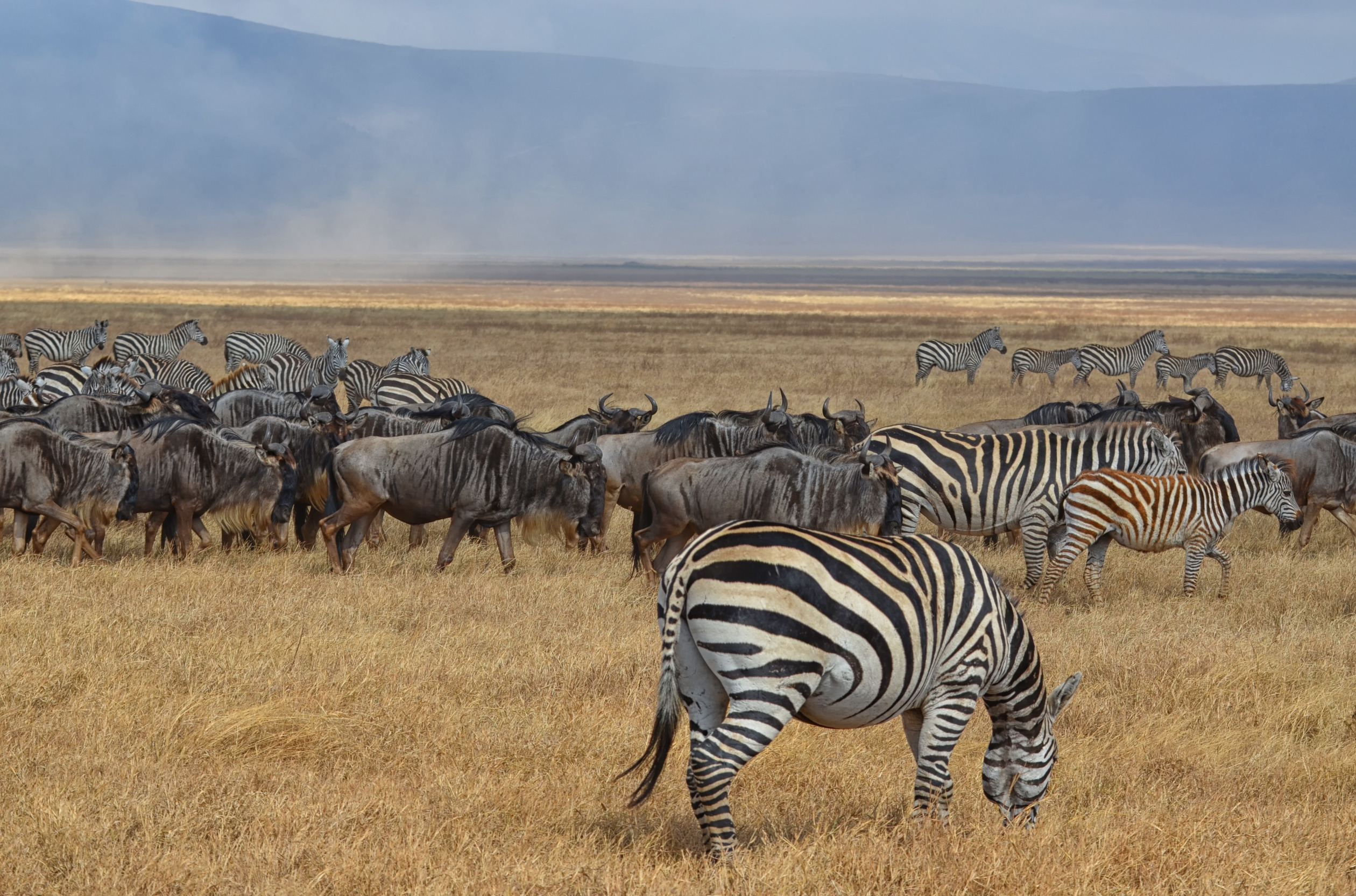
The best time for a 12-day Kenya wildlife safari is during the dry season from late June to October, offering optimal wildlife viewing and the Wildebeest Migration in the Maasai Mara. Another excellent, drier period is January to February, which is great for predator-prey action and birdwatching.
12-days-lake-nakuru-masai-mara-central-serengeti-ngorongoro-crater-amboseli-kenya-tanzania-safari
12-days-kenya-tanzania-safari-and-zanzibar-beach-holiday-vacation
12-days-comprehensive-kenya-safari-circuit
12-days-northern-wilderness-and-conservation-focus-kenya-wildlife-safari
12-days-kenya-and-uganda-primate-and-savanna-circuit
Topical Highlights by Season
- Best Overall (July – October): Best weather, clear skies, and prime time for the Great Migration crossing the Mara River.
- Dry & Calm (Jan – Feb): Ideal for spotting large herds in the Maasai Mara and predator activity, with less vegetation obscuring views.
- Birding & Wildlife (Nov – April): Wet seasons (short rains) make landscapes green, with birdlife booming and migratory birds present.
Key Considerations for a 12-Day Trip
- High Season (June - October): Expect more visitors, so pre-booking lodges is essential.
- Wildlife Viewing: The long dry season (July-Sept) provides the easiest spotting as animals gather around water sources.
- Regional Differences: While the Maasai Mara dominates July-October, places like Samburu offer great sightings in drier months.
12 Days Kenya wildlife safari
12 Days Kenya wildlife safari is a masterclass in biodiversity, designed to immerse you in the staggering variety of East Africa’s landscapes. From the urban conservation hubs of Nairobi to the rugged northern frontier of Samburu, this journey spans the geological wonders of the Great Rift Valley and the golden, predator-rich plains of the Maasai Mara. You will witness the "Samburu Special Five," track rhinos in private sanctuaries, and marvel at the world’s largest land mammals under the shadow of Mount Kilimanjaro. This itinerary is carefully paced to offer a balanced narrative of Kenya’s natural heritage, combining legendary national reserves with intimate private conservancies. Whether you are witnessing the Great Migration or observing rare primates in high-altitude forests, the 12 Days Kenya wildlife safari provides a transformative connection to the wild, ensuring every sunrise brings a new perspective on the resilience and beauty of the African savannah.
Day 1: Arrival in Nairobi
Your 12 Days Kenya wildlife safari begins in the vibrant capital of Nairobi. Upon arrival, you will be met and transferred to your hotel for a briefing. Depending on your flight time, visit the Giraffe Centre to hand-feed the endangered Rothschild’s giraffes and the Sheldrick Wildlife Trust to meet orphaned elephants. These visits highlight Kenya's commitment to conservation right from the start.
Day 2: Nairobi to Amboseli National Park
Drive south through Maasai land to Amboseli, famous for its massive "tuskers." As you arrive, the iconic silhouette of Mount Kilimanjaro provides a dramatic backdrop. Enjoy an afternoon game drive through the park’s swamps, where hippos and elephants congregate. The contrast between the dry, dusty plains and the lush, spring-fed wetlands makes for spectacular wildlife photography and an unforgettable first day in the bush.
Day 3: Full Day in Amboseli
Spend the day exploring Amboseli’s diverse habitats. Early morning is the best time to view Kilimanjaro before clouds gather. Visit Observation Hill for a panoramic view of the park and its resident buffaloes, zebras, and wildebeests. Look for predators like lions and cheetahs in the acacia woodlands. You may also visit a local Maasai village to learn about their ancestral traditions and co-existence with the wild.
Day 4: Amboseli to Lake Naivasha
The 12 Days Kenya wildlife safari heads into the Great Rift Valley today. Arrive at Lake Naivasha, a freshwater haven for birdlife and hippos. Enjoy a boat safari to see African fish eagles in action, followed by a nature walk on Crescent Island. This sanctuary allows you to walk among giraffes and zebras without the presence of predators, offering a unique, ground-level perspective of the animal kingdom.
Day 5: Lake Naivasha to Lake Nakuru
A short drive brings you to Lake Nakuru National Park, a premier destination for rhino conservation. Spend the afternoon tracking both black and white rhinoceroses in the yellow-fever acacia forests. The lake’s alkaline shores often shimmer with flamingos and pelicans. Keep an eye out for the rare Rothschild’s giraffe and the park’s healthy leopard population, which often lounges in the branches of the magnificent fever trees.
Day 6: Lake Nakuru to Maasai Mara
Enter the world-famous Maasai Mara National Reserve, the grandest stage of your 12 Days Kenya wildlife safari. After a scenic drive through the Great Rift Valley, arrive in time for lunch and an afternoon game drive. The Mara’s rolling grasslands are home to the highest concentration of big cats in Kenya. Witness the raw beauty of the savannah as you search for your first "Big Five" sightings.
Day 7: Full Day in the Maasai Mara
Dedicate a full day to the Mara’s wonders with a picnic lunch in the wild. Explore the Mara River, the site of the Great Migration's dramatic crossings. You might witness a lion pride on a hunt or a cheetah mother teaching her cubs. The sheer volume of wildlife, from massive buffalo herds to elegant gazelles, ensures that every turn of the track reveals a new chapter of African survival.
Day 8: Balloon Safari & Mara Exploration
Optional sunrise hot air balloon flight offers an aerial view of the Mara’s vastness. After a champagne breakfast in the bush, continue with game drives focused on elusive species like the caracal or serval. In the afternoon, visit a Maasai Boma to experience their vibrant culture and beadwork. This blend of high-altitude adventure and cultural depth provides a 360-degree understanding of life in this iconic ecosystem.
Day 9: Maasai Mara to Ol Pejeta Conservancy
Move to the Laikipia Plateau to visit Ol Pejeta, a leader in private conservation. This sanctuary is home to the world’s last two northern white rhinos. Visit the Sweetwaters Chimpanzee Sanctuary and embark on a night game drive to find nocturnal species like aardvarks and zorillas. Ol Pejeta’s innovative model shows how private ranching and wildlife can thrive together, adding a hopeful narrative to your journey.
Day 10: Ol Pejeta to Samburu National Reserve
The 12 Days Kenya wildlife safari heads north into the arid, rugged beauty of Samburu. This volcanic landscape is the territory of the "Samburu Special Five," including the Grevy’s zebra and reticulated giraffe. Your afternoon game drive along the Ewaso Ng'iro River reveals how wildlife adapts to the heat. Watch for large elephant herds crossing the red earth, a striking contrast to the green southern parks.
Day 11: Samburu Wilderness & Culture
Spend the day tracking Samburu’s unique predators and herbivores. Search for the long-necked gerenuk and the Somali ostrich. The river is the lifeblood here, attracting leopards and lions to its shaded banks. You will also visit a Samburu village to learn about their nomadic lifestyle and warriors. The red volcanic soil and the vibrant attire of the Samburu people create an atmosphere of timeless, rugged elegance.
Day 12: Return to Nairobi & Departure
On the final day of your 12 Days Kenya wildlife safari, enjoy a sunrise game drive before driving back to Nairobi. Reflect on the diversity of species and landscapes you have encountered, from the marshes of Amboseli to the plains of the Mara. Enjoy a final farewell lunch before your transfer to the airport. You leave with a profound appreciation for Kenya’s wild soul and its enduring natural legacy.
1. What is the overall best time for a 12-day Kenya safari?
The consensus among experts and seasoned travellers is that the long dry season from July to October represents the absolute pinnacle for a 12-day expedition. This window is highly coveted because it aligns perfectly with the Great Migration in the Maasai Mara, arguably the most spectacular wildlife event on the planet. During these months, the weather is predictable and pleasant, characterised by cool mornings and warm, sun-drenched afternoons with virtually no rainfall. This lack of rain is a strategic advantage for wildlife viewing; as the landscape dries out, the vegetation thins, and animals are forced to congregate around permanent water sources like rivers and waterholes.
For a 12-day itinerary that likely spans multiple ecosystems—from the arid northern frontier of Samburu to the southern plains of Amboseli—the dry season ensures that all park tracks are easily navigable. This is crucial for maintaining the rhythm of a multi-destination tour, as it avoids the logistical delays caused by muddy roads. Furthermore, the absence of standing water in the bush reduces the mosquito population, making for a more comfortable experience at camp. While this is the most expensive time to visit due to peak demand, the "wildlife density" is at its maximum, offering the highest probability of seeing the "Big Five" and witnessing the raw drama of predator-prey interactions across the golden savannah.
2. When is the best time to see the Great Migration in Maasai Mara?
To witness the thundering herds of the Great Migration, your 12-day safari in Kenya should be scheduled between late July and October. By July, roughly 1.5 million wildebeest, accompanied by hundreds of thousands of zebras and gazelles, have completed their arduous journey from Tanzania's Serengeti and settled into the Maasai Mara. The most dramatic spectacle of this migration is the river crossings. These occur primarily between late July and September, as the herds brave the crocodile-infested waters of the Mara and Talek Rivers to reach greener pastures.
Observing a river crossing requires patience and a bit of luck, which is why a 12-day itinerary is so beneficial; it allows you to spend three or four dedicated nights in the Mara, significantly increasing your chances of being in the right place at the right time. By October, the herds have usually grazed the Mara plains and begin their slow trek back south toward the Serengeti. While the migration is the main draw, the presence of such a massive concentration of herbivores also means that predator activity is at its peak. Lions, leopards, and cheetahs are frequently seen prowling the edges of the herds, providing a high-octane wildlife experience that defines the very essence of the African wild during these spectacular months.
3. What is the best time for a 12-day safari with fewer crowds?
If you seek the "exclusive" feel of the wilderness without the vehicle clusters often found during the migration, the "shoulder seasons" are your best bet. June, late October, and early November offer an exceptional balance of excellent wildlife spotting and relative solitude. In June, the landscape is often still lush from the recent rains, but the weather has dried out enough for comfortable game drives. This is the "calm before the storm," where you can enjoy the serenity of parks like Amboseli or Samburu before the peak migration crowds arrive in July.
Late October and early November are equally strategic. As the Great Migration herds begin to move south, the majority of "migration-only" tourists depart. However, the resident wildlife—including the Big Five—remains as active as ever. The short rains often begin in November, bringing a refreshing coolness to the air and a vibrant green tint to the plains, which is a dream for photographers. By choosing these shoulder windows for your 12-day safari in Kenya, you benefit from lower lodge occupancy and a more intimate connection with your guide. You are more likely to find yourself alone at a leopard sighting or a scenic viewpoint, making the journey feel like a private exploration rather than a popular tour.
4. When is the "short dry season" in Kenya?
The short dry season, running from December to February, is often considered Kenya’s best-kept secret for safari lovers. This period follows the "short rains" of November, resulting in a landscape that is beautifully green and vibrant but under clear, blue skies. The weather is generally warmer than the July–October window, making it a favourite for those escaping the Northern Hemisphere's winter. These months offer superb conditions for game viewing, as the moisture from the previous month’s rain begins to evaporate, drawing wildlife back to reliable water sources.
For a 12-day safari in Kenya, this season is particularly rewarding in the Maasai Mara and Laikipia. It is the "calming period" after the migration, where the resident prides of lions are well-fed and often seen with cubs. February, in particular, is an excellent month for photography because the dust is minimal and the light is exceptionally clear. While it is a popular time (coinciding with the Christmas and New Year holidays), the crowds are generally thinner than during the August migration peak. It is also an ideal time for those who wish to combine their safari with a beach holiday on the coast, as the Indian Ocean is calm, clear, and perfect for diving and snorkelling.
5. What is the best time for a 12-day safari to see predators?
For those whose primary goal is to see lions, leopards, and cheetahs in action, the dry months of July to October are unequivocally the best. The logic is simple: predators follow the food and the water. During the dry season, the tall grass that usually provides cover for herbivores dies back, making it harder for prey to hide and easier for predators to hunt. Furthermore, the limited availability of water forces antelopes and zebras into predictable patterns, congregating around a few remaining waterholes where predators lie in wait.
A 12-day safari in Kenya during this time allows you to visit "predator hotspots" like the Maasai Mara, where the density of lions is world-renowned, and Samburu, which is famous for its elusive leopards. In the dry heat, cats are often found lounging in the shade of acacia trees or near riverbeds during the day, becoming highly active in the late afternoon and early morning. Your guide can use the dusty ground to track fresh paw prints with incredible accuracy. Witnessing a cheetah chase or a lion pride on a kill is a high-stakes experience that is far more common during these months, providing the raw, unfiltered drama that adventure-seekers crave from a high-quality African safari.
6. When is the best time to see birds?
Birdwatchers will find their paradise during the wet seasons, specifically from November to April. During this window, Kenya’s resident bird population—already one of the most diverse in the world—is bolstered by millions of migratory species arriving from Europe and North Africa. This influx creates an avian spectacle that is hard to match. The Rift Valley lakes, such as Lake Nakuru and Lake Naivasha, become vibrant hubs of activity where you can spot everything from the tiny Malachite Kingfisher to the majestic African Fish Eagle.
For a birding-focused 12-day safari in Kenya, the "Green Season" offers more than just high species counts; it provides the most beautiful backdrop for photography. The rain washes the dust from the air, and the lush, flowering vegetation provides a stunning contrast to the colourful plumage of birds like the Lilac-breasted Roller or the Great Blue Turaco. Many species are in their "breeding plumage" during these months and engage in elaborate courtship displays. Even if you aren't a dedicated birder, the sheer volume of song and colour in the bush during these months adds a magical layer to the wildlife experience, proving that the African wild is about far more than just the "Big Five."
7. When should I avoid going on a 12-day safari?
While Kenya is a year-round destination, April and May are generally the months to avoid for a comprehensive 12-day tour. This is the height of the "long rains," and the precipitation can be intense and sustained. For a multi-destination itinerary that requires driving between parks like Amboseli, Nakuru, and the Mara, the weather can pose significant logistical challenges. The black cotton soil in many of Kenya’s parks becomes incredibly slippery and muddy, often leading to vehicles getting stuck or certain tracks being closed entirely.
Furthermore, the "long rains" mean that the vegetation grows tall and thick, providing ample hiding spots for wildlife and making game spotting considerably more difficult. Animals no longer need to congregate at waterholes because water is available everywhere. While some luxury travellers choose this time for the extreme privacy and "low season" prices, a first-time visitor might find the conditions frustrating. The potential for game drives to be cancelled due to thunderstorms and the difficulty of navigating between distant parks can disrupt the flow of a 12-day safari in Kenya. If you do choose to travel during this time, it is highly recommended to opt for a "fly-in" safari to bypass the road conditions entirely.
8. How does the 12-day itinerary fit within the seasons?
A 12-day safari in Kenya is a substantial commitment that usually covers a "Grand Loop" of the country's most diverse parks, including Amboseli, Samburu, Lake Nakuru, and the Maasai Mara. Because this route involves crossing various climatic zones—from the arid north to the temperate highlands—the long dry season (July–October) is the most logical fit. It ensures that the transition between these parks is smooth and that the unique wildlife of each region is easily accessible. For instance, the "Samburu Special Five" are much easier to track when they are forced toward the Ewaso Ng'iro River in the dry months.
In contrast, trying to fit this 12-day circuit into the wet season requires more flexibility. In Amboseli, the marshes can expand, pushing the elephant herds further away from the main tracks. In the Mara, the tall grass can hide even the largest prides of lions. However, if your 12-day trip is scheduled for the "short dry season" (December–February), you get a fantastic middle ground: the roads are clear, the skies are bright, and the landscape is still green and photogenic. Ultimately, the 12-day duration is designed to give you a "deep dive" into Kenya, and the dry seasons ensure that every day of that journey is maximized for wildlife encounters rather than battling the elements.
9. When is the best time to see wildebeest calving?
While the famous "mass calving" of wildebeest is most associated with the southern Serengeti in Tanzania (January to March), you can witness the "calving season" in Kenya during a similar window. In the Maasai Mara and the surrounding conservancies, the resident wildebeest populations, along with various antelope species like Topi and Impala, give birth during the short dry season (January to February). This is a time of incredible vulnerability and high drama in the bush.
Witnessing the birth of a calf—and its remarkable ability to stand and run within minutes—is a profound experience. However, for predators, this is "feast season." Lions, hyenas, and jackals are on high alert, and the plains often witness intense hunts as predators target the young. For a 12-day safari in Kenya early in the year, this adds a layer of raw biological reality to your game drives. The weather is warm, the grass is relatively short, and the sight of thousands of young animals frolicking on the plains is a heartwarming contrast to the brutal "survival of the fittest" narrative of the migration months.
10. What is the weather like in July and August?
July and August are often considered the most "comfortable" months for a 12-day safari in Kenya. Despite being in the tropics, this is effectively Kenya’s "winter." The weather is cool and dry, with average daytime temperatures ranging from 20°C to 28°C (68°F to 82°F). The humidity is low, and the skies are usually a brilliant, cloudless blue. This makes for very pleasant game drives, as you can spend hours in an open-sided vehicle without the oppressive heat that can characterise the December–February period.
However, it is important to note that mornings and nights can be surprisingly cold, especially in high-altitude areas like the Laikipia Plateau or the Maasai Mara. Temperatures can drop to 10°C (50°F) or lower before sunrise. Most luxury camps provide "bush babies" (hot water bottles) in your bed and heavy blankets for early morning drives. By midday, the sun is strong, and you will likely be in a t-shirt. This "dual climate" requires careful packing, but most travellers find the crisp, fresh air of the Kenyan winter to be the most invigorating and enjoyable environment for a long-term wildlife expedition.
11. Is it hot during the best safari time?
The definition of "hot" on a 12-day safari in Kenya depends entirely on the season and the region. During the long dry season (July–October), the weather is very temperate and generally not "hot" by tropical standards, particularly in the highlands. However, if your itinerary includes the northern frontier of Samburu, you will experience significantly higher temperatures, often exceeding 30°C (86°F), due to its lower altitude and arid terrain.
The short dry season (December–February) is noticeably hotter across the country. This is the peak of the Kenyan summer, where daytime temperatures in the Maasai Mara or Amboseli can reach the mid-30s°C (90s°F). While the dry heat is manageable, it does affect wildlife behaviour; animals tend to become more lethargic during the middle of the day, seeking deep shade and moving very little. To account for this, your 12-day itinerary will usually feature early morning and late afternoon game drives, with the "hot" midday hours spent relaxing by the lodge pool or enjoying a siesta. This rhythm ensures you are active when the animals are, and resting when the sun is at its strongest.
12. When is the cheapest time for a 12-day safari?
For the budget-conscious traveller, the "Green Season" (Low Season) from mid-March to May and November offers the best value. During these months, many of Kenya’s most exclusive luxury lodges slash their prices by up to 50% to fill rooms during the rains. For a 12-day safari in Kenya, this can mean a saving of thousands of dollars. You can experience premier camps that would be financially out of reach during the August migration for a mid-range price.
Furthermore, many operators waive the "single supplement" for solo travellers during the low season, and international airfares to Nairobi are typically at their lowest. While you must accept the risk of rain and muddier roads, the financial benefits are undeniable. You also get a much more personalised service; with fewer guests in camp, the staff and guides can offer a level of attention that is impossible during the peak rush. For those who value a high-end lodge experience and lush, green landscapes over the guaranteed dry weather of the migration, the Green Season is an exceptionally smart time to travel.
13. What is the best time to combine a safari with a beach holiday?
Many travellers like to conclude their 12-day safari in Kenya with a few days of relaxation on the white sands of Diani Beach or Watamu. To get the best of both worlds, the ideal times are July to October or January to February. During these periods, the coast is dry, sunny, and cooled by pleasant sea breezes. The Indian Ocean is at its most beautiful, with turquoise waters and high visibility for those interested in snorkeling or diving at the marine parks.
In contrast, the coast during the long rains (April–May) can be very humid and prone to heavy downpours, which might dampen the "tropical paradise" vibe. If you travel in August or September, you can enjoy world-class game viewing in the Mara followed by a perfect beach retreat. If you travel in January, you can witness the calving season in the bush and then head to the coast for peak summer weather. This "Bush and Beach" combination is the ultimate way to experience Kenya’s diversity, provided you time it to avoid the peak humidity of the rainy months.
14. Are bugs a problem during the wet season?
A common concern for those planning a 12-day safari in Kenya is the presence of insects, specifically mosquitoes. Mosquitoes are significantly more prevalent during the wet seasons (March–May and November) because of the standing water left by the rains, which provides breeding grounds. While most safari lodges are located at higher altitudes where mosquitoes are less of a problem than on the coast, they are still a factor to consider.
During the dry seasons, bug activity is remarkably low. However, regardless of the season, all reputable safari camps provide mosquito nets over the beds and "turn-down" services where they spray the rooms with insect repellent in the evening. Most safari vehicles also carry repellent for guest use. It is always advised to wear long sleeves and trousers during "mosquito hour" (dusk and dawn) and to consult a travel clinic regarding malaria prophylaxis. While bugs are a natural part of the African ecosystem, they are rarely a major "problem" for travellers, provided you take standard precautions and choose a quality operator who prioritises guest comfort and safety.
15. What should I pack for a 12-day safari in the best season?
Packing for a 12-day safari in Kenya during the best season (July–October) requires a strategy of layers. Because of the dramatic temperature swings between 5:00 AM and noon, you need to be able to "peel off" clothing as the day warms up. A typical morning kit should include a warm fleece or light down jacket, a windbreaker, a scarf, and even a beanie. By the time you are stopping for a mid-morning coffee in the bush, you will likely be down to a t-shirt or a light long-sleeved shirt.
Neutral colours (khaki, tan, olive) are recommended to blend in with the environment and avoid attracting Tsetse flies (which are attracted to dark blue and black). Comfortable, closed-toe shoes are essential for walking around camp and short nature walks. Don't forget a wide-brimmed hat, high-SPF sunscreen, and high-quality binoculars—even if your guide has a pair, having your own ensures you don't miss a second of the action. Finally, because many internal bush planes have strict weight limits (usually 15kg in soft-sided bags), the key is to pack light and take advantage of the laundry services offered at most mid-range and luxury camps.
Booking 12 Days Kenya wildlife safari with us Roads of Adventure safaris
Book a 12-day Kenya wildlife safari with Roads of Adventure Safaris to explore top destinations like Samburu, Ol Pejeta, Lake Nakuru, Masai Mara, Lake Naivasha, and Amboseli. These tailored,11-night, 12-day itineraries (or combined Kenya/Tanzania options) offer comprehensive Big Five viewing, birding, and cultural activities.
