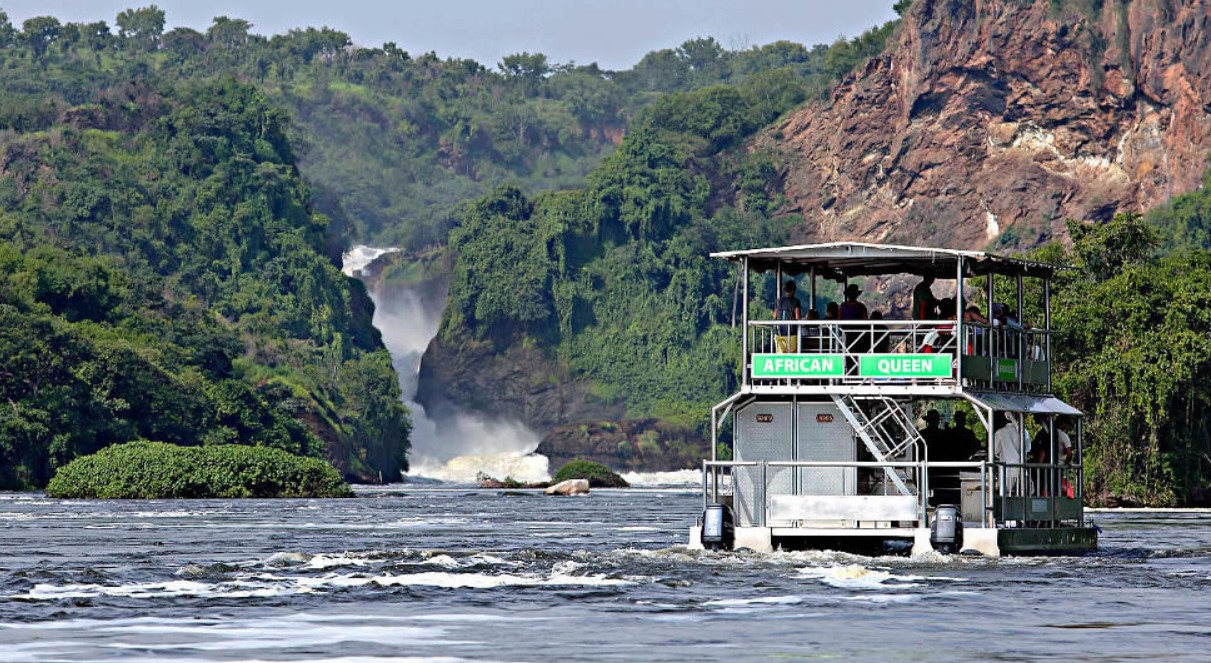
On a 3-day Murchison Falls safari, you will likely see Rothschild’s giraffes, elephants, lions, buffaloes, leopards, and hippos. The trip features a savanna game drive and a Nile boat cruise to see huge crocodiles and aquatic birds, plus a stop at Ziwa Rhino Sanctuary to track rhinos on foot.
3-days-flying-luxury-uganda-safari-to-murchison-falls-national-park
3-days-best-honeymoon-uganda-safari-escape-to-murchison-falls-national-park
3-days-murchison-falls-national-park-best-uganda-safari-road-trip
4-days-murchison-falls-uganda-family-safari-vacation-tour
4-days-luxury-murchison-falls-and-jinja-uganda-safari-vacation
5-days-murchison-falls-safari-and-gorilla-trekking-in-bwindi
5-days-murchison-falls-and-queen-elizabeth-safari-itinerary
5-days-kidepo-valley-uganda-safari-via-ziwa-rhino-sanctuary
3-Day Murchison Falls Safari is Uganda
The 3-Day Murchison Falls Safari is Uganda's most iconic short-duration expedition, offering a powerful blend of "Big Five" wildlife encounters and dramatic landscapes. This journey centers on Murchison Falls National Park, where the world’s longest river—the Nile—is forced through a narrow seven-meter rock gap to create the planet's most powerful surge of water. The itinerary is strategically designed to include a stop at the Ziwa Rhino Sanctuary on the first day, ensuring travelers can check off the complete "Big Five" list. From the open, palm-dotted savannas of the northern bank to the high-density aquatic life along the riverbanks, this safari provides a 360-degree view of African biodiversity. Whether you are tracking rhinos on foot, observing lions on a sunrise game drive, or cruising past massive pods of hippos toward the "Devil's Cauldron," this three-day odyssey delivers a high-impact, soul-stirring introduction to the "Pearl of Africa."
Day 1: Ziwa Rhino Tracking and Transfer
Your journey begins with an early departure from Kampala, heading north through the lush landscapes of Nakasongola. The first major highlight is the Ziwa Rhino Sanctuary, the only home to wild rhinos in Uganda. Here, you will join an expert ranger for a tactical tracking session on foot, bringing you within meters of these prehistoric giants—a vital experience to complete your "Big Five" checklist. After this intimate encounter, you will enjoy lunch before continuing your drive into Murchison Falls National Park. As you enter the gates, the vegetation shifts from thick woodland to open savanna, offering early glimpses of baboons and warthogs. You will arrive at your lodge by evening, settling into the heart of the wilderness. The night air, filled with the distant calls of hyenas and the rhythmic sounds of the African bush, sets the stage for the wildlife adventures awaiting you tomorrow.
Day 2: Game Drive and Nile Launch Cruise
The second day starts at sunrise with a game drive across the Buligi Circuit on the park’s northern bank. This is the prime time to spot predators like lions and leopards before they retreat from the midday heat. You will traverse a landscape defined by Borassus palms, home to massive herds of Rothschild’s giraffes, elephants, and Cape buffaloes. In the afternoon, the perspective shifts as you board a launch cruise toward the base of the falls. This three-hour journey along the Nile acts as a liquid stage, showcasing dense populations of hippos, giant Nile crocodiles, and thirsty elephants lining the banks. The cruise culminates at the "Devil’s Cauldron," where you witness the incredible power of the river exploding through the narrow gorge. It is a sensory-rich day that captures the raw, untamed spirit of the Nile and the vibrant life it supports.
Day 3: Top of the Falls and Return
On your final day, you visit the top of the falls for a breathtaking view of the river’s raw power from above. Standing at the edge, you will feel the ground tremble as the entire Victoria Nile squeezes through a tiny rock cleft, plunging 43 meters into the gorge below. The thundering roar and permanent rainbows created by the mist provide a spectacular photographic finale to your safari. After witnessing this geological marvel, you will begin your return journey toward Kampala or Entebbe. The drive back offers a final opportunity to observe the changing Ugandan countryside and reflect on the diverse wildlife encounters of the past 48 hours. A stop for lunch in Masindi town allows for a brief cultural pause before you reach the city by late afternoon, concluding an epic three-day expedition that successfully showcased the very best of Uganda’s natural heritage.
Mammals: The Savanna Giants and Predators
The northern sector of Murchison Falls is the primary theater for large mammal sightings. The Rothschild’s giraffe is a highlight; Murchison holds the largest population of this endangered subspecies in the world. You will see them in large "towers," their long necks reaching for the tops of acacia trees. African elephants and Cape buffaloes are ubiquitous, often seen in massive herds near the riverbanks.
The predator hierarchy is dominated by lions, which are frequently spotted on the hunt or resting under thickets after a night of activity. Leopards, though more solitary and elusive, are often found in the leopard-rich riverine forests. The park is also home to a high density of Uganda kobs—the national animal—alongside waterbucks, bushbucks, and comical warthogs. In the evenings and early mornings, you may hear the eerie "laugh" of spotted hyenas as they move across the plains in search of scavenged remains.
Aquatic Life: Masters of the Nile
A boat cruise to the base of Murchison Falls is the best way to witness the park’s incredible aquatic density. The Nile is home to one of the world's highest concentrations of hippos. You will see them in "schools" of thirty or more, submerged in the water to stay cool or basking on sandbanks. Their territorial grunts provide a constant soundtrack to your river journey.
Sharing the riverbanks are the massive Nile crocodiles. Murchison is famous for the size of its crocodiles, some of which exceed five meters in length. They are frequently seen sunning themselves with their mouths agape to regulate body temperature. The relationship between the hippos and crocodiles is a fascinating display of coexistence, though both are apex residents that demand respect. Watching these prehistoric reptiles glide silently into the water as your boat approaches is a highlight of the riverine experience.
Birdlife: From the Shoebill to the Fish Eagle
With over 450 recorded species, Murchison Falls is a world-class birding destination. The "holy grail" for birders is the Shoebill stork, a prehistoric-looking bird that is occasionally spotted in the marshy delta where the Nile enters Lake Albert. Its massive, clog-shaped bill and motionless hunting style make it a spectacular sight for those lucky enough to find one.
Along the river, you will constantly hear the haunting cry of the African fish eagle, often perched high in the trees scanning for prey. The grey-crowned crane, Uganda’s national bird, can be seen in the grasslands, while the Goliath heron—the world’s largest heron—wades through the shallows. Brilliant kingfishers, including the Malachite and Pied varieties, dart across the water like colorful jewels. The diversity of shapes and colors makes birdwatching an engaging activity even for those who aren't dedicated "twitchers."
Primates: Forest and Savanna Dwellers
Primates are a constant and often entertaining presence during your safari. Olive baboons are the most visible; you will likely encounter large troops at the park gates and along the roadside. While they are fascinating to watch, they are notorious opportunists, so keeping your vehicle windows closed when parked is a must.
Ziwa Rhino Sanctuary: Tracking on Foot
The experience at Ziwa is arguably the most intimate wildlife encounter on the 3-day circuit. Because rhinos are not yet present in Uganda’s national parks, this 70-square-kilometer sanctuary is the only place to witness these prehistoric giants. Unlike a vehicle safari, tracking on foot sharpens your senses. Accompanied by an expert ranger, you learn to interpret the "language of the bush"—the snap of a twig, the direction of the wind, and the fresh imprints of a three-toed hoof in the mud.
Walking to within six or seven meters of a southern white rhino provides a profound sense of scale. You aren't just looking at an animal; you are sharing its space. You can hear the rhythmic sound of them grazing on the grass and the low-frequency huffs they use to communicate. This activity is essential for those seeking the "Big Five," but it is the physical connection to the earth and the raw vulnerability of being on foot that makes it a highlight. It is a slow, methodical, and deeply rewarding start to the safari that emphasizes the quiet resilience of conservation.
Savanna Game Drive: The Golden Hour
The early morning game drive on the northern bank is the quintessential safari experience. Crossing the Nile by ferry or bridge at sunrise, you enter the Buligi tracks just as the predators are winding down their nightly hunts. The lighting during this "golden hour" is a photographer’s dream, casting a warm glow over the Borassus palm-dotted plains. This is the prime time to find lions before they retreat into the deep shade of the thickets to escape the heat.
As you traverse the savanna, you are surrounded by the sheer volume of the park's herbivore population. Massive herds of Rothschild’s giraffes move with a slow, hypnotic grace across the horizon, while thousands of Uganda kobs and heart-shaped hartebeests dot the landscape. Your guide will navigate through different circuits to track elusive leopards and spotted hyenas. The openness of the northern bank provides unobstructed views, allowing you to witness the raw "theater of the wild"—from territorial displays between kobs to the sight of an elephant family leading their young to a watering hole. It is a high-energy morning where every turn of the track could reveal a new predator-prey interaction.
Launch Cruise: The Nile’s Liquid Stage
The boat cruise to the base of the falls is often cited as the highlight of the entire trip. For three hours, the Victoria Nile becomes a moving gallery of aquatic and riverine life. As the boat glides upstream, you are treated to an unparalleled view of the riverbanks, which act as a magnet for the park's wildlife. You will drift past massive "schools" of hippos—sometimes numbering in the hundreds—their ears twitching and eyes watching as they surface and submerge with loud, resonant grunts.
Along the muddy banks, giant Nile crocodiles bask with their mouths wide open, looking like prehistoric statues until they slide silently into the water. One of the most spectacular sights is the swimming elephants; these giants frequently visit the river to drink and bathe, sometimes crossing to the islands in the middle of the stream. Birdlife is equally staggering, with African fish eagles perched on every other tree and colorful kingfishers darting like jewels across the wake of the boat. The journey culminates as the thundering roar of the falls grows louder, and you find yourself at the "Devil's Cauldron," where the mist from the crashing water provides a refreshing end to the voyage.
Top of the Falls: The Devil's Cauldron
Visiting the top of the falls provides a visceral understanding of why Murchison Falls is the most powerful surge of water on earth. While the boat cruise shows you the falls from below, standing at the summit allows you to witness the terrifying hydraulic pressure as the entire Victoria Nile—the world's longest river—is forced through a narrow rock gap just seven meters wide. The sight of the water changing from a calm river to a white, frothing explosion of energy is a masterclass in the power of nature.
The ground literally trembles beneath your feet as the water plunges 43 meters into the gorge below. The sound is an all-encompassing roar that makes conversation nearly impossible, and a permanent rainbow often hangs in the mist, created by the constant spray. This visit is more than just a photo opportunity; it is a sensory experience that combines the smell of the fresh water, the cool dampness on your skin, and the sheer visual chaos of the plummeting river. It serves as the dramatic punctuation mark of the safari, reminding you of the raw, untamed forces that have carved the Ugandan landscape over millennia.
What are the "Big Five" animals I can see in 3 days?
The quest for the Big Five is the primary driver for most 3-day itineraries. While Murchison Falls National Park is home to four of these iconic species—Lion, Leopard, Elephant, and Buffalo—the Rhino is notably absent from the park's open savanna. This is why the stop at Ziwa Rhino Sanctuary on Day 1 is so crucial. By tracking the southern white rhinos on foot at Ziwa, you check off the first and rarest member of the group before you even enter the park gates.
Once inside Murchison, the "remaining four" become the focus. African elephants and Cape buffaloes are ubiquitous, often seen in massive herds of several hundred. Lions are the kings of the northern bank, frequently spotted during the early morning hours. The Leopard remains the "prize" of the trip; as a solitary and nocturnal hunter, it requires a bit of luck and a skilled guide to spot one draped over a branch. Completing the Big Five in just 72 hours is a thrilling achievement that highlights the efficiency of this specific Ugandan safari route.
Are lions common during the 3-day safari?
Lions are a cornerstone of the Murchison experience, and sightings are remarkably common, especially during the Day 2 morning game drive. The park's northern bank consists of open savanna and Borassus palm forests, which provide excellent visibility. Lions here have adapted to the high density of Uganda kobs and hartebeests, often sticking to the "Buligi" and "Albert" tracks where their prey is most concentrated.
You aren't just looking for a single lion; you are often looking for prides. It is common to find three or four lionesses resting in the shade of a thicket with their cubs, or a dominant male patrolling his territory. Because the lions are habituated to the presence of safari vehicles, they often remain calm, allowing for incredible photography from just a few meters away. Watching a pride transition from their morning hunt to a midday nap is a highlight that provides a raw look at the social dynamics of Africa's apex predator.
Will I see Rothschild’s giraffes?
Murchison Falls is the world’s premier stronghold for the Rothschild’s giraffe (also known as the Baringo giraffe). Unlike other parts of East Africa where giraffes might be seen in small, scattered groups, Murchison features "towers" of thirty or forty individuals moving together. Their towering presence against the backdrop of the Borassus palms is one of the most iconic images of the park.
These giraffes are easily spotted throughout the northern bank game drives. Because they are the tallest mammals on earth, they are often the first animals you see upon entering the savanna. You will observe them using their long, prehensile tongues to strip leaves from the thorny acacia trees. Interestingly, many of the giraffes in Murchison have been part of successful "translocation" programs to other parks in Uganda, making the Murchison population the "mother herd" for the country’s giraffe conservation efforts.
How likely is a leopard sighting?
The leopard is the most elusive of the Big Five, and while they are present in healthy numbers in Murchison Falls, a sighting is never a guarantee. Leopards are masters of camouflage, often spending their days perfectly still in the dense riverine forests or perched high in the branches of leafy trees. They are "luck-based" sightings that separate a good safari from a legendary one.
The best chance to see a leopard is in the early morning or late afternoon, particularly in the leopard-rich thickets of the Buligi circuit or near the old rocky outcrops. Guides often look for "telltale signs," such as the alarm calls of monkeys or kobs, which signal a predator's presence. If you do spot one, it is usually a solitary individual—perhaps a female with a kill dragged high into a tree to keep it safe from lions. While rare, the thrill of finding a leopard is unmatched, representing the ultimate reward for a patient and observant safari-goer.
What animals are seen on the boat cruise?
The afternoon boat cruise on Day 2 offers a completely different perspective, as the Nile becomes a "liquid stage" for wildlife. The most dominant residents are the hippos, which live in massive pods along the riverbanks. You will see them yawning to display their impressive tusks or submerged with only their eyes and ears visible. Joining them are the Nile crocodiles, some of the largest on the continent, often seen basking on the sandbanks with their mouths open to regulate their temperature.
The river also acts as a giant watering hole for the savanna residents. It is common to see herds of elephants coming down to the water to drink and bathe—a spectacular sight as they use their trunks like snorkels. Buffaloes, waterbucks, and giraffes are also frequent visitors to the banks. For many, the boat cruise is the highlight of the trip because it allows you to get incredibly close to the animals from the safety of the water, offering "low-angle" views that are perfect for photography.
Are there elephants in Murchison Falls?
Elephants are the true architects of the Murchison landscape. With a population exceeding 1,500 individuals, they are a constant presence during your 3-day safari. You will encounter them in two distinct forms: the massive savanna herds that roam the northern plains and the smaller, more elusive forest elephants that inhabit the southern woodlands.
The elephants here are known for their impressive size and the "reddish" hue they take on from the park’s volcanic soil after mud-bathing. On a 10-day trip, you might see them in every park, but in Murchison, the interaction between elephants and the river is unique. Witnessing a multi-generational herd—complete with tiny, wobbly-legged calves—crossing a track or drinking from the Nile is a powerful reminder of the intelligence and social complexity of these gentle giants. Their presence is so dominant that you will often see "elephant paths" carved through the thickets, showing how they shape the very environment they live in.
What kind of monkeys can I see?
Primates add a layer of energy and entertainment to the safari. The most ubiquitous are the Olive baboons, which you will encounter almost as soon as you enter the park. Large troops often hang around the gates and roadsides; they are fascinating to watch as they groom each other and navigate their complex social hierarchies, but they are also opportunistic, so keeping your belongings secure is a must.
In the more forested sections, particularly near the river and the southern bank, you will see the strikingly beautiful Black-and-white colobus monkeys. They are easily identified by their long, flowing white fur and their incredible leaping ability as they move through the canopy. Vervet monkeys are also common around lodges and campsites, often seen performing acrobatic stunts in the trees. These smaller primates provide a "vertical" dimension to your wildlife viewing, reminding you that the park's biodiversity extends from the grass of the savanna to the tops of the trees.
Is chimpanzee tracking included in a 3-day trip?
Standard 3-day itineraries usually focus on the savanna game drives and the Nile boat cruise. However, Budongo Forest, located on the southern boundary of the park, is one of the best places in Uganda for chimpanzee tracking. While it is not always "standard" in a 3-day package due to time constraints, it can be added as an optional activity on Day 3 or as a replacement for a morning game drive.
Tracking chimpanzees requires a different mindset; you leave the vehicle and enter the thick mahogany forest on foot. The experience of hearing the deafening "pant-hoots" of a chimp community echoing through the trees is unforgettable. If your heart is set on primates, you should request this customization from your operator. Including Budongo adds a lush, "jungle" chapter to your safari, complementing the dry savanna experience and making the trip a truly holistic Ugandan wildlife adventure.
What makes the Nile crocodiles unique here?
The crocodiles of Murchison Falls are legendary for their size and concentration. Because the Nile provides an endless supply of fish and the riverbanks offer perfect nesting grounds, these reptiles grow to prehistoric proportions, with some individuals reaching over five meters in length. They are most easily seen during the boat cruise to the base of the falls, often clustered at the "croc bar"—a specific sandbank where they gather to sunbathe.
What makes them truly unique is their behavior near the falls. The high oxygen levels and the constant supply of "stunned" fish coming over the falls create a feast for these predators. You will see them lying motionless like logs, but they are incredibly fast and efficient hunters. Observing these apex predators from the safety of a boat provides a chilling and fascinating look at a species that has remained virtually unchanged for millions of years.
What is the most common antelope in the park?
The Uganda kob is the undisputed king of the Murchison antelopes. As the national animal of Uganda, they are found in vast numbers across the northern bank. You will see them in large "leks"—breeding grounds where males defend small territories to attract females. Their golden-brown coats and distinctive white eye-rings make them a beautiful subject for photography.
In addition to the kob, you will see plenty of Jackson's hartebeests, which are easily identified by their long, narrow faces and high shoulders. The tiny Oribi is another common sight, often seen jumping through the tall grass. Waterbucks are frequently found near the river (identifiable by the white "toilet seat" ring on their rumps), and the regal Bushbuck is often spotted in the thicker woodlands. This diversity of herbivores ensures that even when the big cats are hiding, the plains are always teeming with life.
Are there hyenas?
Yes, spotted hyenas are a significant part of the park's nocturnal and early morning drama. While they are primarily nocturnal, they are frequently spotted during the first hour of a morning game drive as they return to their dens after a night of scavenging or hunting. You might see them loping across the savanna with their characteristic sloped-back gait.
Hyenas play a vital role in the ecosystem as the "cleanup crew," but in Murchison, they are also formidable hunters. At night, if you are staying at a lodge near the park, you will often hear their haunting, rising "whoop" calls and eerie laughter echoing through the bush. Seeing a hyena "eye-to-eye" from a safari vehicle dispels many myths; they are incredibly intelligent, social, and powerful animals that add a layer of mystery and thrill to the savanna experience.
What bird species can I see?
For birders, a 3-day Murchison safari is a pilgrimage. The park boasts over 450 species, and the variety of habitats means you can see everything from savanna raptors to water birds. The "big prize" is the Shoebill stork, which is occasionally seen in the marshy delta area. This prehistoric-looking bird, with its massive bill and steady gaze, is one of the most sought-after sightings in Africa.
Along the Nile, the African fish eagle is the most iconic sight, its white head gleaming against the green trees as it emits its famous piercing cry. You will also see Goliath herons (the world's largest), Abyssinian ground hornbills walking across the plains, and several species of kingfishers darting over the water. Whether you are a dedicated "twitcher" or a casual observer, the colors and calls of Murchison’s birds provide a constant and vibrant soundtrack to your journey.
Are there different animals on the north vs. south bank?
Yes, the Victoria Nile acts as a biological divider, creating two distinct worlds. The Northern Bank is dominated by open savanna and Borassus palms. This is the "classic" safari territory where you find the highest concentrations of lions, giraffes, kobs, and patas monkeys. Because the visibility is so high, this is where almost all game drives take place.
The Southern Bank is much more forested and wooded. It is the domain of the primates, including the chimpanzees of Budongo and various forest-dwelling monkeys. While you might see elephants and buffaloes on both sides, the south is much "thicker," making wildlife harder to spot but offering a beautiful, lush contrast to the northern plains. Most 3-day trips involve crossing the river (by bridge or ferry) to access the northern bank for game viewing, allowing you to experience both ecosystems in a single trip.
Will I see rhinos on this trip?
If you follow a standard 3-day itinerary, the answer is a resounding yes. The stop at Ziwa Rhino Sanctuary on Day 1 is specifically designed to include the rhino in your wildlife experience. Because rhinos were poached to extinction in Uganda in the 1980s, this sanctuary is currently the only place in the country to see them.
The experience is unique because you track them on foot. Accompanied by an armed ranger, you walk through the savanna and woodlands to find the rhinos—often a mother and calf or a group of bulls. Standing just a few meters away from a southern white rhino is a heart-pounding experience that provides a sense of connection you simply can't get from a vehicle. This stop is not just a "bonus"; it is a vital part of the story of Uganda’s wildlife recovery and the key to completing your Big Five checklist.
Do animals come near the safari lodges?
One of the most magical parts of a 3-day safari is that the "game viewing" doesn't stop when you return to your lodge. Many lodges, particularly those like Paraa Safari Lodge or those situated right on the riverbanks, are located within or on the edge of the wildlife corridors. It is very common to see warthogs and kobs "mowing" the lawns of the lodges during the day.
At night, the activity increases. You might see hippos leaving the water to graze on the grass near your tent, or elephants passing silently through the lodge grounds. Bushbucks and waterbucks are frequent nocturnal visitors. While the lodges are safe and often have guards to monitor animal movement, being so close to the wildlife—hearing the "munching" of a hippo outside your window or the distant roar of a lion—is a humbling reminder that you are a guest in their territory.
Booking 3 days Murchison falls safari with us Roads f Adventure safaris
Booking a 3-day Murchison Falls safari with Roads of Adventure Safaris offers a comprehensive experience of Uganda's largest national park, featuring thrilling wildlife encounters, boat cruises on the Victoria Nile, and a visit to the top of the falls. The itinerary typically includes Ziwa Rhino tracking, game drives for lions and giraffes, and a boat cruise to the base of the falls.
