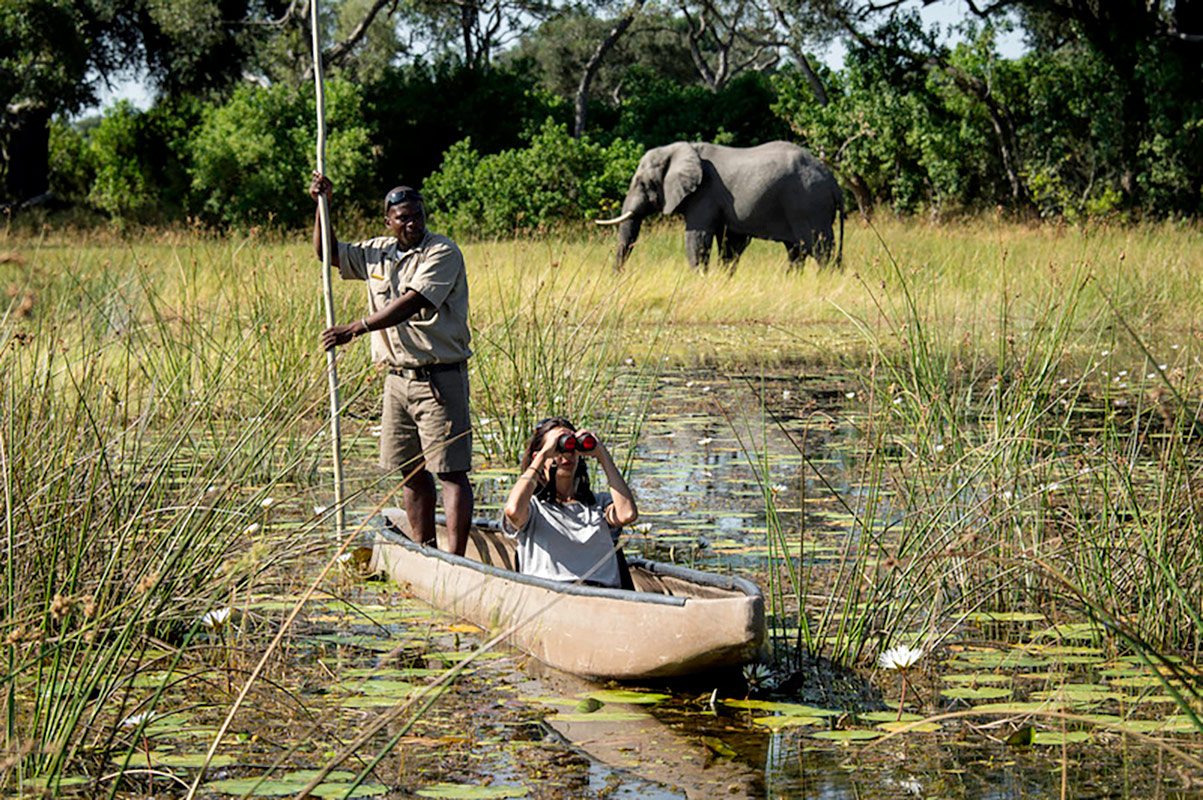
The Okavango Delta supports one of the most biodiverse ecosystems in Africa. You can expect to encounter the famed Big Five (lion, leopard, elephant, buffalo, and both black and white rhino), globally significant populations of African wild dogs, massive herds of plains wildlife, and over 500 bird species
Some of the Popular Botswana wildlife safaris
21-days-exceeding-botswana-safari-itinerary-all-inclusive-tour-package
19-days-exciting-botswana-photography-safari
18-days-exclusive-botswana-safari-victoria-falls-and-zambia-wildlife-safari-tour
15-days-best-of-botswana-and-zimbabwe-safari-holiday-vacation-southern-africa-safari
12-days-exclusive-luxury-botswana-wildlife-safari-vacation
11-days-victoria-falls-tour-chobe-national-park-and-rwanda-gorilla-trekking-combo-itinerary
9-days-okavango-delta-moremi-game-reserve-chobe-river-front-and-victoria-falls-tour-package
7-days-exclusive-luxury-botswana-safari-tour-package
Apex Predators
The Okavango Delta stands as one of Africa's premier wildlife sanctuaries, where a dynamic labyrinth of waterways and seasonal floods shapes the evolutionary traits of its residents. At the apex of this flourishing ecosystem reign four formidable and uniquely adapted predators.
Lions (Swamp Hunters)
The Okavango Delta is famous for its exceptionally large "super lions," which often hunt prey like buffalo in the flooded plains. Unlike standard African lions that generally avoid deep water, these unique prides have adapted to a semi-aquatic lifestyle out of sheer necessity. Constantly wading and swimming through the delta's dynamic marshlands builds immense upper-body strength, making them noticeably larger and more muscular than their mainland counterparts. This formidable physical advantage is crucial for their survival, as their primary target is the aggressive and powerful Cape buffalo. Hunting in coordinated teams, these lions track massive herds across wet, slippery terrains, executing high-stakes ambushes in the shallow waters where the heavy buffalo are slowed down. It is a grueling, specialized way of life found nowhere else on earth.
Leopards (Masters of the Canopy)
Leopards are often spotted resting in the lush trees of Chief's Island and the surrounding riverine forests. These solitary felids rely heavily on the delta’s dense canopy to maintain their competitive edge over larger predators like lions and hyenas. With exceptional climbing abilities, they use jackalberry and mangosteen trees as secure vantage points to scan the forest floors for impala and bushbuck. Once a kill is made, a leopard's immense raw strength allows it to hoist carcasses weighing more than its own body high into the branches, safely out of reach from ground-dwelling thieves. The rich, tangled vegetation of Chief’s Island provides the perfect blend of cover and elevation, making this central landmass an absolute haven for one of Africa's most elusive and successful stealth hunters.
African Wild Dogs (Nomads of the Wetlands)
The Delta is one of the strongest remaining strongholds on the continent for these endangered predators. Also known as painted wolves, African wild dogs thrive in this vast, uninterrupted wilderness, which accommodates their massive home ranges and nomadic lifestyles. Highly social and deeply cooperative, they live in tight-knit packs governed by strict hierarchies and collective pup-rearing. Their hunting strategy relies on incredible endurance rather than speed or camouflage; packs systematically pursue prey over miles until the target collapses from exhaustion. The labyrinth of channels in the delta can be a hazard, but these intelligent canines navigate the terrain with remarkable tactical precision. With global populations drastically declining due to habitat fragmentation, the protected, expansive wetlands of the Okavango serve as a critical sanctuary for their long-term survival.
Cheetahs (Sprinters of the Margins)
Cheetahs are frequently seen hunting in the open grassland areas and the drier, transitional margins of the delta. As the world's fastest land mammals, they require wide, flat, and unobstructed spaces to reach their blistering top speeds of seventy miles per hour. Because they cannot compete physically with the delta's larger apex predators, they actively avoid the thick riverine forests and deep marshes where lions and leopards dominate. Instead, they patrol the outer edges where the savannah meets the wetlands, utilizing termite mounds as elevated scouting posts to spot herds of springbok and impala. To protect their hard-earned kills from being stolen by hyenas, cheetahs hunt during the blistering heat of midday when wealthier, heavier predators are asleep in the shade.
Megaherbivores & Water Dwellers
Beyond the agile predators, the Okavango Delta sustains massive, water-dependent giants. These megaherbivores and aquatic reptiles engineer the very structure of the wetlands, driving the flow of life and forming the foundational biomass that supports the entire ecosystem.
Elephants (Architects of the Landscape)
The Okavango Delta is home to one of the largest elephant populations on the planet; they are abundant year-round and frequently seen wading through the deep channels. These intelligent giants migrate along ancient pathways dictated by the seasonal floodwaters. Wading effortlessly through water that would submerge other mammals, they use their trunks like snorkels to cross deep rivers. Elephants act as crucial ecosystem engineers; by knocking over trees, stripping bark, and clearing thick papyrus reeds, they open up dense thickets into accessible savannah grassland for smaller herbivores. During drier periods, their heavy feet dig deep holes in dry riverbeds to find underground water, creating temporary waterholes that serve as literal lifelines for countless other species sharing this dynamic habitat.
Hippopotamuses (Engineers of the High-Ways)
Hippopotamuses are found in large numbers across the delta. Their daily movements shape the delta's ecosystem by creating deep water channels called "hippo highways." Weighing up to four thousand pounds, these semi-aquatic giants spend hot days submerged in lagoons to keep cool, but their nightly foraging trips to graze on land are what permanently alter the landscape. By repeatedly trampling down dense papyrus and churning up the muddy riverbeds along the exact same paths, they keep vital waterways from clogging with vegetation. These clear, deep channels act as highways, allowing floodwaters to flow freely into drier sections of the delta. Furthermore, the fish, smaller amphibians, and traditional wooden canoes (mokoros) rely heavily on these open lanes to safely navigate the otherwise impenetrable marshes.
Nile Crocodiles (Lurking Apex Reptiles)
Nile Crocodiles thrive in the lily-covered lagoons and permanent waterways of the delta. As ancient, cold-blooded ambush predators, they are perfectly adapted to the slow-moving, reed-fringed waters. Floating seamlessly just beneath the surface with only their eyes and nostrils exposed, they blend perfectly with floating debris and water lilies. This stealth makes them incredibly lethal to thirsty land animals that approach the water's edge to drink. Beyond their hunting prowess, crocodiles play a vital role in maintaining the delta's aquatic health. By scavenging on carcasses and keeping populations of predatory fish in check, they preserve the delicate balance of the freshwater ecosystem. During winter, they can bask on sandy banks for hours, soaking up the African sun to regulate their body temperature.
African Buffalo (Strength in the Shallows)
African Buffalo roam the delta in large, thunderous herds, providing the main food source for the delta's big cat and predator populations. These massive, unpredictable bovines are incredibly resilient, relying on sheer numbers and a highly protective social structure to survive. While mainland herds face drought, the delta buffalo have adapted to grazing on the nutrient-rich grasses of the flooded plains. Moving through the mud and shallow water is exhausting, but their split hooves splay wide to provide excellent traction. Because of their immense size and dangerous, fused horns, single buffalo are nearly impossible to bring down. Consequently, they force the delta’s "super lions" to hunt in exceptionally large, coordinated prides, driving a unique evolutionary arms race between predator and prey.
Plains Game & Antelopes
The lifeblood of the Okavango Delta sustains a spectacular abundance of plains game and herbivorous herds. From highly specialized wetland specialists to iconic savannah grazers, these diverse species paint the landscape with constant movement and vital energy.
Red Lechwe (Swamp Specialist)
The red lechwe is a beautifully adapted swamp antelope found in massive numbers across the shallow, flooded plains. These medium-sized antelopes are uniquely built for life in the wetlands, featuring a water-repellent coat and hind legs that are noticeably longer than their front legs. This distinct anatomy gives them a bounding, leaping stride that allows them to run remarkably fast through knee-deep water, easily outmaneuvering predators like lions or leopards that are slowed down by the muddy terrain. Their splayed, elongated hooves act like natural snowshoes, preventing them from sinking into the soft, unstable marsh silt. By staying safely in water depth of up to twenty inches, the massive herds of red lechwe utilize the flooded environment as a protective shield while grazing on abundant aquatic plants.
Sitatunga (Secretive Shallows Dweller)
The sitatunga is a rare, secretive, and highly specialized swamp-dwelling antelope that is an excellent swimmer. Living deep within the permanent papyrus swamps where few other large mammals dare to venture, this elusive animal possesses incredibly long, widely splayed hooves that allow it to walk on top of floating mats of vegetation without sinking. When threatened by a predator, the sitatunga executes a remarkable defense mechanism: it submerges its entire body underwater, leaving only its nostrils exposed beneath the surface to breathe invisibly. Because they are solitary and deeply camouflage-reliant, catching a glimpse of their shaggy, water-resistant coats in the thick reed beds is a prized challenge for any tracker, making them one of the delta's most mysterious and fascinating residents.
General Antelopes (Diversity on Dry Land)
Large numbers of impala, kudu, tsessebe, springbok, and blue wildebeest are easily spotted across the savanna and islands. These diverse species partition the delta's drier ecosystems to avoid competing for resources. Elegant impalas dominate the woodland fringes, while greater kudus use their majestic, spiral horns to navigate thickets and browse on high tree leaves. On the open plains, the lightning-fast tsessebe—Africa’s fastest antelope—relies on blistering speed to outrun predators. Meanwhile, nomadic blue wildebeest and springbok follow the strict cycles of seasonal rains, chasing fresh grass shoots across the transitional margins. Together, these thriving populations form a dense and complex web of herbivores that supports the delta's famous predators, ensuring that the surrounding landmasses remain vibrant and full of life year-round.
Zebras & Giraffes (Icons of the Woodlands)
Zebras and giraffes roam the seasonal floodplains and acacia woodlands in large, visually striking groups. These iconic species maintain a highly beneficial, symbiotic relationship while traveling together across the delta. Towering southern giraffes use their incredible height and long, purple tongues to feast on the thorny canopy of acacia trees, acting as early-warning lookouts that can spot approaching predators from miles away. Down on the ground, plains zebras act as pioneer grazers; their tough digestive systems allow them to consume coarse, fibrous grasses that other selective antelopes cannot digest. By trampling and eating down the tallest vegetation, zebras uncover the shorter, nutrient-rich grass layers below. This teamwork ensures both species thrive as they migrate between the drying floodplains and lush islands.
Birdlife
With over four hundred recorded species, the Okavango Delta is an absolute paradise for birdwatchers. The shifting balance between open water and dry land creates a rich, dynamic environment that supports both specialized wetland residents and spectacular seasonal travelers.
Aquatic Species (Guardians of the Waterways)
The delta's permanent channels are alive with iconic avian specialists, including African fish eagles, malachite kingfishers, and the endangered wattled crane. The haunting, melodic call of the African fish eagle serves as the literal voice of the continent, echoing across lagoons as these raptors dive from high branches to pluck fish cleanly from the surface. Down in the dense reed beds, the tiny, neon-bright malachite kingfisher hovers with pinpoint precision before piercing the water to catch small minnows. Meanwhile, the elegant wattled crane—Africa's largest crane species—depends entirely on the seasonal floodplains to forage for nutritious sedge tubers. Because these rare birds require undisturbed, pristine wetlands to successfully breed, the protected status of the Okavango serves as a crucial global stronghold for their survival.
Migrants (Summer Kaleidoscope)
During the summer months, the delta bursts into color with the arrival of migratory birds, including the striking carmine bee-eater. Escaping the harsh winters of the northern hemisphere or equatorial Africa, millions of winged travelers journey thousands of miles to exploit the delta’s seasonal explosion of insect life. The southern carmine bee-eater is an absolute standout, gathering in bustling colonies of thousands along sandy riverbanks. Flaunting brilliant rose-pink and turquoise plumage, these acrobatic fliers dive-bomb through the air to catch bees and locusts on the wing. They often hitch a ride on the backs of walking kori bustards or passing safari vehicles, using them to flush out hidden insects from the tall grasses, turning the sky into a shifting, shimmering tapestry of vibrant colors.
What are the best Botswana wildlife safari activities to spot plenty of wildlife
To spot plenty of wildlife in Botswana, the best activities combine 4x4 game drives in high-density reserves with water-based excursions. The ideal approach mixes land tracking with serene river safaris to maximize your predator and mega-herbivore sightings
Chobe River Boat Cruises
Glide down the Chobe River in Chobe National Park to witness the world's largest elephant herds playing in the water, along with massive pods of hippos and bathing Nile crocodiles. Floating along this massive waterway provides an unparalleled vantage point for wildlife viewing, as animals gather at the banks to drink and bathe. You will drift past family herds of elephants swimming across the channels, trunks raised like snorkels, while hippos grunt loudly from deep pools. Prehistoric Nile crocodiles sun themselves on sandy shores just feet away. The boat's elevated deck offers a steady platform for stunning photography, especially during the golden hour when the sun sinks below the horizon, painting the river in deep oranges and reds, making it an essential, deeply relaxing highlight of any African safari.
Mokoro Excursions
Board a traditional dug-out canoe for a silent glide through the papyrus-lined channels of the Okavango Delta. This intimate activity is perfect for spotting rare antelope (like the red lechwe and sitatunga) and colorful birdlife. Propelled gently by an expert local poler standing at the stern, you sit just inches above the water's surface. The absence of an engine brings a profound stillness, allowing you to hear the wind in the reeds, the tiny chirp of reed frogs, and the distant calls of fish eagles. You will wind through crystal-clear water mazes, brushing past water lilies to spot skittish painted reed frogs and beautiful birds. It is a peaceful, slow-paced safari experience that connects you deeply to the delicate, vibrant rhythms of one of Earth's most unique aquatic wilderness areas.
4x4 Game Drives (Morning & Night)
Take open-vehicle drives through the Moremi Game Reserve and the Savuti Marsh. These areas are renowned for incredibly high concentrations of big cats (lions, leopards, cheetahs) and the elusive African wild dog. Setting out at dawn in an open-sided vehicle maximizes your chances of witnessing predators on the move before the midday heat sets in. Expert trackers navigate rugged, unpaved terrain to bring you face-to-face with pride dynamics, territorial leopards, or a pack of wild dogs preparing for a hunt. When night falls, spotlight beams pierce the dark, revealing an entirely different world of nocturnal creatures like bushbabies, genets, and hunting lions. The raw power of an engine crawling through the bush paired with the thrill of tracking fresh paw prints makes this a classic, adrenaline-filled core safari staple.
Guided Walking Safaris
Led by armed, expert guides, this immersive activity lets you step out of the vehicle in private Okavango Concessions to track footprints, identify scents, and learn about the smaller, often overlooked ecosystems. Leaving the safety of a vehicle shifts your perspective completely, tuning your senses to the highest alert. Your guide breaks down the language of the bush, explaining the medicinal uses of plants, decoding warning calls of birds, and teaching you how to determine the freshness of a lion's track. Walking down ancient elephant pathways creates a thrilling, raw connection to nature, where you notice the intricate engineering of termite mounds and the beauty of small insects. It is an educational journey that replaces the fast-paced chase for big game with a deep, respectful appreciation for the bush.
Scenic Helicopter Flights
Take a low-level flight over the Delta to view vast mega-herds of buffalo and elephants moving through the floodplains, offering a completely different perspective of the landscape. Soaring above the wilderness in a helicopter, often with the doors removed for unobstructed views, reveals the breathtaking scale of Africa's geography. From the air, the complex network of channels, animal paths, and islands forms a massive, living puzzle that is completely invisible from the ground. You will look down to see herds of elephants trekking across open plains, pods of hippos clustered in deep blue lagoons, and giraffes gliding through acacia canopies. The dramatic contrast between the dry land and lush floodplains, viewed from a bird's-eye perspective, provides an unforgettable understanding of how water creates life in this spectacular ecosystem.
When is the best time for Botswana wildlife safaris
The best time for a Botswana wildlife safari is the dry season from May to October. During this period, sparse vegetation and dwindling water sources force animals to congregate near rivers and waterholes, making wildlife viewing in the Okavango Delta and Chobe National Park predictable and spectacular
Peak Dry Season (July to October) – Best for Predators & Big Herds
This is the absolute peak for game viewing. Large herds of elephants gather along the Chobe and Linyanti rivers, while predators are highly active. As the bush dries out and water holes vanish, wildlife is forced to converge around remaining permanent water sources. This predictable crowding creates dramatic wildlife viewings, especially when lions and leopards wait in ambush near the banks.
The days are clear and warm, but nights can drop to freezing. September and October get extremely hot and dusty before the rains break. Vegetation thins out significantly, maximizing visibility across the parched plains. It is a high-reward time for standard game viewing, though travelers must pack heavy layers for frigid morning drives and prepare for intense afternoon heat later in the season.
Early Dry Season (May to June) – Best for Flooded Delta & Photography
During May to June dry season, the seasonal floodwaters from Angola reach the Okavango Delta, transforming it into a lush labyrinth of waterways perfect for traditional mokoro (canoe) safaris. This unique paradox—flooding during the dry season—creates a vibrant oasis. Animals migrate toward the rising water, and the pristine, clear channels offer unmatched opportunities for reflecting photography and peaceful boat safaris.
The weather is mild and comfortable, and the landscape is beautifully green before turning completely dry. Daytime temperatures are highly pleasant, though early mornings remain crisp. With minimal rainfall and low humidity, the climate is ideal for long days in the bush. The dust has not yet settled, leaving the air exceptionally crisp and clear for capturing stunning safari photography.
The Green Season (November to April) – Best for Birding & Great Value
The Green Season also known as the rainy season, this time brings lush landscapes, migratory birds, and newborn antelopes. Predators are highly active taking advantage of vulnerable calves. The arrival of summer rains triggers a massive wave of births among impalas and wildebeest, sparking intense predator-prey interactions. Thousands of colorful migratory birds arrive from Europe and northern Africa, making it a spectacular paradise for birdwatchers.
Dramatic afternoon thunderstorms break the humidity, turning the dusty landscapes into a vibrant, emerald paradise. While some dirt roads become muddy and thick vegetation makes tracking big game more challenging, safari camps offer lower rates and far fewer crowds, providing a highly exclusive, intimate, and budget-friendly wilderness experience.
What accommodations should you consider on Botswana wildlife safaris
Choosing the right accommodations is essential to experiencing the unique, water-and-wilderness landscapes of Botswana. When booking your tailor-made Botswana safari with us at Roads of Adventure Safaris, we carefully match your travel style and photographic goals with the region's premier stays.
Ultra-Luxury Permanent Lodges
Built on permanent, raised wooden platforms often anchored directly into the Okavango Delta floodplains, these lodges represent the pinnacle of safari design. Properties feature expansive glass-fronted pavilions, private wrap-around viewing decks, and plunge pools overlooking active elephant corridors or hippo lagoons. Designed to blend seamlessly into the tree canopy, these structures offer ultimate comfort with 5-star amenities, fine dining, and indoor/outdoor showers. Choosing an ultra-luxury lodge ensures exclusive access to private concessions, allowing for uncrowded game viewing, flexible daily schedules, and the ability to watch Botswana's prolific wildlife right from your bed.
Classic Luxury Tented Camps
For a classic, authentic under-canvas experience without sacrificing modern creature comforts, luxury tented camps are an unmatched choice. These spacious canvas suites feature beautifully appointed bedrooms, ensuite bathrooms, and private verandas facing river systems like the Khwai or Chobe. The thin canvas walls allow you to fall asleep to the raw, magical sounds of the African night—whether it is the distant roar of a lion or the splash of a grazing hippo. Strategically positioned next to vital permanent water sources, these camps offer incredible "armchair safari" opportunities, where wildlife naturally wanders through or alongside the camp boundaries.
Adventure Mobile Tented Camps
For travelers seeking raw immersion and deep exploration across changing landscapes, a mobile tented safari provides unparalleled flexibility. Moving between iconic sectors like Moremi, Savuti, and Chobe, these private or small-group camps feature traditional, comfortable tents pitched directly in designated wilderness campsites. Lacking permanent structures, this eco-friendly option leaves zero footprint behind while placing you in the heart of predator country. Expert local guides and a dedicated camp crew handle all camp chores, meals, and logistics, leaving you completely free to track wildlife, photograph pristine landscapes, and share stories around a crackling campfire under brilliant desert stars.
Exclusive Water-Focused Camps
Situated on remote, isolated islands deep within the permanent water channels of the Okavango Delta, these specialized camps prioritize aquatic wilderness exploration. Designed with an eco-conscious ethos, these peaceful sanctuaries swap traditional 4x4 game drives for traditional mokoro (dug-out canoe) excursions, motorized boat safaris, and guided island walking safaris. The accommodations are intentionally intimate, hosting fewer guests to guarantee profound stillness and absolute privacy. Staying at a water-focused camp connects you directly to the delicate aquatic ecosystems, offering a tranquil, slower-paced safari experience that perfectly complements the high-octane predator viewing found on dry land.
Booking Botswana wildlife safaris with us Roads of Adventure safaris
Booking a wildlife safari in Botswana with Roads of Adventure Safaris involves tailored, all-inclusive packages ranging from 7 to 15 days. You can secure your dates with a 30% deposit, with the final balance due 60 days prior to your trip
