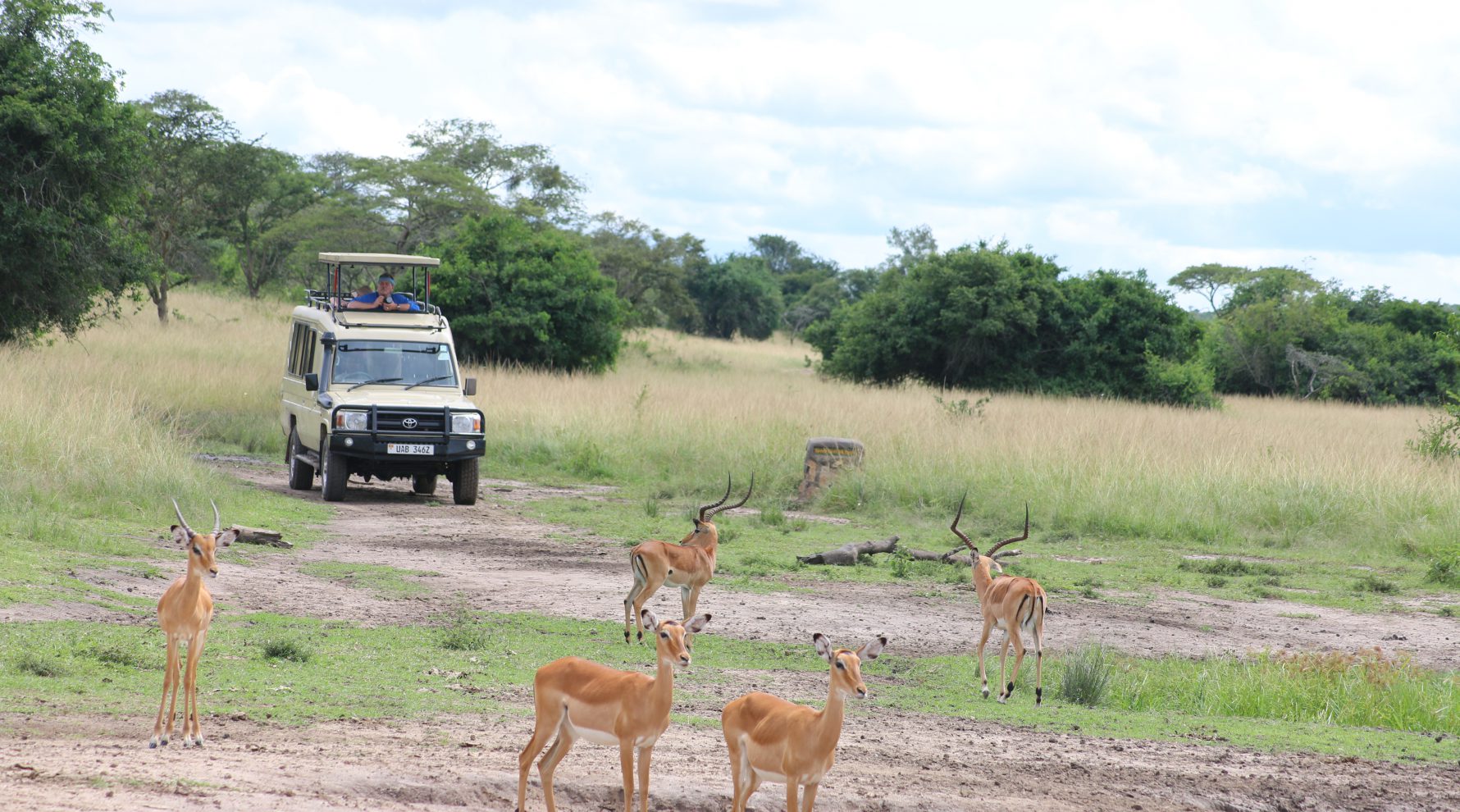
During a morning game drive in Lake Mburo National Park on Uganda safari, you can spot abundant zebras, graceful Rothschild's giraffes, massive elusive elands, and large herds of impalas and Cape buffaloes roaming the golden acacia-dotted savannah.
Common Mammals and Herbivores
- Burchell’s zebras: The most abundant large mammal in the park, frequently seen grazing in the early morning.
- Impalas: Lake Mburo National Park is the premier spot in Uganda to see these active antelopes.
- Elands: Africa's largest antelope, which thrive in this park's unique mosaic habitat.
- Rothschild's giraffes: Reintroduced successfully to the park, these tall browsers are active across the plains.
- Cape buffaloes: Frequently spotted near damp valleys and open grasslands.
- Topis, oribis, and waterbucks: Smaller antelope species commonly dotting the tracks.
- Warthogs: Often seen trotting with their tails straight up in the air.
Predators and Carnivores
Leopards: Present in the park, though daytime sightings require patience and a bit of luck compared to night drives.
Spotted hyenas and jackals: Occasionally seen finishing up night activities or heading back to rest as the sun rises.
Birds and Wetlands
- Crested cranes: Uganda's national bird, often found stepping through the damp grasslands.
- Water birds: Species like herons, pelicans, and fish eagles can be glimpsed near the marshy fringes bordering the park's lakes
Are Plains Zebras common during a morning game drive in Lake Mburo?
Lake Mburo is famous for harboring thousands of Burchell’s zebras, making early morning sightings virtually guaranteed. As the early mist lifts over the acacia woodland, you will find family harems grazing near the tracks or grooming each other. The soft morning light highlights their stark black-and-white stripes, offering prime photography opportunities before the heat sets in.
Can you spot Rothschild's Giraffes early in the morning?
Following a successful translocation effort from Murchison Falls National Park, a healthy herd of Rothschild’s giraffes now calls the park home. Morning is the ideal time to watch these tall towers nibble on fresh acacia shoots along the Kazuma and Zebra tracks before they retreat to deeper shade.
What is the chance of seeing the giant Eland at dawn?
Lake Mburo is one of only two national parks in Uganda where you can encounter the majestic Eland, Africa’s largest antelope. Because they are naturally shy, your best chance to spot them is at first light as herds graze in open woodland clearings. Look for their spiraled horns and large dewlaps as they move through the dew-covered grass.
Where can you find Impalas in Lake Mburo National Park?
Lake Mburo is the only national park in Uganda where you can see wild impalas. During morning game drives, bachelor groups and breeding herds are ubiquitous along central tracks. You will spot them leaping across grass, grooming, or standing alert on termite mounds to keep an eye out for predators.
How active are Cape Buffaloes during morning hours?
Large herds of Cape buffalo graze lazily along floodplains and valley floors early in the morning. Before the midday sun forces them toward mud wallows, you can watch these heavily armored bovines grazing in synchronization alongside zebras and impalas.
Is it possible to spot a Leopard before the sun gets too hot?
Lake Mburo boasts one of the highest leopard densities in Uganda. Early morning drives—starting right around 6:30 AM—offer a solid window to spot these secretive cats. Keep an eye on thick acacia branches or near "Leopard Rock," where leopards linger after a night hunt before slipping into dense camouflage.
What are Topis doing during a morning drive?
Topis are prominent grazers across Mburo's open plains. At dawn, dominant males frequently stand proudly on elevated termite mounds or ridge tops, using these vantage points to mark territory and scan for rivals while the herd feeds nearby.
Can you see Hippos moving around on land early in the morning?
Hippos spend their nights out of the water grazing on terrestrial grasses. If your game drive starts around first light, you will catch stragglers lumbering back from inland pastures toward the safety of Lake Mburo's reed beds before sunrise.
Are Spotted Hyenas visible as day breaks?
Hyenas are predominantly nocturnal, but morning drives frequently yield sightings of hyenas returning to their dens. You might see them loping across tracks near the salt licks or trotting along wood fringes after a night of scavenging.
What species of Primates appear along the tracks in the morning?
Olive baboons and vervet monkeys are active early risers. You will often see troops of baboons sitting right on the dirt tracks to warm up under the morning sun, while vervet monkeys leap through acacia branches searching for fruits and shoots.
Do Warthogs venture out early on the savanna?
Warthogs emerge from subterranean burrows shortly after sunrise. You will spot family sounders trotting through the grass with their thin tails held straight up like radio antennas, or kneeling on their front joints to root for tubers in the soft morning soil.
Where do Defassa Waterbucks congregate at sunrise?
Defassa waterbucks prefer habitats close to water sources and marshy valleys. During early morning drives along the Lakeside Track or near Miriti Valley, look for their long shaggy coats and circular white markings on their rumps as they graze in damp grassy clearings.
Can you spot the solitary Bushbuck near thickets?
Bushbucks are secretive and prefer dense brush or woodland fringes. Early morning is when they step out into edge habitats to feed on foliage, showcasing their rich chestnut coats adorned with distinct white spots and vertical stripes.
What makes Bohor Reedbucks easy to spot in early light?
Bohor reedbucks inhabit low-lying wetlands and tall reed beds. In the early morning mist, their yellowish-brown coats contrast sharply with damp greenery. When startled, they emit a high-pitched whistle and perform a bounding run.
Are Oribis frequently seen darting through open grasslands?
Oribis are small, graceful antelopes that thrive in Mburo's open savanna patches. During morning drives, you will see pairs or solitary individuals standing frozen in tall grass before springing away with quick, nimble leaps.
How likely are you to see a Klipspringer on rocky outcrops?
If your drive takes you near the park’s granite kopjes and rocky hills (such as Kazuma Lookout), scan the stone formations. Klipspringers are agile rock-dwelling antelopes that stand effortlessly on the tips of their rubbery hooves in the morning sun.
Can you encounter Dwarf Mongooses along game tracks?
Dwarf mongooses live in social colonies within abandoned termite mounds. As the morning sun warms up the savanna, whole families emerge to sunbathe on top of termite mounds before fanning out across leaf litter to forage for insects.
Are Side-striped Jackals active during morning game drives?
Side-striped jackals operate mainly at dusk, night, and early dawn. On early morning drives, you may spot a pair trotting through open clearings or along track edges looking for small rodents, birds, or fallen fruit before full daylight.
What birds of prey start hunting in the early morning air?
As thermal currents begin to rise around mid-morning, raptors like the Bateleur eagle, Martial eagle, and Crested Snake eagle take to the sky. Dark silhouettes of vultures can also be seen scanning the plains from dead acacia treetops.
Can you see Crested Cranes along the park's wetland edges?
Uganda’s national bird, the Grey Crowned Crane (Crested Crane), is a classic morning highlight. Pairs or small flocks forage in swampy depressions, performing courtship dances and emitting low booming calls in the morning tranquility.
Are Bare-faced Go-away-birds active in the acacia canopy?
This bird is a classic soundtrack to an Mburo morning drive. You will spot their prominent grey crests as they hop between acacia branches, calling out their characteristic "g'way" warning sound to alert surrounding animals.
What waterbirds can be seen around Lake Mburo's shores early on?
Drives along the Lakeside Track yield views of African Fish Eagles perched high in the branches, Pied Kingfishers hovering over the water, and Goliath Herons standing stoically among the papyrus reeds.
Can you catch sight of the rare Shoebill Stork during a morning drive?
While Shoebills are primarily sought on boat trips into the papyrus swamps, driving near marshy edges or riverine outlets early in the morning occasionally rewards lucky travelers with a glimpse of this prehistoric-looking bird standing motionless in shallow water.
Are African Finfoots visible near water paths at dawn?
African Finfoots are shy aquatic birds that live along overgrown lake edges. While best seen from a boat, low-lying tracks near the shoreline early in the morning sometimes reveal one paddling quietly under overhanging vegetation.
Do Nile Crocodiles bask along the shores during early morning hours?
Nile crocodiles begin crawling out of the cool water onto mudbanks around mid-morning to absorb heat from the sun. Views from shore lookout points along your game drive will reveal giant crocs lying motionless with open jaws.
What species of Duiker might dash across your track?
The Common (Grey) Duiker is a small, timid browser often seen darting across bush tracks in the early morning light. They quickly slip into thick acacia undergrowth when vehicle engines approach.
Are Bushpigs ever spotted before they retreat into dense cover?
Bushpigs are secretive nocturnal animals. However, on very early morning drives (around 6:15–6:45 AM), you might spot a dark, shaggy bushpig scuttling across a track as it hurries back to its dense woodland refuge.
Can you spot Civets or Genets returning to their dens at sunrise?
While diurnal sightings are rare, dawn drives occasionally grant views of nocturnal small carnivores like African Civets or Large-spotted Genets slipping through tall grass as night transitions into day.
Are there any Lions left to spot during a morning game drive?
Lions are extremely rare in Lake Mburo due to historic human-wildlife conflict. However, lone transient lions occasionally range into the park. While a sighting is an ultra-rare lucky break, park rangers keep track of any recent whispers!
How does Ankole long-horned cattle co-exist with park wildlife at dawn?
Lake Mburo features a unique cultural dynamic where local Bahima pastoralist communities border the reserve. In the morning, you will often spot iconic, majestic Ankole long-horned cattle grazing alongside wild zebras and impalas near the park periphery—a striking cultural and wildlife fusion unique to this region.
Booking Uganda safari activities at lake Mburo national park with us Roads of Adventure safaris
To book safari activities in Lake Mburo National Park with Roads Of Adventure Safaris, plan for a 4-hour (240 km) drive west from Kampala. Popular packages range from 2 to 3 days, featuring game drives, horseback riding, boat cruises, and nature walks
