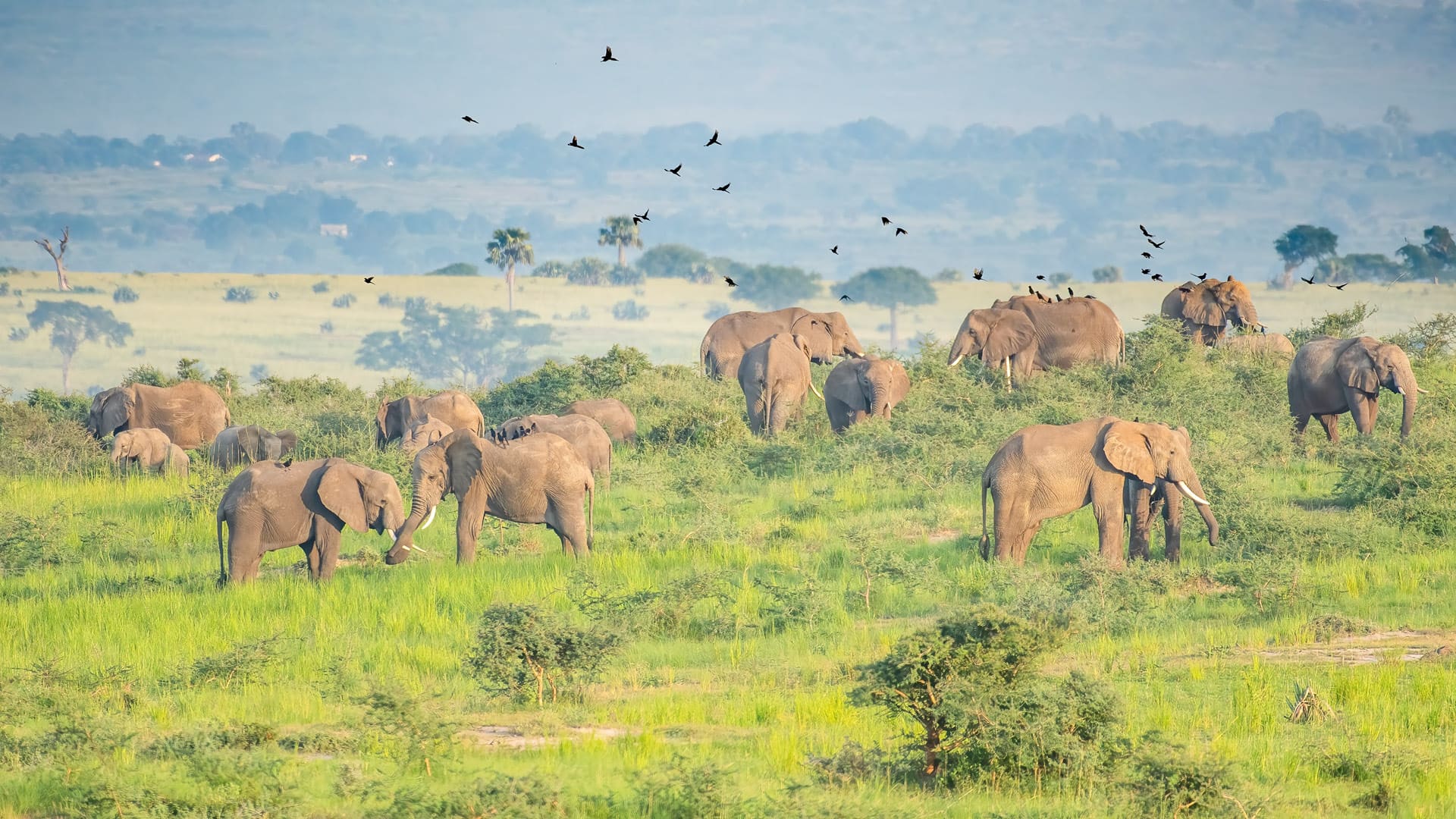
On a Murchison Falls National Park safari, you will step into a bustling wild paradise that proudly protects 76 diverse mammal species and over 450 types of birds. As you explore the golden Buligi grasslands, you will find yourself surrounded by towering herds of endangered Rothschild's giraffes, giant African elephants, and massive Cape buffaloes grazing alongside thousands of elegant Uganda kobs.
The real magic happens where the savanna meets the water. Cruising along the historic Victoria Nile reveals an incredible aquatic theater packed with hundreds of huffing hippos and massive, sunbathing Nile crocodiles. Keep your binoculars ready for the apex predators too; our morning game drives offer fantastic chances to spot pride of lions tracking prey, while stealthy leopards rest quietly in the branches of sausage trees.
3-days-murchison-falls-national-park-best-uganda-safari-road-trip
3-days-best-honeymoon-uganda-safari-escape-to-murchison-falls-national-park
5-day-best-safaris-to-uganda-kidepo-and-murchison-falls-national-parks
5-days-kidepo-valley-uganda-safari-via-ziwa-rhino-sanctuary
6-days-best-of-murchison-and-kidepo-uganda-safari-via-ziwa
7-days-murchison-falls-uganda-safari-trip-via-ziwa-rhinos-kidepo-valley-and-jinja
7-days-uganda-tour-to-murchison-falls-via-ziwa-kibale-and-queen-elizabeth-national-park
9-days-africa-big-five-safari-in-uganda-safari-parks-and-gorilla-trekking
Large Mammals and Predators
Elephants and Buffaloes
The sweeping, Borassus palm-dotted northern plains of Murchison Falls National Park are home to massive herds of megaherbivores thriving under intensive conservation protection. The park’s African bush elephant population has made a spectacular recovery, with over 1,300 individuals moving across the savannas. Concurrently, the Cape buffalo population has experienced an incredible boom, growing to over 41,500 strong. To witness these giants in action, your morning game drive should kick off right at 06:30 AM. During these early hours, before the equatorial sun peaks, you can spot herds of up to 100 buffaloes wallowing in muddy depressions and families of elephants treating the palm trees as scratching posts. By 01:00 PM, as temperatures climb, these giants migrate toward the banks of the Victoria Nile, providing an unparalleled spectacle for safari-goers on afternoon boat cruises. Watch as elephant matriarchs guide calves down the banks to drink, submerging themselves completely to stay cool.
Rothschild's Giraffes
Murchison Falls National Park stands as the primary global stronghold for the critically endangered Nubian (Rothschild's) giraffe, hosting a world-leading population of over 2,000 unique individuals. These towering icons are an essential highlight of any Uganda birding safari or wildlife game drive. They display fascinating, fine-scale seasonal foraging habits, browsing heavily on thorny Acacia trees on the northern banks before partially shifting toward broadleaf evergreen woodlands. The best window to photograph these elegant giants is between 07:00 AM and 09:30 AM, when the soft, golden morning light beautifully illuminates their complex coat patterns. It is very common to spot over 30 individuals traveling together in loose, graceful groups—a phenomenon known as a "journey" of giraffes—silhouetted against the open palms. Their massive height allows them to act as early-warning systems for other herbivores, keeping a constant lookout across the plains for hidden predators.
Lions and Leopards
The open tracks and riverine thickets of the park support a healthy, carefully monitored population of apex predators, featuring an estimated 150 to 200 lions divided across 15 to 20 highly territorial prides. While lions rule the open grasslands of the Buligi tracks, the park's elusive leopards prefer to hunt under the cover of the dense woodland blocks. Spotting these big cats requires an early start; morning predator tracking drives are most successful between 06:30 AM and 08:30 AM, just before they retire from a night of hunting. You might encounter a pride of lions strategically resting near a busy watering hole, patiently calculating a tactical ambush on a herd of kobs. Conversely, spotting a leopard requires checking the low branches of sausage trees and large acacias. Between 06:00 PM and 07:00 PM, as the night takes over, the acoustic landscape transforms entirely as the lions begin their deep, echoing roars to announce their territory.
Antelopes
The sheer volume of plains game in the northern sector is staggering, anchoring the entire park's food chain. The undisputed stars here are the endemic Uganda kobs, boasting a flourishing population of over 175,000 individuals across the reserve. They are joined by over 22,000 tall Defassa waterbucks, thousands of pint-sized oribi, and large herds of Jackson's hartebeests with their distinctive flat faces and high shoulders. Antelope activity peaks heavily throughout the morning between 07:00 AM and 11:00 AM, particularly at the designated kob lekking grounds. Here, you can watch dominant males engage in high-stakes territorial battles, clashing horns in dramatic displays to win the attention of looking females. Because they are active throughout the day, a standard 3-hour game drive guarantees non-stop action, offering fantastic opportunities to watch these fast, agile animals navigate the grasslands while remaining hyper-alert to the threats of lurking predators.
Aquatic Wildlife
Hippos and Crocodiles
If you want to see what a truly bustling aquatic neighborhood looks like, just look at the waters of the Victoria Nile. This stretch of river is absolutely packed with life, hosting one of the densest populations of hippos on the entire continent alongside some truly prehistoric Nile crocodiles. During the heat of the day, between 10:00 AM and 04:00 PM, the river becomes a giant pool party. You will see massive pods of hippos—sometimes up to 40 or 50 individuals bunched tightly together—huffing, yawning, and spraying water to keep their sensitive skin cool under the equator sun. Right next to them along the muddy banks, giant Nile crocodiles, some stretching an incredible 5 meters in length, sit perfectly still with their mouths wide open. They aren't catching flies; they are actually releasing body heat to regulate their temperature. As the sun sets around 06:30 PM, the whole dynamic changes: the hippos finally leave the safety of the water, stepping ashore under the cover of darkness to spend the next 5 to 6 hours mowing down up to 35 kilograms of grass each.
Boat Cruise Sightings
There is nothing quite like the magic of an afternoon boat launch cutting through the gentle currents of the Victoria Nile toward the thundering base of Murchison Falls. Departing daily around 02:00 PM, this 3-hour aquatic safari offers a front-row seat to the park’s ultimate watering hole. As the land bakes in the afternoon heat, the riverbanks become a bustling highway for thirsty wildlife. From the safety of the double-decker boat, you will watch family herds of elephants slide down the sandy cliffs, plunging into the shallows to drink, play, and spray each other with cool water. Cape buffaloes wallow in the shallows just meters away, while elegant waterbucks and kobs nervously sip from the edges, keeping a sharp eye out for predators. For bird lovers, this cruise is an absolute dream; you will drift past vibrant colonies of Red-throated Bee-eaters nesting in the cliffs, and if you are lucky, you might spot the legendary, prehistoric-looking Shoebill stork hiding in the papyrus swamps. It is a peaceful, incredibly rewarding way to see the wild world from a completely different perspective.
Primates and Birds
Chimpanzees
Stepping into the deep, shaded world of Budongo Forest or the Kaniyo Pabidi eco-tourism site brings you face-to-face with humanity’s closest relatives. These pristine blocks of ancient mahogany trees protect a thriving population of approximately 600 wild Chimpanzees (Pan troglodytes). To experience the thrill of tracking them, your adventure begins with an essential briefing at either 07:00 AM or 02:00 PM. Once on the trail, a typical trek lasts between 2 to 4 hours, guided entirely by the vocalizations echoing through the canopy. You will hear their dramatic, booming pant-hoots and the thunderous drumming on giant tree buttresses long before you see them. When you make contact, you are permitted exactly 1 hour of quiet observation. It is pure magic to watch them just meters away as they skillfully construct night nests up in the branches, groom one another, and feed on wild figs. It is a deeply moving experience that adds a spectacular primate chapter to your classic savanna safari.
Specialty Birds
For birding enthusiasts, the transition from the roaring rapids to the tranquil Lake Albert Delta is nothing short of legendary. This internationally recognized Ramsar wetland site is one of the absolute best places in East Africa to track down the rare, prehistoric Shoebill stork (Balaeniceps rex). To maximize your chances, a specialized private swamp-boat cruise should launch by 06:30 AM to catch these enigmatic giants while they stand completely motionless in the papyrus, acting like statues as they wait to ambush lungfish. Beyond the bucket-list Shoebill, the river delta and surrounding channels are a bustling haven for over 450 avian species. You will drift past massive Goliath Herons—the largest herons in the world standing at a striking 1.5 meters tall—and watch elegant African Fish Eagles perched high on dead snags, filling the air with their iconic, ringing duet calls. From vibrant colonies of Red-throated Bee-eaters nesting in the sandy cliffs to rare visual treats like the Pel's Fishing Owl, it is a non-stop paradise for your binoculars.
How many mammal species roam Murchison Falls National Park?
I am incredibly proud to throw open my gates to a staggering 76 diverse mammal species across my sprawling landscapes. When you embark on a wildlife or Uganda birding safari here, you are stepping into one of the most biologically rich ecosystems in East Africa. My unique mix of open Borassus palm savannas, riverine woodlands, and sweeping wetlands provides the perfect home for both massive megaherbivores and stealthy predators. You will find yourself driving past thousands of animals, from herds of giant African bush elephants and heavy Cape buffaloes to a vibrant collection of unique antelopes like the elegant Uganda kob and the tall Defassa waterbuck. My diverse habitats ensure that no two game drives are ever the same, offering non-stop surprises at every turn of the track. Whether they are wallowing in the cool mud networks early in the morning or resting under the shade of a sausage tree during the midday heat, my mammal populations thrive in numbers that make me a world-class safari destination.
What time should your morning game drive officially start?
To catch my wild residents at their absolute liveliest, your morning game drive should kick off right at 06:30 AM. This early hour is the golden window for wildlife viewing because the cool night air still lingers over the plains, and the intense equatorial sun hasn't yet driven the animals into hiding. Setting out at this time gives you the ultimate front-row seat to the daily rhythm of the savanna. You will spot massive herds of up to 100 Cape buffaloes wallowing in muddy depressions and families of African elephants using the palm trees as giant scratching posts. Most importantly, this is the peak time for predator tracking; our resident lions and elusive leopards are most active between 06:30 AM and 08:30 AM as they wrap up their night hunting before retiring into the deep thickets. Having your binoculars ready at dawn ensures you don't miss a single moment of action.
How many endangered Rothschild's giraffes live in the park?
I proudly stand as the ultimate global stronghold for the critically endangered Nubian (Rothschild's) giraffe, hosting a world-leading population of over 2,000 unique individuals. These towering icons are an absolute centerpiece of my savannas, turning any game drive into a magical experience. They display fascinating, fine-scale foraging habits, using their long, prehensile tongues to browse heavily on the thorny Acacia trees blanketing my northern banks. The most rewarding window to admire and photograph these gentle giants is between 07:00 AM and 09:30 AM, when the soft, golden morning light perfectly illuminates their complex coat patterns against the open grasslands. It is a spectacular sight to witness a "journey" of over 30 giraffes traveling gracefully together. Because of their incredible height, they also serve as the savanna's natural early-warning system, keeping a constant lookout for any predators hiding in the grass.
Where can visitors track wild chimpanzees near the park?
To experience the incredible thrill of coming face-to-face with wild chimpanzees, you simply need to step into the deep, ancient world of the nearby Budongo Forest or the Kaniyo Pabidi eco-tourism site. These pristine, shaded blocks of primary forest protect a thriving community of approximately 600 wild Chimpanzees (Pan troglodytes). Your primate adventure begins with a vital safety and tracking briefing, leading into a captivating trek through the mahogany trees that typically lasts between 2 to 4 hours. You will navigate the forest floor guided entirely by the wild soundscape, hearing their dramatic, booming pant-hoots and the thunderous drumming on giant tree buttresses echoing through the canopy long before you spot them. Once you establish contact with these fascinating primates, you are granted exactly 1 hour of quiet observation to watch them groom, play, and feed on wild figs.
What is the best time for afternoon boat cruises?
The absolute best time to embark on my legendary river safari is the daily afternoon departure around 02:00 PM. This 3-hour boat cruise cuts through the gentle currents of the Victoria Nile, heading straight toward the thundering base of Murchison Falls. Timing is everything here: as the savanna bakes in the intense midday heat between 10:00 AM and 04:00 PM, the riverbank transforms into a bustling, non-stop highway for thirsty wildlife. From the safety and comfort of a double-decker boat, you will get a spectacular, close-up look at family herds of elephants sliding down the sandy cliffs to submerge themselves completely in the shallows. Massive Cape buffaloes wallow just meters away, while thousands of hippos huff and spray water to stay cool. It is an incredibly peaceful yet thrilling way to witness the wild world gathering at its ultimate watering hole.
How many individual lions live across the open tracks?
My rich, prey-packed grasslands support a healthy and carefully monitored population of apex predators, featuring an estimated 150 to 200 individual lions. These majestic big cats are divided across 15 to 20 highly territorial prides that rule the open tracks of the northern sector, particularly around the famous Buligi circuit. Spotting them requires a mix of patience and a sharp eye, especially during our early morning predator tracking drives between 06:30 AM and 08:30 AM. You might catch a pride strategically lounging near a busy watering hole, calculating a tactical ambush on a nearby herd of kobs. If they are elusive during the day, you will certainly know they are around as night falls; between 06:00 PM and 07:00 PM, the entire acoustic landscape transforms as the lions unleash their deep, echoing roars to announce their presence across the dark plains.
Which rare bird species lives in the Albert Delta?
The tranquil, swampy waters where the Victoria Nile flows into the Lake Albert Delta are internationally celebrated as a sanctuary for the rare, prehistoric Shoebill stork (Balaeniceps rex). This globally recognized Ramsar wetland site is one of the absolute best places in East Africa for birders to check this legendary giant off their lifelist. To maximize your chances of a sighting, a specialized private swamp-boat cruise should launch by 06:30 AM. This allows you to catch these enigmatic, large-billed birds while they stand completely motionless in the papyrus blocks, acting like grey statues as they wait to ambush passing lungfish. Beyond the bucket-list Shoebill, this delta is a thriving haven for a wider checklist of over 450 avian species, including massive Goliath Herons standing 1.5 meters tall and elegant African Fish Eagles calling out from high tree snags.
Which antelope species is most abundant on the savanna?
The undisputed ruler of my open plains in terms of sheer volume is the beautiful, endemic Uganda kob, boasting a flourishing population of over 175,000 individuals across the reserve. These graceful antelopes anchor my entire ecosystem's food chain and are a constant, lively presence on any safari drive. Their activity peaks heavily throughout the morning hours between 07:00 AM and 11:00 AM, particularly at their designated, traditional kob lekking grounds. If you stop your safari vehicle here, you can watch dominant males engage in high-stakes, dramatic territorial battles, clashing their curved horns together to defend their patch and win the attention of looking females. They share these rich grasslands with over 22,000 tall Defassa waterbucks, thousands of small oribi, and large herds of Jackson's hartebeests, ensuring non-stop wildlife viewing throughout your entire 3-hour game drive.
What size do the giant Nile crocodiles regularly reach?
The waters of the Victoria Nile host one of the largest and densest concentrations of prehistoric Nile crocodiles on the planet, with many dominant individuals regularly reaching massive lengths of up to 5 meters. These incredible reptiles are a thrilling highlight during our daily river cruises. During the sun-drenched hours between 10:00 AM and 04:00 PM, you will see them hauled out along the muddy banks, lying completely still alongside giant pods of huffing hippos. They often sit with their massive jaws wide open in a fierce-looking pose, which is actually a clever way to release body heat and regulate their temperature under the equator sun. As master ambush predators, they keep a watchful eye on the thirsty antelopes and elephant calves sipping at the water's edge, adding an intense, dramatic energy to the riverbanks.
When are the forest chimpanzee tracking sessions scheduled daily?
To seamlessly weave a primate adventure into your savanna itinerary, the habituated chimpanzee tracking excursions in Budongo Forest are strictly scheduled into two daily sessions: a morning trek starting at 07:00 AM and an afternoon trek beginning at 02:00 PM. Both sessions kick off with an essential briefing by expert resident guides before you plunge into the beautiful canopy of ancient mahogany trees. A typical forest trek lasts anywhere from 2 to 4 hours, depending entirely on where the chimpanzee community chose to forage or build their nests that day. Because the morning session aligns with their peak feeding hours, you are highly likely to see them active in the branches. Whichever timing you choose for your custom itinerary, you are guaranteed exactly 1 hour of face-to-face time once contact is made, making for an unforgettable wildlife encounter.
Booking Uganda safari with us Roads of Adventure Safaris
To book a Uganda safari with Roads of Adventure Safaris, contact them directly via email at info@roadsofadventuresafaris.com or call/WhatsApp at +256 701 041637. Share your preferred dates, budget, and interests. They require a 30% deposit to confirm bookings, with the balance due 60 days before your trip
