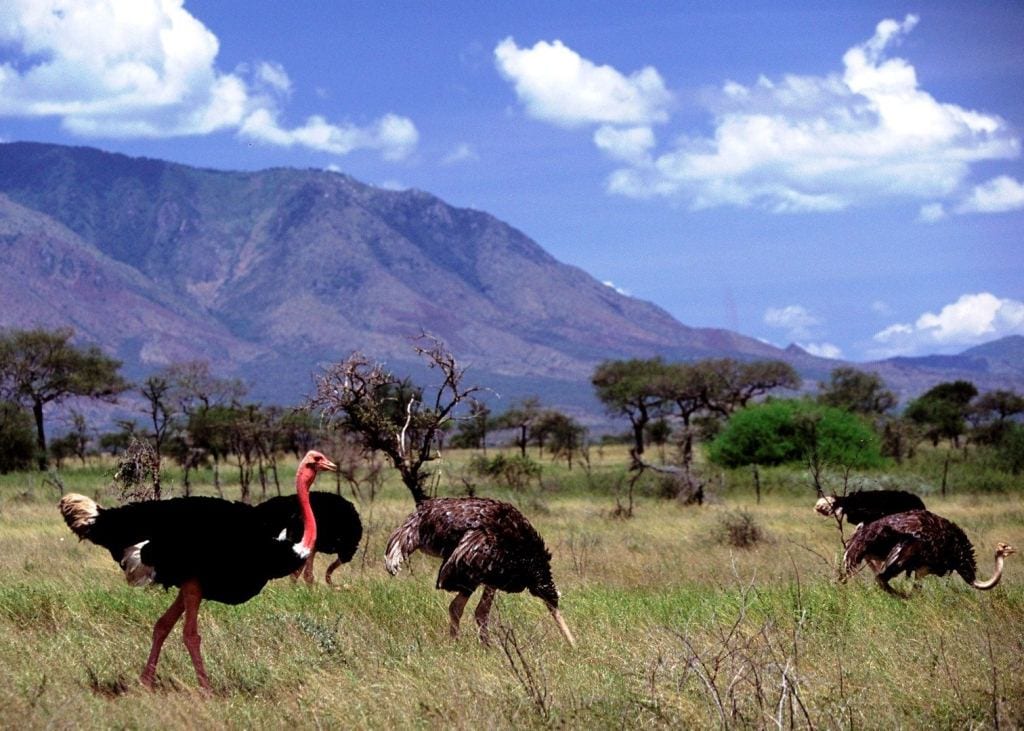
A Kidepo Valley birding safari offers the chance to spot over 475 species, including 60 that are not found in any other Ugandan park, such as the Common Ostrich. Top sightings include the Karamoja Apalis, Secretary Bird, Abyssinian Roller, Black-breasted Barbet, and many birds of prey. The best time is March to April for specials and November to April for migratory birds
36-days-grand-uganda-bird-watching-safari
30-days-best-uganda-birding-safari-extravaganza-and-wildlife-safari
25-days-complete-uganda-birding-safari-extravaganza-with-wildlife-viewing
25-days-complete-uganda-birding-safari-extravaganza-with-wildlife-viewing
21-days-uganda-birding-safari-extravaganza-to-best-uganda-safari-parks
20-days-uganda-birding-safari-wildlife-gorilla-and-chimpanzee-tracking
19-days-best-photography-uganda-birding-safari-and-wildlife-adventure
17-days-uganda-birding-safari-itinerary
16-days-best-of-uganda-birding-safari-holiday-extravaganza
10-days-best-uganda-birding-safari-and-wildlife-experience
Key Species to See in Kidepo valley on birding safari in Uganda
1. Unique and Rare Species
These birds represent the "holy grail" for birders in Uganda, as many are either restricted to Kidepo or have very narrow ranges within the Karamoja region.
- Common Ostrich: Kidepo is the only place in Uganda to see this prehistoric giant in the wild. They are often spotted in the open plains of the Kidepo Valley near the South Sudan border.
- Karamoja Apalis: A globally vulnerable species that is exceptionally difficult to find elsewhere. It lives primarily in whistling thorn (Acacia drepanolobium) and is a key target for serious ornithologists.
- Black-breasted Barbet: A stunning, bulky barbet with a deep black breast and bright red crown. It prefers riverine woodlands and is a regional specialty of the northeastern "dry" corridor.
- Fox’s Cisticola: While often associated with the wetlands of eastern Uganda (like Lake Bisina), this near-endemic is found in the lush valley grasslands of Kidepo.
- Rose-ringed Parakeet: Unlike the feral populations seen in Europe, these are native African parakeets, recognizable by their neon green plumage and rapid, shrieking flight through the acacia canopy.
2. Birds of Prey (Raptors)
Kidepo’s open horizons and high density of small mammals make it a premier "raptor capital." Over 50 species of birds of prey have been recorded here.
- Secretary Bird: A terrestrial raptor that looks like a crane but hunts like a hawk. It is famous for "stomping" venomous snakes to death with its powerful legs.
- Pygmy Falcon: Africa’s smallest raptor, often seen perched near the massive communal nests of White-headed Buffalo-weavers, which it sometimes commandeers.
- Verreaux’s Eagle: A massive, jet-black eagle with a distinct white "V" on its back, usually found patrolling the rocky cliffs and "kopjes" (outcrops) in search of hyraxes.
- Egyptian Vulture: Recognizable by its bright yellow face and white plumage, this intelligent scavenger is known for using stones as tools to crack open ostrich eggs.
- Tawny Eagle & Eastern Pale Chanting Goshawk: The Goshawk is particularly striking with its long orange legs and upright stance on acacia tops, where it scans for lizards.
3. Colorful and Notable Species
The park is famous for its "Technicolor" birds that thrive in the bright, dry light of the savanna.
- Northern Carmine Bee-eater: Perhaps the most beautiful bird in the park, with shimmering pink-red bodies and turquoise heads. They often ride on the backs of Kori Bustards or ostriches to catch insects flushed by the larger animals.
- Abyssinian Ground Hornbill: A turkey-sized bird with a prehistoric silhouette. Males have a bright red throat pouch, while females have blue. Their deep, booming calls can be heard for miles at dawn.
- Abyssinian Roller: Similar to the Lilac-breasted Roller but with long, elegant tail streamers and a deeper sapphire blue on the wings.
- Beautiful Sunbird: Living up to its name, the breeding male is a metallic green with a brilliant red chest patch, frequently seen hovering around flowering shrubs.
- Four-banded Sandgrouse: A master of camouflage that blends perfectly with the sandy soil. They are best seen at dusk when they congregate in large numbers at water holes.
Top Birding Spots in Kidepo
1. Narus Valley
The Narus Valley serves as the biological lifeblood of Kidepo and is an essential cornerstone for any Uganda birding safari. Because the Narus River retains water long after the Kidepo River has evaporated into a dry sand bed, this lush sector becomes a magnet for an incredible density of avian life. For enthusiasts of Uganda bird watching, the valley offers a theatrical display of nature, where the open savanna meets permanent water holes. Here, you are likely to encounter the prehistoric-looking Abyssinian Ground Hornbill stalking through the grass, alongside the majestic Kori Bustard, the world’s heaviest flying bird. The presence of water also attracts various herons, egrets, and the elegant Black-headed Heron, providing a stark contrast to the more arid-dwelling species found elsewhere in the park.
Beyond the ground-dwellers, the Narus Valley is a prime location for spotting the "Big Game" of the bird world—the raptors. During a Uganda birding safari, one can spend hours watching Bateleur eagles and Martial eagles soaring over the plains in search of prey. The concentration of mammals like buffalo and elephants in this valley also benefits birds like the Yellow-billed Oxpecker, which are constantly seen clinging to their hosts. The accessibility of the valley, with its well-maintained game tracks, makes it the most productive area for high-volume Uganda bird watching. Whether it is the flash of a Secretary Bird’s wings or the sudden movement of a Flappet Lark, the Narus Valley ensures that your list grows rapidly within a relatively small geographical area, making it a must-visit for every traveler.
2. Kidepo Valley
In stark contrast to the Narus, the Kidepo Valley offers a rugged, semi-desert landscape that feels like the true frontier of the African wilderness. Characterized by dry sand beds and magnificent groves of Borassus palms, this area is the primary habitat for species that prefer a more arid environment, making it a distinct chapter of any Uganda birding safari. This is the undisputed home of the Common Ostrich; Kidepo is the only place in the country where these giants roam wild, and seeing them stride across the shimmering sand is a highlight of Uganda bird watching. The valley’s unique flora, particularly the palms, also attracts the Rose-ringed Parakeet and the Clapperton’s Francolin, species that are highly sought after by birding specialists visiting this remote region.
The Kidepo Valley is also where the "Lost Eden" feel is most palpable. As you navigate the tracks toward the South Sudanese border, the birdlife shifts toward Horn of Africa specialties. On a Uganda birding safari, this is the best place to scan the acacia scrub for the Abyssinian Scimitarbill or the striking Abyssinian Roller. The heat here can be intense, but the rewards for Uganda bird watching are significant, especially near the Kanangorok Hot Springs. The openness of the landscape allows for incredible visibility, where one can spot the Dark Chanting Goshawk perched atop a whistling thorn or the White-bellied Go-away-bird moving through the canopy. The Kidepo Valley doesn't just offer birds; it offers a sense of discovery, where every sighting feels like a hard-won prize in one of Africa’s last truly wild places.
3. Apoka Rest Camp
One of the most surprising delights of a Uganda birding safari is that the action often starts before you even board a vehicle. Apoka Rest Camp, perched on a rocky hill overlooking the Narus Valley, is a sanctuary for birds that have become habituated to the presence of humans. You don't even have to leave your veranda to enjoy world-class Uganda bird watching. The camp’s trees and flowering shrubs are constantly buzzing with activity, featuring the iridescent Scarlet-chested Sunbird and the ubiquitous Superb Starling, whose metallic plumage glows under the Karamoja sun. It is an ideal spot for photographers who want to capture high-detail shots of smaller species that might be more elusive in the deep bush.
The "resident" birds of Apoka are a diverse bunch. The Silverbird, a stunningly pale flycatcher, is almost a permanent fixture around the camp, as is the Red-cheeked Cordon-bleu, which adds a tiny pop of sky-blue to the dusty ground. During a Uganda birding safari, the camp serves as a perfect classroom for learning the calls of the Yellow-billed Shrike or identifying the various weavers that build their intricate nests in the acacia trees overhead. Even the evening hours at Apoka provide opportunities for Uganda bird watching, as the Verreaux’s Eagle-Owl occasionally makes an appearance near the buildings. This proximity to wildlife means that every moment spent at the lodge is an extension of your safari, proving that in Kidepo, the birds truly come to you.
1. What is the most famous bird in Kidepo Valley?
The Common Ostrich is the undisputed superstar of the park and a major draw for any Uganda birding safari. Kidepo holds the unique distinction of being the only place in the country where these flightless giants can be seen roaming wild in their natural habitat. Seeing an Ostrich against the backdrop of the Morungole Mountains is a quintessential experience for those engaged in Uganda bird watching. They are most frequently spotted in the drier Kidepo Valley, where the open, sandy plains provide the perfect environment for them to display their incredible speed and stature. Their presence adds a prehistoric feel to the landscape, reminding visitors that Kidepo truly is a world apart from the lush forests of the south. Beyond their size, their social behavior and nesting habits make them a fascinating subject for study during a Uganda birding safari, ensuring they remain the most iconic feathered resident of this northern frontier.
2. Where can I find the Karamoja Apalis?
Finding the Karamoja Apalis is often the "holy grail" of a Uganda birding safari. This rare and globally threatened species is a specialist of the dry-scrub and acacia woodlands, specifically favoring the whistling thorn acacias that dot the landscape. Because its habitat is so specific, Uganda bird watching tours often focus their search in the specific thickets where these acacias thrive. The bird is small and can be quite elusive, requiring a patient eye and a quiet approach. For many birders, the thrill of checking this endemic-leaning species off their list is the primary reason for making the long journey to Kidepo. Its survival is intrinsically linked to the health of the Karamoja ecosystem, making every sighting a poignant reminder of the importance of conservation during your Uganda birding safari.
3. When is the best time for a birding safari in Kidepo?
Timing your visit is crucial to getting the most out of Uganda bird watching. While the park is a year-round destination, the dry seasons—from June to August and December to February—are particularly productive. During these periods, the thinning vegetation makes it much easier to spot smaller birds that would otherwise be hidden. However, a Uganda birding safari truly peaks between November and April when Palearctic migrants arrive from Europe and Northern Africa. This window offers the highest species diversity, as local residents in vibrant breeding plumage are joined by a multitude of visitors. Whether you prefer the ease of spotting raptors in the dry heat or the sheer variety of the migratory season, Kidepo never fails to deliver a world-class Uganda birding safari experience.
4. Are there any unique hornbills in Kidepo?
Kidepo is a paradise for hornbill enthusiasts, offering sightings that are difficult to find elsewhere on a Uganda birding safari. The Jackson's Hornbill, with its beautifully speckled wing coverts, is a frequent highlight for those engaged in Uganda bird watching. You are also likely to encounter the massive Abyssinian Ground Hornbill, which is often seen "marching" across the savanna in pairs or small groups. These birds are not just unique in appearance but also in behavior, often acting as ground-based predators. The Northern Red-billed Hornbill also adds to the diversity, frequently seen perched on acacia branches. The variety of hornbills available during a Uganda birding safari provides fantastic photographic opportunities and a deeper understanding of how these specialized birds have adapted to the semi-arid environment of Northern Uganda.
5. What is the best area for bird watching in the park?
The park is divided into two main areas, each offering a distinct Uganda birding safari experience. The Narus Valley is widely considered the best overall spot due to its permanent water sources. This valley attracts a high density of water birds, herons, and raptors, making it a high-yield area for Uganda bird watching. Conversely, the Kidepo Valley is the place to go for arid-country specialists. Here, the landscape changes to dry sand beds and Borassus palms, providing the ideal habitat for the Ostrich and various semi-desert species. By visiting both valleys, a Uganda birding safari covers the full spectrum of the park's biodiversity, from the lush, bird-rich wetlands to the rugged, dry frontier, ensuring a comprehensive list of sightings for any dedicated birder.
6. Can I see Secretary Birds in Kidepo?
Yes, the Secretary Bird is one of the most sought-after sightings on any Uganda birding safari. These elegant, long-legged raptors are frequently spotted in the open, short-grass plains of the Narus Valley. Unlike other birds of prey, they hunt on foot, and watching them "stomp" through the grass to flush out snakes and lizards is a highlight of Uganda bird watching. Their unique silhouette, featuring a crest of long black feathers and crane-like legs, makes them easy to identify even from a distance. Because Kidepo’s landscape is so open, visitors on a Uganda birding safari often get exceptionally clear views of these birds in action. Their presence is a testament to the healthy, undisturbed grasslands that define Kidepo as a premier destination for Uganda bird watching.
7. Are there birds of prey in Kidepo?
Kidepo is arguably the finest raptor destination in East Africa, making it a mandatory stop on a Uganda birding safari. With 58 recorded species of birds of prey, the sky is almost always filled with activity. Specialists in Uganda bird watching will be thrilled to see the tiny Pygmy Falcon, the continent's smallest raptor, or the rare Fox Kestrel perched on rocky outcrops. The park is also a stronghold for the Dark Chanting Goshawk and various massive vultures that circle above lion kills. The sheer variety of eagles, including the Bateleur and Martial Eagle, ensures that every game drive during your Uganda birding safari is filled with aerial drama. The park’s unique geography creates powerful thermals that these predators use to scan the vast plains, offering unparalleled viewing opportunities for Uganda bird watching fans.
8. What birds can be seen near the Kanangorok Hot Springs?
The Kanangorok Hot Springs, located near the South Sudanese border, offer a unique micro-habitat for a Uganda birding safari. The thicket bush and scrub surrounding the springs are excellent for spotting the Black-breasted Barbet, a localized beauty that is a major target for Uganda bird watching. This area is also a reliable spot for Jackson's Hornbill and the White-crested Turaco. The journey to the hot springs takes you through the most remote parts of the park, where the birdlife feels untouched and wild. For anyone on a Uganda birding safari, the springs represent the furthest reaches of the park, where the arid-country specialists thrive in the heat. It is a rugged but rewarding destination that adds significant value to any Uganda bird watching itinerary.
9. Are there any endemic bird species here?
While Kidepo may not have many "strict" endemics, it is the only place in the country to find over 23 species restricted to the Somalia-Masai Biome. This makes a Uganda birding safari here essential for those looking to complete their regional lists. The Karamoja Apalis and the Black-breasted Barbet are among the most famous of these localized residents. For those passionate about Uganda bird watching, the park represents a bridge between East Africa and the Horn of Africa, hosting species that simply do not occur in the more famous parks like Queen Elizabeth or Murchison Falls. Checking off these biome-restricted species is a primary goal of any serious Uganda birding safari, providing a unique perspective on the avian geography of the African continent.
10. Do walking safaris help with bird watching?
Absolutely. While game drives are great for raptors and ostriches, a guided nature walk is the best way to see smaller, more elusive species during a Uganda birding safari. These walks, which typically last 2-3 hours and often start near Apoka, allow for a slow, immersive Uganda bird watching experience. On foot, you can get much closer to sunbirds, flycatchers, and weavers without the noise of an engine. Walking also allows you to explore the whistling thorn thickets where the Karamoja Apalis hides. For many, the intimate connection with nature found on a walking safari is the highlight of their Uganda birding safari, offering a chance to see the "little things" that make Uganda bird watching so rewarding and diverse.
11. What is the African Rose-ringed Parakeet?
The African Rose-ringed Parakeet is a vibrant and highly sought-after species that adds a splash of tropical color to a Uganda birding safari. Found primarily in the wooded areas and Borassus palm groves of the Kidepo Valley, these parakeets are a favorite for photographers engaged in Uganda bird watching. Their bright green plumage and noisy calls make them relatively easy to locate once you are in the right habitat. They are often seen flying in small, energetic flocks between fruit-bearing trees. Including a search for this parakeet in your Uganda birding safari itinerary provides a nice contrast to the larger raptors and ground birds, showcasing the incredible variety of shapes and colors found in Uganda bird watching.
12. What bird species are common around Apoka?
You don’t even have to leave your lodge to enjoy some of the best Uganda bird watching the park has to offer. The area around Apoka Rest Camp is teeming with "resident" birds that have become quite comfortable with human presence. During a Uganda birding safari, you can sit on your veranda and watch the Silverbird, a beautiful and distinctive flycatcher, or the noisy Yellow-billed Shrike. Various starlings, including the iridescent Superb Starling, are constant companions, while the Red-cheeked Cordon-bleu adds a delicate touch of blue to the camp’s gardens. This accessibility makes Apoka a perfect base for a Uganda birding safari, allowing you to keep your binoculars ready even during your downtime, ensuring that your Uganda bird watching experience never truly stops.
13. Are there bird species visible in the rainy season?
The rainy season brings a dramatic transformation to the park and offers unique opportunities for a Uganda birding safari. One of the most notable species that becomes visible during this time is the Black Coucal, which favors the tall, lush grass that follows the rains. While the mud can make travel more challenging, the rewards for Uganda bird watching are immense, as many birds begin their breeding displays. The park turns from gold to a vibrant green, and the air is filled with the songs of birds defending their territories. For a seasoned birder, a Uganda birding safari during the rains offers a chance to see rare behaviors and species that are much harder to find during the dusty dry months, proving that Uganda bird watching in Kidepo is rewarding in every season.
14. What are the best spots for water birds?
For those interested in aquatic species, the Narus Valley is the primary destination on a Uganda birding safari. The valley features several permanent water holes and lily-covered ponds that are ideal for Uganda bird watching. Here, you can easily spot the African Jacana trotting across the lilies, the White-faced Whistling Duck, and a variety of herons and storks. Despite being a semi-arid park, these small pockets of water create a haven for birds that you might normally expect to see in the wetter regions of the south. Watching these water birds congregate alongside thirsty buffalo and elephants is a spectacular sight on any Uganda birding safari, offering a complete picture of the park’s ecological diversity and making Uganda bird watching in the Narus Valley an unforgettable experience.
15. Is Kidepo good for beginner birders?
Kidepo is arguably one of the best places in Africa for someone to start their journey into Uganda bird watching. The open terrain and wide-stretching vistas mean that birds are much easier to spot and identify than in a dense tropical forest. During a Uganda birding safari, beginners can see large, charismatic species like the Ostrich and Secretary Bird without needing expert-level spotting skills. The high density of birds around the lodges also provides a "soft entry" into the hobby. With a good pair of binoculars and a basic field guide, a Uganda birding safari in Kidepo can quickly turn a casual observer into a lifelong enthusiast. The sheer "wow factor" of the park’s avian life makes Uganda bird watching here an accessible, exciting, and deeply rewarding adventure for people of all experience levels.
Booking Bird watching in Kidepo with us Roads of Adventure safaris
Book your bird watching safari in Kidepo Valley National Park with Roads of Adventure Safaris to explore a destination boasting over 475 species, including rare raptors and Karamoja specials. Specialized itineraries focus on top spots like the Narus and Namamukweny Valleys, featuring tailored 4WD transport and expert guides, according to Roads of Adventure Safaris.
