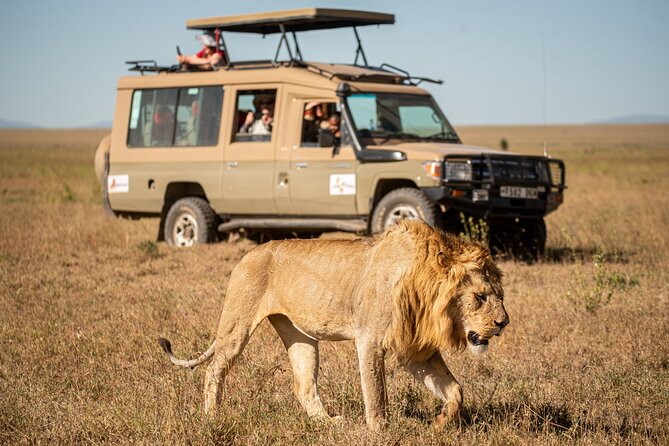
For a 12-day Kenya safari, pack lightweight, neutral-toned clothing (khaki, olive) in layers for temperature swings, including long-sleeved shirts and trousers for sun/insect protection. Essential gear includes sturdy closed-toe shoes, binoculars (or), a wide-brimmed hat, sunscreen, high-DEET insect repellent, and a camera. Use a soft-sided duffel bag for flights
12-days-lake-nakuru-masai-mara-central-serengeti-ngorongoro-crater-amboseli-kenya-tanzania-safari
12-days-kenya-tanzania-safari-and-zanzibar-beach-holiday-vacation
12-days-comprehensive-kenya-safari-circuit
12-days-northern-wilderness-and-conservation-focus-kenya-wildlife-safari
12-days-kenya-and-uganda-primate-and-savanna-circuit
Clothing (Neutral Colors & Layers)
Long-sleeved shirts & trousers
When embarking on a 12-day Kenya safari holiday, your clothing serves as your first line of defense against the elements. Lightweight, breathable long-sleeved shirts and trousers are indispensable for two primary reasons: sun protection and insect defense. At the equator, the UV index is exceptionally high; long sleeves provide a physical barrier that prevents sunburn during long hours in an open-sided vehicle. Furthermore, as dusk approaches, mosquitoes and other biting insects become active. Wearing long limbs significantly reduces the risk of bites and, consequently, exposure to insect-borne illnesses like malaria. Opt for technical "wicking" fabrics that allow moisture to escape, keeping you cool even when the midday sun is at its peak.
Zip-off trousers/safari pants
Versatility is the hallmark of a successful safari wardrobe. Zip-off trousers are highly recommended because they adapt to the dramatic temperature fluctuations of the Kenyan savanna. A typical day starts in the pre-dawn chill (around 12°C/54°F) where full-length pants are necessary. By 11:00 AM, temperatures can soar to 28°C (82°F). The ability to convert your trousers into shorts without returning to camp is a major convenience. These pants are usually made of quick-dry ripstop nylon, which is durable enough to withstand the "African massage" of bumpy roads and the occasional bush walk.
Lightweight fleece or sweater
Many travelers are surprised by how cold it can be in Kenya. Because most safari destinations, such as the Maasai Mara and Laikipia, are situated at high altitudes (above 1,500 meters), the temperature drops significantly at night. A lightweight fleece or wool sweater is essential for early morning game drives. As the vehicle moves, the wind chill can be biting. A fleece is ideal because it provides high thermal insulation while remaining light enough to be stuffed into a daypack once the sun warms the plains.
Rain jacket/poncho
Even during the dry season, tropical weather can be unpredictable. Sudden, short-lived thunderstorms are common, particularly in the afternoons. A compact, waterproof rain jacket or poncho is a vital "just in case" item. Beyond keeping you dry, a rain jacket acts as an excellent windbreaker during fast-paced drives. Choose a jacket in a neutral tone like olive or tan to stay consistent with safari aesthetics while ensuring that a sudden downpour doesn't force an early end to a spectacular leopard sighting.
T-shirts/tank tops
During the "heat of the day," usually between 12:00 PM and 3:00 PM, you will likely find yourself relaxing at your lodge or enjoying a picnic lunch. For these hours, lightweight cotton T-shirts or tank tops are the most comfortable choice. They allow for maximum airflow and are easy to layer under a fleece or jacket. While you should stick to neutral colors even for your base layers, these items are the easiest to wash and dry quickly, making them perfect for the 24-hour laundry service provided by most safari camps.
Comfortable shoes
For a standard 12-day Kenya safari holiday, you do not need heavy mountaineering boots. Instead, opt for sturdy sneakers or lightweight trail running shoes with good grip. You will spend most of your time in a vehicle, but you need reliable footwear for walking around the camp, boarding small aircraft, or participating in short nature walks. Additionally, a pair of lightweight sandals or flip-flops is essential for the lodge. After a long day in the dust, there is nothing better than letting your feet breathe while you sit by the campfire or head to the pool.
Underwear/socks
When packing for 12 days, the "less is more" rule applies, provided you utilize lodge laundry services. Pack enough moisture-wicking underwear and socks for about 4 to 5 days. Technical socks with cushioned soles are best for preventing blisters if you engage in any walking. Note that for cultural reasons, many Kenyan lodges will not wash ladies' underwear by hand; they usually provide a small basin and detergent in the room for "smalls." Packing quick-dry fabrics ensures that your essentials are ready to wear again by the next morning.
Warm jacket/scarf
If your itinerary includes high-altitude regions like the Aberdare Mountains or the Central Highlands, a standard fleece might not be enough. A heavier "puffer" jacket or a thick wool scarf is highly recommended for these areas. The damp, misty mornings in the Aberdares can feel quite wintry. A scarf is particularly versatile; it protects your neck from the cold at dawn and can be used to cover your nose and mouth if the trails become exceptionally dusty during the dry season.
Swimsuit
It may seem counterintuitive to pack a swimsuit for a wildlife expedition, but most luxury and mid-range lodges in Kenya feature beautiful swimming pools. After a hot, dusty morning drive, a midday dip is the ultimate way to refresh. Pools are often positioned to overlook waterholes, meaning you can sometimes watch elephants or zebras drink while you are floating in the water. For those ending their 12-day Kenya safari holiday at the coast in Diani or Malindi, your swimsuit will be your most-used item.
Gear & Electronics
Binoculars
Binoculars are perhaps the most underestimated piece of safari equipment. While your guide will have a pair, having your own is "crucial" for a personalized experience. Binoculars allow you to see the flick of a lion’s ear in tall grass, the intricate plumage of a Lilac-breasted Roller, or the distant drama of a migration crossing. Look for a pair with 8x42 or 10x42 magnification, which offers a good balance between power and a steady field of vision. High-quality optics transform a "small brown dot" in the distance into a stunning, detailed encounter with a leopard or an eagle.
Camera (with Zoom/Extra Batteries)
A smartphone is great for landscapes, but for wildlife, a dedicated camera with a zoom lens (at least 300mm) is essential. Animals are often viewed from a distance to respect their space, and a zoom lens allows you to capture tight portraits and action shots. Because you will be taking hundreds of photos a day, extra batteries and high-capacity memory cards are non-negotiable. Many camps use solar power, which may limit charging times at night, so having a spare battery ensures you don't miss the "shot of a lifetime" because of a dead camera.
Power Bank/Portable Charger
Modern safaris are tech-heavy, with phones used for navigation, checklists, and quick videos. On a 6-hour game drive, your battery can drain quickly, especially when searching for a signal in remote areas. A high-capacity power bank (10,000mAh or more) is essential for keeping your devices charged while in the vehicle. This ensures you always have a phone ready for a quick video of a cheetah chase or to use a bird-identification app in the field.
Universal Travel Adapter
Kenya primarily uses the Type G (British-style) 3-pin rectangular plug. While many luxury lodges provide multi-socket hubs, carrying your own universal adapter ensures you can charge your gear regardless of the lodge's infrastructure. Ensure your adapter is high-quality and can handle multiple devices at once. It’s also worth checking if your gear is dual-voltage, though most modern electronics (laptops, cameras, phones) handle Kenya's 240V system without issue.
Headlamp or Flashlight
Safari camps are often unfenced and intentionally keep lighting low to preserve the wilderness atmosphere. Moving between your tent and the dining mess at night requires a reliable light source. A headlamp is superior to a handheld flashlight because it keeps your hands free—useful for carrying a drink, a book, or navigating a zipper. It is also an essential safety tool for spotting any "resident" wildlife like bushbucks or hippos that might be grazing near the paths at night.
Toiletries & Personal Items
Insect Repellent
In many parts of Kenya, especially the Maasai Mara and coastal regions, mosquitoes are a factor. A high-quality insect repellent with a high DEET content (30-50%) is the gold standard. While many lodges provide repellent, having your own ensures you are protected during "mosquito hour" at dusk and dawn. Apply it to your ankles and wrists particularly, as these are the areas mosquitoes target most frequently. For those sensitive to DEET, Picaridin-based sprays are an effective alternative.
Sunscreen (SPF 50+) & Lip Balm
The Kenyan sun is deceptively strong due to the high altitude and equatorial position. Even on cloudy days, you can burn quickly. Use a broad-spectrum SPF 50+ sunscreen and reapply frequently. Don't forget a lip balm with SPF protection; the dry, dusty wind on game drives can cause painful chapping. Protecting your skin is vital for preventing the "safari fatigue" caused by mild sunstroke, ensuring you stay energized for the full 12 days.
Personal First Aid Kit
While every safari vehicle carries a basic first aid kit, having your own personalized stash is highly recommended. Include antiseptic wipes, bandaids, and blister care (especially if you plan on walking). Pain relievers for "safari headaches" (often caused by dehydration) and any personal medications are essential. Most importantly, ensure you have your antimalarial pills as prescribed by your doctor. A small bottle of "tummy meds" (like Imodium) is also a wise addition for any dietary adjustments.
Hand Sanitizer & Wet Wipes
Safari is a "dusty" business. Between game drives, picnic lunches, and touching vehicle railings, your hands will get dirty. Hand sanitizer is essential for hygiene before snacks in the bush. Wet wipes (biodegradable ones are best) are a "safari secret weapon"—they are perfect for wiping dust off your face, cleaning your camera gear, or freshening up during a long day in the vehicle. They provide a quick "bush shower" when you’re miles away from camp.
Sunglasses (UV Protection)
The glare on the open plains and shimmering salt pans (like those in Amboseli) can be intense. A pair of high-quality polarized sunglasses with 100% UV protection is essential. Polarization is particularly helpful as it cuts through the glare on water, allowing you to see hippos or crocodiles beneath the surface of rivers more clearly. Beyond protection, they prevent eye strain, allowing you to scan the horizon for wildlife for longer periods without discomfort.
Documents & Day Bag
Daypack
A small, lightweight backpack (20-30 liters) is your daily "command center." This bag stays with you in the vehicle and should hold your binoculars, camera, sunscreen, water bottle, and extra layers. Avoid bringing a large, heavy bag, as space in the 4x4 can be limited. A daypack with a rain cover is a bonus, protecting your expensive electronics from both sudden showers and the fine, red dust that characterizes the northern frontier.
Passport, Visa, & Insurance
These are your most critical items. Ensure your passport is valid for at least six months beyond your departure date and has at least two blank pages. Most travelers now require an Electronic Travel Authorization (eTA) for Kenya, which should be printed and kept with your travel insurance documents. Speaking of insurance, ensure your policy specifically covers emergency medical evacuation (like the Flying Doctors service), which is vital when traveling in remote areas like Samburu or the Mara.
Cash (USD & KES)
Kenya is a cash-heavy society for tourism. US Dollars are widely accepted for tips and larger purchases, but they must be printed after 2013 and in pristine condition (no tears or marks). For smaller items, local markets, and "curios," Kenyan Shillings (KES) are better. Carry a mix of small denominations for tipping your guide ($10-$15 per person/day) and lodge staff. While credit cards are accepted in major lodges, they often incur a surcharge, making cash the most efficient way to handle incidentals.
What to Avoid
Bright Colors
In the wild, "standing out" is a disadvantage. Bright white, neon yellow, or fire-engine red can act as a visual alarm for wildlife, causing shy animals like leopards or rhinos to retreat before you get a good look. Furthermore, bright colors are like a beacon for certain insects. To maximize your sightings and your comfort, stick to the "safari palette" of browns, greens, and greys that mimic the natural environment.
Dark Blue/Black
While these colors are staples in most wardrobes, they should be avoided on safari—particularly in wooded or riverine areas. Dark blue and black attract the Tsetse fly, a biting fly common in some African parks. Their bite is painful and, in rare cases, they can carry sleeping sickness. By avoiding these colors, you significantly reduce your attractiveness to these pests, making your game drives much more enjoyable.
Camouflage Patterns
In many African countries, including Kenya, camouflage clothing is associated with the military and police. Wearing it as a civilian can lead to unwanted attention from authorities or even be illegal in certain jurisdictions. To avoid any confusion or delays at checkpoints, leave the camo at home and stick to solid neutral tones.
Heavy Duty Hiking Boots
Unless your 12-day itinerary specifically includes a multi-day trek (like climbing Mount Kenya), heavy-duty hiking boots are unnecessary. They are bulky, heavy, and take up valuable weight in your 15kg luggage allowance on bush planes. They can also be quite hot. A good pair of trail shoes or sturdy sneakers provides more than enough support for the walking you will do, while being much easier to pack and wear in the heat of the savanna.
12 Days Africa safari tin Kenya parks
Embarking on a 12 Days Kenya safari holiday is a definitive exploration of East Africa’s most celebrated landscapes, offering an immersive journey through the heart of the "Cradle of Mankind." This meticulously paced expedition transcends the typical tourist circuit, guiding you from the urban conservation hubs of Nairobi to the rugged northern frontier of Samburu, and through the dramatic Great Rift Valley to the legendary plains of the Maasai Mara. You will witness the "Samburu Special Five," track rare rhinoceroses in private sanctuaries, and marvel at the massive elephant herds of Amboseli under the watchful eye of Mount Kilimanjaro. This itinerary is designed to showcase the staggering diversity of Kenya’s ecosystems, blending high-octane predator tracking with serene lakeside retreats and rich cultural encounters. Whether witnessing the Great Migration or observing the sunrise from a hot air balloon, this 12 Days Kenya safari holiday provides a transformative connection to the wild, ensuring memories as vast and enduring as the African savanna itself.
Day 1: Arrival in Nairobi
Your African adventure begins in Nairobi, the only city in the world with a national park within its borders. Upon arrival at Jomo Kenyatta International Airport, you will be met and transferred to your hotel. Depending on your arrival time, you can visit the Giraffe Centre to feed the endangered Rothschild’s giraffes or the Sheldrick Wildlife Trust to meet orphaned elephants. These urban sanctuaries offer a heartwarming introduction to Kenya’s deep-rooted commitment to conservation. In the evening, enjoy a welcome dinner where your guide will provide a detailed briefing on the upcoming 12-day circuit. This is a time to adjust to the local rhythm and prepare for your transition from the bustling capital to the quiet, majestic wilderness.
Day 2: Nairobi to Amboseli National Park
Departing Nairobi early, your journey heads south through Maasai country toward Amboseli National Park. As you approach, the iconic silhouette of Mount Kilimanjaro—Africa’s highest peak—begins to dominate the horizon. After checking into your lodge and enjoying a late lunch, embark on your first afternoon game drive. Amboseli is world-renowned for its "tuskers," massive bull elephants that roam the dusty plains and emerald-green swamps. The park’s unique hydrology, fed by the melting snows of Kilimanjaro, creates a lush oasis that attracts buffaloes, hippos, and a staggering variety of birdlife. Watching a family of elephants trek across the salt pans with the snow-capped mountain as a backdrop is a quintessential African image.
Day 3: Full Day in Amboseli
Spend a full day exploring the diverse habitats of Amboseli. An early morning start offers the clearest views of Mount Kilimanjaro before clouds typically gather around its peak. Visit Observation Hill for a panoramic view of the vast Enkongo Narok marshes where wildlife congregates to drink and bathe. Your guide will track lions, cheetahs, and spotted hyenas that frequent the acacia woodlands. Between game drives, you may choose to visit a local Maasai village to learn about their ancestral traditions and modern coexistence with the wild. The park’s compact size ensures high wildlife density, making every drive productive. As the sun sets, the golden light transforms the landscape, providing endless opportunities for photography.
Day 4: Amboseli to Ol Pejeta Conservancy
The safari moves to the Laikipia Plateau to visit the Ol Pejeta Conservancy. This private sanctuary is a global leader in conservation and is famously home to the world’s last two northern white rhinos. After checking into your tented camp, head out for a rhino tracking experience. Ol Pejeta is the largest black rhino sanctuary in East Africa, and seeing these prehistoric giants in such high numbers is a true highlight. You will also visit the Sweetwaters Chimpanzee Sanctuary, providing a home for rescued primates. The afternoon game drive offers a chance to see the "Big Five" against the backdrop of Mount Kenya. This stop highlights the critical role of private land management in species recovery.
Day 5: Ol Pejeta to Samburu National Reserve
Departing the central highlands, your journey heads north into the rugged Samburu National Reserve. This arid landscape of red volcanic soil is home to the "Samburu Special Five"—the Grevy’s zebra, Somali ostrich, reticulated giraffe, gerenuk, and beisa oryx. Upon arrival, embark on an afternoon game drive along the Ewaso Ng'iro River. This river is the lifeblood of the region, attracting large herds of elephants and predators to its shaded banks. Keep your eyes peeled for the rare Grevy’s zebra with its narrow stripes and large ears. The arid atmosphere and the vibrant culture of the local Samburu people create a sense of being in a completely different world, far removed from the southern greenery.
Day 6: Full Day in Samburu
Spend the day immersed in the unique biodiversity of Samburu. The morning is dedicated to tracking the elusive leopard and the "giraffe-necked" gerenuk, which stands on its hind legs to reach high branches. You will learn about local conservation projects that promote coexistence between predators and pastoralists. In the afternoon, visit a traditional Samburu village to see how their nomadic culture is evolving to include wildlife protection as a core value. The red earth and rugged mountains provide a dramatic backdrop for observing these specialized species in their natural habitat. Between drives, enjoy the tranquility of your lodge overlooking the river, reflecting on the incredible variety of species you have encountered in this harsh but beautiful northern frontier.
Day 7: Samburu to Aberdare National Park
Travel back toward the lush central highlands to Aberdare National Park. This park is characterized by its high-altitude moorlands, deep ravines, and dense rainforests. Unlike the open savannas, game viewing here is often done from the comfort of your "Tree Hotel," which overlooks a floodlit waterhole and salt lick. As night falls, you can observe elephants, buffaloes, and the rare giant forest hog emerging from the shadows to drink. The Aberdares are also one of the best places to spot the elusive bongo antelope. This leg of the trip offers a dramatic shift in scenery and a more contemplative style of wildlife observation, focusing on the nocturnal secrets of the mountain forest.
Day 8: Aberdare to Lake Nakuru National Park
Descend into the Great Rift Valley to Lake Nakuru National Park, a premier destination for rhino conservation. Spend the afternoon tracking both black and white rhinoceroses in the acacia forests surrounding the alkaline lake. Lake Nakuru offers some of the best chances in East Africa to see these prehistoric giants at close range. The park is also a sanctuary for the rare Rothschild’s giraffe and hosts a healthy population of leopards. While the lake's famous flamingo populations fluctuate, the shores remain a spectacle of avian life, including pelicans and cormorants. Visit "Baboon Cliff" for a stunning aerial view of the shimmering waters, marking a vital and visually arresting pillar of your 12-day journey.
Day 9: Lake Nakuru to Lake Naivasha
A short, scenic drive brings you to the freshwater shores of Lake Naivasha. After lunch at your lakefront lodge, enjoy a private boat safari to see enormous pods of hippos and African fish eagles hunting from the yellow-fever acacia trees. Later, take a guided nature walk on Crescent Island Game Sanctuary. Because there are no resident predators on the island, you can walk among giraffes, zebras, and wildebeests on foot, offering a rare and intimate "ground-level" perspective of the bush. For the more adventurous, a visit to nearby Hell’s Gate National Park offers the unique opportunity to cycle or hike among wildlife amidst dramatic volcanic gorges and geothermal vents.
Day 10: Lake Naivasha to Maasai Mara
The journey reaches its grandest stage as you enter the world-famous Maasai Mara National Reserve. Traversing the Loita Plains, you will arrive at your luxury tented camp in time for lunch. The Mara is an extension of the Serengeti and hosts the highest concentration of big cats in Kenya. Your afternoon game drive introduces you to the vast, rolling grasslands that define the "African Savannah." Keep your eyes peeled for prides of lions lounging in the sun or a cheetah scanning the plains from a termite mound. The Mara is a place of raw, unfiltered nature where the theater of the wild plays out in every direction, welcoming you to the world's most iconic wildlife destination.
Day 11: Full Day in the Maasai Mara
Dedicate a full, uninterrupted day to the heart of the Mara. With a packed picnic lunch, your guide will head toward the Mara River, the site of the dramatic Great Migration crossings. Even outside migration season, the resident wildlife is staggering; massive herds of buffaloes, elephants, and various antelopes roam the plains. You may witness a lion hunt or a leopard guarding its kill in a secluded thicket. Enjoying a meal under a lone acacia tree surrounded by the sounds of the savanna is the essence of the African safari experience. This day is designed for maximum wildlife immersion, allowing you to explore secluded corners of the reserve far from other vehicles and witness the raw survival of the wild.
Day 12: Maasai Mara to Nairobi and Departure
Your safari concludes today. After a final sunrise game drive and a hearty breakfast in the Mara, you will begin the journey back to Nairobi, crossing the Great Rift Valley one last time. Alternatively, a "fly-out" option can be arranged to save time and offer a final scenic view of the savanna from the air. Upon arrival in Nairobi, you will have access to a day room to freshen up and relax before your international departure flight. If time permits, stop for a final meal at the famous Carnivore Restaurant. As you board your plane, the memories of elephants under Kilimanjaro and the red dust of Samburu will stay with you forever, marking the end of a transformative 12-day expedition.
1. What is the best luggage for a 12-day Africa safari in Kenya?
For a 12-day Kenya safari holiday, the choice of luggage is not just a matter of preference but a logistical requirement. A 60L soft-sided duffel bag is the gold standard for African travel. The primary reason for this is the use of small, light aircraft (such as the Cessna Caravan or Twin Otter) to hop between remote bush airstrips in the Maasai Mara or Samburu. These planes have tiny, awkwardly shaped cargo pods that cannot accommodate rigid, hardshell suitcases with wheels or stiff frames. A soft bag can be "squished" and manipulated to fit into tight spaces alongside other travelers' gear.
Furthermore, bush planes have strict weight limits, typically capped at 15kg (33lbs) including carry-on. A heavy hardshell suitcase can weigh 4-5kg empty, eating up a third of your allowance before you’ve even packed a shirt. A canvas or nylon duffel is significantly lighter. Beyond the planes, soft luggage is also easier to stack in the back of 4x4 safari vehicles. Look for a bag made of water-resistant material to protect your belongings from the fine red dust of the northern frontier or the occasional tropical downpour during transit.
2. What clothing colors should I wear on an Africa safari in Kenya?
The "Safari Palette" of khaki, beige, olive green, and stone is rooted in both safety and science. Neutral colors are essential because they allow you to blend into the savanna and bush, making you less of a visual "threat" or distraction to the animals. If you wear bright neon colors, you may startle shy species like leopards or rhinos before you even get close. By blending into the background, you increase the likelihood of witnessing natural behaviors rather than a flight response.
Equally important is the role of color in insect management. Dark blue and black are known to attract the Tsetse fly, a biting insect found in some wooded areas whose bite is notoriously painful. Conversely, bright white is easily soiled by the pervasive African dust and can stand out too much in the wild. Bright red is often associated with the Maasai warriors; while culturally iconic, it is a color that some animals instinctively avoid. Sticking to earth tones ensures you stay cool, clean, and invisible to the wrong kinds of attention.
3. Do I need to pack layers for an Africa safari in Kenya?
Layering is the secret to comfort on a 12-day Kenya safari holiday. Travelers often mistake Kenya’s equatorial location for constant heat, but the reality is dictated by altitude. Most parks are located at 1,500 meters or higher. Pre-dawn game drives begin in an open-sided vehicle at 6:00 AM, when temperatures can be a brisk 12°C (54°F). Without a lightweight fleece or windbreaker, the wind chill from a moving vehicle can be bone-chilling.
As the sun rises, the temperature climbs rapidly. By mid-morning, you will want to shed your outer shell, and by noon, you’ll be comfortable in a light T-shirt as temperatures hit 28°C (82°F). The evening game drive follows the reverse pattern, starting warm and ending in the dark chill. Layers allow you to adjust your body temperature throughout the day without needing to return to your tent. A versatile "puffer" vest or a pashmina scarf are also excellent additions that provide warmth without adding bulk to your restricted luggage allowance.
4. What kind of shoes are needed for an Africa safari in Kenya?
Footwear for a 12-day safari needs to be practical and comfortable, but not overly heavy. For the majority of your trip, light trainers or sturdy sneakers are perfectly sufficient. Since you will spend most of your time in a vehicle, you don't need the heavy ankle support of mountaineering boots. However, if your itinerary includes a walking safari in Lake Naivasha or a private conservancy, a pair of comfortable hiking boots or trail shoes with a good tread is essential. These provide protection against thorns, uneven ground, and the occasional "creepy crawly."
In the evenings at the lodge or camp, you will want to change into something breathable. Sandals or flip-flops are perfect for letting your feet rest after a day in the dust. They are also useful for the pool or for use in the safari showers. Avoid bringing expensive leather shoes or high heels; the terrain in camps is often gravel, sand, or grass, which can easily ruin delicate footwear. The "two-pair rule" (one closed-toe for activity, one open-toe for camp) is the most efficient way to manage your 15kg weight limit.
5. Are binoculars essential for an Africa safari in Kenya?
Binoculars are perhaps the most vital tool in your gear bag. While your safari guide will likely have a professional-grade pair to share, having your own high-quality binoculars (ideally 8x42 or 10x42) ensures you don't miss a single moment of the action. Wildlife is often viewed at a distance to respect the animal's space; without optics, a leopard lounging in a distant acacia tree or a rare bird like the Lilac-breasted Roller just looks like a blur.
Binoculars transform the experience from "looking" to "observing." They allow you to see the texture of an elephant’s skin, the flies around a lion’s eyes, or the intricate markings on a Grevy’s zebra. They are also crucial for birdwatching, which is a major highlight of any Kenyan circuit. On a 12-day Kenya safari holiday, you will spend a significant amount of time scanning the horizon; having your own pair avoids the frustration of waiting for someone else to pass the binoculars just as the animal moves out of sight.
6. What type of camera gear is necessary for an Africa safari in Kenya?
To capture the majesty of Kenya’s wildlife, your smartphone alone won't be enough for those iconic close-ups. A DSLR or mirrorless camera equipped with a zoom lens (ideally reaching 300mm to 600mm) is crucial. Predators like cheetahs or leopards are often spotted hundreds of meters away; a wide-angle phone lens will make them look like tiny specks. A telephoto lens allows you to pull the animal into the frame, capturing the raw emotion and detail of the wild.
Beyond the lens, you must pack extra memory cards and spare batteries. You will likely take more photos in 12 days than you do in a normal year. Many camps are solar-powered and have limited charging hours, so having a spare battery is a safety net against missing a sunset kill or a migration crossing. Consider a beanbag or a small monopod for stabilization, as using a full tripod inside a 4x4 vehicle is often impossible. Protecting your gear is also key; the fine African dust is the enemy of camera sensors, so bring a dedicated camera bag and a cleaning kit.
7. Should I pack camouflage clothes for an Africa safari in Kenya?
In many parts of Africa, including Kenya, camouflage or military-inspired clothing is strictly discouraged and, in some contexts, illegal for civilians to wear. Camouflage is reserved for the Kenyan military and anti-poaching rangers. Wearing it can lead to unnecessary delays at security checkpoints, confusion at park gates, or even being questioned by local authorities. It is best to avoid any "tactical" patterns or prints entirely to ensure your journey remains smooth and respectful of local laws.
Instead of camouflage, stick to solid earth tones. These provide all the "blending" benefits you need for wildlife viewing without the political or legal connotations. If you want to look the part of a traditional explorer, choose olive drabs, tans, and khakis. This not only keeps you in the good graces of local officials but also ensures you don't attract Tsetse flies, which are oddly attracted to some darker camouflage patterns. When in doubt, a plain, neutral-colored shirt is always the safer and more appropriate choice.
8. What toiletries and health items are needed for an Africa safari in Kenya?
The Kenyan sun and environment can be harsh on the body, so your toiletry kit should be focused on protection and recovery. SPF 50+ sunscreen is non-negotiable; even on cloudy days at high altitude, the equatorial sun can cause severe burns. Pair this with a high-quality insect repellent containing 30-50% DEET to ward off mosquitoes and Tsetse flies. While most luxury lodges provide basic soap and shampoo, your own personal kit should include items like lip balm with SPF and eye drops to combat the dust.
On the health side, consult your doctor about Malaria prophylactic tablets, which are essential for most safari regions in Kenya. Your first aid kit should be "safari-ready," containing antiseptic wipes, bandaids, pain relievers, and rehydration salts. The "safari stomach" can occasionally occur due to the change in diet or climate, so include an anti-diarrheal medication. Finally, bring a small bottle of hand sanitizer and wet wipes; these are invaluable for cleaning up before a picnic lunch in the middle of the savanna when running water is nowhere to be found.
9. Can I bring plastic bags on an Africa safari in Kenya?
Kenya has one of the strictest single-use plastic bag bans in the world. This is an environmental initiative aimed at protecting the landscape and wildlife from pollution. When entering the country, customs officials may inspect your luggage for plastic carrier bags, including those from duty-free shops. These bags can be confiscated, and theoretically, their use can carry heavy fines. It is essential to remove all such bags from your luggage before you depart for your 12-day Kenya safari holiday.
However, there is a common-sense exception: reusable zip-lock bags used for toiletries are generally permitted, as they are considered part of your permanent luggage and are not intended for disposal. For packing shoes or dirty laundry, replace plastic bags with reusable fabric or mesh bags. This small adjustment helps preserve the pristine beauty of the parks you are visiting and ensures you comply with local regulations from the moment you land at Jomo Kenyatta International Airport.
10. Do I need a power bank for an Africa safari in Kenya?
In the modern safari era, a high-capacity portable power bank (at least 10,000 to 20,000 mAh) is an essential piece of gear. During a 12-day trip, you will be away from your lodge for 6 to 10 hours a day on game drives. Between taking videos, using GPS-based animal tracking apps, and photography, your phone or camera battery can drain rapidly. A power bank ensures you never miss the "money shot" because your device died in the heat of the action.
While many modern safari 4x4s are equipped with charging ports, they can be slow or already occupied by other guests. Having your own power source gives you independence. Additionally, some remote eco-camps turn off their generators or solar power late at night to conserve energy. If you rely on your phone for an alarm or a flashlight, or if you have a camera that charges via USB, a power bank ensures your gear is ready for the early morning departure, regardless of the camp's power cycle.
11. What is the best daypack for an Africa safari in Kenya?
Your daypack is your daily "survival kit" while out in the bush. The best choice is a small, lightweight backpack (about 20 liters) with comfortable straps. This bag will stay with you in the vehicle and should hold your "must-haves": binoculars, camera gear, sunscreen, a hat, a light jacket, and your water bottle. Avoid bringing a large, bulky bag, as space inside a safari vehicle can be limited when shared with other passengers.
Look for a daypack with multiple compartments to keep your electronics separate from your sunscreen or snacks. A bag with side mesh pockets is ideal for quick access to your water bottle. Since the safari can be incredibly dusty, a bag made of easy-to-clean nylon is better than canvas or suede. Some travelers also prefer a pack with a built-in rain cover, which provides an extra layer of protection for your expensive camera gear against the fine red dust of the northern frontier or a sudden tropical afternoon shower.
12. Is laundry service available for a 12-day Africa safari in Kenya?
One of the greatest perks of a 12-day Kenya safari holiday is that almost all lodges and tented camps offer laundry services. This is a game-changer because it allows you to pack for only 3 or 4 days and rotate your wardrobe, helping you stay within the strict 15kg weight limit for bush planes. Typically, you leave your laundry in a basket in the morning, and it is returned to you washed, dried, and often pressed by the following evening.
Note that for cultural reasons, many Kenyan lodges will not wash ladies' "smalls" (underwear) by hand. Most lodges provide a small tub of detergent in the bathroom for you to wash these items yourself. Because the air is dry and the sun is hot, clothes dry very quickly. Laundry is often included in the price of luxury "all-inclusive" camps, while mid-range lodges may charge a small fee per item. Utilizing this service means you can travel light, avoid the "over-packed" struggle, and always have a fresh set of clothes for your next adventure.
13. What kind of sunscreen is best for an Africa safari in Kenya?
The Kenyan sun at the equator is incredibly powerful, and the high altitude of the parks (like the Maasai Mara and Laikipia) means there is less atmosphere to filter out UV rays. SPF 50+ sunscreen is the absolute minimum recommendation. You should look for a "broad-spectrum" formula that protects against both UVA and UVB rays. Water-resistant or "sport" versions are best, as they are less likely to run into your eyes when you sweat during the heat of the day.
Apply your sunscreen 30 minutes before your morning game drive, and most importantly, reapply every few hours. It is easy to forget while you are focused on a pride of lions, but the reflection of the sun off the white salt pans of Amboseli or the shimmering Rift Valley lakes can cause a burn in minutes. Don't forget often-missed spots like the back of your neck, the tops of your ears, and your hands, which are constantly exposed while holding binoculars or a camera. A high-SPF lip balm is also essential to prevent painful sun-chapping.
14. Should I bring a headlamp or flashlight for an Africa safari in Kenya?
A headlamp is one of those small items that makes a massive difference in your safari comfort. Most safari camps are located in wild areas with no fences; at night, the "grounds" are the domain of hippos, buffaloes, and bushbucks. While lodges usually have staff to escort you to and from your tent, having a headlamp allows you to move safely inside your tent, find items in your bag during power-down hours, or read in bed.
A headlamp is superior to a handheld flashlight because it leaves your hands free—crucial for navigating zippers on tent doors, carrying a drink to the campfire, or adjusting your camera settings in the dark. Look for one with a "red light" mode, which allows you to see in the dark without attracting bugs or blinding your campmates. It’s also an essential tool for "spotting" eyes in the bushes near your tent or for use in the rare event of an early morning vehicle breakdown.
15. Do I need to pack formal clothes for an Africa safari in Kenya?
In short: no. The dress code on a Kenyan safari is "safari casual" at all times. Even the most ultra-luxury lodges do not expect guests to wear suits, ties, or formal dresses. The focus is on comfort, practicality, and relaxation. After a long day in the sun and dust, most guests simply change into a clean pair of trousers and a fresh shirt or a simple sundress for dinner. The atmosphere is sophisticated but grounded in the ruggedness of the environment.
There is no need to pack heavy jewelry or formal shoes. If you are staying at a high-end property like Giraffe Manor or a luxury camp in the Mara, "smart casual" is the peak of formality. Think of a clean polo shirt, a light linen shirt, or a simple wrap. Packing light is the priority, so every item in your bag should serve multiple purposes. One "nicer" outfit for the final night dinner is plenty, but even then, it should be something that wouldn't look out of place next to a campfire. The true "status symbol" on safari isn't your clothes—it's the stories of the wildlife you saw that day.
Booking 12 Days Kenya safari with us Rods of Adventure safaris
A 12-day Kenya safari with Roads of Adventure Safaris offers a comprehensive, in-depth exploration of the country's diverse ecosystems, ranging from northern arid landscapes to the savannahs of the Masai Mara.
