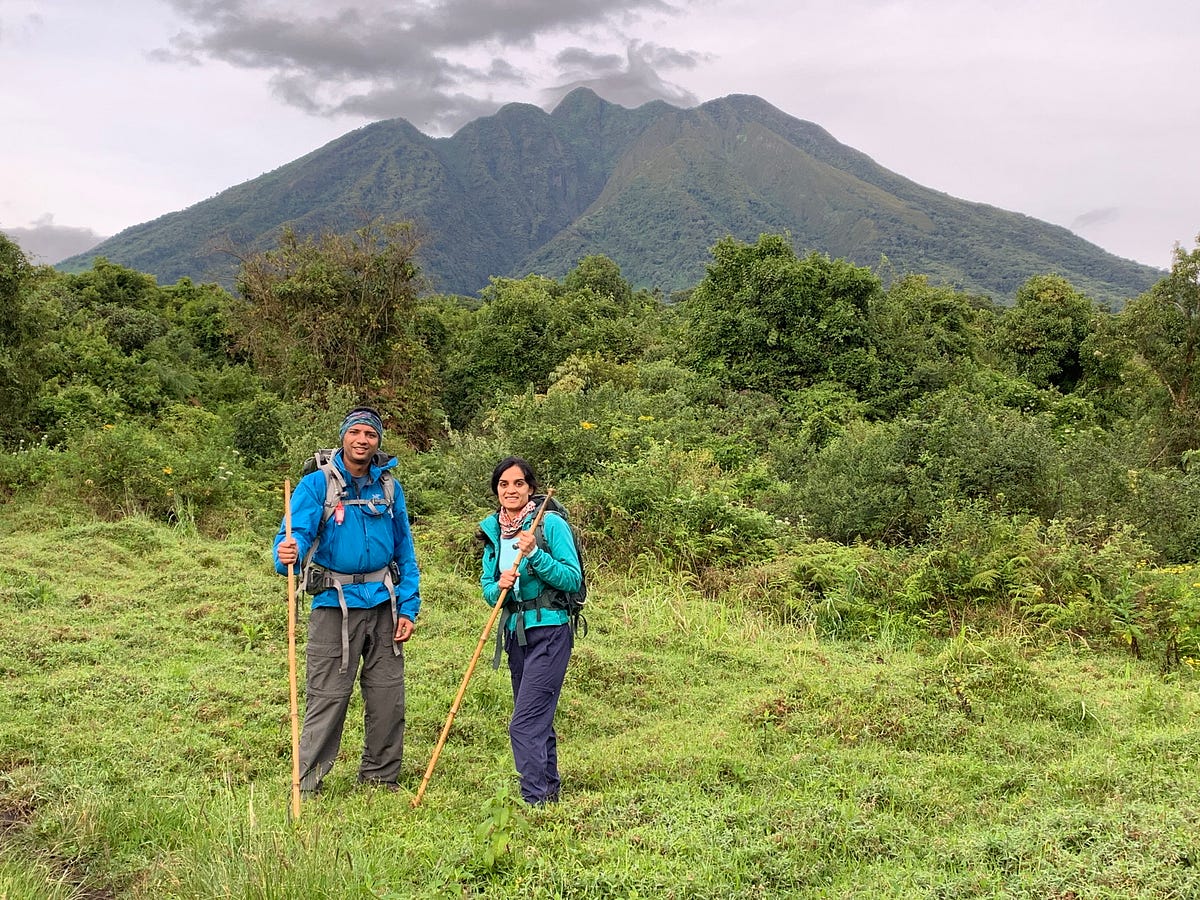
Preparing for the grueling Mountain Sabinyo hike means gearing up for a serious, high-altitude challenge. This demanding 7 to 10-hour round-trip trek pushes your limits as you climb from the Ntebeko trailhead at 2,400 meters up to the dramatic 3,669-meter tri-border summit. Along the way, you will conquer a steep 1,269-meter vertical gain, navigate thick mud, and scale near-vertical wooden ladders with exposed drop-offs. Because the weather in Mgahinga Gorilla National Park changes in an instant—dropping from a comfortable 22°C (71°F) at the base to a biting 5°C (41°F) at the peak—your gear choice is absolutely critical. Having the right equipment keeps you safe, warm, and focused on the stunning views where Uganda, Rwanda, and the DRC meet.
3-day-hike-mount-sabinyo-and-explore-lake-bunyonyi
3-days-muhabura-volcani-hike-adventure
4-days-best-gorilla-trekking-and-mountain-sabinyo-hike
1. Clothing & Footwear
Sturdy Hiking Boots
The rugged terrain requires high-cut boots with deep 4mm to 6mm lugs to grip slick volcanic mud. You will be walking 14 kilometers over uneven roots and sharp volcanic rock, making ankle support and a waterproof Gore-Tex membrane mandatory. Ensure your boots are well broken-in at least 4 weeks prior to prevent painful blisters on the steep, unforgiving descents. The relentless angle of the trail puts immense pressure on your toes, meaning proper fit with a thumb-width of wiggle room is vital. Without proper traction, navigating the slick volcanic clay becomes a safety hazard. Protecting your feet ensures you maintain your balance and momentum throughout the grueling day, allowing you to focus entirely on the physical ascent rather than foot pain or twisted ankles on the trail.
Moisture-Wicking Base Layer
You will sweat heavily during the initial 2-hour climb through the bamboo zone. Wear synthetic polyester or merino wool shirts and trousers that dry 3 times faster than traditional cotton. Avoiding cotton is vital; once wet from sweat or mist, it traps moisture against your skin, which quickly causes your body temperature to plummet when you hit the windy ridges. High-performance fabrics actively pull sweat away from your skin, maintaining a stable microclimate around your core. This regulation is critical when transitioning from the humid lower forests to the exposed, breezy ridges higher up. A reliable synthetic or wool base layer remains comfortable for the entire 7 to 10 hours of intense movement, protecting you from chafing while keeping you fresh and insulated.
Warm Mid-Layer
As you pass the 3,000-meter mark, the air temperature drops by roughly 6.5°C for every 1,000 meters of elevation gain. Pack a lightweight 200g/m² fleece or a packable down jacket in your daypack. This layer is essential for retaining your core body heat when you pause for breaks or stand still on the exposed, windy summits. Wind chill factors can make the air feel close to freezing, turning a rest stop into a shivering emergency without proper insulation. A high-quality mid-layer traps warm air generated by your body while remaining highly breathable under your shell. It takes up minimal space in your pack but provides immediate, life-saving warmth the moment you reach the colder alpine zones near the top.
Waterproof Rain Gear
Mgahinga's microclimate means it receives over 1,500 mm of annual rainfall, and downpours happen without warning. Pack a breathable, seam-sealed waterproof jacket and rain trousers with a minimum 10,000mm hydrostatic head rating. This gear keeps you dry through the dense, dripping Afro-alpine canopy and protects you against fierce summit winds. A sudden downpour at high altitude can lead to hypothermia within 30 minutes if your clothes get soaked. A heavy-duty, windproof and waterproof outer shell acts as an impenetrable shield against both driving rain and freezing mountain gales. Look for jackets with underarm ventilation zippers to help release body heat, preventing internal condensation while you actively climb the steep, vertical sections of the volcano.
Long Trousers & Long-Sleeved Shirts
The lower trails are lined with dense vegetation, including the notorious Urtica massaica (stinging nettles) which cause an intense burning sensation on bare skin lasting for 12 to 24 hours. Heavy-duty, long-sleeved trekking apparel acts as a tough physical barrier against these nettles, sharp branches, and crawling insects like safari ants. The dense bamboo forest features tight pathways where branches brush against you constantly, making short sleeves completely impractical. Canvas or reinforced nylon trousers protect your legs from scratches and stings while offering the durability needed to slide over rocks or wooden rungs. Wearing full-coverage clothing ensures you move confidently through the thickest jungle sections without sustaining painful skin irritations that could ruin your trekking experience.
Hiking Socks Pair your boots with thick, reinforced merino wool hiking socks that feature extra cushioning on the heel and toe boxes. This padding absorbs the repetitive friction caused by the steep 80-degree ladder climbs. Always pack 1 extra dry pair inside a sealed Ziploc bag to switch into if water breaches your boots. Merino wool retains its insulating properties even when damp and naturally resists odors over a long day. The continuous friction of a 14-kilometer mountain trek can easily cause hot spots, but high-density socks cushion your feet against the stiff interior of your hiking boots. Changing into a fresh, bone-dry pair for the long descent down the mountain provides immense relief and prevents skin maceration.
Warm Hat & Tough Gardening Gloves
A beanie is essential at the top where temperatures hover near 5°C. Crucially, pack a pair of durable, rubber-gripped gardening gloves. You will climb dozens of wooden ladders, some rising 30 meters high; these gloves protect your palms from splinters, improve your grip on wet rungs, and shield your hands from cold rock faces. The wind at the summit quickly numbs exposed fingers, making it difficult to maintain a secure hold on the safety structures. Heavy-duty gloves with a textured polyurethane coating offer the perfect balance of friction and protection on the slick, moss-covered timber. Keeping your extremities warm and protected ensures you can safely navigate the near-vertical drops without losing your grip or suffering from painfully cold hands.
2. Gear & Equipment
Waterproof Daypack
You need a lightweight 25 to 30-liter backpack with ergonomic hip straps to distribute weight evenly away from your shoulders. The pack must house your food, water, and extra clothing layers. Ensure it comes equipped with a high-visibility, waterproof rain cover to prevent your spare gear from getting soaked during sudden afternoon storms. A well-fitted daypack centers the load over your pelvis, which keeps you balanced while climbing the vertical ladders. Look for a pack with external mesh pockets for quick access to your water bottles, and compression straps to keep your gear from shifting tightly while you climb. Keeping your equipment dry and secure ensures you have everything you need accessible without compromising your balance on narrow ridges.
Trekking Poles
A pair of adjustable trekking poles reduces the impact and stress on your knee joints by up to 25%, which is a lifesaver on the steep return journey. They provide vital stability when balancing on slippery logs or navigating deep mud pools. If you don't bring your own, UWA rangers often provide wooden walking sticks at Ntebeko. Using poles engages your upper body, distributing the workload across your arms and core to conserve leg strength during the 1,269-meter vertical climb. On the steep, muddy descent, they act as an essential braking system, preventing dangerous slips on the loose volcanic soil. Utilizing two extra points of contact significantly increases your safety margin on the mountain's exposed ridges.
Reliable Headlamp
While the goal is to finish the 14km loop in broad daylight, unforeseen delays like mud or fatigue can push your return past dusk. A lightweight, waterproof LED headlamp with at least 200 lumens of brightness ensures you can safely navigate the final rocky forest stretches if your trek extends past the 6:30 PM equatorial sunset. Handheld flashlights are impractical because you need both hands completely free to balance on the steep trails and hold onto the vegetation. A headlamp secure on your brow casts a steady beam directly into your line of sight, illuminating hidden tree roots and slippery rocks. Carrying this small tool provides peace of mind and essential safety insurance against an unexpected night rescue.
Binoculars & Camera
At the 3,669-meter tri-point summit, a clear day offers a 360-degree view across three nations. A pair of 8x42 binoculars helps you spot rare Albertine Rift endemic birds, like the colorful Rwenzori Turaco. Keep your smartphone or camera protected in a padded, dust-proof, and waterproof dry bag inside your backpack when navigating the ladders. Capturing the moment you stand simultaneously in Uganda, Rwanda, and the DRC is a lifetime milestone, but the high-altitude moisture can easily damage unprotected electronics. Having high-quality optics allows you to scan the distant Virunga crater lakes and expansive forest canopies below, turning a strenuous physical achievement into an incredible sightseeing experience from the roof of the park.
3. Health, Safety & Provisions
2 Liters of Bottled Water
High-altitude trekking accelerates dehydration because you breathe faster in the thinner air. You must carry a minimum of 2 liters of clean drinking water, ideally split between a hands-free hydration bladder and a sturdy bottle. Sip small amounts consistently every 20 minutes to ward off altitude headaches and muscle cramps. The demanding physical exertion causes significant fluid loss through sweat, even in the cool alpine zones. Waiting until you feel thirsty means you are already dehydrated, which severely saps your muscle power and endurance. Carrying sufficient water ensures your body can properly acclimatize to the 3,669-meter summit, keeping your energy levels steady and your mind focused on the technical steps ahead.
High-Calorie Lunch & Snacks
Burning up to 3,500 calories on this intense climb means your body needs fuel. Request a packed lunch box from your lodge—usually containing chicken, boiled eggs, and fruit—and supplement it with 300 grams of high-energy trail mix, dates, or glucose biscuits. Eat these at the designated resting points to maintain your stamina. The grueling 7 to 10-hour trek requires continuous glycogen replenishment to prevent your muscles from hitting a wall. High-carbohydrate snacks provide quick-releasing energy during the steep ladder sections, while the protein in your lunch box aids muscle recovery during the descent. Proper trail nutrition keeps your stamina high, preventing fatigue-induced stumbles on the rugged path back down.
Sun Protection
At 3,669 meters, the atmosphere is thinner, which increases your exposure to damaging ultraviolet rays by roughly 10% to 12% for every 1,000 meters of elevation. Protect your skin and eyes by applying SPF 50+ broad-spectrum sunscreen, wearing polarized UV-blocking sunglasses, and sporting a wide-brimmed sun hat above the tree line. The cool mountain breeze can easily mask the intense solar radiation, leading to severe sunburns before you even realize it. Polarized sunglasses reduce the harsh glare off the rocky peaks, preventing eye strain and ensuring clear visibility. Applying a thick layer of lip balm with UV protection prevents painful chapping caused by the combination of intense high-altitude sun and dry, freezing summit winds.
Insect Repellent
The humid, lower bamboo zones are home to various biting insects. Apply a high-quality repellent containing at least 30% DEET or Picaridin to your exposed skin and clothing before setting off. This keeps mosquitoes and biting flies away, letting you focus fully on the physical challenges of the trail ahead. The thick canopy retains moisture, creating a prime habitat for forest insects that can distract you during the initial stages of the climb. Reapplying the spray after heavy sweating ensures continuous protection throughout the day. Keeping bugs at bay prevents uncomfortable, itchy bites, allowing you to enjoy the pristine wilderness surroundings of Mgahinga Gorilla National Park in complete peace.
Basic First-Aid Kit
Pack a compact, waterproof medical pouch containing essential items for trail injuries. Include 4 or 5 adhesive bandages, antiseptic wipes, a roll of zinc oxide blister tape, and a few sterile gauze pads. Add basic painkillers like ibuprofen to manage muscle soreness, along with your personal daily medications. On a remote volcanic trail, small cuts from sharp rocks or branches must be cleaned immediately to prevent infection. Blister tape is a lifesaver the moment you feel a hot spot forming inside your boots, stopping a minor irritation from turning into a debilitating injury. A lightweight, well-stocked medical kit ensures you can handle minor emergencies independently while high up on the mountain.
Personal Toiletries & Trash Bags
There are zero public waste bins or restrooms along this wilderness trail. Carry a small pack of wet wipes, travel tissues, and a small bottle of hand sanitizer. Most importantly, bring 1 or 2 sealable plastic bags to pack out all of your wrappers and waste, keeping the national park pristine. Mgahinga Gorilla National Park enforces a strict "Leave No Trace" policy to protect its endangered wildlife and delicate afro-alpine habitats. Synthetic wet wipes take years to decompose, making it vital to secure them in your personal trash bag. Being fully self-sufficient with your hygiene items guarantees comfort on the long trail while preserving the untamed beauty of the volcano for future adventurers.
What makes the Mountain Sabinyo hike a legendary adventure?
The Mountain Sabinyo hike is widely considered one of East Africa’s most thrilling and unforgettable outdoor challenges. What makes it truly legendary is the unique geographical reward waiting for you at the very top. When you finally conquer the highest peak, you are standing on a shared tri-border summit where the frontiers of Uganda, Rwanda, and the Democratic Republic of Congo converge. Beyond this incredible political anomaly, the physical journey itself is a masterpiece of wild terrain. You aren't just walking along a standard dirt path; you are climbing through an pristine volcanic landscape that feels entirely disconnected from the modern world. The trail takes you through mysterious bamboo forests, prehistoric-looking alpine moorlands, and along narrow, misty ridges that drop off dramatically into deep valleys on either side. It is a trek that tests your balance, pushes your stamina, and rewards you with a massive sense of personal achievement. Standing on that rustic wooden platform at the summit, looking out over the endless chain of the Virunga Volcanoes, is a rare bucket-list moment that stays with you long after the mud has washed off your boots.
Is climbing Mountain Sabinyo considered safe for everyday hikers?
Yes, the Mountain Sabinyo hike is entirely safe, provided you respect the mountain and follow the guidance of your park rangers. The Uganda Wildlife Authority manages the trail meticulously, ensuring that every single group is accompanied by two professional, armed rangers who know every twist, turn, and loose rock on the path. The most famous features of the climb—the near-vertical wooden ladders—are regularly inspected and reinforced to handle daily foot traffic and heavy rains. While these ladders can look incredibly intimidating to an everyday walker, they are structurally secure and designed with heavy timber to offer solid handholds. The primary safety factor comes down to your personal focus and pacing. The trail can become exceptionally slick during sudden downpours, turning the volcanic soil into a muddy slide, which is why your guides will emphasize slow, deliberate footsteps. As long as you maintain three points of contact on the ladders, wear proper high-traction footwear, listen to your rangers, and stay mindful of your footing along the exposed ridges, it is a perfectly secure wilderness environment for any healthy, determined adventurer.
How difficult are the famous ladders on the trail?
The wooden ladders on the Mountain Sabinyo hike are undoubtedly the most physically demanding and mentally intense part of the entire adventure. As you push past the lower hills and approach Peaks two and three, the terrain turns into a series of near-vertical rock faces. To make these sections passable, wildlife authorities constructed massive timber ladders that cling directly to the mountainside. Some of these structures rise over thirty meters high at an intense, eighty-degree angle. Climbing them feels less like a traditional hike and more like a sustained gym workout. Your upper body, core, and legs are fully engaged as you pull yourself up rung by rung. If you have a severe fear of heights, looking down through the gaps in the wood to the sweeping valleys below will definitely make your heart race. However, you don't need technical rock-climbing experience to handle them. The key is to take your time, wear a sturdy pair of rubber-gripped gloves to protect your palms from splinters, and focus entirely on the rung directly in front of you rather than the drop below.
What kind of wildlife can I spot during the trek?
While the Mountain Sabinyo hike is mostly celebrated for its dramatic peaks and rugged terrain, the trail cuts directly through a highly biodiverse sanctuary. As you begin your journey in the lower bamboo zone, which sits between 2,400 and 2,800 meters, you are walking through the exclusive territory of the endangered golden monkey. These playful, orange-furred primates are unique to the Virunga volcanic chain, and you can often hear them crashing through the bamboo stalks above you. The forest is also home to elusive mountain gorillas, forest elephants, and buffaloes. While these larger mammals generally prefer to avoid human footsteps and stay deep in the bush, your armed rangers are always leading the way to ensure your path is entirely clear and safe. For bird lovers, the trek is an absolute dream. The canopy is alive with over one hundred and fifteen recorded bird species, including the spectacular, brightly colored Rwenzori Turaco and various iridescent sunbirds. Paying close attention to the sights and sounds of the forest turns the strenuous physical climb into a beautiful, immersive wildlife safari.
Can I complete the Mountain Sabinyo hike in winter?
Because Mgahinga Gorilla National Park sits right along the equator, the region doesn't experience classic winter or summer seasons. Instead, weather patterns for the Mountain Sabinyo hike are defined by distinct dry and wet seasons. You can comfortably tackle this mountain at any time of the year, but your overall trail experience will change dramatically depending on the month you choose. The best times to visit are during the dry windows, which run from June to August and December to February. During these months, the trails are significantly firmer, the wooden ladders are dry and easier to grip, and the skies are generally clear, offering those spectacular, unobstructed views across three countries. If you choose to climb during the wet seasons—from March to May or October to November—the mountain becomes a completely different beast. Heavy rainfall turns the paths into thick, slippery mud chutes, and dense mist frequently rolls in, hiding the summit views. However, if you enjoy a raw, misty, and extra-challenging wilderness experience, climbing in the rainy months offers an unforgettable atmosphere of pure, untamed adventure.
What should I pack for the unpredictable mountain weather?
The microclimate surrounding the Mountain Sabinyo hike is famously unpredictable, meaning your packing list needs to prepare you for multiple seasons in a single day. You will start hiking in the warm, humid air of the lower forest, but by the time you reach the 3,669-meter summit, temperatures can easily plummet to a biting five degrees Celsius, amplified by fierce winds. To stay comfortable, you must dress in smart, functional layers. Start with a synthetic, moisture-wicking base shirt that draws sweat away from your skin as you work hard on the lower slopes. Pack a thick fleece or a packable down jacket to trap your body heat during rest stops, and always carry a heavy-duty, waterproof rain jacket to shield yourself from sudden downpours. Sturdy, broken-in hiking boots with deep rubber treads are non-negotiable for keeping your balance on the muddy trails. Finally, don't forget a pair of durable gardening gloves to protect your hands on the wet wooden ladders, and bring plenty of high-calorie snacks and water to keep your energy levels steady.
How long is the entire round trip to the summit?
The Mountain Sabinyo hike is a demanding, full-day commitment that usually takes between six and nine hours to complete from start to finish. The entire round-trip loop covers a distance of roughly fourteen kilometers, beginning and ending at the Ntebeko visitor center. While fourteen kilometers might sound manageable on a flat road, the mountain terrain makes it feel twice as long. You will spend the first few hours conquering a steady, muscle-burning elevation gain through the thick forest to reach Peak One. From there, the trail becomes a technical rollercoaster as you navigate the narrow ridges and steep ladders connecting to Peak Two, before making the final push up to the true summit at Peak Three. Because the descent requires just as much concentration and knee stability on the slick slopes, the return journey takes a significant amount of time. Park rangers enforce a strict turnaround policy around mid-day to guarantee that every hiking group safely exits the forest well before the equatorial sun sets.
Do I need to book my trekking permit in advance?
Unlike mountain gorilla tracking permits, which are strictly capped at a few visitors per day and must be booked months ahead, securing a permit for the Mountain Sabinyo hike is a much more relaxed process. You can easily purchase your trekking permit directly at the Ntebeko park headquarters on the morning of your climb. The park permits cost eighty-five dollars for foreign residents, and this fee conveniently includes your park entrance entry and the invaluable services of your UWA ranger guides. The daily operational briefing starts promptly at 7:30 AM, where the rangers will check your gear, explain the current trail conditions, and organize the day's hiking groups. While you don't need to stress about competitive permit availability, it is highly recommended to coordinate your trip details through a trusted local operator like Roads of Adventure Safaris. Having a professional team handle your transport, pack your lunch box, and align your schedule ensures that you arrive at the park gates relaxed, prepared, and ready to hit the trail by 8:00 AM sharp.
Where are the best places to stay before the trek?
Because camping is strictly prohibited on the fragile slopes of the mountain, choosing the right base camp before and after your Mountain Sabinyo hike is essential for a great trip. Fortunately, the foothills surrounding Mgahinga Gorilla National Park offer excellent accommodations for every travel budget. If you are looking for pure luxury and convenience, Mount Gahinga Lodge sits right at the park boundary, offering beautiful stone bandas, warm fireplaces, and complimentary massages to soothe your muscles after the climb. For a comfortable, mid-range option filled with rich history, Traveler’s Rest Hotel in nearby Kisoro town offers a charming courtyard and a cozy lounge where legendary researchers used to gather. Budget-conscious and culturally curious travelers will love Amajambere Iwacu Community Camp, which is located just steps from the main park entrance gate. Staying at this community-run camp gives you the ultimate logistical advantage for an early morning start while ensuring your tourism dollars go directly toward supporting local development projects.
How physically fit do I need to be for Sabinyo?
To truly enjoy the Mountain Sabinyo hike, you need a solid level of physical fitness and a good dose of mental determination. This trail is widely considered one of the toughest single-day climbs in the region, demanding far more endurance than standard nature walks. You will be conquering an intense vertical elevation gain of over twelve hundred meters, all while operating in thinner, high-altitude air that makes your lungs work significantly harder. The continuous climbing and descending over three distinct volcanic peaks will thoroughly test your leg strength, core stability, and cardiovascular health. If you suffer from severe knee problems or intense vertigo, the steep steps and exposed vertical ladders will pose a significant physical and emotional challenge. To prepare your body for this adventure, it is smart to focus on leg-strengthening exercises like squats, lunges, and stair workouts for a few weeks before your trip. Investing in a local porter at the trailhead is also a fantastic way to lighten your pack weight while supporting the community.
Booking Mountain Sabinyo hike with us Roads of Adventure safaris
Ready to stand at the breathtaking 3,669-meter tri-border intersection where Uganda, Rwanda, and the DRC meet? Booking your adventurous Mountain Sabinyo hike with Roads of Adventure Safaris makes the entire process completely stress-free.
Our local team handles everything from our base in Kampala. We will secure your necessary Uganda Wildlife Authority permits—priced at $85 for foreign non-residents, $70 for foreign residents, and UGX 50,000 for East African citizens. We also coordinate your transport to the Ntebeko visitor center. Whether you prefer a scenic 8 to 10-hour drive from Entebbe or a quick, comfortable domestic flight directly into the Kisoro airstrip, we ensure you arrive relaxed, prepared, and ready to tackle those famous wooden ladders!
