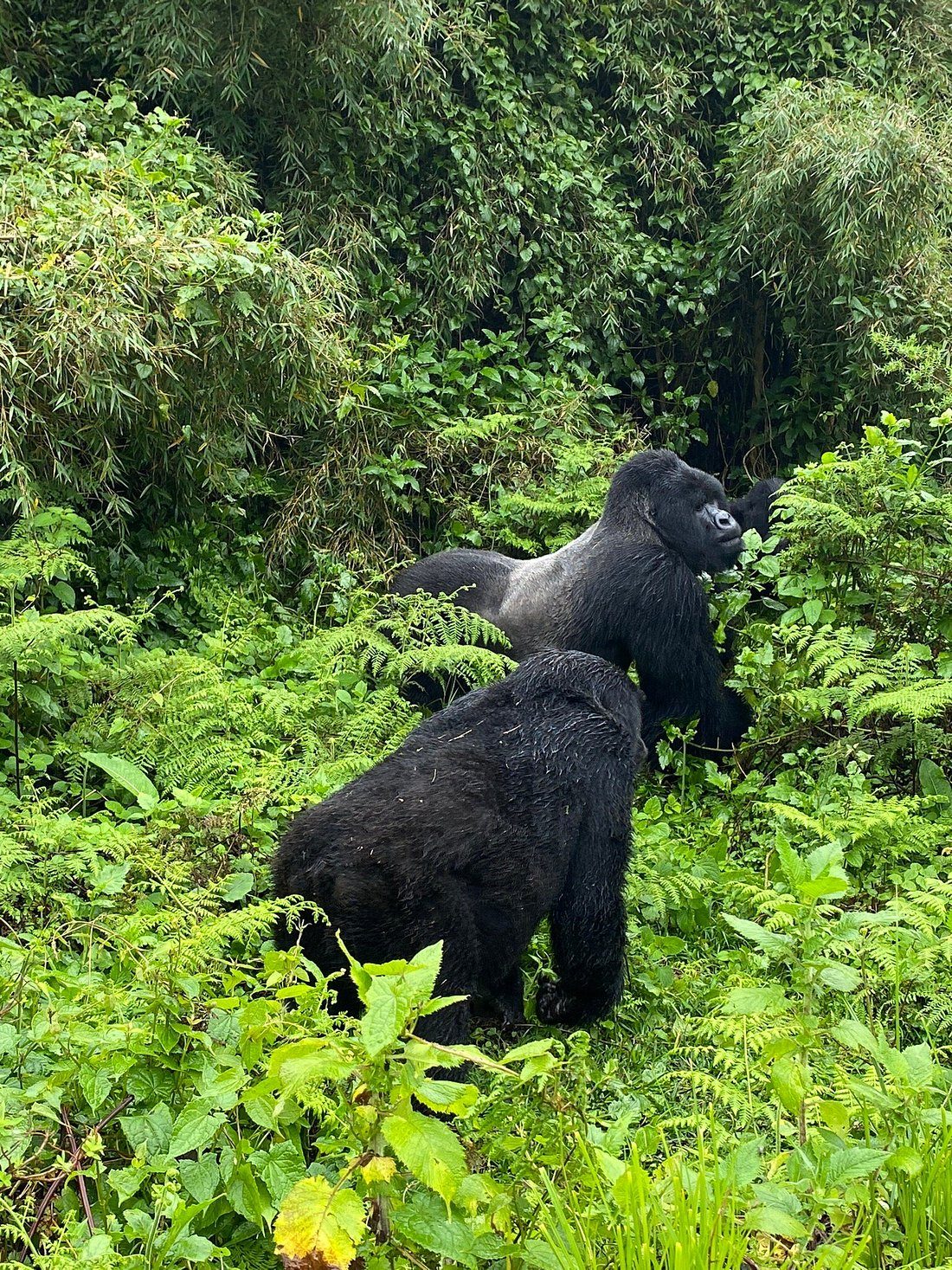
A 7-day Rwanda safari typically offers a packed, premium experience focusing on primate trekking and wildlife, covering Volcanoes National Park (gorillas/golden monkeys), Nyungwe Forest (chimpanzees/canopy walk), and Akagera National Park (savannah game drives). Expect early mornings, steep hiking, high-end scenic views, and immersion into Rwanda's conservation success
7-days-best-rwanda-honeymoon-safari-gorilla-trekking-and-lake-kivu-relaxation
7-days-rwanda-birding-safari-chimps-and-gorilla-trekking
7-day-perfect-rwanda-gorilla-tour-and-wildlife-safari-itinerary
7-days-best-gorilla-trekking-and-other-highlights-of-rwanda-tour
7-days-rwanda-safari-tour-gorilla-trekking-and-bisokey-hike-tour-package
hhy7-days-6-nights-midrange-rwanda-gorilla-trekking-holiday
Volcanoes National Park: Primates and Peaks
Volcanoes National Park is the crown jewel of Rwanda’s tourism, situated in the dramatic Virunga Massif. The primary draw is the mountain gorilla trekking, an activity that is as physically demanding as it is emotionally rewarding. Treks can last anywhere from 2 to 8 hours depending on the movement of the habituated gorilla families, taking you through bamboo forests and thick afro-montane vegetation. Once located, you are granted exactly one hour of observation. Standing mere meters from a 400-pound Silverback or watching infants tumble through the vines is a primal, soul-stirring experience that defies description.
Beyond the gorillas, the park is the only place in Rwanda to track the Golden Monkeys. These vibrant, playful primates live in the bamboo zones at the base of the volcanoes. Unlike the quiet, contemplative nature of a gorilla encounter, golden monkey tracking is fast-paced and energetic as the monkeys leap through the canopy. For those seeking further physical challenge, the park offers hikes to the Dian Fossey tomb site or summits of volcanoes like Mount Bisoke, which features a stunning crater lake at the top. The mist-covered peaks provide a prehistoric backdrop that makes every moment in this park feel like a step back in time.
Nyungwe Forest National Park: The Ancient Canopy
Located in the southwest, Nyungwe Forest is one of the oldest rainforests in Africa, acting as a vital catchment area for the Nile and Congo rivers. The highlight here is Chimpanzee trekking. Unlike the mountain gorillas, chimpanzees are highly mobile and vocal; you will often hear their echoing "pant-hoots" long before you see them. Following them through the dense, hilly terrain requires stamina, but witnessing their complex social interactions and tool-use is a masterclass in evolutionary biology. Nyungwe is also home to 12 other primate species, including massive troops of Rwenzori Colobus monkeys that can number in the hundreds.
The park’s most iconic structural highlight is the Canopy Walkway. Suspended 50 meters (roughly 160 feet) above the forest floor, this 160-meter-long bridge offers a literal bird’s-eye view of the ancient treetops. Walking across the swaying bridge provides an adrenaline rush paired with unmatched views of the rolling green ridges and distant valleys. It is a premier spot for birdwatchers to see species that rarely descend to the forest floor. Between the deep forest floor treks and the aerial perspectives of the canopy, Nyungwe offers a multi-dimensional immersion into a tropical ecosystem that has remained largely unchanged since the last Ice Age.
Akagera National Park: The Big Five Savannah
Akagera National Park represents one of Africa's great conservation success stories. After decades of depletion, the reintroduction of lions in 2015 and black rhinos in 2017 officially restored its "Big Five" status. A game drive here offers a classic savannah experience, but with a unique Rwandan twist of rolling hills and swampy lakes. You can expect to see large herds of elephants, buffaloes, and various plains game like zebras, giraffes, and the handsome Topi. Leopards are present but elusive, often spotted in the thicker acacia woodlands in the north of the park.
A distinct feature of Akagera is its aquatic landscape. A boat safari on Lake Ihema is a mandatory highlight, offering a relaxed alternative to the dusty game tracks. From the safety of the boat, you will see massive pods of hippos and some of the largest Nile crocodiles in East Africa basking on the banks. The birdlife is staggering, with the rare, prehistoric-looking Shoebill stork occasionally appearing in the papyrus swamps. Akagera’s mixture of open plains, woodlands, and lakes ensures that every hour of your safari brings a new habitat and a different cast of wildlife, rounding out the Rwandan experience with a traditional "Big Game" adventure.
Cultural & Scenic Experiences: Tradition and Tranquility
Rwanda’s beauty extends beyond its animals into its rich cultural heritage and serene landscapes. A visit to the Ibyi'wacu Cultural Village (also known as the Gorilla Guardians Village) near Volcanoes National Park is a transformative experience. This community-led project was founded by former poachers who now protect the gorillas. Visitors can participate in traditional Intore dancing, learn how to grind medicinal herbs, or even witness a mock "King’s Coronation." It provides a vital human context to the conservation efforts in the region, proving that the survival of the gorillas is inextricably linked to the prosperity of the local people.
For those seeking a "safari break," Lake Kivu offers the perfect romantic or relaxing stopover. One of Africa’s Great Lakes, its emerald waters are dotted with islands and surrounded by steep, terraced hills. You can enjoy a sundowner boat cruise, go kayaking, or simply relax on the sandy beaches of Rubavu or Karongi. The lakeside towns provide a slower pace of life, where the main activity is watching the "singing fishermen" paddle out into the mist at dusk. This combination of vibrant cultural exchange and tranquil lakeside scenery ensures that your Rwandan journey is as intellectually and spiritually fulfilling as it is adventurous.
Logistics & Comfort: Navigating the Hills
Travel in Rwanda is defined by its spectacular geography. The "scenic, hilly drives" mentioned in most itineraries are no exaggeration; you will spend much of your transit winding through the "Land of a Thousand Hills," where every turn reveals a new vista of terraced agriculture and mist-filled valleys. Because the country is compact, drive times between major parks are usually between 3 to 5 hours on well-paved, winding roads. While the drives are beautiful, they can be dizzying for some, so motion sickness precautions are occasionally recommended.
Accommodation in Rwanda has reached world-class standards, particularly in the luxury sector. You will find lodges like Bisate or One&Only Nyungwe House that offer ultra-luxury eco-designs with private decks and high-end spas. However, the mid-range sector is equally impressive, featuring boutique hotels and eco-lodges that prioritize comfort and local charm. Most lodges are situated to maximize views of the volcanoes or the forest canopy. Logistics are generally very smooth; Rwanda is known for its cleanliness, safety, and efficiency, making it one of the most "user-friendly" safari destinations in Africa for travelers who value both wild adventure and a high standard of comfort.
Kigali City Tour: History and Reflection
No visit to Rwanda is complete without spending time in its capital, Kigali. Widely regarded as the cleanest and safest city in Africa, Kigali is a vibrant metropolis built across several ridges. Most tours culminate in a visit to the Kigali Genocide Memorial Center. This is a profound and somber experience, serving as a permanent memorial to those who fell during the 1994 Genocide against the Tutsi. The museum provides a detailed historical account of the events leading up to the tragedy, the 100 days of darkness, and the remarkable journey of reconciliation and growth the country has undergone since.
Beyond the memorial, a city tour reveals a modern, forward-thinking nation. You can visit the Kimironko Market to see the bustling trade of colorful fabrics and fresh produce, or explore the Kigali Cultural Village to see contemporary Rwandan art and fashion. The city’s culinary scene is also thriving, offering everything from traditional Rwandan "brochettes" to fine dining. Ending your trip in Kigali provides the necessary perspective to understand the modern Rwandan spirit—a resilient, unified people who have turned a painful history into a future of hope, innovation, and world-class conservation.
7 Days Rwanda safari tour
This 7-day Rwanda safari is a masterfully curated journey through the "Land of a Thousand Hills," offering a profound exploration of Africa’s most diverse ecosystems. From the golden, sun-drenched savannahs of Akagera National Park to the mist-shrouded volcanic peaks where mountain gorillas roam, this itinerary captures the essence of Rwanda’s natural and cultural revival. You will experience the "Big Five" in the east, the ancient primate-filled canopy of Nyungwe Forest in the southwest, and the life-changing majesty of the Virunga Mountains. Between these wilderness encounters, the tour offers moments of serenity on the shores of Lake Kivu and reflection in the vibrant, clean streets of Kigali. Designed for those seeking both adventure and depth, these seven days provide an intimate look at a nation that has transformed its landscape into a global sanctuary for conservation, luxury, and peace.
- Day 1: Arrival in Kigali, transfer to Akagera National Park.
- Day 2: Game drive & Lake Ihema boat ride.
- Day 3: Transfer to Nyungwe Forest.
- Day 4: Chimpanzee tracking.
- Day 5: Canopy walk & transfer to Lake Kivu/Volcanoes.
- Day 6: Gorilla trekking.
- Day 7: Golden monkey trekking or Kigali city tour and departure.
Day 1: Arrival and Transfer to Akagera
Your Rwandan odyssey begins at Kigali International Airport, where the warm breeze and rolling hills greet you. After a brief orientation, you depart the capital for the eastern plains of Akagera National Park. The 2.5-hour drive winds through vibrant local markets and sprawling farmlands, offering your first glimpse into the daily life of the Rwandan countryside. As you enter the park, the landscape shifts from terraced hills to expansive savannah and wetland. You will enjoy a "mini" game drive en route to your lodge, where you might spot zebras, giraffes, or impalas grazing in the late afternoon light. The evening is spent in the comfort of a safari lodge, falling asleep to the distant grunts of hippos and the unique symphony of the African bush, marking a peaceful start to your week of discovery.
Day 2: Game Drive and Lake Ihema Boat Ride
The morning begins with a sunrise game drive across the northern plains, the best time to spot Akagera’s apex predators. With the help of your expert guide, you will track lions, leopards, and the recently reintroduced black rhinos. The park’s diverse terrain also hosts massive herds of elephants and Cape buffaloes. In the afternoon, the safari shifts from land to water with a boat cruise on Lake Ihema, Rwanda's second-largest lake. From the safety of the boat, you will glide past enormous Nile crocodiles basking on the banks and pods of hippos surfacing in the shallows. The lake is also a birder’s paradise, home to the rare Shoebill stork and vibrant kingfishers. This day offers a comprehensive "Big Five" experience, showcasing the incredible success of Rwanda’s wildlife restoration efforts in this scenic wetland-savannah mosaic.
Day 3: Transfer to Nyungwe Forest
Today involves a scenic cross-country journey as you transition from the savannah of the east to the ancient rainforests of the southwest. The drive is long—roughly 6 to 7 hours—but serves as a beautiful visual narrative of Rwanda’s geography. You will pass through the central highlands, stopping at the King’s Palace Museum in Nyanza to learn about Rwanda's royal history and see the majestic long-horned Inyambo cattle. Another stop in Huye (formerly Butare) allows for a visit to the Ethnographic Museum, housing one of Africa’s finest archaeological collections. As you climb toward Nyungwe Forest National Park, the air becomes cool and mist-heavy, and the vegetation turns into a dense, prehistoric canopy. You will arrive at your forest lodge in the late afternoon, perfectly positioned at the edge of one of the world's oldest montane rainforests.
Day 4: Chimpanzee Tracking in Nyungwe
Day four is dedicated to the high-energy world of our closest relatives. After an early morning briefing at the park headquarters, you will head into the deep forest to track a habituated troop of chimpanzees. Following their echoing "pant-hoots" through the undergrowth is an exhilarating challenge that requires stamina and a keen ear. Once located, you will spend an hour witnessing their complex social rituals, grooming sessions, and playful acrobatics in the treetops. Nyungwe is also home to 12 other primate species, and you are likely to spot L'Hoest's monkeys or the massive troops of Rwenzori Colobus monkeys during your trek. The experience is a raw, visceral immersion into a thriving ecosystem, providing a fascinating contrast to the open savannah of Akagera and a deep appreciation for the biodiversity that Rwanda works so tirelessly to protect.
Day 5: Canopy Walk and Lake Kivu
The morning begins with an adrenaline-filled walk across the Nyungwe Canopy Walkway. Suspended 50 meters above the forest floor, this 160-meter-long bridge offers a breathtaking aerial perspective of the ancient treetops and the rolling green ridges of the Rift Valley. After this bird's-eye view of the rainforest, you depart for the shores of Lake Kivu. The drive along the Congo-Nile Trail offers stunning vistas of one of Africa’s Great Lakes, with its emerald waters dotted with islands and surrounded by steep, terraced hills. You will arrive at a lakeside town like Rubavu or Karongi, where the afternoon is spent in tranquility. You can enjoy a sundowner boat cruise, watch the "singing fishermen" prepare their wooden boats for the night, or simply relax on the sandy beach, soaking in the serene beauty of Rwanda's coastal highlands.
Day 6: Gorilla Trekking in Volcanoes
This is the soul-stirring pinnacle of your safari. After a briefing in Volcanoes National Park, you will enter the mist-shrouded Virunga Mountains in search of a mountain gorilla family. The trek can be physically demanding, involving steep slopes and thick bamboo, but the moment you find them, the world goes silent. You are granted one sacred hour to observe these gentle giants from just a few meters away. Watching a 400-pound Silverback calmly oversee his troop while infants tumble through the vines is a profound, life-changing experience. You will see the human-like expressions in their eyes and hear their deep, guttural vocalizations, creating an intimate connection that defies description. Following the trek, you may visit the Ibyi'wacu Cultural Village to witness traditional Intore dancing and learn about the community’s transition from poaching to dedicated gorilla conservation.
Day 7: Golden Monkeys and Departure
On your final day, you return to the bamboo forests at the base of the volcanoes for a fast-paced encounter with the endangered Golden Monkeys. These vibrant, playful primates are endemic to the Virunga Massif and are a joy to photograph as they leap through the canopy. Alternatively, if you prefer a cultural conclusion, you can transfer back to Kigali for a comprehensive city tour. This includes a visit to the Kigali Genocide Memorial, a powerful and essential experience for understanding Rwanda’s journey of resilience and reconciliation. You can also explore the Kimironko Market for last-minute souvenirs like hand-woven Agaseke baskets or local coffee. After a final lunch overlooking the "city of a thousand hills," you will be transferred to the airport for your departure, carrying with you the wild spirit and inspiring heart of Rwanda.
1. What are the main highlights?
A standard 7-day Rwanda safari is a "best of" circuit. The crown jewel is Volcanoes National Park for mountain gorilla trekking and golden monkey tracking. In the southwest, Nyungwe Forest National Park offers chimpanzee tracking and the famous 50-meter-high canopy walk. For those seeking a classic savannah experience, Akagera National Park provides the "Big Five" (lions, rhinos, leopards, elephants, and buffaloes). Cultural immersion is often found at the Iby’Iwacu Cultural Village, while Lake Kivu offers a serene "resort" break between the intense forest treks.
2. How safe is Rwanda?
Rwanda is consistently ranked as one of the safest and cleanest countries in the world, not just in Africa. The political climate is stable, and the "Umuganda" (community cleaning) tradition keeps the streets of Kigali and local towns immaculate. You will find the tourism infrastructure highly professional, with well-maintained roads and a strong security presence in and around national parks, allowing travelers to feel at ease whether they are in the heart of the city or deep in the rainforest.
3. What should I pack for hiking?
Preparation is key for the rainforest. You must bring long-sleeved shirts and trousers to protect against stinging nettles and thorns. Sturdy, waterproof hiking boots with good ankle support are essential for the slippery, steep volcanic slopes. Gardening gloves are a "pro-tip" for grabbing onto vegetation without getting pricked. Finally, a lightweight raincoat or poncho is mandatory; Bwindi and Nyungwe are tropical rainforests where a sudden downpour can happen at any time, even in the dry season.
4. Are the gorillas guaranteed?
While nature is never 100% predictable, gorilla sightings in Rwanda are as close to guaranteed as possible (historically over 99%). This is because expert trackers head into the forest at dawn to locate the families before the tourists even arrive at the park headquarters. These trackers stay with the gorillas all day, radioing their exact coordinates to your ranger-guide. Unless a family moves into an exceptionally inaccessible gorge or the weather becomes extreme, you will almost certainly find them.
5. What is the cost of a gorilla permit?
As of 2026, a gorilla trekking permit in Rwanda remains $1,500 USD per person for international visitors. This is the highest permit cost in the world, a strategic choice by the Rwandan government to promote "high-value, low-impact" tourism. This revenue is vital for conservation, paying for 24/7 ranger protection and community projects (schools, clinics, and water) that incentivize locals to protect the gorillas rather than poach them. Note that this fee is usually separate from your tour package.
6. What kind of transport is used?
Standard transport involves customized 4x4 safari vehicles (usually Land Cruisers) driven by professional guides who serve as your local experts. The vehicles have pop-up roofs for game viewing in Akagera. For those with a higher budget or limited time, Rwanda offers internal helicopter flights via Akagera Aviation, which can whisk you from Kigali to Volcanoes or Nyungwe in 30 minutes, turning a 5-hour winding drive into a spectacular aerial tour of the "Thousand Hills."
7. What is the food like?
The food on safari is a highlight in itself. Most lodges offer a sophisticated blend of international cuisine and traditional Rwandan flavors. You can expect fresh, organic produce, with local staples like brochettes (grilled meat skewers), matooke (steamed green bananas), and freshwater fish from Lake Kivu. Lodges are very accustomed to dietary restrictions; whether you are vegan, gluten-free, or have allergies, the chefs at Rwandan safari lodges are generally exceptional at catering to specific needs.
8. Do I need a vaccination for yellow fever?
In 2026, a Yellow Fever vaccination certificate is mandatory if you are entering Rwanda from a country where yellow fever is endemic (including neighboring Uganda, Kenya, or Ethiopia). If you are flying directly from a non-endemic country (like the US or most of Europe) and have not had a long layover in an endemic zone, it is technically not required, but carrying your "Yellow Card" is highly recommended to avoid any administrative delays at the border or airport.
9. Are there age restrictions for trekking?
Yes, there is a strict minimum age of 15 years for both gorilla and chimpanzee trekking. This is enforced for safety and conservation reasons: children are more likely to carry common "childhood" diseases (like mumps or chickenpox) to which primates have no immunity, and the physical and emotional maturity required to stay calm and follow ranger instructions near a 400-pound Silverback is generally found in older teenagers and adults.
10. How far do I have to walk to see gorillas?
The distance varies daily. Some gorilla families live near the park boundary, resulting in a 30-to-60-minute walk, while others might move deep into the higher elevations, requiring a 4-to-6-hour trek. When you arrive for your briefing, the rangers will often ask about your fitness level and try to assign you to a family that matches your physical capability (short, medium, or long treks), though this is never guaranteed.
11. Do I need to be in top physical shape?
You do not need to be an elite athlete, but a reasonable level of fitness is necessary. You will be hiking at altitudes between 2,500m and 3,000m, where the air is thinner. The terrain can be steep, muddy, and thick with vegetation. If you are concerned about the walk, you can hire a porter at the trailhead (approx. $20) to carry your bag and offer a steadying hand, which makes the experience much more manageable and supports the local economy.
12. Are there health restrictions for primates?
Because humans share ~98% of their DNA with gorillas and chimps, our respiratory diseases can be fatal to them. In 2026, wearing a mask (surgical or N95) is mandatory when you are in the presence of the primates. You must maintain a distance of 10 meters (upgraded from 7m in recent years for better biosecurity). If you arrive at the park with a cold, cough, or flu, the rangers have the right to deny you entry to protect the primates' health.
13. Is malaria common?
While the high-altitude areas like Volcanoes National Park have fewer mosquitoes, malaria is present in lower-lying areas like Akagera and parts of Kigali. It is essential to consult a travel doctor before your trip to get the correct prophylactic medication (such as Malarone). Additionally, use insect repellent with 30-50% DEET and wear long sleeves/trousers during the "mosquito hours" of dawn and dusk to minimize your risk.
14. What is the tipping etiquette?
Tipping is not mandatory but is a standard way to show appreciation for the hard work of the staff. General guidelines for 2026 suggest:
- Driver-Guide: $10–$15 per day, per group.
- Park Rangers/Trackers: $5–$10 per person, per trek.
- Porters: $5–$10 (in addition to their hire fee).
- Lodge Staff: Many lodges have a "general tip box" where $10–$20 per day (for the whole group) is distributed among the back-of-house staff.
15. What is the accommodation standard?
Rwanda offers some of the highest standards of luxury in Africa. High-end lodges like Bisate, Singita Kwitonda, and One&Only Nyungwe House provide ultra-luxurious, world-class experiences. However, there are also excellent mid-range boutique hotels and eco-lodges that offer great comfort, hot water, reliable electricity, and stunning views. Even "budget" guest houses in Rwanda are typically clean, safe, and welcoming, reflecting the country’s overall commitment to quality and hospitality.
Booking 7 Days Rwanda safari tour with us Roads of Adventure safaris
Booking a 7-day Rwanda safari with Roads of Adventure Safaris offers tailored itineraries focusing on gorilla trekking in Volcanoes National Park, chimpanzee tracking in Nyungwe, and wildlife viewing, with expert guides and all logistics managed, including permits and accommodation. Packages can be customized for luxury or budget, ensuring a seamless experience.
