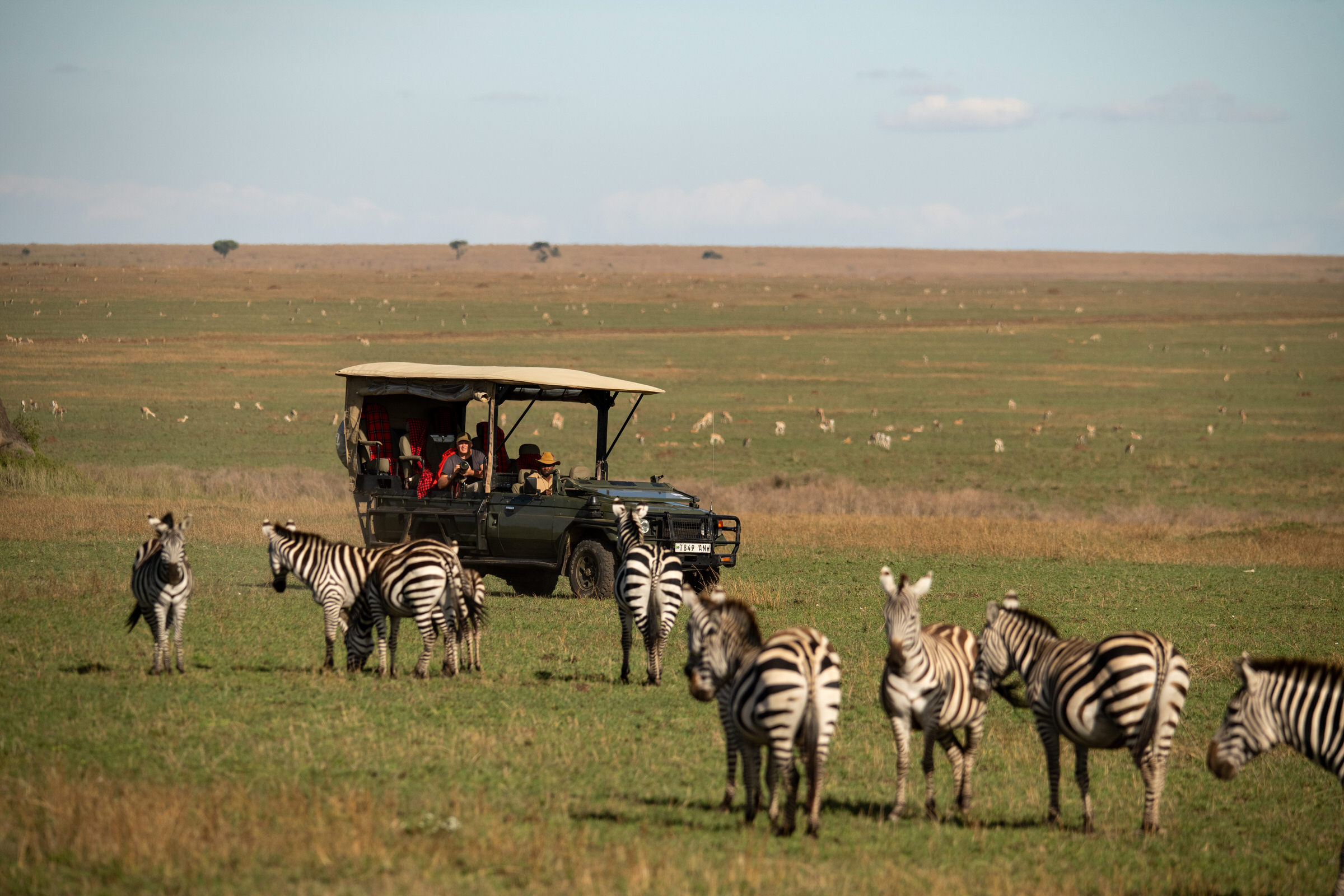
A 4-day Tanzania safari offers a fast-paced, immersive adventure focusing on the Northern Circuit (Serengeti, Ngorongoro, Tarangire). Expect action-packed game drives to see the Big Five, vast savannah landscapes, and dramatic wildlife interactions, often featuring the Great Migration. Accommodations range from luxurious tented camps to standard lodges, with full-board options typical
Popular 4 Days Tanzania safari itineraries
4-days-ndutu-and-serengeti-safari-in-tanzania
4-days-tarangire-ngorongoro-and-serengeti-safari-tour
4-days-best-tarangire-ngorongoro-and-serengeti-safari-itinerary
4-days-best-beach-to-bush-fly-in-and-fly-out-luxury-tanzania-safari-from-zanzibar
Typical 4-Day Itinerary Highlight
Northern Tanzania offers a concentrated dose of Africa’s most iconic landscapes and wildlife. This 4-day itinerary is designed for those who want to witness the raw power of nature without a moment wasted. From the ancient, baobab-studded plains of Tarangire to the endless horizons of the Serengeti and the prehistoric majesty of the Ngorongoro Crater, you will traverse three distinct ecosystems. This journey isn't just about "checking boxes" on a list of animals; it’s about the visceral experience of the Great Migration, the stealth of a leopard in an acacia tree, and the sunrise over the savannah. Whether you are a seasoned photographer or a first-time traveler, these four days provide an intimate window into the "Circle of Life." Prepare for dusty roads, breathtaking sunsets, and the kind of silence only the deep bush can provide as we explore the crown jewels of Tanzania's Northern Circuit.
Day 1: Arusha to the Land of Giants
Your adventure begins with a scenic drive from Arusha, leaving the city bustle behind for the rugged beauty of Tarangire National Park (or the lush groundwater forests of Lake Manyara). Tarangire is often called the "Home of Elephants," and for good reason—huge family herds congregate around the Tarangire River, the only permanent water source in the area. The landscape is dominated by massive, ancient Baobab trees, creating a prehistoric backdrop that looks like a scene from another era. As you embark on your first game drive, keep your eyes peeled for tree-climbing lions and the fringe-eared oryx. The birdlife here is equally spectacular, with over 500 species identified. By the time the sun begins to dip, painting the sky in hues of burnt orange, you’ll head to your lodge or camp, falling asleep to the distant calls of hyenas and the rustling of the African bush.
Day 2: Into the Endless Plains
After an early breakfast, you’ll head toward the world-famous Serengeti National Park. The name "Serengeti" comes from the Maasai word Siringet, meaning "endless plains," and the scale of the horizon is truly humbling. As you pass through the park gates, your afternoon game drive begins immediately. This is the heart of Big Cat country. In the central Seronera valley, leopards often lounge on the limbs of sausage trees while prides of lions survey their kingdom from granite kopjes. Depending on the season, you may find yourself surrounded by the Great Migration, a thundering mass of millions of wildebeest and zebras stretching as far as the eye can see. The sheer abundance of life here is staggering. As evening falls, you’ll settle into a safari camp deep within the park, enjoying a "bush dinner" under a canopy of stars that feel close enough to touch.
Day 3: Serengeti Sunrise to the Highland Rim
The third day starts with the magic of a sunrise game drive. This is the best time to witness predators in action, as cheetahs and lions take advantage of the cool morning air to hunt. The golden light hitting the tall grass provides a perfect opportunity for photography. After a mid-morning "brunch" in the wild, you will begin a slow game drive out of the Serengeti toward the Ngorongoro Conservation Area. This transition is fascinating, as the flat savannah gives way to lush, misty highlands. Along the way, you might pass Maasai herders in their traditional red shukas, tending to cattle alongside wild zebras—a testament to the unique co-existence in this region. You’ll reach the crater rim by late afternoon, where you can stand at the viewpoint and look down into the "Noah's Ark" of Africa, preparing for tomorrow's descent into the caldera.
Day 4: The Ngorongoro Crater & Farewell
On your final day, you’ll descend 600 meters into the Ngorongoro Crater, a UNESCO World Heritage site and a collapsed volcano that has created a self-contained ecosystem. The floor of the crater is teeming with over 30,000 animals, making it one of the densest wildlife areas on Earth. This is your best chance to spot the endangered Black Rhino, completing your "Big Five" checklist. You’ll visit Lake Magadi to see flocks of pink flamingos and watch hippos wallowing in the swamps. The enclosed nature of the crater makes for incredible sightings in a short amount of time. After a picnic lunch on the crater floor, you will begin the climb back up the steep walls and start the return journey to Arusha. You’ll arrive back in the late afternoon, dusty but filled with memories of the most spectacular wildlife theater on the planet.
1. What areas are covered in a 4-day Tanzania safari holiday?
A 4-day safari focuses on the "Northern Circuit," which contains Africa's highest concentration of wildlife. The journey typically begins in Arusha, the gateway to Tanzania’s wilderness. From here, the first stop is often Tarangire National Park, famous for its massive elephant herds and iconic baobab trees that pierce the skyline. Alternatively, some itineraries swap Tarangire for Lake Manyara National Park, a lush groundwater forest known for its tree-climbing lions and soda lake filled with flamingos.
The heart of the trip is the Serengeti National Park, a vast savannah that hosts the Great Migration. Most 4-day tours dedicate nearly two days here to maximize sightings of big cats. The final jewel in the crown is the Ngorongoro Conservation Area. Here, travelers descend into the Ngorongoro Crater, a 600-meter-deep caldera that acts as a natural enclosure for almost every species found in East Africa. Because these parks are relatively close to one another compared to the vast southern parks, this circuit allows you to experience three distinct ecosystems—woodland, open savannah, and volcanic highland—within a very short timeframe.
2. What is a typical daily schedule on a 4-day Tanzania safari holiday?
The rhythm of a safari is dictated by the sun and the behavior of the animals. A typical day begins with a 6:00 AM wake-up call. Early mornings are crucial because predators like lions, leopards, and hyenas are most active in the cool dawn air before the tropical sun becomes too intense. After a quick coffee or light breakfast, you head out for a morning game drive.
Around midday, you will either return to your lodge for a hot lunch or, more commonly on a 4-day trip, enjoy a packed picnic lunch at a designated site in the bush. This allows you to stay deep in the park without backtracking. The afternoon is spent continuing the game drive as animals move toward water sources. By 5:30 PM or 6:00 PM, you begin the drive back to your accommodation to comply with park regulations that require vehicles to be off the tracks by sunset. The evening is spent around a "bush TV" (a campfire), followed by a multi-course dinner and early sleep to prepare for the next dawn.
3. What animals can I see on a 4-day Tanzania safari holiday?
Despite the short duration, a 4-day safari offers a high probability of seeing the "Big Five": lion, leopard, African elephant, Cape buffalo, and the rare black rhino. The Serengeti is perhaps the best place on earth to see lions and leopards, while the Ngorongoro Crater is one of the few places left where the black rhino can be spotted in the wild.
Beyond the Big Five, the sheer volume of "plains game" is staggering. You will see thousands of wildebeest and zebras, especially if your trip coincides with the migration. Giraffes, topis, elands, and gazelles are ubiquitous. The waterways are home to massive hippos and Nile crocodiles. Cheetahs are often found in the southern Serengeti plains, using their speed to hunt in the open. For bird enthusiasts, the parks host everything from the massive ostrich and Kori bustard to the vibrant lilac-breasted roller. In Tarangire, the focus shifts to the giants—family groups of up to 300 elephants are not uncommon.
4. Where will I stay during a 4-day Tanzania safari holiday?
Accommodation in Tanzania is diverse, catering to every budget and comfort level. Budget camping involves staying in public campsites within the parks, sleeping in heavy-duty canvas tents on sleeping pads. This is the most "authentic" way to hear the sounds of the night, though facilities like bathrooms are shared.
Luxury Tented Camps are a step up and very popular. These are semi-permanent structures with wooden floors, real beds, and en-suite bathrooms with hot showers. They offer the feel of being in nature without sacrificing comfort. Finally, there are Permanent Lodges, which are solid-structure hotels often built on the rim of the Ngorongoro Crater or atop hills in the Serengeti. these offer amenities like swimming pools, lounges, and fine dining. On a 4-day trip, your lodging is strategically chosen to minimize driving time, ensuring you are either inside the park gates or very close to them to take advantage of the early morning light.
5. What type of vehicle is used on a 4-day Tanzania safari holiday?
The workhorse of the Tanzanian safari is the custom-built 4x4 Toyota Land Cruiser. These vehicles are specifically modified for the rugged, unpaved terrain of the national parks. They feature heavy-duty suspension to handle the "African massage" (bumpy roads) and are equipped with high-clearance tires.
The most important feature for travelers is the pop-up roof. Once inside the park, the roof is raised, allowing you to stand up and have an unobstructed 360-degree view of the wildlife. This is essential for photography and for spotting animals hidden in tall grass. Most vehicles seat 4 to 6 passengers comfortably, ensuring everyone has a window seat. Inside, you will typically find a refrigerated cool box stocked with water and sodas, power outlets or USB ports to charge your camera batteries, and a long-range radio which the driver uses to communicate with other guides about rare animal sightings (like a leopard kill or a rhino crossing).
6. Is 4 days enough time for a Tanzania safari holiday?
Yes, 4 days is widely considered the minimum viable time for a high-quality safari in the Northern Circuit. While you won't be able to explore the remote corners of the North Serengeti or spend much time relaxing, it is enough time to visit the "Big Three": Tarangire, Serengeti, and Ngorongoro.
The pace is undoubtedly fast-moving. You will spend a significant portion of each day in the vehicle, either game viewing or transiting between parks. However, because the wildlife density in these specific areas is so high, you don't need weeks to see the major species. A 4-day trip is perfect for travelers on a tight schedule, those adding a safari onto a Kilimanjaro climb, or those heading to Zanzibar afterward. To make the most of it, it is recommended to start as early as possible on Day 1 and choose a flight out of Arusha late on Day 4.
7. How much traveling (driving) is involved in a 4-day Tanzania safari holiday?
Prospective travelers should be prepared for substantial time on the road. Tanzania is a large country, and while the parks are clustered, the distances remain significant. The drive from Arusha to the Serengeti, for example, can take 6 to 8 hours depending on road conditions and how much wildlife you stop to see along the way.
A typical 4-day route involves roughly 15 to 20 hours of driving total. Much of this is "game driving," where you are moving slowly and looking for animals, but there are also "transit" sections on paved and gravel roads between park gates. The roads can be dusty and bumpy, which is part of the adventure but can be tiring. To mitigate this, guides often plan stops at the Olduvai Gorge or Maasai villages to break up the journey. The scenery helps the time pass quickly, as you move from the bustling streets of Arusha through mountainous highlands and down into the vast, flat reaches of the savannah.
8. Is a 4-day Tanzania safari holiday suitable for families?
A safari can be a life-changing experience for children, but a 4-day itinerary requires careful consideration. The long hours in a vehicle (often 6+ hours a day) can be challenging for toddlers or very young children. There is no "getting out to stretch your legs" in the middle of a park due to the presence of predators.
However, for school-aged children and teenagers, it is an outdoor classroom like no other. Many lodges are family-friendly, offering interconnected rooms and "Junior Ranger" programs. To make a 4-day trip work for a family, it is best to book a private safari rather than a group tour. This gives you the flexibility to head back to camp early if the kids are tired or to spend more time at a hippo pool if they are fascinated. It is also important to pack snacks, tablets for transit sections, and binoculars for each child to keep them engaged in the "treasure hunt" for animals.
9. What should I pack for a 4-day Tanzania safari holiday?
The golden rule for safari packing is layers and neutral colors. While midday temperatures can be hot, early mornings and nights in the Ngorongoro highlands can drop significantly, sometimes reaching near-freezing levels.
- Clothing: Pack lightweight, breathable fabrics in khaki, green, or beige. Avoid bright colors (which can distract animals) and dark blue or black (which attracts tsetse flies). A warm fleece or down jacket is essential for morning game drives.
- Protection: High-SPF sunscreen, a wide-brimmed hat, and polarized sunglasses are non-negotiable under the equatorial sun.
- Gear: A pair of high-quality binoculars (8x42 is standard) will significantly enhance your experience. For photography, a lens with at least 300mm zoom is recommended.
- Health: Include a small first-aid kit with motion sickness pills (for bumpy roads), antihistamines, and any personal medications.
- Luggage: Use a soft-sided duffel bag rather than a hard suitcase, as they are much easier to pack into the limited space of a 4x4 safari vehicle.
10. What is the best time for a 4-day Tanzania safari holiday?
Tanzania has two distinct seasons. The Dry Season (June to October) is generally considered the best time for game viewing. As water sources dry up, animals congregate around the remaining water holes, making them easier to find. The grass is also short, providing better visibility for spotting elusive cats. This is also when the Great Migration is typically in the Western or Northern Serengeti.
The Wet Season (November to May), specifically the "Green Season" in January and February, is also excellent. This is the calving season for wildebeest, leading to high predator activity. The landscape is lush and green, the air is dust-free, and birdwatching is at its peak with migratory species present. While the "long rains" in April and May can make some roads muddy, this is the time for lower prices and fewer crowds. If your goal is specifically to see the most animals with the least effort, aim for the July–September window.
11. Do I need to worry about malaria on a 4-day Tanzania safari holiday?
Yes, Tanzania is a malaria-endemic country, and the national parks are located in regions where mosquitoes are present. While the risk varies by altitude—for instance, the Ngorongoro Crater rim is high and cool, reducing mosquito activity—the Serengeti and Tarangire are lower and warmer.
Prevention is a three-pronged approach. First, consult a travel clinic before your trip to get a prescription for anti-malarial prophylactics (such as Malarone or Doxycycline). Second, use an insect repellent containing at least 30-50% DEET on exposed skin, especially during dawn and dusk when mosquitoes are most active. Third, wear long sleeves and trousers in the evenings. Most lodges and tented camps provide mosquito netting over the beds and spray the rooms during dinner. While it is a concern, by taking these standard precautions, the vast majority of travelers enjoy their safari without any health issues.
12. What kind of food is served on a 4-day Tanzania safari holiday?
You will certainly not go hungry on a safari. Most lodges and camps provide full-board meals that are a mix of international cuisine and local Tanzanian flavors.
- Breakfast: Usually a buffet with eggs made to order, sausages, bacon, fruit, cereal, and "Maandazi" (Tanzanian donuts).
- Lunch: If you are in the park, you will have a "lunch box" containing cooked chicken or meat, a sandwich, fruit, juice, and a hard-boiled egg. If at the lodge, it is often a light buffet or pasta.
- Dinner: This is typically a three-course affair, starting with soup, followed by a main of beef, chicken, or fish with vegetables and rice or potatoes, and ending with a dessert.
Dietary requirements (vegan, gluten-free, halal, etc.) are easily accommodated as long as you inform your tour operator in advance. The quality of food in even mid-range tented camps is surprisingly high, often featuring fresh produce grown in the nearby highlands.
13. Are the parks safe during a 4-day Tanzania safari holiday?
Wild animals are inherently dangerous, but a safari is an extremely safe activity when you follow the rules. The most important rule is to stay inside the vehicle at all times unless your guide tells you otherwise at a designated picnic or stretch point. Animals in the parks are "habituated" to the shape of the vehicles; they see the Land Cruiser as a neutral object, not as a source of food or a threat. However, if you step out, that silhouette is broken, and you may be perceived as prey or a predator.
At night, if you are staying in an unfenced camp, you will be escorted to and from your tent by an armed ranger or a Maasai warrior. They are experts at spotting eyes in the bush and ensuring you are safe from wandering elephants or buffaloes. From a crime perspective, the parks are very safe, with a heavy presence of park rangers and a community that highly values the tourism industry.
14. What is the tipping etiquette on a 4-day Tanzania safari holiday?
Tipping is a standard and deeply appreciated part of the safari culture in Tanzania. It is not mandatory, but it serves as a primary source of income for many staff members who work long hours away from their families.
For your Safari Guide, the general recommendation is $20 to $30 USD per vehicle, per day. This is usually given at the very end of the trip. If you are traveling in a group of four, this equates to about $5-$8 per person per day. For the lodge or camp staff, most places have a "General Tip Box" located in the reception or dining area. Tipping here covers the chefs, cleaners, and gardeners behind the scenes. A tip of $10 to $15 USD per guest, per day is standard for the tip box. It is best to tip in US Dollars (printed after 2013) or the equivalent in Tanzanian Shillings.
15. Can I customize my 4-day Tanzania safari holiday?
Yes, customization is one of the best ways to ensure the trip meets your expectations. While "group joining" safaris follow a fixed route to keep costs low, a private safari allows you to tweak almost every detail.
You can choose to spend two nights in the Serengeti instead of one if you are obsessed with big cats, or you can skip Tarangire to spend more time in the Ngorongoro highlands if you prefer cooler weather and lush scenery. You can also mix and match accommodation levels, perhaps staying in a budget lodge the first night and splurging on a luxury rim-view suite at the Ngorongoro Crater for the final night. Furthermore, you can add "cultural add-ons," such as a visit to a Maasai Boma or a walking safari with a local tribesman. If you have a specific interest, like birding or photography, your operator can even assign a guide who specializes in that field.
Booking 4 Days Tanzania safari with us Roads of Adventure safaris
For a 4-day Tanzania safari with Roads of Adventure Safaris, you can expect an itinerary that covers the "Northern Circuit," focusing on the Serengeti and Ngorongoro Crater. This operator is primarily based in Uganda but specializes in cross-border East African adventures, including highly-rated wildlife tours in Tanzania.
