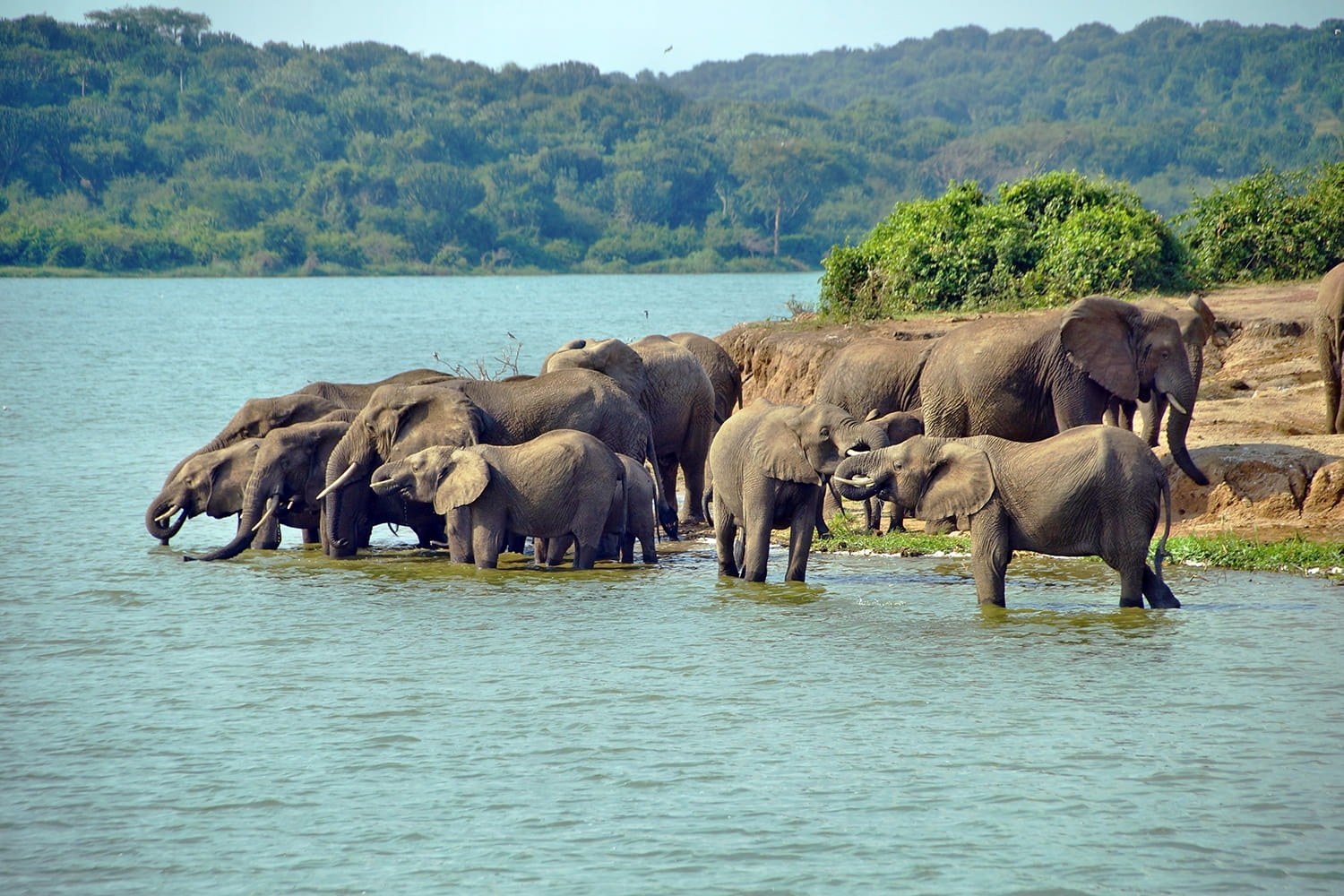
A 3-day road trip to Queen Elizabeth National Park offers a fast-paced, action-packed experience featuring savanna game drives in Kasenyi Plains (lions, elephants, buffaloes), a 2-hour boat cruise on the Kazinga Channel (hippos, crocodiles), a stop at the Uganda Equator, and optional chimpanzee trekking in Kyambura Gorge.
3-days-trips-to-queen-elizabeth-national-park-for-chimpanzee-tracking-in-kyambura-gorge
3-days-uganda-safari-itinerary-to-queen-elizabeth-national-park
3-days-budget-queen-elizabeth-park-uganda-wildlife-safari-holiday
3-days-fly-luxury-uganda-safari-to-queen-elizabeth-national-park
3-Day Queen Elizabeth National Park Safari
Embark on a captivating three-day expedition to Queen Elizabeth National Park, Uganda’s most popular savanna destination. Nestled against the backdrop of the jagged Rwenzori Mountains, this park is a mosaic of sprawling plains, sparkling crater lakes, and dense forests. This road trip offers a perfect blend of adventure and serenity, taking you from the bustling streets of Kampala to the heart of the African wilderness. You will stand at the Equator, traverse the wildlife-rich Kasenyi plains, and cruise the world-famous Kazinga Channel. Whether you are tracking tree-climbing lions or marveling at the sheer density of hippos and elephants, this safari promises an intimate encounter with nature. It is an ideal escape for those seeking to witness the "Pearl of Africa" in its most vibrant form, balancing thrilling game drives with peaceful scenic vistas.
Day 1: The Journey to the Rift Valley
Your adventure begins with a scenic drive westward from Kampala. The 6-7 hour journey is punctuated by a mandatory stop at the Equator, where you can stand in both hemispheres simultaneously for a classic photo opportunity. As you descend into the Albertine Rift Valley, the landscape transforms into lush rolling hills and tea plantations. Upon arrival in the park, the evening is dedicated to exploring the dramatic crater lakes or the ancient salt works at Lake Katwe. If timing allows, an evening game drive offers a chance to see the wilderness transition into night. Keep your eyes peeled for early nocturnal activity and the silhouettes of elephants against the setting sun, providing a mystical introduction to the park's diverse ecosystems before retiring to your lodge for the night.
Day 2: Predators of Kasenyi and the Kazinga Cruise
Day two starts at dawn (6:30 AM) to catch the predators while they are still active. The Kasenyi plains serve as the primary stage, where the vast savanna plays host to massive herds of Uganda Kob. This high concentration of prey makes it the best spot to witness lions and the elusive leopard on the hunt. After a midday rest, the highlight of the safari awaits: a boat cruise along the Kazinga Channel. This natural waterway connects Lakes Edward and George and boasts one of the world’s highest concentrations of hippos. From the safety of the boat, you will glide past Nile crocodiles, thirsty buffalo herds, and a kaleidoscopic array of birdlife, including kingfishers and fish eagles, offering unparalleled close-up photography opportunities.
Day 3: Primate Encounters and the Return Leg
On your final day, choose to delve into the "Underground Forest" of the Kyambura Gorge. This deep tectonic gash in the savanna floor is home to a habituated community of chimpanzees. Tracking these primates through the tropical canopy provides a thrilling contrast to the previous day’s open plains. Alternatively, enjoy a final quiet morning taking in the views of the Maramagambo Forest. Following your morning activity, begin the return journey to Kampala. Reflect on the sightings of the past 48 hours as you climb back out of the Rift Valley, stopping for a local lunch en route. You will arrive back in the capital by evening, carrying memories of roaring lions and the tranquil waters of the channel, marking the end of an unforgettable Ugandan circuit.
How long is the drive from Kampala to Queen Elizabeth Park?
The road trip from Kampala to Queen Elizabeth National Park is an immersive introduction to the Ugandan countryside. Covering approximately 420 kilometers, the drive typically takes 6 to 7 hours, though this can fluctuate based on the traffic leaving Kampala and the road conditions. Most travelers depart early, around 6:30 AM, to beat the city congestion. The route takes you through the lush, rolling hills of central Uganda, transitioning into the vibrant greenery of the west. One of the most significant milestones is the stop at Kayabwe, the site of the Equator. Beyond the Equator, the drive continues through Masaka and Mbarara. The latter is a popular spot for a local lunch, often featuring matooke (steamed green bananas) and beef from the famous long-horned Ankole cattle. As you approach the park, the landscape shifts dramatically. You will descend the Kichwamba Escarpment, part of the Albertine Rift Valley, which offers stunning panoramic views of the park’s savanna and the distant, snow-capped Rwenzori Mountains. While the main highway is well-paved, the final stretch involves navigating park tracks that can be dusty or muddy depending on the season. The length of the drive requires some stamina, but the changing scenery—from urban markets to tea plantations and finally to the wild savanna—makes the transit a core part of the Ugandan safari experience.
What animals are seen on a Kasenyi Plains game drive?
The Kasenyi Plains, located in the northeastern sector of the park, are the primary stage for classic African wildlife viewing. These vast open grasslands are the main breeding grounds for the Uganda Kob, a beautiful antelope that serves as the primary prey for the park’s predators. Because of this high concentration of kobs, a morning game drive here offers your best chance of spotting lions and the elusive leopard. You will also encounter massive African elephants, Cape buffaloes, and family groups of warthogs. The open landscape makes it easy to spot wildlife from a distance, provided you have a knowledgeable guide and a pair of binoculars. The early morning start is crucial, as predators are most active before the heat of the day sets in. Beyond the "Big Four" (rhinos are not present in this park), you can spot various smaller mammals like the side-striped jackal or the banded mongoose. The plains are also home to a variety of grassland birds, including the Grey Crowned Crane—Uganda's national bird. The sight of a lion pride camouflaged against the golden savanna grass, with the Rwenzori Mountains as a backdrop, is one of the most iconic images of a Ugandan safari.
What does the Kazinga Channel boat cruise offer?
The boat cruise along the Kazinga Channel is often the highlight of the entire trip. This 40-kilometer natural waterway connects Lake Edward and Lake George and boasts one of the highest concentrations of hippos in the world. From the safety of the boat, you can watch these multi-ton mammals socializing, yawning, and occasionally squabbling in the water. The banks are also a magnet for other animals; it is common to see herds of elephants and buffaloes coming down to the water’s edge to drink and cool off during the heat of the day. For birdwatchers, the channel is a paradise. The sheer variety of species is staggering, ranging from Great White Pelicans and African Fish Eagles to various species of kingfishers, herons, and egrets. Unlike a game drive where animals might be hidden by thickets, the boat cruise offers unobstructed, close-up views that are perfect for photography. The proximity to the animals—sometimes just a few meters away—provides a unique perspective on their behavior. You might witness a Nile crocodile basking on the sandbanks or a monitor lizard scurrying through the reeds. The gentle pace of the boat combined with the constant wildlife activity makes this a relaxing yet thrilling two-hour experience.
Are tree-climbing lions guaranteed on a 3-day trip?
While Queen Elizabeth National Park is famous for its tree-climbing lions, they are not guaranteed on a standard 3-day itinerary unless specific planning is involved. These unique lions reside primarily in the Ishasha sector, which is located in the southern part of the park, roughly a two-hour drive from the main Kasenyi and Mweya areas. On a typical 3-day trip, the focus is often on the northern sectors to minimize excessive driving. To see the tree-climbing lions, your itinerary must include a detour to Ishasha, usually on the way to or from Bwindi Impenetrable Forest. Even then, "guaranteed" is a strong word in the wild; while they are "likely" to be seen draped over the limbs of ancient fig trees to escape the heat and tsetse flies, sightings depend on luck and the skill of your ranger. If your heart is set on this phenomenon, you should discuss it with your tour operator to ensure Day 2 or Day 3 includes enough time for the Ishasha transit. These lions are a rare behavioral anomaly globally, and seeing a pride resting high above the ground is a sight few other parks in Africa can offer.
Where can I go for chimpanzee trekking in Queen Elizabeth Park?
For those seeking a primate encounter, Queen Elizabeth Park offers two primary locations. The most dramatic is the Kyambura Gorge, a 100-meter-deep tectonic gash in the earth. Known as the "Valley of Apes," this sunken tropical forest is home to a habituated community of chimpanzees. Tracking them through the dense riverine canopy is a thrilling contrast to the open savanna. However, the chimp community in the gorge is small and isolated, making sightings less certain than in other areas. A popular alternative is the Kalinzu Forest, located just outside the park boundary on the way to the escarpment. Kalinzu is often favored by guides because it hosts a larger population of chimpanzees, leading to a much higher success rate for sightings. The forest walk also provides opportunities to see other primates like Black-and-white Colobus monkeys and Blue monkeys, as well as a diverse array of forest birds and butterflies. Whether you choose the dramatic scenery of the "Underground Forest" in Kyambura or the high-density biodiversity of Kalinzu, the trek adds a primitive, adventurous layer to your safari that balances the vehicle-based game drives.
Is accommodation available inside Queen Elizabeth National Park?
Yes, the park offers a wide spectrum of accommodation catering to all budgets and preferences. For those seeking luxury, the Mweya Safari Lodge is the gold standard. Located on a peninsula overlooking the Kazinga Channel, it offers high-end amenities, a swimming pool, and panoramic wildlife views directly from your balcony. For a more intimate, mid-range experience, Bush Lodge or Enganzi Lodge provide comfortable "glamping" or cottage options that make you feel truly immersed in the wilderness; it is not uncommon to hear the sounds of hippos or hyenas as you sleep. There are also budget-oriented campsites and community-run lodges for the cost-conscious traveler. Staying inside or right on the edge of the park is highly recommended because it allows you to start your morning game drives at the crack of dawn (6:30 AM) without a long commute. Being "on-site" also means you can enjoy the transition of the savanna from day to night, often accompanied by a sundowner drink as you watch the African sky turn vibrant shades of orange and purple.
What is the best time for a 3-day safari there?
The timing of your trip can significantly impact your wildlife viewing experience. The dry seasons (June to August and December to February) are widely considered the best times to visit. During these months, the vegetation is thinner, making it much easier to spot animals like lions and leopards hiding in the grass. Furthermore, water becomes scarce, forcing animals to congregate around permanent water sources like the Kazinga Channel and specific water holes, which simplifies tracking. The roads and park tracks are also much drier and easier to navigate, reducing the risk of getting stuck. Conversely, the wet seasons (March to May and September to November) turn the park into a lush, green paradise. While the scenery is beautiful and birdwatching is at its peak with the arrival of migratory species, the tall grass can make mammal spotting more challenging. Some secondary tracks may become impassable even for 4x4 vehicles. However, the wet season is often "low season" for tourism, meaning fewer crowds and potentially lower accommodation rates, which might appeal to those seeking a more solitary experience.
Can I visit the crater lakes during my 3-day safari?
A visit to the Katwe Explosion Craters is a must for those who appreciate dramatic geological landscapes. These volcanic features are located in the northern part of the park and offer some of the most breathtaking views in Uganda. A drive along the Crater Drive takes you past several "explosion craters"—extinct volcanic vents that have since filled with water or forest. The most famous is Lake Katwe, a salt lake where traditional salt mining has occurred for centuries. Visiting the salt works provides a fascinating cultural insight into how locals manually extract salt from the earth using methods passed down through generations. Beyond the salt works, the craters offer spectacular views of the jagged Rwenzori Mountains and the expansive Great Rift Valley floor. On a clear day, the contrast between the deep blue of the crater lakes and the surrounding golden savanna is a photographer's dream. Including this in your 3-day itinerary (usually on the evening of Day 1 or morning of Day 3) provides a scenic and educational break from traditional game viewing.
Are 3-day safaris from Kampala physically demanding?
While a 3-day safari is exhilarating, it does require a certain level of physical stamina. The primary challenge is the long driving hours. Spending 6 to 7 hours in a vehicle on Day 1 and again on Day 3 can be tiring, especially as some sections of the road may be bumpy. Once inside the park, game drives involve several hours of sitting in a vehicle, though the excitement of seeing a lion usually negates any fatigue. If you choose to add chimpanzee trekking, this involves hiking through uneven forest terrain, which requires a moderate level of fitness. However, the itinerary is designed with built-in breaks—such as the relaxing boat cruise and evening lodge downtime—to ensure you aren't overwhelmed. To manage the physical demands, it is important to stay hydrated, wear comfortable clothing, and use the stops at the Equator and Mbarara to stretch your legs. Most travelers find that the "safari high"—the adrenaline rush of spotting rare wildlife—far outweighs the physical toll of the journey. It is a fast-paced trip, but the wealth of experiences packed into 72 hours makes it a worthwhile endeavor for most adventurers.
Booking 3 days queen Elizabeth park with us Roads of Adventure safaris
Book a 3-day budget or tailored Queen Elizabeth National Park safari with Roads of Adventure Safaris to experience tree-climbing lions in Ishasha, a Kazinga Channel boat cruise, and game drives in the Kasenyi plains. Packages include transport, guide fees, and accommodation, often starting with a 7:30 AM departure
