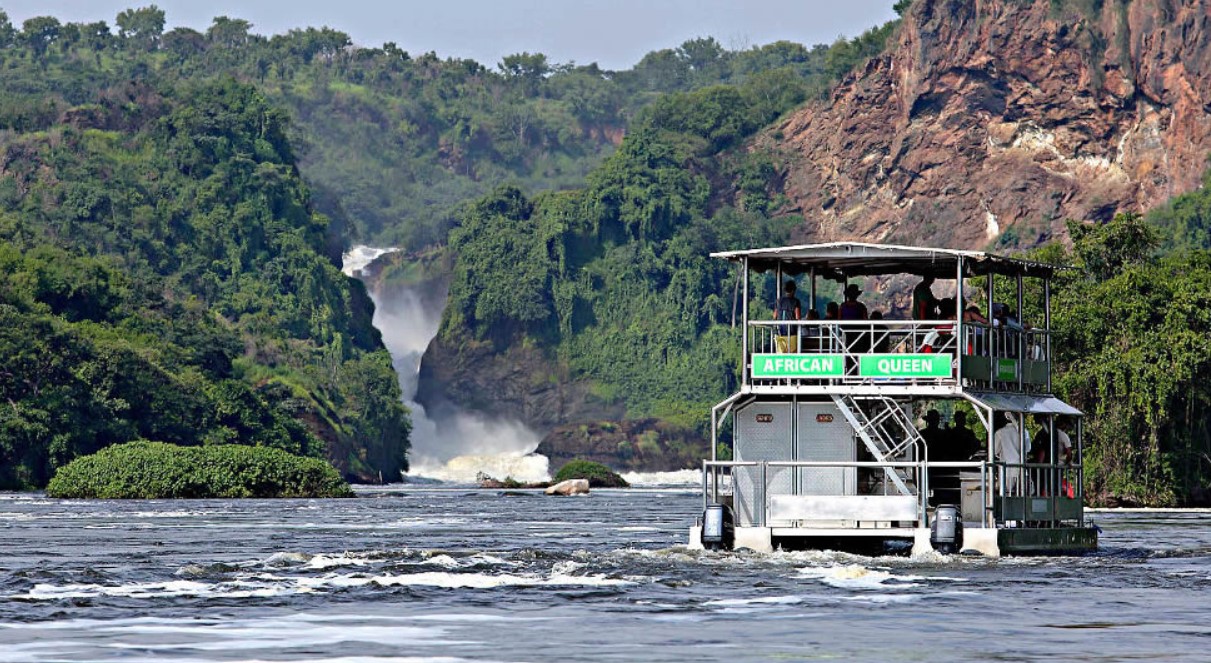
A 3-day Murchison Falls Big Five safari in Uganda offers a compact, high-intensity adventure featuring rhino tracking at Ziwa Rhino Sanctuary, scenic game drives in Murchison Falls National Park, and a boat cruise to the base of the world's most powerful waterfall. You will likely spot lions, elephants, buffaloes, leopards, giraffes, hippos, and Nile crocodiles in this 5–6-hour drive-intensive tour
3-days-flying-luxury-uganda-safari-to-murchison-falls-national-park
3-days-best-honeymoon-uganda-safari-escape-to-murchison-falls-national-park
3-days-murchison-falls-national-park-best-uganda-safari-road-trip
4-days-murchison-falls-uganda-family-safari-vacation-tour
4-days-luxury-murchison-falls-and-jinja-uganda-safari-vacation
5-days-murchison-falls-safari-and-gorilla-trekking-in-bwindi
5-days-murchison-falls-and-queen-elizabeth-safari-itinerary
5-days-kidepo-valley-uganda-safari-via-ziwa-rhino-sanctuary
3-Day Murchison Falls Safari
The 3-Day Murchison Falls Safari is an expertly paced expedition that captures the very soul of the Ugandan wilderness. This journey centers on the country’s largest conservation area, a land of high-impact contrasts where the world’s longest river—the Nile—explodes through a narrow rock gorge to create the most powerful surge of water on earth. The itinerary is strategically designed to deliver the "Big Five" experience, beginning with a tactical rhino tracking session on foot at Ziwa Sanctuary before pushing northward into the palm-studded savannas. Over three days, you will transition from land-based game drives to a riverine boat cruise toward the "Devil’s Cauldron," offering a 360-degree perspective of the park's biodiversity. Perfect for those with limited time, this safari provides a visceral connection to the "Pearl of Africa," combining dramatic geological wonders with intimate encounters with lions, elephants, and the rare Rothschild’s giraffe in a compact, high-energy vacation.
Day 1: Rhino Tracking and the Thundering Summit
Your safari departs early from Kampala or Entebbe, heading north through the verdant landscapes of Nakasongola. The first major highlight is the Ziwa Rhino Sanctuary, the only place in Uganda to see rhinos in the wild. You will join an expert ranger for a tactical track on foot, bringing you within meters of these prehistoric giants—a vital encounter to complete your "Big Five" checklist. After a relaxed lunch, you continue the journey into Murchison Falls National Park, heading directly to the Top of the Falls. Here, you will witness the Nile being forced through a seven-meter gap, a display of raw hydraulic power that makes the ground tremble. The sight of the water plunging 43 meters into the gorge provides a dramatic welcome to the park. You will then proceed to your lodge for an evening of relaxation under the starlit African sky.
Day 2: Savanna Majesty and the Nile Boat Cruise
The second day starts at 6:00 AM with a game drive across the Buligi Circuit on the northern bank. This is the prime window to spot predators like lions and leopards before they retreat from the rising heat. You will traverse a landscape defined by Borassus palms, home to massive herds of Rothschild’s giraffes, elephants, and Cape buffaloes. In the afternoon, the perspective shifts as you board a launch cruise toward the base of the falls. This three-hour journey along the Nile acts as a liquid stage, showcasing some of the largest Nile crocodiles in Africa and dense pods of hippos. You will likely see elephants and waterbucks lining the banks to drink. The cruise culminates at the base of the thundering falls, offering a cooling mist and spectacular photography opportunities of the river’s most powerful point.
Day 3: Final Game Drive and the Return Journey
On your final day, you embark on a morning game drive to catch any wildlife you may have missed. The early light is perfect for spotting hyenas returning to their dens or birds of prey like the Martial eagle circling the savanna. It is a final chance to admire the graceful movement of Jackson’s hartebeests and Uganda kobs across the plains. Following this session, you begin the return journey toward Kampala or Entebbe. The drive back offers a reflective pause to observe the changing Ugandan countryside and rural life. You will stop for a local lunch in Masindi town before the final leg of the trip. Arriving back in the city by late afternoon, you conclude an epic three-day odyssey that successfully bridged the gap between untamed wilderness and the breathtaking force of the mighty River Nile.
1. What does the "Big Five" mean in Murchison Falls National Park?
The term "Big Five" was originally coined by big-game hunters to describe the five most difficult and dangerous African animals to hunt on foot. Today, the term has been reclaimed by the tourism industry to represent the "must-see" safari icons: the Lion, Leopard, African Elephant, Cape Buffalo, and Rhino. In the context of Murchison Falls National Park, the definition is slightly unique. While the park itself is home to four of these giants—lions prowling the savannah, leopards hiding in thickets, massive herds of elephants, and thousands of buffaloes—the rhinos are notably absent from the park's boundaries due to past poaching.
To complete the "Big Five" experience on a 3-day itinerary, travelers stop at the Ziwa Rhino Sanctuary in Nakasongola, which is located conveniently along the route from Kampala to the park. This sanctuary is the only place in Uganda where you can see wild rhinos (specifically Southern White Rhinos) in their natural habitat. Seeing the Big Five in this region is a symbol of conservation success, as Uganda works to restore its wildlife populations. The experience of tracking a rhino on foot at Ziwa, followed by seeing the "Big Four" in the rolling plains of Murchison, creates a complete and spiritually rewarding African safari narrative.
2. Is it really possible to see all Big Five in just 3 days?
Yes, it is entirely possible, though it requires a well-structured itinerary and a bit of luck from nature. Because Murchison Falls National Park is Uganda’s largest conservation area, wildlife is abundant. The 3-day window is the standard timeframe used by most tour operators to ensure a "Big Five" success rate. The strategy begins on Day One with a stop at Ziwa Rhino Sanctuary. Since the rhinos are confined to a 7,000-hectare fenced sanctuary and monitored by rangers, sightings are nearly 100% guaranteed.
On Day Two, the focus shifts to the northern bank of the Nile within Murchison Falls National Park. This area consists of open savannah, which makes spotting elephants and buffaloes very easy. Lions are frequently seen during the early morning game drives when they are still active before the heat of the day. The leopard is the "wildcard"—as the most elusive of the five, it requires a keen-eyed guide and often a bit of patience near leopard-friendly trees or thickets. By combining the sanctuary visit with multiple game drives and a boat cruise, the 3-day window provides ample opportunity to check all five off your list while still enjoying the scenic beauty of the Nile.
3. What is the most exciting activity on this 3-day safari?
While the game drives offer the thrill of the hunt, most travelers agree that the boat cruise to the base of Murchison Falls is the most exciting and unique highlight. Starting from the Paraa jetty, the boat winds its way upstream against the Victoria Nile’s current. This three-hour journey serves as a "water-based game drive." You will see hundreds of hippos submerged in the water, massive Nile crocodiles basking on the banks with their mouths agape, and elephants coming down to the river to drink and bathe.
The climax of the trip is reaching the "Devil’s Cauldron." As the boat approaches the base of the falls, the water becomes turbulent and white with foam. You are treated to a front-row view of the world’s most powerful waterfall, where the entire Nile River is forced through a tiny 7-meter gap. The sound is deafening, and the mist creates permanent rainbows in the air. For those seeking extra adrenaline, the boat can drop you off at the base for a guided hike to the "Top of the Falls." Climbing the steep trail as the water thunders beside you is a sensory-overload experience that defines the spirit of African adventure.
4. How long is the drive from Kampala to Murchison Falls National Park?
The journey from Kampala to Murchison Falls National Park typically takes between 5 to 6 hours, covering a distance of roughly 300 kilometers (186 miles). While this may seem like a long time, the drive is an integral part of the Ugandan experience, taking you through vibrant roadside markets, lush green countryside, and changing landscapes. The road is paved (tarmac) for the majority of the way, making for a relatively smooth ride compared to other remote safari destinations.
The trip is usually broken up into segments to prevent fatigue. The first major stop is typically the Ziwa Rhino Sanctuary, which is about 3 hours from Kampala. After rhino tracking and lunch, you continue for another 2 to 3 hours to enter the park gates. Along the way, you’ll pass through the town of Masindi, a historic colonial-era outpost. As you enter the park's southern gate (Kichumbanyobo), the road winds through the dense Kaniyo Pabidi forest, where you might even spot olive baboons or chimpanzees crossing the road. This transition from the urban bustle of Kampala to the quiet, ancient forest signals that your wilderness adventure has truly begun.
5. What should I pack for a 3-day safari in Uganda?
Packing for a 3-day safari requires a balance between comfort, protection from the elements, and respect for the environment. Clothing should be lightweight and breathable, preferably in neutral tones like khaki, olive, or tan. Avoid bright colors like red (which can distract animals) and blue or black (which attract tsetse flies). Long-sleeved shirts and trousers are essential for the evenings to protect against mosquitoes and during the rhino trek to protect against tall grass and thorns.
Beyond clothing, your safari kit must include high-SPF sunscreen, a wide-brimmed hat, and polarized sunglasses to combat the equatorial sun. A high-quality insect repellent containing DEET is non-negotiable for warding off mosquitoes and flies. For footwear, sturdy closed-toe walking shoes or light hiking boots are necessary for the rhino trek and the hike to the top of the falls. Don't forget your electronics: a good camera with a zoom lens (at least 200mm–300mm) is vital for wildlife photography, along with extra batteries and memory cards. Finally, bring a small pair of binoculars; while your guide will have them, having your own allows you to spot distant birds or a leopard’s tail flicking in a tree without waiting.
6. Can I hike to the top of the Murchison Falls?
Yes, and it is highly recommended for anyone with a moderate level of fitness. The hike to the top of the falls is a visceral experience that allows you to feel the literal vibration of the earth. After the boat cruise drops you at the "Baker’s Trail" landing site, you begin a guided ascent. The hike takes about 45 to 60 minutes. While it is steep in sections, the path is well-maintained, and the various viewpoints along the way provide ample opportunity to catch your breath and take photos.
As you climb, the perspective shifts from looking up at the falling water to looking down into the churning abyss. At the very top, you stand just feet away from where the Victoria Nile—the world's longest river—squeezes through a narrow 7-meter rock gorge. The pressure is so intense that the water doesn't just flow; it explodes upward in a plume of mist. This spot, known as the "Top of the Falls," offers a 360-degree view of the park and the Nile stretching back toward Lake Kyoga. It is a place of immense geological power and beauty, and standing there is often the most memorable moment of the entire safari.
7. What wildlife can I expect to see during the morning game drive?
The morning game drive is the "golden hour" of the safari. Starting at daybreak (around 6:30 AM), you head to the northern bank, where the concentration of wildlife is highest. The most iconic sight in Murchison is the Rothschild’s Giraffe; the park holds one of the largest populations in the world, and seeing dozens of them silhouetted against the rising sun is breathtaking. You will also see vast herds of African Elephants moving toward the water and Cape Buffaloes grazing in the dew-covered grass.
The predators are the main focus of the morning. This is when lions are most active, often seen returning from a night of hunting or socialising with their pride before the sun gets too high. If you are lucky, you might spot a leopard draped over a branch of a sausage tree. The plains are also filled with "plains game," including the elegant Uganda Kob (the national antelope), Jackson’s Hartebeest, Defassa Waterbuck, and Oribi. For birders, the morning air is filled with the calls of Abyssinian Ground Hornbills, secretary birds, and various eagles. The sheer density of animals in the morning creates a feeling of being inside a "National Geographic" documentary.
8. Are the game drives on this safari done in open-roof vehicles?
Yes, standard professional safaris in Murchison Falls utilize specially modified 4x4 Safari Land Cruisers or Vans equipped with "pop-up" roofs. These vehicles are designed specifically for the African terrain, featuring heavy-duty suspension to handle the bumpy park tracks. The pop-up roof is the most important feature; it allows you to stand up safely inside the vehicle and have an unobstructed, 360-degree view of the horizon. This is crucial for spotting animals hidden in tall grass and for taking high-quality photographs without the interference of window glass or pillars.
These vehicles also come equipped with a UHF radio, which guides use to communicate with one another. If a pride of lions or a rare leopard is spotted in one area, the word spreads quickly, increasing your chances of seeing the "Big Five." While the vehicles are rugged on the outside, they are comfortable on the inside, usually featuring window seats for every passenger and an onboard cooler for bottled water. In the event of rain or intense dust, the roof can be lowered quickly, ensuring that you and your gear stay dry and protected while you continue your journey through the park.
9. When is the best time of year to visit Murchison Falls?
While Murchison Falls is a year-round destination, the dry seasons are generally considered the best times for wildlife viewing. These occur from June to September and December to February. During these months, the vegetation thins out, making it much easier to spot predators like lions and leopards that would otherwise be hidden in tall, green grass. More importantly, the lack of rain forces animals to congregate around permanent water sources, primarily the Victoria Nile and the Albert Delta. This "concentration" makes game viewing much more predictable and rewarding.
The wet seasons (March to May and October to November) have their own charms, however. The park turns into a lush, emerald-green paradise, and this is the time when many animals give birth, providing opportunities to see "baby" wildlife. Birdwatching is also spectacular during the wet season as migratory birds from Europe and North Africa arrive. However, some tracks can become muddy and difficult to navigate, and animals may disperse into the thickets because water is available everywhere. For a first-time visitor wanting the classic "Big Five" experience, the December-February window is often cited as the peak, offering clear blue skies and the highest probability of seeing all major species.
10. Do I need to get vaccinated before visiting Uganda for this safari?
Health and safety are paramount when traveling to East Africa. The most critical requirement is the Yellow Fever vaccination. The Ugandan government requires proof of vaccination (the "Yellow Card") for all travelers entering the country. Without this, you may be denied entry or forced to get the vaccination at the airport, which can be an expensive and stressful start to your trip. It is recommended to get this shot at least 10 days before your departure.
In addition to Yellow Fever, Malaria prophylaxis is strongly advised. Murchison Falls is a low-altitude, tropical area where mosquitoes are present, especially near the river. Consulting a travel clinic for the right anti-malarial medication (such as Malarone or Doxycycline) is essential. Other recommended vaccinations often include Hepatitis A and B, Typhoid, and Tetanus boosters. It is also wise to bring a basic first-aid kit with rehydration salts, bandages, and any personal prescriptions. While Uganda has made great strides in healthcare, being prepared ensures that a minor health issue doesn't derail your 3-day adventure.
11. What kind of accommodation is available in Murchison Falls?
Murchison Falls offers a wide spectrum of accommodation to suit every budget and travel style. On the luxury end, lodges like Paraa Safari Lodge offer a colonial-style elegance with swimming pools overlooking the Nile, while Bakers Lodge provides an intimate, eco-luxury experience with private decks on the riverbank. These high-end options provide gourmet meals, air conditioning (or high-end fans), and exceptional service, allowing you to relax in style after a dusty game drive.
For those seeking mid-range comfort, lodges like Murchison River Lodge or Pakuba Safari Lodge offer a fantastic balance. They usually feature comfortable cottages or "glamping" tents with en-suite bathrooms and great views, often located right on the edge of the park or within the park boundaries. Budget travelers are also well-catered for, with options like Red Chilli Rest Camp or Fort Murchison’s tents. These provide clean, basic facilities and a lively communal atmosphere, perfect for backpackers and solo travelers. Regardless of where you stay, the sound of hippos "honking" in the distance and the sight of the African stars at night make every accommodation level feel like a true wilderness experience.
12. Is the 3-day trip to Murchison Falls suitable for children?
Yes, a 3-day safari to Murchison Falls can be a life-changing experience for children, but it does require some planning. The primary challenge is the 5–6-hour drive from Kampala. For younger children, this can be restless, so it’s important to have snacks, games, or tablets ready for the journey. Once in the park, the excitement of seeing real-life "Lion King" animals usually keeps them engaged. The boat cruise is particularly popular with kids because it is stable and offers constant views of hippos and crocodiles.
Safety is the biggest consideration. Most lodges in the park are not fenced, meaning wildlife (like warthogs or even the occasional hippo) can wander through the grounds. Children must be supervised at all times. Regarding activities, the "Top of the Falls" hike might be too strenuous for very small children, but they can still enjoy the view from the boat. Some lodges also have swimming pools, which are a great way for kids to burn off energy between game drives. As long as parents are mindful of the heat and the need for hydration, Murchison is a fantastic "outdoor classroom" for young explorers.
13. What is the weather like at Murchison Falls National Park?
Murchison Falls is located in the northern part of the Albertine Rift, making it one of the warmer regions in Uganda. Temperatures are generally consistent year-round, typically ranging from 25°C to 32°C (77°F to 90°F). Because it is a tropical savannah environment, the humidity can be high, especially near the river. The sun is quite intense, so the heat is most felt during the midday hours, which is why most safari activities are scheduled for the early morning and late afternoon.
In the evenings and early mornings, the temperature can drop slightly, creating a pleasant "safari chill" that might require a light fleece or windbreaker, especially during an open-roof game drive. Rain can occur at any time, even in the dry season, usually taking the form of short, heavy tropical thundershowers followed by clear skies. This weather pattern keeps the park vibrant and supports the massive flow of the Nile. When packing, think "layers"—breathable cotton for the heat of the day and a light jacket for the cool, breezy evenings by the campfire.
14. Are there any restrictions while on a game drive in the park?
To ensure both visitor safety and animal welfare, the Uganda Wildlife Authority (UWA) enforces strict rules. First and foremost, you must stay inside your vehicle at all times while in the park, except at designated picnic spots or viewpoints. Stepping out to get a better photo of a lion is not only illegal but extremely dangerous. Additionally, "off-roading" (driving off the marked tracks) is strictly prohibited as it destroys the habitat and disturbs the animals.
Noise control is another major factor. You are asked to keep voices low so as not to frighten the wildlife or ruin the experience for other travelers. Littering is a serious offense; anything you bring into the park must be taken out. Finally, do not attempt to feed any animals, including the seemingly "friendly" baboons at the gate. Feeding them makes them aggressive and dependent on humans. Following these rules ensures that Murchison remains a wild, pristine environment for future generations and that your interactions with the "Big Five" remain respectful and safe.
15. Can I see the rare Shoebill Stork in Murchison Falls?
The Shoebill Stork is one of Africa’s most coveted sightings for bird enthusiasts, often described as a "living dinosaur" due to its prehistoric appearance. Murchison Falls is one of the best places in the world to see them. While they aren't guaranteed on a standard game drive, they are frequently spotted in the Albert Delta area, where the Victoria Nile flows into Lake Albert. This swampy, papyrus-filled environment is the perfect hunting ground for the Shoebill.
To maximize your chances, you can book a specific "Delta Boat Cruise" which focuses on the downstream portion of the river rather than the waterfall. These trips start early in the morning when the birds are most likely to be standing motionless in the reeds, waiting to strike at lungfish. Even if you don't see the Shoebill, the Delta trip is spectacular for seeing hundreds of other waterbirds, including kingfishers, herons, and the African Fish Eagle. Seeing a Shoebill is often considered the "Sixth of the Big Five" for many travelers, adding a layer of rarity to the 3-day itinerary.
16. What is included in a typical 3-day safari package?
A standard 3-day safari package is designed to be "hassle-free," meaning most of your major costs are covered. This typically includes transportation in a 4x4 safari vehicle from Kampala and back, including the fuel and the services of a professional English-speaking driver/guide. Accommodation for two nights and all meals (breakfast, lunch, and dinner) are usually part of the price. The package also covers essential "activity fees," such as Murchison Falls National Park entrance fees, the Victoria Nile boat cruise, and the rhino tracking fees at Ziwa Sanctuary.
However, it is important to check what is not included. Usually, tips for your guide and lodge staff, alcoholic beverages, laundry services, and optional activities (like the Shoebill boat ride or a hot air balloon safari) are extra. Travel insurance and international flights are also the responsibility of the traveler. By having the core components—transport, food, and park fees—pre-paid, you can focus entirely on the landscape and the wildlife, knowing that the logistics of your "Big Five" adventure are fully handled.
Booking 3 days Murchison falls with us Roads of Adventure safaris
Book a 3-day Murchison Falls safari with Roads of Adventure Safaris for an action-packed, tailored tour, including Ziwa Rhino tracking, boat cruises to the Nile's base, and game drives. This comprehensive package features 4WD transport, expert guides, and customized accommodation. Book directly via email or phone to secure your spot
