A 20-day birding safari in Uganda offers an immersive, species-rich journey through diverse habitats. You will explore wetlands, savannahs, and tropical rainforests, aiming to spot a massive portion of Uganda's over 1,060 recorded bird species, alongside iconic primate trekking
20-days-uganda-birding-safari-to-uganda-national-park
20-days-uganda-birding-safari-wildlife-gorilla-and-chimpanzee-tracking
What to expect on 20 Days bird watching safari in Uganda
1. Key Habitats and Target Species
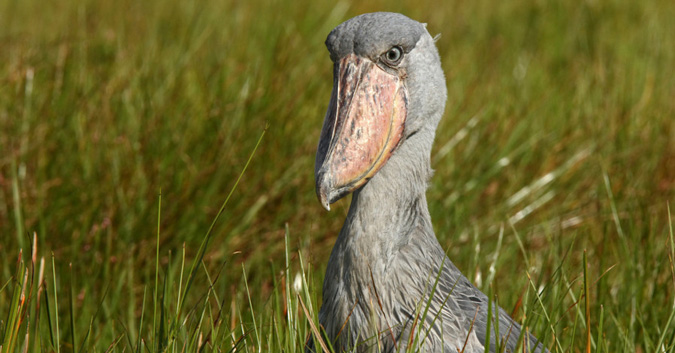
Uganda’s unique position at the crossroads of the East African savannah and the West African rainforest makes it an unrivaled avian paradise, hosting over 1,000 species. A specialized birding itinerary focuses on distinctive, high-value habitats that protect rare and localized species. The journey begins at Mabamba Swamp, a vast wetland on the fringes of Lake Victoria. This habitat is world-renowned as one of the best locations to spot the prehistoric-looking Shoebill ($Balaeniceps$ $rex$). Navigating the narrow channels by traditional wooden canoe allows you to slip quietly through the papyrus reeds, where you can also search for the striking pink-breasted Papyrus Gonolek, Blue-breasted Kingfishers, and African Marsh Harriers gliding low over the water.
[Mabamba Papyrus Channels] ──> [Kazinga Waterways] ──> [Albertine Rift Montane] ──> [Semuliki Congo-Basin]
- Shoebill Stork - Waterbirds & Raptors - Rwenzori Turaco - Guinea-Congo Biome
- Papyrus Gonolek - African Skimmer - Regal Sunbird - Nkulengu Rail
Moving west, the landscape shifts dramatically to the open savannahs and channels of Queen Elizabeth National Park. This park features an incredible checklist of over 600 species. The focal point here is a private boat cruise along the Kazinga Channel, where the shorelines teem with waterbirds, including Great White Pelicans, African Skimmers, and Martial Eagles.
Further south, the ancient, mist-shrouded montane forests of Bwindi Impenetrable and Mgahinga National Parks shelter 24 of Uganda’s 27 Albertine Rift endemics. Birding along the steep trails of the Ivy River route or the high-altitude bamboo zones of Mgahinga provides opportunities to spot the dazzling Rwenzori Turaco, Archer’s Robin-Chat, and the elusive African Green Broadbill.
Finally, Semuliki National Park offers a distinct experience. It represents the easternmost extension of the vast Central African Guinea-Congo lowland rainforest biome. Here, walking beneath the dense canopy unlocks species found nowhere else in East Africa, such as the Nkulengu Rail, piping hornbills, and the rare fiery-breasted bush-shrike.
2. Wildlife and Primate Trekking
While the primary objective of this specialized itinerary is filling your checklist with rare lifers, the routing naturally unfolds through Uganda's premier wildlife reserves. This creates a spectacular multi-dimensional safari where world-class birding blends seamlessly with iconic primate and big game tracking. The most profound primate interaction takes place within Kibale Forest National Park, celebrated as the primate capital of East Africa. As you scan the high forest canopy for forest birds like the Great Blue Turaco, you will share the habitat with 13 different primate species. Participating in a Chimpanzee Tracking excursion allows you to spend an hour on foot observing a habituated community, listening to their vocal pant-hoots echoing through the ancient trees.
Further south, the avian quest through the misty valleys of Bwindi Impenetrable National Park sets the stage for a spectacular optional Mountain Gorilla Trekking odyssey. Tracking through the dense, tangled undergrowth leads to a face-to-face encounter with a wild silverback and his family, an emotional and rewarding wildlife experience.
Beyond primates, the itinerary spans classic African savannah plains, notably inside Murchison Falls National Park. Here, your birding drives across the northern delta—where you look for Abyssinian Ground Hornbills and Denham's Bustards—are shared with massive herds of Rothschild's giraffes, African elephants, and Cape buffaloes. You will also track apex predators like prides of lions and leopards resting in the branches of sausage trees, ensuring a well-rounded and complete Kenyan or Ugandan safari experience.
3. What to Expect Daily
A specialized birding and wildlife safari is an immersive, high-energy endeavor that requires a deliberate mental adjustment regarding daily pacing and routines. Birding is inherently detailed and physically demanding. To catch the morning chorus and see elusive species when they are most active, your day begins with pre-dawn wake-up calls, typically around 5:00 AM. After a quick coffee, you will head out into the field before sunrise. Full days are spent on foot or in open safari vehicles, carrying packed picnic lunches to maximize field time and avoid returning to the lodge during peak activity hours.
Safari Aspect
Daily Reality & Expectations
Morning Starts
Pre-dawn departures (05:30 AM) to catch the active morning chorus.
Physical Effort
Hours of slow walking on uneven, muddy forest trails and steep slopes.
Transit & Roads
Long drives across rugged, bumpy terrain to link distinct ecosystems.
Weather Range
Shifting conditions from hot, humid lowlands to cool, rainy mountain ridges.
The physical pacing varies by habitat. Savannah birding involves slow, patient drives with frequent stops to scan the horizon through binoculars. In contrast, forest birding in Bwindi or Semuliki requires hours of quiet, slow walking along uneven, steep, and muddy trails. You will use your senses to trace calls through the thick canopy, often keeping your neck tilted up for extended periods.
Additionally, linking these diverse habitats involves traveling across rugged terrain and bumpy roads, moving from dry savannah plains up to high-altitude montane forests. The weather can change quickly from hot, humid lowland heat to cool, rainy mountain mist. This active pace is balanced by returning to your luxury safari lodge each evening, where a warm shower, premium fine dining, and a cozy fire await.
20 Days bird watching safari in Uganda
This comprehensive 20 Days bird watching safari in Uganda offers the ultimate avian odyssey through East Africa's most diverse landscapes. Positioned at the unique geographical crossroads where the vast West African lowland rainforest meets the sweeping East African savannah, Uganda hosts a staggering checklist of over 1,000 recorded bird species. This masterfully curated itinerary spans an incredible array of rich habitats, from tranquil freshwater swamps and papyrus-lined waterways to ancient mist-shrouded montane forests, dramatic Albertine Rift valleys, and open acacia woodlands. Throughout this immersive trip, you will explore world-renowned birding hotspots like Mabamba Swamp, the famous Royal Mile in Budongo Forest, and the endemic-rich trails of Bwindi Impenetrable National Park. Along the way, this specialized route effortlessly integrates iconic primate tracking and big game viewing, creating a highly rewarding, multi-dimensional safari experience that guarantees an unforgettable checklist of rare lifers and spectacular wilderness memories.
Day 1: Arrival & Entebbe
Your magnificent avian adventure begins the moment you land at Entebbe International Airport ($EBB$). After clearing customs, your private guide will welcome you and arrange a short transfer to your hotel. Depending on your arrival time, you will kick off your 20 Days bird watching safari in Uganda with initial birding in the lush Entebbe Botanical Gardens. This peaceful lakeside habitat features giant, canopy-forming trees that provide an excellent introduction to Uganda's common species. As you stroll along the scenic walkways bordering Lake Victoria, keep your eyes peeled for the colorful Great Blue Turaco, Eastern Plantain-eater, and African Openbill. You will also look for noisy colonies of Vieillot’s Black Weavers, the striking Double-toothed Barbet, and Orange-weaver nesting in the lakeside reeds, setting a wonderful tone for the incredible birding journey ahead.
Day 2: Mabamba Swamp
An early morning departure brings you to the world-famous Mabamba Swamp, a critical ramor wetland on the shores of Lake Victoria. This pristine papyrus ecosystem is a legendary highlight of the 20 Days bird watching safari in Uganda. You will step into a traditional wooden motorized canoe to navigate the narrow, winding channels. Your main target is the prehistoric-looking Shoebill Stork ($Balaeniceps$ $rex$), which hunts lungfish in the shallow waters.
While searching for this giant bird, the swamp will reward you with sightings of the elusive Papyrus Gonolek, Malachite Kingfisher, and Blue-breasted Bee-eater. You will also scan the reeds for the Lesser Jacana, African Purple Swamphen, Squacco Heron, and the elegant African Marsh Harrier gliding effortlessly over the vast papyrus canopy.
Day 3: Lake Mburo National Park
Today, your journey tracks southwest as you transfer to Lake Mburo National Park, a beautiful mosaic of open savannah, dry acacia woodlands, and tranquil wetlands. This transit adds a wealth of dry-country species to your 20 Days bird watching safari in Uganda. As you enter the park gates, the habitat changes to rolling hills dominated by whistling thorns. Your expert guide will help you scan the branches for acacia-associated specialists like the striking Crested Francolin, Brown Parrot, and Bare-faced Go-away-bird. As the afternoon cools down, you will check into your luxury safari lodge and enjoy an initial game drive, looking for the Broad-billed Roller, Common Scimitarbill, and various lapwings grazing alongside herds of impalas and Burchell's zebras.
Day 4: Lake Mburo Exploration
Your day begins with a rewarding morning game drive through the network of game tracks. This specialized drive on your 20 Days bird watching safari in Uganda focuses on locating the highly localized Red-faced Barbet, a localized acacia specialist. You will also search the open grasslands for the Black-bellied Bustard, Flappet Lark, and the majestic Martial Eagle perched high in a dead tree.
In the afternoon, you will embark on a peaceful boat cruise across Lake Mburo. This aquatic habitat is one of the best places in Africa to spot the elusive African Finfoot ($Podica$ $senegalensis$) swimming quietly along the forested shorelines. You will also look for Shining-blue Kingfishers, White-backed Night-Herons, and African Fish Eagles.
Day 5: Transfer to Mgahinga Gorilla National Park
Today features a highly scenic drive as you travel to the extreme southwestern corner of the country. This long journey on your 20 Days bird watching safari in Uganda takes you through rolling terraced hills and steep mountain passes, earning this region the nickname "the Switzerland of Africa." Your guide will plan several strategic birding stops along the high-altitude roadsides to check for specialized species.
As you approach the dramatic Virunga Volcanoes, the air turns crisp and cool. You will look for the Augur Buzzard soaring over the agricultural terraces and the handsome Cinnamon-chested Bee-eater perched on telephone wires, before checking into your luxury lodge bordering Mgahinga Gorilla National Park.
Day 6: Mgahinga Bird Watching
Today is dedicated to exploring the high-altitude montane habitats of Mgahinga Gorilla National Park, focusing on the famous Sabinyo Gorge trail. This challenging mountain walk is a vital component of the 20 Days bird watching safari in Uganda, offering your first real chance to target rare Albertine Rift endemics. Walking through the bamboo zones and secondary forest, your guide will listen for the distinct calls of the spectacular Rwenzori Turaco and the secretive Dusky Crimsonwing.
You will also scan the dense undergrowth for Archer’s Robin-Chat, Kivu Ground Thrush, and the Mountain Yellow Warbler. Keep your eyes on the canopy for the Olive Pigeon, Regal Sunbird, and the striking Strange Weaver feeding in the flowering trees.
Day 7: Transfer to Ruhija (Bwindi Impenetrable Forest)
Leave the volcanic peaks behind and travel north through the rugged Kigezi highlands to the high-altitude Ruhija sector of Bwindi Impenetrable National Park. This transition brings you to one of Africa's most important forest birding sites on your 20 Days bird watching safari in Uganda. Arriving in the afternoon, you will enjoy a relaxed birding walk along the main forest road.
This open canopy edge offers fantastic visibility, allowing you to easily spot the handsome Mountain Masked Apalis, Chestnut-throated Apalis, and Stripe-breasted Tit. You will also search for the Black-billed Turaco, Regal Sunbird, and various starlings feeding on wild figs, introducing you to Bwindi's rich diversity.
Day 8: Mubwindi Swamp Trail
Today brings one of the most exciting and physically demanding birding days of your 20 Days bird watching safari in Uganda. You will take a full-day trek down the steep forested ridges of the Ruhija sector to the remote Mubwindi Swamp. This specialized trail is the premier site to search for the critically endangered African Green Broadbill ($Pseudocalyptomena$ $graueri$).
Your expert guide will carefully scan the thick hanging vines for this holy grail of African birding. The trail also offers excellent chances to find other rare Albertine Rift endemics, including Grauer’s Broadbill, Shelley's Crimsonwing, the Regal Sunbird, and the elusive Archer's Robin-Chat feeding in the damp undergrowth.
Day 9: Gorilla Trekking & Birding
While your primary focus is birding, today features an unforgettable wildlife experience as you track wild mountain gorillas in Bwindi. This core activity adds a thrilling dimension to your 20 Days bird watching safari in Uganda. After a morning briefing, you will step into the primary rainforest with park rangers to spend an hour standing face-to-face with a gorilla family.
In the afternoon, you will head back onto the forest trails for a relaxed birding walk along the forest fringes. You will look for the Narrow-tailed Starling, Waller’s Starling, and the Black-faced Rufous Warbler, processing the magic of your gorilla encounter while adding new forest species to your list.
Day 10: Transfer to Buhoma (Bwindi)
Today, you will transfer from the high-altitude Ruhija sector to the lower lowland forest of the Buhoma sector of Bwindi. Birding along the road through "The Neck"—a narrow forest corridor connecting the two sectors—is a key highlight of your 20 Days bird watching safari in Uganda. This lower altitude brings a wave of new forest species.
Your guide will search the mid-canopy for the spectacular Black Bee-eater ($Merops$ $gularis$) with its striking red throat, alongside the colorful Bar-tailed Trogon and the elusive Cassin’s Hawk-Eagle soaring over the valleys. You will also look for the Many-colored Bush-shrike, African Black Duck in the mountain streams, and various illadopsises scratching in the leaf litter.
Day 11: Buhoma Main Trail
Today is dedicated to a full day of forest birding along the famous Waterfall Trail in Buhoma. This pristine primary rainforest trail is a crown jewel of your 20 Days bird watching safari in Uganda. Walking beneath the towering ancient canopy, your guide will look for the unique Short-tailed Warbler and the secretive Red-throated Alethe in the undergrowth.
You will also scan the mossy branches for the Equatorial Akalat, White-bellied Robin-Chat, and Ansorge’s Greenbul. Keep an eye on the high canopy for the Great Blue Turaco, Black-billed Weaver, and the rare Chapin’s Flycatcher, enjoying a deeply immersive day inside one of Africa's oldest forests.
Day 12: Queen Elizabeth National Park
Leave the misty forests of Bwindi behind and drive north into the vast savannahs of Queen Elizabeth National Park. This route passes through the remote Ishasha sector, famous for its tree-climbing lions, adding an iconic safari chapter to your 20 Days bird watching safari in Uganda.
As the dense forest gives way to open grasslands and flat-topped acacia trees, the birdlife shifts to savannah species. You will scan the skies for large raptors, including the Martial Eagle, Bateleur, and various vultures. In the grasslands, look for the Common Buttonquail, Croaking Cisticola, and the elegant Black-lored Babbler foraging in small groups along the road.
Day 13: Kazinga Channel Boat Cruise
Start your morning early with a game drive across the Kasenyi plains, tracking lions and leopards while spotting savannah birds like the Rufous-naped Lark and Temminck’s Courser. This day forms a major waterbird highlight on your 20 Days bird watching safari in Uganda. In the afternoon, you will embark on a private boat cruise along the famous Kazinga Channel.
The sandy banks are teeming with thousands of birds, allowing you to glide incredibly close to breeding colonies of African Skimmers, Pink-backed Pelicans, and Saddle-billed Storks. You will also spot Malachite, Pied, and Giant Kingfishers diving for fish alongside massive pods of wallowing hippos.
Day 14: Transfer to Kibale Forest
Today, you will drive north toward Fort Portal, tracking along the base of the spectacular, snow-capped Rwenzori Mountains. This beautiful journey on your 20 Days bird watching safari in Uganda winds through the scenic Ndali-Kasenda crater lakes region. The changing altitude and microclimates around these deep volcanic lakes provide excellent roadside birding opportunities.
You will stop along the lake rims to scan for forest-edge species, including the Great Blue Turaco, Ross’s Turaco, and the Double-toothed Barbet. Arriving at Kibale Forest National Park by afternoon, you will check into your luxury lodge surrounded by primary rainforest, listening to the evening chorus of forest greenbuls.
Day 15: Chimpanzee Tracking & Bigodi Wetland
Your morning begins with an exciting Chimpanzee Tracking excursion in Kibale Forest, the primate capital of East Africa. Sharing the forest with these intelligent primates adds an amazing wildlife highlight to your 20 Days bird watching safari in Uganda. In the afternoon, you will head to the community-run Bigodi Wetland Sanctuary for a guided boardwalk safari.
This lush papyrus swamp is an exceptional birding site, famous for its high numbers of the spectacular Great Blue Turaco. You will also track the rare Papyrus Gonolek, White-winged Warbler, and the colorful Hairy-breasted Barbet feeding in the fruiting figs along the swamp edge.
Day 16: Transfer to Semuliki National Park
Today, you will descend the dramatic Rift Valley escarpment to the hot, humid lowlands of Semuliki National Park. This park represents the easternmost extension of the vast Central African Congo Basin rainforest, introducing unique biome species to your 20 Days bird watching safari in Uganda.
As you enter this lowland forest, the birdlife changes completely. Your guide will focus on locating Central African specialists, scanning the high canopy for the rare Congo Serpent Eagle and the massive Black-casqued Wattled Hornbill. You will also look for the Spot-breasted Ibis, Red-thighed Sparrowhawk, and Long-tailed Hawk flying through the thick forest clearings.
Day 17: Semuliki Exploration
Today features an immersive, full-day birding walk along the famous Kirumia River trail inside Semuliki National Park. This legendary trail is a top highlight for serious birders on the 20 Days bird watching safari in Uganda, offering your best chance to find Guinea-Congo biome species found nowhere else in East Africa.
Walking through the swamp forest, your guide will listen for the distinct calls of the Nkulengu Rail and the Lyre-tailed Honeyguide. You will scan the undergrowth for the Maxwell’s Black Weaver, Grant’s Bluebill, and Crested Malimbe, while keeping an eye out for Red-billed Dwarf Hornbills feeding in the canopy.
Day 18: Transfer to Masindi
Bid farewell to the lowland forests of Semuliki and embark on a long drive north toward the historic town of Masindi. This transit day on your 20 Days bird watching safari in Uganda takes you through rural farming communities and open savannah landscapes along the Albertine Rift escarpment, providing spectacular views of Lake Albert.
Your guide will arrange several strategic birding stops along the escarpment road to search for dry-country specialists. You will look for the Foxy Cisticola, Mocking Cliff-Chat, and the striking White-crested Turaco foraging in the rocky scrub, before arriving in Masindi for a relaxing evening.
Day 19: The Royal Mile (Budongo Forest)
Today, you will explore The Royal Mile inside Budongo Forest, widely considered one of the premier forest birding sites in all of Africa. This wide, flat forestry track features an open canopy that provides exceptional visibility, making it a legendary day on your 20 Days bird watching safari in Uganda.
Accompanied by a local site expert, you will search the mid-canopy for the spectacular Chocolate-backed Kingfisher ($Halcyon$ $badia$) and the tiny African Dwarf Kingfisher. You will also scan the leaf litter for Puvel’s Illadopsis, and look for the Chestnut-capped Flycatcher, Ituri Batis, and various greenbuls, filling your checklist with top-tier forest lifers.
Day 20: Murchison Falls & Departure
On your final morning, you will drive into Murchison Falls National Park to witness the historic Victoria Nile compress through a narrow 7-meter gorge, bursting downward with incredible force. This dramatic landscape concludes your unforgettable 20 Days bird watching safari in Uganda.
You will enjoy a final brief game drive across the northern savannah plains, looking for the Abyssinian Ground Hornbill and Denham’s Bustard, before your guide transfers you back to Entebbe International Airport ($EBB$) for your evening international flight home, leaving you with a completed checklist of Africa's finest birds.
Uganda is widely considered one of Africa’s absolute best birding destinations, packing over 1,000 species into a country roughly the size of Great Britain. Embarking on a comprehensive 20-day bird-watching safari allows you to traverse a massive variety of ecosystems—from expansive papyrus swamps and rolling savannahs to montane rainforests and the unique lowland Congo-biome.
1. What is the best time of year for a 20-day birding safari in Uganda?
Timing your safari correctly is critical because a 20-day itinerary covers vast distances and multiple altitudes, meaning weather patterns significantly influence your daily success and logistical comfort. The peak windows for a comprehensive birding tour are the dry seasons: from December to February and June to August. During these months, forest trails are less muddy, and the "black cotton" soils of the northern savannahs are manageable for 4x4 vehicles.
However, if your primary goal is maximizing your overall species checklist count, the window between November and April is spectacular. This is when millions of Palearctic and intra-African migratory birds arrive, filling the wetlands and savannahs with warblers, terns, and birds of prey. The downside to scheduling your tour in the wetter months (especially March to May) is that heavy downpours can cause sudden road delays and make steep mountain forest trails incredibly slick.
For a balanced experience, late January or early July offers the best of both worlds—excellent resident bird activity, manageable weather, and stable driving conditions across all major national parks.
2. Which key birding destinations are covered in a typical 20-day itinerary?
A well-designed 20-day itinerary functions as a grand loop of Uganda's primary Important Bird Areas (IBAs). The journey almost always begins near Entebbe at the Mabamba Swamp on Lake Victoria, specifically to target water birds. From there, the route heads west to Lake Mburo National Park, a compact savannah park rich in acacia-associated species.
As you ascend into the southwestern highlands, the focus shifts to montane ecosystems. You will spend several days exploring Mgahinga Gorilla National Park and the famous Bwindi Impenetrable Forest (covering both the high-altitude Ruhija sector and the lower Buhoma sector). These sites are the premier locations for Albertine Rift endemics.
Descending back to the western rift valley floor, the itinerary hits the open plains and crater lakes of Queen Elizabeth National Park, followed by the lush, mid-altitude canopy of Kibale Forest National Park and the adjacent Bigodi Wetland Sanctuary. The loop then ventures into the unique, low-elevation jungle of Semuliki National Park, which provides a taste of the Central African Congo-biome. Finally, you travel north to the famous Budongo Forest—specifically the legendary "Royal Mile" trail—before concluding the safari with an extensive exploration of the vast savannahs and river systems of Murchison Falls National Park.
3. What are the top "bucket list" bird species to expect on this tour?
While you will easily record several hundred species on a 20-day trip, a few legendary targets command absolute priority for international birders. At the top of the list is the prehistoric-looking Shoebill, a massive, ancient-looking wetland specialist. Following closely are the highly sought-after forest species: the Green-breasted Pitta in Kibale Forest, which requires early dawn scouting to witness its brief display, and the ultra-rare African Green Broadbill (Grauer's Broadbill), found only in the deepest, most pristine valleys of Bwindi's Ruhija sector.
In the highland regions, the stunning Rwenzori Turaco and Great Blue Turaco offer explosive flashes of crimson and deep teal as they hop clumsily through the canopy. If you are tracking nocturnal species, the bizarre Standard-winged Nightjar and Pennant-winged Nightjar display spectacular, elongated primary wing feathers during their breeding seasons in Murchison Falls. Other major highlights include the elusive African Finfoot on quiet riverbanks, the cryptic Nahan's Francolin in Budongo, and the striking Chocolate-backed Kingfisher, which rules the mid-canopy of western Uganda's dense rainforests.
4. How physically demanding is a 20-day Ugandan birding safari?
The physical demands of a 20-day tour are highly variable, shifting daily based on the ecosystem you are exploring. Savannah birding in Murchison Falls or Queen Elizabeth is relatively relaxed, relying primarily on 4x4 open-roof safari vehicles and slow boat cruises. Similarly, swamp birding at Mabamba is conducted while sitting comfortably in paddled wooden canoes.
However, forest birding is a completely different story. Exploring Bwindi Impenetrable Forest, Mgahinga, and Semuliki requires walking on foot for several hours a day. Bwindi’s terrain involves steep, slippery mountain ridges with altitudes ranging from 1,100 to 2,600 meters. The hike down to the Mubwindi Swamp in search of the African Green Broadbill is an all-day trek that demands decent cardiovascular fitness and stable footwear.
Furthermore, forest birding induces what guides affectionately call "warbler neck"—the physical strain of staring straight up into dense, 40-meter-tall tree canopies for hours trying to spot tiny, fast-moving greenbuls or sunbirds. Expect to walk anywhere from 5 to 15 kilometers on forest days, often over uneven, root-laden, and muddy ground.
5. What kind of camera gear and binoculars should I pack?
Your optics will completely define your trip. For binoculars, a high-quality pair of 8x42 or 10x42 is mandatory. Because forest interiors are incredibly dark, optics with excellent light transmission and multi-coated lenses are crucial for picking out the subtle field marks of cryptic species like illadopsises and greenbuls.
For photography, Uganda presents distinct challenges. In the open savannahs of Murchison Falls, birds are often distant, making a long focal length of 500mm or 600mm (or a 400mm lens with a teleconverter) ideal. In contrast, inside the dense rainforests of Bwindi or Kibale, birds are closer but the light is extremely low. You will need a camera body capable of clean performance at high ISO levels (ISO 3200 to 6400) and fast lenses with wide apertures like f/4 or f/2.8.
Crucial Gear Warning: Equatorial rain can start instantly. Always carry heavy-duty waterproof dry bags for all your gear, high-quality lens cleaning kits to combat high humidity and condensation, and a sturdy monopod or lightweight tripod to support heavy setups during long forest walks.
6. What should I expect regarding the daily schedule and pace?
A 20-day birding safari is an intensive, high-reward expedition rather than a leisurely vacation. The daily routine is governed entirely by avian behavior, which means early mornings are completely non-negotiable. Wake-up calls typically happen between 5:00 AM and 5:30 AM to ensure you are at the forest edge or on the savannah tracks just as the dawn chorus begins. This is when bird activity peaks, territorial calls are loudest, and elusive species are most visible.
Breakfast is often a quick cup of coffee followed by a packed bush breakfast out in the field. You will spend the morning on slow, focused walks or drives. Lunch is either a picnic or a brief return to the lodge during the midday heat when bird activity naturally drops. Afternoon sessions resume around 3:30 PM and extend until dusk.
Over a 20-day timeline, the cumulative fatigue of early rises and long hours on rough dirt roads can build up. A professional itinerary balances this by incorporating occasional relaxed birding from lodge verandas and smoother boat trips to prevent burnout before reaching the final destinations.
7. How do we target the elusive Shoebill Stork, and what are our chances?
The Shoebill is the ultimate prize of a Ugandan safari. Targeting this bizarre, solitary bird requires accessing extensive, undisturbed papyrus wetlands. The most reliable site is the Mabamba Swamp, located an hour west of Entebbe. Here, the search is conducted using specialized, low-profile wooden canoes paddled by expert local community site guides who monitor the birds' movements daily.
The strategy involves navigating narrow channels and open water lagoons where the Shoebill stands completely motionless for hours, waiting to ambush lungfish, catfish, or frogs. Because the local community protects the wetland and tracks the birds consistently, the success rate at Mabamba is exceptionally high—frequently exceeding 90%.
Another excellent opportunity occurs in the northern delta region of Murchison Falls National Park, where the Victoria Nile flows into Lake Albert. Here, you search from larger motorized boats along the swampy banks. While the chances are superb, you must expect to spend several hours scanning the reed beds, as their grey plumage blends perfectly into the dense papyrus vegetation.
8. What are the Albertine Rift Endemics, and where do we find them?
The Albertine Rift is the western branch of the East African Rift System, forming a dramatic geographic barrier that has driven the evolution of highly localized species found nowhere else on earth. Of the 37 range-restricted bird species unique to this rift valley, Uganda hosts over 24. These species are the primary reason why avid world birders commit to a full 20-day itinerary.
The undisputed capital for these regional specialties is Bwindi Impenetrable National Park. The high-altitude sector of Ruhija provides access to the rare Grauer's Broadbill, Grauer's Swamp Warbler, Regal Sunbird, Handsome Francolin, and Archer's Robin-Chat. Nearby, Mgahinga Gorilla National Park offers access to higher-altitude afro-montane zones where you can find the spectacular Rwenzori Turaco and Ruwenzori Batis.
Key Target
Preferred Habitat
Primary Location
African Green Broadbill
Deep montane valleys
Bwindi (Ruhija)
Rwenzori Turaco
Bamboo & montane forest
Mgahinga / Rwenzori
Regal Sunbird
Forest edges and clearings
Bwindi / Echuya
Grauer's Swamp Warbler
High-altitude papyrus bogs
Mubwindi Swamp
Finding these birds requires patience, as many are small altitudinal migrants that move through the dense understory based on fruiting and flowering seasons.
9. What type of accommodation can I expect along a 20-day route?
Uganda’s tourism infrastructure has expanded dramatically, offering exceptional comfort even in remote areas. Along a standard 20-day route, your accommodations will range from intimate eco-lodges nestled on the edges of rainforests to classic safari tents pitched along savannah riverbanks. Most mid-range and luxury properties are designed beautifully using local stone and timber, blending seamlessly into the natural environment.
As a birder, your accommodation serves a dual purpose: a place to rest and a functional base for your gear. Most lodges feature 24-hour solar power or generator windows specifically timed for the evening, allowing you to charge multiple camera batteries, power banks, and laptops overnight.
Furthermore, many of these lodges are premium birding hotspots themselves. Properties bordering Bwindi, Kibale, or Lake Mburo feature lush native gardens that attract sunbirds, weavers, and turacos directly to your private balcony, allowing you to easily tick off new species during your midday downtime.
10. How do weather conditions impact birding in the dense rainforests?
Equatorial rainforests create their own microclimates, meaning weather conditions can change drastically within an hour. Heavy morning downpours are always a possibility, even during designated dry seasons. When a major storm hits, bird activity drops to absolute zero; birds seek dense cover, and the forest becomes completely silent, making detection by sound or sight nearly impossible.
However, the period immediately following a heavy downpour offers some of the most explosive birding of the entire safari. As the sun breaks through the mist, the forest warms up rapidly, triggering massive hatches of insects. This sudden abundance of food causes birds to emerge simultaneously, forming hyper-active mixed-species feeding flocks (often called "bird parties").
Within a single clearing, you might suddenly find yourself surrounded by twenty different species of greenbuls, flycatchers, apalises, and illadopsises feeding furiously. To handle these rapid shifts, you must expect to wear layers and always keep high-quality rain gear and a dry cloth readily accessible.
11. Will a birding safari include opportunities for gorilla and chimpanzee tracking?
Yes, a comprehensive 20-day itinerary smoothly integrates Uganda's world-famous primate tracking experiences alongside dedicated bird-watching. Because the prime habitats for Albertine Rift endemic birds overlap perfectly with the home ranges of the Mountain Gorilla in Bwindi and the Chimpanzee in Kibale Forest, combining these activities is logistically seamless.
On a typical tour, one full day in Kibale is dedicated to chimp tracking, and another full day in Bwindi is reserved for gorilla tracking. While these primate excursions require purchasing separate permits well in advance, they offer unexpected birding bonuses.
When you leave the established park trails to follow trackers deep into the undisturbed forest undergrowth in search of the gorillas, you often stumble across secretive, ground-dwelling forest birds—such as flufftails, alethes, and francolins—that rarely show themselves along the main tourist paths. For serious birders, taking the primate detour is highly recommended as it enriches the overall wilderness experience.
12. What are the advantages of birding by boat versus foot or vehicle in Uganda?
Varying your mode of transport is essential for clean views of different species families. Boat birding is a major highlight of a Ugandan safari, offered at Mabamba, Lake Mburo, Queen Elizabeth (Kazinga Channel), and Murchison Falls (the Victoria Nile). The primary advantage of a boat is that water birds are incredibly habituated to watercraft, allowing you to drift within a few meters of skimmers, herons, and kingfishers without causing them flight stress.
[Boat Safari] ------> Close optics, stable viewing of waders/kingfishers
[4x4 Vehicle] ------> Large range across open savannah for raptors/bustards
[Forest Foot] ------> Slow, quiet tracking of cryptic understory species
Vehicles provide the speed and range necessary to scan vast grasslands for large raptors, bustards, and ground hornbills. However, for true forest interior specialties, traveling on foot is the only viable method. Foot travel allows your guide to move silently, stop instantly to listen for faint calls, and gently maneuver through the dense understory to locate skulking species that never venture near open roads.
13. What health and safety precautions should I take for a 20-day safari?
Spending nearly three weeks traveling through diverse tropical environments requires sensible health planning. First and foremost, a Yellow Fever vaccination certificate is a strict legal entry requirement for Uganda. Additionally, because you will traverse low-altitude, high-risk malaria zones like Murchison Falls and Semuliki, taking a reliable malaria prophylaxis recommended by your travel clinic is highly advised.
On the trail, your physical safety is managed by park rangers, but personal protection against insects is your responsibility. When birding in dense forests, you should always tuck your long trousers into long hiking socks to prevent aggressive safari ants from climbing up your legs.
Apply high-quality insect repellent containing DEET to guard against biting tsetse flies in savannah woodlands and mosquitoes at dusk. Finally, always drink bottled or filtered water provided by your safari vehicle to stay properly hydrated under the intense equatorial sun.
14. How do local birding guides enhance the safari experience?
Attempting to bird Uganda without a professional local guide is incredibly difficult. Ugandan birding guides are recognized globally as elite field experts. Because forest birding relies almost entirely on auditory detection, a top-tier guide can instantly identify hundreds of distinct vocalizations, including complex songs, alarm notes, and subtle contact calls of tiny greenbuls or warblers.
Beyond basic identification, local guides understand the precise, hyper-localized habitat niches of rare birds. They know exactly which specific fig tree in Kibale is currently fruiting, or which precise valley in Bwindi was home to a breeding pair of broadbills the previous week.
They also work in close coordination with a network of local community site guides and park trackers. This collective, real-time communication ensures that your 20-day itinerary adapts dynamically to changing bird movements, maximizing your chances of finding rare species.
15. What are the ethical guidelines for bird photography and playback use?
Maintaining strict ethical standards is crucial for long-term conservation, especially when spending 20 days inside protected national parks. The use of audio playback (broadcasting recorded bird calls to lure species out of thick cover) is heavily restricted or entirely prohibited by the Uganda Wildlife Authority (UWA) in vulnerable habitats. Excessive playback stresses territorial birds, forcing them to waste vital energy defending boundaries or abandoning active nests.
When photographing, you must avoid clearing nesting vegetation to get a cleaner shot, as this exposes eggs and chicks directly to predators. Inside dark forest environments, the use of powerful, direct flash photography is highly discouraged, as it can temporarily blind nocturnal birds or startle nesting pairs.
A professional safari prioritizes the welfare of the bird over the perfect photograph. By remaining patient, staying on established trails, and allowing birds to reveal themselves naturally, you ensure that Uganda's spectacular avifauna remains protected for future generations of birders.
Booking 20 Days bird watching safari in Uganda with us Roads of Adventure safaris
Book the highly-rated 20 Days Uganda Birding Safari with Roads of Adventure Safaris for an immersive journey through Uganda's rich avian habitats, savannahs, and primate forests
